• Link to X
  • Link to Facebook
  • Link to Instagram
  • Link to TikTok
  • Link to Youtube
  • About
    • About Us
      • President
      • Board of Directors
      • Board of Advisors
      • Financials
      • Our Methodology
      • Success Tracker
      • Contact
  • Act Now
    • 30 Ways to Help
      • Email Congress
      • Call Congress
      • Volunteer
      • Courses & Certificates
      • Be a Donor
    • Internships
      • In-Office Internships
      • Remote Internships
    • Legislation
      • Politics 101
  • The Blog
  • The Podcast
  • Magazine
  • Donate
  • Click to open the search input field Click to open the search input field Search
  • Menu Menu
Blog - Latest News
Global Poverty, Water

Improving the Water Quality in Djibouti
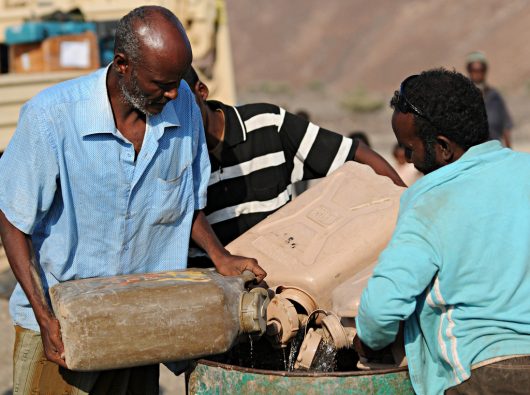
Improving the Water Quality in Djibouti
Water is a human necessity. The issue of water quality in the developing world is one that affects millions of people daily. More than half of the population of the developing world suffers from a water-related disease and about 6,000 children die from a water-related disease every day.

Djibouti, a small country off the eastern coast of Africa, is one of these developing countries. Currently, the country is experiencing a major national water crisis. Citizens in rural areas are the most affected: according to UNICEF, nearly 50% of people in rural communities do not have access to a safe water source.

Despite its coastal location, Djibouti is a country heavily affected by drought due to its arid climate. Most of the country’s water supply comes from groundwater resources, which have dwindled dramatically in recent years because of widespread drought.

Water quality in Djibouti is also a national problem. The little groundwater resources that are available are often of poor quality which has resulted in an epidemic of many waterborne illnesses.

The most high-risk water-related diseases in Djibouti are hepatitis A, hepatitis E and typhoid fever. These illnesses are contracted when people come into direct contact with water contaminated by fecal matter. Typhoid fever is the most deadly of the three, with a mortality rate of 20 percent.

Water conditions are slowly improving in the country thanks to efforts made by UNICEF, the European Union and Djibouti’s Ministry of Agriculture. This partnership, which began in 2007, has given more than 25,000 of the poorest people in rural communities access to clean water close to their homes.

The European Union has given UNICEF 2 million euros toward improving water sanitation in Djibouti. UNICEF also agreed to include an additional 60,000 euros to provide technical expertise.

More still needs to be done to improve the water quality in Djibouti. According to the Central Intelligence Agency (CIA), about 35% of the rural population has not received any improvements to their water supply.

Luckily, the Djibouti government has shown proactive concern in erasing the national water crisis. With help from UNICEF and the implementation of climate change policy in the country, Djibouti is looking toward a future of increased health and adaptability.

– Laura Cassin

Photo: Flickr

November 5, 2016
Share this entry
  • Share on Facebook
  • Share on X
  • Share on WhatsApp
  • Share on Pinterest
  • Share on LinkedIn
  • Share on Tumblr
  • Share on Vk
  • Share on Reddit
  • Share by Mail
https://borgenproject.org/wp-content/uploads/borgen-project-logo.svg 0 0 Borgen Project https://borgenproject.org/wp-content/uploads/borgen-project-logo.svg Borgen Project2016-11-05 01:30:122024-05-27 23:54:07Improving the Water Quality in Djibouti

Get Smarter

  • Global Poverty 101
  • Global Poverty… The Good News
  • Global Poverty & U.S. Jobs
  • Global Poverty and National Security
  • Innovative Solutions to Poverty
  • Global Poverty & Aid FAQ’s
Search Search

Take Action

  • Call Congress
  • Email Congress
  • Donate
  • 30 Ways to Help
  • Volunteer Ops
  • Internships
  • Courses & Certificates
  • The Podcast
Borgen Project

“The Borgen Project is an incredible nonprofit organization that is addressing poverty and hunger and working towards ending them.”

-The Huffington Post

Inside The Borgen Project

  • Contact
  • About
  • Financials
  • President
  • Board of Directors
  • Board of Advisors

International Links

  • UK Email Parliament
  • UK Donate
  • Canada Email Parliament

Get Smarter

  • Global Poverty 101
  • Global Poverty… The Good News
  • Global Poverty & U.S. Jobs
  • Global Poverty and National Security
  • Innovative Solutions to Poverty
  • Global Poverty & Aid FAQ’s

Ways to Help

  • Call Congress
  • Email Congress
  • Donate
  • 30 Ways to Help
  • Volunteer Ops
  • Internships
  • Courses & Certificates
  • The Podcast
Link to: Business Opportunities for Ethiopian Women Link to: Business Opportunities for Ethiopian Women Business Opportunities for Ethiopian Women Link to: How Poverty Affects Learning Link to: How Poverty Affects Learning How Poverty Affects Learning
Scroll to top Scroll to top Scroll to top