• Link to X
  • Link to Facebook
  • Link to Instagram
  • Link to TikTok
  • Link to Youtube
  • About
    • About Us
      • President
      • Board of Directors
      • Board of Advisors
      • Financials
      • Our Methodology
      • Success Tracker
      • Contact
  • Act Now
    • 30 Ways to Help
      • Email Congress
      • Call Congress
      • Volunteer
      • Courses & Certificates
      • Be a Donor
    • Internships
      • In-Office Internships
      • Remote Internships
    • Legislation
      • Politics 101
  • The Blog
  • The Podcast
  • Magazine
  • Donate
  • Click to open the search input field Click to open the search input field Search
  • Menu Menu

Archive for category: Violence Against Women

Violence Against Women

Malala Yousafzai Meets With Nigerian President

malala
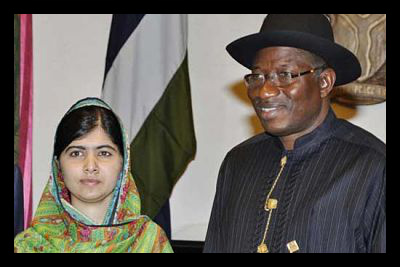
Malala Yousafzai, the Pakistani activist who in 2012 survived gunshots during a Taliban assassination attempt, met with Nigerian President Goodluck Jonathan to urge him to meet with the parents of recently kidnapped schoolgirls.

Since the age of 11, Malala has advocated for girls’ education, which led to the Taliban issuing a death threat against her. When they tried to assassinate her in 2012 — when she was just 15 years old — they failed.

As a result, Malala dedicated her life to activism, spreading a message on the importance of education and urging political leaders to help young women in need.

Malala therefore felt deeply concerned about the 276 girls abducted from a secondary school by Boko Haram in Chibok, a region of northeast Nigeria. The girls were abducted on April 14, and 219 of them are still missing.

In a recent video, Boko Haram leader, Abubakar Shekau, announced that he would only release the girls if the Nigerian government released imprisoned Boko Haram fighters. In the video, Shekau also greeted Al Qaeda and other prominent terrorist leaders across the Middle East, and denounced democracy and all forms of Western education.

He ended the video by firing an AK-47 rifle into the air in a show of violence.

“Nigerians are saying ‘bring back our girls’ and we are telling [President Jonathan] to bring back our arrested warriors, our army,” Shekau said.

Malala spent July 14, a date designated international “Malala Day” by the United Nations, visiting with the Nigerian President, urging him to do everything in his power to free the girls captured by the Boko Haram militant group.

“As we celebrate Malala Day on July 14, I have both hope and heartbreak,” Malala said. “I did not think that, just one year after my U.N. speech, more than 200 girls would be kidnapped in Nigeria by Boko Haram simply for wanting to go to school. These girls are my sisters.”

During Malala’s meeting, President Jonathan agreed to meet with the parents of the abducted schoolgirls. He also promised scholarships to all of them once they were released.

“The president has expressed his solidarity with those girls and his sadness,” Malala said. “He has assured that these girls will come back home safely.”

She went on to say that the president is currently considering the safest option to bring them home.

Malala cited over 66 million girls lacking access to education worldwide. She blames the lack of education on the large numbers of child brides in her home country of Pakistan. She feels that if young women are allowed to go to school and given more opportunities, they will not so readily relinquish their youth and freedom.

“I know education is what separates a girl who is trapped in a cycle of poverty, fear, and violence from one with a chance at a better future,” Malala said.

In recent weeks, Nigerian officials have hinted at progress in planning a rescue mission for the captured girls. But, according to a recent statement released by President Jonathan, the Nigerian government refuses to make any negotiations with Boko Haram.

Some feel this may be a dangerous tactic, since Shekau has openly taken credit for at least two recent bombings of Nigerian cities.

No matter what the Nigerian government plans to do, Malala has hope that everything will work out for the captive girls.

“We raise our voices so that those without a voice can be heard. We pledge not to forget the voiceless. Not to get tired of calling for the creation of a world that we want to live in,” Malala wrote. “Not to lose hope, and not to stop caring.”

– Paige Fraizer

Sources: Biography.com, LA Times, Liberty Voice, The International News, Washington Post
Photo: CCTV

July 22, 2014
https://borgenproject.org/wp-content/uploads/borgen-project-logo.svg 0 0 Borgen Project https://borgenproject.org/wp-content/uploads/borgen-project-logo.svg Borgen Project2014-07-22 10:14:552024-12-13 17:50:59Malala Yousafzai Meets With Nigerian President
Gender Equality, Violence Against Women, Women, Women and Female Empowerment

5 Violations Against Women’s Rights

women's rights
Despite enormous strides made toward gender equality, the world today is still riddled with gender disparities. Below are a list of five reasons why fighting for women’s rights is so important, and why it’s still an ongoing battle.

1. Workplace Inequalities Around the World…Including the United States

For most Americans, it isn’t a secret that women still face extreme disadvantages in the workplace. Despite putting in equally long hours and given identical responsibilities as their male counterparts, women still only make 77 cents for every man’s dollar in the United States, and it’s even worse in other countries. Not only do women make less, but their responsibilities at home are often more rigorous; according to Harvard studies, men still put in a significantly less amount of time in household chores as their female partners.

2. Skewed Gender Ratios

In some countries, where population control laws were put into a much stricter affect, gender ratio disparities are skyrocketing. A favorable push of male-to-female in these countries has resulted in unbalanced gender ratio problems, where some female babies can be killed or left abandoned. In China, the gender ratio of male to female was 108:100 based on a 2013 data consensus; in India, it was 107:100.

3. Violence

According to a statement made by U.N. Secretary-General Ban Ki-moon in 2008, one in every three women is likely to be “beaten, coerced into sex or otherwise abused in her lifetime.” In fact, violence against women is so common in developing countries that oftentimes it doesn’t even make the news cycle. And while many countries fail to protect their rape victims, other countries such as Morocco and Saudi Arabia have much stricter punishments. Rape victims in these countries can be charged with crimes for being “alone with an unrelated man, or for getting pregnant afterwards,” only further perpetuating the damaging notion of rape culture.

4. Marriage and Divorce

According to UNICEF, more than one-third of women between the ages of 20 and 24 were married before they turned 18, which is considered below the minimum age for marriage in most countries. Nevertheless, these child brides risk greater chances of giving birth at earlier ages and suffer from risks of complications in childbirth and a greater chance of contracting HIV/AIDS. Courts do little to help the problem; in Yemen, it is against the law for a woman to leave the house without her husband’s permission. This results in a high percentage of women, who are afraid of the legal ramifications, to stay in abusive relationships.

5. Education

Women currently make up two-thirds of the world’s illiterate adults. Whether they are kept from school in order to keep up with household chores or their father deems it time for them to marry, women are consistently being denied their right to education; a right hardly ever denied to their male counterparts. While numerous studies have been proven to show that educating women is key to eliminating poverty and aiding development, the gender gap in education in many of these developing countries is only continuing to increase.

– Nick Magnanti

Sources: The Washington Post, Harvard Summer School, Discovery, United Nations Population Fund
Photo: Act 4 Entertainment

July 16, 2014
https://borgenproject.org/wp-content/uploads/borgen-project-logo.svg 0 0 Borgen Project https://borgenproject.org/wp-content/uploads/borgen-project-logo.svg Borgen Project2014-07-16 04:00:542024-12-13 17:50:255 Violations Against Women’s Rights
Violence Against Women

Fighting Sexual Violence in the DRC

Since military conflicts erupted in the Democratic Republic of the Congo (DRC) in the 1990s, rates of sexual violence have increased significantly and become a major issue across the region. Though conflict in the DRC officially ended in 2003, fighting has continued and taken more than 5 million lives since the war began almost 20 years ago.

Sexual violence in the DRC, along with related crimes, have been called the worst in the world, particularly in the eastern region of the country. A study from the American Journal of Public Health states that in the DRC, 1,152 women are raped every day, and an estimated 12 percent of the female population of the DRC has been raped at least once.

Research has shown that many of the sexual attacks are related to armed conflict, and thus, the United Nations Development Program is helping the DRC strengthen its military justice program to make it fair, just and constructive in helping sexual violence victims.

Across the regions, trials are taking place following years of conflict and acts of violence in the DRC. Many soldiers have not been punished for their actions due to their special treatment in the military system, but the civilian courts are working their way through cases with the support of the UNDP. Thirty-one convictions and 9 investigative missions into serious war crimes under the International Criminal Court have resulted from UNDP support.

“It was important that the case be tried here because it is the exact location where the incidents [of rape and murder] occurred,” said Captain Magistrate Bienvenu Muanansele, from the Tribunal Militaire de Garnison de Goma. “These trials held before the people of Bweremana show the people how justice does its job. The law prevails, even for the military.”

The UNDP is also supporting the DRC military in training soldiers to understand the law, the consequences of violent attacks against civilians and human rights. A total of 2,432 soldiers and officials have gone through this training process.

In addition to these steps to reduce violent acts by soldiers, many organizations are working to provide support and community for female sexual violence victims. Masika is a rape victim and founder of a rescue center for sexual violence survivors. After being exiled by her parents in-law, she decided to offer community and support to other women who had experienced sexual assault. Following an army attack in the nearby marketing town of Minova, 130 rape victims came to Masika’s camp.

The stigma against rape victims in the DRC is so severe that in many cases, women are exiled from their families and ostracized. However, women support groups are beginning to provide community as rapists are being brought to justice.

An organization called SAMWAKI, or A Voice to Rural Women in Swahili, works to provide information and training for rural women through community radio. The group aims to increase women’s knowledge on topics from health to farming, and provides listening groups for victims to share their experiences.

Similarly, AFEM (L’Association des Femmes des Médias du Sud Kivu) offers journalism training and a space for women to be a voice for sexual violence survivors. Founded by young journalist Chouchou Namegabe, the organization aims to increase women’s representation in the media.

While sexual violence in the DRC continues to be one of the worst cases in the world, both international and domestic groups are working to end the normalization and prevalence of rape. Gradually, soldiers and sexual assailants are being brought to justice, and women are coming together, speaking out and finding community.

— Julia Thomas

Sources: UNDP, The Independent, The Guardian, Washington Post
Photo: ICMHD

June 23, 2014
https://borgenproject.org/wp-content/uploads/borgen-project-logo.svg 0 0 Borgen Project https://borgenproject.org/wp-content/uploads/borgen-project-logo.svg Borgen Project2014-06-23 13:07:202024-12-13 17:50:20Fighting Sexual Violence in the DRC
Global Poverty, Politics and Political Attention, Violence Against Women, Women

Katra and India’s Women’s Rights Problem

Two 12 and 15-year-old girls were lynched last week in western Uttar Pradesh in India after being abducted, gang raped and hanged by their attackers. The Indian village, known as Katra in the Badaun district, is one of the world’s most impoverished areas.

Most of its citizens work as tillers or take up small, part-time jobs in order to make a living. With hardly any money, most cannot afford a functioning toilet, so they relieve themselves in nearby fields.

Yet this is exactly what would lead to the death of two young cousins after being abducted by three men in the fields of their village. Their attackers hanged the two girls on a tree in the village, which would be on display for the entire community.

Thought by medical experts to have been hanged alive, many are wondering how and why these gruesome attacks could have taken place in a day and age where feminism is, in most parts of the world, on the rise.

India has had a history of women’s rights problems for years. After the gang rape case of a 23-year-old girl in Delhi in 2012, in which four men were all found guilty and given the death penalty, India has been making a concerted effort to tighten their rules regarding violence against women.

Yet this has by no means actually prevented or improved cases of violence against women in the country; in most cases, police insensitivity has been proliferated by patriarchal attitudes of those in governmental power.

The Samajwadi Party is just one example of misogyny’s power in Indian politics. The senior Samajwadi Party leader, Ram Gopal Yadav, spoke of the most recent incident, stating, “[In] many places, when the relationship between girls and boys come out in the open, it is termed as rape.”

Two months ago, party patriarch Mulayam Singh Yadav claimed that “boys will be boys” and vehemently opposed the death penalty as punishment for acts of rape.

The three men responsible for the two teenage girls’ deaths in Katra have been arrested, and two policemen are being held on suspicion for trying to cover up the crimes.

This is not an uncommon occurrence: while a rape is reported every 21 minutes in India, law enforcement failure often results in crimes not being reported or investigated fully. Yet as the case rises in power, world officials are continuing to speak out against these acts of misogyny.

U.N. Secretary General Ban Ki-moon, who stated that he was “appalled” by these recent acts, is just one of many to have spoken out. “We say no to the dismissive, destructive attitude of ‘boys will be boys,’” he said. As the government continues to crack down on these acts, many hope its citizens will listen.

 — Nick Magnanti

Sources: The Diplomat, ODT, Scroll, Times of India 1, Times of India 2
Photo: The Story Exchange

June 22, 2014
https://borgenproject.org/wp-content/uploads/borgen-project-logo.svg 0 0 Borgen Project https://borgenproject.org/wp-content/uploads/borgen-project-logo.svg Borgen Project2014-06-22 16:00:052024-05-26 23:46:05Katra and India’s Women’s Rights Problem
Violence Against Women, Women

Domestic Violence in Nepal

Radha Neupane, who is already married at the age of 12, lives and supports her family on $30 a month. She has no financial backing from her alcoholic husband and she is also a victim of domestic violence. She works  for a cleaning service, cleaning over three houses a day to place food on the table for her young ones.

“I’m used to it now. What choice do I have?” said Neupane to IRIN, a service of the U.N. Office for the Coordination of Humanitarian Affairs.

Over the past decades, domestic violence in Nepal still remains an unsolved issue. Gender based violence, particularly toward females, is the main concern. The violence comes in all forms, including verbal abuse, beating and even more common, acid burning.

Saathi is an organization directed at helping victims of domestic violence. Activist and Saathi vice president Bhawana Rana states, “The office has barely changed because we hold the same patriarchal society where women’s equality is not accepted.”

Nepal is known to hold the worst rates of gender based violence in Asia. The current bill to hinder domestic violence from continuing to be a problem is currently on hold in Nepal’s government. As of now, the government is not taking any proactive actions to help relieve any of the domestic violence in Nepal.

In Nepal, domestic violence is considered to be more of a private family issue than a crime, thus resulting in a lack of outside interference. Abused women suffer from mental health problems like depression and physical reproductive health problems.

Violence against women in Nepal continues to grow every day. A total of 86 percent of women are unsafe in the communities they reside in. A disturbing 91 percent of women killed in Nepal have been killed by someone they know. Many of these abused adult females do not seek legal help in fear of more abuse from the government agencies and authorities.

Nepal does not provide secure areas for adult females who are victims of domestic abuse. This leaves women vulnerable and unable to escape the abuse. Over one-fifth of Nepal’s population deems domestic abuse acceptable. For most women the home is the most unsafe place to be. Women in the home are more likely to face marital rape and violence.

Activists are continuing their efforts to put an end to domestic violence and provide a safe environment for women and children to live in. The society is in need of political leadership to speak up for not only the women in Nepal, but all victims of domestic violence in the area. There is much improvement needed within Nepal’s government and legislature. Their view of domestic violence needs to change.  Human rights activists have raised awareness of the social unjust in Nepal and continue to raise the question of providing necessary protocol and policies to end this epidemic.

– Rachel Cannon

Sources: IRIN, WOREC
Photo: World Bank

June 20, 2014
https://borgenproject.org/wp-content/uploads/borgen-project-logo.svg 0 0 Borgen Project https://borgenproject.org/wp-content/uploads/borgen-project-logo.svg Borgen Project2014-06-20 10:22:362024-05-26 23:46:50Domestic Violence in Nepal
Global Poverty, Violence Against Women, Women & Children

Nigeria Still Marred by Instability

On April 14 approximately 276 girls were abducted from a boarding school in Chibok, Nigeria, by the militant group Boko Haram. The international attention and social media activism that have followed since have all been indicators of universal outrage. But most importantly they have underscored the instability which has crippled Nigeria in recent years.

With a $6 billion national annual budget for security forces, Nigeria’s recent mass kidnapping might seem surprising, but it is indicative of a broader spectrum of disarray. Nigeria is the most populous state in Africa and its leading economy, laying claim to the 26th largest economy in the world. However, its citizens are often bound by dire living constraints.

In Nigeria’s Borno state, home to capital city Maiduguri, the birthplace of Boko Haram, the per capita income is $1,631 compared to $4,000 in political capital Abuja. It is evident that poverty has planted the seeds for violent extremism. Since 2009 Boko Haram, in their quest to create an Islamic state in Nigeria, has been implicated in the deaths of over 12,000 Nigerian citizens. In 2013 they were officially declared a terrorist group by the United States government.

Despite Nigeria’s trouble with internal uprisings, it has become clear that its government has been troubled by its own internal issues. Recent Nigerian media reports have revealed that 10 generals and five other senior officers have been court martialed and found guilty of supplying info and ammunition to Boko Haram. This level of extremist sympathizing, while detestable, is not altogether shocking given Nigeria’s current state of affairs.

Corruption on the level of high-ranking government officials has long been linked to poverty throughout Africa. Nigeria has been operating at annual levels of around seven percent economic growth over the past few years but its correlation between national economic growth and increasing living standards has become tenuous at best.

Nigerian president Goodluck Jonathan has framed his country’s growing poverty problems as a problem of wealth distribution. Considering the highly concentrated nature of wealth and political capital amongst the country’s oil barons, this assessment is worth considering. With oil reserves of upwards of 37 billion barrels, only second to Libya in all of Africa, Nigeria is surely not pressed for revenue generating natural resources. However, its influx of oil revenue has not made it a wealthy state.

By 2030 Nigeria’s population size is expected to increase from its 2010 level by upwards of 60 percent, making it the world’s eventual fifth largest population. There are currently over 160 million people living in Nigeria, 42.8 percent of whom are age 14 or younger. However, of the school age children who actually begin formal education, only two-thirds complete primary school. Like the rest of the world, lack of education coupled with the presence of poverty makes for a corrosive pair. It will surely take increasing levels of stability and government accountability to fend the two off.

On June 9, 20 more girls were kidnapped by Boko Haram in the northeastern town of Garkin Fulani, Nigeria. The abductions took place only a few miles from where the 200-plus girls were kidnapped in Chibok in mid-April. This most recent example of Nigeria’s internal security woes comes after President Goodluck vowed to protect this vulnerable and embattled area of Nigeria. Instead, another instance of atrocity has once again marred a Nigerian community still reeling from the effects of the past five years.

 — Taylor Dow

Sources: CNN, BBC, Global Public Square, Tribune, Business Day
Photo: The Indian Express

June 20, 2014
https://borgenproject.org/wp-content/uploads/borgen-project-logo.svg 0 0 Borgen Project https://borgenproject.org/wp-content/uploads/borgen-project-logo.svg Borgen Project2014-06-20 09:35:542024-06-04 01:17:37Nigeria Still Marred by Instability
Global Poverty, Violence Against Women

Victims of Rape in Haiti Stand Up for Justice

Rape_in_haiti
Loutchama was just 12 years old when she was a victim of rape in Haiti. Her attacker, a man named Etienne Rene, and Loutchama’s neighbor at the time, reportedly had noticed none of her family members were home on April 30, 2011. After hearing of the rape, a physical altercation between Rene and Loutchama’s mother, Adrienne, would result in Adrienne’s eventual arrest.  Yet, while Rene, too, was arrested at his home soon afterward and would eventually be put on trial and sentenced to 15 years in prison, Adrienne feels devoid of justice. Loutchama died on August 26, 2013, and Adrienne believes it to be a direct result of Rene’s sentencing.

It would not be until a year and a half after Loutchama and her mother filed for rape against Rene that he would be sentenced. Haiti’s Minister of Justice, Jean Renel Sanon, says that it usually takes “four months” from the time a rape is reported to make it to court. Yet, all too regularly, cases are prolonged. Inevitably discouraged by Haiti’s judicial patriarchy, cases are usually given up by the victim mere months after their happening.

Poverty is a factor, too. Those with more money can afford to have warrants served expeditiously, guaranteeing them quicker justice. Yet, for the majority of poor Haitian women, their cases — which are at the hands of the judge — can be held stagnant for as long as five years if they are not dropped prior. A UN study conducted in 2012 proved just this. In a sample of 2010 reports, only one of a total of 62 rape cases filed over a three-month period made it to court.

For women like Loutchama, going through the judicial process is a constant reminder of their attack. Many of these women, most who work as street vendors, cannot afford a day off from work to go to trial and, subsequently, resort to unofficial monetary arrangements with their rapists. Of course, this poses a major problem. More often than not, poor rapists cannot actually afford to pay their victims, and zero judicial ties to the promise results in complete injustice.

Now crippled by her daughter’s death and worried for her own safety, Adrienne — who, prior to the case, had never even heard of the term “human rights” — believes Rene’s payback has just begun. “I’m poor,” she said. “And I will never have justice.”

Yet, Rene’s 15-year sentence may just be the long-awaited beginning of said justice for rape victims in Haiti. Through the recent works of Haitian organizations such as the Bureau des Avocats Internationaux, more rapists are being persecuted than ever before. In 2011, 13 of 22 rape cases resulted in conviction. While rape culture in Haiti is still all too prominent, many of these women are just beginning to feel secure enough to stand up for their own human rights.

– Nick Magnanti

Sources: IJDH, JJIE, Salon
Photo: Ehowzit

May 30, 2014
https://borgenproject.org/wp-content/uploads/borgen-project-logo.svg 0 0 Borgen Project https://borgenproject.org/wp-content/uploads/borgen-project-logo.svg Borgen Project2014-05-30 12:00:302024-06-05 01:57:27Victims of Rape in Haiti Stand Up for Justice
Global Poverty, Violence Against Women, Women

The “Solution” to Sexual Assault in Sri Lanka

Sri Lankan Women’s Affairs and Child Development Minister Tissa Karaliyadda remarked that female victims should marry the males who sexually assaulted them to reduce the amount of rape in Sri Lanka. If the victim is underage, he suggests that the marriage be postponed until the victim reaches the age of eighteen, the legal age of consent in the country.

Karaliyadda explained to local media that, “the idea is to ensure the victim gets justice. If she feels the rapist must marry her for what he did to her, then she must have that option.”

But why would a girl wish to marry the person who sexually assaulted her? Is it because girls who have sex before their marriage will find it extremely difficult to find a husband in the future? Does their society mark them as unclean and force them to atone for the sexual assault? Is marriage the only solution to rid them of their dishonor?

Sri Lanka’s President, Mahinda Rajapaksa, has a different viewpoint. He believes that underage female rape victims should not wait until age eighteen to be married. He is quoted saying “if under aged girls are statutorily raped and the sexual act was however with consent, it may be good to have legislation that allows the perpetrator to marry the victim with her consent.”

What is most unsettling about Rajapaksa’s quote is not the part about forcing attackers to marry their underage victims, but that sexual activity between a child and an adult can be consensual.

In Sri Lanka, eighteen marks the age of consent, maturity and adulthood. Eighteen-year-olds can legally drive, smoke, drink alcohol and provide consent for sexual activity. The age of consent varies across the globe from twelve in Angola to twenty-one years old in Bahrain.

Rajapaksa’s belief that sexual activity between a child and an adult can be consensual is incorrect. Not only are their brains and bodies not fully developed, most children lack the emotional maturity and awareness to make informed important decisions. This is why statutory rape laws exist. Statutory rape laws are designed to prevent adults from “exploiting the ignorance, the trust, the inexperience and the terror of children.”

Chamal Rajapaksa, current Speaker of the Parliament and also the elder brother of President Rajapaksa, believes that “nobody can make men responsible for the violence against women. Women are responsible for it.” It is exactly this kind of viewpoint that perpetuates gender inequality and sexual assault in societies where women have very little agency. Sexual assault in Sri Lanka and gender equality is not merely a women’s issue, as it affects men, women, boys and girls. Instead of focusing on finding remedies to sexual assault after it has already happened, perhaps officials should attempt to prevent sexual assault in Sri Lanka before they actually take place.

-Sarah Yan

Sources: First Post, Buzzfeed, Care 2, Sri Lanka Guardian

May 9, 2014
https://borgenproject.org/wp-content/uploads/borgen-project-logo.svg 0 0 Borgen Project https://borgenproject.org/wp-content/uploads/borgen-project-logo.svg Borgen Project2014-05-09 04:00:102024-05-26 23:30:35The “Solution” to Sexual Assault in Sri Lanka
Gender Equality, Global Poverty, Violence Against Women, Women

Women’s Rights in Kenya

While women in Kenya take care of the majority of the agricultural and produce market work, they only earn a fraction of the income their male counterparts do. As an outcome of wage discrimination for women, 40 percent of households in Kenya that are run solely by women are in poverty.

Women’s reliance on men has greatly increased within the past few years, due to state and resource conflicts during wartime. For instance, even though Kenya suffers droughts throughout the year, women are afraid to travel to collect water for their families due to gender-based violence. As a result, young girls cannot gain an adequate education due to the deficiency of proper hygiene and clean water within the school, resulting in low literacy rates. In addition, pregnant adult females who do not have access to clean water are more likely to acquire a water-borne disease, harming both the mother and unborn child.

Women in Kenya are not only restricted in the private realm, but also face restrictions in the public realm. For example, women cannot gain any property or land regardless of their social rank. In fact, after their husband’s death, several widows lost their homes and families because of these harsh gender-based rules. If a woman tries to acquire any property or land for her family, she will be exiled from the household, or even worse, from the community.

Kenyan cultural practices also influence the threat of HIV and AIDS that plague the country. Further, in addition to the medical threats of this disease, it also lowers  women’s self-esteem. Forced sex and inheritance of a widow by male relatives is part of Kenyan culture, yet 1 in 5 adults have HIV, a rate even higher for women.

Besides the negative effects of some cultural practices, women also have a higher rate of experiencing gender inequality, discrimination, gender-based violence and rape. In particular, practices such as gang rapes or forced sexual mutilations continue to be a major issue in communities across the country. Unfortunately, even when these women file rape complaints, police often do not prosecute their perpetrators. Thus, there is no support for victims and survivors of violence.

While there have been reforms to the Kenyan constitution within the past year, such as more rights for female business owners to help grow the economy, they constantly fight to keep their business afloat to support their families. The laws may vary, yet the traditional codes are nevertheless in effect within some communities and villages.

Kenya needs to improve its legal assistance and medical care for women, while ensuring all women receive the highest degree of protection and representation. In addition, girls must have better access to education to improve literacy rates. Even though women voters make up the bulk of the voting population in Kenya, they continue to be seriously underrepresented in politics, making it difficult to achieve these tangible goals. Overall, if women are more included in Kenya’s economy, the country can progress from severe poverty. By bringing women and young girls out of poverty and providing basic political and socio-economic rights, the country can and will grow for the better.

– Rachel Cannon

Sources: The Water Project, Foundation for Sustainable Development
Photo: Buzz Kenya

May 6, 2014
https://borgenproject.org/wp-content/uploads/borgen-project-logo.svg 0 0 Borgen Project https://borgenproject.org/wp-content/uploads/borgen-project-logo.svg Borgen Project2014-05-06 11:05:042024-06-05 01:57:24Women’s Rights in Kenya
Children, Global Poverty, Human Rights, Human Trafficking, Violence Against Women, Women & Children

The Internet’s Role in Sex Trafficking

Internet_sex_trafficking
Sex trafficking exists in the United States. Sex traffickers target women and children with histories of addiction, abuse and even issues with debt and use manipulation to keep these victims trapped in the sex trafficking industry. The leaders in sex trafficking use violence and threats against the victims loved ones as means to force these victims to work against their own will. Accordingly, 83% of sex traffic victims are United States citizens. This issue is larger than most people realize and exists in the form of strip clubs, fake massage businesses, hostess clubs and even online escort services.

The internet is the number one center for sex trafficking in the United States. For example, pimps use websites like Backpage.com and even Craigslist.org disguised as massage services to escort victims for services. Thus, these women are forced into sex trafficking at a young age mostly by older men. Most of the services that are offered on Craigslist are in the form of recruiting. Women post pictures of themselves and answer customer’s calls referencing the ads placed on Craigslist. These women are not willingly posting these pictures, but are in constant fear of their own lives. In addition, these pimps use not only force but the false promise of a better life and threats to harm the victims’ loved ones. Victims are coerced into trafficking by pimps posing as model scouts, or nannies and house maids being recruited and then captured by these sex traffickers.

Because trafficking is unique when based in the internet it has become extremely profitable and it is easier to reach a larger audience. Anyone can post ads on these sites and these ads can be seen by thousands of people in addition to being unnoticed by the police. The average age range these victims enter the sex trafficking industry is 11-15 and due to the vague description of age with words like “young,” these operations slip by unnoticed by authorities.

In addition, many women in places like Nigeria, Thailand, and other places suffering from global poverty are involuntarily forced into sex trafficking. The geological approach to sex trafficking shows high numbers of victims in areas stricken with poverty, as well as remote areas where women are more likely taken from to an area of global capitalization and tourism. These high traffic areas are promoted through the use of the internet and smartphones. Because of the accessibility to these websites, where a brothel can be located in under a minute generates high revenue for the owner.

Accordingly, President Barack Obama released a statement saying “We’re turning the tables on the traffickers. Just as they are now using technology and the Internet to exploit their victims, we’re going to harness technology to stop them.”

To illustrate the alarming statistics of this issue the US Department of Health and Human Services show that 90% of runaways end up in the commercial sex trade industry and in Tennessee 94 children are trafficked every month. Human Trafficking has become a larger issue than most realize and will be addressed accordingly to the advancement of technology.

– Rachel Cannon

Photo: CNN
Sources:
End Slavery Tennessee, Polar is Project

April 16, 2014
https://borgenproject.org/wp-content/uploads/borgen-project-logo.svg 0 0 Borgen Project https://borgenproject.org/wp-content/uploads/borgen-project-logo.svg Borgen Project2014-04-16 01:07:502020-07-25 00:43:36The Internet’s Role in Sex Trafficking
Page 6 of 8«‹45678›»

Get Smarter

  • Global Poverty 101
  • Global Poverty… The Good News
  • Global Poverty & U.S. Jobs
  • Global Poverty and National Security
  • Innovative Solutions to Poverty
  • Global Poverty & Aid FAQ’s
Search Search

Take Action

  • Call Congress
  • Email Congress
  • Donate
  • 30 Ways to Help
  • Volunteer Ops
  • Internships
  • Courses & Certificates
  • The Podcast
Borgen Project

“The Borgen Project is an incredible nonprofit organization that is addressing poverty and hunger and working towards ending them.”

-The Huffington Post

Inside The Borgen Project

  • Contact
  • About
  • Financials
  • President
  • Board of Directors
  • Board of Advisors

International Links

  • UK Email Parliament
  • UK Donate
  • Canada Email Parliament

Get Smarter

  • Global Poverty 101
  • Global Poverty… The Good News
  • Global Poverty & U.S. Jobs
  • Global Poverty and National Security
  • Innovative Solutions to Poverty
  • Global Poverty & Aid FAQ’s

Ways to Help

  • Call Congress
  • Email Congress
  • Donate
  • 30 Ways to Help
  • Volunteer Ops
  • Internships
  • Courses & Certificates
  • The Podcast
Scroll to top Scroll to top Scroll to top