• Link to X
  • Link to Facebook
  • Link to Instagram
  • Link to TikTok
  • Link to Youtube
  • About
    • About Us
      • President
      • Board of Directors
      • Board of Advisors
      • Financials
      • Our Methodology
      • Success Tracker
      • Contact
  • Act Now
    • 30 Ways to Help
      • Email Congress
      • Call Congress
      • Volunteer
      • Courses & Certificates
      • Be a Donor
    • Internships
      • In-Office Internships
      • Remote Internships
    • Legislation
      • Politics 101
  • The Blog
  • The Podcast
  • Magazine
  • Donate
  • Click to open the search input field Click to open the search input field Search
  • Menu Menu

Archive for category: Violence Against Women

Global Poverty, Violence Against Women, Women and Female Empowerment

Seven Nonprofits Working to Help Women in Afghanistan

7 Non-Profits Working to Help Women in Afghanistan
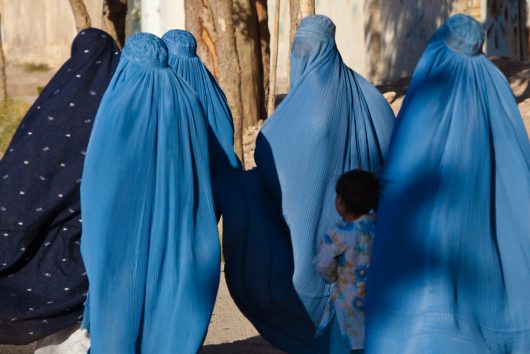
Poverty and oppression go hand in hand for women in Afghanistan. In a country hosting a crushing degree of poverty, women face a variety of discrimination and violence, in many cases from their own families. Global Rights estimates almost nine out of 10 Afghan women will endure marriage against their will or physical, sexual or psychological abuse.

In response to the abuse of women in Afghanistan, several nonprofits have formed to focus on empowering women and helping them escape the trap of poverty and abuse. Many of these nonprofits are based in Afghanistan and feature Afghan women in prominent leadership roles. All of them face danger operating in rural areas of Afghanistan where the rights of women are routinely trod upon.

    1. Afghan Women’s Educational Center (AWEC): AWEC works to empower women in local Afghan communities while working towards gender equality. Through a series of programs focused on providing income and education opportunities for women, they hope to bring about lasting change in Afghanistan towards equality for all. Also as part of their agenda, the organization works to offer new social services for women in addition to founding community centers in rural areas to promote women’s issues and health.
    2. Afghan Women’s Mission: A small group of Americans founded this organization in 2000 as a way of providing medical assistance to Afghan refugee camps in Pakistan. The Afghan Women’s Mission focuses its support on efforts led by Afghan women such as clinics, schools, orphanages, agricultural programs and demonstrations. The volunteers of this nonprofit are proud to support the political and humanitarian efforts of another organization on this list, the Revolutionary Association of the Women of Afghanistan (RAWA).
    3. Afghan Women’s Network: Formed by a group of women after participating United Nation’s Fourth World Conference on Women in Beijing in 1995, the Afghan Women’s Network seeks to provide a foundation for a movement of women in Afghanistan. Boasting a presence in Kabul, Herat, Balkh, Kandahar, Bamyan, Paktia, Nangarhar and Kunduz the network serves as an umbrella for 125 women’s organizations across Afghanistan. The member organizations are concerned with addressing gender-based violence, the health of children and education for girls.
    4. Afghan Women Welfare Department (AWWD): Founded in the last year of the Soviet war in Afghanistan in 1989, AWWD began as a way to improve the outcomes of Afghan women in refugee camps. Expanding from its original purpose, AWWD now attempts to assist Afghan women entrepreneurs in the Peshawar. In over 19 years, AWWD has educated some 13,000 women in education services, vocational training, general health, reproductive health, gender awareness training, human rights and income-generation.
    5. Revolutionary Association of the Women of Afghanistan (RAWA): Perhaps the oldest women’s rights advocacy organization operating in Afghanistan, several highly-educated Afghan women formed the group in 1977 under the leadership of an Afghan woman named Meena. Surviving the Meena’s assassination in 1987, RAWA continues to struggle for the rights of women in addition to democratic and secular values in Afghanistan. Currently, RAWA provides publications to raise awareness of the plight of Afghan women and works to provide education, healthcare and employment opportunities to women in Afghanistan and Pakistan.
    6. U.S.-Afghan Women’s Council: The only mixed public-private institution on this list, a group of Afghans, university officials and U.S. State Department personnel formed the U.S.-Afghan Women’s Council in 2002 at Georgetown University. Like the other nonprofits on this list, programming addresses education, health and economic empowerment of women while also focusing heavily on women’s leadership development. Honorary co-chairs of the organization include First Ladies Laura Bush, Hillary R. Clinton and Rula Ghani.
    7. Women for Afghan Women (WAW): Founded a few months prior to the attacks of September 11th in 2001, WAW is based in New York in the Afghan community in Queens. Responding to abuse directed towards women, its members operate long-term shelters for women and children in 13 Afghan provinces while also providing legal aid to women in need. Their past clients have included women targeted with mutilation, acid attacks, torture, rape and attempted murder.

– Will Sweger

Photo: Flickr

September 30, 2016
https://borgenproject.org/wp-content/uploads/borgen-project-logo.svg 0 0 Borgen Project https://borgenproject.org/wp-content/uploads/borgen-project-logo.svg Borgen Project2016-09-30 01:30:212024-12-13 17:55:48Seven Nonprofits Working to Help Women in Afghanistan
Global Poverty, Violence Against Women

Engaging Fathers to End Intimate Partner Violence

According to the World Health Organization, 35 percent of women worldwide have experienced intimate partner violence or non-partner sexual violence, and 38 percent of murders of women are committed by intimate partners. Violence against women increases during times of stress or conflict, which can occur in many developing countries, but domestic violence is also prevalent in the developed world.

Gender-based violence can inflict serious physical and mental harm. Examples include injury, sexually-transmitted diseases and depression. Furthermore, there is an economic cost to intimate partner violence. A United Nations report indicates that the costs of intimate partner violence in the U.S. in 2003 added to $5.8 billion. Costs can include medical expenses, lost time at work and deaths. In the developing world, costs will come in the form of slower GDP growth in addition to deaths and unemployment. These types of harm prevent families and communities from developing and contributing to the social and economic health of their communities.

Programs like the REAL (Responsible, Engaged and Loving) Fathers Initiative work toward minimizing these costs by creating more gender-equitable communities. Research has determined that one of the most effective ways to accomplish this is by positively engaging men to work with their partners and children to end patterns of violence.

The U.S. Centers for Disease Control and Prevention cites different strategies to address violence in high and low-income settings. In higher-income settings, school programs that address dating violence have proven to be effective. In lower-income settings, programs that require the entire community to address gender equality are likely to be effective.

The REAL Fathers Initiative implemented by the Institute for Reproductive Health is a current program in post-conflict Northern Uganda. The project works to engage young fathers in efforts to reduce intimate partner violence and harsh punishment of children. Having programs that involve men can be beneficial in reducing domestic violence.

Mentors, who are fathers in the community, are trained in relationship skills and positive parenting practices. They are selected from the community and trained by the research team in order to work with other young fathers.

Initial testing of the program indicates that young fathers are making positive changes. For example, fathers are more involved in childcare and more dedicated to helping their wives with chores.

The Fatherhood Institute, a nonprofit in the U.K., recognizes the value in engaging fathers to break the cycle of violence. When fathers are more involved in the lives of children and supportive of their partners, communities can thrive with healthy family dynamics.

– Iliana Lang

Sources: CDC, Fatherhood Institute, Institute for Reproductive Health, UN Women, WHO
Photo: Dr. Phil

August 13, 2015
https://borgenproject.org/wp-content/uploads/borgen-project-logo.svg 0 0 Borgen Project https://borgenproject.org/wp-content/uploads/borgen-project-logo.svg Borgen Project2015-08-13 10:30:492024-05-27 09:24:19Engaging Fathers to End Intimate Partner Violence
Global Poverty, Human Rights, Human Trafficking, Violence Against Women, Women and Female Empowerment

Power to Victims: Human Trafficking

Human Trafficking
Human trafficking is a major concern especially for young people in underdeveloped and developing nations. However, there have been major efforts to save those taken into modern-day slavery, and victims of such atrocities are now fighting back.

Victims are fighting back with two different approaches: through advocacy programs, and through direct involvement in ending human trafficking and returning others who have fallen victim. These victims range in age, gender and nationalities, whether poor countries in Africa or citizens of the United States. Human trafficking a global issue that affects every nation directly.

The United Nations has founded that 70% of those taken into human trafficking are young women and children. When victims, especially women and children, are able to escape their traffickers, they often find themselves in need of help. For this reason, many shelters and organizations have begun to appear around the world—in order to shelter and protect these traumatized victims, as well as bring their violators to justice.

The Philippines have had several young people taken into human trafficking against their will, and, as the issue is given more attention, victims of the practice are now finding the strength to oppose their captors. Many of these victims are women and children, stolen from shelters—as many of them were already fleeing unsafe living circumstances.

There are shelters throughout the Philippines that are specifically established to house people who have fled their human trafficking captors, assist them in reintegrating into society and also give the legal assistance needed to take down their traffickers.

Human trafficking is also being combated by nonprofit organizations that are emerging all over the globe. A number of organizations have been created to spread awareness of the issue in an effort to end the terrible practice.

One group that was created for such a purpose is Polaris, a nonprofit organization that works with survivors of human trafficking and governments of different countries to apprehend human traffickers and bring back captives who have been taken against their will. One of the biggest efforts in ending the phenomena is through advocacy and spreading awareness of the issue, as is the case for many security concerns throughout the world.

– Alexandrea Jacinto

Sources: CNN, The Polaris Project, The United Nations Office of Drugs and Crime
Photo: FBI

July 22, 2015
https://borgenproject.org/wp-content/uploads/borgen-project-logo.svg 0 0 Borgen Project https://borgenproject.org/wp-content/uploads/borgen-project-logo.svg Borgen Project2015-07-22 13:28:532020-07-14 11:45:10Power to Victims: Human Trafficking
Global Poverty, Violence Against Women

Dowry Killings in India

dowry_killings
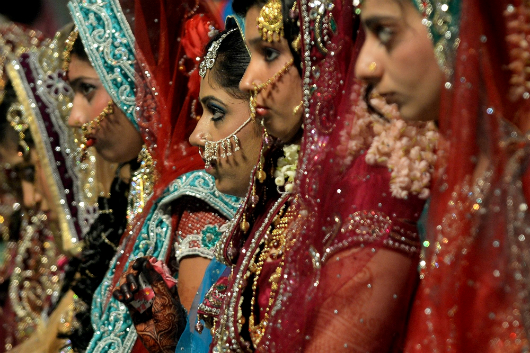
A dowry is the money or property that a woman brings to her husband’s family at the time of their marriage. Traditionally, dowries in India were meant to ensure that the bride was financially secure after her marriage and was seen as a type of inheritance from the bride’s parents to the bride. However, when the British colonized India, this changed. Heavy taxes meant that many families who had sons began to rely on the bride’s dowry for survival, and the husband’s family began to extort more and more money from the bride’s family.  Providing a dowry was officially made illegal in India in 1961 with the establishment of the Dowry Prohibition Act, but many families among all social classes continue the practice of giving a dowry today. Dowry killings are when a wife is killed because her parents are unable to fulfill all of the demands of the husband’s family, and these killings are unfortunately extremely common.

In 2012, 8,233 women were killed in dowry-related deaths. While the number of these deaths declined from 2011, when 8,618 women were killed over dowry disagreements, the number of abuse cases related to dowry — when a husband and in-laws abuse a bride because her parents fail to pay a “sufficient” dowry — rose from 99,135 cases in 2011 to 106,527 cases in 2012.

In the 1990s, dowry killings were not very common, with about 300 killings per year. However, with the rise of consumerism in India, dowry killings have increased. Now, goods and appliances that were originally scarce have become more widely available, prompting a wave of greed and increasing the demand for dowry. Families that previously could not have dreamed of being able to afford goods such as cars are now within reach of being able to buy one, and they rely on the bride who marries their son to help them fulfill their consumption desires.

Pravartika Gupta and her one-year-old daughter were killed by her in-laws in 2012 because Gupta’s parents were unable to afford the 15,000 pounds, Honda City car and new apartment that had been demanded as a dowry. Gupta’s case is unfortunately not unique. In 2014, 22-year-old Annu Devi and her one-year-old daughter were burned to death by Devi’s husband and in-laws because her parents were unable to pay the dowry demanded. Many in-laws continue to demand more and more dowry even in the years after their son is married, claiming that the dowry will be used to provide for children and pay living expenses throughout the years. Around 80% of bank loans in India are taken in order to meet dowry-related demands.

Dowry is also the reason for the high levels of female feticide in India. Parents kill their female babies in the womb because they do not want to spend their whole lives saving money to pay for their daughter’s dowry. This has led to a skewed gender ratio in India, where there are 933 girls per 1,000 boys.

In 2012, charges were brought in 94% of dowry-related death cases, but only 32% of cases led to convictions. Many husbands and in-laws claim that dowry-related deaths were suicides in order to escape conviction. Parents of the bride are also sometimes reluctant to bring charges against the husband’s family because they do not want to ruin their other daughters’ chances of marriage.

India has one of the fastest-growing middle classes in the world, and it has had a female president and a female prime minister. It is now common for women in India to have impressive careers. However, India still ranks as the world’s fourth most dangerous country for a woman. If India wishes to really advance, it needs to ensure that harmful practices such as dowries are not just legally unacceptable, they are also socially unacceptable.

– Ashrita Rau

Sources: International Policy Digest, CNN, The Guardian, LA Times, Telegraph
Photo:The Daily Beast

July 3, 2015
https://borgenproject.org/wp-content/uploads/borgen-project-logo.svg 0 0 Borgen Project https://borgenproject.org/wp-content/uploads/borgen-project-logo.svg Borgen Project2015-07-03 07:19:272024-12-13 17:51:38Dowry Killings in India
Violence Against Women, Women

Violence against Women in Bangladesh

women_in_bangladesh

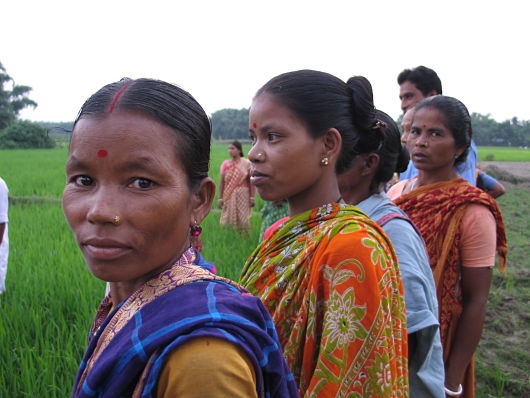
Bangladesh is a small South Asian country which borders India, Myanmar, and the Bay of Bengal. Since it gained independence in 1971, Bangladesh’s economy has been growing about 6% annually. However, while the economy in Bangladesh is becoming more progressive, socially, Bangladesh still has room for advancement. Patriarchal customs mean that many women in Bangladesh face threats of violence.

Some main acts of violence committed against women include dowry killings, rape, sexual harassment and stalking, acid attacks, physical and mental abuse and sex trafficking. Nearly two out of every three women in Bangladesh are victims of some form of violence.

Gender based violence is on the rise. In 2004, there were 2,981 cases of dowry related violence; women are beaten or killed because their parents fail to pay the dowry that her in-laws request. This number rose to 4,563 cases in 2012.

Gender discrimination also leads to women having less opportunities. The literacy rate for women in Bangladesh is only 43.2%, while 61.0% of Bangladeshi men are literate. The unemployment rate for women is 70.7%, much higher than the 12.4% unemployment rate for men. Even though many women help in the agricultural sector, 73% of those women contribute what is considered as unpaid ‘family labor’ and do not receive a salary. This is problematic because even if women work for their family, patriarchal values dictate that many of the women are not given control of the property or the family income, and therefore the women are not able to spend the money they earn as they see fit.

Many women in Bangladesh fail to report violence committed against them because there persists a stigma surrounding rape, abuse, and domestic violence in the country. The police are also likely to blame the victim and favor the side of the abuser. From 2010 to 2012, the Bangladeshi police received 109,621 complaints about violence against women. However, the police determined that only 6,875 of these complaints were ‘genuine’ and should be further investigated. The inspector-general of police, who is responsible for investigating crimes involving violence against women, told the Inter Press Service news agency that “On many occasions . . . the law was used to harass the accused. It does seem that not all complaints are genuine”.

The stigma surrounding violence against women means that many women do not get the justice they deserve. In 2011, there were 420 recorded cases of rape in Bangladesh, and only 286 reached the prosecution stage.

Luckily, there are laws and programs being implemented to help reduce the amount of gender based violence that is taking place in Bangladesh. A joint program with the UN has instituted a three-tier strategy to help reduce this violence. The first part of the UN’s program is designed to enhance the capacities of the government and to support NGO’s in order to help prevent violence against women and protect victims. The program also aims to protect survivors of violence and to change social attitudes, which lead to much gender based violence.

Some important achievements of the UN’s program have been increased access to healthcare for women, a decrease in the rate of child-marriages and dowry-killings and more awareness about the lesser-known forms of gender based violence, such as sexual harassment in the workplace.

There are also specific laws which have been instituted by the Bangladeshi government in an effort to prevent violence against women. Some of these laws include the 2010 Domestic Violence Act and the 2000 Suppression of Violence against Women and Children Act.

The 2010 Domestic Violence Act criminalizes domestic violence. This was a landmark act because many Bangladeshi women face cruelty by their husbands. A 2007 report stated that 53% of married women in Bangladesh were physically and/or sexually abused by their husbands. If the court deems that domestic violence is likely to occur, it can either relocate the victim to a shelter or evict the perpetrator of the violence.

The Suppression of Violence against Women and Children act was passed in 2000 and makes clear that there will be harsh punishment for those convicted for committing violent crimes. The law targets rape, trafficking, and kidnapping.

Though legislation is an important step toward ending violence against women in Bangladesh, in order for significant change to occur, societal attitudes must change in order to end the stigma and victim-blaming that women face when they report violence carried out against them.

– Ashrita Rau

Sources: MDG Achievement Fund, IPS News Odhikar, Department of Women’s Affairs, Bangladesh UN, CIA CIA World Factbook, OHCHR
Photo: Women Deliver

June 29, 2015
https://borgenproject.org/wp-content/uploads/borgen-project-logo.svg 0 0 Borgen Project https://borgenproject.org/wp-content/uploads/borgen-project-logo.svg Borgen Project2015-06-29 12:14:522024-06-04 01:08:11Violence against Women in Bangladesh
Global Poverty, Violence Against Women

Attacks on Immigrants in South Africa

attacks_on_immigrants
Ever since the fall of apartheid, South Africa has been a popular destination for immigrants from the rest of Sub-Saharan Africa and, to a lesser extent, South Asia and the Middle East. Immigrants seeking job opportunities have settled in townships and many have opened shops and businesses.

There are an estimated two to five million immigrants and foreign migrant workers living in South Africa. The most common countries of origin are Zambia, Zimbabwe, Malawi, Mozambique, Tanzania, Ethiopia, Somalia and Nigeria. Many also come from Pakistan, Bangladesh and Egypt.

But all of this immigration has fueled racial tensions within South Africa. Many South Africans still live in poverty and the official unemployment rate is 25 percent, but many think the real number is higher due to the large informal economy. In poor townships, where the majority of immigrants have settled, unemployment is often near 50 percent.

The high levels of immigration have led to accusations of foreigners taking jobs from locals and of foreign businesses out-competing local ones. Violence against immigrants has become a common occurrence and foreign businesses are often targeted. Most recently, this month has seen a massive wave of anti-immigrant violence in townships in Durban and Johannesburg.

Six people have been killed and thousands of immigrants have been forced from their homes and had their businesses destroyed by mobs. Many are now being housed in refugee camps and several foreign governments have sent buses to evacuate their citizens. The South African government has vowed a swift response and over 300 people have been arrested in connection to the attacks.

Many point to a quote by Zulu King Goodwill Zwelithini as the instigator of the recent violence. The king was quoted as saying that immigrants taking away jobs from South Africans “should pack their belongings and go home.” The attacks began soon afterwards, starting in the townships of Durban that are part of the Zulu homeland. Some think he may be charged with inciting hatred. The king has claimed his quote was misinterpreted in the media.

This is not the first case of violence against immigrants. Earlier in January several people were killed and hundreds injured in mob violence against foreign owned businesses. Such incidents have become increasingly recurring and smaller scale attacks on specific shops or individuals are very common. In some cases South African police have been implicated or directly involved.

The worst wave of violence was in May 2008 when riots and mob attacks killed 62 people, most of them foreign immigrants. The incident shocked South Africa and drew attention to the issue of xenophobia for the first time. Since then it has become a major issue, but many accuse President Zuma of not doing enough to address it. Many South Africans have mobilized to fight against xenophobia and feel such attacks are undermining the country’s long struggle for racial equality. These attacks serve as an important reminder of the role poverty plays in creating racial tensions.

– Matt Lesso

Sources: Al Jazeera, BBC 1, BBC 2, BBC 3, Washington Post
Photo: Flickr

April 30, 2015
https://borgenproject.org/wp-content/uploads/borgen-project-logo.svg 0 0 Borgen Project https://borgenproject.org/wp-content/uploads/borgen-project-logo.svg Borgen Project2015-04-30 08:00:282024-12-13 17:51:22Attacks on Immigrants in South Africa
Education, Global Poverty, Government, Violence Against Women, War and Violence

Pakistani Taliban Executes Peshawar School Massacre

The city of Peshawar, Pakistan mourns deeply in the wake of the Pakistani Taliban’s deadliest attack to date. An estimated 132 children and nine staff members were killed in a devastating massacre targeting a school in the northwest region, where gunmen and suicide bombers inflicted damage so horrific that even the Afghani Taliban have condemned their actions. Most of the victims were children of military families enrolled at Peshawar’s Army Public School.
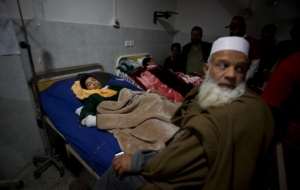
On Wednesday, the Pakistani Army pointedly allowed numerous television crews to enter the school grounds, where they were able to observe the crime scene for themselves and broadcast those observations back to their respective audiences. Images captured by international news teams revealed the devastating extent of the brutality, showing classroom floors coated with blood, walls covered in hundreds of bullet holes, and rooms blown apart by suicide bombers.

The international community has collectively vocalized utter contempt over the massacre, and Pakistan was immediately consumed by a state of national outrage. Prime Minister Nawaz Sharif responded by declaring three full days of mourning and announcing an abrupt end to the moratorium on the death penalty for terrorist actions.

This decision by Sharif is quite significant given the country’s past responses to terrorist groups. Despite the fact that terrorism in Pakistan has taken more than 50,000 lives since 2001, there has long existed a puzzling lack of a national consensus to fight terrorism. In the immediate aftermath of Tuesday’s massacre, politicians refrained from publicly declaring whether they thought the Taliban had been behind the attack, even though the Tehreek-e-Taiban Pakistan, or TTP, had quickly claimed responsibility. The militants describe the Peshawar disaster as an act of revenge for an army attack that they claim killed approximately 1,000 of their own people.

The Taliban has a lengthy history of attacking schools. As an extremist group that first emerged in northern Pakistan in the early 1990s, the Taliban wields its own version of Islamic law as a major justification for and motivation behind its actions. The Pakistani Taliban adamantly opposes Western education for children, especially for girls. Education activists in Pakistan claim that this opposition is the Taliban’s way of trying to exert control over the population by keeping young people in the intellectual dark. An educated girl or boy represents a threat in the eyes of the Taliban, and the terrorist group actively works to eliminate these perceived threats through violence and oppression.

The Peshawar school massacre represents a departure from the Taliban’s usual school attacks. Militants in the past typically attacked schools while they were empty at night, specifically hoping to have the institutions shut down rather than directly harm students. The Taliban has also tried to threaten Pakistan’s education system by intimidating teachers and pressuring parents to quit sending their kids to class.

Some are beginning to question whether the Peshawar attack will force Pakistan to decidedly confront the terrorist group in a way it has generally refrained from doing in the past. Pakistan has long held an ambiguous view of Taliban militants, a phenomenon known as “good Taliban” and “bad Taliban” that for the past decade has baffled the Pakistani public and sent terribly mixed messages to the West. In the wake of the attack, Prime Minister Nawaz Sharif announced “there will be no differentiation between ‘good’ and ‘bad’ Taliban,” while acting foreign minister Sartaj Aziz has described the tragedy as “our 9/11” and a “game changer.”

– Shenel Ozisik

Sources: BBC 1, The Guardian 1, The Guardian 2, BBC 2
Photo: Flickr

January 15, 2015
https://borgenproject.org/wp-content/uploads/borgen-project-logo.svg 0 0 Borgen Project https://borgenproject.org/wp-content/uploads/borgen-project-logo.svg Borgen Project2015-01-15 12:00:362020-07-17 22:12:05Pakistani Taliban Executes Peshawar School Massacre
Violence Against Women

Domestic Violence on a Global Scale

domestic_violence_on_a_global_scale
October is Domestic Violence Awareness Month. According to the U.S. Department of Justice, 25 percent of women and 8 percent of men have been raped and/or physically assaulted by a spouse, friend or acquaintance. This means that “each year about 1.3 million women and 835,000 men are physically assaulted by an intimate partner.”This issue is severely under-recognized. The National Association of Social Workers does its part to both prevent and find solutions for domestic violence.

Social workers are directly involved with victims, whether it be through counseling individuals, aiding in the judicial process or finding new homes for those abused. The issue of domestic violence exists outside of the U.S. There are countless foundations all over the world aimed at providing a support system to those affected by domestic violence. For example, the Global Foundation to Eliminate Global Violence (GFEGV) is a nonprofit aimed to both eliminate domestic violence and to support those who have already been claimed as a sufferer. Trying to escape the throngs of violence can be the hardest part for most victims, who may either rely on their abuser for financial stability or may have emotional ties to them. Having the courage to escape can often result in not only loneliness, but also poverty. According to the GFEGV’s website, the annual cost of health-related domestic violence issues in the U.K. is $23 billion. In the U.K., one in four women will be abused, while men have a one in six risk.World Bank data reports that “women aged 15-44 are more at risk from rape and domestic violence than from cancer, car accidents, war and malaria.”Here are some quick facts from the U.N.’s UNITE website about domestic violence:

  • In South Africa, a woman is killed every six hours by an intimate partner.
  • In India, 22 women were killed each day in dowry-related murders in 2007.
  • In Guatemala, two women are murdered, on average, each day.
  • In the U.S., one-third of women murdered each year are killed by intimate partners.

The dowry-related murders mentioned above involve the murdering of a new wife, or wife-to-be, if she fails to meet the dowry requirements of her husband’s family. It is a practice that occurs in various cultures worldwide.

Donating money to organizations and becoming educated is important to improving and ultimately eliminating domestic violence worldwide.

– Kathleen Lee

Sources: National Association of Social Workers, EDV, UNiTE
Photo: Trade Arabia

October 10, 2014
https://borgenproject.org/wp-content/uploads/borgen-project-logo.svg 0 0 Borgen Project https://borgenproject.org/wp-content/uploads/borgen-project-logo.svg Borgen Project2014-10-10 08:00:122024-06-05 01:58:15Domestic Violence on a Global Scale
Children, Violence Against Women, Women

UK Summit: End Female Genital Cutting

The preacher has performed many cuttings like this before. He holds up some broken glass to the light – he will use this to cut out the clitoris of the young girl. No anesthetic will be used. The pain she endures is thought to be a sign of her strength.

The young girl screams out against this horrific abuse to her body.

Over 130 million girls and women have experienced some form of Female Genital Cutting in the 29 countries in Africa and the Middle East where it is most common, according to research from UNICEF.

The charity also estimates that 250 million women and girls alive today have been married since their 15th birthday.

In an attempt to highlight the issues of Female Genital Cutting and child, early and forced marriage, the UK government hosted the first international Girl Summit in London on July 22, co-hosted by UNICEF. Pakistani teenager Malala Yousafzai attended as well as women from across the world who have been affected by FGC.

The issue of FGC has been a growing concern in Britain where estimates from the Commons Home Affairs Committee reveal that 170,000 women and girls were living with FGC in the UK.

At the summit UK Prime Minister David Cameron revealed a £1.4 million prevention program aimed at ending the practice of FGC. New laws are set to come into effect, making it a crime for parents not to protect their children from female genital mutilation. Although illegal in the UK since 1985, no one has ever been convicted for FGC crimes.

The summit also revealed an “international charter” calling for the eradication of FGC and forced marriage within a generation.

Female Genital Cutting has no health benefits, is extremely painful and often leads to infections and in some cases death.

In its most severe form, the sensitive clitoris is completely or partly removed with crude and accessible implements in order to dull the sexual appetite of the girl. The genitals are then cut and stitched closed making sex impossible. Sometimes corrosive substances are poured in to scar and shrink the genitals.

Only a tiny piece of wood creates an opening so that urine and monthly blood can flow.

When the young girls are able to bear children they are un-stitched – and once the child has been born, stitched back up again.

The Girl Summit aims to raise the profile of this horrific practice which the Prime Minister has called a “preventable evil.”

He hopes that FGC can be ended in a generation. While so many of these types of summit fall short of meeting their goals, the issue of female genital mutilation and child marriage is finally being taken seriously by the international community. The new laws being introduced to the UK and the international charter raise the profile of this crime and may begin the process of eradicating this practice.

Female Genital Cutting Key Facts

· FGC Includes “the partial or total removal of the female external genitalia or other injury to the female genital organs for non-medical reasons.”
· The procedure has no health benefits for girls and women.
· Procedures can cause severe bleeding and problems urinating, and later cysts, infections, infertility as well as complications in childbirth and increased risk of new-born deaths.
· More than 125 million girls and women alive today have been cut in the 29 countries in Africa and Middle East where FGC is concentrated.
· FGC is mostly carried out on young girls sometime between infancy and age 15.
· FGC is a violation of the human rights of girls and women.
· In December 2012, the U.N. General Assembly approved a resolution calling for all member states to ban the practice.

– Charles Bell

Sources: BBC 1, BBC 2, BBC 3, UK Government, WHO
Photo: FBNewswire

July 28, 2014
https://borgenproject.org/wp-content/uploads/borgen-project-logo.svg 0 0 Borgen Project https://borgenproject.org/wp-content/uploads/borgen-project-logo.svg Borgen Project2014-07-28 14:23:272024-05-27 09:19:03UK Summit: End Female Genital Cutting
Food & Hunger, Food Aid, Violence Against Women, Women

Pakistan Women and Food Aid Violence

Over 40 tribal elders in the Bannu region of Pakistan voted to ban women from collecting food aid for Internally Displaced Persons fleeing the military offensive in North Waziristan, Pakistan. Witnesses report seeing men slap women who had joined the line for food rations. The women reportedly left quickly after experiencing such violence, but the question remains as to how widows or women unaccompanied by men will receive aid. One man distributed leaflets discouraging women from attempting to attain food rations with a warning to husbands who fail to keep their women at home. The Bannu region is especially conservative, where women wear full-length burqa robes and rarely venture outside their homes.

Violence and discrimination against women in Pakistan have plagued the country, as recently as on July 23 when unknown assailants threw acid at two women at a shopping center in Baluchistan. A similar attack occurred one day earlier when four women were attacked with acid. In both attacks, the perpetrators rode past on motorcycles spraying their victims with acid. Officials believe the crimes to be the work of religious extremists in the area.

In March, the Council of Islamic Ideology, a body that provides legal advice to the Pakistani government, said laws that ban child marriage are “un-Islamic.” Current laws require boys to reach the age of 18 before marriage, and girls the age 16. Chairman of the Council Maulana Mohammad Khan Sheerani continued, “Sharia allows men to have more than one wife, and we demanded that the government should amend the law.”

Child marriage in Pakistan, according to experts, explains the country’s high infant mortality rate, as early marriage results in frequent pregnancies with inadequate preparation. The country also has lower reproductive and maternal healthcare coverage for women than its neighbors India, Bangladesh or Nepal.

Over 990,000 people left the North Waziristan following the June airstrikes known as the Zarb-e-Azb operation, and 84 percent of these IDPs have fled to the Bannu District. North Waziristan has long served as a haven for militants in Pakistan and although the Pakistani government claimed to have targeted all militant groups equally, the U.S. and many locals say Pakistan protected the Haqqani group, which has been based in Waziristan for decades. Many accuse the Pakistani military of allowing Haqqani militants to escape before the operation began. The U.S. sees the Haqqani as a threat to stability in Afghanistan, and is withholding $300 million in aid to Pakistan until the Secretary of Defense determines Pakistan to have “significantly disrupted” the Haqqani network.

The Pakistani military has used militants as proxies in Afghanistan and India for decades. Experts believe the operation — which has killed over 450 since June — is intended to primarily target Tehreek-e-Taliban Pakistan, central Asian and Arab militants in the region that militants have traditionally used to launch attacks on Afghanistan.

The U.S. military has since joined Pakistan with its drone strikes on Saturday that killed 15.

– Erica Lignell

Sources: Reuters, International Business Times, Business Standard, New York Times, Wall Street Journal
Photo: Reuters

July 28, 2014
https://borgenproject.org/wp-content/uploads/borgen-project-logo.svg 0 0 Borgen Project https://borgenproject.org/wp-content/uploads/borgen-project-logo.svg Borgen Project2014-07-28 14:05:422024-06-05 01:57:51Pakistan Women and Food Aid Violence
Page 5 of 8«‹34567›»

Get Smarter

  • Global Poverty 101
  • Global Poverty… The Good News
  • Global Poverty & U.S. Jobs
  • Global Poverty and National Security
  • Innovative Solutions to Poverty
  • Global Poverty & Aid FAQ’s
Search Search

Take Action

  • Call Congress
  • Email Congress
  • Donate
  • 30 Ways to Help
  • Volunteer Ops
  • Internships
  • Courses & Certificates
  • The Podcast
Borgen Project

“The Borgen Project is an incredible nonprofit organization that is addressing poverty and hunger and working towards ending them.”

-The Huffington Post

Inside The Borgen Project

  • Contact
  • About
  • Financials
  • President
  • Board of Directors
  • Board of Advisors

International Links

  • UK Email Parliament
  • UK Donate
  • Canada Email Parliament

Get Smarter

  • Global Poverty 101
  • Global Poverty… The Good News
  • Global Poverty & U.S. Jobs
  • Global Poverty and National Security
  • Innovative Solutions to Poverty
  • Global Poverty & Aid FAQ’s

Ways to Help

  • Call Congress
  • Email Congress
  • Donate
  • 30 Ways to Help
  • Volunteer Ops
  • Internships
  • Courses & Certificates
  • The Podcast
Scroll to top Scroll to top Scroll to top