• Link to X
  • Link to Facebook
  • Link to Instagram
  • Link to TikTok
  • Link to Youtube
  • About
    • About Us
      • President
      • Board of Directors
      • Board of Advisors
      • Financials
      • Our Methodology
      • Success Tracker
      • Contact
  • Act Now
    • 30 Ways to Help
      • Email Congress
      • Call Congress
      • Volunteer
      • Courses & Certificates
      • Be a Donor
    • Internships
      • In-Office Internships
      • Remote Internships
    • Legislation
      • Politics 101
  • The Blog
  • The Podcast
  • Magazine
  • Donate
  • Click to open the search input field Click to open the search input field Search
  • Menu Menu

Archive for category: Activism

Information and stories on social activism.

Activism, Global Poverty, Philanthropy

10 Latina Powerhouses With a Plan

Latina-Powerhouses
For years entertainers have adopted a precious role in ridding away difficulties posed against those of the developing world. With such charitable responsibility, ten Latina powerhouses from an assortment of entertaining realms have quintessentially supported strategies that give back to many, albeit by endorsement or establishment of a personal foundation.

1) Cuban musician Gloria Estefan has been sincerely active in providing global health, especially helping those who suffer from paralysis-related illnesses. A paralysis-sufferer herself, the “Conga” songstress founded The Gloria Estefan Foundation in 1997 as a means to empower”the youth by financial support for good health, cultural development and education.

2) Mexican singer Thalía, known in American music markets for her Fat Joe-assisted “I Want You,” has been a charitable key in giving back to underprivileged women and children from Latin American countries. Her more familiar feat comes from participation as a spokeswoman and ambassador for global campaign March of Dimes, an initiative that educates and funds the developing Latin American world of hazardous premature births,

3) Puerto Rican-Cape Verdean hip-hop icon Lisa “Left Eye” Lopes not only served as a member of R&B trio TLC but has additionally held philanthropic ties with organizations alleviating AIDS, alongside giving back to international ones concerned with poverty. Lopes’ most profound advocate roles derived from her donative unit Lisa Lopes Foundation, an organization that provides shelter and necessities to developing Honduran sites.

4) Puerto Rican actress and choreographer Rosie Perez is undoubtedly synonymous with addressing health awareness statements, especially in concern to the discussion of HIV/AIDS. Expanding herself from an inner-city educator to a global spokesperson, the “In Loving Color” choreographer has been massively active in endorsing AIDS-related fundraisers and providing global education of the sexual disease by support of her role in the Presidential Advisory Council on HIV/AIDS (PACHA), as appointed by President Barack Obama.

5) Honduran entertainer America Ferrera, best known for her televised title role as “Ugly Betty,” first explored her philanthropic skills when she participated with Aquafresh White Trays to provide immediate dental care to women in need. Since her “fresh mouth” spot, Ferrera has worked in conjunction with fellow celebrities in combating AIDS and cancer, and has more notably collaborated with programs like international “Save the Children” and Hispanic Heritage Foundation-associated “READ: Refugee Enrichment and Development” to enhance education for the impoverished; the former notably raising funds to build schools in Mali.

6) Mexican film starlet Salma Hayek has provided a passionate take on helping battered women of all ages around the world. Among her most high-profiled recognitions include her $75,000 donation to Mexican-operated charity units that minimize domestic hardships in northeastern regions of Mexico. Hayek has more notably co-founded CHIME for a Change and its Syrian-based initiative to improve lives like those hailing from the Middle East who have been displaced by brutal conflict.

7) Greatly known for her filming roles as Gail in “Sin City” and Chelsea Brown in the recent “Top Five,” Puerto Rican-Cuban actress Rosario Dawson has taken part in programs that enrich African lives for a socially- and domestically-healthy cause. From attending a 2005 United Nations conference to promote environmental preservation as a poverty eliminator, the “Men in Black II” co-star has been a frequent advocate for the global “V-Day campaign,” a movement that stops violence against women; moreover, Dawnson has launched several initiatives that embrace native Africans who specialize in fashion or design.

8) Renowned Mexican singer and former X-Factor judge Paulina Rubio has led a moderate philanthropic trail in shielding Latinos from sexual diseases like HIV/AIDS. Appointed as the then-newest “Madrina” for the Latino Commission on AIDS in 2007, the “Boys Will Be Boys” musician remains a vast component in initiating safe sex campaigns geared towards a Latino audience, not only from the Latino Commission, but also for accompanying international nonprofits like the Elton John AIDS Foundation.

9) Pop culturally known for her sexual-liberating role as Gabrielle of “Desperate Housewives,” Mexican starlet Eva Longoria has been regarded as among the top philanthropists, particularly for her vast achievements in giving back to a large number of communities. Longoria’s most known charitable causes generally include her involvement with Padres Contra El Cancer and Eva’s Heroes, the latter which improves developmentally challenged children. Further on, Longoria has provided global awareness with her Eva Longoria Fund (ELF), which supports children of any ethnic background who suffer from health-related problems.

10) Finally, the term humanitarian is not fully defined without the mentioning of famed Colombian singer Shakira, who has been featured as a spokeswoman for a number of foundations that give back in millions. The “Whenever, Wherever” artist’s very own organization, Barefoot Foundation, has created over five schools and implemented proper nutritional and educational access to over 30,000 native Colombian families since its launch in 2007.

With the help of these 10 gracious Latina “sheroes,” the developing world might just be a few steps closer in reaching the hopeful of everyone living stably, without financial or health concerns posing as deathly restraints.

– Jeff Varner

Sources: TreeHugger, BORGEN, esmas, PRNewswire 1, San Antonio Express-News, PRNewswire 2, Save the Children, USATODAY.com, California Community Foundation, Shape Magazine, TakePart, thuglifearmy.com, Los Angeles Times, VeroNews, BMI.com
Photo: Billboard

July 30, 2015
https://borgenproject.org/wp-content/uploads/borgen-project-logo.svg 0 0 Borgen Project https://borgenproject.org/wp-content/uploads/borgen-project-logo.svg Borgen Project2015-07-30 08:17:312024-12-13 17:52:0510 Latina Powerhouses With a Plan
Activism, Advocacy, Global Poverty

How John Oliver Blends Activism and Comedy

John_Oliver“That dress is worth four dollars and ninety five cents. Think about that. That means you could take a five dollar bill, scotch tape it over your genitals, and you’d be wearing a more expensive piece of clothing.”

The audience bursts into laughter. However, while John Oliver is all about getting laughs on his show “Last Week Tonight,” when it comes to blending the comedian and the activist, he’s not joking around.

The above quote is from a segment on sweatshops in the clothing industry, particularly modern, cheaper retailers.

“It seems sweatshops aren’t one of those 90s problems we got rid of like Donnie Wahlberg,” Oliver said. “They’re more like one of those 90s problems we’re still dealing with, like Mark Wahlberg.”

Oliver’s use of his comedic platform as a springboard for his activism makes sense. Prior to his television show’s launch, Oliver was known for his role as a correspondent on “Jon Stewart’s The Daily Show,” and famously filled in for the beloved host in June of 2013, while Stewart was overseas filming his directorial debut.

The difference between Stewart and Oliver’s areas of focus is subtle but significant. Stewart focuses on news and current events, approaching them with a fresh spin, an important trait in a daily program. Oliver, on the other hand, focuses on issues. From food waste, which Oliver compares to Rascall Flatts in that “it can fill a surprising number of stadiums even though many people consider it complete garbage,” to tobacco giant Phillip Morris International threatening to sue Togo, a country with a GDP of just 4.3 billion dollars (“when your GDP is only a couple of billion more than the box office of Avatar, a protracted legal case is not really what you need.”) Oliver takes on major topics not just for laughs, but for information.

What is also unique about Oliver is how he encourages his audience to get involved. In his segment on the tobacco industry, for instance, Oliver christened “Jeff the diseased lung in a cowboy hat” as the new face of Marlboro. Oliver spread t-shirts of the diseased lung in Togo and billboards in Uruguay. Oliver also encouraged his audience to support the new icon, which mocked the tobacco industry’s marketing tactics, particularly in the developing world. It is through this type of culture jamming that Oliver achieves the power of comedy as a medium that influences social change.

Ultimately, “Last Week Tonight” could have been another late night television show, perhaps made a bit edgier due to its placement on HBO. But due to John Oliver’s social activism and experience gained while working with the great Jon Stewart, the show has become an informative springboard for activism, something with great impact on both its audience and the world at large.

– Andrew Michaels

Sources: Last Week Tonight: Fashion, Last Week Tonight: Food Waste, Last Week Tonight: Tobacco, Splitsider
Photo: HBO – Last Week Tonight

July 30, 2015
https://borgenproject.org/wp-content/uploads/borgen-project-logo.svg 0 0 Borgen Project https://borgenproject.org/wp-content/uploads/borgen-project-logo.svg Borgen Project2015-07-30 01:30:202024-12-13 17:54:04How John Oliver Blends Activism and Comedy
Activism, Global Poverty, Technology

#Donate

#Donate
#Donate: If the single most characteristic feature of the 21st century was chosen, social media would definitely be among the forerunners for the title. In the past decade especially, the advent of social media has taken over our lives. From MySpace to Facebook, Twitter, Instagram et cetera, the world of social media has become grown exceptionally.

The takeover by social networking sites and apps is generally taken in a negative context. There is always a never-ending stream of criticisms directed at the virtual world. The critics often propagate the notion of social media desensitizing people to the real world problems. These arguments, while not entirely untrue, completely disregard social media’s potential for positive impact, if used wisely.

Recently, the ALS Ice Bucket Challenge campaign received much media frenzy. It was also successful in raising awareness as well as donations for its cause. The “tagging” process, such as #Donate, through social media websites led to a massive campaign, which also involved many celebrities.

Popular Facebook page “Humans of New York” managed to raise $1.2 million in a campaign for an inner-city school. The catalyst-a viral photograph of an inspiring middle school boy.

A photograph of a Filipino boy doing his homework under the light of a McDonald’s restaurant posted on Facebook went viral, as it was shared almost 7,000 times. The significant number of people interested in contributing to the boy’s education led to the establishment of an online fundraising campaign. The campaign generated enough funds to cover nine-year old Daniel up till college.

These stories, and many more like these, establish the significance of social media in modern world activism. The creation of social media websites has enabled an unprecedented platform to create awareness for the issues in the world. Pages like GoFundMe or Network For Good allow for anyone and everyone to start fundraising campaigns for a cause they hold near and dear.

In the fast world of social media however, fundraising can sometimes become a challenge as well. The campaigns like the ALS fundraiser require the donor to go to a separate website and then donate. As easy as it is to type a web address and make a few simple clicks, it is still somewhat of a hassle for social media users. Mostly attuned to “liking” or commenting on statuses, the process of redirecting to other websites can be annoying for the users.

This has given rise to “slacktivism”—where “activists” on social networking websites become slackers in actual donation process. In the ALS campaign, for example, the donors were far outnumbered by the people who shared the videos.

To assist the users in donating quickly and efficiently, a Washington DC-based startup Good World has come up with an innovative idea. They partner with a network of nonprofit charities. Users need a one-time signup for Good World to contribute to any charity of their choice within their network. To donate, the users simply need a hashtag of donation and their choice of amount of contribution typed into the comments section.

The system of commenting also simplifies the process of further promoting the campaign. Instead of having to “share” their donation through separate websites, the comment can be directly viewed by the user’s friends. This also gives them a faster way to make a contribution by simply commenting on the thread. The web service also forwards tax-deductible receipts to the registered email address.

The service has certain caveats: almost five percent of the donated amount is automatically deducted to fund the technology itself. There is also a 2.2 percent processing fee associated with the service. The additional charges may serve to distance some users.

In spite of the challenges, Good World is a valuable innovation in ensuring our technology remains up to speed with our generosity.

– Atifah Safi

Sources: Good World, Wall Street Journal, Daily Mail, PBS, Washington Business Journal
Photo: The Guardian

July 29, 2015
https://borgenproject.org/wp-content/uploads/borgen-project-logo.svg 0 0 Borgen Project https://borgenproject.org/wp-content/uploads/borgen-project-logo.svg Borgen Project2015-07-29 08:07:112022-12-07 06:41:36#Donate
Activism, Charity, Global Poverty

Experience Poverty Challenge: Empathy as the Catalyst for Change

Poverty_ChallengePeople may not find it easy to imagine the pains of hunger, the roaring grumble of an unsatisfied stomach that has to be ignored because sustenance is scarce. The Experience Poverty Challenge beckons those living at a higher and more generous standard to cross the economic threshold and step into the shoes, or lack thereof, of a person living in poverty daily.

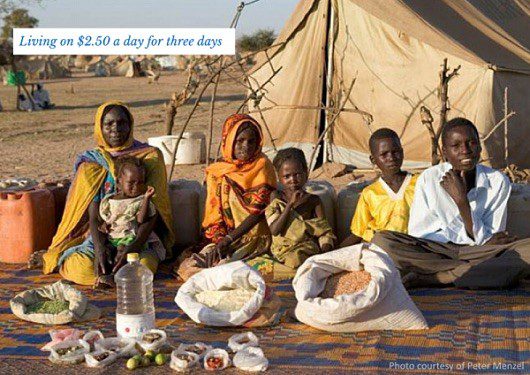
The general challenge is to simply spend three days living on only $1.50. The provisions that can be bought on this insignificant amount seem near to none, but that is the point. The goal of the challenge is for those participating to be sponsored for his or her participation. Funds received for fulfilling the terms of the challenge go to a sponsored charity.

The sponsored charity is the Deworm the World Initiative. This charity focuses its efforts on the provision of life-saving medicines to those who live in poverty, conditions where individuals can hardly afford food, let alone healthcare.

Half of the world spends $2.50 or less on food a day and this quantity of income highly suggests an inability to afford basic healthcare. Furthermore, the charity does not limit its expectations and goals to resolving a lack of healthcare issues produced by poverty.

The Deworm the World Initiative aims to tackle poor living conditions as a whole through the “Evidence Action Beta” (EAB) approach. “Beta,” in this case, refers to the “beta” testing solutions that focus on efforts that have been tested and proven to maximize results and minimize possible consequences of intervention.

This means research-based solutions. An example of this is seen in the charity’s approach towards what they call “seasonal hunger.” During certain times of the year, some developing countries experience famine due to changing environmental conditions. One working solution that EAB noticed was a success with travel subsidies for work migration.

These travel subsidies would allow individuals to leave their families during these seasonal famines and work in neighboring locations. This would allow the families to receive capital and resources from the work-migrating individuals, which would show improvements in consumption and nutrition in these affected areas.

In order to participate in this challenge and support this innovative charity, one can visit www.experiencepoverty.causevox.com.

– Felicia L. Warren

Sources: WTXL, Experience Poverty, Evidence Action
Photo: Experience Poverty

July 28, 2015
https://borgenproject.org/wp-content/uploads/borgen-project-logo.svg 0 0 Borgen Project https://borgenproject.org/wp-content/uploads/borgen-project-logo.svg Borgen Project2015-07-28 07:37:112024-06-11 23:17:10Experience Poverty Challenge: Empathy as the Catalyst for Change
Activism, Advocacy, Global Poverty

10 Inspiring Celebrity Quotes About Charity

Celebrity_Quotes
Many celebrities have participated in charities for all sorts of causes. Here are ten celebrity quotes that will inspire you to give back, too.

“The truth of the matter is: you can create a great legacy, and inspire others, by giving to philanthropic organizations.”
– Michael Bloomberg, entrepreneur, politician and philanthropist

“I choose to rise up out of that storm and see that in moments of desperation, fear and helplessness, each of us can be a rainbow of hope, doing what we can to extend ourselves in kindness and grace to one another. And I know for sure that there is no them – there’s only us.”
– Oprah Winfrey, talk show host, actress and founder of Oprah’s Angel Network

“If you think of life as like a big pie, you can try to hold the whole pie and kill yourself trying to keep it, or you can slice it up and give some to the people around you, and you still have plenty left for yourself.”
– Jay Leno, television host and humanitarian

“No matter what happens in life, be good to people. Being good to people is a wonderful legacy to leave behind.”
– Taylor Swift, professional singer and the 2014 Most Charitable Celebrity

“With a generation of younger folks who have thrived on the success of their companies, there is a big opportunity for many of us to give back earlier in our lifetime and see the impact of our philanthropic efforts.”
– Mark Zuckerberg, Facebook founder, investor and patron

“One child, one teacher, one book and one pen can change the world.”
– Malala Yousafzai, women’s rights activist and 2014 Nobel Peace Prize Winner

“Is the rich world aware of how four billion of the six billion live? If we were aware, we would want to help out, we’d want to get involved.”
– Bill Gates, business magnate, computer programmer and co-founder of the Bill and Melinda Gates Foundation

“It’s about giving the gift of life to a stranger.”
– Leighton Meester, actress, professional singer and philanthropist

“If you’re in the luckiest one percent of humanity, you owe it to the rest of humanity to think about the other 99 percent.”
– Warren Buffet, investor, businessman and member of The Giving Pledge

“We’re all in this together. Each and every one of us can make a difference by giving back.”
– Beyoncé, professional singer, musician and founder of BeyGood

– Fallon Lineberger

Sources: Cause Cast, Daily Mail, Ecorazzi, Giving What We Can, Inspire More, Michael Bloomberg, National Philanthropic Trust, Oprah.com, The Giving Pledge, The Quotations Page, Twitter
Photo: Flickr

July 26, 2015
https://borgenproject.org/wp-content/uploads/borgen-project-logo.svg 0 0 Borgen Project https://borgenproject.org/wp-content/uploads/borgen-project-logo.svg Borgen Project2015-07-26 09:47:102024-05-27 09:26:0610 Inspiring Celebrity Quotes About Charity
Activism, Global Poverty, Technology

WakaWaka is “Sharing the Sun”

WakaWaka
The Personal Solar Power Station is energizing Haiti with a mission to bring the 1.3 billion people in the world without electricity the basic right to energy.

Energy poverty’s progress has been regressing in over a quarter of the world’s population. According to the WakaWaka site, hundreds of millions face regular blackouts, and, even if they have access to kerosene lamps, they are extremely inefficient, dangerous and expensive, and also pose risks to health and the environment.

WakaWaka, which translates to “Shine Bright” in Swahili, works to create and market advanced solar-powered lamps and chargers at affordable costs. WakaWaka works to replace kerosene lamps with safer, cheaper and more sustainable energy sources, and their off-grid solar powered products do just that.

Intivation, a mobile solar products manufacturer, partners with WakaWaka Light to patent and distribute the most efficient models for solar technology.

The self-proclaimed impact-driven social venture fights to abolish energy poverty throughout the world with its original lamps. Currently, WakaWaka Power produces the “most compact power station in the world.”

What began as a kickstarter via crowd funding developed from a “buy one, give one campaign” to a full-blown sustainable enterprise and benefit corporation.

Maurits Groen and Camille van Gestel launched WakaWaka in 2010. They looked to revolutionize the energy market in South Africa by designing “an ultra-efficient LED lamp.” The award-winning model took first place in an international competition for emission-reduction ideas. WakaWaka’s bright future developed in its vision for bringing South Africans living off the electricity grid the chance to try solar-powered lamps.

Five years running, WakaWaka found partners around the world, from NGOs to national and local companies. WakaWaka lamps are charged by nothing but the sun. As of 2013, more than 12,000 LED lamps were provided to Haitian communities without electricity. WakaWaka also provides its lamps to Syrian refugees and those hit by typhoon Haiyan in the Philippines.

Mali, Liberia and Indonesia have also been impacted by WakaWaka’s off-grid lighting solutions. So far, WakaWaka has been established in more than 200 aid, crisis, and relief projects among developing nations.

The business model follows that all proceeds made from Western purchase go toward making them freely available to off-grid areas around the world at much lower prices.

As if WakaWaka was not doing enough, every WakaWaka product sold in the United States donates a WakaWaka Light to The International Rescue Committee, one of the world’s leading humanitarian aid organizations that has helped deliver tens of thousands of WakaWakas in regions that need them most.

– Lin Sabones

Sources: Waka-Waka, Kickstarter
Photo: Kickstarter

July 26, 2015
https://borgenproject.org/wp-content/uploads/borgen-project-logo.svg 0 0 Borgen Project https://borgenproject.org/wp-content/uploads/borgen-project-logo.svg Borgen Project2015-07-26 09:23:492024-12-13 17:51:58WakaWaka is “Sharing the Sun”
Activism, Global Poverty, Health, Water

How World Rowing Is Changing Poverty

How World Rowing Is Changing Poverty

Clean water is a very important part of people’s lives. However, for many poorer nations and communities around the world, access to clean water is limited. Some people have to travel for several miles just to find drinkable water. Many individual people and organizations have tackled this problem, but there is no singular solution to having clean water.

In 2011, World Rowing, the international organization, for rowing began a project with the World Wildlife Fund (WWF) to give to disadvantaged people the vital thing that makes the sport of rowing possible: water. The alliance began as a way to educate people about the importance of clean, fresh water, not just for humans but also for the environment.

WWF and World Rowing further developed this movement to find an area where water was endangered the most by various threats to water security. Some such threats include the effects of pollution, industry, agriculture, flooding, damming, hydropower, other ecosystems and human consumption. The resulting location was the lower water basin of the Kafue River in Zambia. This basin is a key area for economic resources, but it is also an important home to wetland wildlife and the main source of clean water for locals.

The issue at hand is how to reconcile the importance of the water basin with the harmful environmental effects. If people were to stop using it for industrial and agricultural purposes, the area would lose a large portion of its economic support, which could throw more people into poverty. However, if industry pollution and pesticides continue to contaminate the water, then there will be no safe drinking water.

The project has two goals that, if reached, can help end water insecurity and poverty. The first is to create a world-class water research center at the Kafue River Center. The center will team up with universities and researchers from around the world. Here they can study the effects of pollution, various ways to clean water, the balance of industry and wildlife and much more. The results found here will be open to the public, so that all water sources can benefit from the research.

The center’s second task is to provide a meeting place for all the people involved with this water project and other similar projects around the world.

While the project will do work to clean up the water in the Kafue Basin and provide cleaner water for the people, the research done at this center will help the world. It is a local project with a potentially global impact that can help solve the issue of water resources and poverty by finding a balance for all of the uses of water. The research here will hopefully solve the problems of water usage and water access, problems that keep people in poverty. It will be a balance that can provide sustainability and allow people to bring themselves out of poverty.

– Katherine Hewitt

Sources: World Rowing, World News
Photo: International Water Security Network

July 26, 2015
https://borgenproject.org/wp-content/uploads/borgen-project-logo.svg 0 0 Borgen Project https://borgenproject.org/wp-content/uploads/borgen-project-logo.svg Borgen Project2015-07-26 09:19:402020-07-03 16:14:04How World Rowing Is Changing Poverty
Activism, Charity, Global Poverty

How a Saudi Prince is Saving Communities

How a Saudi Prince is Saving Communities - TBP
Saudi Arabia is a nation with one of the highest per capita GDPs in the world, coming in at around $55,000; however, it is still affected by a decent amount of poverty, with an estimated 12.7% of the population living in poverty. Saudi Prince Alwaleed Bin Talal Bin Abdulaziz Alsaud is seeking to change this in his own nation and several others worldwide.

Prince Alwaleed made his fortune through expert investment in American, Middle Eastern and European companies and now has a net worth of around $32 billion, making him the 21st richest person in the world. However, rather than spend this fortune on himself, Alwaleed has pledged to donate his entire fortune to charity over the course of his lifetime.

This is a model based off of the Bill & Melinda Gates Foundation: he is seeking good investments and strong organizations that can help him better the global community and increase the amount of respect for Saudi Arabia.

Prince Alwaleed has begun his charity work with a project that is very close to home. Understanding that much of the Saudi native population is struggling, he has vowed to provide his people with 10,000 homes and 10,000 cars over 10 years. According to Arabian Business, this gesture is “an expression of [the prince’s] gratitude to the Saudi nation and its people,” and this small step is truly evident of the greatness that is to come.

The self-proclaimed “Warren Buffett of Arabia” has decided to enact these goals in order to promote cultural understanding, empower women and provide vital disaster relief throughout the world. Alwaleed’s philanthropic organization, Kingdom Holding, is not just focused on building communities: it also has interests ranging from a new Disney theme park to Citigroup, with much more in between.

Prince Alwaleed has recently signed a treaty with France, thus creating a French-Saudi investment fund that is worth upwards of $400 million. He has also invested some of his fortune in Kingdom African Management, which is a Nigerian company focused on exploring alternatives to oil.

While the current investments have mainly been aimed at fostering monetary relationships with other nations, the prince has several other plans to make a difference in the world.

The prince has a rough timeline of what exactly he wishes to do with his fortune, but this is subject to change as the state of the global community changes. Ultimately, it is an impressive and extremely altruistic goal that will allow for mountains of change and hope in the world.

With an increasing number of celebrities and wealthy individuals using their fortunes to do good, there is no telling where the world will be in a few years. The world has long existed in a state of haves and have-nots, but when people realize that society cannot progress without a little help, and are then willing to do what they can to help, it will become a better place and a stronger community because of that.

– Sumita Tellakat

Sources: The Huffington Post, Al-Jazeera
Photo: DW

July 26, 2015
https://borgenproject.org/wp-content/uploads/borgen-project-logo.svg 0 0 Borgen Project https://borgenproject.org/wp-content/uploads/borgen-project-logo.svg Borgen Project2015-07-26 08:17:102020-07-03 16:24:13How a Saudi Prince is Saving Communities
Activism, Global Poverty

NYU Student Fights Energy Poverty in India

mansi_prakash
The fate of the future now lies in the hands of Generation Y, and millennials must rise to the task of eradicating global poverty. One kid is doing just that, and all before graduating from college.

A 20-year-old economics major at New York University, Mansi Prakash is bringing clean energy to developing countries. After visiting her grandparents’ Indian village in 2010, Prakash became inspired by the energy crisis and went on to discover Brighter Today, a nonprofit that promotes the use of eco-friendly light bulbs as a tool to lessen poverty.

Prakash learned that most families did not use their light bulbs because they could not afford to pay the electricity bill. Immediately, a metaphorical light bulb turned on in her head—eliminate the energy-efficient 600-watt incandescent bulbs that work for just two months for 20 cents a bulb and replace them with 11-watt compact fluorescent lamp bulbs that work for 3 to 4 years and cost $2 per bulb. And so Prakash began her fight against energy poverty in India.

Although the original bulb appears more cost effective at just 20 cents, the switch ultimately decreases electricity bill payments by 80%.

In March 2014, Prakash presented her brilliant idea at the Clinton Global Initiative University Conference, where she was awarded a fellowship to begin her project in India and formed a partnership with Philips, a tech company focused on healthcare, lighting and electronics. Together, Philips and Prakash brought cost-effective and eco-friendly light to 5,300 residents of Behlana Village.

This year, after winning Glamour magazine’s 2015 Top 10 College Women contest, Prakash was awarded a $20,000 grand prize, which seriously advanced her fight against energy poverty.

Prakash is now focused on a project for the Philippines called Light for Life, developing a solar panel powered by daylight. Made possible by the money from Glamour, the solar panel will provide constant light and sustainable power to many homes for free.

An energy transformation saves a lot of money for many families, money that Prakash would like to see put towards food, health and education. Furthermore, efficient and long lasting light provides families with more time in the day for productivity, thus improving their overall quality of life, Prakash’s goal from the start.

– Sarah Sheppard

Sources: Take Part, Glamour, Brighter Today
Photo: The Christian Science Monitor

July 25, 2015
https://borgenproject.org/wp-content/uploads/borgen-project-logo.svg 0 0 Borgen Project https://borgenproject.org/wp-content/uploads/borgen-project-logo.svg Borgen Project2015-07-25 08:31:062024-05-27 09:26:00NYU Student Fights Energy Poverty in India
Activism, Global Poverty

OneDollarGlasses Makes Eyewear Available for All

OneDollarGlasses-Eye-Wear
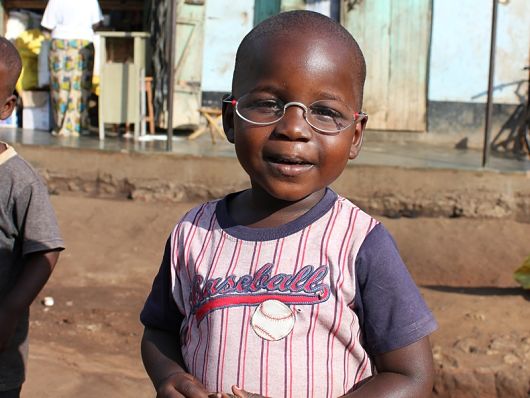
Across the globe, about 150 million people need corrective lenses, but cannot afford them, impeding their ability to work, study and provide for their family. Yet OneDollarGlasses aims to change this.

OneDollarGlasses was started in 2009 by Martin Aufmuth when he saw a pair of glasses sold for US$1 in Germany and questioned why the First World had US$1 glasses but the Third World did not. With that in mind, Aufmuth created the first pair of OneDollarGlasses with bent spring steel wire frames and hardened polycarbonate lenses.

No tools are required to assemble the OneDollarGlasses before putting them on and, most importantly, they cost US$0.80 to make. Today, OneDollarGlasses works with seven developing countries and has greatly improved the lives of many.

Their first project was in Rwanda. Rwanda is densely populated and of the 11.4 million inhabitants, only 11 are ophthalmologists. There, Alfmuth teamed up with a German team of students called Enactus Munich to train local opticians and merchants.

Next, OneDollarGlasses went to Burkina Faso where they faced a low literacy rate and a language barrier. The Enactus students took the lead on training 10 micro-opticians who since then have sold over 1,600 pairs of glasses.

OneDollarGlasses then went to work in Nicaragua in Central America. In Nicaragua, more than 80 percent of the population lives on fewer than US$2 a day. In 2014, OneDollarGlasses sent trainers to San Carlos, and by spring, glasses were being sold.

One pair was given to a woman named María Sandoval on her 99th birthday by her family. With +6 diopters on both eyes, it was the first time she had seen the world in full detail.

In April 2014, Alfmuth presented OneDollarGlasses to the United Nations Conference on Trade and Development. He received praise at the end of his presentation and several countries described his foundation as “groundbreaking.” OneDollarGlasses has it all: low cost to produce, cheap to buy and a huge demand.

– Hannah Resnick

Sources: Empowering People, Enactus, Essilor, OneDollarGlasses, UNICEF, Venture Beat
Photo: Quora

July 24, 2015
https://borgenproject.org/wp-content/uploads/borgen-project-logo.svg 0 0 Borgen Project https://borgenproject.org/wp-content/uploads/borgen-project-logo.svg Borgen Project2015-07-24 19:40:482024-12-13 17:52:01OneDollarGlasses Makes Eyewear Available for All
Page 23 of 56«‹2122232425›»

Get Smarter

  • Global Poverty 101
  • Global Poverty… The Good News
  • Global Poverty & U.S. Jobs
  • Global Poverty and National Security
  • Innovative Solutions to Poverty
  • Global Poverty & Aid FAQ’s
Search Search

Take Action

  • Call Congress
  • Email Congress
  • Donate
  • 30 Ways to Help
  • Volunteer Ops
  • Internships
  • Courses & Certificates
  • The Podcast
Borgen Project

“The Borgen Project is an incredible nonprofit organization that is addressing poverty and hunger and working towards ending them.”

-The Huffington Post

Inside The Borgen Project

  • Contact
  • About
  • Financials
  • President
  • Board of Directors
  • Board of Advisors

International Links

  • UK Email Parliament
  • UK Donate
  • Canada Email Parliament

Get Smarter

  • Global Poverty 101
  • Global Poverty… The Good News
  • Global Poverty & U.S. Jobs
  • Global Poverty and National Security
  • Innovative Solutions to Poverty
  • Global Poverty & Aid FAQ’s

Ways to Help

  • Call Congress
  • Email Congress
  • Donate
  • 30 Ways to Help
  • Volunteer Ops
  • Internships
  • Courses & Certificates
  • The Podcast
Scroll to top Scroll to top Scroll to top