• Link to X
  • Link to Facebook
  • Link to Instagram
  • Link to TikTok
  • Link to Youtube
  • About
    • About Us
      • President
      • Board of Directors
      • Board of Advisors
      • Financials
      • Our Methodology
      • Success Tracker
      • Contact
  • Act Now
    • 30 Ways to Help
      • Email Congress
      • Call Congress
      • Volunteer
      • Courses & Certificates
      • Be a Donor
    • Internships
      • In-Office Internships
      • Remote Internships
    • Legislation
      • Politics 101
  • The Blog
  • The Podcast
  • Magazine
  • Donate
  • Click to open the search input field Click to open the search input field Search
  • Menu Menu

Archive for category: Slavery

Information and news about slavery

Global Poverty, Human Rights, Slavery

Eight Facts About Chattel Slavery

Chattel Slavery
The definition of chattel slavery is a “civil relationship in which one person has absolute power over the life, fortune, and liberty of another.” According to a report issued by the Australia-based Walk Free Foundation, 29.8 million people still exist as slaves in the modern world. Among the enslaved, there are forced laborers, forced prostitutes, child soldiers, child brides in forced marriages and those in the servitude of absolute ownership (chattel slaves). Below are eight facts to illustrate the current state of chattel slavery around the world.

Top Chattel Slavery Facts to Know

  1. Countries with the most chattel slavery include the East African countries of Mauritania and Sudan. Within these countries, people can experience being bought and sold as if they were a commodity.
  2. The enslaved are often captured during raids of villages, with girls as young as ten often seen as easy targets. Branding with hot metal objects is a practice often used to prevent escape, while female genital mutilation and castration are frequently imposed punishments to those who try.
  3. Civil strife in Sudan has created a comeback for slavery within the country, as an increasing number of war prisoners face abduction. As government-armed Arab militias loot villages in the southern regions, they have been known to murder the men and take the women and children to be auctioned off and sold as property. According to James Aguir of Sudan’s Committee for the Eradication of the Abduction of Women and Children, “35,000 slaves remain in bondage in Northern Sudan.”
  4. While Mauritania’s government has continually banned slavery, there is little enforcement effort.  Current estimates claim that 20% of the population are slaves to North African Arabs. As slaves, their only purpose is for house and farm labor and sex.
  5. Children of chattel slaves are born the property of their parents master. As Fatma Mint Mamadou was born a slave in Mauritania, she knew of little else. When questioned if she and the other slave girls in her village were raped, she answered, “Of course they would come in the night when they needed to breed us. Is that what you mean by rape?”
  6. About one in ten Haitian children are sold to wealthier families to become “restaveks” or “stay withs” by poor parents who have few other choices. As these impoverished people normally have no other income source, their only chance of survival often comes from selling their children into forced labor conditions resembling those of chattel slavery.
  7. Rich, developed countries have the lowest rates of slavery. In reference to the Walk Free Global Slavery Index, the Washington Post’s Max Fisher wrote that “effective government policies, rule of law, political stability and development levels all make slavery less likely.”
  8. Slavery is driven by extreme poverty, corruption, and discrimination. As Fisher argues, “When society treats women, ethnic groups or religious minorities as less valuable or less worthy of protection, they are more likely to become slaves”.

While slavery continues throughout many developing nations, the need for strengthening those weakened by poverty is undeniable. As trends have shown, investing in the stability of poorer nations and their people will help enable citizens to stand up against the corruption in their own countries, as well as major human rights violations like chattel slavery.

– Kendra Richardson

Photo: Flickr
July 13, 2017
https://borgenproject.org/wp-content/uploads/borgen-project-logo.svg 0 0 Borgen Project https://borgenproject.org/wp-content/uploads/borgen-project-logo.svg Borgen Project2017-07-13 01:30:522020-06-04 10:53:20Eight Facts About Chattel Slavery
Developing Countries, Global Poverty, Human Rights, Slavery

How Walk Free Foundation is Helping Countries with the Most Slaves


The most recent update to the Global Slavery Index estimates that, in 2016, 45.8 million people were in some form of modern day slavery in the 167 countries surveyed. Of these countries, India, China, Pakistan, Bangladesh and Uzbekistan are the countries with the most slaves, holding 58 percent of the worldwide slave population. The Global Slavery Index is a program developed by the Walk Free Foundation, an organization seeking to end modern slavery with a multifaceted method.

The foundation’s strategy includes building an extensive knowledge base through research that can be used to inform action. The Global Slavery Index reports the number of people enslaved around the globe, but it also provides other important data such as the global distribution of slavery. This indicates countries with the most slaves, as well as those with the least, and specific actions governments are taking to respond to slavery within their own borders and abroad.


Walk Free Foundation believes that a combination of direct implementation, faith-based grassroots, businesses, academics, NGOs and governments all around the world is needed to eradicate modern slavery for good. By teaming up with this variety of groups and individuals, the foundation can fight at the legislative, commercial and private levels. Attacking the issue from all these angles creates a better chance for ending slavery rather than just relocating the problem.

In August 2017, Walk Free Foundation’s founder Andrew Forrest will attend the Bali Process Government and Business Forum, where CEOs and business leaders will advise government officials on how to prevent and combat modern slavery. Since the majority of modern slaves are held in the private sector working in areas such as manufacturing, construction and agriculture, Walk Free Foundation and Bali Process focus on educating businesses on how to terminate all forms of slavery from their supply chains. The forum in August aims to raise awareness of modern slavery and address ways of action. This will be crucial countries with the most slaves.

– Hannah Kaiser

Photo: Flickr

July 4, 2017
https://borgenproject.org/wp-content/uploads/borgen-project-logo.svg 0 0 Borgen Project https://borgenproject.org/wp-content/uploads/borgen-project-logo.svg Borgen Project2017-07-04 07:30:162024-12-13 17:58:16How Walk Free Foundation is Helping Countries with the Most Slaves
Developing Countries, Global Poverty, Human Rights, Slavery

Countries That Still Have Slavery

Countries That Still Have Slavery
Although modern slavery is not always easy to recognize, it continues to exist in nearly every country. In total, there are 167 countries that still have slavery and around 46 million slaves today, according to the 2016 Global Slavery Index.

The U.S. Department of State defines modern slavery as “the act of recruiting, harboring, transporting, providing, or obtaining a person for compelled labor or commercial sex acts through the use of force, fraud, or coercion.”

India, China, Pakistan, Bangladesh, Uzbekistan and North Korea are at the top of the list for countries that still have slavery. Here are some facts about what slavery is like in each of these countries.

The Highest Numbers: 6 Countries That Still Have Slavery

  1. India (18.4 Million) India has the highest number of slaves in the world. Like many other countries, modern slavery in India can take the shape of domestic service, forced begging, commercial sexual exploitation, forced marriage and forced recruitment for armed services. Because of India’s growing economy, many modern slaves work in factories that export goods to other countries. Consequently, men, women and children work long hours without proper compensation or even basic rights.
  2. China (3.4 Million) The Chinese government relies on exports of goods and raw materials even more than India. According to a CNN report, people in China are forced into labor across many different industries. The migration of poor families from rural to urban areas in search of jobs often leads to opportunities for traffickers. Although families travel together, many eventually split up. Individuals sell young boys to other families who lack sons, and girls often face sex slavery or forced marriage.
  3. Pakistan (2.1 Million) Modern slavery in Pakistan, like India, centers on debt bondage, or bonded labor. Brick-making employs around 10 million people in Pakistan. Children and families often work 10 hours each day in brick kilns and are denied basic rights or laws to protect them. Without this protection, workers face torture and sexual exploitation.
  4. Bangladesh (1.5 Million) Contemporary slavery in Bangladesh is accounted for through 80 percent forced labor and 20 percent forced marriage, according to the Global Slavery Index. Poverty, natural disasters and government corruption have made Bangladesh the 11th most vulnerable country to slavery within Asia.
  5. Uzbekistan (1.2 Million) The main cash crop of Uzbekistan is cotton. Each fall, when cotton crops are booming, the government forces millions of people out of their jobs to work in the cotton fields. International organizations monitor the process, however, the government still does not compensate these people. They also do not enforce proper safety precautions.
  6. North Korea (1.1 Million) The government of North Korea has done little to criminalize modern slavery. People of all ages are subject to forced labor while their government says they are “living in a socialist paradise.” One in twenty North Koreans is enslaved. Although the country does not have the highest total number of slaves, it does have the highest concentration of forced labor.

While many countries have taken steps toward banning and criminalizing slavery, there is still much to do. Countries that still have slavery are facing many problems that we all must address. “Improving the rights of 45.8 million human beings is both wise and urgent for all leaders of countries and organizations,” said Andrew Forrest, Founder and Chairman of the Walk Free Foundation. “Eradicating slavery makes sense; morally, politically, logically and economically.”

– Madeline Boeding

Photo: Flickr

July 4, 2017
https://borgenproject.org/wp-content/uploads/borgen-project-logo.svg 0 0 Borgen Project https://borgenproject.org/wp-content/uploads/borgen-project-logo.svg Borgen Project2017-07-04 07:30:122024-12-13 17:58:16Countries That Still Have Slavery
Developing Countries, Global Poverty, Slavery

6 Types of Modern Day Slavery That Cannot Be Ignored


Though we often associate slavery with the past, it is still widely practiced throughout the world today. Estimates put the number of currently enslaved people at almost 21 million. Modern day slavery, otherwise known as human trafficking, occurs when individuals are exploited through coercion or deception and typically involves restricted freedom of movement. It can take many forms that we often do not think of as slavery. Below are six specific forms of modern day slavery.

6 Types of Modern Day Slavery That Cannot Be Ignored

  1. Forced Labor: Forced labor includes all types of enslavement that involve coercion against one’s will and a threat of punishment. The practice is typically found in industries with little regulation and many workers. It is commonly used in global supply chains by the private economy to make products. This form of slavery is also used by governments, particularly in state prisons. If the work is not voluntary and involves a threat of penalty, it can be considered forced labor. Forced labor can occur even without the presence of physical violence because it is highly ingrained in some cultures.
  2. Bonded Labor: Debt bondage occurs when an individual is forced to work to repay a debt. As the worker labors to repay their debt, the employer can add other expenses making repayment impossible and enslavement permanent. This type of slavery is often used to make consumer products. It particularly targets migrant workers looking for an economic opportunity who incur debt for travel or housing expenses. The debt involved can also be generational, so children can be born into a situation where they must work to repay a debt incurred by their parents.
  3. Domestic Servitude: This type of slavery consists of live-in domestic workers who cannot leave of their own free will. Since authorities are unable to easily inspect homes, this modern day slavery is easy to hide. It is also extremely difficult to detect because enslaved individuals can appear to be nannies or other types of domestic workers. As a form of bonded labor, domestic servitude often affects migrant workers who incur a debt to their employer for travel or recruitment that they are unable to pay back.
  4. Sex Trafficking: Sex trafficking occurs when women, men, or children are forced to engage in commercial sex acts. Commercial sex involving children under age eighteen is always considered sex trafficking. Those living in extreme poverty are particularly vulnerable to this practice because of their economic marginalization and lack of education. They can be lured overseas through false employment opportunities. Victims suffer physical and psychological trauma and potential legal charges.
  5. Forced Marriage: This type of slavery occurs when an individual lacks the option to refuse marriage or is married to someone else by relatives. Forced marriage can also happen when a wife is married in exchange for payment. This practice is characterized by a lack of consent by at least one party. A major motivation of this type of slavery is cultural tradition or threats. Forced marriage of a child under the age of eighteen is called early marriage. Girls are more common targets for this because they can be controlled through sexual violence.
  6. Child Labor: Any form of modern day slavery that involves children under 18 is considered child labor. More than a quarter of slaves today are children, and many are involved in occupations that are harmful mentally or physically. The demand for cheap labor and specific physical characteristics increases the use of child workers. Children are also easier to control and usually do not demand better working conditions or wages. Those living in poverty are especially vulnerable because of the desire or need to support their families due to a lack of education and employment opportunities.

These are six of the most common types of modern day slavery, but the practice is not limited to just these forms. Slavery still occurs throughout the world in practices that are not always easily recognizable. Governments and organizations must remain informed about the occurrence of modern day slavery to be able to stop it in its tracks.

– Lindsay Harris

Photo: Flickr

June 4, 2017
https://borgenproject.org/wp-content/uploads/borgen-project-logo.svg 0 0 Borgen Project https://borgenproject.org/wp-content/uploads/borgen-project-logo.svg Borgen Project2017-06-04 07:30:222024-05-27 23:59:596 Types of Modern Day Slavery That Cannot Be Ignored
Global Poverty, Slavery

10 Shocking Facts About Slavery In Mauritania

Slavery In Mauritania
Slavery in Mauritania is not a thing of the past. The practice persists despite laws abolishing and criminalizing it. Slavery is ingrained in society and is perceived as a normal part of life. Below are ten shocking facts about slavery in Mauritania today:

  1. Mauritania was the last country in the world to abolish slavery in 1981, but the practice continues. It took until 2007 to criminalize slavery by law with a maximum prison sentence of 10 years. This law has not been widely enforced, and the government continues to deny that slavery exists.
  2. A new law in 2015 replaced the 2007 law and declared slavery a crime against humanity. It increased prison sentences for slavery to 20 years. It also created tribunals to address slavery issues. The new law allows human rights organizations to bring cases on behalf of victims but still does not protect the rights of victims.
  3. Slave families are usually dark-skinned, serving lighter-skinned Arab-Berbers. Slavery in Mauritania is descent-based, persisting down family lines from ancestors who had been captured years ago. Slaves are typically given as gifts and are thereafter enslaved for life. The children of slaves are born slaves, and many are born out of the rape of slaves by their masters.
  4. Slavery is perceived as a normal part of life in Mauritania because it has persisted for so long. Some slaves are beaten or held under the threat of being beaten. Others are convinced that they are meant to be in slavery because of their darker skin. Many slaves do not understand their position and believe this is the life they are supposed to lead.
  5. Slaves are not physically bound, but most do not escape in part for social reasons. Some do not want to lose the social status they have gained from being a slave for a wealthy family. Others are concerned about the lack of social mobility they will face due to the persistence of a strong caste system. Escaped slaves are still considered part of the slave caste.
  6. Slavery in Mauritania also persists for religious reasons. Local Islamic leaders approve of slavery and participate in it. Although Islam does not allow Muslims to enslave each other, slaves are told that Allah wishes for them to be enslaved. Leaders of other religions also teach slaves that obedience will send them to heaven.
  7. SOS Slaves is an organization that was founded to liberate slaves. It created a school for escaped slaves and children to learn skills they need in their new lives. Funding for the school comes from SOS Slaves and the European Union. Despite this incredible step forward, many former slaves live without help.
  8. The United Nations has recommended various changes that the Mauritanian government can implement to combat slavery, including allowing international monitors into the country and funding rehabilitation centers for former slaves. Global participation is essential for the success of the antislavery movement.
  9. The percentage of people enslaved in Mauritania dropped to one percent in 2016. This represents a substantial decline in the practice. As recently as 2012, the number was estimated to be 10 to 20 percent. However, information about slavery from Mauritania is extremely hard to gather since the government continues to deny its existence.
  10. Mauritania is not the only country that still engages in the practice of slavery. A 2016 report ranks North Korea as the country with the highest rate of enslavement, with one in 20 people believed to be enslaved within its borders. The report estimates that 45.8 million people are still enslaved throughout the world.

There is still a long way to go to abolish slavery in Mauritania entirely. Global and local organizations need to engage in direct efforts for change. However, recent developments have improved the situation of slavery in Mauritania. There is hope that soon the practice will become a thing of the past.

– Lindsay Harris

Photo: Flickr

April 2, 2017
https://borgenproject.org/wp-content/uploads/borgen-project-logo.svg 0 0 Borgen Project https://borgenproject.org/wp-content/uploads/borgen-project-logo.svg Borgen Project2017-04-02 01:30:372020-04-28 15:34:0310 Shocking Facts About Slavery In Mauritania
Activism, Aid, Global Poverty, Human Trafficking, Slavery

OUR: Modern “Abolitionists”

Modern "Abolitionists"
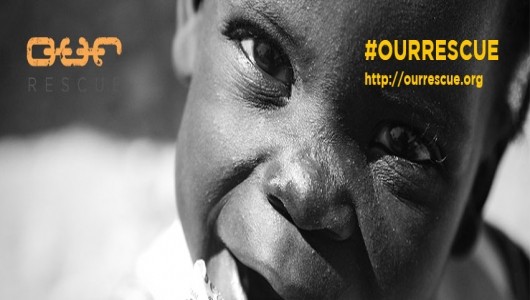
Tim Ballard, a former CIA Agent and Homeland Security operant from Utah, spent over a decade working to disrupt child trafficking both domestically and internationally. His passion for this work led him to form a new organization to combat the issue plaguing the world. Ballard formed the nonprofit organization Operation Underground Railroad (OUR).

OUR uses a network of former military officers, medics, nurses, cops and others to directly free children forced into the sex trade. The organization relies heavily on high-level connections for donations and for cooperation with governments and police forces abroad. Though OUR has faced the common criticisms that follow all raid based programs, Ballard and his team defend the mission, emphasizing that these children are in dire, forced circumstances and freeing them is ideal. Also, OUR uses local government and police agencies to make the actual arrests and then sets up the rescued children with some type of assistance, be it financial or through local programs.

The program has played off of the general publicity that comes with raid and rescue type intervention programs and spun it even further. The team itself is something to behold, with physically fit and mentally sharp experts in their field, they are entrancing to watch. Which is why the organization is on the verge of making a deal for a TV show accompaniment. In fact, a large part of donations come from wealthy individuals who in turn for their donations get direct access to view the raids from afar. The entertainment aspect of the program has been substantial for funding, to say the least.

The program has also gained popularity through its marketing as modern “abolitionists” and the website entices potential donors with the tag line “give a Lincoln, save a slave,” which urges donors to give a monthly five dollar membership due. By using terms that play on 1800s slavery emancipation, the organization further highlights the slavery element of the child sex trafficking world, emphasizing that this is a tremendous injustice.

Despite OUR’s success, the organization’s highly Mormon roots, entertainment element and raid styled approach have worried some experts. The strong religious association may cause further cultural resistance in certain areas and in certain groups, which could halt other efforts working to combat sex trafficking. The entertainment element and how the group is giving back to donors in the form of live raid video access brings up ethical questions. While thus far the approach has worked and brought attention to the problem of child sex trafficking, there is the risk of the organization becoming too entertainment-focused and the actual mission being overclouded. With the potential for a television show, the raids become cinematic and less real-life-nitty-gritty, making the very real problem seem far from home and even fictional.

The classic criticisms of raid style intervention programs persist with the OUR abolitionists. Common concerns are that they are doing little to help the child recover and succeed after freedom. Also, the program needs to address the fact that many members of the sex trade are not directly forced into it but arrive there because of a lack of opportunity and desperation. Also of those that are forced, as the program does try to target children, many children develop drug addictions while working that lead them back into the practice.

OUR is new and seems to have a good amount of leverage with high paying donors and political connections that could provide the means to address the problems or concerns now to develop an unstoppable force against sex traffickers. For now, the program is working on developing software that will flag computers containing child pornographic material, particularly belonging to tourists, in areas where the sex trade is prominent, to come at the problem from that angle also. Further strengthening of the current and new programs that help rescued children recover and stay away from the sex trade is essential in for OUR to make a long-term impact. The entertainment aspect of the program is an interesting new approach that seems to have short-term success but does hold some risk down the line. However the program does deserve credit for its efforts and with continued development, could become a major player in foreign assistance. OUR serves as a prime example of how small-scale efforts can transform into larger operations through raising awareness and how non-governmental and non-profit organizations can oftentimes avoid the restrictions that are unavoidable for their counterparts.

– Emma Dowd

Sources: Foreign Policy, Maxim, OUR
Photo: The Florida Villager

August 24, 2015
https://borgenproject.org/wp-content/uploads/borgen-project-logo.svg 0 0 Borgen Project https://borgenproject.org/wp-content/uploads/borgen-project-logo.svg Borgen Project2015-08-24 07:26:232024-05-27 09:26:24OUR: Modern “Abolitionists”
Child Soldiers, Global Poverty, Slavery

Modern Slavery in Africa and How Americans Can End It

Americans-Can-End-Modern-Slavery-in-Africa
Thousands living in poverty and inhumane conditions are forced into slavery for their survival. Many of the victims are woman and children who flee countries in search of refuge but, instead, are captured by human traffickers and sold into what is known as modern-day slavery.

Many of those who end up in modern slavery rings are fleeing persecution in their native countries. This is a particularly prominent issue in African countries that neighbor South Africa. South Africa is a desired destination for many Africans who suffer from poverty and corruption in other countries. It is on their travels from other nations to safety that they unfortunately get sucked into the horrors of modern slavery in Africa.

Some children are forced into becoming child soldiers, while some, along with women, are sold into sex trafficking. Others are used to provide cheap or unpaid labor in agricultural work, factories or domestic work. The number of people enslaved are staggering, with approximately 193,000 in Ghana and about 762,900 in the Congo.

It is important that, instead of just ignoring modern slavery like many have been, we know the power we have in ending slavery around the world. Modern day slavery has been uncovered everywhere, even in the United States in the last 15 years. Ignoring the horrific acts just won’t do.

How can we not only show that we do not support this atrocity but also want to work towards its end?

Many enslaved people are those who make the products we use every day. This includes agricultural goods, clothes and other items. Many who use slaves use other terminology in order to hide the atrocities. Many people are enslaved to make clothes and products in factories, working for inhumane hours at a time for either very little or even no pay. There are ways for consumers to research quickly online about where their products come from and how those who make the clothing are treated.

Much of this information is provided by advocacy organizations that have dedicated time and research into finding these victims.

There are many organizations that work to find and free enslaved individuals, while also dismantling groups that enslave them. One international organization is “Free the Slaves.” Free the Slaves is an advocacy group that speaks for those throughout the world who have fallen victim to such atrocities.

For more information about how everyone can make a difference and end modern slavery in Africa, go to www.freetheslaves.net.

– Alexandrea Jacinto

Sources: Free the Slaves 1, Free the Slaves 2, African Holocaust
Photo: Rita Bay’s Blog

July 6, 2015
https://borgenproject.org/wp-content/uploads/borgen-project-logo.svg 0 0 Borgen Project https://borgenproject.org/wp-content/uploads/borgen-project-logo.svg Borgen Project2015-07-06 09:22:072020-07-13 12:08:58Modern Slavery in Africa and How Americans Can End It
Extreme Poverty, Human Trafficking, Slavery

Causes of Human Trafficking

human trafficking

There are numerous causes of human trafficking, but the root of most causes is money. Reaping approximately $150 billion and victimizing close to 27 million people, human trafficking is the fastest-growing illicit industry in the world. It includes sex trafficking, child sex trafficking, forced labor, debt bondage, domestic servitude, forced child labor and the unlawful recruitment of soldiers. The common factor lurking behind the different causes of human trafficking is the victim’s vulnerability to exploitation.

Characterized by low costs and high returns, human trafficking is an extremely lucrative enterprise. Harvard’s Siddharth Kara discovered that the cost of today’s slaves is, on average, $420 and modern slaves can generate more than 500 percent in annual return on investment. In comparison, the cost of slaves in 1850, after adjusting for inflation, was between $9,500 and $11,000. During the time, the return on investment from a slave was significantly lower, around 15 to 20 percent in annual return on investment. Furthermore, traffickers face low risks, although more governments around the world are actively penalizing human traffickers, and have a steady stream of vulnerable people to exploit.


Poverty & Causes of Human Trafficking


Although the world successfully reduced global poverty by 35 percent in the past 27 years, 767 million people still live in poverty and make up a portion of the pool of those vulnerable to human trafficking. The structural causes of human trafficking are poverty, lawlessness, social instability, military conflict, natural disasters, weak law enforcement and racial and gender biases. These structural causes represent the broader, necessary requirement for human trafficking to thrive: vulnerability.

Many times, poor families will give their children away to traffickers posing as agents promising their children better lives. Refugee camps are prime locations for this kind of exploitation. Where displaced people lack many forms of proper care, shrewd traffickers build relationships with corrupt officials and freely prey on the weak.

In a more recent example, migrants who cross the Sahara to escape war and terrorism are often captured by traffickers in northern parts of Africa. The International Organization for Migration reported that many of these migrants are falsely promised jobs and then are sold publicly in Libyan slave markets. Many do not make it to Europe.

Human trafficking can happen anywhere, as long as the environment contains vulnerable conditions. The New York Times estimates that one-fifth of homeless youth are victims of human trafficking in the U.S. and Canada. In West Africa, traffickers pose as teachers and enslave optimistic students to become beggars. In 2015, the Associated Press discovered that young migrants and impoverished Thais were forced to catch seafood that later ended up in the world’s seafood supply, including on the shelves of America’s major retailers and supermarkets. Thai agents recruited children and the disabled, some of the most marginalized and vulnerable groups in the world.

Today, many countries are collaborating together to reduce the causes of human trafficking. The U.S. State Department Trafficking-in-Persons Report is the world’s most comprehensive resource on anti-trafficking efforts, including 188 countries and territories. Countries that fail to meet the report’s minimum requirements fall to tier three status, which can result in sanctions on the country. In 2016, Thailand was recognized for making significant strides in eliminating human trafficking.

Locally, ordinary people and nonprofits are continually impacting their communities. Nonprofits, such as Mango House in Chiang Mai, Thailand or FOREFRONT in India, continue to address these structural issues that breed vulnerability.

– Andy Jung
Photo: Flickr

January 27, 2015
https://borgenproject.org/wp-content/uploads/borgen-project-logo.svg 0 0 Borgen Project https://borgenproject.org/wp-content/uploads/borgen-project-logo.svg Borgen Project2015-01-27 16:00:142024-05-27 09:23:12Causes of Human Trafficking
Advocacy, Global Poverty, Slavery

UK Campaign Raises Awareness of Modern Slavery

“Slavery is closer than you think” is the slogan of a new campaign in the United Kingdom to raise awareness of slavery happening in the country. The Home Office has launched a two-month campaign that aims to encourage those experiencing modern-day slavery to come forward and seek help from the government, as well as to urge the public to report anyone suspected of enslaving others.

Modern slavery is a major problem in the U.K. The Human Trafficking Foundation estimates that around 20,000 people are living in slavery throughout the country. The three most common types of slavery are agricultural labor, sexual exploitation in a brothel and domestic servitude in another’s home.

Many cases of slavery have been reported lately. In November, three women were discovered in a house in south London after being held there for 30 years of domestic servitude. In another case, James and Josie Connors were convicted of manipulating and exploiting destitute men for their own financial gain in Bedfordshire.

The slogan encompasses the campaign’s main idea, which is that these examples of modern slavery are going on everywhere, like in average households and families.


Facts on Modern Slavery


A new national helpline, supported by the National Society for the Prevention of Cruelty to Children (NSPCC), has also been created to offer information for victims of slavery on how to get help, and to educate the general public on how to accurately report persecutors.

The goal of the campaign is to raise awareness for these previously unknown situations. Through various forms of advertising, the U.K. government hopes to see more victims seeking help and more people reporting the crimes.

Home Secretary Theresa May said, “The first step to stamping out modern slavery is acknowledging and confronting its existence. This campaign aims to bring this hidden crime out into the open and challenges us all to report it wherever we suspect it.”

– Hannah Cleveland

Sources: The Guardian, BBC
Photo: The Guardian

August 10, 2014
https://borgenproject.org/wp-content/uploads/borgen-project-logo.svg 0 0 Borgen Project https://borgenproject.org/wp-content/uploads/borgen-project-logo.svg Borgen Project2014-08-10 12:00:042024-05-27 09:20:45UK Campaign Raises Awareness of Modern Slavery
Human Trafficking, Slavery

Escaping Poverty through Slave-Like Marriages

Women from various Asian countries are being lured to Australia under the pretense of escaping poverty and living a happy married life; however, too often they are faced with exploitation and oppression.

These brides are living in slave-like marriages, where they are constantly abused. Some have reported being kept in isolation, denied basic rights, exploited for work, restricted to the home and denied money.

Immigration data shows that the women in these marriages are coming from China, India, the Philippines and Vietnam, among others. Many of these women agreed to these marriages to escape poverty and terrible living conditions experienced in their home countries.

Authorities have found it difficult to determine the exact number of women engaging in these relationships because victims are often kept in severe isolation and are punished if they attempt to seek help.

A large part of the problem lies in the fact that women are forbidden to report the crimes and are dependent on their perpetrators for survival. They face the possibility of deportation if their husbands claim they are illegal citizens.

The Walk Free Foundation published a global slavery index in October, which indicated that approximately 3,300 people are living in modern-day slavery in Australia.

Action is being taken to alleviate the problem. Tony Abbott, Australia’s Prime Minister, announced that the country would invest $94 million to fight domestic violence. This money will be focused on women from culturally diverse and indigenous backgrounds. Additionally, forced marriages have been deemed illegal, while forced labor laws were strengthened in 2013.

Jenny Stanger, a Salvation Army worker who works at a refuge for trafficked people in Sydney, said, “It’s an absolute deception on the part of the perpetrator.” She is working tirelessly to see laws passed that will provide these women with options in their situations. “They [the victims] are looking for a way out, so…the more doors we can open, the more likely someone is going to step through that door.”

– Hannah Cleveland

Sources: Malay Mail Online, The Guardian
Photo: The Guardian

August 8, 2014
https://borgenproject.org/wp-content/uploads/borgen-project-logo.svg 0 0 Borgen Project https://borgenproject.org/wp-content/uploads/borgen-project-logo.svg Borgen Project2014-08-08 11:24:492024-05-27 09:20:51Escaping Poverty through Slave-Like Marriages
Page 4 of 6«‹23456›»

Get Smarter

  • Global Poverty 101
  • Global Poverty… The Good News
  • Global Poverty & U.S. Jobs
  • Global Poverty and National Security
  • Innovative Solutions to Poverty
  • Global Poverty & Aid FAQ’s
Search Search

Take Action

  • Call Congress
  • Email Congress
  • Donate
  • 30 Ways to Help
  • Volunteer Ops
  • Internships
  • Courses & Certificates
  • The Podcast
Borgen Project

“The Borgen Project is an incredible nonprofit organization that is addressing poverty and hunger and working towards ending them.”

-The Huffington Post

Inside The Borgen Project

  • Contact
  • About
  • Financials
  • President
  • Board of Directors
  • Board of Advisors

International Links

  • UK Email Parliament
  • UK Donate
  • Canada Email Parliament

Get Smarter

  • Global Poverty 101
  • Global Poverty… The Good News
  • Global Poverty & U.S. Jobs
  • Global Poverty and National Security
  • Innovative Solutions to Poverty
  • Global Poverty & Aid FAQ’s

Ways to Help

  • Call Congress
  • Email Congress
  • Donate
  • 30 Ways to Help
  • Volunteer Ops
  • Internships
  • Courses & Certificates
  • The Podcast
Scroll to top Scroll to top Scroll to top