• Link to X
  • Link to Facebook
  • Link to Instagram
  • Link to TikTok
  • Link to Youtube
  • About
    • About Us
      • President
      • Board of Directors
      • Board of Advisors
      • Financials
      • Our Methodology
      • Success Tracker
      • Contact
  • Act Now
    • 30 Ways to Help
      • Email Congress
      • Call Congress
      • Volunteer
      • Courses & Certificates
      • Be a Donor
    • Internships
      • In-Office Internships
      • Remote Internships
    • Legislation
      • Politics 101
  • The Blog
  • The Podcast
  • Magazine
  • Donate
  • Click to open the search input field Click to open the search input field Search
  • Menu Menu

Archive for category: Slavery

Information and news about slavery

Slavery

Taiwan Takes Firm Stance Against Human Trafficking

taiwan_human_trafficking
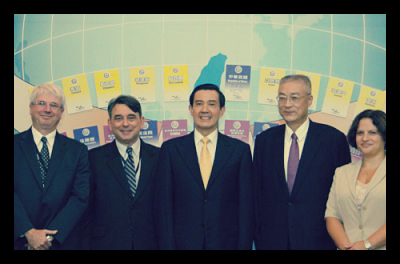
October 1, 2013 marked the opening ceremony of the International Workshop on Strategies for Combating Human Trafficking in Taipei City, Taiwan. The workshop serves to stimulate conversation and collaboration for human rights protection and is organized by the National Immigration Agency under the Ministry of the Interior. Around 200 policy experts and officials from Taiwan and abroad attended, including those from Brazil, Canada, Vietnam, the U.K. and 16 other countries.

Vice President of the Republic of China (ROC), otherwise known as Taiwan, Wu Den-yih, took a staunch stance against human trafficking at the opening ceremony. He stated that protecting human rights is a universal value that needs international attention. He also highlighted the firm commitment of the ROC government against human trafficking and violations of human rights.

In the days after the opening ceremony, the workshop hosted six discussion panels ranging from topics pertaining the protecting the youth from sex crimes to trying to prevent modern-day slavery and labor exploitation. Many guest speakers were featured at panels, including officials from the U.S. Department of Homeland Security.

This year was the fourth consecutive year that the U.S. State Department awarded Taiwan the Tier 1 status of the U.S. State Department Trafficking in Persons (TIP) Report, based on the government’s effort to fight human trafficking. While the Department of State places countries into one of three tiers, this ranking has no indication of the prevalence of human trafficking in the country, or lack thereof. The ranking simply acknowledges the effort a government has made to make human trafficking a pressing concern in the national political discourse and to attempt to address the problem.

Nevertheless, Taiwan’s ranking demonstrates its commitment of protecting human rights and ending human trafficking. In recent years, Taiwan has been improving law enforcement training, strengthening support services by building shelters and providing temporary work, and establishing policy strictly prosecuting traffickers, such as the Human Trafficking Prevention Act.

– Rahul Shah

Sources: UNPO, AIT, US State Department
Photo: American Institute in Taiwan
October 10, 2013
https://borgenproject.org/wp-content/uploads/borgen-project-logo.svg 0 0 Borgen Project https://borgenproject.org/wp-content/uploads/borgen-project-logo.svg Borgen Project2013-10-10 19:17:592024-05-25 00:24:37Taiwan Takes Firm Stance Against Human Trafficking
Children, Human Rights, Slavery

Child Labor 101

21st Century Child Labor Global
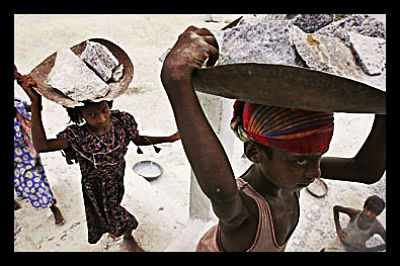
According to the International Labor Organization, approximately 211 million children are working around the world. These children range from ages five to 14, and most are working in order to provide support for their poor families. Nearly 128 products from 70 countries are made through child labor – many cases of which are forced child labor. While some children elect to start working at a young age to help support their families, many are forced into labor and treated as slaves in bondage.

In addition to poor treatment, the work environments children are forced to work in are often dangerous and harmful to their health. When children are sent to scour hazardous lakes filled with toxins in order to search for metals and jewels, the consequences are extremely damaging to their health. Much of the merchandise purchased by Americans is made in other countries, many of which are still developing and relying on labor from children. Children are often forced into labor by their government, or their government simply ignores the fact that companies and factories are forcing children to work for their own profit. Some of the products made by children include clothes, tobacco, metals, jewels, food items, pornography, holiday decorations, and electronic goods. This wide span of merchandise leaves little that child labor has not infiltrated.

In the worst cases of child labor, children are used much like slaves. In these cases, children are trafficked, often times forcing them to deal in illegal activities like drug trafficking, prostitution, and weapon conflict. Binding the children in debt is another method used by companies to ensure that the children will continue to work under their authority.

According to a report conducted by the Bureau of International Labor Affairs, India has the highest percentage of child workers. India is followed by China, which is then followed by smaller countries throughout sub-Saharan Africa. In 2008, as many as one in every four children in sub-Saharan Africa were forced into labor, and commonly sent to work in diamond mines and factories. In Ethiopia, an estimated 60 percent of children are forced into labor to help support their families, the child’s income usually amounting to a dollar a month.

In Afghanistan, an increasing number of underage girls are being sold in order to pay off debt, and more than 30 percent of children are working in major industries rather than attending school. Some of the worst forms of child labor occur in Somalia where 40 percent of children under the age of 15 are forced to engage in sex slavery and armed conflict.

Though the statistics concerning child labor may seem bleak, an increasing number of organizations and nations are rising up to help put an end to child labor. The International Labor Rights Forum (ILRF) is an advocacy organization that has been fighting for years to redesign working conditions across the world focusing on women in the workforce, sweatshops, and child labor. The U.S. Labor Department has also joined the stand against child labor: one of its recent reports says that Brazil is no longer relying on child labor for coal production, and that India and other countries have started anti-poverty programs to help end child labor.

– Chante Owens

Sources: Fox Business, International Labor Rights Forum, Business Insider
Photo: NYTimes

October 7, 2013
https://borgenproject.org/wp-content/uploads/borgen-project-logo.svg 0 0 Borgen Project https://borgenproject.org/wp-content/uploads/borgen-project-logo.svg Borgen Project2013-10-07 18:10:212018-02-26 10:35:30Child Labor 101
Developing Countries, Human Rights, Slavery

Slavery Slowly Wanes in Timbuktu, Mali

Modern_slavery_Mali
TIMBUKTU, Mali — Though slavery was formally abolished in the West African nation of Mali in 1960, roughly 200,000 people continue to live as modern-day slaves and hundreds more are only now experiencing freedom for the first time.

According to the advocacy group Anti-Slavery International, “descent-based slavery” has existed for generations in Mali but worsened in March 2012 when Islamist rebels gained control of northern Mali. The lighter-skinned Tuaregs and Arab Moors used the ethnic background they shared with jihadists to control darker-skinned ethnic groups.

Many Tuareg and Arab Moor families recaptured former slaves, and those enslaved reported that their treatment worsened during the Islamists’ ten-month reign, during which a highly conservative brand of Islamic sharia law was enforced. A French-led military intervention rid Mali’s northern towns of these Islamists in early 2013, and many Tuaregs and Arab Moors fled the region fearing reprisal for their actions have .

While many former slaveholders have fled the region, the impact of slavery has left a possibly irreparable gulf between Mali’s different ethnic groups. Tuaregs and Arab Moors formerly raided communities of darker-skinned populations in order to acquire slaves for a variety of unpaid roles, ranging from salt mining to sexual slavery. Darker-skinned ethnic groups also entered voluntarily into bondage systems to feed their families because, due to discrimination, they are unable to acquire a better source of income.

These groups have adopted the language and customs of the Tuaregs and Arab Moors, but they are still subjected to unfair treatment and poor working conditions. Those who have managed to escape slavery often come to Timbuktu in order to find employment, but they end up with jobs closely resembling their former experiences as slaves.

Though former slaves celebrate as their longtime captors leave Mali, a guerrilla war surges on. Many slaves have escaped from the families that held control over their bloodline for generations, but the impact of slavery is readily apparent. Today, Timbuktu is a wasteland offering virtually no economic opportunities, even though many of its citizens are finally free.

– Katie Bandera

Source: Antislavery, Washington Post
Photo: The Guardian

July 12, 2013
https://borgenproject.org/wp-content/uploads/borgen-project-logo.svg 0 0 Borgen Project https://borgenproject.org/wp-content/uploads/borgen-project-logo.svg Borgen Project2013-07-12 04:54:592024-06-04 02:43:55Slavery Slowly Wanes in Timbuktu, Mali
Human Rights, Slavery

Slavery’s Last Stronghold in Mauritania

Mauritania-slavery
For most of us, the concept of slavery is an abstract reference to a primitive and barbaric process, a blight on our nations’ histories and also, firmly in the past. A devastating report by CNN shows that in one country, the practice is still alive and well.

Mauritania is a poor Muslim country on the West coast of Africa. Largely ignored by the international community, it has also managed to uphold slavery, not officially abolishing it until 2007 – more than one hundred years after Abraham Lincoln freed the slaves of the United States. Even so, only one case of slave ownership has been successfully prosecuted in a country teeming with slave owners. Estimates of what percentage of the population is enslaved run as high as 18% – near 3.5 million people.

The term ‘slavery’ is not applied lightly. These people are made to work for one master, doing hard manual labour for no wages. They are often mistreated, denied healthcare, education, the right to own property, clothing, proper food or basic rights. A woman CNN interviewed, Moulkheir Mint Yarba, was repeatedly raped and one of her infant children left to die and be eaten by ants when she was working in the field. She was not allowed to give her baby a proper burial.

Slavery persists because of an ingrained caste system, in which family ancestry determines social standing. Historically in Mauritania, out of the four major ethnic groups (White Moors, Black Moors, Black Africans and Harantine), the Harantine are the traditional slave class. They are kept subordinate through systematic discrimination and told that Islam dictates they must be slaves. Denied an education, religion is the closest thing they have to knowledge, and this is a powerful weapon.

Foreigners have had difficulty infiltrating Mauritania because the nation seems set on preserving the status quo. CNN described the great lengths they had to go to even to write a report on the situation, much less intervene, inventing a fake investigation, dodging an official assigned to watch them, knowing they could be deported or tortured if discovered.

Currently, Anti-Slavery International is working with the local organization SOS Enclaves to work on freeing individual slaves, but are facing great odds. Not only the government of Mauritania, but the political instability that plagues the nation, threats to the anti-slave workers themselves and the indoctrination of the citizens of Mauritania.

Moulkheir herself was lucky – after enduring unimaginable circumstances, she and her daughter, with the help of SOS, managed to escape and form a new life for themselves. They live together in a one-room shack and are even attended a school for former slaves, funded by the SOS-Enclave.

However, most of the 3.5 million slaves in Mauritania are not so lucky. During the interview, CNN asked Free the Slaves worker Kevin Bales what could help Mauritania, to which he replied that global demand for change could make a difference. “It’s a destitute country. It needs a few friends in the world.”

– Farahnaz Mohammed

Source: CNN, AntiSlavery
Photo: Smithsonian Magazine

July 10, 2013
https://borgenproject.org/wp-content/uploads/borgen-project-logo.svg 0 0 Borgen Project https://borgenproject.org/wp-content/uploads/borgen-project-logo.svg Borgen Project2013-07-10 04:00:162017-11-30 11:09:44Slavery’s Last Stronghold in Mauritania
Page 6 of 6«‹456

Get Smarter

  • Global Poverty 101
  • Global Poverty… The Good News
  • Global Poverty & U.S. Jobs
  • Global Poverty and National Security
  • Innovative Solutions to Poverty
  • Global Poverty & Aid FAQ’s
Search Search

Take Action

  • Call Congress
  • Email Congress
  • Donate
  • 30 Ways to Help
  • Volunteer Ops
  • Internships
  • Courses & Certificates
  • The Podcast
Borgen Project

“The Borgen Project is an incredible nonprofit organization that is addressing poverty and hunger and working towards ending them.”

-The Huffington Post

Inside The Borgen Project

  • Contact
  • About
  • Financials
  • President
  • Board of Directors
  • Board of Advisors

International Links

  • UK Email Parliament
  • UK Donate
  • Canada Email Parliament

Get Smarter

  • Global Poverty 101
  • Global Poverty… The Good News
  • Global Poverty & U.S. Jobs
  • Global Poverty and National Security
  • Innovative Solutions to Poverty
  • Global Poverty & Aid FAQ’s

Ways to Help

  • Call Congress
  • Email Congress
  • Donate
  • 30 Ways to Help
  • Volunteer Ops
  • Internships
  • Courses & Certificates
  • The Podcast
Scroll to top Scroll to top Scroll to top