• Link to X
  • Link to Facebook
  • Link to Instagram
  • Link to TikTok
  • Link to Youtube
  • About
    • About Us
      • President
      • Board of Directors
      • Board of Advisors
      • Financials
      • Our Methodology
      • Success Tracker
      • Contact
  • Act Now
    • 30 Ways to Help
      • Email Congress
      • Call Congress
      • Volunteer
      • Courses & Certificates
      • Be a Donor
    • Internships
      • In-Office Internships
      • Remote Internships
    • Legislation
      • Politics 101
  • The Blog
  • The Podcast
  • Magazine
  • Donate
  • Click to open the search input field Click to open the search input field Search
  • Menu Menu

Archive for category: Poverty Reduction

Information and stories about poverty reduction.

Poverty Reduction

Poverty in Algeria

algeria-poverty
Algeria, a French-speaking country in the north of America, enjoyed relative prosperity until around the 1980s. After independence, the economy was buoyed by booming oil prices. However, a blow to the oil market and inept management saw conditions in the country decline after the 1980s, and Algeria’s poverty has continued to rise since.

Today, nearly a quarter of Algerians are living close to or below the poverty line. The majority live in rural areas, though the urban centres are also suffering from unemployment rates, the most affected being unskilled youth.

Algeria suffers from major inequality in the distribution of wealth. A select minority control a large amount of the resources and live in relative affluence, able to enjoy modern conveniences, private school educations, and trips abroad. Yet the majority of the population lives in squalor and struggles for access to healthcare, clean water, education, and food.

The poorest in Algeria are the landless farmers who live in the mountainous regions to the north or near the south Saharan region. Working on the production of crops, and unable to procure their own land, they have been particularly affected by soil erosion and degradation, droughts, poor irrigation, and drainage.

Algeria’s problems are not unsolvable and could be improved by improvements in agricultural practices or providing support services or education. Yet internal conflicts have worsened the problem in recent years, and a lack of political stability has prevented governments from implementing the necessary long term structural reforms that are needed to provide resources to lift the nation out of poverty.

– Farahnaz Mohammed

Source: World Bank, Nation’s Encyclopedia, Rural Poverty Portal
Photo: Brookings

July 2, 2013
https://borgenproject.org/wp-content/uploads/borgen-project-logo.svg 0 0 Borgen Project https://borgenproject.org/wp-content/uploads/borgen-project-logo.svg Borgen Project2013-07-02 05:00:412024-05-24 23:57:31Poverty in Algeria
Food Security, Poverty Reduction

Rural Poverty in Azerbaijan

Rural Poverty in Azerbaijan
Azerbaijan is a small Central Asian country about the size of South Carolina bordered by The Caspian Sea, Armenia, Georgia, Iran, and Russia. Similar to Russia, Azerbaijan’s heritage is derived from both Eastern and Western civilizations, making her a distinctly Eurasian entity.  In the years initially following the Russian revolution of 1917, the victorious Bolsheviks invaded Azerbaijan, integrating it into the Soviet Union.  This was an effort by Lenin to capitalize on the oil reserves of the Azerbaijanis.

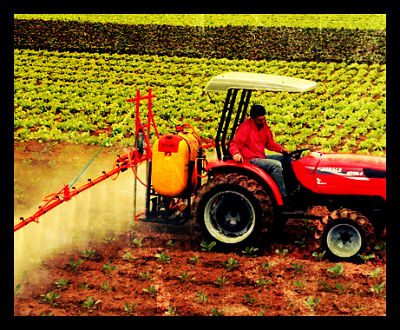
Consequently, agriculture in Azerbaijan was collectivized.  This caused agricultural workers to become dependent on a very specific, prescribed method of farming in which success depended upon the survival of the Soviet system.  When the Soviet Union collapsed in the early 1990s and farms were privatized, agricultural workers were completely unprepared to grow crops on their own.  This resulted in a situation in which uneducated farmers with limited resources were unable to maximize the productivity of their land.

Like other nations that declared independence after the fall of the USSR, Azerbaijan’s rural communities have struggled immensely to stand on their own two feet economically.  Rural poverty is widespread, but it is especially concentrated in the desolate northeastern part of the country, with pockets also appearing in the mountainous northwestern region of  Sheki-Zagatal where the poverty rate is over 50%.  The International Fund for Agricultural Development (IFAD) describes the severity of the economic conditions there, stating:

“Remote areas and upland or mountainous areas show high rates of poverty. These areas often lack basic infrastructure and services, including irrigation, adequate road access, a reliable drinking water supply and health services.”

Fortunately, IFAD has invested almost $200 million in development projects in Azerbaijan over the last decade and a half.  These projects focus on improving food security through practical education (such as irrigation tutorials) and the establishment of business connections between rural farmers and lucrative markets.  With support such as this, agriculture in Azerbaijan has the potential to rise out of poverty in the coming years.

– Josh Forgét
Source: Rural Poverty Portal via IFAD,Glenn E. Curtis
Photo: Azerbaijan News

July 1, 2013
https://borgenproject.org/wp-content/uploads/borgen-project-logo.svg 0 0 Borgen Project https://borgenproject.org/wp-content/uploads/borgen-project-logo.svg Borgen Project2013-07-01 05:18:532020-07-08 19:09:30Rural Poverty in Azerbaijan
Poverty Reduction

The Family Independence Initiative

family-independence-initiative
Mauricio Lim Miller had spent years working in social services in Oakland and San Francisco utterly frustrated at the lack of results and the absence of sustainable change or progress. He knew something needed to change and he knew it had to happen at the bottom level within families. He witnessed how individual communities provided support to their members and helped each achieve personal goals. Miller used a similar concept to create the Family Independence Initiative.

Miller offered families a regular stipend if they would agree to a monthly meeting and to setting and tracking goals for their households. His employees were not authorized to counsel or advise, simply to monitor the families’ goal progress. The program proved to be a great success because, when given the autonomy to set and meet their own goals, people made remarkable changes.

The families’ incomes increased by an average of 27%, and 40% of the families purchased homes within three years. The Family Independence Initiative has expanded to other cities and includes many different communities. Goals differ from place to place but Miller’s policy prevails –  provide them with the means in the form of small stipends and they will figure out the right strategy to improve their lives. Some groups want to establish better daycare for children, other communities want their members to be able to own houses, and others hope to set up businesses.

Giving people the responsibility for directing their own change allows them ownership over their success and investment in their future. Jesus Gerena, Director of the Family Independence Initiative explains, “The more families take initiative, the more they watch out for each other, the more they share successes, the less they need us.”

This is not just about helping each individual family but rather about transformative change and altering the way anti-poverty policy is crafted. Programs like the Family Independence Initiative show the potential to break the cycle of poverty in a sustainable way.

– Zoë Meroney

Source: The Boston Globe National Journal
Photo: Facebook

June 28, 2013
https://borgenproject.org/wp-content/uploads/borgen-project-logo.svg 0 0 Borgen Project https://borgenproject.org/wp-content/uploads/borgen-project-logo.svg Borgen Project2013-06-28 06:56:092024-12-13 17:49:26The Family Independence Initiative
Poverty Reduction

Poverty in Cameroon and Why it Matters

Poverty in Cameroon and Why it Matters
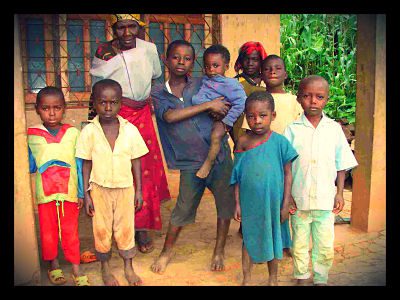
Cameroon is on track to become a middle-income country, however, nagging poverty spurred by under-funded social programs and ineffective public finance management holds the country in its current limbo.

The country of Cameroon boasts the largest economy in Central Africa. It is one of the oldest oil exporters on the continent, and it receives some of the smallest amounts of aid in Sub-Saharan Africa.

Cameroonian poverty has plateaued over the last several years at 40% nationally, though the rates have actually increased in the poorest areas of the country. Of those citizens living in poverty, 87% live in rural areas. According to a recent report, the World Bank does not expect Cameroon to meet most Millennium Development Goals, except for the ones related to universal primary education and gender equality.

The factors holding Cameroon back are complex. Budget austerity and general governmental inefficiency are at the heart of many of the country’s development headaches. These confounding factors have a crippling effect on the improvement and expansion of modern, secure infrastructure and established a business climate unfriendly to major investors. Thus, a country with impressive natural resources, including high value-added agricultural products like coffee, cotton, and cocoa, is struggling to effectively harness its economic potential.

The varied and fertile landscape of Cameroon enables 70% of the population to earn its living from agriculture and farming. The country is the world’s fifth-largest cocoa producer and has seen sectors outside of its long-established oil industry become the driving forces in the growth of its economy. While modest gains in the agricultural and tertiary sectors have pushed the economy, rich mineral reserves remain untapped, partially due to an infrastructure power deficit.

The World Bank believes further economic expansion and sustainable poverty reduction in the country can best be achieved through a commitment to targeted programs and efforts aimed at improving governance at the central and sectoral levels. Accordingly, such initiatives are key features in the World Bank’s Country Assistance Strategy for Cameroon. The strategy seeks to bring increased coordination and transparency on governance-related issues and to foster competitiveness and service delivery across the country.

Despite these challenges, there is hope for the future of Cameroon. The country has successfully implemented programs that have increased the primary education completion rate to 71% and have pushed gender equality, notably through the school enrollment rate for girls. These successes demonstrate the potential positive impact of effectively implemented development programs. Through cooperation with and commitment to World Bank strategies and other development efforts, the country of Cameroon should, in the not too distant future, experience real success in the fight against poverty and economic underachievement.

– Lauren Brown

Source: World Bank, Reuters
Photo: Health Care Volunteer

June 27, 2013
https://borgenproject.org/wp-content/uploads/borgen-project-logo.svg 0 0 Borgen Project https://borgenproject.org/wp-content/uploads/borgen-project-logo.svg Borgen Project2013-06-27 04:29:572024-05-24 23:42:26Poverty in Cameroon and Why it Matters
Development, Poverty Reduction

Arco do Futuro

Arco do Futuro
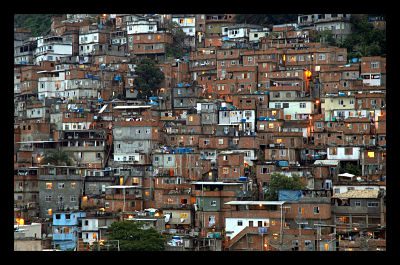
São Paulo’s visionary new mayor, Fernando Haddad, plans to elevate the city’s sprawling and overcrowded slums out of abject poverty by 2020. His goal is to improve the horrible living conditions of the favelas while also halting their insurgent growth.

The favela slums of São Paulo remain a brazen example of the poverty and income inequality that still lingers in Brazil despite its recent (and remarkable) economic growth. They serve as hotbeds for violence and crime as well as uncontained waste and rampant pollution.

In a campaign promise during last year’s election, Haddad created what will become the city’s main development plan named “Arco do Futuro.” This plan promises to provide more housing and jobs for the favela’s cramped and unemployed populations. He maintains that the improvements will occur as a result of economic growth, government funding, and demographic changes.

Previously, the government’s efforts to develop a 100-acre area around Luz, which is notorious for drug activity and known as Cracolândia, sparked intense protests within the community. According to Haddad, this was because the public did not trust the private companies in charge of the housing programs.

The mayor plans to allow members of the community to have a greater voice in order for the development plan to not be seen as a threat. He emphasized that giving individuals a greater sense of ownership would negate the negative feelings toward the project.

This mentality fits well with the message of the New Cities Summit, which was hosted by São Paulo this year. The message is this: “The Human City, placing the individual and the community at the heart of discussions on our urban future.”

The New Cities Summit, held in São Paulo this year echoed this idea as a way of developing solutions to the challenges of rapid urbanization. São Paulo was chosen to host last week’s New Cities summit because it faces many of the same problems as other metropolises across the developing world. If São Paulo can find ways to alleviate their problems of crime, pollution, overcrowding and waste, then the hope is that other cities can too.

By 2030, it is estimated that 60% of the world’s total population will be living in urban areas. Each year, a million people are added to this figure in China, India and the Middle East. Latin American countries have the highest percentage of urban populations with 87% of the population of Brazil living in cities.

“We need more just cities. Not just playgrounds for the wealthy, but cities where all people can thrive,” said John Rossant of the New Cities Foundation, “This is a global summit to look at problems facing cities in the 21st century, but also opportunities. There are lots of interesting solutions.”

– Kathryn Cassibry

Source: The Guardian,New Cities Foundation,Estado Sao Paulo
Photo: Mind Map-SA

June 23, 2013
https://borgenproject.org/wp-content/uploads/borgen-project-logo.svg 0 0 Borgen Project https://borgenproject.org/wp-content/uploads/borgen-project-logo.svg Borgen Project2013-06-23 07:14:382020-07-03 00:32:00Arco do Futuro
Advocacy, Food & Hunger, Poverty Reduction

Hunger in Rwanda: The Good and the Bad

Hunger in Rwanda: The Good and the Bad
In Rwanda, poverty and hunger continue to pose a major challenge for the rapidly developing country. Based on the UNDP Human Development Index for 2011, the country ranks 166 out of 187 while maintaining one of the highest population densities in Africa. The large population puts a strain on proper healthcare as well as the already limited natural resources of the country. Although the government of Rwanda, together with the World Food Program, has found that nutrition levels and food security have been improving over the last seven years, the situation is still far from optimal.

Some of the major challenges Rwanda faces with regard to poverty and hunger could be solved by foreign aid investments or direct cash donors from developed nations and foreign aid organizations. 83.7% of the population survives on $2 a day or less, and without proper disposable income, it is impossible to support families with proper food, water, and nutrition.

Up to 90% of the population engages in subsistence agriculture. This, combined with the extreme crowding and limited access to land, makes subsistence farming inefficient.

WFP’s country director for Rwanda, Jan Delbaere, weighs in on the topic, explaining that “during 2012, WFP bought 23,000 metric tons of food in Rwanda, mostly for operations in neighboring countries. This is a clear sign that Rwanda is more than self-sufficient for its staple crops. However, households with only a small area of land for cultivation simply cannot afford to access enough nutritious food to live healthy, active lives or to provide for their basic needs from their land alone.”

The WFP remains committed to supporting the government in Rwanda to increase food security and food production programs, and the country itself has chosen to sign the “Comprehensive Africa Agriculture Development Program (CAADP) compact and to secure funding, thus confirming malnutrition and food insecurity as one of the government’s key priorities.” In spite of its food insecurity, Rwanda’s GDP has been growing by 7.2% annually since 2010. With proper investment and aid, these issues can be solved, and the country set further on the right track to stability.

– Sarah Rybak

Source: WFP,Hope in Action
Photo: ESB Blog

June 20, 2013
https://borgenproject.org/wp-content/uploads/borgen-project-logo.svg 0 0 Borgen Project https://borgenproject.org/wp-content/uploads/borgen-project-logo.svg Borgen Project2013-06-20 08:28:292024-05-24 23:56:42Hunger in Rwanda: The Good and the Bad
Global Poverty, Poverty Reduction

Poverty in Senegal

Poverty in Senegal
Senegal is a geographically and culturally diverse country with 5 languages, a desert in the north and a tropical climate in the south. This all exists within a country about the size of South Dakota. Praised as one of the most successful democracies in Africa, Senegal is making progress on many of the World Bank indicators of decreasing poverty. Yet, poverty in Senegal persists.

Challenges
Senegal still faces many of the challenges that are commonplace on the continent. Extreme weather causes crop failures, impacting the strategic economic sector of groundnuts. A ban on street beggars has taken the only source of income from many families, essentially hurting those the ban was supposed to help. Former dictator Chad Hissène Habré awaits trial, accused of ordering thousands of political killings in the 1980s.  Additionally, a “long-running, low-level separatist war in the southern Casamance region” impacts the residents and detracts from the political cohesion needed to tackle a wide range of health and education problems. These are just a few of the high-level political and economic challenges facing this country.

Improvements
Despite the difficult political, economic, social and geographic terrain facing this country, there has been steady progress over the last few years. According to World Bank data, primary school enrollment has been steadily increasing to 86%. CO2 emissions are slowly but steadily decreasing. Also, the percentage of the national population living below the national poverty line is at a 10 year low.

Poverty facts and figures
A segment of the Senegalese population suffers from chronic poverty. Chronic poverty is defined by the Chronic Poverty Research Center as poverty lasting many years and possibly over multiple generations. The chronically poor are “often multi-dimensionally deprived and may experience preventable deaths early (and so are not even counted).” In Senegal, chronic poverty has marred the last 80 years of progress. There are more chronically poor than transitional poor (people who move in and out of poverty) or the non-poor. A report by the Chronic Poverty Research Center found that not only are 60% of households “poor or vulnerable” but that there is a possibility that the poverty will be passed on to the next generation.

Events such as “loss of harvest, conflict, theft, flooding, divorce, loss of spouse, and/or loss of capital” drastically increase vulnerability. While there is little mobility between life-stages, the youth are more likely to escape poverty. Additionally, “older women [are] less likely to live in chronic poverty than their male counterparts.”

There are several other strongly correlated factors. First is an ethnic correlation. The minority ethnic groups Pulaar and Sereer are at an 83% risk of poverty, with the Dolar face an 80% risk of becoming chronically impoverished. The results on the geographic correlation to poverty yield that rural households are more likely to suffer from chronic impoverishment. Lack of education and child-labor is also strongly linked to poverty, particularly chronic poverty in Senegal.

Strategies
Social networks are an important social safety net in Senegal. Households often include multiple families who share resources and risks. The Chronic Poverty report suggests that the social network must play a key role in “developing human capital, agricultural investments, and improving food security, particularly in rural areas.” Entrepreneurship needs to be enabled via “endogenous development” in order to link development from villages to the national level. A multi-sector inclusive approach is necessary because of the currently limited economic base.

Despite the uphill battle Senegal faces in reducing poverty, progress is being made and the momentum is being put to good use. Strategies for reducing poverty are being implemented by the World Bank and the United States Peace Corps with measurable results.

– Katherine Zobre

Sources: CIA World Factbook , BBC, Huffington Post, World Bank, NPR, Human Rights Watch, Chronic Poverty Research Center, Chronic Poverty Research Center
Photo: Chronic Poverty in Senegal

June 20, 2013
https://borgenproject.org/wp-content/uploads/borgen-project-logo.svg 0 0 Borgen Project https://borgenproject.org/wp-content/uploads/borgen-project-logo.svg Borgen Project2013-06-20 05:32:172024-05-24 23:55:41Poverty in Senegal
Poverty Reduction

$24 Million Invested in Flexenclosure to Reduce Poverty

$24 Million Invested in Flexenclosure to Reduce Poverty
Flexenclosure received $24 million from investors such as the International Finance Corporation (IFC) to help in their efforts to reduce poverty. Based in Sweden, the company manufactures modular data centers and corresponding power infrastructure for rural communities where construction is often difficult.  The data centers give telecommunication companies the ability to expand into emerging markets previously unavailable to them.  The expansion provides individuals in rural areas of Asia and Africa access to communication via cell phone.

The unit Flexenclosure produces houses all the telecom data and equipment is a low cost and is energy efficient. The on-site power system that runs the unity supports wireless towers with the wind, solar, and battery power. When those sources are unavailable, the unit can also run on diesel power. The power site also provides power for mobile phones, water pumps, and schools. The software manages the power for various uses and applications.

Currently, the majority of cellular base stations in emerging markets run on diesel generators for power supply which raises costs associated with the stations. Flexenclosure’s innovation power sources will help to reduce the costs and spread mobile technology further. IFC is the private equity arm of the World Bank and is supportive of Flexenclosure’s growth strategy and production methods.

A recent report on sustainable energy further supported Flexenclosure’s product. The report, Sustainable Energy for All, monitors universal access to modern energy as well as energy efficiency and renewable energy. The report finds only modest progress is being made since the report first started in 1990. Demand continues to outpace the supply of electricity and new supplies need to be affordable, sustainable, and efficient. Flexenclosure is working to create energy that follows those three standards and reduces the information gap between the rich and the poor.

– Amanda Kloeppel
Source: Sustainable Business News

June 20, 2013
https://borgenproject.org/wp-content/uploads/borgen-project-logo.svg 0 0 Borgen Project https://borgenproject.org/wp-content/uploads/borgen-project-logo.svg Borgen Project2013-06-20 04:00:542024-12-13 17:49:25$24 Million Invested in Flexenclosure to Reduce Poverty
Activism, Global Poverty, Poverty Reduction, Technology

Google Blimps Bring Internet To Africa

Google Blimps
Some companies provide food to people in countries who need it, others may donate supplies to build homes or schools, and some may send doctors or medical supplies to help the sick. Google is taking a different approach, using their technology skills to bring the internet to Africa via blimps.

The company’s goal is to connect nearly 1 billion people across Africa and Asia to the internet with high-flying blimps and balloons. The Google blimps are beneficial because they can cover a wider area while remaining cost-efficient. Google has created an ecosystem of smartphones that are low-cost with low processing power, and the signals are carried by the balloons. Google also is asking the local government regulators for permission to use television airwaves for their project, because these waves are better at transferring signals through buildings and across large areas of land than traditional WiFi infrastructure.

Google isn’t the first to propose a plan that uses balloons and blimps. Afghanistan already uses blimp technology for surveillance purposes by scanning wide areas that wouldn’t be possible or as simple as other forms of ground technology. The U.S. military is also involved in cloud-type projects involving blimps, and the Army uses them for communication. Instead of using traditional satellites to communicate back and forth with troops on the ground, which is very expensive, they use Combat SkySat balloons.

Google has begun a trial launch of their blimps in South African schools to test how well the new technology performs.

– Katie Brockman

Source Forbes, Wired

June 17, 2013
https://borgenproject.org/wp-content/uploads/borgen-project-logo.svg 0 0 Borgen Project https://borgenproject.org/wp-content/uploads/borgen-project-logo.svg Borgen Project2013-06-17 04:00:252024-12-13 17:49:24Google Blimps Bring Internet To Africa
Poverty Reduction

5 Facts About Energy Poverty

Energy Poverty
Energy poverty is an issue that is little known by people around the world. Many people assume that poverty only means lacking money or food, but it also means cooking and living with very primitive energy sources, which could be even deadlier than malaria, tuberculosis, and HIV/AIDS. If nothing is done by 2030 about the energy poverty crisis, 4,000 people could die each day of the toxic smoke and fires from primitive, unsafe stoves. Also, there are a few surprising facts about energy poverty that many people may not know.

1. There has been a tremendous amount of progress in delivering safe energy to people who need it, but it makes little difference. From 1990 to 2010, 1.7 billion gained access to electricity, and an additional 1.6 billion gained cleaner cooking fuels. But because the population grew by 1.6 billion during those years, there were still billions without safe energy.

2. It’s the quickly-developing countries that have the biggest energy problem. India is the fastest country to get her people access to electricity, and China has the most efficient energy on the planet, yet both countries have millions of people without electricity and other forms of safe energy.

3. About 3.5 million people each year die from indoor pollution caused by the smoke when cooking on wood and biomass cookstoves. Cookstove smoke is considered by some to be the largest environmental threat because it kills more than malaria (1.2 million) and HIV/AIDS (1.5 million) each year.

4. Countries with the most energy have people with the least. Nigeria produces the highest quantity of oil in Africa, yet it has the second highest number of people without safe energy in the world (behind India).

5. Renewable resources are currently not enough to provide safe energy across the world. The UN’s Sustainable Energy For All programs rely on creating more energy from renewable sources, such as solar and wind, to provide energy without polluting the earth, but renewable energy only accounts for less than 1% of the world’s energy consumption.

– Katie Brockman

Source National Geographic, National Geographic


June 4, 2013
https://borgenproject.org/wp-content/uploads/borgen-project-logo.svg 0 0 Borgen Project https://borgenproject.org/wp-content/uploads/borgen-project-logo.svg Borgen Project2013-06-04 06:30:182020-06-26 13:55:185 Facts About Energy Poverty
Page 60 of 63«‹5859606162›»

Get Smarter

  • Global Poverty 101
  • Global Poverty… The Good News
  • Global Poverty & U.S. Jobs
  • Global Poverty and National Security
  • Innovative Solutions to Poverty
  • Global Poverty & Aid FAQ’s
Search Search

Take Action

  • Call Congress
  • Email Congress
  • Donate
  • 30 Ways to Help
  • Volunteer Ops
  • Internships
  • Courses & Certificates
  • The Podcast
Borgen Project

“The Borgen Project is an incredible nonprofit organization that is addressing poverty and hunger and working towards ending them.”

-The Huffington Post

Inside The Borgen Project

  • Contact
  • About
  • Financials
  • President
  • Board of Directors
  • Board of Advisors

International Links

  • UK Email Parliament
  • UK Donate
  • Canada Email Parliament

Get Smarter

  • Global Poverty 101
  • Global Poverty… The Good News
  • Global Poverty & U.S. Jobs
  • Global Poverty and National Security
  • Innovative Solutions to Poverty
  • Global Poverty & Aid FAQ’s

Ways to Help

  • Call Congress
  • Email Congress
  • Donate
  • 30 Ways to Help
  • Volunteer Ops
  • Internships
  • Courses & Certificates
  • The Podcast
Scroll to top Scroll to top Scroll to top