• Link to X
  • Link to Facebook
  • Link to Instagram
  • Link to TikTok
  • Link to Youtube
  • About
    • About Us
      • President
      • Board of Directors
      • Board of Advisors
      • Financials
      • Our Methodology
      • Success Tracker
      • Contact
  • Act Now
    • 30 Ways to Help
      • Email Congress
      • Call Congress
      • Volunteer
      • Courses & Certificates
      • Be a Donor
    • Internships
      • In-Office Internships
      • Remote Internships
    • Legislation
      • Politics 101
  • The Blog
  • The Podcast
  • Magazine
  • Donate
  • Click to open the search input field Click to open the search input field Search
  • Menu Menu

Archive for category: Poverty Reduction

Information and stories about poverty reduction.

Poverty Reduction

Crochet Improves Lives of Women in Uganda

pink_flower_Crochet_blanket_uganda_women_economy_opt

If you’ve ever received a handmade sweater on Christmas from Grandma, you know how much octogenarians love to crochet.

Well, believe it or not, crocheting can be more than just entertainment for the elderly (or the crafty Pinterest fiend). Thanks to Krochet Kids International, now grandma’s favorite past time is improving the lives of women in northern Uganda and Peru by offering them hope and opportunities for self-empowerment.

That’s right, crocheting.

Krochet Kids International began as three high school friends, Kohl, Travis and Stewart, in Spokane, Washington, who enjoyed crocheting. In Kohl’s words “though it was not a normal hobby for high school guys, we reveled in the novelty of it”. A local paper nicknamed them the Krochet Kids and the name stuck.

In college Stewart spent a summer in Uganda where he encountered whole communities of people who’d been living in government camps for 20 years after the Lords Resistance Army (LRA) ravaged much of the northern half of the country.  Opportunities to make a living or improve their lives were nonexistent and most were trapped in dependence on the government camps and aid. After Stewarts returned, the three realized the difference they could make by teaching women in Uganda their beloved hobby. With this skill and the products they would create, they could lift themselves out of poverty and provide for their families.

To date, over 150 women in Uganda and Peru are Krochet Kids and are receiving ongoing support, education, and mentorship. Apiyo Kevin is one such woman. When asked what her favorite thing about crocheting is she replied, “crocheting has greatly helped me to forget my husband’s death. Besides, it has provided me with an employment opportunity that has drastically improved my income.”

Each of Krochet Kids’ colorful beanies and scarves has a small tag bearing the name, scrawled in blue ink, of the Ugandan woman who made it.

Fore these women, crocheting isn’t simply a hobby. It provides them with the self-confidence that comes with learning a new skill, an opportunity to heal, and most importantly, an income.

Because three high school friends decided they wanted to make a difference in the world around them, women in Uganda and Peru and consequently those who depend on them, are beginning to lead better, more fulfilled lives.

– Erin Ponsonby

Source: Krochet Kids
Photo: Granny Funk

May 16, 2013
https://borgenproject.org/wp-content/uploads/borgen-project-logo.svg 0 0 Borgen Project https://borgenproject.org/wp-content/uploads/borgen-project-logo.svg Borgen Project2013-05-16 07:00:492020-05-29 21:48:59Crochet Improves Lives of Women in Uganda
Poverty Reduction

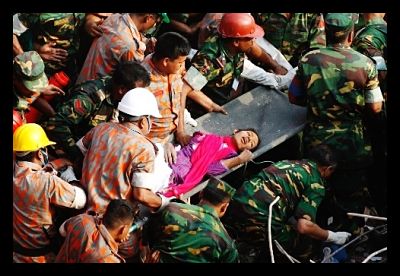
Tragedy at Bangladesh Garment Factory

Tragedy at Bangladesh Garment Factory

Until now, more than 1000 people are estimated to have been killed in the collapse of the Bangladesh garment factory. Statistics make this accident one of the worst garment factory disasters in modern history. As governments, organizations, and conscientious consumers look for solutions and ways to prevent another catastrophic loss of life, some are considering the role a company or consumer boycott of clothing made in Bangladesh would have. But how should consumers respond? Is pushing for a boycott of Bangladeshi products really the solution? Experts differ on the possible effects of such a move.

Professor Linda Scott at Oxford University says no:

The most obvious thing to do is to take away shopping dollars, and I do appreciate that stopping power, but I am just afraid that moves the problem someplace else. There is always another country that is happy to take on garment manufacturing. That is why it moves around so much. If the factories move elsewhere, it does not really solve the problem. It just moves misery somewhere else. And it takes away work from the people in Bangladesh.

Paul Collins of the British Anti-poverty Group War on Want also hesitates to endorse such a move:

We take our lead from our partner, the National Garment Workers’ Federation in Bangladesh, and they take their lead from the trade union members they support – mainly women – who say that these jobs should be decent jobs that are safe, pay a living wage and do not force them to work excessive hours. But they fear that a boycott campaign would mean they would lose their jobs. They come from rural areas and abject poverty, so they have not asked us to mount a boycott campaign.

Jamie Terzi, Bangladesh Country Director for CARE International, offered the following perspective:

I think for an incident of this magnitude to occur, we are talking about a systemic failure, where there are multiple responsibilities and, more strongly, culpabilities. It is not particularly helpful to pick one person or group, the problem is simply too large and too complex. It is absolutely the government; it is absolutely the people of Bangladesh calling on their government to be more accountable; it is up to the factory owners; it is up to the buyers and it absolutely is up to the consumers in Western countries.

Elizabeth L. Cline, author of Over-Dressed: The Shockingly High Cost of Cheap Fashion emphasizes the same point made by Terzi:

Bangladesh is a very poor country so even if they wanted to implement changes there is not a lot of money to do so. We’re talking about a $500,000 (£320,000) investment per factory to get some of these changes implemented and the brands can afford it. The factories can’t. Consumers are ready for ethical fashion. They want to see fair labor standards implemented and abided by, and they would support it if the brands made headway on that.

For consumers, particularly those in the west, who decide to respond to the tragedy, all of these experts agree that there are a number of complex and interlocking issues to be considered here. Everyone, from governments to multi-nationals, to consumers will have a role to play in developing a solution to save lives in the future.

– Délice Williams

Source: BBC, CBS
Photo: CNN

May 13, 2013
https://borgenproject.org/wp-content/uploads/borgen-project-logo.svg 0 0 Borgen Project https://borgenproject.org/wp-content/uploads/borgen-project-logo.svg Borgen Project2013-05-13 11:35:282024-05-24 23:50:58Tragedy at Bangladesh Garment Factory
Poverty Reduction

Biking in Bangkok is More Than a Tour

Biking in Bangkok is More Than a Tour
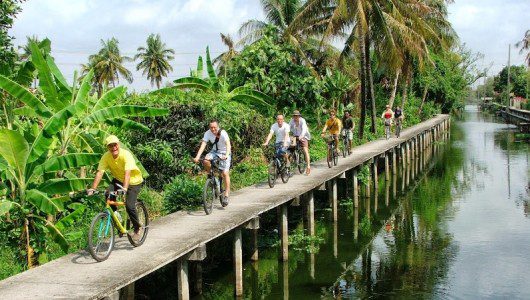
For two bicycle tour companies, biking in Bangkok is more than a tour. These two extraordinary companies not only give excellent guided tours of the hidden gems of this city, but also have significant impacts on the poverty in and around Bangkok.

Bangkok, the coastal capital of Thailand has two seasons, covers 606 sq miles, and 18 million residents, and approximately 1.5 million slum dwellers. There are over 400 Buddhist temples and thousands of other tourist attractions including the Royal Palace and the famous Khaosan Road.  One could spend a lifetime discovering new parts of Bangkok. As a tourist with limited time, the best way to see the real Bangkok is to pound the pavement with locals.

The first bicycle tour company is Co van Kessel. Mr. van Kessel, a Dutch ex-patriot, started the tour company over 30 years ago. Frustrated with the image of Bangkok as a city of uninhibited urban sprawl, grid-lock traffic and suffocating pollution, Mr. van Kessel started a bicycle tour company to change this image. His was the first bicycle tour company in Bangkok and has been working towards making Bangkok a cyclist-friendly city ever since.

In addition to being an entrepreneur, Co van Kessel bike tour company is also generous with their time and money. They often donate money to local charity organizations. Additionally, every year they donate bicycles that are unfit for tours but still in good working condition to villages in the north of Thailand. The bicycles serve the villagers as their primary form of transportation thereby allowing them to pursue livelihoods otherwise unavailable.

The second, Recreational Bangkok Biking (RBB), is also run by a Dutch ex-patriot, Andre Breuer. RBB offers several different tours each with their own extraordinary sights. They offer a variety of walking, biking, rickshaw, boat and combination tours throughout the city. Their goal is to give tourists a chance to see what Thai life is really all about—colorful markets full of sounds and smells that make your whole body tingle, daily life along the canals that wind through the city, and stretches of green space one could hardly imagine existed when limited to main tourist areas.

What makes this company stand out is not only the high quality of the tours but also the social commitment Mr. Breuer insists on. His employees are local, mostly low-class Thais. The employees start out as bicycle mechanics and learn English through interacting with foreigners—two skills that are extremely valuable to enhancing their living standards. The restaurants, food stands, boat drivers, and bicycle repair establishments are locals, mostly slum dwellers. Mr. Breuer also uses his influence and business network to help fund a local orphanage, the Mercy Center, and a kindergarten. (Mercy Center is located in the largest slum in Bangkok, Khlong Toey and serves as an orphanage and rehabilitation center for those with AIDS.)  Tourists have the option of stopping at the school and talking to the children, who learn English from their frequent interactions.

It is easy to get sucked into the tourist traps in Bangkok. Everyone wants to take you for a ride. Let yourself be taken by Recreational Bangkok Biking or Co van Kessel and you will not regret it!

– Katherine Zobre

Sources: Co Van Kessel , The Mercy Center
Photo: Google Plus

May 6, 2013
https://borgenproject.org/wp-content/uploads/borgen-project-logo.svg 0 0 Borgen Project https://borgenproject.org/wp-content/uploads/borgen-project-logo.svg Borgen Project2013-05-06 10:24:342020-05-26 08:49:19Biking in Bangkok is More Than a Tour
Developing Countries, Development, Global Poverty, Poverty Reduction

The Open Borders Theory and Ending Global Poverty

Border_opt
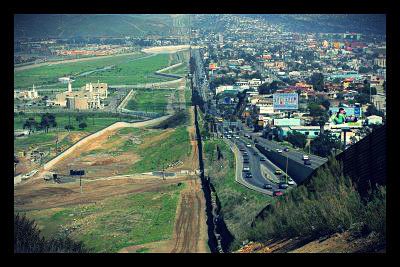
Immigration has always been a hot button issue, especially considering the comprehensive reform laws currently being debated by U.S. congressional leaders. However, what effect would the opening of the nation’s borders have on global poverty? According to several developmental thinkers, quite a bit, as adopting many of the mass migration policies called for in the open borders theory could hypothetically eliminate global poverty forever.

The researchers responsible for the open borders theory, drawn from such disparate fields as Mathematics, Economics, and Philosophy, argue that through the enforcement of a closed border policy, individuals are stripped of their basic human right of self-determination. Furthermore, by allowing migrants to move freely between nations, the net loss of labor productivity could theoretically double the world’s GDP through the mitigation of capital flow inefficiencies.

In regards to the open borders theory, developmental economist Michael Clemens noted that, “Immigration is very, very far from being a zero-sum game of their poverty or ours. Within ranges that even slightly resemble current migration levels, it is rather simply ‘their poverty or their prosperity,’ while we remain prosperous.”

Additionally, supporters of the open borders theory debunked the notion that a huge influx of migrants would depress the wages of developed countries based upon the net employment gains of the managerial sector. And by enabling efficient use of migrant skill sets underutilized by the inadequate facilities of the global south, developed economies would reap huge financial dividends.

Although the open borders theory is still in its infancy and years away from being considered as a realistic solution to global poverty, innovative ideas such as these help to encourage further debate involving current developmental policy. Michael Clemens remarked that, “Development is about people, not places.”

– Brian Turner

Source: The Atlantic
Photo: Women On The Border

May 5, 2013
https://borgenproject.org/wp-content/uploads/borgen-project-logo.svg 0 0 Borgen Project https://borgenproject.org/wp-content/uploads/borgen-project-logo.svg Borgen Project2013-05-05 01:18:512020-05-26 08:23:47The Open Borders Theory and Ending Global Poverty
Poverty Reduction, Women and Female Empowerment

Women Thrive Worldwide: Raising Women’s Voices

WomenThriveLogo
Women and children make up the majority of people in the world who live on less than $1 a day. Women are often responsible for providing for the family and keeping them healthy, yet, tragically, they often eat last and eat least. However, if this fragile population is given the chance to realize their full potential, they have the power to lift their communities and, indeed, entire countries out of poverty.

Far too often, global decisions about poverty and developing countries are made without accounting for the needs of women and girls. Without the opportunity to learn skills like reading and writing, it is nearly impossible for them to escape the cycle of poverty.

So what’s the solution?

Women Thrive Worldwide believes that the solution lies in raising women’s voices. Their staff works every day to ensure that the United States is investing in women and girls around the world and listening to what they have to say when it comes to making decisions on the global level by working with grassroots women’s organizations from Afghanistan to the Philippines to Zambia as well as dozens of other countries.

Women Thrive Worldwide purports that real change happens when women and girls are at the table and able to talk about what’s most important to them — issues such as freedom from violence, access to a quality education, and economic opportunity to lift their families out of poverty.

The organizations’s goal is to help bring the voices of women and girls around the world into discussions about the policies that impact their lives. Only then can their needs, priorities, and concerns be meaningfully addressed and effective solutions adopted to reduce poverty at the local level.

– Katie Brockman

Source: Huffington Post
Photo: Women Thrive

April 28, 2013
https://borgenproject.org/wp-content/uploads/borgen-project-logo.svg 0 0 Borgen Project https://borgenproject.org/wp-content/uploads/borgen-project-logo.svg Borgen Project2013-04-28 18:33:142020-05-26 07:47:09Women Thrive Worldwide: Raising Women’s Voices
Aid Effectiveness & Reform, Developing Countries, Extreme Poverty, Global Poverty, Nonprofit Organizations and NGOs, Poverty Reduction

$500 Million ‘Rescue Mission’ Initiative Launched

$500 Million 'Rescue Mission' Initiative LaunchedWith cuts to foreign aid looming and some already in place, humanitarian organizations are going to become even more important in the fight against global poverty. Evangelical organization World Vision launched a $500 million ‘Rescue Mission’ initiative to help 10 million children living in poverty.  The ‘Rescue Mission’ initiative will focus on clean water, access to health care, and child protection.

Under the budget cuts that went into effect as of January 1, 2013, non-profits are predicting that there will be 1.1 million fewer mosquito nets distributed, 300,000 fewer people with access to clean water, and 2 million people with reduced or zero access to food aid.  This is cause for serious concern as we look at being less than 1,000 from the end date for the Millenium Development Goals (MDG).

World Vision launched the $500 million ‘rescue mission’ dubbed “For Every Child” which seeks to raise $500 million by 2015.  It is the farthest-reaching endeavor World Vision has ever taken on.  The initiative will focus on clean water, fighting communicable diseases, providing small loans to families, and protecting children from human trafficking.

When the government cuts budgets, it can be difficult for non-profit organizations to get the start-up capital they need to start new ventures. This campaign is important to continue the life-saving work World Vision is already doing around the world.  It will hopefully fill the gap from government funds and continue to promote the MDGs as we near the final stretch.  We have halved poverty in the last decade and it is very possible to continue the downward trend, but it is going to take a lot of hard work.

While the needs are great and the costs seem high, the alternative to pushing forward is not an option. As Richard Sterns, Executive Director of World Vision put it, “We’ve taken a hard look at the needs that exist today. They are great, but we refuse to believe that poverty is too big, too expensive, or too difficult to overcome-because for the millions of children living in poverty, the stakes couldn’t be higher.”

– Amanda Kloeppel

Source: Christian Post

April 24, 2013
https://borgenproject.org/wp-content/uploads/borgen-project-logo.svg 0 0 Borgen Project https://borgenproject.org/wp-content/uploads/borgen-project-logo.svg Borgen Project2013-04-24 09:00:522020-06-12 23:12:22$500 Million ‘Rescue Mission’ Initiative Launched
Poverty Reduction

Wonderbag: An Energy-Saving Cooking Method

Wonderbag: An Energy-Saving Cooking Method
The Wonderbag is an invention that reduces energy use and cooking time, and can thereby save money and free time for activities other than cooking for its users. It is designed primarily to benefit poor women who spend much of their time preparing food. The Wonderbag was developed by Sarah Collins, who has worked in Africa in environmental conservation and eco-tourism. She released the Wonderbag in South Africa in 2008 and plans to extend its availability to 15 other countries including Nigeria, Rwanda, and Kenya, by 2015.

The Wonderbag is very simple to use. You simply prepare a meal such as stew or curry, bring it to a boil on the stovetop, then seal the pot or pan in the Wonderbag for a few hours. The bag insulates the food, allowing it to continue cooking unattended. This not only saves carbon dioxide from being released into the atmosphere, but also saves families money on fuel. In South Africa, where half the population lives in poverty, even a small reduction in fuel usage results in substantial monetary savings. The Wonderbag can reduce an average South African family’s fuel need by up to 30 percent.

The Wonderbag is not a charity. The business sells the bags for around $45 but some are subsidized for those unable to pay the full amount. Carbon credits earned from greenhouse gas reductions, as well as a deal with sustainability-focused global manufacturer Unilever, account for the subsidies.

While the Wonderbag certainly saves time, money, and fuel over the long run, it remains to be seen whether the invention will empower women to become active in other ways. If women are able to enjoy more freedom, leisure time, and pursue self-empowering activities outside of the home as a result of using the Wonderbag, then the bag will truly succeed at reducing poverty.

– Kat Henrichs

Source: The Guardian

April 16, 2013
https://borgenproject.org/wp-content/uploads/borgen-project-logo.svg 0 0 Borgen Project https://borgenproject.org/wp-content/uploads/borgen-project-logo.svg Borgen Project2013-04-16 14:12:132020-06-12 01:16:24Wonderbag: An Energy-Saving Cooking Method
Food Security, Poverty Reduction

Niger’s 3N Initiative to Improve Food Security

Niger's 3N Initiative to Improve Food Security
The African country of Niger, a landlocked nation in the north-central part of the continent in the Sahel region, has struggled intermittently with food security for the last fifty years. Before the 1960s, Niger was a productive agricultural region that was not only self-sustaining but exported cereal grains. Now, due to a rapidly growing population, recurring droughts and poverty, Niger struggles to grow enough food to feed its people.

The Nigerien government is implementing an ambitious agricultural transformation plan called the 3N Initiative – Nigeriens Feeding Nigeriens. It is estimated to cost $2 billion in the first three years and will address issues and reformations in the agricultural, environmental, industrial, and energy sectors. Initiatives range from providing farmers with technology and seeds to expanding market access and management.

Overcoming obstacles to food and nutrition security in Niger is no small task. Drought is the main impediment to productive agriculture: Niger experiences drought at least once every two years, although droughts have been increasing in the last decade. Only one percent of the country’s land receives more than 23 inches of rain each year, and just 12 percent of the land can sustain agriculture.

In a country where eighty percent of the population depends on agriculture for sustenance and livelihood, addressing agricultural issues is critical. Niger has one of the fastest-growing populations of any country, has doubled from 7 million in 1988 to 15 million in 2010. In addition to population growth and drought, unstable food prices have contributed to food insecurity throughout the Sahel region. The prices of staple cereal grains such as millet are well above the five-year average. For the world’s poor, food accessibility is just as important as agricultural productivity in improving health and quality of life.

Attempts by previous Niger administrations to achieve food security have clearly not been successful in the long run. Current national administrators say that political will, coordination, and centralized leadership set the 3N Initiative apart. The Nigerien government is working to draft legislation that will ensure the existence of the Initiative well into the future.

Both Niger and the Food and Agriculture Organization (FAO) acknowledge the urgency of addressing food security throughout the Sahel region, which suffered a major drought and resulting famine in 2010. Niger’s FAO representative states that addressing food security is necessary for every country in the region. Niger’s 3N Initiative, if successful, can serve as an example for other African countries seeking to achieve food security through agricultural and political transformation.

– Kat Henrichs

Source: FAO
Photo: AusAID

April 15, 2013
https://borgenproject.org/wp-content/uploads/borgen-project-logo.svg 0 0 Borgen Project https://borgenproject.org/wp-content/uploads/borgen-project-logo.svg Borgen Project2013-04-15 13:00:182024-05-24 23:48:04Niger’s 3N Initiative to Improve Food Security
Charity, Poverty Reduction

Red Nose Day 2013

red nose day
Friday, March 15, 2013 was best spent celebrating Red Nose Day by sitting in front of the television watching Comic Relief – Funny for Money on BBC One. The show was full of comical sketches, musical performances, and celebrity appearances all to help raise money for Comic Relief, an organization working to make the world poverty free. It definitely resulted in a great deal of laughter, which is the point of Red Nose Day, which promotes “having fun and changing lives” as one of its main goals.

Red Nose Day is a day for everyone “to put on their Noses, pull out all the stops, and get fundraising,” according to the official website. Literally, everyone puts on red noses and clowns around, eliciting laughter and donations. Celebrity support of the day came from an array of celebrities – from Rihanna, who donned a Stella McCartney red nose t-shirt, to Ron Burgundy of Anchorman, who performed in one of the comical sketches. And, of course, One Direction, a big supporter of the Comic Relief organization, made an appearance, performing their hit song, and the official Red Nose Day single, One Way or Another (Teenage Kicks). Yet, one celebrity stood above the rest, Jessie J, a panelist for the show The Voice. On live television, Jessie J sacrificed her lustrous black bob in order to boost the amount of money raised, all of which is going to Comic Relief. After shaving her head she said, “It is the weirdest feeling” to have no hair!

The money raised for Comic Relief is going to help support a variety of people and projects in both the United Kingdom and Africa. In the United Kingdom, it will, amongst many other things, help provide shelter to young adults living on the streets and help protect those who have suffered from domestic abuse. In Africa, it will help by providing life-saving treatment for malaria to communities by giving them access to clean and fresh water and much needed vaccines.

Red Nose Day was celebrated throughout the United Kingdom and Africa. As of 6:30pm on Friday night, it had raised over £75 million, setting a new record for the most money raised in the 25 years since its creation. The total amount raised, however, has not yet been released.

If you missed the “the star-studded and unmissable Comic Relief- Funny for Money” show on Friday, don’t worry! You can get exclusive clips on iTunes, with all purchases going to support Red Nose Day.

– Angela Hooks

Sources: UK Yahoo, Red Nose Day, BBC
Photo: Red Nose Day

March 20, 2013
https://borgenproject.org/wp-content/uploads/borgen-project-logo.svg 0 0 Borgen Project https://borgenproject.org/wp-content/uploads/borgen-project-logo.svg Borgen Project2013-03-20 14:30:262021-12-14 03:01:08Red Nose Day 2013
Developing Countries, Development, Poverty Reduction

Can Aid For Trade Reduce Poverty?

Can Aid For Trade Reduce Poverty?In 2005, the World Trade Organization (WTO) launched its Aid for Trade initiative, which works to reduce poverty in developing countries through trade. In most developing countries, supply-side and trade-related infrastructure problems hinder the ability to participate in international trade. The Aid for Trade initiative works to educate governments on the potential for trade to work towards development.

The World Trade Organization has managed to raise $200 billion worth of funding for the initiative that will go towards resource mobilization, the mainstreaming of trade into development plans and programs, regional trade integration, private-sector development, and the monitoring and evaluation of Aid for Trade. Emphasis is placed on gathering support and resources to counter constraints that deter trade in developing countries. Aid for Trade works on the assumption that “a rising tide floats all boats,” meaning that as national wealth increases, the poor will profit as well.

Some NGOs, however, question the viability of this method in reducing poverty. A study was commissioned by Traidcraft and the Catholic Agency for Overseas Development to look into the real impacts of these projects on the poor. Saana Consulting reported that most of the funding had gone to middle-income rather than low-income countries. They had also found that the program had little impact on the poor, calling the assumption that it will have an effect “a leap of faith.”

Donors have admitted that impacts are indeed difficult to track. Adaeze Igboemeka, head of Aid for Trade at the UK Department for International Development, concedes that there is indeed a lack of information, as the programs impacts on poverty are seemingly indirect.“The assumption,” Igboemeka said, “is – and there is a lot of evidence to support it – that if a country is able to trade more, it will grow, and that will create jobs and increase incomes and lead to poverty reduction.”

The consensus seems to be that, generally, trade is good. However, for now, there is not enough information and time to accurately project its impact on poverty reduction.

– Rafael Panlilio

Sources: The Guardian, WTO

March 17, 2013
https://borgenproject.org/wp-content/uploads/borgen-project-logo.svg 0 0 Borgen Project https://borgenproject.org/wp-content/uploads/borgen-project-logo.svg Borgen Project2013-03-17 11:18:152024-06-04 02:43:50Can Aid For Trade Reduce Poverty?
Page 61 of 63«‹5960616263›»

Get Smarter

  • Global Poverty 101
  • Global Poverty… The Good News
  • Global Poverty & U.S. Jobs
  • Global Poverty and National Security
  • Innovative Solutions to Poverty
  • Global Poverty & Aid FAQ’s
Search Search

Take Action

  • Call Congress
  • Email Congress
  • Donate
  • 30 Ways to Help
  • Volunteer Ops
  • Internships
  • Courses & Certificates
  • The Podcast
Borgen Project

“The Borgen Project is an incredible nonprofit organization that is addressing poverty and hunger and working towards ending them.”

-The Huffington Post

Inside The Borgen Project

  • Contact
  • About
  • Financials
  • President
  • Board of Directors
  • Board of Advisors

International Links

  • UK Email Parliament
  • UK Donate
  • Canada Email Parliament

Get Smarter

  • Global Poverty 101
  • Global Poverty… The Good News
  • Global Poverty & U.S. Jobs
  • Global Poverty and National Security
  • Innovative Solutions to Poverty
  • Global Poverty & Aid FAQ’s

Ways to Help

  • Call Congress
  • Email Congress
  • Donate
  • 30 Ways to Help
  • Volunteer Ops
  • Internships
  • Courses & Certificates
  • The Podcast
Scroll to top Scroll to top Scroll to top