• Link to X
  • Link to Facebook
  • Link to Instagram
  • Link to TikTok
  • Link to Youtube
  • About
    • About Us
      • President
      • Board of Directors
      • Board of Advisors
      • Financials
      • Our Methodology
      • Success Tracker
      • Contact
  • Act Now
    • 30 Ways to Help
      • Email Congress
      • Call Congress
      • Volunteer
      • Courses & Certificates
      • Be a Donor
    • Internships
      • In-Office Internships
      • Remote Internships
    • Legislation
      • Politics 101
  • The Blog
  • The Podcast
  • Magazine
  • Donate
  • Click to open the search input field Click to open the search input field Search
  • Menu Menu

Archive for category: Poverty Reduction

Information and stories about poverty reduction.

Extreme Poverty, Poverty Reduction

UN Warns Environmental Threats Increase Poverty

UN Warns Environmental Threats Increase PovertyA report released by the UN warns that the number of people in extreme poverty could rise by 3 billion in 2050 unless immediate action is taken to combat environmental threats.

The 2013 Human Development Report had stated that more than 40 countries have shown significant improvement on health, wealth and education with rapid increases in Brazil, China, India as well as many other developing countries. The percentage of those living in extreme poverty, or living on $1.25 a day or less, had fallen from 43% to 22% from 1990 to 2008. This is attributed to significant successes in poverty reduction and economic growth in China and India. In response to this statistic, the World Bank has said that the Millennium Development Goal of decreasing extreme poverty by half by 2015 was ahead of schedule.

However, the UN had also reported that if environmental challenges such as climate change, deforestation, and air and water pollution were left unaddressed, human development progress in the poorest countries could come to a halt and possibly be reversed. Environmental threats and ecosystem losses are worsening the living situations and hindering the livelihood opportunities of many poor people. Building on the 2011 edition of the report arguing for sustainable development, the UN warns that unless coordinated global action is taken to combat environmental issues, the number of people in extreme poverty could rise.

“Environmental threats are among the gravest impediments to lifting human development,” the report says. “The longer action is delayed, the higher costs will be.”

– Rafael Panlilio

Source: Flickr

March 16, 2013
https://borgenproject.org/wp-content/uploads/borgen-project-logo.svg 0 0 Borgen Project https://borgenproject.org/wp-content/uploads/borgen-project-logo.svg Borgen Project2013-03-16 22:15:312020-05-24 23:36:05UN Warns Environmental Threats Increase Poverty
Poverty Reduction

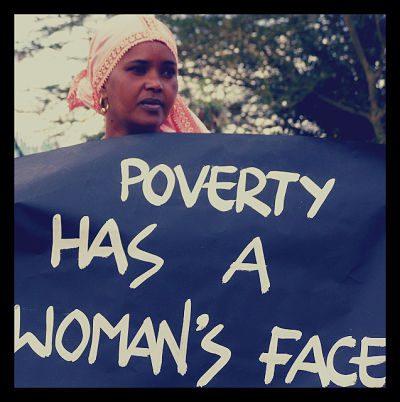
Poverty Reduction Efforts on Women

Poverty Reduction Efforts on WomenProgress in the fight against poverty has demonstrated the importance of focusing on poverty alleviation efforts on women and children. Despite the great gains that have been made, gender inequality and violence against women still exist in every country in the world. Poverty reduction efforts should focus on women because women are vital to sustainable development. The empowerment of women leads to economic growth and increased social stability.

Poverty reduction efforts should focus on women because women have fewer opportunities for equal and meaningful education, jobs, and health care. Access to these human rights is essential in order to escape from poverty. Currently, women own only one percent of all property and earn just 10 percent of all income, yet they produce half of the world’s food.

Over 70 percent of the world’s poor, those living on less than $1.25 USD per day, are women. Because women compose the majority of those living in poverty, and because they face additional hurdles in achieving economic and social equality and success, poverty reduction efforts should focus on women across the globe, especially among the most disadvantaged and marginalized populations.

Most of the world’s poor women spend the majority of their time performing household chores, including cooking, cleaning, growing or obtaining food, collecting fuel and water, and caring for family members. Women do not receive monetary compensation for these tasks, yet they compose up to 63 percent of the gross domestic product in countries like India and Tanzania. Time and energy spent on these essential tasks result in fewer opportunities for advancement, such as education or economic pursuits.

A 2000 study by the International Food Policy Research Institute found that the majority of the reduction in global hunger between 1970 and 1995 could be attributed to the improvement of women’s social status. Progress in women’s education, food availability, and health care all played major roles in the reduction of hunger.

Because women play a major role in the world’s food production, poverty reduction efforts should focus on women farmers in order to help them earn a viable income and rise above poverty. Programs have been instituted in China, Bangladesh, and the Philippines that subsidize women farmers in order to allow them to grow food while earning extra income from selling vegetables or raising animals. Access to adequate sanitation facilities, health care, and children’s education are also priorities for bringing more women out of poverty.

– Kat Henrichs

Sources: Center for American Progress, NY Times
Photo: Muslimah Source

March 13, 2013
https://borgenproject.org/wp-content/uploads/borgen-project-logo.svg 0 0 Borgen Project https://borgenproject.org/wp-content/uploads/borgen-project-logo.svg Borgen Project2013-03-13 11:16:422020-05-24 23:09:38Poverty Reduction Efforts on Women
Poverty Reduction

Can Charter Cities Help Eliminate Poverty?

Can Charter Cities Help Eliminate Poverty?When many of us imagine utopias, we may have flashbacks to our 7th-grade reading assignment of Lois Lowry’s The Giver. Paul Romer, however, has created a ‘concept’ over the past few years that leaves all imagined futuristic cities in the dark. Romer’s concept or “start-up” cities don’t actually possess any futuristic characteristics. They revolve around three basic principles: an independent watchdog, the influence of an external legal framework, and business investors. The product of these will “help drive economic growth…and reduce poverty and enhance development”.

Cities such as the ones Romer has tried to establish around the world were somewhat common during the period of industrial growth in the western world. When new factories would pop up, communities were built around them providing homes, schools, and other institutions for the workers. Romer, however, stresses that his cities are nothing like these. “A city built solely by a private business will just become a modern company town — a corporate city, not a charter city”.

His latest attempt was in Honduras. In partnership with the U.S. investment group MGK, Romer was hoping to create a city that would lure in businesses to revitalize the city and provide jobs. President Profirio Lobo Sosa cooperated, thereby facilitating the process of creating the city. However, in the fall of 2013, major issues began to rise. There was a lack of a solid independent ‘big brother’ for the city. There was no way the city was going to exist alone alongside the corruption in the Honduran government. Aside from that, the Honduran Supreme Court overturned the law that would create the charter city. Romer left the project in September with the investment group shortly abandoning it 2 months later.

Why did this project fail? Was it the concept or the lack of requirements that were being met? Paul soon found out that perhaps his venture’s foundation was too broad. Creating a city out of almost nothing (“Rome wasn’t built in a day” they say) requires confidence from numerous sources, especially given the participants required for charter cities. Of course, the external countries need to provide revenue and training, but if they do not trust the government of the country they are working with, the projects will fail.

Perhaps Honduras was not ready for a charter city. Charter cities have to be in countries that are ready for change; whose governments are willing to take on a drastic idea and let it redefine their communities. Countries such as those affected by the Arab Spring.

Tunisia and Morocco, where Romer is currently expanding his ideas to, have few preexisting symptoms that would make charter cities such a good fit for them. For one, they have a large population of unemployed and consequently agitated, youth. Their political leaders are desperate for a change both politically and economically, something charter cities can achieve.

There are those however who believe Romer’s approach is too complex and can create more problems than it solves. Michael Strong of MGK sees the involvement of the outside countries as too much. He believes that the charter city’s country should focus on developing a relationship with the private investors of the city and keep all affairs internal.

All in all, the use of charter cities offers a novice approach to create semi-autonomous patches of peace and economic success within countries that are slowly trying to reinvent themselves whether it’s out of political upheaval or recession. Even though there are some projects that have not had too much success such as the Georgian city of Lazika, the energy and thought put into building these cities, whether from scratch or renewing a fallen one, will not go wasted and unnoticed.

– Deena Dulgerian

Photo:The Economist

March 4, 2013
https://borgenproject.org/wp-content/uploads/borgen-project-logo.svg 0 0 Borgen Project https://borgenproject.org/wp-content/uploads/borgen-project-logo.svg Borgen Project2013-03-04 12:51:402024-12-13 17:53:42Can Charter Cities Help Eliminate Poverty?
Development, Poverty Reduction

The World Alliance of Cities Against Poverty

The World Alliance of Cities Against PovertyOne voice may not always be enough for the world to hear, but when a community of more than 900 cities joins together to combat and confront development challenges such as global poverty, being heard is a guarantee. The World Alliance of Cities Against Poverty (WACAP) is a network of more than 900 cities, some of them located in nations such as the United Kingdom, Turkey, Ethiopia, among many more. This vast number of cities collaborate together to mobilize change with individuals, governments, and anyone willing to bring a helping hand into confronting and ending global poverty.

When a community comes together, there is the power of partnership and collaboration to depend upon. With this strength magnified, the ability of the network to make strides in development is multiplied.

When a city wants to join WACAP, they don’t only envision an improvement in their own communities, but an open opportunity to help fight urban poverty everywhere. This is the idea of cities helping cities. The cooperation between the cities is a vision of strengthening development. In the mission of WACAP, this vision is comprised of sustainable development in the urban context, understood through economic, environmental, and social dimensions.

Poverty kills thousands and leaves many people leading lives of constant despair and struggle. In order to create hope for these people living in poverty-stricken cities, WACAP is in an enduring partnership that will work to alleviate their suffering and build community networks that people can rely on.

– Jada Chin

Source: WACAP

March 3, 2013
https://borgenproject.org/wp-content/uploads/borgen-project-logo.svg 0 0 Borgen Project https://borgenproject.org/wp-content/uploads/borgen-project-logo.svg Borgen Project2013-03-03 12:30:542020-05-17 21:48:10The World Alliance of Cities Against Poverty
Global Poverty, Poverty Reduction

The South Asian Paradox

The South Asian Paradox
South Asia is experiencing what one World Bank economic advisor is calling the South Asian Development Paradox. Ejaz Ghani notes that despite experiencing rapid economic growth, the region still houses the largest concentration of people living in poverty in the world. Ghani writes on his observations and makes recommendations on how to remedy this South Asian Paradox.

India makes up nearly 80 percent of South Asia’s GDP and is recognized as an emerging economic powerhouse. This progress is being experienced as well by other South Asian countries transitioning from low-income to middle-income status. Regardless, what is being seen right now is a shift in the “geography of poverty.” More than 70 percent of the world’s poor are now concentrated not in low-income countries but in these middle-income countries with more poor people in South Asia than there are in Sub-Saharan Africa. Ghani predicts that this is a pattern that is likely to continue over the next decade.

In South Asia, the number of poor has increased from 549 million in 1981 to 595 million in 2005. In India, where three-quarters of these poor reside, the numbers rose from 420 million to 455 million. Oddly enough, the poverty rate for India fell from 60 percent to 40 percent in this same time frame. Conventional wisdom has associated decreasing poverty rates to growth. Poverty rates are indeed going down but not at fast enough rates to reduce the number of poor people. This lag in poverty reduction is not due in part to underperformance as India, China, Sri Lanka, and Bangladesh are in line with the global trend and what economic growth would predict it to be. Unfortunately, South Asian countries have not fared as well as China and Thailand. Merely being on par with the global trend is not enough for South Asia, which has the largest concentration of the poor.

Ghani posits two big questions for South Asia:

• Has the pace of poverty reduction kept up with the pace of income growth?
• Has the pace of human development and gender parties kept up with the pace of income growth?

With what is being seen happening in South Asia, the alternative view that growth by itself without improving social indicators such as education, health, and women’s participation in economic activities may not be enough, seems to ring true. He compares India to China, which has roughly the same population. Both have witnessed an increase in inequality of distribution of wealth across people, with inequality in China increasing more rapidly. Despite this, China has seen much faster poverty reduction while India has experienced much slower economic growth.

Ghani notes that South Asia lags behind in education, health and gender inequality. In India, the growth enrollment ratio in secondary school, the ratio of the number of students attending university to the number of students attending school, is 40 percent, much lower than East Asia’s which is at 70 percent. Also, the region is plagued with the highest rates of malnutrition and the largest number of undernourished children in the world. In terms of gender inequality, women’s labor-force participation rate in South Asia is the lowest in the world.

To address this South Asian Paradox, Ghani prescribes direct policy interventions to accelerate social progress. In particular, he stresses the importance of improving gender inclusiveness. By reducing gender inequality in the workforce and education, South Asia can hope to see a revolutionary transformation in society.

– Rafael Panlilio

Source: World Bank

March 1, 2013
https://borgenproject.org/wp-content/uploads/borgen-project-logo.svg 0 0 Borgen Project https://borgenproject.org/wp-content/uploads/borgen-project-logo.svg Borgen Project2013-03-01 10:40:592020-05-13 23:45:05The South Asian Paradox
Aid Effectiveness & Reform, Poverty Reduction

3 Important Factors For Haiti Earthquake Recovery

3 Important Factors For Haiti Earthquake Recovery
Despite global outreach following the massive earthquake on January 12, 2010, Haiti has been stalled in effectively alleviating the widespread poverty historic to the island, which has increased dramatically after the disaster. President Michel Martelly, elected twenty months ago, has recently proposed a five-point plan of employment, rule of law, education, environment, and energy to help lift his country out of turmoil. But this plan will not affect stagnation unless Haiti addresses its dysfunctional political system, public frustration, and donor fatigue.

1. Political System
The political system in Haiti is one factor that is working against the Haiti earthquake recovery. The system is conducive to winner-takes-all politics, which makes compromise, an essential aspect of a stable political system, difficult to attain. It is also unhelpful that President Martelly faces an opposition-dominated parliament that only exacerbates the inability to compromise. Haiti does not currently have any strong political parties that represent the majority of its poor citizens. This has lead to a system that relies mainly on cronyism rather than public support in order to get things done.

2. Public Frustration
The unfair political climate has led to frustration among the Haitian public. A staggering 350,000 citizens that lost their homes during the earthquake over two years ago are still living in camp settlements across the capital. These people are waiting to see tangible improvements to their daily lives. Their plight has not been made any easier by the drought, two tropical storms and rising food prices. The president faced 128 public protests across Haiti between the months of August and October alone, according to the International Crisis Group.

3. Donor Fatigue
Not only the general public, but also foreign aid donors are feeling frustration over Haiti’s political gridlock. The lack of transparency with foreign aid funds and lack of progress in reconstruction is causing Canada, one of the biggest supporters of Haitian renewal, to reconsider tens of millions of dollars that was meant for the country. According to figures published by the United Nations, only half of the $6.04 billion pledged to Haiti since the earthquake has been disbursed to the country thus far, and only ten percent of that figure was distributed directly to the government. Until Haiti finds a solution for its political woes, the financial aid that Haiti’s earthquake recovery needs could be in a gridlock of its own.

While these issues are important to consider for the Haiti earthquake recovery, it is also important to keep in mind that the international community is still deeply interested in seeing a Haitian recovery. Identifying the key obstacles to any issue is the first step to solving them. Hopefully, steps two to infinity will present themselves sooner rather than later.

– Sean Morales

Source: AlertNet
Photo: Christian Science Monitor

February 25, 2013
https://borgenproject.org/wp-content/uploads/borgen-project-logo.svg 0 0 Borgen Project https://borgenproject.org/wp-content/uploads/borgen-project-logo.svg Borgen Project2013-02-25 10:32:592020-05-11 04:15:053 Important Factors For Haiti Earthquake Recovery
Children, Developing Countries, Development, Extreme Poverty, Foreign Aid, Poverty Reduction

Teenager Helps Residents of a Garbage Dump

Teenager Helps Residents of a Garbage DumpWhile most teenage girls her age are reluctant to take out the trash, Courtney Quigley is begging her parents to return to Guatemala City to help the poverty-stricken residents of a garbage dump there. In the past, Courtney has worked with Potter House, a nonprofit which helps the 11,000 people living in the garbage dump. Out of that population, 6,500 are children.

According to the Lake Zurich Patch, Courtney first fell in love with Guatemala when she was nine and her family took a trip to build playgrounds with Kids Around the World, an organization whose primary goal is to provide safe play equipment for children who find it difficult to be “just a kid.” Courtney describes the garbage dump as being 40 acres filled with trash and yet the children somehow manage to stay positive and in high spirits.

While her family has been on other mission trips, Courtney has fallen in love with Guatemala. She was able to return in 2011, meeting a family of seven who lived in a 9 x 10 shack. One of the children, a 15-year-old girl, was pregnant and Courtney decided that something needed to be done to help improve their living condition.

To help, Courtney and her friends are hosting a “Hope’s in Style” fashion show fundraiser on February 24 at the Garlands Center in Barrington, Illinois.

Although she is now living in the United States, the memory of the children in Guatemala still remains vivid in her mind.

“There is nothing here that is hopeful, but when you shake hands, hug, and talk to people, they are so full of hope, so full of faith,” Courtney said. Their determination to make the best of their situation is what inspires her to keep moving forward.

 – Pete Grapentien

Source: Lake Zurich Patch

February 24, 2013
https://borgenproject.org/wp-content/uploads/borgen-project-logo.svg 0 0 Borgen Project https://borgenproject.org/wp-content/uploads/borgen-project-logo.svg Borgen Project2013-02-24 12:47:412020-05-11 03:55:29Teenager Helps Residents of a Garbage Dump
Politics and Political Attention, Poverty Reduction

Raise the Minimum Wage, Inflation is Real!

Raise the Minimum Wage, Inflation is Real!In his State of the Union address, President Obama has called for a national increase in the minimum wage standard of the country. The President has proposed to raise the minimum wage to $9 from its current $7.25. The newly proposed amount would also have safeguards to account for inflation, which the current standard does not.

This demand comes at a time when the National Center for Law and Economic Justice supports that one in seven Americans lives in poverty, with one in sixteen Americans living in deep poverty. Poverty, of course, exacerbates tension and has been linked to decreased social mobility, increased rates of violence, and increased likelihood of being a young parent.

Addressing poverty, both at home and abroad, is a key, central way to better the standard of living for millions as the better able families are to support themselves, the more efficient the employee, the better the consumer, and the more stable the economy.

CNNMoney, however, has debunked the myth that raising the minimum wage in America is the only element necessary to raise a family out of poverty. For a family of four making at least $9/hr, and while taking advantage of several key tax breaks, Tami Luhby of CNNMoney writes that the new rate would be barely enough to lift the family above the poverty line, and hardly enough to raise their standard of living by much in light of the U.S.’s dependence on a tax code that has been decried as “broken” by many.

While raising the minimum wage would be a step in the right direction towards addressing poverty in the United States, advocates for economic justice argue that helping people find higher-paying jobs is another, more effective, means of fighting poverty.

– Nina Narang

Sources: NCLEJ, CNNMoney
Photo: Occupy

February 18, 2013
https://borgenproject.org/wp-content/uploads/borgen-project-logo.svg 0 0 Borgen Project https://borgenproject.org/wp-content/uploads/borgen-project-logo.svg Borgen Project2013-02-18 16:50:422020-05-13 23:00:13Raise the Minimum Wage, Inflation is Real!
Poverty Reduction

Bangladesh Poverty Reduction Story Wins UNDP Award

Shyamola Begum And Her Two Daughters
A story of poverty reduction in Bangladesh has come in second place in an annual U.N. Development Programme Competition. The purpose of the competition was to capture the result of transformative development in a story. “These stories highlight UNDP’s critical work on poverty reduction, democratic governance, crisis prevention and recovery and the environment and sustainable development,” said UNDP chief Helen Clark.

The story involves Shyamola Begum of Dhaka and how she managed to support herself and her two children after her husband left her. Shyamola’s situation is not uncommon in Dhaka. Every year, tens of thousands of women are left by their husbands who have given up hope in the face of poverty and lack of employment opportunities. However, after receiving an entrepreneur grant of roughly $30 from the UK’s Urban Partnerships for Poverty Reduction fund, Shyamola was able to open a tea stall. In just a few months, she had more than doubled her investment.

“Until I became destitute, I had never imagined I could run a business, that I could do accounts, that I could be successful,” said Shyamola.

Her success is also not uncommon. Over the past five years, 55,000 families like Shyamola’s all across Bangladesh have received similar assistance from UPPR, the largest urban poverty reduction initiative in Bangladesh. Over the past decade, Bangladesh’s poverty has decreased by half, 90 percent of young girls are enrolled in schools and child mortality has gone down by 60 percent.

Regarding the UNDP stories, Clark said, “They remind us that people are and always will be the center of UNDP’s work.”

– Rafael Panlilio

Source: The Daily Star, UNDP


February 16, 2013
https://borgenproject.org/wp-content/uploads/borgen-project-logo.svg 0 0 Borgen Project https://borgenproject.org/wp-content/uploads/borgen-project-logo.svg Borgen Project2013-02-16 09:00:102020-04-08 20:14:21Bangladesh Poverty Reduction Story Wins UNDP Award
Advocacy, Poverty Reduction

Top 7 Celebrities Helping the World’s Poor

brad-pitt-angelina-joli-charity-poverty

Sometimes we just want to know who is doing what to help those less fortunate, especially what celebrities are doing. Those special individuals who have tremendous wealth and are compelled to give some away in recognition of their good fortune, and in stark contrast to those who have so very little.

The site Look to the Stars lists celebrities and all their philanthropic contributions. The top 7 celebrities who are helping the world’s poor are Brad Pitt and Angelina Jolie who together give to 27 charities and in 2006 alone gave away $8 million. Bono is next on the list, not only contributing to 14 specifically humanitarian groups but actively creating organizations, concerts, programs, strategies and even clothing to reduce poverty. Then, Bill Clinton follows with contributions to 13 organizations, but primarily focuses on the foundation he created in his name to help with humanitarian causes. Rock legend and well-known philanthropist Annie Lennox donates to 11 related charities, principally Amnesty International and Greenpeace. George Clooney not only contributes to 10 poverty groups but also created his own campaign specifically to help those suffering in Darfur – Not On Our Watch. The seventh leading celebrity actively addressing poverty issues is musician John Legend, supporting 7 related campaigns and starting his own with partner Jeffrey Sachs – the Poverty Action Tour, trying to educate and inspire U.S. university students to get involved in the cause.

Top charities being supported by celebrities to assist the world’s poor are UNICEF, Save the Children, Oxfam, Entertainment Industry Foundation, Comic Relief, Soles4Souls, Artists for Peace and Justice, ONE Campaign, Sport Relief, (RED).

Interestingly, Bono was compelled to start his charitable work after seeing The Secret Policeman’s Ball in 1979, and John Legend immediately took action after reading The End of Poverty by Earth Institute, director Dr. Jeffrey Sachs.

– Mary Purcell

Source: Look To The Stars
Photo: Hollywoodnose

February 16, 2013
https://borgenproject.org/wp-content/uploads/borgen-project-logo.svg 0 0 Borgen Project https://borgenproject.org/wp-content/uploads/borgen-project-logo.svg Borgen Project2013-02-16 09:00:052020-04-08 20:11:47Top 7 Celebrities Helping the World’s Poor
Page 62 of 63«‹60616263›

Get Smarter

  • Global Poverty 101
  • Global Poverty… The Good News
  • Global Poverty & U.S. Jobs
  • Global Poverty and National Security
  • Innovative Solutions to Poverty
  • Global Poverty & Aid FAQ’s
Search Search

Take Action

  • Call Congress
  • Email Congress
  • Donate
  • 30 Ways to Help
  • Volunteer Ops
  • Internships
  • Courses & Certificates
  • The Podcast
Borgen Project

“The Borgen Project is an incredible nonprofit organization that is addressing poverty and hunger and working towards ending them.”

-The Huffington Post

Inside The Borgen Project

  • Contact
  • About
  • Financials
  • President
  • Board of Directors
  • Board of Advisors

International Links

  • UK Email Parliament
  • UK Donate
  • Canada Email Parliament

Get Smarter

  • Global Poverty 101
  • Global Poverty… The Good News
  • Global Poverty & U.S. Jobs
  • Global Poverty and National Security
  • Innovative Solutions to Poverty
  • Global Poverty & Aid FAQ’s

Ways to Help

  • Call Congress
  • Email Congress
  • Donate
  • 30 Ways to Help
  • Volunteer Ops
  • Internships
  • Courses & Certificates
  • The Podcast
Scroll to top Scroll to top Scroll to top