• Link to X
  • Link to Facebook
  • Link to Instagram
  • Link to TikTok
  • Link to Youtube
  • About
    • About Us
      • President
      • Board of Directors
      • Board of Advisors
      • Financials
      • Our Methodology
      • Success Tracker
      • Contact
  • Act Now
    • 30 Ways to Help
      • Email Congress
      • Call Congress
      • Volunteer
      • Courses & Certificates
      • Be a Donor
    • Internships
      • In-Office Internships
      • Remote Internships
    • Legislation
      • Politics 101
  • The Blog
  • The Podcast
  • Magazine
  • Donate
  • Click to open the search input field Click to open the search input field Search
  • Menu Menu

Archive for category: Nonprofit Organizations and NGOs

Information and stories about nonprofit organizations and NGOs

Activism, Advocacy, Global Poverty, Health, Nonprofit Organizations and NGOs, Volunteer

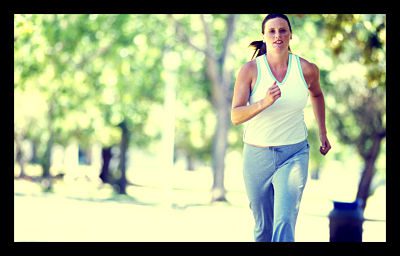
5 Ways to Make Your Workout Fight Poverty

Workout_Fight_Poverty
We all know working out is good for us. It makes you feel good and improves your health. But what if your workout could fight poverty as well? Sound too good to be true? It’s not! Here are 5 ways that you can help end poverty with your workout:

1) Charity Miles: This free app will track how many miles you run, walk, or bike and sponsor your efforts. For every mile you run or walk, they’ll donate a quarter, while a mile biking translates to a dime for charity. When you’re done with your workout, you share your success on a social media site and they send the money to a charity of your choice!

2) Run For Charity: This website will help you find a charity to run for. Charity runners use their training and hard work to raise money for the charity of their choice. Charities are extremely supportive of their runners, providing help with registration, training, and fundraising. Some will even have race day events for their runners. This is a great opportunity for runners to put all those miles to good use.

3) Plus 3 Network: This network was created by four guys who wanted to encourage people to get out and ride their bikes more. It has since grown to include all forms of exercise, which you can log on their website. You earn money for charity by logging your activity, so you feel even better about that yoga class or walk around the block.

4) Eco-Friendly Workout Gear: You show yourself some love by working out and staying healthy. Show the earth some love, too, by purchasing eco-friendly workout gear. Be sure to buy your shoes, socks, and clothing from eco-friendly companies like Montrail (shoes), Teko (socks), or Patagonia (clothing). Using reusable water bottles will keep plastic ones out of landfills and save you money. You can also look for secondhand fitness supplies, like weights, treadmills, and exercise balls to cut down on waste.

5) Donate Your Old Workout Gear: That fitness equipment that you just don’t use anymore could help someone else lead a healthier life. You can donate old sports balls, shoes, cleats, and the like to Sports Gifts, which redistributes old workout gear to underprivileged kids. Old tennis balls can go to Rebounces, which restores them and resells them as practice balls, saving space in our landfills. Your old orthotics that helped you get back to the activities you love can be given to Rebounces’ philanthropic organization, Joni and Friends. The nonprofit will give the equipment to disabled or injured people in the developing world.

– Katie Fullerton

Sources: Charity Miles, Plus 3 Network, SparkPeople, Oprah
Photo: DX Foundation

August 27, 2013
https://borgenproject.org/wp-content/uploads/borgen-project-logo.svg 0 0 Borgen Project https://borgenproject.org/wp-content/uploads/borgen-project-logo.svg Borgen Project2013-08-27 10:35:512024-05-25 00:19:415 Ways to Make Your Workout Fight Poverty
Global Poverty, Health, Nonprofit Organizations and NGOs, Sanitation, War and Violence, Water

Sanitation and Clean Water is an Issue In Liberia

In 2003, Liberia finally came out of a thirteen-year long civil war that ravaged the country and left the inhabitants riddled with poverty. Right after the end of the war, the unemployment rate was listed at 85 percent of the population. The populations in the slums skyrocketed and the people living there were left with little choice of where to obtain water or where to use the bathroom. During the war, rebels destroyed much, if not all, of the water and sanitation infrastructure the country once had. A decade later, much of the population is still impoverished and lacking access to the basic needs of potable water and a sanitary living area. In 2010, there were almost 4 million people living in Liberia, over 1 million of which were rural poor. However, there is a stress for clean water in slums, from where a number of people from rural areas fled to Monrovia during the fighting and violence in an attempt to find refuge. For every four people, there is one living without access to clean water and sanitation in Liberia, and for every five deaths in the country, one is a result of contaminated water sources. In fact, in 2012, the World Health Organization discovered that E. coli was present in 58 percent of the city’s water due to public defecation. This spreads illness such as diarrhea and perpetuates the issue, creating a cycle of illness through dirty water. Liberian president, Ellen Johnson Sirleaf, has pledged to double the amount of access to safe water in four years, but has clearly fallen short of this claim. Phillip Marcelo of Rhode Island’s Providence Journal is spending two weeks in Liberia this month to investigate what progress has been made since the end of the war and the installation of democracy within the country. He notes that at the entry to the slums at West Point Beach, there is a massive pile of trash marking the place. The defecation of children is all over the beach and people are being forced to buy their water from “distributors.” While adults have been banned from using the beach as a bathroom and there are pay toilets in the slum, there is often still no other option. Because of this, the spread of cholera is common along with other water-borne diseases. The government is opening up nine new toilets for the area, but the inhabitants are not sure a real difference can be made considering there are more than 50,000 people living the area. Aid groups are investing time and money into providing Liberia with better access to clean water, with the hope that this will cease to be an issue in the coming years, if not in time to meet the Millennium Development Goals. Non-profit organization Waves for Water has raised $15,100 towards the goal of $25,000 to help provide clean water filters for over 60,000 people living in poverty in Liberia. WaterAid, another NGO, also works in Liberia and happens to be an organization for which President Sirleaf is an ambassador. Last year, they were able to reach 17,000 people and provided them with clean water or sanitation facilities. Help for Liberians is out there and there are solutions to the present issues, but it will take a while to recover completely from the devastation of the war. Simply put, it is going to take plenty of hard work and a revamp of the entire infrastructure of the country in order to change the conditions of those living in the slums of Liberia. – Chelsea Evans Sources: Providence Journal, Rural Poverty Portal, Waves for Water, PBS, WaterAid Photo: Sanitations Update [hr top]

  • $30 billion per year is needed to end world hunger.

  • $660 billion per year is the amount Congress spends on Defense.


August 24, 2013
https://borgenproject.org/wp-content/uploads/borgen-project-logo.svg 0 0 Borgen Project https://borgenproject.org/wp-content/uploads/borgen-project-logo.svg Borgen Project2013-08-24 05:32:242016-02-16 11:55:06Sanitation and Clean Water is an Issue In Liberia
Nonprofit Organizations and NGOs, Water

LifeStraw Providing Safe Drinking Water

lifestraw_development
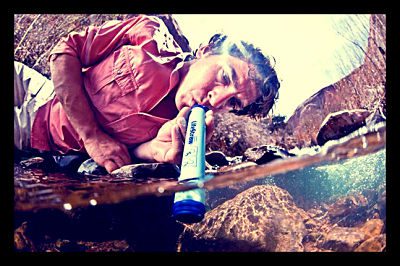
900 million people in the world are without access to safe drinking water. This a serious problem which the world is trying to address in the Millennium Development Goals (MDGs). A product developed by the Swiss-based company Vestergaard Frandsen is making great progress towards water sanitation. The product is called LifeStraw. It is a 25 cm straw that purifies water by simply sucking on the product, like a straw. LifeStraw uses no chemicals when it purifies water.

LifeStraw comes in two different sizes; the LifeStraw can provide 1000 liters of safe drinking water, and LifeStraw Family can provide 18,000 liters of drinking water. The LifeStraw removes 99.9999% of waterborne bacteria and 99.9% of parasites. However, the LifeStraw does not filter out heavy minerals or desalinate water.

LifeStraw could provide safe drinking water to many impoverished people who would otherwise suffer from the many diseases unsanitary drinking water causes. The most prevalent illness caused by unsanitary drinking water is diarrhea. Nearly one in five child deaths – about 1.5 million each year – are due to diarrhea. Diarrhea kills more young children than AIDS, malaria and measles combined.

LifeStraw uses the point-of-use (POU) approach to bring about effective, and affordable drinking water. The philosophy of POU is that purification of drinking water at the point of consumption is much more cost-effective and disease preventative. By purifying water in the household it reduces the risk of water being contaminated at other points during the purification process. POU empowers people to control the quality of their own drinking water. In the developed world, household water-quality interventions can reduce diarrhea morbidity by more than 40%.

The LifeStraw currently costs $20 in the US, but it is subsidized and made cheaper for those in need. LifeStraw was distributed to those in need during the 2010 Haiti earthquake, the 2010 Pakistan floods, and the 2011 Thailand floods. LifeStraw won the “Best Invention of 2005 Award” by Time Magazine and the 2008 Saatchi and Saatchi Award for “World Changing Ideas.”

LifeStraw is providing hundreds of thousands with affordable drinking water and is making a tremendous dent in the MDG to provide safe drinking water to all.

– Catherine Ulrich

Sources: PRINKA, The Daily Star
Photo: Cool Material

August 22, 2013
https://borgenproject.org/wp-content/uploads/borgen-project-logo.svg 0 0 Borgen Project https://borgenproject.org/wp-content/uploads/borgen-project-logo.svg Borgen Project2013-08-22 12:13:292024-05-25 00:18:17LifeStraw Providing Safe Drinking Water
Nonprofit Organizations and NGOs

Agape Family Life House

Agape_Orphanage_House
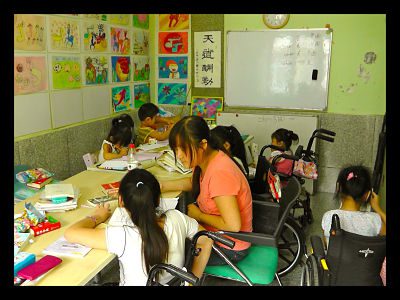
Agape Family Life House is a foster home and care center for orphans in the city of Langfang, China. The home specializes in medical treatment and care for children with Osteogenesis Imperfecta or brittle bones. The home also supports adoption and placement of children into new homes where they can be loved and cared for properly.

Agape Family Life House was founded by Keith and Cheryl Wyse from the United States. In 2002, the Wyses felt called to move to China to aid handicapped children. The Wyses had already adopted their own daughters from China, Rebekah and Rachelle, twins suffering from OI. So they sold everything they owned and moved to China to pursue their passion. Eventually they would open Agape Family Life House in Langfang which cares for 29 people from age 1.5 to 27. They would also start the Bread of Life Bakery, a bakery that employs some of the oldest girls who were living at the home. The Wyses also dedicated themselves to working with local hospitals and American hospitals to bring surgical procedures and treatments to China. Together with Dr. Wu Guo Hua of the Langfang Orthopedic Hospital, Keith Wyse co-founded the OI Association of China.

Children who suffer from OI have bones that can fracture or break with the slightest bump or injury. As a result, they are often left with severely stunted growth or deformed bones and limbs. Thus the children often grow very slowly and maintain a very youthful appearance despite their actual age. Individuals with OI also often have blue tinged eyes that supplant the usual white sclera of normal eyes.

The children that Agape Fmaily Life House serves are known as “children of glass”. The children of the Agape Family Life House come from all parts of China and varying degrees of poverty. One boy, Joseph, is all the way from the province of Xin Jiang that borders Kazakhstan. Another child Lydia was delivered to Agape Family Life House with a broken arm and a note that read “When she dies, just give this note to the authorities and they will understand that it was not your fault.” Other children have been sent by their orphanages in various provinces to the home to receive better medical treatment.

In each case, children are found or sent to Agape Family Life House because they could not be cared for in their original homes. Other children are simply abandoned by parents who could either not afford to care for a child with OI or for whatever reason, did not want the child. Children who grow up with OI in China face a bleak future if they cannot be treated medically. Furthermore, people with OI in China face the strong possibility of falling into poverty and destitution if they cannot find employment or support.

There are many ways to support Agape Family Life House. Anybody can make individual donations or financially sponsor a child. Donations can also be made to a fund that supports parents interested in adopting any of the children from Agape Family Life House. The home also offers many opportunities to volunteer or intern with the home. Volunteers can interact with children or help around anywhere at the home. Long term or short term arrangements can be made as well. With increasing help from volunteers in the recent years, Agape Family Life House has been able to expand and provide a second chance for many orphans in China. 

– Grace Zhao

Sources: Agape Family Life House, CCTV
Photo: International Voice of the Orphan

August 20, 2013
https://borgenproject.org/wp-content/uploads/borgen-project-logo.svg 0 0 Borgen Project https://borgenproject.org/wp-content/uploads/borgen-project-logo.svg Borgen Project2013-08-20 07:46:582024-06-05 01:53:36Agape Family Life House
Health, Nonprofit Organizations and NGOs

United Cerebral Palsy

Cerebral_Palsy_United
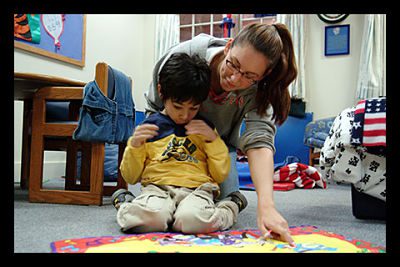
The goal of nonprofit group United Cerebral Palsy is to provide a “life without limits” for people with disabilities. By working with its 100 affiliates, the organization is able to help people all over the world become more independent productive citizens. Founded in 1949 by a group of parents of children with cerebral palsy, United Cerebral Palsy evolved into an organization devoted to anyone with a disability.

United Cerebral Palsy does not focus on how a person acquired a disability; rather, they will reach out to all types of people, whether the disability is due to aging, accident or the person was born with an ailment. Some of the disabilities the group works with are cerebral palsy, Down syndrome, autism spectrum disorders, physical disabilities, and traumatic brain injury (TBI).

This organization is proud to claim affiliation with about 100 groups in its quest to aid the disabled. These affiliates are vital to the cause and provide services such as housing, therapy, assistive technology training, early intervention programs, individual and family support, social and recreation programs, community living, state and local referrals, as well as employment assistance and advocacy. Without the help of its affiliates, United Cerebral Palsy’s outreach would be severely limited.

By focusing on the future, United Cerebral Palsy will impact even more lives. The organization teams up with other groups to develop new technologies and methods for improving the lives of those with disabilities. For example, United Cerebral Palsy is working to ensure that children unable to use their vocal cords can still communicate with innovate new voice technology.

Another resource United Cerebral Palsy provides is just as important as new technology. The group acts as a support group for friends and family of people with disability and offers forums for people to discuss and ask questions about a disability affecting his or her family. United Cerebral Palsy has a branch in each state and affiliates around the world as no one with a disability need go without the independence and wellbeing that he or she deserves.

– Mary Penn

Sources: United Cerebral Palsy, Charity Navigator
Photo: United Cerebral Palsy Cleveland

August 20, 2013
https://borgenproject.org/wp-content/uploads/borgen-project-logo.svg 0 0 Borgen Project https://borgenproject.org/wp-content/uploads/borgen-project-logo.svg Borgen Project2013-08-20 06:38:312024-12-13 17:49:38United Cerebral Palsy
Human Rights, Nonprofit Organizations and NGOs

Mobility International USA

mobility-international-usa
For the right price, most people can hop on a plane and go anywhere, anytime. College students in particular utilize this privilege and depart for couple months or a year on a study abroad program. A commonly overlooked fact is that for those with disabilities, this may seem like an impossible dream. Organizations like Mobility International USA are here to change that.

One participant in Mobility International USA described how she had wanted to study abroad during college, but was unable to find a program that could accommodate her special circumstances. After almost giving up, she discovered Mobility International and through the organization was connected to several programs that worked with the disabled. Because of Mobility International, she traveled to Peru and then eventually to 21 other countries. Her story is a common one in Mobility International.

Not only does Mobility International work with disabled college students, but also high school, professionals, Peace Corps volunteers and other groups to provide short-term exchanges all over the world. Currently, there are 2,000 people of all ages and backgrounds participating in the program worldwide.

In addition to international exchange programs, Mobility International USA partners with government and non-government disability groups around the world to ensure that people with disabilities have the same human rights as everyone else. This is particularly a concern in developing countries like Ethiopia, Albania, Jordan, Colombia, Uganda, Zambia, and Vietnam. By partnering with disability groups in these countries, Mobility International can work to ensure that the disabled receive the care they deserve.

Since its establishment in 1995, the Bureau of Educational and Cultural Affairs of the U.S. Department of State have sponsored Mobility International USA. This partnership has changed the lives of thousands of people with disabilities. Many, like the girl who was able to visit Peru, now work for the organization. Mobility International USA is an admirable organization dedicated to the pursuit of international experiences and, most importantly, a higher quality of life for the disabled.

– Mary Penn

Sources: Mobility International USA

August 20, 2013
https://borgenproject.org/wp-content/uploads/borgen-project-logo.svg 0 0 Borgen Project https://borgenproject.org/wp-content/uploads/borgen-project-logo.svg Borgen Project2013-08-20 04:38:042024-05-25 00:17:48Mobility International USA
Education, Health, Nonprofit Organizations and NGOs

Perkins School for the Blind

Perkins_International_Education
Perkins School for the Blind is an international association that originally started off as a school for the blind. But as time passed, more disabilities were taken care of at the schools. Founded in the United States, today it has grown into an international organization that reaches out to children and adults with disabilities all over the world.

In poverty stricken areas, people with disabilities are the least of the bread-winners’ concern. In a typical family, employment is preferred to education at an early age, and a visually/hearing impaired child or adult is often seen as just an extra mouth to feed. They are marginalized by their own society and family. That is where Perkins International comes in. Perkins International has branches all over the world, including in Africa, Asia, Europe, and South America, giving necessary aid and care to people with disabilities.

Perkins International breaks its work down into four branches: education, advocacy, information and technology, and leadership development. Perkins not only provides education for children with disabilities all over the world, but also works to train the teachers who will assist said children. With advocacy, Perkins International hopes to help children and adults with disabilities achieve recognition and equal treatment, as well as increase awareness about this often under-represented population.

Perkins International also brings new technology to the disabled in the form of their “Perkins Braillers®”, which helps the disabled read and write in Braille, a tactile print language that is accessible to the visually impaired. Finally, Perkins encourages local leadership, by training members of the local community to teach and lead a literacy program for the disabled. The leadership initiative, also known as the Educational Leadership Program, and the Institutional Development Program, also encourages and employs adults with disabilities. This is not only a great economic move, but also gives hope to young disabled children, especially from poverty stricken areas, that they can lead the future as well.

Today the individual branches of Perkins International all over the world can celebrate many triumphs, and it’s these small victories that can lead to larger ones. Whether it is successfully teaching one visually-impaired child how to read Braille, or holding a Braille Cup to encourage reading, learning, and a healthy dose of competition in a school for visually- and hearing-impaired children, the important thing is that children’s lives are being positively impacted.

– Aalekhya Malladi

Sources: IDP

August 19, 2013
https://borgenproject.org/wp-content/uploads/borgen-project-logo.svg 0 0 Borgen Project https://borgenproject.org/wp-content/uploads/borgen-project-logo.svg Borgen Project2013-08-19 06:24:072024-05-25 00:18:10Perkins School for the Blind
Nonprofit Organizations and NGOs, Women and Female Empowerment

LandWise: Empowering Women

landwise
Landesa Center for Women’s Land Rights, a capacity building organization, has recently launched LandWise, a free online searchable database and tool. LandWise provides important information and practical applications that may be used for capacity building and technological assistance for strengthening women’s land rights across the globe.

In many places across the world, women’s land tenure is not recognized or is consistently undermined. Without rights to their land, women lack the ability to use, control, and transfer this asset. In some areas, men may have sole control of land that is owned by their wife. The absence of legal land ownership by women is recognized as a constraint for overcoming rural poverty. Without legal ownership of this valuable asset, women are placed in a precarious position where they may lose their family’s only form of income.

There are many facets to women’s rights to land that must be addressed. The country’s legal codes, cultural norms, and administration all play a part in this problem, since these factors can often be very complex and difficult to determine. Landesa’s LandWise seeks to organize this information in an easily searchable database that practitioners may access. While LandWise is not intended to take the place of field work, it will help with the initial research, since the legal codes that govern land rights are often difficult to uncover. The issue of land rights is often bound up with family and marriage law as well as property law. LandWise organizes these laws in an easily searchable database.

Sometimes, rural women are unaware of the rights they have under law. In these cases, practitioners can use the research gathered to engage women in clinics or information sessions. In areas where women’s land rights are not legally codified practitioners may use advocacy to engage civil society and government officials and promote policy recommendations.

LandWise also provides Practice Guides. The Practice Guides help practitioners use the information provided on the database. The Guides include checklists that help analyze the issues that may affect women and men differently in regards to property rights. In addition to the legal codes provided on LandWise, users also receive information regarding how the law is in fact carried out and cultural norms that may affect its implementation.

LandWise is overseen by a full-time librarian. Practitioners in the field are encouraged to submit information that they may come across to LandWise in order to help expand its database.

– Callie D. Coleman

Sources: IFAD, LandWise, Landesa Center for Women’s Land Rights
Photo: Landesa

August 19, 2013
https://borgenproject.org/wp-content/uploads/borgen-project-logo.svg 0 0 Borgen Project https://borgenproject.org/wp-content/uploads/borgen-project-logo.svg Borgen Project2013-08-19 04:04:482016-03-07 11:18:52LandWise: Empowering Women
Food & Hunger, Health, Nonprofit Organizations and NGOs, Women and Female Empowerment

Project Concern International

Africa-Kenya-Agricultural-Extension-Development
Project Concern International (PCI) is an organization which seeks to to prevent disease, improve community health, and promote sustainable development worldwide. PCI was founded in 1961 by Dr. James Turpin after saving the lives of two children suffering from pneumonia while working in a Tijuana clinic. This experience inspired the young doctor to go on and forever change the lives of millions. PCI envisions a world in which resources are abundant and shared, communities are capable of providing for the basic health and well-being of its members, and children and families can achieve lives of hope, good health and self-sufficiency. PCI conducts its work through field offices in host countries where directors can live in the area and get an intimate understanding of local needs.

Working in 16 countries, PCI hopes to reach at least 5 million people per year with its services. Overtime, PCI has expanded its reach through increased funding: from the Bill and Melinda Gates Foundation to government grants to the Starbucks foundation, PCI has a well rounded list of supporters. PCI’s ultimate goals include addressing the root causes of poverty and poor health; working with the community to leverage their assets, capabilities and goals to create community-inclusive solutions; implementing holistic solutions; cultivating long-standing relationships with community leaders, investors, and stakeholders to catalyze the impact of aid spent; and developing tools which measure the long-term success of such programs. PCI addresses poverty through programs focused on women’s empowerment & poverty, children’s health, disease prevention, food & water programs, and disaster relief & recovery. Between 2013-2016, PCI hopes to reach over 10 million people worldwide and become a leader in building community capacity, resilience and self-sufficiency.

In addition to its programs worldwide, PCI also has a series of initiatives to further promote its goals. These intiatives include: Women Empowered, Legacy, Who Cares? and SHE.

  • Women Empowered: Established in May of this year, Women Empowered is an initiative in support of women’s equality, human rights and success. PCI believes that women are the solution to poverty, poor health and vulnerability and that through WE, women can attain social and economic empowerment. WE programs are currently being implemented in Guatemala, Bolivia, Botswana, and Malawi. One such success story comes from Maweta in Zambia. After raising six children of her own, Maweta returned to parenthood to raise her grandchildren after their parents died from AIDS. Without a steady source of income, Maweta struggled to provide for her grandchildren. After attending a community orientation hosted by PCI, Maweta began mobilizing women in her community to form a self-help group. Nine months later, Maweta has learned how to read and write, perform basic accounting and save $60 by selling mangoes to her community. Maweta has since received a loan to start a small business. Maweta buys food in bulk, repackages it into smaller quantities and sells these to her village. Since starting the business, Maweta has been able to provide for her grandchildren’s basic needs and education.
  • Legacy: PCI’s Legacy Programs focus on maternal/child health and nutrition, as well as economic empowerment. As the name suggests, ‘Legacy’ for PCI means consistent and compassionate commitment to the communities involved. These programs include: Well Baby clinics, Ventanilla de Salud (VDS), Casa Materna, and the Street and Working Children Program. Ventanilla de Salud (VDS) targets at risk immigrant populations near the border, by providing basic health and community services, while these families are waiting for service at the Mexican consulate. VDS has reached more than 41,000 people with health education information and nearly 20,000 with HIV/AIDS prevention messages. However, the VDS program suffers from a lack of funding and has been scaled back by more than 25 percent.
  • Who Cares?: An online campaign which celebrates, recognizes and encourages those who are giving back to the greater good. Who Cares? provides volunteers with the opportunity to network, share stories, or just get motivated about a cause. Who Cares targets the youth and young adults because they believe that the ability of today’s youth to mobilize others is huge, yet largely untapped. In addition, Who Cares provides tools to help the youth mobilize others and make their efforts pay off.
  • SHE: SHE, which is short for Strong, Health and Empowered, is a group of ambassadors who dedicate their time to PCI’s projects across the globe. These ambassadors work within the community to promote women’s empowerment and find innovative solutions to ensure that women lead strong, healthy lives.

To learn more about PCI’s work, explore PCIglobal.org for more info.

– Kelsey Ziomek

Sources: PCI Global, The San Diego Foundation, Washington Global Health Alliance, Coronado Eagle

August 19, 2013
https://borgenproject.org/wp-content/uploads/borgen-project-logo.svg 0 0 Borgen Project https://borgenproject.org/wp-content/uploads/borgen-project-logo.svg Borgen Project2013-08-19 03:25:382024-12-13 17:49:38Project Concern International
Foreign Aid, Nonprofit Organizations and NGOs

AmericasRelief Team

Americas_Relief_Team
Although there are many international aid organizations, few exist that focuses all their resources on one specific region of the world. AmericasRelief Team is one of the exceptions. This organization is devoted to providing immediate, as well as sustainable, humanitarian and educational aid for people in the Americas experiencing some form of disaster.

The group works to provide such assistance by creating a three-part process: disaster preparedness, disaster response and aid and humanitarian assistance. However, like any effective international organization, AmericasRelief Team does not work alone. It partners with other international groups, local groups, nonprofits, emergency centers, corporate donors, the U.N. Office for the Coordination of Humanitarian Affairs and other independent experts to ensure that it is able to help as many people as possible.

AmericasRelief Team has many success stories to solidify its position as a key source of aid to the Americas during disasters. In 2005, the AmericasRelief Teams provided vital assistance to the Florida State Government after Tropical Storm Jeanne devastated the Caribbean region. More recently, in 2010, the group organized the distribution and utilized of 20 million pounds in humanitarian aid money and worked with the United Nations to quickly respond to the earthquake in Haiti.

In addition to monetary aid, the AmericasRelief Team provides clothing, household items and transportation for victims of disasters. Also, the group works with local news and media teams to spread information about the disaster and ways to avoid further complications. Overall, the group is one of the first responders to disasters in the Americas and one of the most effective organizations to provide vital services to those affected by any tragedies.

– Mary Penn

Sources: AmericasRelief Team, InterAction

August 19, 2013
https://borgenproject.org/wp-content/uploads/borgen-project-logo.svg 0 0 Borgen Project https://borgenproject.org/wp-content/uploads/borgen-project-logo.svg Borgen Project2013-08-19 03:00:242024-06-04 02:43:58AmericasRelief Team
Page 53 of 60«‹5152535455›»

Get Smarter

  • Global Poverty 101
  • Global Poverty… The Good News
  • Global Poverty & U.S. Jobs
  • Global Poverty and National Security
  • Innovative Solutions to Poverty
  • Global Poverty & Aid FAQ’s
Search Search

Take Action

  • Call Congress
  • Email Congress
  • Donate
  • 30 Ways to Help
  • Volunteer Ops
  • Internships
  • Courses & Certificates
  • The Podcast
Borgen Project

“The Borgen Project is an incredible nonprofit organization that is addressing poverty and hunger and working towards ending them.”

-The Huffington Post

Inside The Borgen Project

  • Contact
  • About
  • Financials
  • President
  • Board of Directors
  • Board of Advisors

International Links

  • UK Email Parliament
  • UK Donate
  • Canada Email Parliament

Get Smarter

  • Global Poverty 101
  • Global Poverty… The Good News
  • Global Poverty & U.S. Jobs
  • Global Poverty and National Security
  • Innovative Solutions to Poverty
  • Global Poverty & Aid FAQ’s

Ways to Help

  • Call Congress
  • Email Congress
  • Donate
  • 30 Ways to Help
  • Volunteer Ops
  • Internships
  • Courses & Certificates
  • The Podcast
Scroll to top Scroll to top Scroll to top