• Link to X
  • Link to Facebook
  • Link to Instagram
  • Link to TikTok
  • Link to Youtube
  • About
    • About Us
      • President
      • Board of Directors
      • Board of Advisors
      • Financials
      • Our Methodology
      • Success Tracker
      • Contact
  • Act Now
    • 30 Ways to Help
      • Email Congress
      • Call Congress
      • Volunteer
      • Courses & Certificates
      • Be a Donor
    • Internships
      • In-Office Internships
      • Remote Internships
    • Legislation
      • Politics 101
  • The Blog
  • The Podcast
  • Magazine
  • Donate
  • Click to open the search input field Click to open the search input field Search
  • Menu Menu

Archive for category: Nonprofit Organizations and NGOs

Information and stories about nonprofit organizations and NGOs

Global Poverty, Nonprofit Organizations and NGOs, Poverty Reduction, Volunteer

Telecommute Internships at The Borgen Project

Are you seeking real world experience working as part of a news content team? Looking to build skills working as a journalist, writer, editor, or public relations/visual editor? Are you an independent self-starter? Does working from your personal computer appeal to you? Would you like to research, advocate, and produce content for a cause that is aiming to end global poverty?

If you said yes to the questions above, you may be a good fit for an telecommute internship with The Borgen Project. The Borgen Project is an innovative humanitarian organization downsizing global poverty located in Seattle, Washington. The Borgen Project volunteer network extends to 190 cities, and includes celebrities, political leaders, and a growing number of passionate individuals.

Currently, there are four open telecommute internship positions for The Borgen Project: Journalist, Writer, Editor, and PR/Visual Editor.

The time commitments for the internships vary depending on internship type. While The Borgen Project requires a 12-week program for journalists and writers, editors and PR/visual editors are required to spend 260 hours in total, and 15 hours each week.

Access to a computer is vital, as you will be communicating back and forth with supervisors at Seattle Headquarters, and fellow team members across the nation. Attendance to The Borgen Project national conference call from 5pm-6pm PST every Monday is also required.

Content workload varies depending on the internship type. Writers must complete 4 blog posts/magazine articles each week, journalist write 3 in-depth articles each week, PR/visual editors find, tint, and resize images to meet website criteria, and editors edit and approve articles submitted by content team writers. While each internship fills a certain role for The Borgen Project, all interns must spend 2-3 days assisting with fundraising, share Borgen Project articles and news via social media, meet deadlines, and effectively communicate with supervisors.

Interns are given the freedom to choose their own schedule within the required time commitment guidelines. The first week of the internship entails an online training curriculum that clearly lays out your role, what is expected of you, and eliminates any ambiguity about what you should be doing. Supervisors are supportive and can respond to any questions you have regarding fundraising, article content, article style, deadlines etc.

Additionally, interns have the opportunity to meet each other (people from all walks of life), network, and work within a community that extends across the nation. Internet and social media allow us to extend the values and mission of The Borgen Project across many networks.

View telecommute internship openings.

– Laura Reinacher

Sources: The Borgen Project
Photo: Smallbiz Technology

January 10, 2014
https://borgenproject.org/wp-content/uploads/borgen-project-logo.svg 0 0 Borgen Project https://borgenproject.org/wp-content/uploads/borgen-project-logo.svg Borgen Project2014-01-10 08:00:592024-05-25 00:34:35Telecommute Internships at The Borgen Project
Advocacy, Developing Countries, Development, Extreme Poverty, Global Poverty, Inequality, Nonprofit Organizations and NGOs, Poverty Reduction, United Nations

International Day for the Eradication of Poverty

On October 17, International Day for the Eradication of Poverty was celebrated in honor of the goal to end world poverty by 2030. Declared by the UN General Assembly, this annual day serves as a reminder to promote the need to end poverty and destitution in all countries, specifically the developing nations.

In celebration of the International Day for the Eradication of Poverty, Interaction, the NGO alliance, highlighted global programs that are already making an impact. One of these programs, A World Vision program in Zambia, has made health care, education, and psycho-social support accessible for more than a quarter million children. The program has also trained nearly 40,000 volunteers to assist people living with HIV across the country. It is programs like these, indeed, that are helping us reach our goal.

In hope to get to zero percent by our lifetime, NGOs, like Interaction, are essential parts of the solution. “We cannot let over a billion people suffer in extreme poverty when we have the tools and the research to change their lives for the better. … We can do better. We have to do better,” said World Bank president Jim Yong Kim.

So far, the world has made significant progress in working toward this goal. While it is bold, it is undoubtedly achievable. Already, extreme poverty rates are half of what they were two decades ago. In 1990, nearly one in two people in the developing world lived in “extreme poverty” or on less than $1.25 a day. Today, this number is about one in five. Because of the help of many institutions, government and nongovernment organizations alike, we have been able to make immense developments. Still, it is not enough. The International Day for the Eradication of Poverty recognizes these groups that have made all the difference through these years and even further, motivates people to help take those next few steps forward.

– Sonia Aviv

Sources: UN, Global Dimension, Devex
Photo: Times Square

October 26, 2013
https://borgenproject.org/wp-content/uploads/borgen-project-logo.svg 0 0 Borgen Project https://borgenproject.org/wp-content/uploads/borgen-project-logo.svg Borgen Project2013-10-26 04:00:382024-05-25 00:30:06International Day for the Eradication of Poverty
Activism, Aid Effectiveness & Reform, Global Poverty, Nonprofit Organizations and NGOs

Louis and Anne Abrons Foundation

abrons_foundation_gala_henry_street

The Louis and Anne Abrons Foundation is a private foundation stationed out of New York, NY. Started in 1951, the Abrons Foundation provides gifts, grants, and loans to other organizations in need. Today, its assets range roughly from $10,000,000 to $50,000, 000.

From schools like New York University (NYU) and Wilberforce University to institutions like the Metropolitan Opera House and Henry Street Settlement, the foundation has donated to all types of causes. Most recipients of the Abrons Foundation hail from areas like the District of Columbia, Illinois, Ohio and New York, though funding is not limited to these areas.

Richard Abrons, acting President of the Abrons Foundation, wishes to keep the majority of foundation spending near the home office in New York. “As the president of the Louis and Anne Abrons Foundation, I have overseen grants to more than 200 nonprofits… Most benefit our city (New York), which is our emphasis,” he said in an interview with The Huffington Post.

Richard Abrons is also a well-known playwright in the New York and Los Angeles communities. He is extremely well educated, receiving his BA from Yale, his MBA from Columbia and his MFA from NYU. In addition to the Abrons Foundation, Richard Abrons is Managing Director of First Manhattan Co., an investment management company, and Vice Chairman and former President of the Henry Street Settlement. He is also the director of GrowNYC.

–Meagan Hurley

Sources: Huffington Post, Idiologic, GuideStar, FAQs
Photo: Henry Street


October 23, 2013
https://borgenproject.org/wp-content/uploads/borgen-project-logo.svg 0 0 Borgen Project https://borgenproject.org/wp-content/uploads/borgen-project-logo.svg Borgen Project2013-10-23 16:58:432024-06-05 01:53:41Louis and Anne Abrons Foundation
Advocacy, Developing Countries, Education, Global Poverty, Health, Nonprofit Organizations and NGOs, Poverty Reduction

5 Books about Global Health and Development

three_cups_of_tea_book
No matter what your political leanings may be, these books cannot help but convince readers of the importance of global development. As you read the anecdotes and arguments presented in these books, remember that only 1 percent of the U.S. budget goes to foreign aid – and change begins with you.

1. Three Cups of Tea by Greg Mortenson

After traveling and mountain-climbing in the Himalayas, Mortenson launched a mission to bring schools and education to children living in remote regions of central Asia. His moving book outlines the importance of local development projects targeted at education, capacity building and sustainability. Through Mortenson’s activism and writing, the Taliban’s hold has been reduced over previously unprotected and disempowered communities.

2. Partner to the Poor by Dr. Paul Farmer

World-renowned doctor, anthropologist and humanitarian Paul Farmer defines the term “structural violence” and explains its connection to global health in this gripping book. Farmer writes about the structural elements of political and social life that systematically undermine access to healthcare in rural Haitian, Rwandan and Peruvian communities. His arguments on political instability’s effect on population compel readers to see the vast impact of foreign policy and aid.

3. The Practice of International Health by Ananya Roy and Daniel Perlman

This book offers a series of personal accounts from physicians and humanitarians providing healthcare around the world. More so than other anecdotes, these stories provide a detailed picture of the logistical and cultural challenges international development projects face. However, rather than discouraging such projects, “The Practice of International Health” demonstrates how such barriers can be overcome in order to achieve remarkable success.

4. Half the Sky by Nicholas Kristof and Sheryl WuDunn

Journalists Kristoff and WuDunn cover a lot of ground in this entertaining and heartbreaking collection of stories. Similar to Mortenson’s work, “Half the Sky” emphasizes the importance of grassroots organizations, illuminating the tireless efforts of individuals in India, China, Afghanistan and Ethiopia on the behalf of women. In the book’s epilogue, Kristoff and WuDunn also provide an extensive list of nonprofits doing amazing work around the world, as well as easy steps for getting involved in female empowerment and global development.

5. Banker to the Poor by Muhammad Yunus

Microfinance has both supporters and critics, but after reading this autobiography by the founder of the Grameen Bank, Muhammad Yunus, readers might find that their opinion has changed. Yunus was awarded the Nobel Peace Prize in 2006 for his work in providing small-value loans to women in rural areas in order to promote economic growth among families and villages.

– Shelly Grimaldi

Sources: GoodReads, Banker to the Poor
Photo: Wishes 4 Life

October 21, 2013
https://borgenproject.org/wp-content/uploads/borgen-project-logo.svg 0 0 Borgen Project https://borgenproject.org/wp-content/uploads/borgen-project-logo.svg Borgen Project2013-10-21 15:54:572020-07-09 20:52:165 Books about Global Health and Development
Activism, Advocacy, Charity, Global Poverty, Human Rights, Nonprofit Organizations and NGOs

What is an NPO?

NPO
A nonprofit organization is an organization that, pursuant to Section 501(c) of the United States Internal Revenue Code, does not retain its surplus revenue as profit. Instead, any surplus money is used to sustain the organization in its execution of a specific goal or set of goals, as designated by its bylaws and charter. In contrast to for-profit organizations, NPOs are largely project-driven ventures as opposed to product-driven ventures.

Before applying to be a 501(c) organization, a board of trustees must be assembled. The board will be committed to governing the execution of the organization’s goals. Once assembled, the board is responsible for drafting a clear and precise set of bylaws outlining the organization’s goals and the ways in which those goals will be pursued.

The bylaws must be recorded and, along with some necessary accounting paperwork (which varies according to different concessions granted by Section 501(c)), submitted to the IRS and the department of the secretary of state where the organization plans to operate in.

Once this paperwork is filed with the state, it may take up to a year for an organization to get approved as a 501(c). Most NPOs use this interim to prepare for launch immediately upon receipt of approval. Much of this time is spent identifying and communicating with potential donors, writing grants and taking other measures to secure funds for when the organization is approved.

Following state approval, a 501(c) organization must adhere to the bylaws it established in order to maintain its tax-exempt status. Its operation is limited by the bylaws it imposed on itself, and its tax-exempt status is contingent upon adherence to those bylaws. If an organization is not working effectively to accomplish its outlined mission, its tax-exemption will be revoked.

Under 501(c) of the Internal Revenue Code, an NPO may receive one of 29 different designations according to its mission. These designations determine what kind of tax exemptions the NPO will receive, as well as the kind of economic activity it is permitted to engage in. These designations are determined by an organization’s goals, the parties it engages with economically, and the recipients of any aid the organization is providing.

Most NPOs involved in the fight against poverty are designated as 501(c)(3)s. By law, a 501(c)(3) falls under one of the following categories: religious, scientific, charitable, educational, literary, public safety, the fostering of international or national amateur sports or the prevention of cruelty to children and animals. Organizations that actively fight against poverty can fall under any number of these categories. As well as tax-exemption, 501(c)(3)s receive reduced postage rates, and are permitted to generate receipts to provide donors with tax write-offs. They are, however, prohibited from participating in any political campaigns.

For an  NPO engaged in the campaign against poverty, transparency is of utmost importance. Strict adherence to bylaws and charter are necessary. If the secretary of state perceives that an organization is straying from its mission, its tax-exempt status will be lost. This renders the organization far less effective in the abolition of poverty. Not only does this cost an organization financially, it costs the world’s poor.

– Matt Berg

Sources: 501c3, Cornell Law, IRS, IRS
Photo: GuideStar,

October 21, 2013
https://borgenproject.org/wp-content/uploads/borgen-project-logo.svg 0 0 Borgen Project https://borgenproject.org/wp-content/uploads/borgen-project-logo.svg Borgen Project2013-10-21 10:45:302024-05-25 00:29:44What is an NPO?
Charity, Education, Global Poverty, Nonprofit Organizations and NGOs

Patrick and Anna M. Cudahy Fund: What You Should Know

Patrick_Anna_Cudahy_Fund
The Patrick and Anna M. Cudahy Fund is a foundation that grants money to nonprofit organizations involved in social and youth services, education, art and culture.

The premise of the fund dates back to the early 1920s, when Articles of Association were drawn to break ground on the Alice Dickson Cudahy Clinic. This clinic was created to provide free services to dependent family members of employees at the Cudahy Brothers Company. Some of these free services included medical attention, and education on matters such as child welfare, domestic science and social hygiene. The clinic was able to open on August 1, 1923, thanks to a $19,270.77 donation made by Michael F. Cudahy.

On August 22, 1935, the name of the organization was changed to the Michael F. Cudahy Fund. Upon this change, the association broadened its spectrum of philanthropy efforts to include the severely poverty-stricken and ill. On September 29, 1943, the name of the organization was once again changed, this time to the Patrick and Anna M. Cudahy Fund, in honor of Michael’s parents.

Today, the Fund primarily assists youth organizations located in Wisconsin and Chicago, though some money is granted to charities involving public interest and environmental conflicts. The Fund also accepts international requests affiliated with U.S. nonprofits.

– Meagan Hurley

Sources: Business Journal, Cudahy Fund

October 17, 2013
https://borgenproject.org/wp-content/uploads/borgen-project-logo.svg 0 0 Borgen Project https://borgenproject.org/wp-content/uploads/borgen-project-logo.svg Borgen Project2013-10-17 13:53:402017-03-20 13:09:27Patrick and Anna M. Cudahy Fund: What You Should Know
Activism, Advocacy, Charity, Global Poverty, Nonprofit Organizations and NGOs

Can One Person Change the World?

BuildOn_EducationVenture into a forest, and the trees are a hard thing to miss. Trees come in all shapes and sizes, but even the giant sequoia tree had a small beginning. All trees are grown from minuscule seeds. How does something so expansive and enormous come from such an insignificant beginning? Just like any other great wonder, all things start from small beginnings. Trees had to grow, buildings had to be constructed, and people are grown from swaddling babes. Everybody and everything had a small beginning; it’s the decisions made and actions done that determine what grows from it.

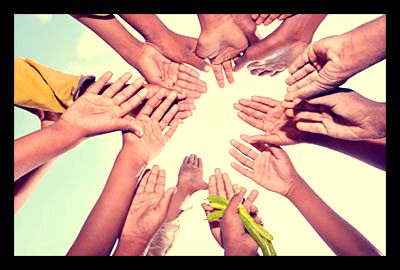

Jim Ziolkowski is the founder, president, and CEO of buildOn, a non-profit organization established to build schools in developing countries while also running after-school programs for America’s toughest inner-city environments. The seeds for buildOn were planted on an after-college excursion into the Himalayan Mountains. Ziolkowski came across a village in Nepal that was celebrating the opening of a new school. During his trip, Ziolkowski gained first-hand experience of poverty-stricken areas and the conditions that lay therein. But in this village, Ziolkowski saw something that forever changed him. He saw a community that was hanging its hopes on the power of education.

Ziolkowski returned to the United States, and began his job in corporate finance at GE. However, the memories of his cross-country hiking could not be forgotten. 15 months into his job, Ziolkowski walked out forever, pursuing a life that would enlighten the lives of others throughout the world by founding buildOn.

In 1992, Ziolkowski traveled to Misolami, a village located in Malawi. Ziolkowski planned to build his organization’s first school here, but he soon succumbed to malaria. Ziolkowski barely escaped with his life, and had another life-changing moment in the process; barely anybody in the area diagnosed with malaria escapes with their life. Ziolkowski only survived because he was not entrenched in extreme poverty, unlike most of the people in the area. Ziolkowski saw education as a way to escape extreme poverty, and his fire to change the world’s education for the less fortunate was strengthened.

Ziolkowski returned to the U.S knowing he also had to impact the lives of the urban youth in a positive way. Ziolkowski was unable to connect with these kids on a deeper level because he had been raised in a stable small town in Michigan. To solve this problem, Ziolkowski moved into a rough neighborhood in Harlem, so he could experience the difference in person. He lived there for three years, and he learned the urban youth did not want to participate in the dangerous style of life, they wanted to change it. Ziolkowski wanted to assist this mindset to the best of his ability.

Twenty years later, the results from Ziolkowski’s experiences have helped launch buildOn into a successful program. On Ziolkowski’s return to Misolami in 2012, the village had constructed four other schools thanks to support from buildOn. Instead of 150 kids attending school, now well over 1,000 were enrolled. Ziolkowski’s success can be seen on the forefront of this village, and in neighborhoods throughout urban America. The tree (buildOn) started out as a small idea, but Ziolkowski’s drive and determination turned it from a seed into a giant sequoia.

Ziolkowski’s success has been printed in his book, Walk in Their Shoes, available on Amazon.

– Zachary Wright

Sources: Amazon, buildON, NC State University
Photo: WorldOz

October 17, 2013
https://borgenproject.org/wp-content/uploads/borgen-project-logo.svg 0 0 Borgen Project https://borgenproject.org/wp-content/uploads/borgen-project-logo.svg Borgen Project2013-10-17 04:00:292024-05-25 00:24:54Can One Person Change the World?
Developing Countries, Disease, Global Poverty, Health, Human Rights, Nonprofit Organizations and NGOs

Is McGill University Doing “Asbestos” it Can?

mcgill_university
Asbestos, which has been mined for more than 4,000 years, was not largely distributed until the end of the 19th century. Today, armed with the knowledge about the dangers to human health that asbestos poses, production in the modern world has been brought to a halt. However, in many developing countries, particularly in Asia, many are surprised to hear that the use of asbestos has been increasing.

The world’s largest asbestos mine was the Jeffrey mine in the town of Asbestos, Quebec. Because of the preciousness of asbestos to the Quebecois economy, when results began to show the toxicity of asbestos, the Quebec Asbestos Mining Association (QAC) needed to find a solution preventing the stoppage of asbestos use. They turned to McGill University.

Professor J.C. McDonald, working for McGill’s Department of Epidemiology, was funded by a front organization set up by the QAC to research the effects of asbestos. His findings, using outdated and inaccurate techniques, demonstrated that exposure to chrysotile asbestos could give protection against cancer.

Despite the fact that no other scientist has been able to replicate McDonald’s data – even McDonald himself refuting his own findings, going so far as to admit that some of the data taken was thrown away until specific results were found – many companies continue to use his research to support the use of asbestos.

As such, every year, two million tons of asbestos are being put into homes and schools, ultimately causing a public health catastrophe to come.

Kathleen Ruff, founder of the human rights website RightonCanada.ca, and senior advisor on Human Rights of Rideau Institute was joined by Professor David Egilman of Brown University, who is the President of Global Health through Education, Training and Service (GHETS), a NGO dedicated to improving health in under-served communities around the world, at a conference on October 1st at McGill.

Here, Egilman and Ruff addressed McGill’s “internal review” on McDonald’s study, which Abraham Fuks, McGill’s research integrity officer, concluded Professor McDonald to be “a pioneer in the demonstration of health hazards of asbestos.”

Fuks states that while it is true that McDonald’s project was funded by the asbestos industry, there was no collusion between the university and the asbestos industry.

Egilman contends noting, “[McDonald’s team] threw data out because it gave them wrong results.” And when they finally had data that matched up to what they wanted to prove, Ruff points out that “the industry [then] went on a mission to developing countries to get them to use chrysotile asbestos.”

The problems associated with asbestos-related risks are manifold. The previous installation and further dismantling of asbestos abroad lacks proper regulation and legislation, with many companies not respecting safety and proper execution. Consequently, exposure increases the risk of lung cancer, mesothelioma, and nonmalignant lung and pleural disorders.

Countries with economic ties to asbestos, such as Russia, India and Brazil continue to use McDonald’s information to lobby for increased use. Without an independent review of the research conducted and a final nay-say of McDonald’s results, it will prove difficult to put a stop to these organizations.

What started as a good PR strategy back in the 1960s has now exploded into one of the main justifications of continued global asbestos use.

GHETS, founded in 2002, places emphasis on “grassroot partnerships, sustainability and the development of primary healthcare infrastructure.” In association with many major institutions, GHETS funds training of local doctors and distribution of seed grants to for local business start-ups.

RightonCanada, an advocacy campaign to put human rights back on Canada’s political agenda, believes that Canada, when refusing to recognize the human right to water, aid in sabotaging a U.N. Declaration on the Rights of Indigenous Peoples, and block action to control export to developing countries of asbestos, among other things, has consequently become “a human rights saboteur.”

– Chloe Nevitt
Feature Writer

Sources: Rabble, McGill Daily,McGill Daily, Global Labour University, CDC, Right on Canada, GHETS
Photo: Wikimedia

October 15, 2013
https://borgenproject.org/wp-content/uploads/borgen-project-logo.svg 0 0 Borgen Project https://borgenproject.org/wp-content/uploads/borgen-project-logo.svg Borgen Project2013-10-15 17:12:222024-12-13 17:49:44Is McGill University Doing “Asbestos” it Can?
Nonprofit Organizations and NGOs

The Importance of Non-Profits in Our Economy

importance non-profits nonprofit organizations
It never occurs to many people who are not involved with non-profits how integral these organizations can be to the overall functioning of the economy.

To many, non-profits are just innocuous little entities existing in their own isolated corner of the economy. They do not hurt the economy, but they certainly do not carry it, either. Non-profits serve one distinct purpose – bettering the world while zeroing out their books.

In reality, non-profits do much more. Discussed below are three ways non-profit organizations enhance and bolster the economy.


3 Benefits of Non-Profits


1. Non-profit organizations are a steady source of employment. Just because non-profits are not allowed to carry forward does not mean their operation does not require specialized jobs to be filled. In fact, in terms of day-to-day operations, non-profits run very similarly to for-profit corporations. Non-profits, like for-profits, rely on computer programmers, accountants, graphic designers and other specialized workers to ensure smooth operation.

“Non-profits are businesses. They simply receive preferential tax treatment,” Sean Stannard-Stockton said in a piece for The Chronicle of Philanthropy. The piece was a response to a remark by Mexican billionaire Carlos Slim in which Slim expressed distaste for non-profits. “Like all businesses, non-profits employ people. A lot of people.”

A 2012 report prepared by Johns Hopkins University showed that 10.7 million people were employed in the non-profit sector in 2010 – 10.1 percent of total employment in the United States.


2. Non-profit organizations, like any other business, consume third-party goods and services in their day-to-day operations. They require computers, internet and phone services, building materials, and utilities in order to run. This generates revenue for the companies that manufacture and distribute these goods and services, thereby providing added economic stimulation.


3. By providing employees with a source of income, non-profits, just as for-profits, indirectly stimulate endless other facets of the economy. When people have money, they spend it. They pay mortgages, utility companies and car payments. Discretionary income goes to restaurants, theaters and other luxuries and entertainments.

Even the most cursory economic impact study demonstrates the indispensable value of non-profit organizations in any economy. The jobs they provide help sustain the economy in the same way any properly-functioning for-profit organization does. The same Johns Hopkins report mentioned above even seems to indicate that non-profits have a certain resiliency in economic downturns that for-profit organizations do not have. According to the report, employment in the non-profit sector had an average annual growth rate of 2.1 percent from 2000-2010 – a period in which the United States experienced two separate recessions. On the other hand, for-profits saw employment reduced by 0.6 percent annually across those 10 years.

Non-profits’ vast economic contributions are evident in the United States’ GDP. According to The Independent Sector, non-profits account for 5.5% of the GDP – the equivalent of $805 billion.

The impact of non-profit organizations is indisputably far-reaching and vital to the United States’ economic well-being.

– Matt Berg

Sources: Grant Space, The Chronicle of Philanthropy, Career Builder, Independent Sector
Photo: Slick Text


October 12, 2013
https://borgenproject.org/wp-content/uploads/borgen-project-logo.svg 0 0 Borgen Project https://borgenproject.org/wp-content/uploads/borgen-project-logo.svg Borgen Project2013-10-12 10:29:392024-05-26 22:58:52The Importance of Non-Profits in Our Economy
Activism, Charity, Global Poverty, Nonprofit Organizations and NGOs

Sandy River Foundation Aids Nonprofit Efforts

Sandy_River_Foundation
The Sandy River Foundation, founded in 2008, works to bring physical and spiritual wholesomeness to all nations. It achieves this by providing nonprofit organizations with funding in order to focus on their initiatives rather than on fundraising to keep the organization going.

Nonprofits that wish to receive this funding must meet the guidelines of the Sandy River Foundation and complete an application process, but only after being invited by the foundation itself. Some of the organizations that have accepted funding include Heifer International, the Long Island Community Foundation, Oxfam America, and Acción International.

The mission of Heifer International is to end both hunger and poverty by providing families with a cow. This provides a source of food to families from the milk the animal provides. The families can also sell the excess products to gain a reliable source of income, and after saving this income, can start a small business or even join an agricultural cooperative with other families nearby.

By providing small businesses with microfinancing, Acción International hopes to strengthen businesses with both financial and managerial support. Once those microfinance institutions have grown and become financially independent of donors, the economy of the surrounding area will increase and the jobs of those working at the company will be secured. Acción International has provided its support to countries across the globe including India, China, Nigeria, Tanzania, and Colombia.

The Sandy River Foundation donates

to nonprofits in order to create a positive impact across the globe.

– Alessandra Wike

Sources: Accion, Heifer International, Sandy River Foundation

October 2, 2013
https://borgenproject.org/wp-content/uploads/borgen-project-logo.svg 0 0 Borgen Project https://borgenproject.org/wp-content/uploads/borgen-project-logo.svg Borgen Project2013-10-02 21:24:582016-02-06 08:44:40Sandy River Foundation Aids Nonprofit Efforts
Page 52 of 60«‹5051525354›»

Get Smarter

  • Global Poverty 101
  • Global Poverty… The Good News
  • Global Poverty & U.S. Jobs
  • Global Poverty and National Security
  • Innovative Solutions to Poverty
  • Global Poverty & Aid FAQ’s
Search Search

Take Action

  • Call Congress
  • Email Congress
  • Donate
  • 30 Ways to Help
  • Volunteer Ops
  • Internships
  • Courses & Certificates
  • The Podcast
Borgen Project

“The Borgen Project is an incredible nonprofit organization that is addressing poverty and hunger and working towards ending them.”

-The Huffington Post

Inside The Borgen Project

  • Contact
  • About
  • Financials
  • President
  • Board of Directors
  • Board of Advisors

International Links

  • UK Email Parliament
  • UK Donate
  • Canada Email Parliament

Get Smarter

  • Global Poverty 101
  • Global Poverty… The Good News
  • Global Poverty & U.S. Jobs
  • Global Poverty and National Security
  • Innovative Solutions to Poverty
  • Global Poverty & Aid FAQ’s

Ways to Help

  • Call Congress
  • Email Congress
  • Donate
  • 30 Ways to Help
  • Volunteer Ops
  • Internships
  • Courses & Certificates
  • The Podcast
Scroll to top Scroll to top Scroll to top