• Link to X
  • Link to Facebook
  • Link to Instagram
  • Link to TikTok
  • Link to Youtube
  • About
    • About Us
      • President
      • Board of Directors
      • Board of Advisors
      • Financials
      • Our Methodology
      • Success Tracker
      • Contact
  • Act Now
    • 30 Ways to Help
      • Email Congress
      • Call Congress
      • Volunteer
      • Courses & Certificates
      • Be a Donor
    • Internships
      • In-Office Internships
      • Remote Internships
    • Legislation
      • Politics 101
  • The Blog
  • The Podcast
  • Magazine
  • Donate
  • Click to open the search input field Click to open the search input field Search
  • Menu Menu

Archive for category: Malnourishment

Global Poverty, Malnourishment

Forging the Fight Against Malnutrition in South Sudan

malnutrition in South SudanSince 2013, political unrest in South Sudan has created a wave of violence, forcing millions from their homes to seek refuge elsewhere. According to the International Rescue Committee, the violence has left approximately 10,000 dead and displaced more than two million South Sudanese people, or one in three.

Among the displaced, about 65 percent are children under the age of 18. About 19,000 children were recruited into militias, according to a UNICEF press release. The enduring violence has disrupted the economy, education system and healthcare and has caused severe malnutrition in South Sudan.

According to the UNICEF press release, more than one million children, which is more than half of the youth population in South Sudan, suffer from acute malnourishment. With no real progress in sight, malnutrition is expected to worsen in the coming year.

“In early 2018, half of the population will be reliant on emergency food aid. The next lean season beginning in March is likely again to see famine conditions in several locations across the country,” said the Emergency Relief Coordinator for the United Nations Office for the Coordination of Humanitarian Affairs (OCHA) Mark Lowcock to the OCHA security council.

Causes of Malnutrition in South Sudan

Besides flooding, which has displaced more than 100,000 people, the primary suspect causing malnutrition in South Sudan is the ongoing conflict. Destroying villages and separating families, the violence has created devastating consequences for the citizens of the African nation.

The threat of being killed or recruited into militias has forced millions from their homes and away from their farms. Now living in crowded refugee camps, and with a decrease in crop production, thousands of people are almost entirely reliant on humanitarian aid.

Not only does the violence cause millions to seek refuge and halt crop production, it also prevents humanitarian aid from reaching much-needed parts of South Sudan that suffer from food insecurity. According to OCHA, humanitarian aid will not be entirely successful until the conflict ends and allows organizations like UNICEF and the International Rescue Committee access to the malnourished people of South Sudan.

Thus far, 95 aid workers killed in South Sudan, 25 of which were killed in 2017. These unfortunate acts are the ones that hinder NGOs and other organizations’ abilities to send aid.

Aid Contributions

UNICEF has treated more than 600,000 people in South Sudan for malnutrition and aims to give about $183 million in aid during 2018. Furthermore, the World Bank’s South Sudan Emergency Food and Nutrition Security Project plans on giving about $50 million to help supply food and assist farmers in increasing their crop yield. Finally, the International Rescue Committee has helped in South Sudan by establishing clinics focused on addressing health-related issues, including malnutrition.

While these organizations and others are fighting malnutrition in South Sudan, violence has greatly affected their ability to assist. Constant warfare has left villages and farms deteriorated and has strained the already limited amount of food.

Filippo Grandi, the U.N. High Commissioner for Refugees, voiced his concern for the future of South Sudan when he and Lowcock initiated an appeal for an additional $1.5 billion in funding to combat the worsening conditions in South Sudan.

“The conflict is purging South Sudan of the people who should be the greatest resource of a young nation. They should be building the country, not fleeing it,” Grandi said. “For as long as the people of South Sudan await peace, the world must come to their aid.”

– Austin Stoltzfus

Photo: Flickr

February 12, 2018
https://borgenproject.org/wp-content/uploads/borgen-project-logo.svg 0 0 Borgen Project https://borgenproject.org/wp-content/uploads/borgen-project-logo.svg Borgen Project2018-02-12 01:30:432024-05-29 22:39:23Forging the Fight Against Malnutrition in South Sudan
Economy, Malnourishment

Why is Burundi Poor?

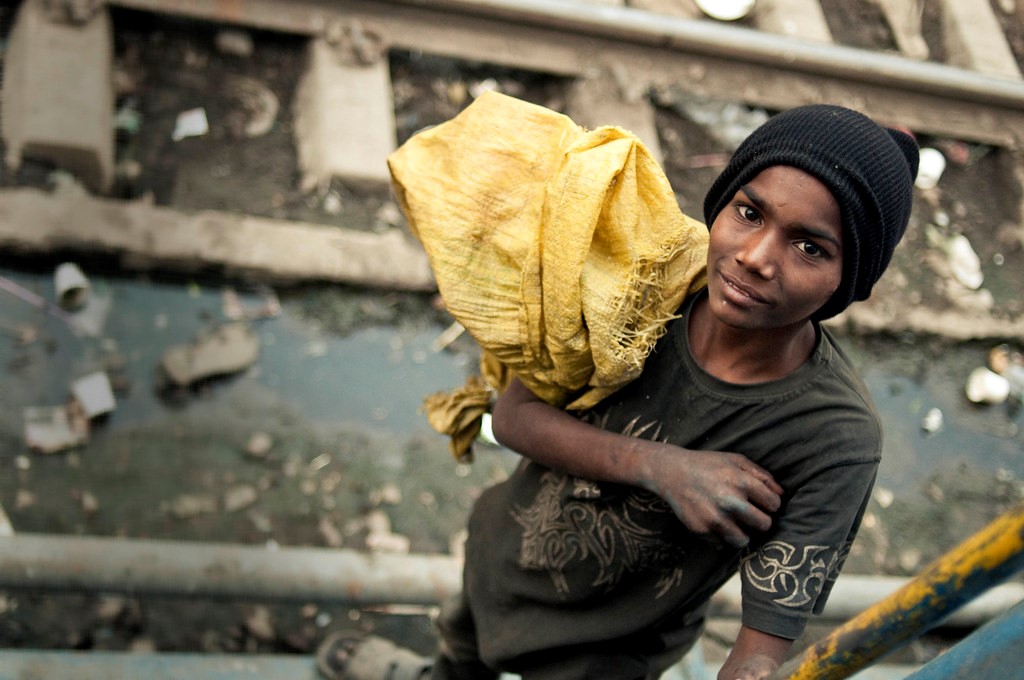
Why is Burundi PoorBurundi is a small East African nation located near Rwanda. Unfortunately, 58 percent of the population is chronically malnourished. Only 28 percent are food secure. With a GDP per capita of $818, it is the third poorest nation in the world. How is this nation one of the hungriest in the world, and why is Burundi poor? There are several reasons Burundi is poor and hungry. Below are four.
1. Conflict

Burundi has been involved in a cycle of civil wars since they obtained independence from Belgium in 1962. The nation has recorded five episodes of civil war that have claimed more than 500,000 lives and have produced about a million refugees. Consequently, this cycle of war has created an extremely unstable political environment. What is more, the latest two civil wars—one from 1993-2005 and another in 2015 after the controversial reelection of President Pierre Nkurunziza for a third term on a technicality—further crippled Burundi’s economy.

Conflict hinders agriculture, the backbone of Burundi’s economy. In fact, 90 percent of the population depend on agriculture for their livelihood. Due to Burundi’s civil war, poverty increased from 48 to 67 percent of the population between 1994 and 2006. Rising food prices (including a 28 percent increase in 2007-08) affect families’ livelihoods and increase their susceptibility to repetitive natural threats. These threats include flooding, droughts, landslides and the impact of climate change.

War has also impeded manufacturing. For example, the 1993-2005 civil war caused manufacturing production to decline by an average of 13 percent per year between 1993 and 1997.

Finally, war economies are short-term oriented. Even when wars end, post-war economies must overcome a destroyed infrastructure, a devastated productive sector because of allocating resources to fund the war, lack of funds and a dearth of moral standards. These facts make it easier to understand why the rate of investment in the Burundian economy declined during the 1993-2005 civil war years. The rate of gross investment declined from 17.5 percent in 1990 to a mere 5.6 percent in 1998.

Why is Burundi poor? The continuous cycle of violence and war has been a major detriment to Burundi’s economy and has increased the amount of people in poverty in the country.

2. Inefficient Management of Public Finances and Resources by the State

The state of Burundi regularly interferes with the economy. It subsidizes fuel and rations subsidized electricity. The government also influences other prices through state-owned enterprises and agriculture-support programs. Economic freedom is not allowed, and this weakens entrepreneurial activity. The state also takes away private property from citizens.

Whys is Burundi poor? Poor economic planning and management from the government prevents economic growth.

3. Little Land to Support the Growing Population

Burundi is landlocked, and its population is continually increasing. Land is the greatest source of conflict in Burundi. The country is overpopulated and rural, so land is valuable because it is a source of agriculture. Land is a source of life and death. In fact, 89 percent of the population are subsistence farmers and depend on the land to grow food for their families.

In his study, “Why Has Burundi Grown So Slowly?” Janvier D. Nkurunziza cites a 1998 study from the Entequete Prioritaire (EP 1998) that stated the average farmer in rural areas of Burundi walked an average of one hour to get to the nearest marketplace, and it took them 30 minutes to get to the nearest grocery. In addition, there is only one market day per week in many rural areas, and there are no storage areas for perishable produce. Because of this, farmers have no incentive to create surplus. EP1998 data further shows that Burundian producers consume on average 64 percent of their own food produce. The farmers farm to survive, not to grow wealth.

Why is Burundi poor? With a fast-growing population and too little land to house them all, resources and livelihoods are more difficult to acquire and improve.

4. Droughts and Other Natural Disasters

Burundi has suffered from an unusually high number of natural disasters. Droughts, torrential rain, floods and hailstorms have been particularly destructive in recent years. Disasters have contributed to the displacement of communities; the destruction of homes; the disruption of livelihoods and the further decline in food and nutrition security.

Other effects of the disasters include decreases in land productivity and an increase in crop pests. Regions affected by recent natural disasters are also at risk for permanent food insecurity and weak nutritional conditions. Overcrowded areas (about 270 inhabitants per km2, and up to 400 per km2 in the most densely populated areas) have also contributed to greater food and resource scarcity in affected areas.

Why is Burundi poor? Natural disasters through an already impoverished nation into a state of crisis, causing food shortages and displacement.

The history of conflict and leadership in Burundi has had long term consequences for the state of poverty in the country today. The recent decision by several western countries to discontinue aid to Burundi to compel its state to genuinely reform systemic issues that contribute to conflict is not helping poverty in the interim. However, humanitarian aid programs such as the World Food Programme (WFP) and UNICEF offer hope that someday, the Burundian people will overcome the perpetual cycle of poverty through compassion and help from their fellow man. Burundi has a long journey ahead on the path to reform. Understanding its history helps answer the question: why is Burundi poor?

– Jeanine Thomas

Photo: Flickr

August 25, 2017
https://borgenproject.org/wp-content/uploads/borgen-project-logo.svg 0 0 Kim Thelwell https://borgenproject.org/wp-content/uploads/borgen-project-logo.svg Kim Thelwell2017-08-25 07:30:132024-05-28 00:15:48Why is Burundi Poor?
Global Poverty, Hunger, Malnourishment

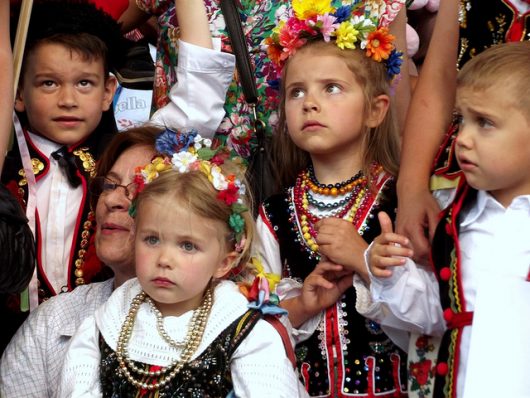
Malnutrition and Hunger in Poland

Hunger Within Poland
One of the main challenges Poland faces today is malnutrition. Hunger in Poland is an issue every third child between the age of 7 and 15 suffers from, according to research done by Poland Human Resources.

In Warsaw, over 23,000 children suffer from malnutrition.

When diet fails to supply the body with the essential nutrients it requires, malnutrition results. This lack of nutrition exists predominantly in developing nations, but malnutrition is also an issue in developed nations. Protein-energy malnutrition, for instance, generally occurs in underweight children. In Poland, this type of malnutrition is seen in 1 percent of men, more than 3 percent of women and in 13 percent of children.

Poverty is the main cause of malnutrition and hunger in Poland. Nearly 7 percent of the Polish population lives below the poverty line. As a result, many of the poor have unhealthy diets, causing deficiencies in vitamin D, folate, vitamin C, calcium and iodine. Infants, teenaged girls and women are particularly vulnerable. Iron deficiency is also a problem in Poland, seen in about one-quarter of children and pregnant women.

The Polish Central Statistical Office recently released a report which reveals deteriorating living conditions for the working class. The report shows that more than half a million children suffer from hunger in Poland, as well as severe malnutrition. Other highlights from the report:

  • In 2009, 2.2 million Polish people lived in conditions of extreme poverty.
  • Over 170,000 Polish children suffer from malnutrition, which has slowed their growth and development.
  • More than 260,000 children start their days without breakfast. Additionally, more than 70,000 children only eat what they receive at school because they lack food at home.
  • One in five Polish children is malnourished.

These statistics are particularly relevant in small villages, where there are high rates of unemployment and social helplessness. Most of the children suffering from hunger and malnutrition have families that are at the edge of poverty.

The Polish government has focused on improving economic conditions for its people in recent years. It must do more to eliminate hunger and malnutrition for its children.

– Yana Emets

Photo: Flickr

July 3, 2017
https://borgenproject.org/wp-content/uploads/borgen-project-logo.svg 0 0 Borgen Project https://borgenproject.org/wp-content/uploads/borgen-project-logo.svg Borgen Project2017-07-03 07:30:332017-12-19 13:34:50Malnutrition and Hunger in Poland
Food & Hunger, Malnourishment

Law Passed in Italy to Help Reduce Food Waste

Food Waste in Italy
Each year, about one-third of the food produced worldwide, 1.3 billion tons, is lost or wasted — enough to feed the one billion people who are malnourished and two billion more. Including food waste in Italy and France, the food wasted in Europe alone could provide for 200 million people.

“The problem is simple — we have food going to waste and poor people who are going hungry,” French politician Arash Derambarsh said to the Independent.

France became the first country in the world to ban supermarkets from disposing of unsold foods and require them to instead donate the products to charities and food banks. The Italian Parliament has become the second to introduce food waste reform.

In contrast to its French counterparts, however, Italy’s bill rewards supermarkets for helping reduce food waste instead of punishing them for not doing their part.

Current law requires stores to declare each donation five days in advance, preventing supermarkets from giving away excess. Once the new bill becomes law, markets will only need to submit a document detailing what was given at the end of the month. The donations will go to public authorities and non-profit organizations.

The new legislation also allows markets to donate mislabeled food products if the expiration date and allergy information are properly indicated. A food education program for schools, a national awareness campaign and a take-out system for restaurants will follow within the next three years.

According to La Reppublica, 43 percent of food waste in Italy happens at the consumer’s home. Each person wastes an average of 76 kilograms per year, costing the country $18 million. Maruzio Martina, the Italian agriculture minister, said he hopes to increase Italy’s food recovery from 550 million tons to 1 billion.

Many hope the bill will not only reduce food waste in Italy but also benefit the 6 million Italians living in poverty who rely on donations to survive.

The waste-bill, brainchild of Italian member of parliament Maria Chiara Gadda, has received bipartisan support, and was passed in the Senate on August 2.

– Ashley Leon

Photo: Flickr

October 17, 2016
https://borgenproject.org/wp-content/uploads/borgen-project-logo.svg 0 0 Borgen Project https://borgenproject.org/wp-content/uploads/borgen-project-logo.svg Borgen Project2016-10-17 01:30:412020-06-03 10:35:24Law Passed in Italy to Help Reduce Food Waste
Advocacy, Economy, Global Poverty, Malnourishment

Five Ways Global Communities Fight Poverty in Ghana

Global Communities Poverty in Ghana
A non-profit organization called Global Communities works to end poverty in Ghana with a 5-point plan in conjunction with USAID’s Multi-Sectoral Nutrition Strategy.

The non-profit organization works in more than 20 countries around the world, with Ghana being a focus of the recent programs. Global Communities, created about 60 years ago, works with the private sector, governments and local communities to provide the “means and ability to live and prosper with dignity,” something it ensures under its organization’s vision.

The Maryland-based organization paired with USAID in support of the Multi-Sectoral Nutrition Strategy to be implemented over the years 2014-2025. The program’s goal seeks to reduce chronic malnutrition by 20 percent over those 11 years. Global Communities has put forth these five goals in hopes of accelerating the fight against malnutrition in Ghana.

1. Provide more opportunities for economic growth through microfinance

Individuals who do not have access to the capital provided by large financial services corporations can gain access to funds through various microfunding institutions. These smaller companies allow a more intimate relationship between the lender and the borrower. Global Communities works through Boafo Microfinance Services in order to provide low-income Ghanaians with the money for new businesses, education and homes.

2. Build a more “resilient” Ghana by improving the nutrition in local diets

In order to reach this goal, Global Communities has partnered with the USAID/Ghana Resiliency in Northern Ghana (RING) program to “reduce poverty and improve the nutritional status of vulnerable populations.” The introduction of the sweet potato in local Ghanaian farms was a successful implementation of the partnership. Both USAID and Global Communities hope to educate communities on the importance of good nutrition instead of just providing temporary relief.

3. Create pathways for urban youth to become financially independent

Global Communities has joined the Youth Inclusive Entrepreneurial Development Initiative For Employment in opening up the construction sector to Ghana’s youth. In five of the biggest cities in Ghana, the initiative hopes to “reach more than 23,000 youth” by teaching them the skills for employment. Because Africa’s youth makes up a majority of the population, targeting this demographic is the most effective way to reducing poverty in Ghana.

4. Improve access to clean water and sanitation

Working with both the public and private sector, Global Communities is working to enhance the current water and sanitation infrastructure. With focus on “slum communities” in three cities, the non-profit seeks to optimize every individual’s condition while constructing water and sanitation services that can be sustainable. These efforts are paired with USAID’s Water Access Sanitation and Hygiene for the Urban Poor (WASH-UP) and USAID’s WASH for Health (W4H). An important part of the relief is affecting a change in behavior which can help create a poverty-free society that operates without relief.

5. Upgrade local neighborhoods and reinforce political and social institutions

After the basic needs of food, water and shelter are met, a society can begin to upgrade its political, economic and social conditions. Global Communities, with the Bill & Melinda Gates SCALE-UP program, echoes this idea as it reinforces educational and financial institutions for residents in the low-income communities of Accra and Sekondi-Takoradi. The expansion of government services, such as female inclusivity and public transportation, in those regions is being implemented through the Our City, Our Say project.

Global Communities is just part of a larger non-profit coalition fighting against global poverty in Ghana. The process includes numerous programs with funding from various foreign governments, each generating results through their focus on different parts of the Ghanaian society. Readers can follow the various programs and outcomes on the Global Communities website.

– Jacob Hess

Sources: Global Communities 1, Global Communities 2, USAID 1, USAID 2
Photo: Borgen Project

April 3, 2016
https://borgenproject.org/wp-content/uploads/borgen-project-logo.svg 0 0 Borgen Project https://borgenproject.org/wp-content/uploads/borgen-project-logo.svg Borgen Project2016-04-03 01:30:202024-12-13 17:54:12Five Ways Global Communities Fight Poverty in Ghana
Global Poverty, Malnourishment

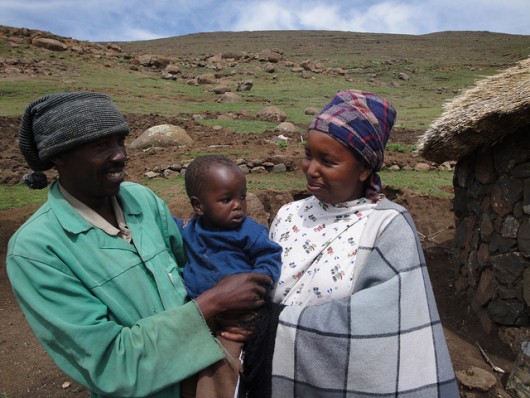
One Stop Shop Improves Health Care in Lesotho

Healthcare in LesothoUNICEF and the German Agency for International Cooperation (GIZ) have announced that they will launch four pilot health centers in 2016. As a result, thousands of rural residents may be able to receive basic health care in Lesotho.

The health centers, called One Stop Shops, are an effort to bring HIV, malnutrition, blood pressure screenings, immunizations and infant checkups to the most remote areas of the country. Community members in mountain regions are currently unable to get these services without traveling to district capitals, which is a severe hardship that often deters them from seeking help at all.

“Without easy access to these service providers, they won’t go after these services,” said district council secretary for Maseru, Mamajara Lehloenya. “One wouldn’t take the initiative to go test your high blood pressure (hypertension) unless you are very sick.”

This is a serious problem in a country facing a number of national health burdens. The most recent reports from the World Health Organization indicate that the hypertension prevalence rate is more than 30 percent. HIV affects over 23 percent of the population. At the same time, Lesotho is experiencing an under-five mortality rate of 100/1000 children.

To remedy this lack of accessible health care in Lesotho, which is taking away lives, UNICEF and GIZ are bringing services to the most accessible level of government: community councils.

After the pilot phase is over, agencies hope that One Stop Shop will be a “reliable information hub” where community members can learn what services they can receive near home and how to receive them. One Stop Shop also aims to strengthen the referral network for more technical services offered in the capitals.

Social workers will also be included in the initiative in order to assist residents with government documents, including birth certificates and identification cards, as these are often necessary to receive help outside of local communities.

Empowering rural citizens of Lesotho to take charge of their health is critical to sustainably improving human and economic development in the country.

“By linking them to services that build their human capital – like health and education – a safety net of public assistance programs can help the poor rise out of long-term poverty,” said UNICEF Social Protection Consultant Betina Ramirez.

The efforts will complement those of the United Nations Development Program (UNDP), which has been working to build capacity in the country, especially in the agricultural sector. UNDP urges that, together, improving health and food security will be critical if Lesotho is to get back on track with the Millennium Development Goals.

– Ron Minard

Sources: UNDP, UNICEF, WHO
Photo: Flickr

February 13, 2016
https://borgenproject.org/wp-content/uploads/borgen-project-logo.svg 0 0 Borgen Project https://borgenproject.org/wp-content/uploads/borgen-project-logo.svg Borgen Project2016-02-13 01:30:172024-05-27 09:28:51One Stop Shop Improves Health Care in Lesotho
Global Poverty, Hunger, Malnourishment

What Causes Stunting?

What Causes StuntingWhat causes stunting? The World Health Organization (WHO) calls growth stunting one of the most significant impediments to human development.

Stunting is described as, low height for age or a height more than two standard deviations below the WHO Child Growth Standards median.

It is estimated 162 million children under the age of five are stunted worldwide.

According to The Future of Children, stunting is an indication of malnutrition or nutrition related disorders. Contributing factors include poor maternal health and nutrition before, during and after pregnancy, as well as inadequate infant feeding practices especially during the first 1,000 days of a child’s life and infection.

In a global study, UNICEF explains that nearly half of all deaths of children under the age of five are attributable to chronic malnutrition. In one year, that’s a loss of nearly three million lives.

Malnutrition doesn’t only lead to decreased stature. Malnutrition increases the risk of dying from common infections, the frequency and severity of such infections and contributes to delayed recovery. According to UNICEF, the relationship between malnutrition and infection can create a potentially lethal cycle of worsening illness and deteriorating nutritional status.

The effects of stunting are lasting and generally irreversible. Children over the age of two who are stunted are unlikely to be able to regain their lost growth potential. In addition, children who experience stunting have an increased risk for cognitive and learning delays.

The effects of malnutrition on a population have broader impacts. Malnutrition perpetuates poverty and slows economic growth. Reports from the World Bank show that as much as 11 percent of gross national product in Africa and Asia is lost annually to the impact of malnutrition.

A study looking at the long-term effects of stunting in Guatemala showed adults who were stunted as children received less schooling, scored lower on tests, had lower household per capita expenditure and a greater likelihood of living in poverty. For women, stunting in early life was associated with a lower age at first birth and a higher number of pregnancies and children.

The World Bank estimates a 1 percent loss in adult height due to childhood stunting is associated with a 1.4% loss in economic productivity. Further estimates suggest stunted children earn 20 percent less as adults compared to non-stunted individuals.

In 2012, the World Health Assembly endorsed a plan to improve maternal, infant and young child nutrition by 2025. Their first target: a 40 percent reduction in the number of children under the age of five who are stunted.

Overall, progress has been made. UNICEF reported between 1990 and 2014 the number of stunted children under five worldwide declined from 255 million to 159 million. Today, that is just under one in four children under the age of five who have stunted growth.

At the same time, numbers of stunting have increased in West and Central Africa from 19.9 million to 28.0 million. As of 2014, just over half of all stunted children live in Asia and over one-third reside in Africa.

– Kara Buckley

Sources: World Bank, UNICEF, The Future of Children, World Health Organization 1, World Health Organization 2
Photo: Needpix.com

January 8, 2016
https://borgenproject.org/wp-content/uploads/borgen-project-logo.svg 0 0 Borgen Project https://borgenproject.org/wp-content/uploads/borgen-project-logo.svg Borgen Project2016-01-08 06:05:122024-05-27 09:28:41What Causes Stunting?
Food & Hunger, Global Poverty, Health, Malnourishment

Going Door-to-Door to End Malnutrition in South Sudan

malnutrition_in_south_sudan
UNICEF and the World Food Programme announced recently that volunteers will go door to door over the next 12 months in an effort to screen 250,000 children for acute malnutrition in South Sudan.

The initiative will target households in the state of Warrap in Buhr el Ghazi, where an estimated 26,000 children are thought to suffer from life-threatening cases. Volunteers have been chosen from local communities and trained by the state Ministry of Health with support from UNICEF and WFP.

“Visiting every single home will help ensure that children who are malnourished or sick will be referred for treatment and will receive life-saving care,” said Vilma Tyler, Chief of Nutrition for UNICEF in South Sudan.

The announcement comes just as the recent Integrated Food Security Phase Classification warns that the situation in some areas of the country could escalate to famine levels if humanitarian assistance isn’t delivered by December. Nearly 238,000 children in South Sudan are currently experiencing Severe Acute Malnutrition (SAM).

Widespread food insecurity in the newly formed country has been the result of ongoing conflict between various rebel groups and the fledgling South Sudanese governing body.

Civil war came to a head in Juba in 2013 amidst ethnically motivated attacks, civilian massacres, and the displacement of over 750,000 children as people fled their homes to escape the violence.

Record food prices caused by the resulting economic downturn and unreliable rainy seasons have exacerbated an already dire problem; the number of children facing SAM doubled from the previous year.

With time running out, volunteers are working quickly to triage those in need. Children at risk of starvation will receive treatment at UNICEF-supported health facilities and outpatient therapeutic programs while caregivers will be offered guidance on how to keep children healthy through nutrition, hygiene and sanitation practices.

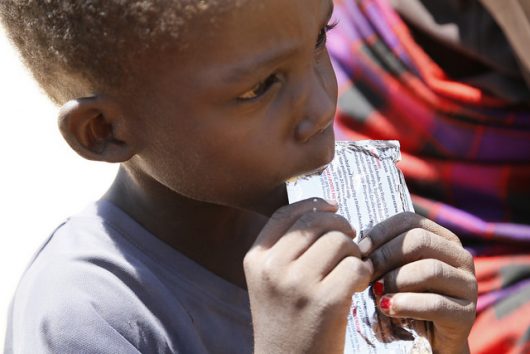
For children with SAM, initial treatment often means utilizing Ready-to-Use Therapeutic Food (RUTF) – 500kcal spreads containing essential amino acids, lipids, and minerals – as their sole nutritional intake.malnutrition_in_South_Sudan

UNICEF is hoping to build on the progress it made in 2014 by prioritizing three strategic objectives: continuing humanitarian intervention in UN Protection of Civilian (PoC) and Internally Displaced Person (IDP) sites, scaling up its Rapid Response Mechanism (RRM) in hard to reach locations and supporting capacity building by engaging community-based organizations.

Until March 2014, UNICEF primarily operated within United Nations’ PoC and IDP sites, which sheltered only a fraction of the 800,000 people displaced by conflict. Ethnic and gender-based harassment and shifting security situations prevented volunteers and specialists from reaching 90 percent of at-risk individuals across the country.

Still, for 90,000 people, life-saving treatment and sustainable training came just in time. In addition to nutrition services, children benefited from guidance on sanitation and hygiene and were enrolled in school.

The development of RRM revolutionized UNICEF’s reach in the country. Mobile teams of specialists are now equipped to deploy to locations previously inaccessible because of deteriorated security.

During the 34 missions these teams conducted last year, more than 500,000 additional people were screened, and the number of children receiving life-saving treatment for SAM climbed to 93,000.

These teams are also equipped to collect more extensive data on the ground and to implement warning systems, which will alert them to return to communities when progress begins to reverse. UNICEF is hopeful that by ramping up RRM capabilities, they will continue to see more patients.

To prevent recurring cases, UNICEF will step up engagement with community-based organizations with a focus on capacity building. Last year, the organization worked with 88 local organizations to train around 1,900 partners on SAM treatment, infant and young child feeding, and nutrition surveys.

It also supported local working groups seeking to maintain progress in affected areas and engaged the government of South Sudan on water sanitation and national planning.

These efforts will be critical to ensuring that sustainable development continues even after these next 12 months, and UNICEF is hopeful that, for children in South Sudan, it will.

– Ron Minard

Sources: IpcInfo 1, IpcInfo 2, UNICEF 1, UNICEF 2
Photo: Flickr, Wikipedia

November 13, 2015
https://borgenproject.org/wp-content/uploads/borgen-project-logo.svg 0 0 Borgen Project https://borgenproject.org/wp-content/uploads/borgen-project-logo.svg Borgen Project2015-11-13 01:30:382024-12-13 18:05:23Going Door-to-Door to End Malnutrition in South Sudan
Food & Hunger, Global Poverty, Malnourishment

Addressing Guatemala’s Food Emergency

Guatemalan Drought Creates Food Emergency
Over the last three years, Guatemala has experienced a drought that has taken a hungry nation and made conditions even more severe.

Before the drought, the nation experienced some of the highest levels of “inequality, poverty, chronic malnutrition and mother-child mortality in the region.” Almost 50 percent of children under the age of five suffer from chronic undernutrition; that is the highest number in their region and fourth highest in the world.

The drought has now taken what little bit of food supply the region can supply on their own and caused the crops to be stunted or not grow. Also, any food reserves have been depleted. Nearly one million hungry people are growing even hungrier with the drought.

The food emergency was an issue last year as well. On August 26, 2014, a state of emergency was declared in Guatemala after a particularly brutal drought was affecting the nation. The state of emergency was issued in 16 of the 22 provinces and at that time was affecting 236,000 families.

Currently, much of the nation’s population is relying on the government and U.N. handouts to feed their families.

Part of the reason that the drought is so devastating is the lack of improvements to the water infrastructure. The inefficiencies in collecting, storing and then irrigating the rainwater that does come expounds the problems that are associated with the drought.

Organizations are working to help those suffering most from the ravaging drought. The World Food Programme has created programs “geared towards reducing food insecurity, improving the nutritional status of mothers and children under 5 and living conditions of vulnerable groups by increasing agricultural productivity and farmer’s marketing practices.”

They cite two main programs they are conducting in Guatemala:

  1. Country Programme: 45,500 people will be given supplementary food in order to combat the chronic undernutrition, 12,000 subsistence farmers will be assisted and the program will help 3,000 farmers gain access to markets.
  2. Purchase for Progress: This program is working to link a much broader base of farmers and markets together. Also, guidance on best farming practices will be given to help grain quantity and quality.

While these programs may not directly stop the widespread hunger, it is putting food in the mouths of many who need it and creating an infrastructure to ensure that severe food shortages do not happen in the future.

They are also not the only programs that the World Food Programme is working on in Guatemala. There are long-term plans to help the country through future droughts and streamline food voucher distribution to help those hungry right now.

Guatemala has a long way to go. During this drought, so many people are suffering from worsening hunger. Unfortunately, this is not a new revelation or situation. The first area that has been addressed is the immediate need to feed the hungry.

But long-term action needs to be enacted. Thankfully, the Guatemalan government understands this and the World Food Programme has programs in place. Hopefully, in the future, a drought will not cause such widespread hunger again.

– Megan Ivy

Sources: Guatemala: WFP Country Brief, NBC, Trust, WFP
Photo: Flickr

September 25, 2015
https://borgenproject.org/wp-content/uploads/borgen-project-logo.svg 0 0 Borgen Project https://borgenproject.org/wp-content/uploads/borgen-project-logo.svg Borgen Project2015-09-25 01:30:082024-12-13 18:04:57Addressing Guatemala’s Food Emergency
Food & Hunger, Global Poverty, Malnourishment

Malthusianism: Theories on Poverty and Aid

Malthusianism Theories on Poverty and Aid
Thomas Malthus was a clergyman and philosopher of the late 18th century. His ideas on the causes of poverty and the means by which it could be eliminated were controversial for his time and would probably have been unspeakable in ours. However, his work shaped England’s “Poor Laws,” influenced scientists and philosophers such as Charles Darwin, and remains pertinent today.

Malthus believed that the population would always increase more rapidly than food supply, which meant that large numbers of people would always suffer from starvation and poverty. His calculations demonstrated that while food supply grew at a linear rate, populations tended to grow at an exponential one.

The inspiration behind his ideas came from his work as a parish priest, where he noticed that the numbers of poor people he was baptizing far outstripped the number of deaths he was recording. As a member of a wealthy family himself, he was also struck by the abject poverty and miserable conditions the poor were living in. At the time, almost a seventh of England was on some sort of welfare, but its population was booming.

Carrying out more studies on England’s poor gave Malthus a clearer picture of the problem. Poor families showed a tendency to have more children when their economic situation improved, even slightly, as it had after the industrial revolution. This had the effect of again lowering the average living standard of the entire family.

In this sort of poverty trap, the poor would remain unable to escape their condition. A poor family was also generally more likely to have a greater number of children because some were always expected to die in their infancy. The solution, Malthus stated, was to encourage the poor to marry later and have fewer children, if any at all. By having children, they would be sentencing more people to live in poverty and starvation.

The way to encourage the poor to adopt this solution would be to eliminate all types of aid. While this would initially be very hard and even cruel, it would eliminate poverty and dismantle the poverty trap in the long run.

What welfare did, Malthus believed, was encourage the poor to marry earlier even when they could not support a family and have children they could not afford. The effect of this was that families continued to be poor and live on the very barest of necessities. England’s Poor Laws, which propped up people who suffered from bad harvests, was creating the very poverty it hoped to eliminate.

Once these practices were taken up, food supply could finally keep up with the lowered population growth. If food supply could not keep up, Malthus believed that three necessary and inevitable things would take place: plague, famine and war. These would once again balance out the population but at a much greater cost.

Critics have generally attacked Malthusianism from two different angles. One side believes that a small population is not good for a country. The Mercantilists argue that high population growth, even if it results in poverty, is good for the country. It would provide it with people to fight in the army, work in factories and provide cheap services.

Mercantilists did not want the population to earn very high wages or live far above the poverty line—this would stagnate economic growth and weaken the nation. Modern anti-Malthusians also believe that low birth rates are bad for the economy because the workforce would not be able to support its older population.

Other critics of Malthusianism believe that his proposed solutions are not the best way to tackle poverty. They are needlessly inhumane. Human ingenuity can come with solutions to expand food supply to meet population needs. Norman Borlaug, the mind behind the Green Revolution of the 1960s and 1970s, is cited as an example. He created strains of corn and wheat that had much higher yields than before, saving millions from starvation.

Neo-Malthusians, as modern proponents of Malthus are called, say the current statistics speak for themselves. Populations in almost every developing country are growing rapidly as they become wealthier and advancements in medicine keep more children and older people alive. In the last 110 years, the world’s population has grown from 1.6 billion to 7.2 billion.

But 805 million worldwide go to bed hungry, and most are from developing countries. A fourth of people in Sub-Saharan Africa are chronically malnourished. More than 750 million lack access to clean water, which leads to 850,000 deaths per year. In major cities, such as Mumbai, half the population are living in wretched and slum-like conditions. In Sub-Saharan Africa, this number reached 61 percent. Most poor people continue to have more children than they can afford to take care of.

While the poor continue to have high fertility rates, they will continue to be poor. Neo-Malthusians advocate for better family planning, a change in societal expectations and norms, greater access to contraceptives and more education about conception to reduce the poor’s fertility rates.

– Radhika Singh

Sources: Orion Magazine, Population Connection, Economist, BBC
Photo: Flickr

September 14, 2015
https://borgenproject.org/wp-content/uploads/borgen-project-logo.svg 0 0 Borgen Project https://borgenproject.org/wp-content/uploads/borgen-project-logo.svg Borgen Project2015-09-14 08:22:212024-12-13 17:52:12Malthusianism: Theories on Poverty and Aid
Page 5 of 10«‹34567›»

Get Smarter

  • Global Poverty 101
  • Global Poverty… The Good News
  • Global Poverty & U.S. Jobs
  • Global Poverty and National Security
  • Innovative Solutions to Poverty
  • Global Poverty & Aid FAQ’s
Search Search

Take Action

  • Call Congress
  • Email Congress
  • Donate
  • 30 Ways to Help
  • Volunteer Ops
  • Internships
  • Courses & Certificates
  • The Podcast
Borgen Project

“The Borgen Project is an incredible nonprofit organization that is addressing poverty and hunger and working towards ending them.”

-The Huffington Post

Inside The Borgen Project

  • Contact
  • About
  • Financials
  • President
  • Board of Directors
  • Board of Advisors

International Links

  • UK Email Parliament
  • UK Donate
  • Canada Email Parliament

Get Smarter

  • Global Poverty 101
  • Global Poverty… The Good News
  • Global Poverty & U.S. Jobs
  • Global Poverty and National Security
  • Innovative Solutions to Poverty
  • Global Poverty & Aid FAQ’s

Ways to Help

  • Call Congress
  • Email Congress
  • Donate
  • 30 Ways to Help
  • Volunteer Ops
  • Internships
  • Courses & Certificates
  • The Podcast
Scroll to top Scroll to top Scroll to top