Malnourishment Has Decreased, Improving Children’s Lives
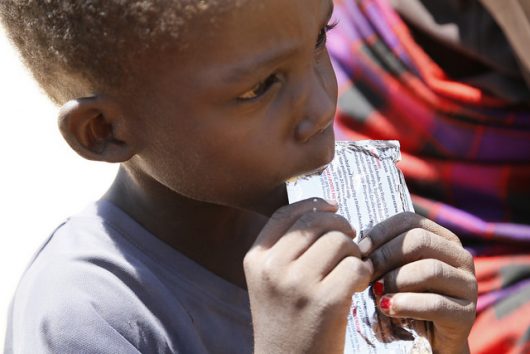
In many parts of the world, malnourishment has been a fatal problem — not just for children, but also for communities. Today, malnourishment has decreased but continues to affect children globally. Despite this prevalence, strides have been made and malnourishment is becoming less and less detrimental for people, children especially, in numerous parts of the globe.
Facts of Malnourishment
Malnourishment involves a dietary deficiency — a poor diet may lead to a lack of vitamins, minerals and other essential substances. Too little protein can lead to kwashiorkor, symptoms of which include a distended abdomen. In addition, a lack of vitamin C can result in scurvy.
According to the World Health Organization (WHO), 462 million people worldwide are malnourished, and possess stunted development due to poor diet; this affects 159 million children globally.
Stunting in Senegal
When this millennium began, malnourishment was highly prevalent in most poor countries across the planet. In Senegal, however, stunting affected as many as 30 percent of children under five years of age. Stunting in growth is the result of long-term malnourishment.
In Senegal, stunting has life-long consequences such as: the reduction of cognitive abilities, limited school attainment, decreases in adult wages and can make children less likely to escape poverty as adults. The solution to these outcomes lies in holistic monitoring and feeding.
Within the globe, 1 in 4 children are stunted in growth; today, Senegal has a rate of 19 percent of stunted children. This makes it the lowest rate in any sub-Saharan African nation. Thanks to efforts from the Nutrition Policy Coordination Unit in the Prime Minister’s office — who worked with local governments, public service providers and NGOs — nutrition services have been delivered to in-need communities and households.
The services included health education, breastfeeding promotion, infant and young child feeding counseling, monthly weighing sessions, micronutrient supplementation, conditional cash transfers, targeted food security support and more.
Importance of Good Nutrition
The best chance a child has for growth is in access to good nutrition; child survival and development both stem from a healthy start. Children who are well nourished are more equipped to grow, learn and participate in the community, and are also much more resilient in the face of disease or disaster.
Malnourishment is often linked to nearly half of childhood deaths under the age of five; this figure calculates roughly to about 3 million young lives a year. For millions of children, chronic malnourishment results in stunting, irreversible physical and mental growth.
The first 1,000 days of a mother’s pregnancy are when malnourishment begins to take hold of the child; thankfully, by focusing on these first 1,000 days, UNICEF has helped cut the number of children affected by stunting by nearly 100 million since 1990.
First Steps of Progress
Now more than ever, millions of children’s lives are being saved on a grand and global scale. Within the last decade, malnourishment has decreased despite its continuance to globally affect children.
This progress is only the beginning — the start of the first 1,000 days to help prevent malnourishment from taking life away from those who’ve yet to begin to live it. To continue in the fight for the children is to continue to allow life to be at its best.
– Gustavo Lomas
Photo: Flickr
