• Link to X
  • Link to Facebook
  • Link to Instagram
  • Link to TikTok
  • Link to Youtube
  • About
    • About Us
      • President
      • Board of Directors
      • Board of Advisors
      • Financials
      • Our Methodology
      • Success Tracker
      • Contact
  • Act Now
    • 30 Ways to Help
      • Email Congress
      • Call Congress
      • Volunteer
      • Courses & Certificates
      • Be a Donor
    • Internships
      • In-Office Internships
      • Remote Internships
    • Legislation
      • Politics 101
  • The Blog
  • The Podcast
  • Magazine
  • Donate
  • Click to open the search input field Click to open the search input field Search
  • Menu Menu

Archive for category: Malnourishment

Food & Hunger, Food Security, Global Poverty, Malnourishment, Refugees and Displaced Persons

1,000 Days Campaign in Rwanda 

1,000_days_campaign
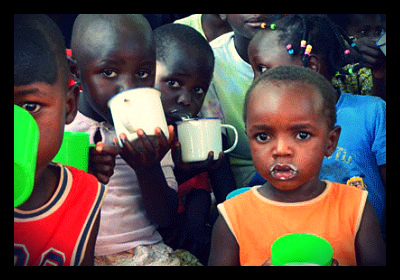
Since conflict started in the Democratic Republic of Congo, children have been fleeing the violence to Rwanda and into the hands of another challenge: malnutrition. The state of food security and proper nourishment in Rwandan refugee camps is becoming dire as nearly 44 percent of children under 5 face serious chronic malnutrition.

However, the Rwandan government is making strides to welcome its new residents with open arms and humanitarian aid. Under the command of Prime Minister Pierre Damien Habumuremyi, the Rwandan government launched the “1,000 Days in the Thousand Hills” campaign back in September of 2013 to combat malnutrition in both its refugee camps and its local population. With the help of the Ministry of Disaster Management and Refugee Affairs (MIDIMAR), the 1,000 days campaign was implemented first in the Kiziba camp in Western Rwanda, then in all five refugee camps in the country.

The mission of the campaign: combat malnutrition using programs that make populations more self-reliant and educated on proper health. The approach: provide children with the proper nutrients for the first 1,000 days from birth until the child’s second birthday and establish local community efforts to produce more nutritious food.

The 1,000 Days campaign in Rwanda is not unique. In fact, similar programs have been implemented in a variety of other locations including Ethiopia, Indonesia and Guatemala. But what makes Rwanda’s campaign special is its focus on integration. Like all of MIDIMAR’s programs, the 1,000 Days in the Thousand Hills campaign aims to connect the refugee and local populations by using their combined forces to solve mutual problems. All practices used in the local population are being used in refugee camps and vice versa.

What are these practices? As established, the campaign seeks to make populations at risk more self-sufficient while still receiving help to reduce malnutrition. Programs include setting up kitchen gardens and animal breeding programs. At the start of the campaign, 315 kitchen gardens were set up and 151 families received rabbits to breed, eat and sell. The hope is to make refugees and local populations independent with livestock and farming techniques that provide them with greater nutrients.

On top of this, the 1,000 days campaign aims to provide children with the necessary sustenance for healthy development and nutrition from day one until age 2. This allows children to escape malnutrition and stunting of growth and to have better immune systems and brighter futures. The program achieves this goal both by putting more food into the community and educating parents on what counts as fortified and healthy foods, such as vegetables, fruits and milk. In addition, the campaign seeks to spread awareness on the warning signs of malnutrition and the diseases associated with the condition.

All of this culminates in two results: first, it brings children out of risk of malnutrition by providing them with necessary protein from the start. Second, it pulls populations into a state of food security by providing sustainable ways of harvesting good food.

The program is set to end in October of 2016, but many strides towards success can be taken by then. With any luck and lots of hard work, malnutrition will cease to be an insurmountable problem facing refugees in Rwanda.

– Caitlin Thompson

Sources: All Africa, Doctors Without Borders, Ministry of Disaster Management, Relief Web, Republic of Rwanda, Republic of Rwanda Ministry of Health, World Vision International, 1000 Days
Photo: Republic of Rwanda Ministry of Health


June 5, 2014
https://borgenproject.org/wp-content/uploads/borgen-project-logo.svg 0 0 Borgen Project https://borgenproject.org/wp-content/uploads/borgen-project-logo.svg Borgen Project2014-06-05 20:39:262024-06-05 01:57:291,000 Days Campaign in Rwanda 
Food Security, Global Poverty, Malnourishment

Soybeans and Global Food Security

A recent study by NASA’s Jet Propulsion Lab in California has shown that soybeans can be re-engineered to grow in more arid environments without losing standard crop yield. If the new varieties prove durable, the cultivation of soybeans in Sub-Saharan Africa and South Asia will help address food insecurity issues in the region. Here are five reasons why soybeans are important in addressing global food security:

1. Food production must increase by 70 percent to meet the world’s food needs by 2050.

There are a number of factors that will affect global food security in the coming decades including: population increase, movement away from rural areas and toward urban centers, food production and climate change.

Today, undernourishment affects 870 million people worldwide. Between now and 2050, there will be an additional two billion people on our planet, with around 24 million children pushed into hunger due to food security issues.

2. Soybeans are one of the world’s most important protein crops.

Soybeans have a protein content of over 35 percent, as well as healthy unsaturated fats and carbohydrate fibers, making them some of the healthiest food sources around. They are also one of the least expensive sources of protein when compared to eggs, milk, beef and cow peas.

Due to the use of soybeans in both the food and animal feed industries, soybean farmers can earn a substantial amount of cash because the crop can be successfully grown at a low cost of production.

3. Modifying soybeans can address both climate challenges and food insecurity.

In a recent study led by NASA’s Jet Propulsion Lab (JPL,) computer models have been applied to look for a super soybean. The research study determined that soybean plants can be redesigned to increase crop yield by 7 percent without using more water. The study also demonstrated that soybeans can be redesigned to use either 13 percent less water, or reflect 34 percent more light back into space without reducing crop yields–good for both food security and climate change.

While other geo-engineering solutions for climate change tend to be expensive, such as spraying sulfates into the upper atmosphere in order to reduce incoming sunlight or loading the ocean with iron in order to increase plankton photosynthesis, modifying annual crops is inexpensive and can be implemented quickly.

4. Soybean cultivation is growing in Africa.

Research by the University of Agriculture Makurdi in Nigeria in collaboration with the International Institute of Agriculture (IITA), aims to help improve the lives and livelihoods of small-hold farmers in the drought-prone areas of sub-Saharan Africa and South Asia by providing more durable soybean varieties that can stand up against more arid conditions. Like the redesigned varieties in the JPL study, new varieties being promoted in Africa can help increase crop yields without using more water.

Soybean production remains relatively isolated in Africa, with Nigeria as the largest soybean producer, followed by South Africa and Uganda. However, the new, more durable varieties may allow for more countries to begin cultivating soybeans, helping improve the health of their populations as well as reducing local poverty.

5. Soybeans could have a long-term impact on poverty.

Food and water security will be a major national security focus in the coming decades as both climate change and population increases affect food production worldwide. Countries lacking basic food resources to feed their growing urban populations may become hotbeds for conflict, unrest and terrorist activities.

While many solutions for food insecurity should be addressed and considered by lawmakers, scientists and farmers alike, soybean technology is a first step in addressing the needs of poverty stricken regions by providing a modified crop that can meet multiple goals.

Re-engineered soybeans are an innovative (and healthy) way to help address local food security issues worldwide. Not only do they provide a good food source, but their wide use in products from oils to food to animal feed guarantee a lucrative market for local farmers. Reducing poverty through innovative changes in the way staple crops are traditionally grown is an economical and feasible way to bring food security, in light of climate and population challenges, to developing regions of the world.

– Andrea Blinkhorn

Sources: Daily Trust, United Nations Conference on Trade And Development, Intech, NASA, VOA News, World Food Programme, Stop Hunger Now
Photo: HD WAll IMG

June 4, 2014
https://borgenproject.org/wp-content/uploads/borgen-project-logo.svg 0 0 Borgen Project https://borgenproject.org/wp-content/uploads/borgen-project-logo.svg Borgen Project2014-06-04 04:00:512024-06-07 04:41:25Soybeans and Global Food Security
Page 10 of 10«‹8910

Get Smarter

  • Global Poverty 101
  • Global Poverty… The Good News
  • Global Poverty & U.S. Jobs
  • Global Poverty and National Security
  • Innovative Solutions to Poverty
  • Global Poverty & Aid FAQ’s
Search Search

Take Action

  • Call Congress
  • Email Congress
  • Donate
  • 30 Ways to Help
  • Volunteer Ops
  • Internships
  • Courses & Certificates
  • The Podcast
Borgen Project

“The Borgen Project is an incredible nonprofit organization that is addressing poverty and hunger and working towards ending them.”

-The Huffington Post

Inside The Borgen Project

  • Contact
  • About
  • Financials
  • President
  • Board of Directors
  • Board of Advisors

International Links

  • UK Email Parliament
  • UK Donate
  • Canada Email Parliament

Get Smarter

  • Global Poverty 101
  • Global Poverty… The Good News
  • Global Poverty & U.S. Jobs
  • Global Poverty and National Security
  • Innovative Solutions to Poverty
  • Global Poverty & Aid FAQ’s

Ways to Help

  • Call Congress
  • Email Congress
  • Donate
  • 30 Ways to Help
  • Volunteer Ops
  • Internships
  • Courses & Certificates
  • The Podcast
Scroll to top Scroll to top Scroll to top