Indigenous Poverty in GuatemalaGuatemala, a small country in Central America with a population of 18.4 million, continues to face widespread poverty, especially among Indigenous communities. 

Brief History of Indigenous People in Guatemala

The Maya people, Guatemala’s largest Indigenous group, have endured centuries worth of colonization, conquest and neocolonial forms of violence and domination. Their struggles and systemic discrimination increased during the Guatemalan Civil War that lasted from 1960 to 1996. During the civil war, the Maya people were accused of being affiliated with or supporters of the Guerrillas (a paramilitary group).

The Guatemalan government burned entire villages and innocent people were massacred. What is now considered a genocide resulted in more than 200,000 deaths, the internal displacement of one million people and 30,000 fleeing as refugees to other countries. The Peace Accords were signed in 1996, allowing most refugees to return home to Guatemala.

The next crucial step was the signing of the Accord on Identity and Rights for Indigenous Peoples, designed to protect Guatemala’s Indigenous communities. Unfortunately, it wasn’t implemented.

The Numbers

Indigenous poverty in Guatemala stems from long-standing inequality—Indigenous people do not receive the same opportunities or respect as non-Indigenous populations. Indeed, four out of five Indigenous Guatemalans live in poverty, with limited access to healthcare, education and other basic necessities. Around 75% of Guatemala’s Indigenous population lives in rural areas, where government support is often limited.

Approximately 58% of Indigenous people suffer from chronic malnutrition (compared to 38% of the non-Indigenous population), which stunts children’s growth and learning, perpetuating the cycle of poverty. Additionally, many Indigenous children do not complete secondary school and literacy rates remain particularly low among Indigenous women.

Why These Inequalities Persist

These disparities are rooted in structural and institutional discrimination:

  • Structural Racism: According to The International Work Group for Indigenous Affairs (IWGIA), the social and political gap between Indigenous and non-Indigenous Guatemalans reflects systemic racism, a legacy of colonialism that remains interwoven into modern governance.
  • Unequal Public Investment: The stark difference in daily per-capita spending ($0.40 vs. $0.90) highlights how Indigenous lives are under-resourced by the state.
  • Land Dispossession: Many Indigenous communities lack formal land titles. Without recognized land rights, they remain vulnerable to eviction, exploitation and external development projects.
  • Geographical Isolation: With most Indigenous people living in rural areas, many communities are physically and economically remote, making access to services extremely difficult.

The Change

Despite the debilitating history and hardships, Indigenous and campesino (peasant farmer) movements and organizations have taken the lead in improving the livelihood of Indigenous people in Guatemala. For more than 36 years, the Campesino Committee of the Highlands (CCDA) has fought for access to land, the defense of territory, decent work and justice. Founded in 1981, after the signing of the Peace Accords, it expanded to the Alta Verapaz region.

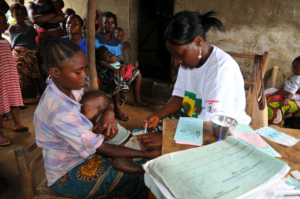
Currently, CCDA works in 20 departments around Guatemala. Regarding the chronic malnutrition affecting more than half of the Indigenous population, the Crecer Sano Project addresses malnutrition from a sectoral perspective. This organization focuses on expanding access to basic healthcare in remote areas, improving water access and improving sanitation.

More than 31,000 families have received water filters through this program. The initiative emphasizes behavior change by integrating traditional practices, ensuring that these communities receive culturally appropriate care. Guatemala is also vulnerable to natural disasters, which include hurricanes, droughts and earthquakes.

These natural occurrences disproportionately affect the most impoverished communities. International initiatives have supported Indigenous-led development as well. For instance, the Dedicated Grant Mechanism (DGM) for Indigenous Peoples and Local Communities is part of Guatemala’s Forest Investment Program, which seeks to reduce deforestation and promote sustainable forest management. The DGM strengthens Indigenous communities’ capacity to manage land and forests sustainably by combining traditional knowledge with economic opportunities that incentivize environmental stewardship.

Moving Forward

Progress has been slow. However, organizations such as CCDA, the Crecer Sano Project and DGM demonstrate that addressing Indigenous poverty in Guatemala through empowerment and environmental protection can be achieved in tandem. Achieving true equality will require continued investment, respect for Indigenous land rights and a national commitment to justice and inclusion.

Guatemala’s Indigenous poverty is not just a legacy of the past; it is a current, structural problem. High rates of malnutrition, poverty and exclusion reflect centuries of marginalization. But the story is not only one of suffering: Indigenous communities, supported by international partners, are leading initiatives for healthier, more just futures via projects like Crecer Sano and rural development partnerships.

To build a more equitable Guatemala, it will take sustained political will, fair resource distribution, secured land rights and respect for Indigenous leadership. Only then can Guatemala truly fulfill its constitutional commitment to being a multicultural nation.

– Arielle Telfort

Arielle is based in Purchase, NY, USA and focuses on Global Health for The Borgen Project.

Photo: Flickr

Poverty in MalaysiaOver the past decades, the impressive economic strides have brought down the official poverty rate in Malaysia. Yet, significant challenges remain, especially across rural regions and within Indigenous communities.

Current Poverty Landscape

  • National Progress: By 2019, Malaysia’s national poverty rate had declined to 5.6%, a testament to decades of targeted policy and development.
  • Staying Above Global Benchmarks: Despite this progress, disparities persist compared to other countries. An October 2019 World Bank blog emphasizes the urgent need to update the country’s poverty line, which has not kept pace with cost-of-living changes.

Who Is Being Left Behind?

  • Indigenous Communities – The Orang Asli: The Indigenous Orang Asli remain among Malaysia’s most disadvantaged groups. A 2021 report by Malaysia’s Department of Orang Asli Development (JAKOA) highlights this community’s staggering poverty rate of 89.4%.
  • Historical Context: Earlier, in 1999, 50.9% of the Orang Asli population lived in poverty and 15.4% in hardcore poverty. This far exceeds the national averages of 7.5% (overall poverty) and 1.4% (hardcore poverty).
  • Income Disparities: Earlier studies (2013–2014) showed that 34% of Orang Asli lived below the national poverty line and nearly one in three earned less than RM1,000 (about $236) per month.

Root Causes of Persistent Inequality

  • Outdated Poverty Line: The outdated national poverty threshold fails to reflect rising living expenses, effectively underestimating the scale of deprivation.
  • Structural Marginalization: The Orang Asli’s high poverty levels stem from limited access to education, economic opportunities and essential services. These include electricity, clean water and health care, which are especially lacking in remote settlements.
  • Bureaucratic Hurdles: A 2024 Malay Mail assessment points to bureaucratic rigidity, inefficient service delivery and insufficient community participation as key barriers to progress.

Government Strategies and Frameworks

  • Shared Prosperity Vision 2030 (SPV 2030): Launched in 2019 and formalized in 2020, SPV 2030 pledges “sustainable growth along with fair and equitable distribution” across income groups, ethnicities and regions. It includes the Orang Asli, women, youth and senior citizens.
  • Policy Goals and Gaps: Analysis cautions that while SPV 2030 stresses equity, it sometimes remains too focused on income distribution and lacks clarity around enabling basic needs like health and education.
  • Implementation in Planning: Malaysia’s Twelfth Malaysia Plan (2021–2025) aligns with SPV 2030, highlighting economic empowerment, environmental sustainability and social equity. However, critics question whether marginalized groups like the Orang Asli are effectively prioritized.

How Global Advocates Can Help

  • Push for Poverty Line Revision: Advocate for Malaysia to revise its national poverty threshold to reflect current costs, making anti-poverty programs more impactful.
  • Target Indigenous Inclusion: Support NGO, U.N. and community-led initiatives that empower the Orang Asli through education, infrastructure and cultural preservation, amplifying JAKOA’s efforts.
  • Champion Equitable Implementation: Promote accountability in SPV 2030 and the 12th Malaysia Plan—ensuring that resources reach those most in need, not just top-down frameworks.
  • Lift Marginalized Voices: Advocate for participatory policymaking, where Orang Asli communities shape programs designed for their benefit, ensuring sustainability and local relevance.

Conclusion

Malaysia’s battle against poverty has made remarkable progress. Yet, systemic inequities continue to constrain its most vulnerable citizens, particularly within Indigenous communities. By advocating for updated poverty measurement, better policy implementation and inclusive participation, global partners such as nonprofit organizations can support Malaysia in translating its commitment to shared prosperity into real change. This also helps ensure that no one is left behind.

– Paige Javor

Paige is based in Boulder, CO, USA and focuses on Global Health and Politics for The Borgen Project.

Photo: Flickr

GrantWith an unemployment rate of 33% and more than 25% of its residents living at the extreme poverty level, South Africa maintains the title of “most unequal country in the world.” In the wake of economic turmoil catapulted by the coronavirus pandemic, rural-dwelling South Africans increasingly depend on government-issued social grants for survival.

However, significant programs like the Social Relief of Distress (SRD) R370, a grant in which eligible South African citizens and refugees receive a stipend of $21.2 per month, are increasingly administered by grant algorithms that deny qualified recipients grants for basic goods and welfare accommodations.

Inception of the Social Relief of Distress Grant

In a first attempt to remedy this, the South African Social Security Agency (SASSA) responded to the pandemic’s tumultuous economic conditions by launching an Economic Reconstruction and Recovery plan. The plan included measures to address the social distress caused by the pandemic.

By 2023, social grants served as the primary form of income for working-age South Africans living at the extreme poverty level, individuals who would otherwise collect a maximum of $40 per month in means. The stipend is available to any unemployed South African of working age. However, many eligible residents encounter demographic obstacles that make acquisition nearly impossible.

Barriers To Grant Approval

For one, the platform, which largely benefits inhabitants of rural areas populated by native speakers, is strictly available in English. Applications are only received digitally, requiring impoverished individuals to acquire a device for submission.

To receive the SRD grant, an individual’s maximum income may not exceed 624 ZAR ($35.21), significantly below the food poverty threshold. The SRD grant is administered by a digital grant algorithm that scans bank accounts and flags any indication of income.

The Automated Means Test

This process, known as the Automated Means Test, rejects qualified applicants whose accounts possess erroneous means that may not reflect sustainable income. One such miscontextualization of funds perpetually influences Brenda Mtshali, a widow and tomato vendor who scarcely makes enough to support her six children.

In her case, the grant algorithm disqualified her from benefaction, falsely arguing that her account contained a loan. In addition to this invasion of personal and financial data, the detection software misinterprets miscellaneous funds as “means” that exceed an already underrepresentative poverty threshold.

Since the inception of the Automated Means Test, the number of grant beneficiaries has decreased from 10.9 million to eight million, despite an existing eligibility pool of approximately 17 to 18 million people. In analyzing this disparity, the Institute for Economic Justice (IEJ) identified an exclusion rate of 89.7%. Whereas failures on the Automated Means Test cause millions of rejections, the IEJ concluded that only 24% of cases should be eliminated in ethical circumstances.

Benefits of the Social Relief of Distress Grant

On the contrary, the beneficiaries of the stipend report significant increases in quality of living. “Mind the People,” a short film directed by Mozilla Africa Mradi (and available for streaming on YouTube), dissects the disparate qualification process by collecting testimony from individuals who reside in the rural Mountain View and Eldorado regions of South Africa.

Ntombizodwa, an individual who testifies in Mradi’s film, describes how the SRD grant allows her to live a “much better life,” providing access to toiletries, food and electricity that she previously lacked. Nonetheless, significant improvements in accessibility must be made to improve the efficacy of the program.

Researcher Response to Algorithmic Inequity

According to the IEJ Report, applicants should be permitted to submit documents supporting their petition for a grant and that means tests should be conducted over a longitudinal period to eliminate algorithmic error. To improve accessibility, the report suggests shifting to a hybrid and multilingual application model.

A 2024 document published by the European Union–Agence Française de Développement (EU-AFD) Research Facility on Inequalities proposed a new structure to improve the efficacy and sustainability of the former SRD model. The document recommended that SASSA use self-reported data to assess eligibility, increase grant amounts and establish grant permanence.

Conclusion

Ethical access to social grants in South Africa is not only an issue of socioeconomic disparity, but also a matter of social equity and justice. Whereas recent projects have advanced critical conversation about broken South African grant algorithms, many people remain excluded from the precise benefits that might salvage them from tragedy. 

– Talia Gitlin

Talia is based in Natick, MA, USA and focuses on Good News for The Borgen Project.

Photo: Flickr

Tax Justice in KenyaProtests in Kenya erupted due to widespread discontent over the government’s proposed 2024 finance bill. Economic and social challenges continued over the year, reigniting anti-government demonstrations in June 2025. Despite Kenya’s broadly positive economic outlook, a large part of the population experiences wealth inequality and a lack of access to social services.

Globally, wealthy individuals and corporations enable Illicit Financial Flows (IFFs), resulting in a loss of $1 trillion in 2022 alone. Advocate groups challenge this disparity as it largely contributes to poverty and degrades social welfare. Taxes proposed in the 2024 finance bill were seen as unfavorable to impoverished and middle-class people, possibly widening this gap further and proving the need for tax justice in Kenya.

United Nations’ Convention on International Tax Cooperation

Wealth disparities and illegal wealth extraction in the Global South often enrich Western corporations. The Tax Justice Network researches these illicit financial outflows, which hamper economic development. The organization has also lobbied for stronger global tax policies to promote social development and tax justice in vulnerable countries.

One of its major global concerns is the United Nations (U.N.) Convention on International Tax Cooperation, which seeks to close gaps in the international tax system and help countries recover stolen revenue. The Convention also aims to address tax abuses in cross-border systems and resolve international tax disputes equitably.

Kenyan delegates and other leaders of the African Group were the first to push for the U.N. Convention. The African Group’s concerns in advancing the Convention stem from the unequal distribution of wealth between developing and Western nations and corporate-driven wealth disparities within the Global South.

Social and Wealth Inequality

Oxfam asserts that the number of millionaires in Kenya will grow by more than 80% in the next 10 years. If current rates of inequality continue, it could result in millions of people living in extreme poverty in a similar time frame. Poverty rates in Kenya are higher in rural areas and areas of lower economic growth.

The World Bank Group highlights this uneven distribution as a vulnerability. Indeed, its reports suggest evaluating tax spending and fiscal policy to support poverty reduction. Accountability organizations like the National Taxpayers Association (NTA) in Kenya also work toward this goal.

The NTA supports local endeavors to rebalance social service provisions. The organization supports researching, monitoring and evaluating tax issues and development programs, as well as analyzing policy and legislation. Locally taking charge in the fight for tax justice in Kenya, the independent organization hopes for accountability from the government against economic inequality.

The Challenges Ahead

From 2025 to 2027, the U.N. Tax Convention negotiations will deliberate on multilateral platforms to address global wealth inequalities. Having only completed the organizational phase, member states need to continue talks and vote to pass issues before consideration from the U.N. General Assembly.

Analysts at the Tax Justice Network assert that lower-income countries can be negatively impacted through bilateral tax treaties if equitable terms are not met. The U.N. Convention is one attempt to avoid this, making global trade equitable and reversing many years of richer economies unilaterally dictating global economic agendas.

– Aliyah Omar

Aliyah is based in Alberta, Canada and focuses on Global Health and Politics for The Borgen Project.

Photo: Wikimedia Commons

Wealth Inequality in Costa RicaCosta Rica enjoys a reputation as one of Latin America’s success stories, largely thanks to its thriving tourism industry and political stability. Despite this, 5.9% of Costa Rica’s 5 million people live in extreme poverty and wealth inequality is increasing across the country. Though historically it has generated many advantages, tourism is now one of the most significant factors contributing to wealth inequality in Costa Rica. The World Bank’s recent aid provision for the country sets out a program of inclusive growth designed to tackle this issue.

Wealth Inequality in Costa Rica

Costa Rica is a small Central American nation with many impressive development indicators. It ranks 62nd (globally) on the Human Development Index and its people live longer on average than those in the U.S. and Saudi Arabia. Costa Rica’s welcoming image is shaped by the government’s decision to dissolve its military in 1948 and its reputation as a global leader in rewilding and ecotourism. It contrasts sharply with many of its Latin American neighbors, especially its troubled border nation, Nicaragua.

Yet, as well as those living in extreme poverty, 25% of Costa Ricans live below the poverty line. The country’s GINI Coefficient, a measure of wealth inequality, increased more than any other country between 2010 and 2021. This makes Costa Rica one of the most unequal countries in Latin America.

Wealth inequality in Costa Rica disproportionately affects those with African heritage, indigenous peoples, single mothers and Nicaraguan immigrants. Following the COVID-19 pandemic, the rate of Nicaraguan migrants living in poverty became 50% higher than that of any migrant group in Costa Rica, such that they are considered to live with a “structurally higher poverty rate.”

Tourism in Costa Rica

Costa Rican tourism has flourished since the ’90s, with popular sites such as the Monteverde cloud forest and Manuel Antonio National Park attracting millions of visitors yearly. Tourists from the U.S., Canada and Europe bring vast amounts of money into the country.

Around 8% of Costa Rica’s total GDP is attributed to tourism, making it one of the country’s largest economic sectors besides foreign investment. The industry employs about 550,000 people, more than 10% of the population and has lifted many out of poverty. Costa Rica also attracts large numbers of expatriates, many of whom stay longer to work remotely.

Impacts on Locals

Tourism in Costa Rica is presenting serious challenges. The emergence of the so-called “Gringo Market” highlights the sharp rise in food and rental prices in popular tourist areas. In these places, the cost of living reflects the purchasing power of tourists rather than residents. These prices overspill into the rest of the country, compounded by the sheer volume of Costa Rica’s land area on the tourist circuit.

Locals are often priced out of their homes and only 16% of the population can financially access the typical living costs of a short-term tourist, reflecting a stark divide. While many benefit from being employed in tourism, many lose out on the distorted living costs that tourism generates.

Visitor numbers declined in the last year, owing to the rising strength of the Costa Rican colon against the dollar and the consequently lower exchange rates afforded to visitors. This foreshadows a long-term tourism climate where only the wealthiest visitors can afford to come. As a result, food and rental inflation will continue, driving out middle-class tourists on whom Costa Rica’s tourism industry and thousands of affiliated jobs depend.

Wealth inequality in Costa Rica is exacerbated by many factors other than tourism. These include import taxes on basic foods, clothing and electronics and governmental bureaucracy slowing economic growth. Yet the overarching concern surrounding Costa Rica’s tourism dependence is that its government and businesses continue to prioritise the needs of tourists ahead of its people. Opposition to tourism in Costa Rica is feared by stakeholders who are cautious of discouraging foreign investors.

Taking Action: The World Bank

The World Bank supports several aid programs in Costa Rica, with a combined value of more than $1.6 million, mainly through U.S. funding. Its 2024 Country Partnership Framework (CPF), administered in cooperation with the Costa Rican government, focuses on pursuing inclusive economic growth to address the country’s rising wealth inequality.

Acknowledging the rising wealth inequality created by Costa Rica’s foreign investment and tourism-driven economy, the CPF has introduced several initiatives. These include diversifying the economy and strengthening the country’s social protection systems. These measures will directly benefit disadvantaged groups such as Nicaraguan migrants, indigenous peoples, single mothers and Afro-descendants.

By 2026, the scheme anticipates reducing Costa Rica’s poverty rate from 25% to 19.5% and its GINI coefficient from 0.509 to 0.493.

Conclusion

Tourism is vital yet challenging for Costa Rica, creating many job opportunities while also deepening wealth inequality. However, initiatives such as those supported by the World Bank offer a chance to address some of this dominant industry’s drawbacks and provide disadvantaged groups with a more inclusive economic outlook.

– Joseph Webb

Joseph is based in Norwich, UK and focuses on Politics for The Borgen Project.

Photo: Flickr

Poverty Eradication in PanamaPanama is one of the most prosperous trade hubs in the world’s economy. The Panama Canal drew in 210.3 million tons of cargo in 2024 and is an important part of the United States of America’s trade operations. Panama has also faced significant problems with poverty in the region. The UNICEF annual report 2020 reported that the poverty rate is 41.4% in rural areas, while it is 11% in urban areas. This level of poverty hits children the hardest, as 32.8% of children grow up multidimensionally poor. 

Programs in poverty eradication in Panama have grown over the past few decades, thanks to the Panamanian government, creating innovative approaches to improve the lives of its citizens, such as increasing jobs for the nation and social programs such as the Universal Educational Social Assistance Program (PASE-U) and the Panamá Solidario emergency program. Despite these advancements, the region faces challenges, particularly in addressing income inequality.

Job Creation and Economic Prosperity 

Panama’s rapid economic growth has been a cornerstone of its poverty reduction efforts. Between 1990 and 2019, the country’s economy grew at an average rate of 5.8% annually, thanks to the usage of the Panama Canal. This pace significantly outpaced the regional average of 2.6%. This growth has translated into improved labor conditions for the people of Panama, with mean hourly real wages increasing by 60%, the employment rate rising from 48% to 63% and women’s labor force participation increasing from 34.1% to 55.5%. This increase in jobs has decreased the number of people living in poverty in Panama, plummeting from 50.2% in 1989 to 12.9% in 2021.

This is just one step in poverty eradication in Panama, as giving people jobs and positive economic growth in a country can hopefully help all classes of people in Panama, not just the wealthy business owners.

Social Protection Programs

Innovative social protection programs have been a crucial strategy to poverty eradication in Panama. The Universal Educational Social Assistance Program (PASE-U) and the Panamá Solidario emergency program are notable examples. Starting in 2020, the PASE-U objectives are to prevent school dropout, raise enrollment and school attendance rates and motivate to strengthen academic improvement. This is done by a government allowance to students who continue to pursue education, with the benefits of 270 PAB for primary school students, 360 PAB for presecondary school students and 450 PAB for secondary school students (PASE-U).

Panamá Solidario’s emergency program prioritized the purchase of local production from both agribusinesses and producers, for the manufacture of bags and delivery of products of agricultural and livestock origin. This program aimed to continue economic production in light of the COVID-19 pandemic. The results of the program were widely successful, as the nation delivered more than 6 million bags of meals until January 2021. About 2.1 million physical bonds and 4.7 million digital vouchers were credited to continue economic growth. The Panamá Solidario would support more than 1.6 million Panamanians during the COVID-19 pandemic, maintaining economic growth.

Addressing Inequality

Despite these achievements in addressing poverty reduction, Panama continues to grapple with significant income inequality. The country ranks third in South America and Central America for income disparity, with the poorest 20% earning just 1.2% of the total labor income, while the wealthiest 20% claim 32.7%. Geographic disparities are also pronounced, with poverty rates being higher in the rural areas of the region, compared to urban areas. Indigenous communities face even greater challenges, with 69.4% living in poverty and limited access to basic services such as education and health services.

Future Directions

Progress is still occurring, as the World Bank Group’s Poverty and Equity Assessment of Panama suggests that Panama must prioritize policies that expand access to basic services, improve job quality, enhance human capital and promote household resilience in the long run. Addressing the structural challenges that perpetuate inequality for the people of Panama will be essential for achieving shared prosperity.

Panama’s strides towards poverty eradication are a testament to the power of innovative approaches and sustained economic growth. While challenges remain, the country’s commitment to improving the lives of its citizens offers a long-term goal for a more equitable and prosperous future for the people of Panama.

– Dylan Fly

Dylan is based in Detroit, MI, USA and focuses on Business and Politics for The Borgen Project.

Photo: Flickr

Higher Education in SpainIn Spain, about 25.8% of its people are at risk of relative poverty as of 2024, which is among the highest in Europe. Government efforts to reduce poverty are keeping 10.8 million people out of poverty, a problem especially prevalent for children, women, minorities and those with disabilities. The situation is further exacerbated for those who have not pursued a higher education in Spain; 12.6% of those with a higher education were at risk of poverty compared to 33.7% of those with only a primary education. Plus, those who were raised by more educated parents are significantly less at-risk for poverty.

Higher Education Institutions in Spain

After compulsory education for those who are 3 to 16 years old, various educational options exist for students considering higher education in Spain:

  • Vocational Training. The purpose of vocational training is learning practical skills immediately applicable to a diverse selection of future careers.
  • A University Education. After high school, students pursuing a university degree are required to earn a Bachillerato certificate to be able to apply to universities. Spain offers 45 public and 31 private universities with programs for bachelor’s, master’s and post-graduate degrees. Public universities tend to have lower costs due to government funding.
  • A Higher Arts Education. Another option for those who are more creative is attending a school for the arts.

Challenges of Higher Education in Spain

On paper, higher education in Spain is completely free. However, this fails to include necessary costs, like textbooks and other crucial supplies. As a result, many families still face challenges in paying these costs, which has been on the rise. It then makes sense that unfortunately, many Spanish students fail to finish their education–Spain has the highest rate in the EU of 13.9% of students leaving school. This sparks a brutal cycle; higher education is the key to escaping poverty yet financial barriers come in the way of its accessibility to many Spaniards.

The Good News

The good news is that higher education in Spain is improving. Recent years have demonstrated reforms including supporting student mental health, digitalizing education, adding an emphasis on the environment to the curriculum and reducing antisemitism in schools. 

The Spanish government has outlined several goals that hope to reduce inequalities in its education system, including the high dropout rate. It is also intending to rewrite its curriculum to reflect more modern values, including civics. Additionally, it is allocating a greater budget toward scholarships, especially aimed at expanding the threshold of need-base eligibility, which is predicted to help out 1 million students across the country. It has also recently passed legislature expanding vocational education opportunities. As a result, gradually, more and more people are gradually getting a higher education. Hopefully, these efforts will contribute to reducing poverty, too.

Ayuda en Acción’s Efforts

Nonprofit organizations like Ayuda en Acción are fighting to reduce inequalities among higher education in Spain. Since it originated in 1981, Ayuda en Acción is a global nonprofit organization that has focused on advocating for a Spanish education system that reflects the diversity of its students and the variety of equally valid paths to an education. In particular, the nonprofit has created the Impulsa program, which works to provide more vocational training opportunities for students of lower socioeconomic backgrounds. Its efforts have helped 760,866 people globally.

Looking Ahead

Higher education institutions can also be agents of good that can contribute to a more just society. Rewriting the curriculum to include more topics like civics and social justice can create more global citizens and responsible leaders who contribute not only to the economy but also to the social well-being of those in poverty, thus helping them escape poverty. Ultimately, higher education is an opportunity and with reforms, can be a tool for breaking the cycle of poverty.

– Klara Jones

Klara is based in Los Angeles, CA, USA and focuses on Good News and Technology for The Borgen Project.

Photo: Flickr

Disability and Poverty in SenegalWith the international poverty line being at $2.15/day (USD), roughly 1.7 million Senegalese live below this margin as of April 2025. While this is alarming, it is important to note that the poverty rate is steadily decreasing. As of 2023, approximately 8% of those 15 and older experience some form of functional difficulty. In terms of being considered multidimensionally poor, 88% of people with “at least a lot of functional difficulty’ are classified as such, compared to 76% of people who experience ‘no difficulty.” With both disability and poverty in Senegal being common, accessing necessary health care, education and accommodations for individuals with disabilities becomes increasingly challenging.

The Creation of the Equal Opportunity Card

Disability and poverty in Senegal impact each other. Living with a disability may be more expensive due to necessary accommodations such as wheelchairs, health care or visual assistance. Therefore, intervention is frequently necessary. First implemented in 2012, The Carte d’Égalité des Chances (CEC) originated to provide accommodations to people with disabilities. These accommodations include the Family Allowance Programme, health care such as the Universal Health Coverage Plan, assistance with employment, vocational training, education, transportation and other services that may otherwise be challenging to access.

While receiving health care prior to the CEC was possible, it was extremely difficult – especially for individuals with disabilities – due to financial reasons.

As of 2019, Senegal issued at least 50,006 cards which resulted in 17,614 individuals registering in mutual health funds, 25,507 benefitting from a family security grant and 633 gaining free access to “Dakar-Senegal dem dikk,” a public transport network. Although further work is needed to fully implement this card in society, as the International Budget Partnership explains, this card has assisted many and has the potential to continue doing so.

Inclusive Schooling

The United Nations International Children’s Emergency Fund encouraged the Government of Senegal to re-engage with a national policy draft that supports inclusive education. Lt. Aliou Badara Diallo Elementary School, with support from the Sensorial Handicap Cooperation, has given many children the opportunity to thrive, flourish and grow, all while getting a quality education in a supportive environment.

Advancing Equal Opportunities

Humanity & Inclusion’s (HI) program in Senegal encourages the integration of people with disabilities into the workforce and society through training, vocational and economic inclusion projects. Projects that HI is running include the creation of a Master’s degree in inclusive education, introducing sign language to inclusive employment spaces and a national campaign that’s dedicated to fight prejudices which prevent children with disabilities from going to school. In addition, HI works to spread awareness and improve the accessibility of infrastructure and services.

Access to Education

Statistics prove that most disabled people in Senegal have less than primary school education. The rate is higher among people who experience “at least a lot of functional difficulty” (82%), compared to “no difficulty” (66%).

This is likely because some standard schooling lacks inclusive programs that accommodate different ways of learning. Sightsavers’ inclusive education pilot project – launched in three mainstream schools in Dakar, Senegal – ensures children with disabilities receive a proper education that meets their needs. This project is a great example of an initiative that increases education access to those with disabilities. 

The Promotion of Awareness and Support

In 2010, Senegal signed the social orientation law n°2010-15 of July 6 into law to protect the rights of people with disabilities. This law is meant to put social measures into action that ensure fair treatment and equality, however, it is loosely followed. In order for people with disabilities to fully benefit from the social orientation law n°2010-15, the implementing texts must be signed and enforced.

Accommodating Sanitation Facilities

People with disabilities, particularly those who use wheelchairs, may find it challenging to use a standard sanitation facility. Including amenities such as universally accessible toilets and showers can promote the equal treatment of people who are disabled in public spaces. A four component project called the Rural Water Supply and Sanitation Project for Senegal aims to increase the accessibility of improved water and sanitation services in selected rural areas, benefiting all individuals.

Looking Ahead

With initiatives like the Equal Opportunity Card and Lt. Aliou Badara Diallo Elementary School, decreasing discrimination while promoting equality is clearly on Senegal’s agenda. Although disability and poverty in Senegal are prevalent, they do not go ignored. Despite being a developing country that fights widespread poverty, Senegal has shown its commitment to supporting disabled individuals and ensuring fair treatment. 

– Casey Relyea

Casey is based in Moneta, VA, USA and focuses on Good News and Global Health for The Borgen Project.

Photo: Unsplash

Poverty in Colombia: How Stratification Reinforces InequalityColombia’s stratification system, originally created to fairly distribute utility subsidies, has shaped the classification of poverty in the country and it is now undergoing national reform. Launched in 1985 and solidified in the 1991 Constitution, the system divides neighborhoods into six socioeconomic levels. Authorities assign each area a stratum based on physical characteristics like road quality, construction materials and surrounding infrastructure. Strata 1 and 2 represent the poorest zones, while strata 5 and 6 represent the wealthiest. Strata 3 and 4 fall in the middle. Most classifications are the result of visual inspection, not household income.

Redistribution as a Barrier

The system’s intent was progressive. Higher strata would pay full or elevated rates for public services, effectively subsidizing lower-income households. Those in strata 1 and 2 receive discounts, while strata 3 and 4 are expected to pay market rates. But over time, the policy has increased inequality and distorted the measurement of poverty in Colombia, failing to reflect current economic conditions, thereby leading to mismatches. A struggling family in stratum 6 may pay full price, while a wealthy homeowner in a modest area may qualify for discounts.

A ScienceDirect study found that residents in middle-income Stratum 4 reported a higher quality of life than those in Stratum 6. It cited stronger community ties and a greater sense of safety. In lower strata, household income improved wellbeing, but in wealthier areas, social trust mattered more. The researchers concluded that Colombia’s current classification system may overlook the factors that actually improve people’s lives.

Outdated Metrics and Adverse Incentives

Poorer neighborhoods sometimes resist infrastructure upgrades to avoid reclassification and loss of benefits. In other cases, families face higher utility rates after a neighborhood improves, even if their income remains unchanged. Strata assignments have not kept pace with the country’s demographic shifts, rapid urbanization or population displacement from conflict. The result is a system that reflects outdated stereotypes more than present-day realities.

Strata affect more than just utility bills. Strata details appear on personal IDs and can influence access to bank loans, scholarships and job opportunities. “Stratum” has become a shorthand for class status—mocking someone as “estrato 8” (too rich) or “estrato 3” (unsophisticated) is common in daily speech. This reinforces classism, racial prejudice and territorial segregation.

According to the World Values Survey, as the BBC reported, Colombia ranks among the most socially distrustful countries in Latin America. During the 2021 protests, some residents in higher-income neighborhoods reportedly armed themselves against perceived threats from poorer communities. As noted by a 2024 Reuters report, many Colombians rarely interact with people outside their stratum. For wealthier residents, this makes it easy to ignore poverty altogether.

Colombia’s stratification system aimed to reduce inequality. Instead, it entrenched a modern caste order, where address often determines opportunity. These outcomes have prompted national efforts to rethink how Colombia targets poverty, from the delivery of public services to vulnerability assessment.

SISBÉN IV: A Data-Driven Alternative

The government’s primary tool for identifying and addressing poverty in Colombia is the System for Identifying Potential Beneficiaries of Social Programs (SISBÉN). It is a multidimensional classification system that evaluates households based on income, housing, health and education conditions. Its goal is to help social investment reach the most vulnerable populations.

SISBÉN IV, the latest version, classifies households into groups A through D, with Group A representing extreme poverty and Group D being nonvulnerable. The system shifts focus away from strata and toward individual vulnerability. It does not directly distribute aid, but it enables institutions like Prosperidad Social, ICBF and housing programs to allocate support more equitably. By relying on updated, verifiable data, SISBÉN improves targeting and reduces misclassification, helping ensure that those most in need are prioritized for public assistance.

Universal Income Registry: Replacing the Strata System

To modernize social policy, Colombia is preparing to launch the Universal Income Registry (RUI) in 2026. This system will eventually replace SISBÉN and the outdated strata model. Built on the Social Household Registry (RSH), the RUI will assess household vulnerability based on income, employment, education, housing conditions and health status. This reform will expand the national social registry from 35 million to up to 57 million people, creating a more accurate and unified platform for distributing subsidies.

The RUI aims to:

  • Identify subsidy-eligible families more accurately
  • Maintain Colombia’s principle of social solidarity
  • Reduce exclusion errors through real-time data
  • Improve transparency and efficiency in public spending

This shift toward income-based classification marks a fundamental departure from geographic indicators like strata.

Housing Reform: Mi Casa Ya

The Mi Casa Ya program is Colombia’s primary housing subsidy initiative. It provides down-payment and interest subsidies to first-time homebuyers from vulnerable populations, based on their SISBÉN group rather than strata.

Recent reforms have expanded the program’s reach beyond major cities to include rural and Indigenous communities. In addition to income requirements, applicants must:

  • Not own a home
  • Not have received prior housing subsidies
  • Meet minimum SISBÉN vulnerability thresholds

By using data to prioritize need, Mi Casa Ya makes homeownership more accessible and equitable for lower-income families.

A More Equitable Path

While Colombia’s stratification system has long reinforced inequality, reforms like SISBÉN IV, the Universal Income Registry and programs like Mi Casa Ya reflect growing efforts to reframe how the country defines vulnerability. These reforms reflect a shift in understanding and addressing poverty in Colombia, moving from geographic assumptions to individual need. By using data-driven tools, the country is working toward a more inclusive and equitable future.

– Jacobo L. Esteban

Jacobo is based in Cali, Colombia and focuses on Technology and Politics for The Borgen Project.

Photo: Flickr

Being Poor in NicaraguaPoverty in Nicaragua is not just a number. It is a daily struggle for families who face limited opportunities, unpredictable income and fragile public services. Even with modest economic growth on paper, everyday life for many remains uncertain. When disaster hits—be it a drought, job loss or storm—there is often little room to recover.

A Nation of Beauty and Inequality

Nicaragua, bordered by Honduras and Costa Rica, is known for its volcanoes, lakes and vibrant culture. Yet for many of its citizens—especially in rural areas— economic fragility overshadows these scenic images. According to the World Bank, approximately 12.5% of the population lived below the international poverty line of $3.65 per day in 2023.

This figure masks deeper inequalities. About 73% of the rural population depends on agriculture, where work is seasonal and wages are low. Failed harvests are not only financial setbacks—they often mean food insecurity for entire families, according to the World Food Programme (WFP).

Adding to the challenge, remittances made up 26% of Nicaragua’s GDP in 2023, according to the World Bank. This reliance on income from abroad highlights the painful fact that many families survive only because loved ones have left home.

The Human Face of Poverty

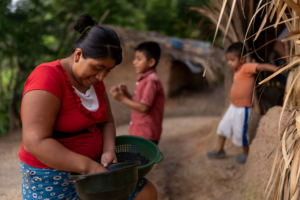
Being poor in Nicaragua means limited access to clean water, health care and education. In rural communities, homes are often built with scrap materials and lack proper toilets or plumbing. Children face high rates of malnutrition and many families struggle to meet even the most basic dietary needs.

Environmental disasters only make things worse. Hurricanes, flooding and droughts are common and can wipe out crops, damage homes and isolate villages. The Food and Agriculture Organization (FAO) has warned that extreme weather events often reverse development gains, keeping families trapped in poverty.

Political and Economic Tensions

Politics in Nicaragua remain tense. The government, led by President Daniel Ortega, has received criticism for stifling opposition and limiting freedoms. These issues have led to international sanctions and reduced foreign investment, which affects funding for public services and development programs.

Although the International Monetary Fund (IMF) projected Nicaragua’s economy would grow by 3.6% in 2024, many of the country’s poorest people are not feeling the impact. Growth often benefits urban centers or large businesses, leaving rural communities behind.

Solutions

Despite these challenges, local and international organizations are working to make a difference. Opportunity International has been active in Nicaragua for nearly 20 years, partnering with micro-entrepreneurs to build sustainable businesses that help families lift themselves out of poverty.

Support also comes from other NGOs. The Fabretto Foundation is improving education in under-resourced areas by training teachers and equipping rural classrooms. Meanwhile, Catholic Relief Services helps farmers manage climate risks through sustainable practices such as soil conservation and drought-resistant crops, building long-term resilience in vulnerable communities.

Final Thoughts

Being poor in Nicaragua means living with uncertainty, but it does not have to stay that way. With targeted policies, community-driven efforts and international support, progress is possible. Each step forward—whether it is a harvest that survives the season, a child finishing school or a family opening a small shop—brings hope that poverty in Nicaragua can be challenged and one day, overcome.

– Charlie Baker

Charlie is based in London, UK and focuses on Global Health and Politics for The Borgen Project.

Photo: Unsplash