Agriculture and Nutrition Aid: Improving Food Security in Guatemala
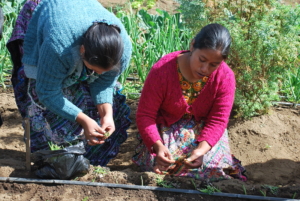 Guatemala faces one of the most severe and persistent food security crises in Latin America. Despite being a country rich in agricultural resources, Guatemala faces structural inequality, recurrent droughts and economic shocks, which have kept nearly half of its population in poverty. The COVID‑19 pandemic and the 2022 global food and fuel price shocks deepened the crisis, pushing additional households into food insecurity.
In 2022, nearly half of children under 5, about 46.5 %, were stunted, making Guatemala one of the worst in the Western Hemisphere in terms of child undernutrition. To address this humanitarian emergency, a series of agriculture and nutrition-based initiatives launched by the Guatemalan government, the United Nations (U.N.) and international partners have sought to rebuild livelihoods and reduce hunger through sustainable rural development.
Poverty and Food Insecurity
According to the Integrated Food Security Phase Classification (IPC) and humanitarian monitoring sources, more than five million people (above 25% of the population) require humanitarian assistance in Guatemala. Around 2.7 million face severe acute food insecurity (IPC Phase 3 or worse). Guatemala’s food insecurity is deeply intertwined with rural poverty.
The majority of impoverished households live in rural and Indigenous communities, where subsistence farming is the main livelihood. Limited access to credit, irrigation and markets keeps smallholder farmers vulnerable to climate shocks. The Food and Agriculture Organization’s (FAO) recent report highlights how vulnerable communities face multiple deprivations, including low incomes, limited access to value chains and a high risk of climate-related impacts.
An analysis by the World Bank highlights that economic growth has not been sufficiently translated into poverty reduction or improved livelihoods for the most vulnerable populations.
Building Food Security Through Agriculture and Nutrition Aid
One of the most impactful interventions since 2022 has been the Home‑Grown School Feeding Program, led by WFP in partnership with Guatemala’s Ministry of Education and local farmer cooperatives. This initiative connects smallholder farmers directly with schools to supply nutritious food, ensuring that children receive regular meals while farmers gain reliable buyers. The program connects more than 500 farmers and 840 schools through a mobile procurement application, enabling farmers to browse school orders and deliver locally produced food.
According to WFP monitoring, the program improves children’s dietary diversity and supports rural incomes. In parallel, FAO, through its “Hand-in-Hand” initiative and other resilience programs, has been scaling up efforts to strengthen food production among vulnerable households. The FAO study notes that climate-smart practices, improved seeds and market integration are essential components of the solution.
The FAO also monitors agriculture livelihood-recovery projects that aim to boost both food security and incomes for rural families. The World Bank emphasizes that investment in human capital, agriculture and rural development is critical to addressing long-standing inequalities and food insecurity.
Continuing Challenges
Despite these encouraging results, Guatemala’s path toward food security remains fragile. Hundreds of thousands of children continue to face stunting and rural poverty remains entrenched among Indigenous and highland populations. The WFP country brief notes that Guatemala is disaster-prone and extended dry seasons and climate shocks severely damage the livelihoods of subsistence farmers.
Scaling successful programs nationally is limited by funding constraints, infrastructure gaps and institutional capacity. Without sustained investment in rural infrastructure, market access and social protection, localized gains risk being reversed by future shocks.
Conclusion
The past few years have shown that agriculture and nutrition-based aid can make a tangible difference in improving food security in Guatemala. Indeed, by linking local farmers to school-feeding programs, investing in climate-smart agriculture and focusing on vulnerable rural communities, the country and its partners have taken meaningful steps toward reducing hunger and poverty. While national statistics remain daunting, with child stunting at nearly half of all children under 5, widespread rural poverty and persistent acute food-security need, the evidence indicates that targeted interventions can improve outcomes.
With continued investment, expansion of proven models and stronger institutional capacity, Guatemala has the potential to transform its food system from fragile to resilient, making inclusive agricultural development a cornerstone of poverty reduction.
– Akash Ramaswamy
Akash is based in Ontario, Canada and focuses on Global Health and Politics for The Borgen Project.
Photo: Flickr
