• Link to X
  • Link to Facebook
  • Link to Instagram
  • Link to TikTok
  • Link to Youtube
  • About
    • About Us
      • President
      • Board of Directors
      • Board of Advisors
      • Financials
      • Our Methodology
      • Success Tracker
      • Contact
  • Act Now
    • 30 Ways to Help
      • Email Congress
      • Call Congress
      • Volunteer
      • Courses & Certificates
      • Be a Donor
    • Internships
      • In-Office Internships
      • Remote Internships
    • Legislation
      • Politics 101
  • The Blog
  • The Podcast
  • Magazine
  • Donate
  • Click to open the search input field Click to open the search input field Search
  • Menu Menu

Archive for category: Humanitarian Aid

Aid Effectiveness & Reform, Humanitarian Aid

The Responsibility to Protect, Evidence from Syria

r2pThe Responsibility to Protect doctrine, also known as R2P, was created by the International Commission on Intervention and State Sovereignty in response to the genocide in Rwanda. R2P argues that the international community has the responsibility to protect civilians in states that are unwilling or unable to do so, therefore re-defining the pillars of state sovereignty. Two basic pillars of the Responsibility to Protect include state sovereignty to responsibility for the protection of its people lies within the state itself, as well as the international responsibility to protect populations suffering serious harm from internal war, insurgency, repression or state failure through humanitarian intervention.
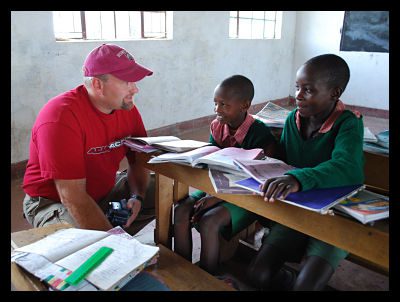

The Responsibility to Protect includes the responsibility to prevent, react and rebuild. To prevent includes addressing both the root causes and direct causes of internal conflict and other man-made crises putting populations at risk. The responsibility to react describes the duty of either the state or international community to utilize coercive measures like sanctions and international prosecution, and military intervention as a last resort in response to situations with dire humanitarian consequences. The responsibility to rebuild includes providing full assistance with recovery, reconstruction and reconciliation, usually after a military intervention.

There are six criteria for military intervention: just cause, right intention, last resort, proportional means, reasonable prospects and right authority. Military intervention is difficult to justify, not only because of the criteria for intervention, but due to state sovereignty and United Nations Security Council vetoes. The conflict in Syria demonstrates the difficulty of implementing R2P and humanitarian intervention.

In addition to issues of sovereignty between the governments, the lack of cohesive intervention from the beginning has contributed to the conflict significantly, for early attempts at intervention were neither swift nor effective.  Due to the humanitarian situation, a UNSC Resolution or unilateral intervention justification would have proven legitimate in regard to the International Convention on Human Rights and the Responsibility to Protect, for the Assad regime was not being held accountable for the mass atrocities being committed within his territory. In addition to a lack of UNSC approval, the Chinese and Russian veto of the transfer of the case to the ICC has proven a hindrance to the international capacity to alleviate the conflict and further promotes the proxy war debate.

The lack of international capacity to alleviate the conflict in Syria has illuminated several tensions for the Responsibility to Protect and the future of humanitarian intervention. The conflict further demonstrates how R2P continues to be dependent on national interests, rather than the presence of “atrocities that shock the conscience.” The international community ought to acknowledge their mistake for not intervening in Syria in pursuit of assuring this non-intervention is a deviation from the norm to protect rather than implementation of a new precedent in order to restore the legitimacy of the Responsibility to Protect and humanitarian intervention.

– Neti Gupta

Sources: Stand, Responsibility to Protect,  Global Center2p
Photo: Global Solutions

March 19, 2015
https://borgenproject.org/wp-content/uploads/borgen-project-logo.svg 0 0 Borgen Project https://borgenproject.org/wp-content/uploads/borgen-project-logo.svg Borgen Project2015-03-19 12:00:372024-05-27 09:23:27The Responsibility to Protect, Evidence from Syria
Activism, Global Health, Humanitarian Aid, Nonprofit Organizations and NGOs, Poverty Reduction

World Concern Makes an Impact

world concern
World Concern is a nonprofit organization devoted to transforming the lives of deeply impoverished people. Founded by pharmacist Jim McCoy and Doctor Wilbert Saunders in 1955, the organization was intended to provide resources to hospitals and clinics overseas.

In 1976, the functions of World Concern shifted dramatically when they realized that sending medicines and medical supplies was not enough to aid countries affected by a variety of crisis. They began sending passionate volunteers and expert to work on the ground with people living in the targeted community.

In addition to long-term support, they offer emergency relief support to countries that have experienced earth quakes and tsunamis among other situations. Their most recent contribution to relief was after the devastating earthquake.

World Concern is revolutionary because they work in some of the world’s most diseased and dangerous places. Some of these locations include Darfur, Myanmar, Somalia, Ethiopia and Rwanda. In some of the countries World Concern works, literacy rates are as low as 25 percent. A committed staff of approximately 900 people work on behalf of World Concern’s mission to aid poor communities.

In addition, 90 percent of the donations World Concern receives go to their programs abroad. They are transparent with their fiscal information to ensure that money is being maximized where it is most effective. Fundraising takes up only 5.2 percent of all expenses and promotions. 4.7 percent goes to management and general administrative duties.

World Concern is devoted to providing clean water to communities. Clean water is pertinent to maintaining the health of the people living in the community. They bring in wells and latrines to facilitate better hygiene and access to clean water.

Another service they provide is bettering children’s access to education. Many children in these poor communities have to walk for miles and the classes are usually held is sub standard conditions either outside or in very informal settings.

In poor communities of developing countries the way that most people earn a living is through farming. These forms of subsistence living are vulnerable to food insecurity; reliance on environmental conditions and floods and drought greatly affect the income stability.

World Concern is devoted to the long-term solutions to working out solutions in some of the world’s poorest communities. They foster a sense of hope through providing access to education and clean water.

– Maxine Gordon

Sources: CRISTA Ministries, World Concern
Photo: World Concern

February 26, 2015
https://borgenproject.org/wp-content/uploads/borgen-project-logo.svg 0 0 Borgen Project https://borgenproject.org/wp-content/uploads/borgen-project-logo.svg Borgen Project2015-02-26 04:00:362020-07-16 09:45:06World Concern Makes an Impact
Humanitarian Aid, USAID

USAID Fights Poverty, Addresses Criticism

For over fifty years, USAID has been addressing the needs of those living in extreme poverty overseas, promoting stable, self-sustaining democracies and advancing security and prosperity on a global scale.

Founded by President John F. Kennedy in 1961, USAID, or United States Agency for International Development, works in over 100 countries to address a wide array of prosperity goals. These include advancing food security and agriculture, improving global health, providing humanitarian assistance and protecting human rights, among other objectives.

Despite its humanitarian efforts, USAID has garnered some criticism over the past few years. First and foremost, critics and watchdogs have claimed that USAID policies and actions are often more focused on advancing U.S. policy interests than global humanitarian interests.

In particular, a 2010 study by two Harvard and Yale economics professors found that the size of U.S. food aid shipments are determined more by the size of U.S. crops than they are by recipient need. Moreover, the study found that about half of the funding for food aid was allocated for shipping, often for American cargo ships.

Additionally, a 2012 study by the Center for Economic and Policy Research examined contracts issued by USAID for the 2010 relief effort in Haiti. It found that only .02 percent of these contracts went directly to local Haitian firms, while over 75 percent of the contracts went to American firms. One of these firms has received up to $173.7 million from USAID since the Haitian earthquake. However, the data provided does not track local subcontracting and grant making, which may or may not be significant.

Amidst these and a variety of other allegations against USAID involving wasteful or misplaced spending, the U.S. government has made some concerted efforts in the past few years to reform USAID.

Beginning in 2010, President Obama and former Secretary of State Hillary Clinton launched USAID Forward, an ambitious reform effort aiming to increase USAID’s transparency and provide more efficient, effective service.

In particular, USAID Forward incorporates rigorous evaluations for each new program undertaken, investments in new innovations to aid in sustainable development, better risk assessment tools and transparent fiscal reports.

In addition, USAID Forward has significantly increased its public-private partnerships and is working more directly with local governments, the private sector, civil society and academia.

The Agricultural Reform, Food and Jobs Act of 2013, passed in early 2014, also included some major food aid reforms. Specifically, the bill placed greater emphasis on improving the nutritional quality of food aid products, ensured that sales of agricultural commodity donations do not adversely affect local markets and created a new local and regional purchase program, among other reforms.

The Obama Administration has additional food aid reform goals in mind, including reducing the volume of commodities subject to cargo preference legislation, increasing cash donations and “providing greater flexibility in procuring commodities in local and regional markets.”

– Katrina Beedy

Sources: USAID, Reuters 1, Reuters 2, FAS, Reuters 3, Hagstrom Report, CEPR, Business Week, GovTrack
Photo: Flickr

January 30, 2015
https://borgenproject.org/wp-content/uploads/borgen-project-logo.svg 0 0 Borgen Project https://borgenproject.org/wp-content/uploads/borgen-project-logo.svg Borgen Project2015-01-30 16:00:162024-05-27 09:23:15USAID Fights Poverty, Addresses Criticism
Government, Humanitarian Aid

Transparency International Reveals Global Corruption Levels

History has shown that government and institutional corruption can greatly hinder progress in developing countries. A new study by Transparency International reports that countries with faster-growing economies are more prone to government corruption.

The research shows that governments in countries such as China, Turkey and Angola are becoming more corrupt with increased fraud and bribery while others are reducing corruption levels.

Corruption is a major issue that causes distress in the lives of the poor and impedes international efforts to bring countries out of poverty. Numerous international organizations stress that corruption causes major setbacks in development work. Transparency International also states that corrupt officials prevent progress and impair public trust in the government.

Chairperson of Transparency International, José Ugaz, emphasizes the severity of corruption, stating, “Grand corruption in big economies not only blocks basic human rights for the poorest but also creates governance problems and instability. Fast-growing economies whose governments refuse to be transparent and tolerate corruption create a culture of impunity in which corruption thrives.”

International aid has a large correlation with corruption in impoverished nations. While the causation for that corruption is debatable, the majority of researchers agree that foreign aid helps to increase national stability and to bring people out of desperate situations. The Transparency International Policy organization works to assure that foreign aid is not deterred by government corruption.

The organization’s recent report was developed from 13 data sources and the estimated perceptions of many businesspeople and experts. The index scores 175 countries from zero to 100, with zero comprising a “highly corrupt” public sector and 100 representing a “very clean” establishment.

Afghanistan, the Ivory Coast and Egypt made the most improvement in eliminating government corruption, though the countries still remain towards the bottom of the index. Almost all underdeveloped nations have scores below 50 (with zero being extremely corrupt and 100 very clean). Denmark has the lowest estimated level of corruption, while Somalia and North Korea are ranked as having the most corrupt governments, with a score of eight.

As the report shows that every country is affected, Transparency International warns that corruption is threatening economic growth across the globe. Higher levels of corruption are marked by widespread bribery and fraud, an absence of punishment for corruption and public institutions that fail to attend to citizens’ needs.

While some researchers disapprove of foreign aid, stating that in certain nations it has fostered corruption, Transparency International officials encourage the use of aid as a means to diminish corruption.

Peter Eigen, the founder of Transparency Interational, states that, “Additional aid resources are needed, but their delivery has to be structured in a way that takes account of the risk of corruption. At the same time, while developing countries need increased resources, both sides must work together to put an end to corruption.”

– Nina Verfaillie

Sources: The Guardian, World Bank, Transparency International 1, Transparency International 2
Photo: N.Y. Mag

January 1, 2015
https://borgenproject.org/wp-content/uploads/borgen-project-logo.svg 0 0 Borgen Project https://borgenproject.org/wp-content/uploads/borgen-project-logo.svg Borgen Project2015-01-01 04:00:352024-06-05 01:58:21Transparency International Reveals Global Corruption Levels
Activism, Advocacy, Human Rights, Humanitarian Aid

Episcopal Relief and Development Celebrates 75

Episcopal_relief_and_development
In 1938, in the midst of the Second World War, Episcopalians around the country raised money to help European refugees. In 1940, the Episcopal Church formally founded the Bishop’s Fund for World Relief. Throughout the 1940s and 1950s, the Bishop’s Fund continued to help with post-WWII efforts to rebuild. In 2000, the Fund was renamed to Episcopal Relief and Development. In 2002, it was incorporated as a 501(c)(3). In 2003 it shifted to long-term development projects, officially endorsing the Millennium Development Goals (MDGs).

The platform which Episcopal Relief and Development works from is based on partnership, both with church and other partners in host countries that are working in the same regions with the same goals.

Each year, Episcopal Relief and Development works in over 40 countries and reaches over three million people. Some of those countries are the most impoverished in the world, including Haiti, Burundi, Malawi and Nicaragua.

Episcopal Relief and Development’s four core programs are to alleviate hunger and improve food supply, create economic opportunities and strengthen communities, promote health and fight disease and respond to disasters and rebuild communities. Specific programs include fighting malaria, micro-finance, clean water and maternal and child health. All of their programs relate directly to the MDGs.

The official mission of Episcopal Relief and Development is “to bring together the generosity of Episcopalians and others with the needs of the world.” According to their financial statements, 84 percent of their 2013 budget went to programs. Ten percent went to fundraising and the remaining six percent went to administration. Episcopal Relief and Development is accredited by the Better Business Bureau, InterAction, Charity Navigator and GuideStar. They are based out of New York City.

– Caitlin Huber

Sources: Episcopal Relief, Charity Navigator
Photo: Episcopal Relief

December 8, 2014
https://borgenproject.org/wp-content/uploads/borgen-project-logo.svg 0 0 Borgen Project https://borgenproject.org/wp-content/uploads/borgen-project-logo.svg Borgen Project2014-12-08 12:00:022020-07-18 04:36:27Episcopal Relief and Development Celebrates 75
Activism, Global Poverty, Health, Humanitarian Aid

IMA World Health

IMA World Health is a faith-based organization that is dedicated to providing health services in order to create sustainable and long-lasting healthy communities around the world.

The organization operates with four major goals at the forefront of all of its projects: to build new health systems and strengthen existing health systems in order to provide people vulnerable to disease with the care they deserve; to partner with other faith-based and international organizations in order to best spread the mission of universal care; to exercise technical excellence in all aspects of its practice; and finally to set up a organized health systems in order to best distribute quality care to mass amounts of people.

IMA World Health is also a big proponent of empowering women across the globe and currently has many projects set up in order to help give women the chance at a better life. Some of these projects include literary circles, in which women are taught basic reading and writing skills to help them gain a higher position within their communities. USHINDI is a program that provides legal and psychological counseling to women who have faced traumatic experiences. WeWillSpeakOut.US is a program dedicated to breaking the silence surrounding sexual violence against women, and the Women’s Leadership project is an effort to promote women’s leadership both in and outside of the home.

IMA World Health additionally prides itself on its ability to deliver medical supplies to communities that are unable to provide for themselves. Projects currently being implemented include the IMA Medicine Box, which when distributed, can treat up to 1,000 people in remote villages for around two months. The box includes antibiotics, first aid items and pain medication. The IMA Safe Motherhood Kit includes sterile birthing materials in order to reduce mothers’ chance of infection upon delivery. Lastly, the Gifts in Kind program has allowed supplies to be donated to 72 countries with over $100 million worth of medical supplies.

– Jordyn Horowitz

Sources: IMA World Health, GlobalGiving, Forbes
Photo: IMA World Health

August 24, 2014
https://borgenproject.org/wp-content/uploads/borgen-project-logo.svg 0 0 Borgen Project https://borgenproject.org/wp-content/uploads/borgen-project-logo.svg Borgen Project2014-08-24 04:00:092024-06-05 01:58:03IMA World Health
Global Poverty, Humanitarian Aid

Global Poverty & the Economy

Humanitarian work is intuitively selfless; it is an opportunity to positively impact a stranger’s life without any expectations that he will return the favor. Although this makes a certain amount of sense, the sentiment is not entirely true.

In fact, when federal government agencies such as the United States Agency for International Development invest to eliminate global poverty, they see huge economic returns. Global markets expand and jobs are created. Financial gain should not necessary be the sole motivation for aid, but humaneness and generosity are not always the federal government’s prime movers. Boosting the economy makes for a good supplement.

The process, from foreign aid to market expansion, works like an investment. The investor, the one providing the aid, is essentially buying consumers who will then in turn spend money on foreign goods.

“From an economic perspective, what happens in one country has ripple effects throughout the world,” says Christopher Policinski, the CEO of Land O’Lakes.

The ripple effects starts like this: a small investment is made in a poor overseas community. Maybe this money provides clean and accessible water, maybe it champions education, or maybe it funds electricity and energy projects. In every possibility, it begins to raise the community out of poverty, making consumerism more viable.

The working poor, for example, may have money for apples, soaps, toothpastes and wheat. Middle to upper classes may now have money for plane tickets, clothing, technologies and cars. These goods are purchased from the United States and from other industrialized countries, boosting their economies.

Current data backs this theory. Here are some statistics you will find on the Borgen Project website:

1.

One out of five U.S. jobs is export-based. This means that one out of five U.S. jobs relies on global markets to succeed. Investments in foreign, impoverished communities expand these markets by creating new buyers of U.S. products, bolstering U.S. export-based business.

2.

Developing nations receive 45 percent of our country’s exports. This is important because it shows how much the U.S. really does rely on foreign communities that are still “developing.” Aiding those people in those markets will likely produce strong economic benefits in the U.S.

3.

The list of the countries with the fastest growing gross domestic products (GDP,) according to their annual average GDP increase percentage, may be surprising. The list goes: Angola (11.1,) China (10.5,) Myanmar (10.3,) Nigeria (8.9,) Ethiopia (8.4,) Kazakhstan (8.2,) Chad (7.9,) Mozambique (7.9,) Cambodia (7.7) and Rwanda (7.6.) In comparison, the U.S. GDP growth rate in 2013 was 1.9 percent. Investing in countries like Angola is smart business.

History backs this theory as well.

“From Germany to South Korea, nearly all of the United States’ top trading partners were once recipients of U.S. foreign aid,” reads the Borgen Project’s “Global Poverty & U.S. Jobs” page.

There is a lot of reason to promote foreign aid for its economic benefits, but it is important not to forget that at its core it is a humanitarian act. People are not only consumers. If Congress needs to think otherwise to secure bipartisan support and increase generosity in development projects, which it could stand to do, then so be it. It could be for the best.

– Adam Kaminski 

Sources: The Borgen Project, Bloomberg Businessweek
Photo: Bloomberg Businessweek

August 14, 2014
https://borgenproject.org/wp-content/uploads/borgen-project-logo.svg 0 0 Borgen Project https://borgenproject.org/wp-content/uploads/borgen-project-logo.svg Borgen Project2014-08-14 12:00:582024-05-27 09:20:47Global Poverty & the Economy
Humanitarian Aid, Nonprofit Organizations and NGOs, Technology

NGOs in the DRC Reject Drones

Drones buzz through the skies of the Democratic Republic of the Congo to monitor this mineral-rich country that has been racked with war for 20 years. The U.N. Stabilization Mission, or MONUSCO,  a peacekeeping operation with over 21,000 personnel, brought two of these Unmanned Aerial Vehicles into action in the DRC last April. MONUSCO then offered to share drone-collected information with humanitarian NGOs working in the DRC.

The offer was emphatically rejected.

The NGOs reject drones because MONUSCO is a military operation. International NGOs are humanitarian and as such are bound to the principles of “neutrality, impartiality and operational independence.” Using drones for both military and humanitarian information gathering compromises these principles.

A July 14, 2014 statement released by NGOs working in the DRC pointed to the potential for data gathered with a humanitarian objective nevertheless informing combat operations.

2006’s guidelines for how humanitarian actors and MONUSCO are to coordinate has recently been revised, but IRIN reports that a final draft “does not directly address the use of info gained through drones.”

NGOs are concerned that they have no guarantee the info will come from non-drone sources.

Drones have served both military and non-military purposes in the past. For example, while one drone might use its infrared camera to search for people congregating at night (a sign of an attack brewing), another drone might be tasked with monitoring the geological activity of a volcano.

On May 5, 2014, drones in Rwanda that were flying over Lake Kivu relayed information indicating a ferry had capsized, leaving 20 people in the water struggling for their lives. Rescuers saved 14 people who probably would have drowned otherwise.

However, the issue here is not whether drones are capable of serving a non-military function; humanitarian organizations know they would find information gathered by drones helpful. The issue is that, according to certain core principles, humanitarian NGOs cannot take sides in a war.

The drones’ many uses could embroil the NGOs in the conflict because MONUSCO might use “humanitarian information” for military purposes.

The region these drones patrol is highly unstable, with many armed groups fomenting conflict there. Last June, members of the Democratic Forces for the Liberation of Rwanda, a militia group with a large presence in the DRC, proclaimed their desire to disarm and negotiate. Provided the offer to disarm was genuine, some thought this might stabilize the region to a certain extent.

However, recent attacks on barracks in Kinshasa by a separate group highlight how one party’s exit from the conflict can hardly be used to foretell an end to the larger conflict. Because of this, drones will remain a fixture in the DRC’s skies.

-Ryan Yanke

Sources: IRIN, BBC News, The New York Times
Photo: BBC

August 1, 2014
https://borgenproject.org/wp-content/uploads/borgen-project-logo.svg 0 0 Borgen Project https://borgenproject.org/wp-content/uploads/borgen-project-logo.svg Borgen Project2014-08-01 14:05:202024-05-27 09:20:38NGOs in the DRC Reject Drones
Humanitarian Aid

Humanitarian Aid’s Shortcomings

A report released by Medecins Sans Frontieres (MSF) last week has shocked the humanitarian aid community. The report, entitled “Where is everyone?,” took a hard look at areas where aid has been falling short, especially in regard to emergency responses.

The three main issues the report finds are: funding is too slow and inflexible, NGOs operating at the grassroots are shut out of the UN-dominated system and emergency response is not prioritized in the humanitarian aid system.

Responses to MSF’s report have not all been favorable. Some, such as Bertrand Taith, a cultural historian of humanitarian aid and director of the Humanitarian and Conflict Response Institute at the University of Manchester, have criticized MSF’s methodology. Taith called the approach taken by MSF “headline grabbing.”

However, despite the controversy over MSF’s methods, the overwhelming response has been appreciation for the debate it has sparked. The MSF report’s website states: “We intend this paper to start a real discussion with our colleagues in the aid community…to make us all improve how we respond.”

One contribution to the debate has taken the form of a blog entitled, “Where is everyone? We’re standing right next to you.” Bob Kitchen, director of the International Rescue Committee’s emergency preparedness and response unit expressed in the blog that his agency and others “continue to stand and deliver in the face of chaos and mounting humanitarian needs.”

Kitchen’s comment is in response to the report’s finding that humanitarian aid agencies are not targeting the most vulnerable areas, because they are too dangerous and hard to access. One such population being unregistered urban refugees in Jordan.

“We’re not saying [agencies] should take unnecessary risks, but we do feel that in some cases, a perceived lack of security becomes a rather defensive argument,” says Jens Pedersen, a humanitarian adviser with MSF.

Kitchen, however, cites the work his agency is currently doing in Somalia. “A country,” he describes, “so violent that MSF itself has withdrawn.”

Funding is another issue that the report addresses. Not lack of funding in general, but lack of flexible and easily accessible funds. The report begins by saying, “the international humanitarian aid system has more means and resources at its disposal…than ever before.”

The issue is that the money is often inflexible and earmarked. It is also slow; on average, it takes three months for donor funds to be disbursed through UN agencies and reach their target. Three months that emergency response situations cannot afford.

To combat this delay, certain networks have been established. One is the START network, which operates outside the UN. It provides a shared source of emergency funding for 19 major NGOs.

The report effectively sparked debate in the aid community. MSF “has made it clear that [the report] is intended as a trigger for critical discussions in the aid community,” reports IRIN. And, in that regard, it has succeeded.

Humanitarian aid agencies across the globe are preparing for the World Humanitarian Summit, which will take place in Istanbul in 2016. The stated goal of the summit is to “find new ways to tackle humanitarian needs in our fast-changing world,” and the summit will provide space for the conversation about aid effectiveness to continue.

– Julianne O’Connor

Sources: IRIN, MSF, World Humanitarian Summit
Photo: NewInt

July 24, 2014
https://borgenproject.org/wp-content/uploads/borgen-project-logo.svg 0 0 Borgen Project https://borgenproject.org/wp-content/uploads/borgen-project-logo.svg Borgen Project2014-07-24 11:44:322024-05-27 09:19:06Humanitarian Aid’s Shortcomings
Page 34 of 34«‹323334

Get Smarter

  • Global Poverty 101
  • Global Poverty… The Good News
  • Global Poverty & U.S. Jobs
  • Global Poverty and National Security
  • Innovative Solutions to Poverty
  • Global Poverty & Aid FAQ’s
Search Search

Take Action

  • Call Congress
  • Email Congress
  • Donate
  • 30 Ways to Help
  • Volunteer Ops
  • Internships
  • Courses & Certificates
  • The Podcast
Borgen Project

“The Borgen Project is an incredible nonprofit organization that is addressing poverty and hunger and working towards ending them.”

-The Huffington Post

Inside The Borgen Project

  • Contact
  • About
  • Financials
  • President
  • Board of Directors
  • Board of Advisors

International Links

  • UK Email Parliament
  • UK Donate
  • Canada Email Parliament

Get Smarter

  • Global Poverty 101
  • Global Poverty… The Good News
  • Global Poverty & U.S. Jobs
  • Global Poverty and National Security
  • Innovative Solutions to Poverty
  • Global Poverty & Aid FAQ’s

Ways to Help

  • Call Congress
  • Email Congress
  • Donate
  • 30 Ways to Help
  • Volunteer Ops
  • Internships
  • Courses & Certificates
  • The Podcast
Scroll to top Scroll to top Scroll to top