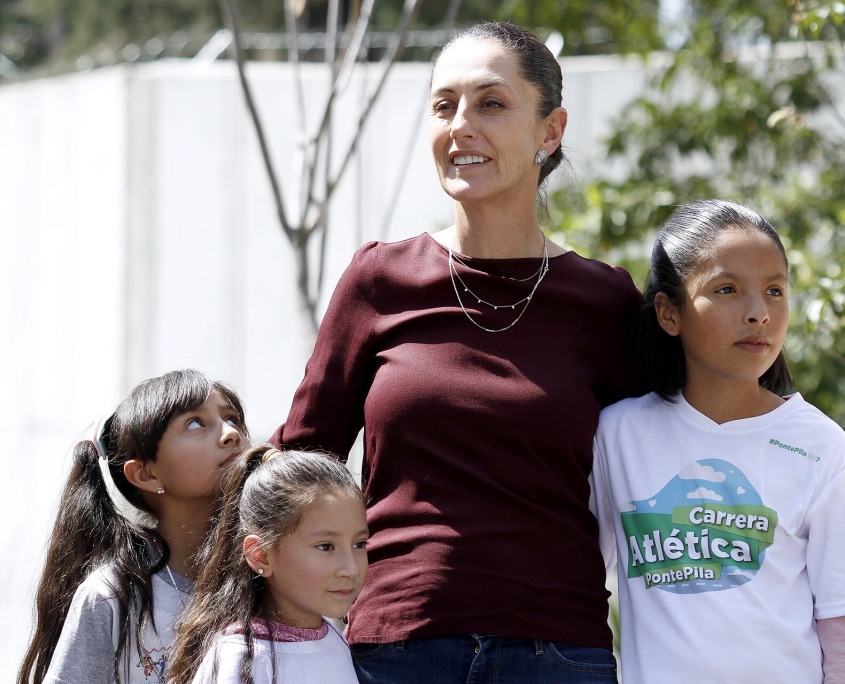
 In an April 7 press conference, Mexican President Claudia Sheinbaum announced the creation of Mexico’s universal health care system, which is scheduled to achieve full coverage by 2028. Sheinbaum described the initiative as a “historic step” toward achieving free, accessible and quality health care for all of Mexico’s more than 120 million citizens. The country plans to roll out the new system in phases, beginning with the issuance of health ID cards for citizens over 85 years old this year. By 2027, the exchange of services between institutions will begin, and the process will conclude in 2028 with coverage of treatment for chronic conditions and the ability to refill prescriptions at any health institution.
The Necessity of a New System
Since the creation of the Mexican health care system in 1943, fragmentation has created disparities in quality and access due to divisions based on economic, social and regional factors. As of 2023, the system was divided into the Mexican Social Security Institute (IMSS), which covered salaried private sector workers; the Institute for Social Security and Services for State Workers (ISSSTE), which covered salaried public sector workers; PEMEX, which covered workers in the oil industry; and IMSS-Bienestar, or INSABI, which covered those who did not qualify for the others, such as contract workers, the unemployed and the self-employed. INSABI replaced Seguro Popular in 2018, causing the number of citizens without access to health services to increase by 15.6 million in only two years. As of May 2023, the government had dismantled INSABI. However, the effects still remain, increasing the need for Mexico’s universal health care system.
In 2025, Mexico ranked below Organisation for Economic Co-operation and Development (OECD) averages in life expectancy (75.5 years), preventable mortality (243 per 100,000), eligible children vaccinated against diphtheria, tetanus and pertussis (DTP) (78%) and women screened for breast cancer (20%). Mexico spent $1,588 per capita on health, compared with the OECD average of $5,967. Much of this was due to fragmentation’s effects on the rural poor. Because access to health services was based on employment status and proximity to salaried jobs in the public or private sector, the poor could not always use the closest hospital or institution if a specific subsystem ran it. Additionally, changes in the labor market caused by the COVID-19 pandemic placed more than half of the population in the informal sector. This created disparities in quality of care between the formal and informal sectors, effectively splitting the country’s health care system in half.
How a Universal System Will Address These Issues
Beyond providing free coverage for its citizens, Mexico’s universal health care system will integrate these subsystems into a national network. In doing this, the government hopes that quality care and accessibility will transcend employment status or geographical location. Citizens will be able to use any health care institution, regardless of personal factors, with a health ID card. The card will be connected to an app displaying an individual’s medical records, upcoming appointments and available services.
The health ID card and connected app should streamline the health care process and improve efficiency. The consolidation of subsystems should also help efficiency, as specialized equipment can now be shared across hospitals that it previously could not. Patients will have the option to remain at a specific health center for the full duration of care, removing forced transfers that shortened treatments. The unification of these subsystems is necessary for both universal coverage and an efficient, centralized network.
Looking Ahead
According to Sheinbaum’s timeline, the exchange between institutions will begin by Jan. 1, 2027, with services covering emergency care, high-risk pregnancies, heart attacks, strokes, cancers, vaccinations and primary care consultations. The second half of 2027 marks the beginning of coverage for specialized medical services. By 2028, universal coverage will include prescriptions, referral-based hospitalization and specialized outpatient care. Mexico’s universal health care system represents a significant shift in access for millions of citizens, particularly those in the informal sector and rural communities who have historically been underserved.
– Joshua Megson
Joshua is based in Albemarle, NC, USA and focuses on Good News for The Borgen Project.
Photo: Wikimedia Commons