 A fractured economy, political protests and the transition to a democratic country are factors that have put Sudan in the global spotlight. Due to shortages within the country and the added weight of COVID-19, Sudan is on track to receive much-needed financial aid from several global sources. Foreign aid to Sudan will provide direct relief to the impoverished people in the country.
Improved Foreign Relations
In February 2020, Sudan’s ex-president, Omar al-Bashir was prosecuted and convicted for the mass murders of people in the region of Darfur. The declaration was made that the country would cooperate with the ICC (International Criminal Court) for the prosecution. This act could serve as a window of opportunity for improved foreign relations and a new international image. There have also been talks of peace agreements between Sudan and Israel. These issues have attracted a global audience as the world watches to see where things could potentially lead to.
Democracy and Debt
One of the country’s most monumental feats was transitioning to democracy after many years of social discord and oppressive power. Unfortunately, this massive change also came with a damaged political system and an outstanding debt of nearly $60 billion. Necessities such as food and fuel have undergone an extreme rise in price at an 80% estimate and the introduction of COVID-19 could be the potential last straw for Sudan’s already overburdened economy. While Sudan’s army chief of staff, Lt. Gen. Abdal Fatteh al-Burhan, is a member of the Sovereign Council, the relationship between the country’s government and the military is rocky. The prime minister, Abdalla Hamdock, is desperately trying to avoid a potential military takeover and is calling for any available financial support from allies abroad.
Sudan’s Call for Help
Sudan’s call for help had reached many different listening ears. In a joint effort, the World Bank, the European Union and several other countries signed a deal of almost $190 million that would go directly to families in need through the Sudan Family Support Programme (SFSP). The amount of foreign aid to Sudan would equal out to 500 Sudanese pounds (roughly $9) per person, per month for one year and aims to cover the needs of nearly 80% of Sudan citizens. Prime minister Hamdock noted that while willing donors have given $1.8 billion to help, the country is really in need of $8 billion for a real balance to its economy. The distribution of the aid was set to begin in October 2020 and will eventually total $1.9 billion after two years.
The Road Ahead
With the degree of social and political change in Sudan, the country is certainly moving in a positive direction. Reinventing the country’s image and political structure is no easy feat. Sudan has proven that change is certainly possible, even in the most dire circumstances, especially with sufficient international backing and support. Foreign aid to Sudan gives the people of the country hope for a better future.
– Brandon Baham
Photo: Flickr
 A whole
  The provision of foreign aid from the United States serves as a multifaceted solution and preventative measure to many issues that ultimately impact the United States. In assisting with the development of under-resourced countries and those afflicted by natural disasters and conflict, the country’s interest in strengthening U.S. eminence in the global political ecosystem is served, as is the initiative to foster and stabilize democracies that are essential in maintaining global peace. Mozambique is one such country that receives aid from the United States. Nearly half of the population lives in poverty and while having managed to combat that statistic with an
  Prosperous health and well being are the backbone of a progressive society. Unfortunately, countless people in the developing world struggle to access affordable and effective healthcare. South Sudan is an Eastern African country riddled in an ongoing ethnic conflict. In addition, it is one of the hardest-hit nations on the issue of healthcare.
 The COVID-19 pandemic is deemed a global health crisis that has resulted in an economic crisis and a hunger crisis too. In the Dominican Republic, Cabarete Sostenible seeks to address the root cause of hunger.
 Colombia is home to some of the most unyielding forms of violence, such as assassinations, assaults and homicides. Significant acts of violence and conflict first came about during the
 The year 2020 brought many different changes to the country of Togo. Because Togo is located in West Africa, its economic sector heavily relies on agriculture. However, drought and wildfires have unfortunately made a grave impact on this sector. Due to a disputed presidential election, Togo has received a substantial amount of refugees from the Ivory Coast seeking safety from political backlash and violence. With the addition of the COVID-19 outbreak, the country now finds itself in a very tight position. On the brighter side, the country recently elected its first female prime minister, who aims to take immediate economic action. This historic event occurred at a crucial time as Togo’s evolving government recently made a substantial investment in crop refining and mineral excavation.
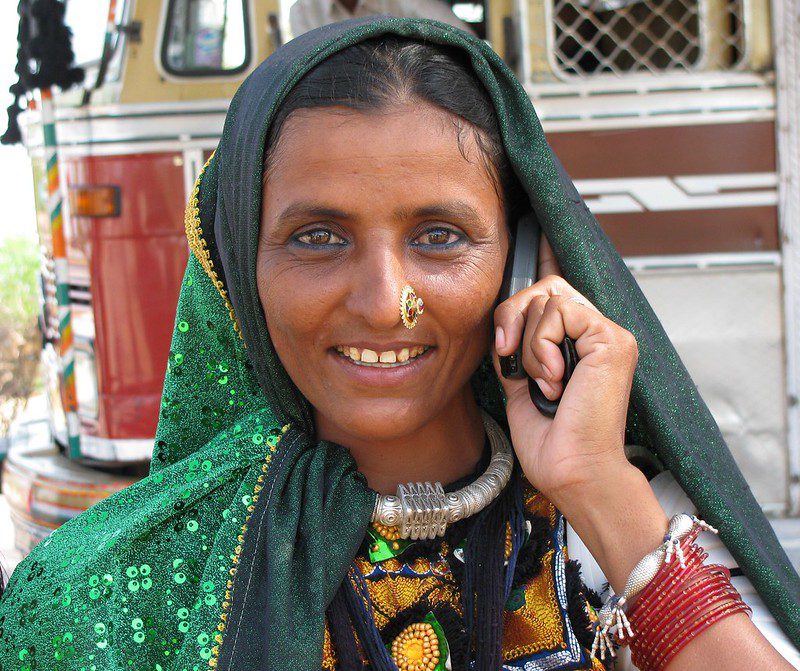 The recent technological revolution booming in the developed world is showing positive results. To that end, many people are urging the distribution of these technologies to developing countries like India. Rural villages in the country have largely not been part of the mobile phone trend. Even certain urban areas remain hidden from these new technologies. Several nonprofit organizations and recent government movements have vowed to fight this reality, looking to increase the availability of cell phones and cell phone data in India. Here are three ways India is using phones to combat poverty.
