 In Bangladesh, millions of children are living in poverty without any assistance. For this reason, the nonprofit organization, Spreeha Bangladesh Foundation, comes in and fulfills its mission. Spreeha greatly supports Bangladeshi children; the organization uses creative solutions to empower people to reach their full potential.
One Spreeha-run program that guarantees support for Bangladeshi girls is called Progga. The program aims to empower young girls with important life skills, especially leadership values. Approximately 13.7 million Bangladeshi girls feel disorganized and vulnerable during their adolescent years and are lacking the correct guidance. Those who go without counsel are more likely to perform poorly or drop out of school. Additionally, they have a higher risk of mental and physical abuse. This inevitably leads to lower possibilities of female representation in leadership positions.
Spreeha’s solution is to motivate young Bangladeshi girls to become leaders through an interactive method. Progga groups educate young girls on how to make proper judgments that enhance their socio-economic situations and overall security. The organization achieves this goal by encouraging awareness of developmental changes in Bangladesh. The organization mentors young girls using group collaboration with speech and debate to develop their leadership skills and improve their self-confidence.
COVID Complications
The COVID-19 pandemic has made life hard to bear, especially for children in Bangladesh. Thankfully, Spreeha has developed solutions to combat the crisis. Doctors and health care workers make up the primary components of the organization. They engage in door-to-door visits, providing counsel and consciousness to the community. Spreeha also informs the community on how to prevent infections during the pandemic.
In an attempt to support Bangladeshi children, Spreeha has helped prevent infection by temporarily shutting down the before and after-school programs as well as adolescent girls’ clubs. Urban populated areas of Bangladesh are very dense, therefore, they are more susceptible to coronavirus. The young children are unaware of how dangerous the virus is, which is why Spreeha is working tirelessly to ensure their safety. With the economy in disarray, the daily wage-earning Bengali workers are most affected. Spreeha urges the communities to support each other during these uncertain times.
How it Began
Tazin Shahid is the founder of the Spreeha Bangladesh Foundation. He desires to help more Bangladeshi people and ensure that Spreeha can support the children. Along with education and job training services, Spreeha has developed a business incubator called Spreeha Studios. The company promotes startup companies. These services have helped more than 125,000 people, including business owners with families.
Prior to the founding of Spreeha, Shahid worked for Microsoft. This profession pushed him to contact 1 million people by the start of the new decade. He accomplished this by “hitting refresh,” meaning to start anew in a world with less poverty. According to Shahid, the first stage of Spreeha involved ending the succession of poverty. The second was to shatter social obstacles. Finally, the third involves encouraging people to follow their dreams and desires.
The organization began in 2011 when Shahid still worked for Microsoft. He yearned to build a world where those living in poverty can be inspired to improve their lives. At first, Spreeha was a small transportable health clinic with only one doctor and very little medicine. Early on, the funding came from Shahid’s Microsoft companions. The medical center was generous enough to aid 10,000 to 20,000 people in two provinces.
Eventually, Spreeha was reworked to include many other ways to help Bangladeshi families. The Bangladeshi children received affordable health care from the Sneho Diagnostic Center as well as medical diagnoses from the mobile Amar Lab. New ventures included the aforementioned leadership program, Progga, and the early childhood development and daycare center for children and education center for mothers, the Udoy Center. Shahid has reached his objective of helping 1 million people by providing education to 3,669 children in addition to 65,119 receiving health care and 68,033 gaining counseling.
The Overall Mission
The CEO of Spreeha, Ferdouse Oneza, spoke with The Borgen Project. He says, “Our mission is to break the cycle of poverty. We look at the root causes of poverty. Right now we have a clinic in Bangladesh as well as pre and after-school programs. We educate them for fun and teach them social skills.”
With the pandemic, issues of poverty are worsening. Spreeha continues to create safe spaces for the less fortunate. It is a pivotal reason why the communities of Bangladesh are still intact. One issue of safety Bangladeshi children face is the legalization of child marriage. Girls in Bangladesh are in danger of being forced into arranged marriages with significantly older men. Millions of these girls are younger than 15. This is currently legal due to a loophole in the Child Marriage Restraint Act.
Oneza says Spreeha addresses child marriage by raising awareness of the issue and educating children. By going door-to-door to counsel parents, Spreeha hopes to change societal perspectives on child marriage. Oneza describes, “One of our girls was working for Spreeha but was engaged to someone way older than her. She dropped out of her university but after some campaigning, she was allowed to finish her education first and then get married.” Oneza says further that “During the pandemic, a lot of families are moving to the villages. This puts the girls at risk because they don’t have the Spreeha service so their parents marry them off.”
Although the nonprofit does not engage in influencing policymaking, the Spreeha Foundation of Bangladesh still makes a significant impact by supporting Bangladeshi children through active community involvement and inspiring individuals to prosper.
– Shalman Ahmed
Photo: Flickr
 Seven years ago,
  The impact of COVID-19 has resulted in fractured economies and health care systems all around the world. While some countries are trying to recover, others just cannot catch a break. Papua New Guinea is a country that finds itself in a unique and desperate situation. With the onset of COVID-19, the country was also hit with a resurgence of polio. Dual outbreaks are a cause of significant concern for Papua New Guinea. Australia is coming to the aid of its neighbors with a substantial financial assistance plan.
 In London in the United Kingdom, both Syrian children and adults seeking refuge in the nation are grappling with mental health challenges and post-traumatic stress disorder (PTSD) as a result of the conflict in Syria. Syrian refugee children are at high risk of depression, anxiety and other forms of mental illness after experiencing high levels of trauma. These untreated trauma-related mental and behavioral disorders that form the Syrian mental health crisis serve as threats to physical well-being, academic performance and economic prosperity.
 When COVID-19 struck the world, Sweden did not close its borders. Instead, the nation opted to follow the standard health and safety guidelines. Although stores, schools and businesses remained open and people hardly wore masks, many Swedes still chose to stay at home. As of January 25, 2021, Sweden notes
 The Huanjiang Maonan Autonomous County lies in Guanxi in southern China. A majority of China’s Maonan ethnic group live here in rural villages. Once considered one of China’s most impoverished places, the poverty rate has now dropped to under 2% thanks to efforts by the Chinese Academy of Sciences (CAS). By using advanced farming techniques and relocating people to more arable areas, CAS has provided a model for eradicating rural poverty in China.
 Human health and environmental concerns are commonly thought of and treated as unrelated issues. However, environmental degradation has an unquestionable impact on a community’s health. The
 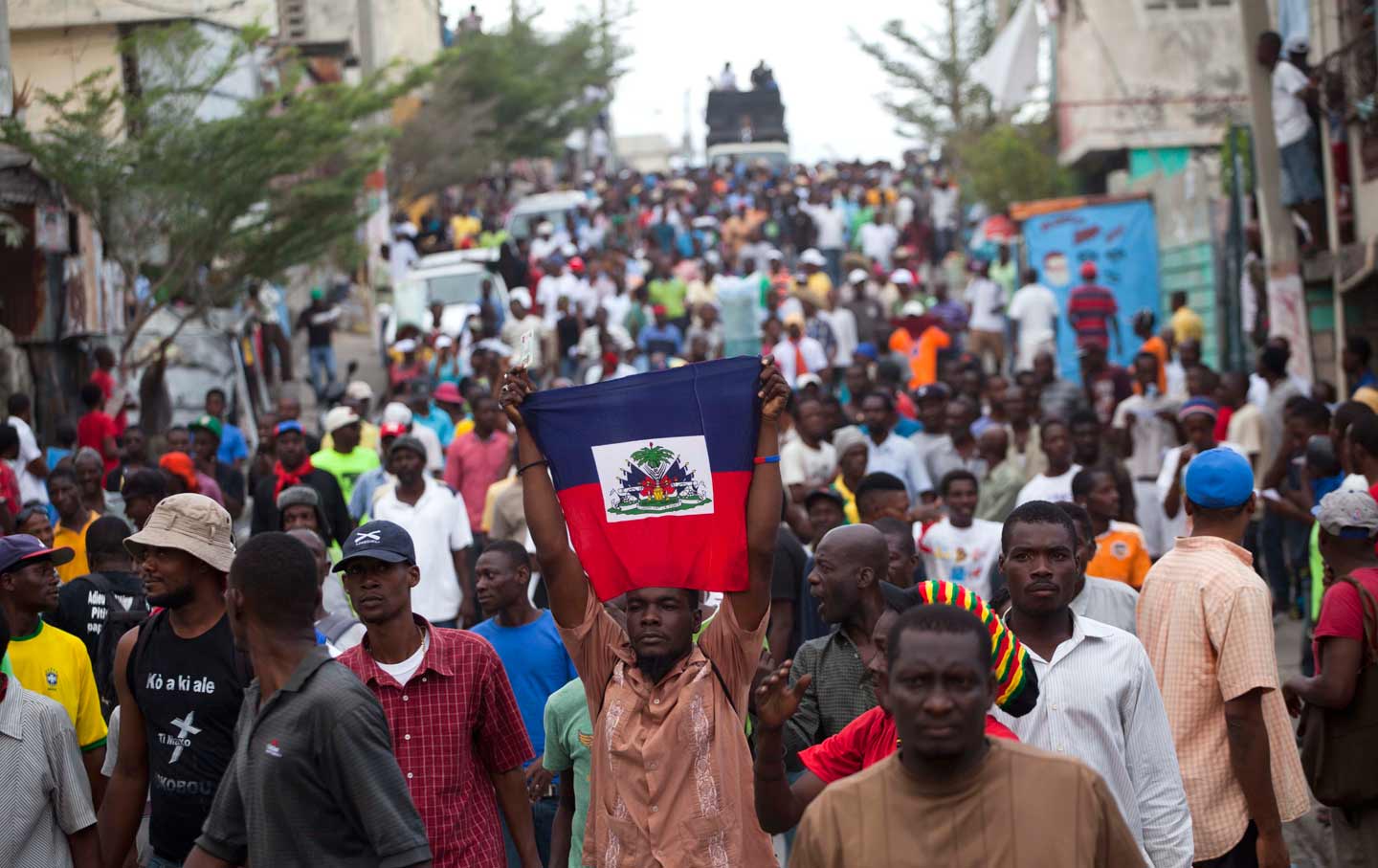 According to The World Bank, Haiti currently ranks as the poorest country in the Western Hemisphere. Of its 11 million residents,
