• Link to X
  • Link to Facebook
  • Link to Instagram
  • Link to TikTok
  • Link to Youtube
  • About
    • About Us
      • President
      • Board of Directors
      • Board of Advisors
      • Financials
      • Our Methodology
      • Success Tracker
      • Contact
  • Act Now
    • 30 Ways to Help
      • Email Congress
      • Call Congress
      • Volunteer
      • Courses & Certificates
      • Be a Donor
    • Internships
      • In-Office Internships
      • Remote Internships
    • Legislation
      • Politics 101
  • The Blog
  • The Podcast
  • Magazine
  • Donate
  • Click to open the search input field Click to open the search input field Search
  • Menu Menu

Archive for category: Global Poverty

Key articles and information on global poverty.

Global Poverty

Pizza Hut Donates to Philippines

It is almost impossible to watch a program on television without seeing an advertisement from one of America’s top pizza restaurants, Pizza Hut. Pizza Hut is a subsidiary of Yum! Brands, Inc. and is known for delivering more pizza, pasta and wings than any other restaurant in the world. The Pizza Hut name has come very far since its invention in Wichita, Kansas 55 years ago.

Pizza Hut is also a top partner of the United Nations World Food Programme (WFP), the world’s largest effort to fight hunger worldwide. Pizza Hut has been involved with WFP since 2007 and has donated over $10 million in the form of over 40 million meals to fight hunger in the United States. Pizza Hut also founded the Pizza Hut Harvest Program to independently donate meals to shelters in the United States.

Pizza Hut recently declared that a designated percentage of its World Hunger Relief donations will go to the Philippines. The recent typhoon in the Philippines has left 2.5 million survivors hungry and in need of food. Scott Bergren, President and CEO of Pizza Hut, emphasized the importance of aid to the survivors when he said “the purpose and intent of our partnership with the World Food Programme is to provide relief through food to those most in need, and nowhere is that need more urgent now than in the Philippines.” Bergren also took a moment to thank the WFP for allowing Pizza Hut and Yum! Brands to help so many people.

Other major companies such as Royal Caribbean Cruises, FedEx and Google have also donated to those in the Philippines in light of the recent tragedy.

– Lienna Feleke-Eshete

Sources: CNN Money, Market Watch
Photo: Entrepreneur

December 2, 2013
https://borgenproject.org/wp-content/uploads/borgen-project-logo.svg 0 0 Borgen Project https://borgenproject.org/wp-content/uploads/borgen-project-logo.svg Borgen Project2013-12-02 04:28:242024-05-25 00:35:08Pizza Hut Donates to Philippines
Global Poverty, Health

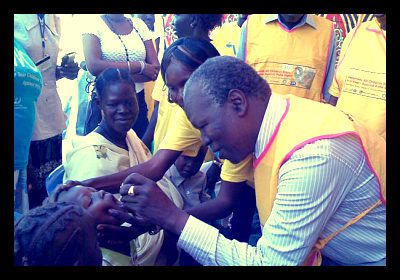
UN Foundation Gives Children a Shot@Life

dennis_ogbe_shot_at_life
Every 20 seconds, a child dies from mundane diseases that have faded from first world concerns like nothing but a nightmare. But 1.5 million children die every from pneumonia, diarrhea, measles and polio—all diseases that are preventable with the vaccines one might find at a routine clinic. For children living in impoverished regions, these diseases are an all too prevalent reality caused by the lack of access to vaccines.

United Nations Foundation-sponsored Shot@Life is the latest movement in garnering support and advocacy in humanitarian efforts to provide vaccines to children in need. The movement stresses the importance of Americans to reach out to Congress to make vaccinating children around the world a political priority. Shot@Life emphasizes the dire consequences of slashing global health funding and other forms of foreign aid, that Americans can no longer remain complacent in informing their government of children under five in peril of seemingly antiquated diseases like polio and measles.

The routine life-saving shots one normally receives at Kindergarten are denied to 2.5 million at-risk children.

U.S. paralympian Dennis Ogbe, an advocate for polio eradication, is a living testament to the ever-present threat of the disease. Raised in Nigeria, the track-and-field athlete contracted polio at the age of 3 and was confined to a wheelchair whilst his friends were allowed to run and play. Through force of will and support from his father, Ogbe miraculous regained mobility in one leg—one leg that would scale him to a place high amongst Olympians.

Though now 99% eliminated worldwide, polio still remains a presence—one that might continue grow and resurface as a more serious threat through complacency. There are still 200 cases per year with remaining polio epidemics in Nigeria, Pakistan and Afghanistan. Permanent polio teams have been established in hard-to-reach provinces in Pakistan and Afghanistan, while Nigeria has employed satellite technology in order to best reach out to children in need of vaccines.

Funding shortages in global partnerships have hampered efforts to completely eradicate polio; it is reported that nearly $1 billion is needed to fully rid the world of polio. The projected benefits and returns in investing in polio eradication are impressive: by 2035, the world’s poorest countries will receive benefits of up to $50 billion. Furthermore, investing in channels of dispersing polio vaccines would in turn open up cost-effective channels to deliver more vaccines and thereby prevent more types of diseases, such as measles and rotaviruses, in regions of extreme risk and poverty.

It is time to construct a world in which all children of all countries are protected from all preventable diseases and given an equal shot at living. UN Foundation’s Shot@Life is a call for Americans to their part in the name of global health equality.

– Malika Gumpangkum

Sources: Shot@Life, AAP Global, CNN, CNN

December 2, 2013
https://borgenproject.org/wp-content/uploads/borgen-project-logo.svg 0 0 Borgen Project https://borgenproject.org/wp-content/uploads/borgen-project-logo.svg Borgen Project2013-12-02 04:22:292024-06-04 01:17:32UN Foundation Gives Children a Shot@Life
Global Poverty

Krochet Kids International Fights Poverty

While still a high school kid, Kohl Crecelius never thought about that a small hobby could eventually make a big difference on many others’ lives.

Crecelius is the CEO and co-founder of the Krochet Kids International (KKI), a non-profit organization dedicated to empowering people to rise above poverty. When he was in high school, he loved sports on the mountain, like surfing, and was passionate about crocheting unique headwear for himself. Later on, to fund high school dances, he started his crochet business, a small crocheted hat company.

During summer breaks, Crecelius volunteered in various developing nations and saw people tired of living solely on the operating bodies for their every need. “They wanted to work and provide for their own families,” he said.

Not until that moment did he have an idea of helping these people break the cycle of poverty by teaching them crocheting. Crecelius believes high-quality, handmade products can serve as a vehicle for social change.

“The simplicity of crocheting is its most profound quality,” Crecelius said. “With hook and yarn people could make amazing products.Being paid a fair wage to do so would allow for them, for the first time, to provide for their families and begin planning for the future. By teaching these people to crochet, we would be empowering them to rise above poverty.”

Along with some close friends, Crecelius established the KKI in 2008 and began working with women in impoverished communities in Northern Uganda and Peru. By teaching those women, most are mothers and heads of households, how to crochet products, this organization has created an innovative approach to help the poor through job creation and education.

“Our goal is to poverty alleviation,” Crecelius said. “We are trying to empower women and families living in poverty to be in charge of the responsibilities to break that circle of poverty for them and forever.”

Currently, over150 people in Uganda and Peru are working and receiving education. The collaboration of KKI staff and beneficiaries around the world has created a sustainable cycle of employment and empowerment.

Crecelius noted the biggest difference between the KKI and other businesses with missions to provide aid to developing countries.Instead of providing one thing such as water, clothing or education and trying to help a broad range of people, KKI focuses on individuals, helps them with the skills they will need to address their circumstances and assists them to make a difference.

“We try to leverage the tools of business to launch the entrepreneurship and to make the best impact on people,” Crecelius said.

– Liying Qian 

Sources: KTLA, Kochet Kids International
Photo: Onboard Mag

December 2, 2013
https://borgenproject.org/wp-content/uploads/borgen-project-logo.svg 0 0 Borgen Project https://borgenproject.org/wp-content/uploads/borgen-project-logo.svg Borgen Project2013-12-02 04:12:002024-12-13 17:49:48Krochet Kids International Fights Poverty
Advocacy, Global Poverty

The Diary of a Poor Woman

On an average blog, an average post managed to make headlines. With over 3 million views, Linda Tirado’s blog post, “Why I Make Terrible Decisions, or, poverty thoughts,” has shed new light on poverty in America. Tirado is a wife, mother, student and employee. Her family lives below the poverty line and faces daily struggles to make ends meet.

Tirado articulates a widespread feeling that persists among families in poverty. She explains that stress, uncertainty and depression come along with financial woes. Tired of being misunderstood, Tirado took to her blog to respond to society’s misconceptions about poverty.

With cuts to food stamps occurring at the beginning of November, the welfare debate in the U.S. has recently been a hot topic. Many assume that people who are in poverty are responsible for their own bleak situation. The reality is, and Tirado makes sure to point this out, that those living in poverty were born into it and are never given the resources or the tools to get out.

Tirado’s post is written as a slightly unorganized stream of thoughts which she explains are constantly occurring in the back of her mind. She describes her average day of school, two jobs, and domestic responsibilities, while trying to keep her depression and exhaustion from getting in the way of her duties. Without knowing what will happen tomorrow, Tirado smokes a cigarette, puts her children to bed and fights on.

Tirado has received a lot of backlash because of this post. Anonymous commenters have urged her to stop having children, to not smoke cigarettes which are destroying her health, and to get a real job. It is because of these insensitive and uninformed responses that Tirado wrote her post in the first place. She explains that she had children because she had no access to affordable birth control, she smokes because she cannot afford depression and anxiety medication, and she is often turned down from jobs because she does not fit the company’s image.

There have also been positive responses to Tirado’s post. She has started a “go fund me” site and has received more than her annual salary in donations. Her post has opened doors for her to write a book and be a professional speaker. All this positive reinforcement has encouraged Tirado, and other families living in poverty, to continue searching for a light in the face of hopelessness.

The importance of Tirado’s post goes beyond her newfound opportunities. Her raw words have opened the public’s eye to the true nature of poverty. Often misconstrued as the plight of lazy and uneducated people, poverty is the result of systemic and social failure. Tirado has granted other families in poverty a platform on which they can be heard.

– Alessandra Luppi

Sources: KillerMartinis, The Huffington Post, Huff Post Live
Photo: The Equity Factor

December 2, 2013
https://borgenproject.org/wp-content/uploads/borgen-project-logo.svg 0 0 Borgen Project https://borgenproject.org/wp-content/uploads/borgen-project-logo.svg Borgen Project2013-12-02 04:10:132024-05-25 00:36:29The Diary of a Poor Woman
Development, Global Poverty, Technology

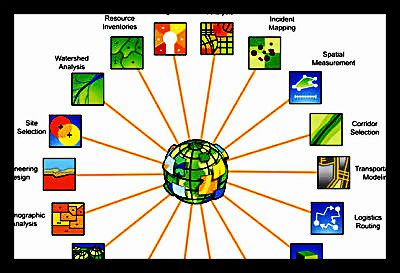
GIS: The Universal Language of Development

GIS_map
If a picture is worth a thousand words, a custom-tailored map which can be manipulated to display the interactions between multiple selected variables must be worth entire books. Geographic Information Systems (GIS) provides this power to the user who understand the language of the software, and this power is especially important to development and aid organizations seeking to maximize their impact.

Unlike conventional cartography, GIS software can exploit social, economic, political, and environmental data to create an image which can then be layered onto the topographic landscape in any way the user desires. The relations between layers, and between data within layers, can then be presented to the viewer in a way that draws attention to the important facts.

This differs fundamentally from the report by presenting information visually, without losing depth in the way that a chart or graph flattens the ethnographic depth of the actual survey informing it.

Geospatial analysis has been used primarily for military purposes in the past, but that situation is already evolving. USAID is deploying geo-analysts in almost every program to give its staff the most useful information possible, going so far as to institute its own geospatial arm, to ensure the best possible use of the existing technology. The United Nations is on a similar path.

A software which was once esoteric and difficult to manage – akin to prototypical PC operating systems – has been streamlined and aestheticized so that with less than a year’s training, anyone can masterfully manage multiple databases with thousands of streams of data into coherent maps.

As with any form of communication and representation, there is a danger of misrepresentation and error. Factors can be ignored or manipulated to produce maps that do not mirror reality, or that fail to bring attention to critical factors. Even if the map is sound, it can still be misused by those with ulterior motives or simple incompetence.

As with all analysis, GIS relies entirely on a substrate of reliable data from which to extrapolate conclusions. Unlike polls, however, GIS data does not require a ‘boots on the ground’ approach – though this can be useful. For many applications, remote sensing, satellite imagery, and tomography are sufficient, meaning that, in many situations, the difficulties of other analytical approaches are evaded.

What is more, with cloud computing becoming nearly universal, a global GIS network, shared by all development agencies, would perpetuate a system whereby an up-to-date cartographic representation of reality would be accessible to those seeking to capitalize on its wealth of information, thereby bridging the gap between those who are able and willing to help – but lack an idea of where to begin or what needs doing – and those who require assistance. GIS transcends language barriers, enabling global cooperation and understanding to tackle pressing issues. In that way, GIS is becoming the universal language of development.

– Alex Pusateri
Sources: Directions Mag, Esri

December 1, 2013
https://borgenproject.org/wp-content/uploads/borgen-project-logo.svg 0 0 Borgen Project https://borgenproject.org/wp-content/uploads/borgen-project-logo.svg Borgen Project2013-12-01 04:30:512017-03-20 13:10:09GIS: The Universal Language of Development
Education, Global Poverty

Baseball Field or Public Education?

braves_turner_field
In the summer of 1996 as an eight year old boy, I was privileged to venture into downtown Atlanta during the Summer Olympic Games. I was amazed at my firsthand sight of the many sporting arenas, housing for international athletes, hotels and other buildings that were built in anticipation for the summer games. At that time I was not aware of the amount of money that was being spent for construction, security, planning and promotions by the city of Atlanta and other private enterprises to stage this worldwide event.

In anticipation for the Games, the city of Atlanta spent $209 million alone on the building of Olympic Stadium, an 85,000 seat stadium that held track and field events and the opening and closing ceremonies of the games. At the conclusion of the Olympics about 30,000 seats were removed from the stadium so that it could be converted into a baseball field, which was a more viable use of the venue. The renovated baseball stadium was renamed Turner Field and became the new home of the Atlanta Braves for the start of the 1997 season.

Since its completion, Turner Field has hosted 81 games each summer for the relatively successful Atlanta Braves and their passionate fan base. At only 17 years old, Turner Field is still newer than 14 of the other 29 ball parks used in Major League Baseball. It is still fully operational and relatively new but the Atlanta Braves are not pleased with the venue. On November 11 of this year, the Atlanta Braves announced that they had partnered with nearby Cobb County, Georgia for the building of a new baseball stadium, set to cost $672 million, of which $450 million is to be publicly financed by the county.

Atlanta’s stadium saga is just one example of municipalities that face the debate of the benefits of publicly financed stadiums. Proponents of them promise an increase in public revenue for the city in the form conventions, sporting events, jobs and retail shopping, but years of outside research has proven to be inconclusive on the economic impact of such projects. In 2017, 20 years after the completion of the once-proud stadium, the city of Atlanta will demolish Turner Field and use the land for another project.

Publicly Financed Stadiums are a risky bet for municipalities that could use the same funds for other more noble investments such as infrastructure improvements and education. Ironically Cobb County is the same county that is currently facing a $78 million deficit in its school system but is willing to fund $450 million on a baseball field. Time will tell if the diversion of funds for education towards a new stadium will be a wise investment for the community of Cobb County.

– Travis Whinery
Sources: ESPN, CHICAGO TRIBUNE, USA TODAY, THE MARIETTA DAILY JOURNAL

December 1, 2013
https://borgenproject.org/wp-content/uploads/borgen-project-logo.svg 0 0 Borgen Project https://borgenproject.org/wp-content/uploads/borgen-project-logo.svg Borgen Project2013-12-01 04:00:552017-03-20 13:10:09Baseball Field or Public Education?
Global Poverty

Drawing Global Inequality

Before change must come awareness. Polish cartoonist Pawel Kuczynski has been using his talent for the past decade to do just that. His satirical illustrations evoke grim emotions and cause his viewers to think about the current state of the world. Things are not as they appear and Kuczynski is literally showing the public what they do not know about politics.

Kuczynski’s drawings expose the irony of everyday occurrences by taking them out of context and juxtaposing these normal events with harsh reality. Topics range from political disillusion, pollution, child labor and income inequality. Kuczynski seems to be asking the public to realize the true nature of their place in the world, not only as puppets of a larger global system but also as players in an unbalanced field.

The image above touches on harsh labor, the global economy and inequality. Kuczynski plays on the story of Santa Claus and as homes in the West are filled with gifts, they are completely oblivious as to where these toys are made. The morning sun is replaced by the Chinese Communist Party banner which hangs over child and impoverished laborers as they slave away to make affordable, consumer-friendly products. Ultimately, Kuczynski is criticizing our world’s affection for material goods and our incredible ability to ignore human suffering because it is far away.

We are constantly told the cost of war and how much of our tax dollars are dedicated to defense. Instead of beads on an abacus, soldiers are counted as this businessman tallies up his profits. Even though it costs tax dollars and human lives to sustain a war, money is still to be made. Weapons manufacturers watch their profits soar as wars drag on, and companies on the winning side sit on the edge of their seats to gain a new market. Kuczynski points out that war requires more than dollars – human lives are spent just as quickly – and in the end, it’s all business.

Visit https://pawelkuczynski.com/ for more.

– Alessandra Luppi

Sources: Visual News, Visual News

December 1, 2013
https://borgenproject.org/wp-content/uploads/borgen-project-logo.svg 0 0 Borgen Project https://borgenproject.org/wp-content/uploads/borgen-project-logo.svg Borgen Project2013-12-01 04:00:112024-05-25 00:33:14Drawing Global Inequality
Children, Disease, Global Poverty, Health, Malaria

10 Global Health Accomplishments From the Past Decade

Global Health Accomplishments WHO
Global health has a huge impact with poverty. In many poverty-stricken areas, a lack of proper health equipment and the spread of diseases is a major function in the poverty trap. These countries rarely have the bare minimum to handle widespread disease and other health complications, making it hard truly to combat a global health issue. Despite these bleak conditions, there have been impressive global health accomplishments. The work and time put in by programs such as United States Agency for International Development (USAID) and Centers for Disease Control and Prevention (CDC) have made these ten necessary improvements for impoverished areas.

Global health has improved by leaps and bounds over the past decade. Many different factors have caused this great revolution of health, but ten specific reasons can be credited with carrying the weight. Without improvement in these specific areas by programs like USAID and the CDC, many of the great advancements seen today in global health would have never had the funds to be reached.


Factors Contributing to Global Health Accomplishments


In many areas with great health risks; immunizations and vaccines are not made readily available. Without these treatments, many people are often infected by disease that could otherwise be avoided or contained with the assistance of vaccination and immunization. First, USAID immunization programs have provided the funds to treat up to three million impoverished people per year.

Many nations struggle with health issues because of water deprivation. Second, USAID introduced oral hydration therapy to these areas, in hopes it would counteract dehydration problems. As of today, the oral hydration therapy has been successful in areas all around the globe, with tens of millions of people being properly nourished through the low-cost program yearly.

Thirdly,  not only is the oral hydration therapy combatting worldwide dehydration, USAID has partnered with The United Nations Drinking Water Supply to help some 1.3 billion people receive proper water nourishment sources.

Sanitary water is a vital piece to figuring out the poverty puzzle, but the eradication of poverty begins with the young people. Fourth, the average number of children per family in impoverished nations has dropped from 6.1 in the mid-1960s to 4.2 today. In addition, infant and child deaths have decreased by 50 percent in these impoverished areas.

Fifth, USAID child survival programs have made a 10 percent child mortality rate reduction in just the past eight years. Not only has the number of children’s lives saved risen, but life expectancy has improved by 33 percent in these nations.

The decrease of major diseases worldwide is a major improvement made possible by USAID, CDC, and similar programs worldwide. Sixth, Smallpox has been eradicated, and now only exists in laboratories. Seventh, USAID has accounted for thirty-two HIV/AIDS prevention programs throughout the world.

Eighth, over 850,000 people have been reached by the HIV program, and (ninth) another 40,000 people have been trained to treat the virus. Lastly, programs like the CDC have been responsible for the diminishing malaria cases, from 2004 (2.1 million cases) to 2009 (1.8 million cases).

By combatting major poverty causing issues such as disease epidemics, unsanitary water, and child mortality rates, programs such as USAID and the CDC have been instrumental in causing the turnaround of world poverty. With the continued support from these programs, the world’s impoverished people can be assured of better conditions outside of these ten beneficial starts.


10 Key Global Health Accomplishments


1. USAID immunizations and vaccines have provided funds to treat up to three million impoverished people per year.

2. Introduction of oral hydration therapy in impoverished areas.

3. Supplied roughly 1.3 billion people proper nourishment sources.

4. Average number of children per impoverished family has dropped from 6.1 to 4.2.

5. 10 percent child mortality rate reduction.

6. Smallpox only exists in laboratories.

7. USAID has 32 HIV/AIDS programs throughout the world.

8. 850,000+ people have been reached by the HIV program.

9. 40,000 have been trained to treat HIV.

10. Diminishing malaria cases, from 2.1 million to 1.8 million over a five year period.

– Zachary Wright

Sources:  USAID, CDC

Photo: USAID

October 26, 2013
https://borgenproject.org/wp-content/uploads/borgen-project-logo.svg 0 0 Borgen Project https://borgenproject.org/wp-content/uploads/borgen-project-logo.svg Borgen Project2013-10-26 09:12:512024-05-25 00:28:4310 Global Health Accomplishments From the Past Decade
Education, Global Poverty

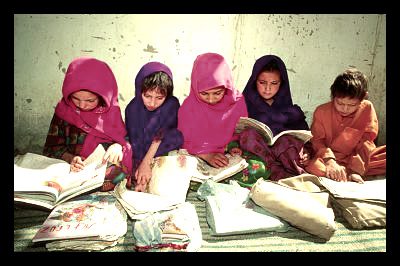
Education in Pakistan and Why it Matters

education_in_pakistan
Poverty in Pakistan has allowed the Taliban to flourish.  By promising food security, shelter, protection, and education, the Taliban has been able to gain support in this region. But the Taliban’s presence has had a detrimental effect on Pakistani schools, a strategy that has kept the region impoverished and under Taliban control.  “Education is a prerequisite for development,” said Shakil Ahmad, author of “The Taliban and Girl’s Education in Pakistan and Afghanistan.”

Education is also the key to releasing Pakistan from the grips of the Taliban. When a population does not understand basic politics or economics, it is easy to manipulate them. As a result, most Pakistani schools have either been bombed or taken over by Taliban members, who turn the schools into recruitment programs, where students are taught extremism and trained for terrorism.

For women, the Taliban’s crusade against education is especially damaging. Taliban rule means a strict interpretation of Islamic and Pashtun customary law, which states that women are not allowed to work outside the home, go unveiled, or leave the house without a male family member.  Religious police roam the streets, handing out harsh punishments for anyone in violation of Pashtun.  All girls’ schools were outlawed in January 2009, and  the Taliban threatened that anyone caught educating a girl or any girl receiving an education would be blown up or attacked with acid.

By now, most of the world knows of Malala Yousafazi, the teenage girl who was shot in the head by the Taliban while on her way to school.  This was not a random incident; she was targeted for speaking out in favor of girls’ education.  Today she has fully recovered, and now leads the Malala Fund, an organization to improve education for girls in the developing world.  The mission is a simple one with seemingly insurmountable challenges—educate girls where education is outlawed.  However, Malala believes in taking small steps: her mantra is “One child, one teacher, one book, one pen can change the world.”

– Stephanie Lamm

Sources: Lund University Department of Sociology, Malala Fund
Photo: Center for Economic Research in Pakistan

October 26, 2013
https://borgenproject.org/wp-content/uploads/borgen-project-logo.svg 0 0 Borgen Project https://borgenproject.org/wp-content/uploads/borgen-project-logo.svg Borgen Project2013-10-26 04:00:472024-05-25 00:30:39Education in Pakistan and Why it Matters
Advocacy, Developing Countries, Development, Extreme Poverty, Global Poverty, Inequality, Nonprofit Organizations and NGOs, Poverty Reduction, United Nations

International Day for the Eradication of Poverty

On October 17, International Day for the Eradication of Poverty was celebrated in honor of the goal to end world poverty by 2030. Declared by the UN General Assembly, this annual day serves as a reminder to promote the need to end poverty and destitution in all countries, specifically the developing nations.

In celebration of the International Day for the Eradication of Poverty, Interaction, the NGO alliance, highlighted global programs that are already making an impact. One of these programs, A World Vision program in Zambia, has made health care, education, and psycho-social support accessible for more than a quarter million children. The program has also trained nearly 40,000 volunteers to assist people living with HIV across the country. It is programs like these, indeed, that are helping us reach our goal.

In hope to get to zero percent by our lifetime, NGOs, like Interaction, are essential parts of the solution. “We cannot let over a billion people suffer in extreme poverty when we have the tools and the research to change their lives for the better. … We can do better. We have to do better,” said World Bank president Jim Yong Kim.

So far, the world has made significant progress in working toward this goal. While it is bold, it is undoubtedly achievable. Already, extreme poverty rates are half of what they were two decades ago. In 1990, nearly one in two people in the developing world lived in “extreme poverty” or on less than $1.25 a day. Today, this number is about one in five. Because of the help of many institutions, government and nongovernment organizations alike, we have been able to make immense developments. Still, it is not enough. The International Day for the Eradication of Poverty recognizes these groups that have made all the difference through these years and even further, motivates people to help take those next few steps forward.

– Sonia Aviv

Sources: UN, Global Dimension, Devex
Photo: Times Square

October 26, 2013
https://borgenproject.org/wp-content/uploads/borgen-project-logo.svg 0 0 Borgen Project https://borgenproject.org/wp-content/uploads/borgen-project-logo.svg Borgen Project2013-10-26 04:00:382024-05-25 00:30:06International Day for the Eradication of Poverty
Page 2101 of 2176«‹20992100210121022103›»

Get Smarter

  • Global Poverty 101
  • Global Poverty… The Good News
  • Global Poverty & U.S. Jobs
  • Global Poverty and National Security
  • Innovative Solutions to Poverty
  • Global Poverty & Aid FAQ’s
Search Search

Take Action

  • Call Congress
  • Email Congress
  • Donate
  • 30 Ways to Help
  • Volunteer Ops
  • Internships
  • Courses & Certificates
  • The Podcast
Borgen Project

“The Borgen Project is an incredible nonprofit organization that is addressing poverty and hunger and working towards ending them.”

-The Huffington Post

Inside The Borgen Project

  • Contact
  • About
  • Financials
  • President
  • Board of Directors
  • Board of Advisors

International Links

  • UK Email Parliament
  • UK Donate
  • Canada Email Parliament

Get Smarter

  • Global Poverty 101
  • Global Poverty… The Good News
  • Global Poverty & U.S. Jobs
  • Global Poverty and National Security
  • Innovative Solutions to Poverty
  • Global Poverty & Aid FAQ’s

Ways to Help

  • Call Congress
  • Email Congress
  • Donate
  • 30 Ways to Help
  • Volunteer Ops
  • Internships
  • Courses & Certificates
  • The Podcast
Scroll to top Scroll to top Scroll to top