• Link to X
  • Link to Facebook
  • Link to Instagram
  • Link to TikTok
  • Link to Youtube
  • About
    • About Us
      • President
      • Board of Directors
      • Board of Advisors
      • Financials
      • Our Methodology
      • Success Tracker
      • Contact
  • Act Now
    • 30 Ways to Help
      • Email Congress
      • Call Congress
      • Volunteer
      • Courses & Certificates
      • Be a Donor
    • Internships
      • In-Office Internships
      • Remote Internships
    • Legislation
      • Politics 101
  • The Blog
  • The Podcast
  • Magazine
  • Donate
  • Click to open the search input field Click to open the search input field Search
  • Menu Menu

Archive for category: Global Poverty

Key articles and information on global poverty.

Global Poverty

The World’s Largest Election

On April 7, the world’s largest democracy begins what is being hailed as the world’s largest election. India, a country of various cultural and geographic distinctions, plans to continue a tradition of free, fair and incredibly large elections. Eight hundred and fourteen million eligible voters make decisions on the 543 members of the Lower House of Parliament.

The election is too large, however, to occur in one fell swoop. The process will consist of nine phases. In all, the elections will cover 543 constituencies, four main political parties in addition to dozens of marginalized ones, and thousands upon thousands of candidates.

The size of the country and the corresponding number of candidates necessitates the lengthy election, slated to conclude on May 12 in time for winners to be announced on May 16. Due to an exponentially growing Indian population, 97 million voters have been added to the list of those eligible since the 2009 general elections. That means almost 12% of those capable of voting between April and May will experience this enormous process for the first time.

The Election Commission, in charge of the entire process, has taken on a lofty challenge in organizing what is to be the most important and largest election since 1977. While individual candidates are permitted to spend no more than an equivalent $120,000 in Indian rupees, the Commission is expected to spend almost $600 million supervising the event.

Because they have determined that no person should have to travel more than two kilometers to cast a vote, the Commission will be setting up 930,000 polling stations across India’s vast territory. Everywhere from Rajasthan in the desert to the heights of the Himalayas, voters will have convenient access to polling stations.

In 2009, an isolated temple caretaker in Gujarat got his own voting booth.

India prides itself on free and fair elections, and regularly has a high turnout among the country’s poor. This year in particular, two parties have run on platforms catering to this demographic. The Bharatya Janata Party campaigns on good governance and national development, and the Aam Aadmi Party campaigns with an emphasis on anti-corruption.

These positions have rendered fervent support among those less privileged and should contribute to a continuation of a high voter turnout for the world’s largest election.

– Jaclyn Stutz

Sources: Forbes, New York Times, Wall Street Journal
Photo: NVO News

March 7, 2014
https://borgenproject.org/wp-content/uploads/borgen-project-logo.svg 0 0 Borgen Project https://borgenproject.org/wp-content/uploads/borgen-project-logo.svg Borgen Project2014-03-07 10:37:202024-05-26 23:18:04The World’s Largest Election
Activism, Advocacy, Global Poverty

Top 5 Most Viral Humanitarians

Whether they’re lifelong philanthropists or newcomers, the following public figures have all captured the media spotlight at one point or another, drawing attention to humanitarian causes in unique and exceptional ways. Here are the top five most viral humanitarians.

1. Casey Neistat

Despite being one of the newest faces in advocacy, filmmaker Casey Neistat has a well-established fan base of YouTube followers. He also has an eclectic filmography including work for HBO, The New York Times, Nike and Mercedes. Casey’s most recent hit was a December 2013 viral video titled “What Would You Do with $25,000?”

Twentieth Century Fox offered Neistat $25,000 to produce a promotional video for The Secret Life of Walter Mitty, but instead he used the funds for a typhoon relief mission in the Philippines. In the short six minute video, he documented his trip every single step of the way—from his arrival, to buying provisions, to renting a bus to transport goods to typhoon victims. The relief effort and the video were a huge success, garnering close to three million views.

2. Romeo Dallaire

Romeo Dallaire is a retired Lieutenant-General of the Canadian Army and current Senator from Quebec who was at the frontline of the Rwandan Genocide in the early 1990s. As the Force Commander for the UNAMIR peacekeeping operation in Rwanda, Dallaire saw the nation descend into genocide between the Tutsi and Hutu ethnic groups. Accompanied by a minimal peacekeeping group with few resources (as well as direct orders to stay put and not to engage) Dallaire’s reports of the escalating violence were lost amidst the bureaucracy of United Nations leaders and U.S. government officials.

His 2003 memoir, Shake Hands with the Devil: The Failure of Humanity in Rwanda, brought the issue to light for the whole world and was later accompanied by both a documentary in 2004 and a feature drama in 2007 of the same name. Since then, Dallaire has developed the Will to Intervene (W2I) Project for the Montreal Institute for Genocide and Human Rights Studies at Concordia University.

The project provides governments, journalists and NGOs with policy recommendations for dealing with future potential crises. Dallaire has kept up appearances through annual university tours across Canada. He was played by Nick Nolte in Terry George’s Hotel Rwanda, which deals with the genocide from the perspective of local hotel owner Paul Rusesabagina.

3. Bill Nye

Most of us know William Sanford Nye as “Bill Nye the Science Guy,” the adorably goofy yet informative character from Disney and PBS’s television show. The show, which aired for five seasons from 1993-1998, is still viewed today in grade school classrooms throughout the country. Essentially, Bill Nye is like the Mr. Rogers of science, and perhaps the only celebrity to hold both a list of Emmy Awards and Honorary PhDs.

Bill Nye’s 2005 project The Eyes of New targeted an older audience and went beyond the actuarial sciences to tackle issues such as population growth, nuclear energy, race, and climate change. His wide range of media appearances include stints on “Dancing with the Stars,” “Larry King Live,” “N3mbers,” and a highly anticipated debate with Ken Ham—not to mention last year’s very viral death hoax, and this year’s presidential selfie.

Recently, he brought his brand of “edutainment” to the Bill and Melinda Gates Foundation with a short video dispelling popular poverty myths as part of the #StopTheMyth movement. Nye’s mix of fact-based research and humor has made him one of the most talked about scientists of today and a true viral humanitarian.

4. Jason Russell

Jason Russell’s Kony 2012 campaign is what happens when a video goes too viral too fast—as well as how easily a personal incident can bring scrutiny upon a humanitarian effort. Invisible Children is an organization founded by Jason Russell in 2004 to raise awareness about Joseph Kony, the leader of the Lord’s Resistance Army in Uganda, a group that has since become synonymous with child soldiers and war crimes.

The Kony 2012 short film, dedicated to bringing Joseph Kony to the International Criminal Court, was met with widespread, unprecedented support from social media networks and young people across the globe.

First posted on March 5, 2012, the video currently holds almost a 100 million views. But amidst all the criticism, financial scrutiny, stone-throwing, and lampooning, what few people realize is that Russell’s efforts were overwhelmingly successful at bringing Joseph Kony to the forefront of media attention.

Senators Chris Coons (D-Del.), Roy Blunt (R-Mo.), and Lindsey Graham (R-S.C.) all participated in a bipartisan resolution to place a bounty on Kony just weeks after the video’s release. A year later, the U.S. put up an additional $5 million bounty as part of the War Crimes Rewards Program, just as the AU and Uganda called off their own search efforts. Moreover, the film brought a surge of interest into U.S. foreign policy toward Africa and the workings of the International Criminal Court.

5. Bill and Melinda Gates

Bill and Melinda Gates are very savvy with the internet—which shouldn’t be surprising considering Gates’ Microsoft helped make online culture into what it is today. The Bill & Melinda Gates Foundation, founded in 1997, is an expansive organization that focuses on global health, agricultural development, family planning, vaccines and disease.

Recently, the philanthrocapitalist duo released their annual letter addressing “3 Myths That Block Progress for the Poor”. A summarized version of the letter was published by BuzzFeed last month as “9 Reasons The World is Better Than Ever”. From their #StopTheMyth hash-tagging project to their clever GIF demonstrations, the two show impressive diligence in informing the millennial internet culture.

What’s important to note is how the above figures draw attention to causes in very new and unconventional ways. The philanthropists of yesterday used the power of Hollywood and the prestige of the music industry to advocate their causes. Today, they fight for the support of internet communities and social media users rather than viewers and listeners. Whether it’s Jason Russell’s aggressive viral sharing, Gates’ Reddit AMA’s, or Neistat’s hands-on charity work, they’ve reached new crowds with new media, making significant change along the way.

– Dmitriy Synkov

Sources: Casey Neistat, Parliament of Canada, W2I, Bill Nye CV, Invisible Children, Politico, Gates Foundation
Photo: Glass Door
March 7, 2014
https://borgenproject.org/wp-content/uploads/borgen-project-logo.svg 0 0 Borgen Project https://borgenproject.org/wp-content/uploads/borgen-project-logo.svg Borgen Project2014-03-07 10:30:532024-12-13 17:53:50Top 5 Most Viral Humanitarians
Global Poverty, Health, Human Rights, Violence Against Women, Women and Female Empowerment

Ending the Practice of Female Genital Mutilation

female_genital_mutilation
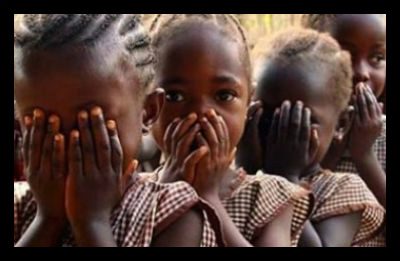
Female genital mutilation (FGM) or female circumcision, has been occurring for hundreds of years in mostly sub-Saharan and northeast African regions. The term “female genital mutilation” encompasses every procedure where partial or total removal of the external female genitalia occurs, as well as any general injury to those organs without a distinct medical purpose.

The practice of FGM is internationally seen as a violation of human rights for women and young girls because it emulates the inequality between genders and represents extreme discrimination against women. On top of this, the following rights are also violated: the right to security, physical integrity, health, freedom from torture and from inhumane treatment–especially when the procedure can result in death.

There are four general classifications of FGM: clitoridectomy, excision, infibulation and an “other” category. Clitoridectomy entails the removal of part of or the entire clitoris and is one of the most common types. Excision is where they remove part of or the entire clitoris and labia minora, and this can be with or without cutting the labia majora. Infibulation includes the reduction of the vaginal opening by cutting and repositioning the labia majora to make a covering, with or without removing the clitoris. The “other” category classifies any other harmful procedures to a woman’s reproductive organs in a non-medical way.

FGM is in no way beneficial to a woman’s health, and in fact, it is harmful in several ways. Short-term effects include hemorrhage, severe pain, tetanus and urine retention. Long-term effects include cysts, recurrent urinary tract and bladder infections, infertility, childbirth complications and newborn deaths. This kind of procedure is mostly done to newborns or girls around 15 years of age that are going through puberty. Today, over 125 million women and girls in the Middle East and Northern Africa have been circumcised. By 2030, it is estimated that a further 86 million young women around the world will experience this procedure as well.

Many officials at UNICEF disagree with the practice of FGM and state it is not necessary in Islamic countries. They say it is a very old practice, traced back to the Egyptian pharaohs, and that the Koran says how humans were created in the perfect way, so changing them is not justified by religion.

Fahma Mohamed, a 17-year-old student that leads the Guardian’s campaign to end FGM, has acquired over 212,000 signatures in her petition against the issue. She has even gotten recognition from the United Nations Secretary General, Ban Ki-moon, who has made it a priority to end FGM because of how it threatens the empowerment of women.

There have been progressive signs in the worldwide campaign to end the practice of female genital mutilation with multiple countries like Kenya, Uganda and Guinea-Bissau adopting laws against it. The girls themselves understand the risks of being circumcised, and mothers who have dealt with the ordeal are fighting more and more to protect their daughters from the same fate. Schools can be directed to address the issue so that the people in these countries can learn about the issue and how to shield their young women from it.

– Kenneth W. Kliesner 

Sources: The Guardian (1), The Guardian (2), World Health Organization
Photo: Girls’ Globe

March 7, 2014
https://borgenproject.org/wp-content/uploads/borgen-project-logo.svg 0 0 Borgen Project https://borgenproject.org/wp-content/uploads/borgen-project-logo.svg Borgen Project2014-03-07 09:25:522024-12-13 17:50:08Ending the Practice of Female Genital Mutilation
Education, Global Poverty

Facebook Offers Online Education in Rwanda

facebook_poverty_education
Facebook plans to bridge the digital divide by connecting the remaining two-thirds of the world without Internet to the growing web of information. As a leader in this “knowledge economy,” CEO Mark Zuckerberg partnered with other industry giants to provide access to those who cannot afford it.

He continues to collaborate with leading companies in the technology field: Ericsson, Nokia, Qualcomm and Samsung. These prominent members formed Internet.org to offer connectivity to more than five billion people. In developing countries, his Internet.org initiative aims provide the following:

More affordable access

Collaborative efforts between industry titans, such as Samsung and Nokia, will expand mobile access. To decrease the cost of delivering data, companies seek to develop low-cost smartphones and partner with internet providers to broaden the reach.

More efficient use of data

Global partners also plan to invest in products to limit the necessary amount of data. Along with “data compression tools,” these products may offer the enhancement of network capabilities and mobile frameworks designed to reduce the data use of applications.

Assist businesses in increasing access

These companies plan to incentivize the development and manufacturing of affordable devices for developing countries. The partnerships also aim to “localize services,” offering more languages on mobile devices.

Education Online: SocialEDU

Internet access alone cannot address underlying issues in developing nations. Zuckerberg, as a result, will apply Internet.org to education inequities.

Referred to as SocialEDU, this program offers open online courses to students through a mobile application integrated with Facebook.

With a Facebook account, young Rwandans could learn from professors at the Massachusetts Institute of Technology and Harvard. Facebook prepares to combat the digital and educational barriers these students face and expand online education in Rwanda.

This social media platform partnered with “the Rwandan government, a telecom company, a device manufacturer and an educational content provider.” Such collaboration allows the for the following:

  •  Free content and data
  •  A supportive government
  •  Low-cost smartphones
  •  Innovative education on a local level

For one year, Airtel plans to provide the education content at no cost to participants.

Christian de Faria, the CEO of Airtel Africa, understands education drives social and economic growth. As a local carrier, Airtel will fuel this growth by offering a data subsidy.

Nokia has also joined this corporate collaboration, offering affordable smartphones to the region. This improves access to the Internet, enabling more students to join the open online classes.

The Nokia Vice President of Mobile Phones, Timo Toikkanen notes, “Our affordable smartphones help people make the transition from simple mobility to more sophisticated experiences. Playing a role in helping students get access to these experiences, such as social education through the SocialEDU initiative, is truly an honor.”

To promote further corporate innovation, the Rwandan government offers:

  • Trade-in rebates
  • Interest rate subsidies
  • Micro-loan guarantees
  • Targeted use of its Universal Service Fund

In support of corporate social responsibility, the government plans to expand its Smart Kigali program. This offers free wi-fi on college campuses and as a result, more students can access the multi-media SocialEDU content. The government will further support this initiative by adapting course materials to the needs of local students.

These educational apps require a large amount of bandwidth. To combat this, Facebook promises to provide technical assistance and support the app in a low-bandwidth region. Partnering with Ericsson, the company must test the app capabilities in a 2G environment.

Tailoring services to meet the needs of regions across the globe is but one part of the equation. Through such innovation and corporate cooperation, the digital divide gradually closes. With the expansion of online education in Rwanda, Facebook and its global partners will propel the country into a knowledge-based economy.

– Ellery Spahr

Sources: The Verge
Photo: PCI Podium

March 7, 2014
https://borgenproject.org/wp-content/uploads/borgen-project-logo.svg 0 0 Borgen Project https://borgenproject.org/wp-content/uploads/borgen-project-logo.svg Borgen Project2014-03-07 04:00:372015-01-06 09:24:39Facebook Offers Online Education in Rwanda
Global Poverty, Women and Female Empowerment

International Women’s Day

International_Women's_Day
International Women’s Day has been observed since the early 1900s, when 15,000 women marched through New York City demanding shorter hours, better pay and voting rights. Since then, women have made great progress, but there is still a long way to go. International Women’s Day celebrates the political, economic and social achievements of women.

Education

Ramatou Sambo, a 12-year-old girl in the West African country of Benin, escaped a forced marriage to continue her education and build her leadership skills. With the help of her friends, Ramatou said no to dropping out of school for marriage. The girls asked for help from the Students’ Mothers Association; Ramatou is currently enrolled in school and planning to continue her education. She has the blessing of her parents, who publicly renounced their plan to marry their daughter at such a young age.

Voice

A Yemeni woman, whose name was withheld to protect her identity, goes to great lengths to have a say in her government. She spends one night per week walking through mountainous terrain to make sure that her government does not neglect her opinions. In a country where women are only half as valued as men, it is extremely brave for women to take a stand to make sure their voices are heard.

Growth

From a young girl playing barefoot in an Ethiopian village to the first black Miss Israel, 21-year-old Yityish Aynaw has taken the world by storm. After losing both of her parents, Aynaw moved to Israel to live with her Ethiopian Jewish grandparents.

Aynaw had always wanted to model but it was her friend who signed her up for the Miss Israel competition. When she won, Aynaw was invited to dine with one of her role models, United States President Barack Obama. Aynaw herself is now a public role model to not only the 125,000 Ethiopian immigrants in Israel, but also to women everywhere.

Community

Another beauty queen is using her celebrity status to help underprivileged children and women in her birthplace, the Democratic Republic of Congo (DRC.) Noella Coursaris founded the Georges Malaika Foundation, which sponsors the education of young girls who have been abandoned or sexually abused. The Foundation financially supports the girls’ school, food, orphanages and uniforms.

Coursaris believes that educating DRC’s young girls will help the entire country progress. “We believe that showing the culture and the creativity of the Congolese orphans and girls through education they will know how to manage themselves — they will have an education, they will have work one day and they will be able to have a voice politically, economically, socially,” she says.

This year’s theme for International Women’s Day is “equality for women is progress for all,” emphasizing the importance of gender equality, empowerment of women, human rights and the eradication of poverty. Women are powerful agents of change in today’s society; in some countries, International Women’s Day is celebrated similarly to Mother’s Day.

– Haley Sklut

Sources: International Women’s Day, Care, United Nations, CNN, CNN, Care
Photo: CSMonitor

March 7, 2014
https://borgenproject.org/wp-content/uploads/borgen-project-logo.svg 0 0 Borgen Project https://borgenproject.org/wp-content/uploads/borgen-project-logo.svg Borgen Project2014-03-07 04:00:202024-12-13 17:50:08International Women’s Day
Children, Developing Countries, Development, Global Poverty

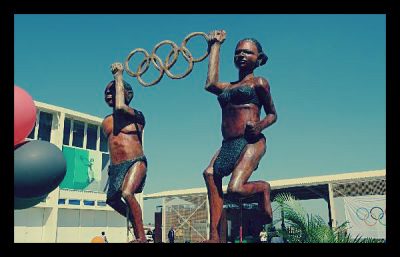
Olympic Youth Development Center Celebrates Third Year

Zambia_Olympics_youth
The International Olympic Committee (IOC) thinks sports are the answer to improving life in developing countries. The IOC’s “Sports for Hope” program provides communities with better opportunities to exercise and learn about the values of Olympism.

The organization believes practicing sports in a safe and welcoming environment has the power to bring hope and positivity to developing countries. Sports have the ability to foster cognitive development, social interactions and community integration. The program involves building multi-functional sports facilities in developing countries.

Besides improving the health of those who participate, the program will also help young athletes actively develop their minds. Other goals of “Sports for Hope” include offering athletes professional training opportunities, organizing sports competitions and providing health services.

The pilot project for the program is in Lusaka, Zambia. In addition to the Olympic Youth Development Center, the project provides community development services, Olympic education, health services and sports administrators’ seminars. The Olympic education covers girls’ empowerment and civic education.

The Center, costing a total of about $10 million, includes outdoor sports fields, indoor multi-purpose courts, a boxing arena, a gym, classrooms, administrative offices, locker rooms and storage rooms. The IOC partnered with the Government of the Republic of Zambia and the National Olympic Committee of Zambia to bring the center to the people of Zambia.

Now in its third year, the Center welcomes about 10,000 children and teenagers each month. The facility offers opportunities for young athletes to train in 16 different sports.

Following the success of The Center in Zambia, the IOC is currently building its second Olympic Youth Development Center, this one in Port-au-Prince, Haiti. The Haitian Center will feature large shaded areas to protect athletes from the heat of the region.

The Centers offer educational classes, including HIV/AIDS programs. Zambia has one of the world’s most devastating HIV/AIDS epidemics; at least one in every seven adults in the country live with HIV. Woman and girls aged 15 years old to 24 years old are most vulnerable to the disease with double the prevalence of men in the same age group. The educational programs on female empowerment focus on positivity, including safe sexual practices to prevent the transmission of HIV/AIDS.

Zambia’s Olympic Youth Development Center is an example of how a sports complex and sports in general, can be so much more than what meets the eye. Zambian Olympian Samuel Matete says, “As an Olympian myself, I look forward to using the Center to provide great opportunities for young people to achieve their dreams.”

– Haley Sklut

Sources: Olympic, Olympic, Olympic Youth Development Center, Avert, YouTube
Photo: Asian Wave Mag

March 7, 2014
https://borgenproject.org/wp-content/uploads/borgen-project-logo.svg 0 0 Borgen Project https://borgenproject.org/wp-content/uploads/borgen-project-logo.svg Borgen Project2014-03-07 04:00:072024-12-13 17:53:51Olympic Youth Development Center Celebrates Third Year
Extreme Poverty, Global Poverty

The World’s e-Dumpsite

wall-e_e-waste_dump
When you were little, you may have wondered where the souls of your deceased pets went, but have you ever wondered where defunct or discarded electronics go? After all, they have to be disposed somewhere. In the Ghanaian capital Accra is the Pearly Gate—or perhaps more appropriately the limbo—of the electronic dead.

Agbogbloshie (altogether now, come on: uh-g-bog-blo-shee), a suburb of the capital, is the world’s largest e-dumpsite. Here, many scrap dealers—mainly economic migrants from the poorest parts of Ghana—are busy toiling their days away dismantling non-figurative tons and tons of gadget remains. When their day at work is over, they return to nearby shantytown called Old Fadama whose sobriquet is—and I kid you not—“Sodom and Gomorrah.”

There are around 80,000 residents in this shantytown of around 3, 000 square feet. In order to retrieve metals and other sellable materials, children and young adults smash and burn these toxic. Operating without any safety equipment, most workers laboring in this horrendous condition die from cancer within their 20s. For many who work on the dumpsite, if they were to get injured or ill, medical care would be beyond their means, translating to s shortened life expectancy.

As for the living condition in “Sodom and Gomorrah,” which is the country’s biggest slum, they are appallingly precarious. Aside from being located adjacently to the world’s biggest e-dumpsite, the community also lacks basic sanitation such as running water, waste collection, and medical care. It is also estimated that around 49% of the inhabitants of this slum do not have any education at all.

Furthermore, due to the infamy brought with extreme impoverished, the district and its inhabitants are highly stigmatized in the Ghanaian society. Perhaps due to this attitude, this poisonous shantytown has long suffered negligence from the society at large. Despite the fact that there is pressure to relocate its inhabitants, an endeavor for which the Ghanaian government has allocated almost $13 million (in USD), this effort has been met with strong resistance from its targets. It is evident that the dwellers view the government’s effort as forced eviction rather than an attempt to improve their living standard.

The case of Old Fadama is not the only instance of extreme poverty and destitution in Accra. The People’s Dialogue on Human Settlement estimates that around 80% of the city’s residents live in slums—though with varying degrees of material inadequacy.

The situation in Agbogbloshie also raises the question of the responsibility that consumers all over the world must take with regard to their electronic consumption. Even though dumping their broken or unfashionable apparatuses in Ghana may provide the residents of Old Fadama with paltry incomes, their health and wellbeing are greatly compromised.

Where then should these electronic devices be disposed? By whom? And, perhaps, the most important questions of all in the cosmos of consumerism—what will be the cost and who will pay for it?

–Peewara Sapsuwan

Photo: Trade 2 Save
Sources:
Think Africa Press, Think Africa Press, The Guardian, e.tv Ghana, GhanaWeb

March 6, 2014
https://borgenproject.org/wp-content/uploads/borgen-project-logo.svg 0 0 Borgen Project https://borgenproject.org/wp-content/uploads/borgen-project-logo.svg Borgen Project2014-03-06 04:00:382024-12-13 17:53:51The World’s e-Dumpsite
Activism, Advocacy, Global Poverty, Philanthropy

Ben Affleck Testifies to the US Senate on DRC

ben_affleck_DRC
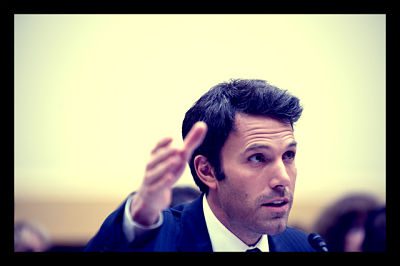
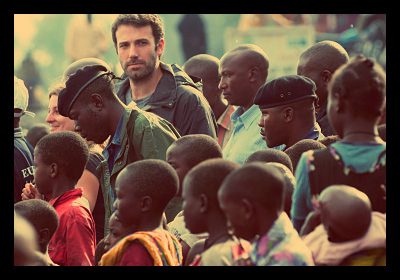
Ben Affleck may be famous for his role in movies such as Argo, The Town and Good Will Hunting, but nowadays he’s making an impact in a new role. Because of his philanthropic involvement in eastern Congo, Affleck went before the Senate Foreign Relations Committee to testify about the Congolese people and the need for U.S. involvement in the region. The hearing provided an opportunity for Affleck to draw increased media attention to the precarious human rights situation in the Democratic Republic of Congo and pressure lawmakers to do more to help.

Affleck first became involved in the Congo through his grant-making and advocacy organization, the East Congo Initiative (ECI). This organization seeks to increase investments in Congolese-led programs that create safe and sustainable communities. Additionally, ECI advocates for increased U.S. involvement in Congo while working against key problems such as rape and sexual violence as well as inadequate education and health resources for children. The East Congo Initiative also seeks to reintegrate former child soldiers back into their homes while leading community-level peace and reconciliation programs.

During his testimony, Affleck highlighted many of the struggles the Congolese people are enduring every day. For instance, Affleck cited UN reports that not only indicate that 2.9 million Congolese had been displaced internally, but also that 428,000 others have become refugees in neighboring countries. These people are being scattered throughout the region by the armed militia known as M23 that had previously taken over the capital of a northern Congolese province. A UN peacekeeping force recently coerced the M23 to surrender and sign a peace agreement. Affleck cited the UN group as evidence that “when the international community acts, and the Congolese government rises to the moment, these challenges are in fact solvable.”

Affleck finished his testimony by sharing a story about one of ECI’s partners, Theo Chocolate. An organic, fair-trade chocolate company, Theo imports more than 50% of its Chocolate from the DRC. Theo Chocolate’s business was connected to small folder farmers in the DRC by ECI and has helped support many of these small Congolese business operations. Through professionally directed investments, ECI was able to help spur economic development in the Congo and improve the lives of several Congolese people.

Through his charitable initiatives with ECI, Affleck is an example of how ordinary Americans can make a difference in influencing Congress and bring attention to the issues they care about. Affleck acknowledged, “I am, to state the obvious, not a Congo expert. I am an American working to do my part for a country and a people I believe in and care deeply about.” Through his actions, Affleck not only successfully drew the attention of the United States Senate to the plight of the Democratic Republic of the Congo, but he also gives hope for a better life to many impoverished people.

– Martin Levy

US Senate Committee on Foreign Relations, East Congo Initiative
Photo: Heritage

March 6, 2014
https://borgenproject.org/wp-content/uploads/borgen-project-logo.svg 0 0 Borgen Project https://borgenproject.org/wp-content/uploads/borgen-project-logo.svg Borgen Project2014-03-06 04:00:202018-01-30 13:14:11Ben Affleck Testifies to the US Senate on DRC
Global Poverty, Health

Physical Inactivity Taking a Toll in Middle East

Fat_Middle_East
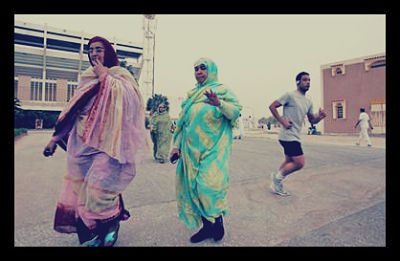
As life expectancy across the globe steadily increases, chronic and degenerative diseases are becoming the norm in many countries, fueled by the rapid rise of obesity due to physical inactivity.

The World Health Organization (WHO) and the Ministry of Health of the United Arab Emirates (UAE) convened in Dubai, UAE on February 23 for a two-day ‘Move for Health’ forum to address just that.

The push for the forum came following recent statistics naming the Middle East as the most unfit region for young adults, age 15 to age 29. It is also the second-most unfit region for adults and the most unfit region for women worldwide. Approximately 50% of Middle Eastern women are deemed physically inactive.

Given what people know about global inactivity trends, these statistics are not so shocking.

Physical inactivity is the fourth-leading risk factor for global mortality, accounting for 3.2 million deaths worldwide. It is also directly responsible for 27% of diabetes cases, 30% of heart diseases, and 21-25% of breast and colon cancer cases. More than 30% of people over the age of 15 are physically inactive, 28%t of them men and 34% of them women.

Given these daunting numbers, it is no surprise that physical inactivity is one of the most pressing global health challenges at present.

Among those who spoke at the forum was Dr. Ala’a Alwan, the regional director of the Eastern Mediterranean Region at the WHO. Noting the severity of the issue, Alwan reiterated the importance of making efforts to recognize physical inactivity as a public health priority by developing national awareness campaigns.

The forum also shed light on a new policy to be implemented in the UAE, as well as 34 other signatory countries. The policy follows a multi-sectoral approach and pledges to reduce physical inactivity levels by 10% by the year 2025. Included is a seven-step program targeting public education, school-wide programs, community programs, healthcare, sports awareness, urban design and transport policies.

Specifically, the policy aims at communicating to the general public the idea that physical activity is not limited to sports. It also includes any bodily movement produced by skeletal muscles that uses energy, from walking or cycling to dancing and swimming.

The WHO and UAE’s Ministry of Health are promoting having people exercise five days each week for 30 minutes to reduce current levels of inactivity across the globe, and in the Middle East.

– Mollie O’Brien

Photo: Niwemang
Sources:
Emirates 24/7, Zawya, World Health Organization

March 6, 2014
https://borgenproject.org/wp-content/uploads/borgen-project-logo.svg 0 0 Borgen Project https://borgenproject.org/wp-content/uploads/borgen-project-logo.svg Borgen Project2014-03-06 04:00:182024-05-26 23:16:11Physical Inactivity Taking a Toll in Middle East
Foreign Policy, Global Poverty, Government, War and Violence

Ben Affleck DRC Testimony

Ben Affleck
Ben Affleck, co-star of the upcoming film Superman vs. Batman, spent time in Washington, D.C. on February 26 discussing the situation in the Democratic Republic of the Congo (DRC). Using his celebrity and networking super powers,  Affleck has previously launched the Eastern Congo Initiative (ECI) in 2010 and has since helped raise awareness and generate public action against violence in the DRC.

While in D.C. Affleck testified in front of the Senate Foreign Relations Committee and Committee Chairman  Sen. Robert Menéndez (D-N.J.). He began his testimony by acknowledging the significant progress made in the last three months. He also thanked Congress, U.S. President Obama and the State Department for their roles in achieving the surrender of M23, the Congolese Revolutionary Army, which has been violently rebelling against the DRC government.

Affleck emphasized that though progress has been made, it is important to stay on track, and that deviating could risk losing the fruit of their hard diplomatic labor.  The ECI created five key points for Congress to ensure sustainable peace in the country:

  1. Urge U.S. Secretary of State John Kerry to ensure DRC special envoy Russell Feingold has the support needed to successfully achieve his mission
  2. Call on U.S. Embassador to the U.N. Samantha Power to support extending the intervention brigade past its March 31 expiration
  3. Foreign Relations committee hold an oversight hearing to consider a sunset to MONUSCO that compels the DRC to follow through and fully reform its security sector
  4. Have Obama directly engage with DRC President Joseph Kabila to encourage him to make good on his critical commitment to long-overdue security sector reforms by establishing a clearly defined road map
  5. Have the U.S. play a pivotal role and robustly participate in multilateral efforts to ensure that the Congolese holds free, fair and timely local and national elections that respect the Congolese constitution including strict observance of term limits
  6. Call upon USAID to scale up its economic development initiatives in Eastern Congo

Ultimately, the ECI believes the DRC can be revived through enhanced security on one side and injecting small amount of development aid throughout pockets of the community. This will allow the Congolese people to stand on their own and create a market economy, eventually joining the global market.

– Sunny Bhatt

Sources: YouTube, Eastern Congo Initiative
Photo: Ryot.org

March 6, 2014
https://borgenproject.org/wp-content/uploads/borgen-project-logo.svg 0 0 Borgen Project https://borgenproject.org/wp-content/uploads/borgen-project-logo.svg Borgen Project2014-03-06 04:00:132018-01-30 13:14:12Ben Affleck DRC Testimony
Page 2048 of 2177«‹20462047204820492050›»

Get Smarter

  • Global Poverty 101
  • Global Poverty… The Good News
  • Global Poverty & U.S. Jobs
  • Global Poverty and National Security
  • Innovative Solutions to Poverty
  • Global Poverty & Aid FAQ’s
Search Search

Take Action

  • Call Congress
  • Email Congress
  • Donate
  • 30 Ways to Help
  • Volunteer Ops
  • Internships
  • Courses & Certificates
  • The Podcast
Borgen Project

“The Borgen Project is an incredible nonprofit organization that is addressing poverty and hunger and working towards ending them.”

-The Huffington Post

Inside The Borgen Project

  • Contact
  • About
  • Financials
  • President
  • Board of Directors
  • Board of Advisors

International Links

  • UK Email Parliament
  • UK Donate
  • Canada Email Parliament

Get Smarter

  • Global Poverty 101
  • Global Poverty… The Good News
  • Global Poverty & U.S. Jobs
  • Global Poverty and National Security
  • Innovative Solutions to Poverty
  • Global Poverty & Aid FAQ’s

Ways to Help

  • Call Congress
  • Email Congress
  • Donate
  • 30 Ways to Help
  • Volunteer Ops
  • Internships
  • Courses & Certificates
  • The Podcast
Scroll to top Scroll to top Scroll to top