• Link to X
  • Link to Facebook
  • Link to Instagram
  • Link to TikTok
  • Link to Youtube
  • About
    • About Us
      • President
      • Board of Directors
      • Board of Advisors
      • Financials
      • Our Methodology
      • Success Tracker
      • Contact
  • Act Now
    • 30 Ways to Help
      • Email Congress
      • Call Congress
      • Volunteer
      • Courses & Certificates
      • Be a Donor
    • Internships
      • In-Office Internships
      • Remote Internships
    • Legislation
      • Politics 101
  • The Blog
  • The Podcast
  • Magazine
  • Donate
  • Click to open the search input field Click to open the search input field Search
  • Menu Menu

Archive for category: Global Poverty

Key articles and information on global poverty.

Global Poverty

2014 Match Against Poverty

The 11th annual United Nations Development Programme (UNDP)  Match Against Poverty concluded on March 5 as soccer stars joined together to fight global poverty. With international income inequality at extremely high levels, the United Nations has enlisted the help of famous soccer players and the world’s most popular sport to garner increased attention to combating poverty.

UN Goodwill Ambassadors Zinédine Zidane and Ronaldo are some of the famous players playing in the charity match against local Swiss team Young Boys Bern in Bern, Switzerland. Other players included Czech Pavel Nedved and the Portuguese Luis Figo. The squad of retired players beat the Young Boys 8-6, with two goals scored by Zidane.

The charity match is expected to raise up to $250,000 through the sale of tickets and broadcasting rights for the game, and two-thirds of the funds taken in will go towards rebuilding the Philippines after the devastating Typhoon Haiyan hit in November 2013 and toward reducing poverty in Brazil.

Proceeds will be allocated towards the UN’s short-term work program, designed to provide enough money to cover basic necessities in the Philippines. The 2012 Match Against Poverty was held in Porto Alegre, Brazil and raised $360,000 to support UNDP projects in the country. The first Match Against Poverty, held in 2003, took place in Basel, Switzerland and raised approximately $1 million.

Soccer continues to be the most popular sport around the world, partly due to its incredible accessibility. Some kids from poor countries simply use paper and string to make a soccer ball while others use balled-up grocery bags. Soccer is capable of joining people together and making people excited about a topic that seems foreign to people living in developed countries. Increased partnerships between the public and private sectors, along with increased partnerships between the public and private sectors with civil society will continue to be the key in reducing global poverty.

– Jeff Meyer

Sources: Independent, Daily Mail
Photo: MSN Sports

March 15, 2014
https://borgenproject.org/wp-content/uploads/borgen-project-logo.svg 0 0 Borgen Project https://borgenproject.org/wp-content/uploads/borgen-project-logo.svg Borgen Project2014-03-15 04:00:312024-06-05 01:57:162014 Match Against Poverty
Global Poverty

Chinese Security: Terrorist Attack in Kunming

A terrorist attack at a train station in Kunming on March 1 that has left 29 people dead and 140 people injured has stirred up anger and fear in China. The group of eight people, including six men and two women, are thought to have been from the Xinjiang region in the Northwest of China.

Reports claim that the knife-wielding attackers initially tried to leave the country through crossing the border in Yunnan Province and later in Guangdong Province. After failing to leave the country, the killers decided to mount a terrorist attack at either a bus or a train station. The suspects are thought to have been radicalized Muslims trying to leave China to join the global jihad.

Chinese authorities shot and killed four of the attackers, while the other four are currently in custody after being caught in Honghe, a county 174 miles away from Kunming.

The attack drew sharp condemnations from both China and the United States. On March 5, at the opening session of the National People’s Congress, a moment of silence was observed for the victims. The leaders in China have promised to fight against terrorism. The U.S. has also called the attack in China an act of “terrorism.”

Observers worry that the Chinese government will simply use this attack as a further reason to continue its brutal crackdown on the ethnic Uighur minority, living predominantly in Xinjiang Province. Tensions between the majority Han Chinese and the minority Uighurs have always been high, and recent attempts by the government in Beijing to integrate China’s Western regions through repression, development and migration of Han Chinese into historically Uighur areas has only exacerbated the situation.

The Chinese government has not been accepting of Uighur culture. Stdudents are not allowed to fast during Ramadan, religious teaching for children is not permitted and Uighur-language education is dying out. Han Chinese now make up two-fifths of the Xinjiang population and control an out-sized portion of its wealth.

One way of reducing violence in China is not to crack down through increased military presence. The answer lies in giving the Uighurs an opportunity to participate in their local culture without fear of reprisal.

– Jeff Meyer

Sources: Washington Post, New York Times, The Economist
Photo: China Daily

March 15, 2014
https://borgenproject.org/wp-content/uploads/borgen-project-logo.svg 0 0 Borgen Project https://borgenproject.org/wp-content/uploads/borgen-project-logo.svg Borgen Project2014-03-15 04:00:022024-05-26 23:18:39Chinese Security: Terrorist Attack in Kunming
Global Poverty, Women

Japan’s Historical Revisionism, ‘Comfort Women’

Japan’s hawkish Prime Minister, Shinzo Abe, has reignited controversy over the conduct of Japanese soldiers during World War II by engaging in historical revisionism. In particular, one area of contention arises when considering the topic of “comfort women” brought from around Japanese-occupied Asia and forced to become prostitutes to please Japanese soldiers.

Although the 1993 statement by Chief Cabinet Secretary Yohei Kano on comfort women admitted coercion by Japanese soldiers into forcing women into prostitution, the topic has been brought to the forefront of international debate recently as Japanese nationalists have started to deny past wartime actions.

Understandably, Abe and other nationalists who appear to be washing over Japanese actions during World War II bother Japan’s neighbors in the region, namely South Korea and China. Japan refuses to offer South Korea official compensation to individuals affected by the “comfort women” controversy.

Certain cities around the United States have also permitted the erection of statues of comfort women to promote awareness of Japanese crimes during the war. In Glendale, California and in Palisades Park, New Jersey, comfort women have already been commemorated. A small victory was won by Korea when a Virginia school board approved textbooks with the name “East Sea” in conjunction with “Sea of Japan” in an atlas depicting the sea between the two countries.

Japan has historically been confident that with the U.S. as an ally, the country would stand by the position of the Japanese government regarding comfort women. But in 2007, Congress adopted a resolution condemning the practice of taking comfort women and pressed that the government of Japan should “formally acknowledge, apologize, and accept historical responsibility in a clear and unequivocal manner for its Imperial Armed Forces’ coercion of young women into sexual slavery.”

Controversy has also arisen in China over the comfort women. In response, China has approved the building of a memorial museum to Ahn Jung-Geun, the person who assassinated Itoh Hirobumi, one of the first prime ministers of Japan. In China and Korea, he is seen as a hero but in Japan he is labeled as a terrorist.

If Japan’s historical revisionism continues, tensions will continue to rise with its Asian neighbors and Japan will find itself increasingly isolated from the protection of its major ally, the U.S.

– Jeff Meyer

Sources: The Diplomat, MOFA, GovTrack
Photo: Los Angeles Times

March 14, 2014
https://borgenproject.org/wp-content/uploads/borgen-project-logo.svg 0 0 Borgen Project https://borgenproject.org/wp-content/uploads/borgen-project-logo.svg Borgen Project2014-03-14 09:02:232024-06-05 01:57:16Japan’s Historical Revisionism, ‘Comfort Women’
Activism, Advocacy, Global Poverty

Twittersphere: International Women’s Day

The month of March, along with the end of winter, is a time to reflect and appreciate all the women in our lives and throughout the world. Women’s History Month began in 1987 after the National Women’s History Project petitioned Congress and it has been reauthorized or designated every year since.

It is critical to recognize the importance of women throughout the world. They are the keystone to every healthy family, often taking on both the roles of mother and caregiver while also contributing to the household income base. They are teachers, CEOs, mothers, sisters, aunts, military personnel, athletes and just about every other job under the sun.

March 8 was International Women’s Day and people from all over the globe took to Twitter to voice their support and raise awareness for women’s issues. Here are some of the top tweets:

@OneCampaign: Happy International Women’s Day! Find out why women are the secret weapon in ending poverty https://ow.ly/iyrZ5

@Oxfam: Women perform 66 (percent) of the work, produce 50 (percent) of the food, but earn only 10 (percent) of the income & own 1 (percent) of the property #IWD pic.twitter.com/r9M4ShlUjf

@stephRWolf: International Women’s Day 2014: What kind of world do YOU want to build? https://cnn.it/1jZBHvy via @cnni #CNNwomen

@JuxDotCom: Happy International Women’s Day from Jux. Because without women who would we be, what would we become, when would we eat, why would we live?

@PREVNet: Happy International Women’s Day! Let’s reflect on how we treat the girls & women in our lives. Are we acting with kindness? We can do better

@YWCA_Canada: Happy International Women’s Day! Let’s celebrate how far we’ve come, but advocate for women’s rights every day. #IWD pic.twitter.com/aEnthxbs8K

@NadhieraYoung: Happy International Women’s Day! Be yourself, bcs you are already beautiful just the way you are :)

@AJLucaci: “There is only one known cure for poverty, known colloquially as ‘The Empowerment of Women'” Happy International Women’s Day, everyone!

@kassiehernandez: Happy International Women’s Day, Ladies! Let’s continue empowering women and eliminate gender inequality https://3bl.me/kde948 #IWD

@ECA_AS: Meet the 10 extraordinary recipients of the 2014 Int’l Women of Courage Awards: https://owl.li/ucTfL #IWOC #IWD

Studies have shown that women are vital to the health of a society. Increases in women’s education help the entire family make better choices and lead healthier lives. We cannot thank them enough for all that they give and we as a society must stay vigilant of the continued struggle women face throughout the world.

– Sunny Bhatt

Sources: Twitter, Women History Month
Photo: Presse Box

March 14, 2014
https://borgenproject.org/wp-content/uploads/borgen-project-logo.svg 0 0 Borgen Project https://borgenproject.org/wp-content/uploads/borgen-project-logo.svg Borgen Project2014-03-14 08:24:292024-05-26 23:19:17Twittersphere: International Women’s Day
Global Poverty, Human Rights, Inequality, Politics and Political Attention

Paul Ryan’s Fight Against Anti-Poverty Programs

Rep. Paul Ryan published a 204-page report that criticizes the U.S. government’s anti-poverty programs and proposes cuts to welfare expenditures.

Ryan (R-Wis.), who is also the chairman of the House Budget Committee, believes Washington should focus on reforming the welfare program and recommended “a sweeping overhaul of social programs,” according to the Washington Post.

“There are nearly 100 programs at the federal level that are meant to help, but they have actually created a poverty trap,” said Ryan. “There is no coordination with these programs, and new ones are frequently being added without much consideration to how they affect other programs.”

Moreover, he continued, “This document is a precursor not only of our budget but of our larger project to introduce poverty reforms over the course of this year. The president may focus on inequality because he can’t talk about growth. We’re focused on upward mobility, speaking directly to people who have fallen through the cracks.”

The following day, however, President Obama unveiled a $3.9 trillion budget for next year. According to Investopedia, Obama’s budget would expand the Earned Income Tax Credit (EITC) to help a million Americans get out of poverty.

“Under the new plan workers would get 15.3 cents credit for each dollar earned up to $6,570, for a maximum credit of $1,005,” said Investopedia. “That amount would be set until the worker earned $18,070.”

Unfortunately for Ryan, his report was not well received by many economists. Jared Bernstein said that it is misleading to tell the American people that anti-poverty programs result in even more poverty.

“While much of the commentary suggests that federal antipoverty efforts have failed and are fraught by wasteful duplication, the evidence – some of which is in here and much of which is conspicuously missing [sic] – belies that facile claim,” said Bernstein.

In the meantime, it is uncertain which direction Washington will take to address the growing inequality in America’s biggest cities as well as the poverty that is already present throughout the country. However, many economists who have more experience than Ryan believe that his report is inaccurate.

– Juan Campos

Sources: The Washington Post, Media Matters
Photo: Mother Jones

March 14, 2014
https://borgenproject.org/wp-content/uploads/borgen-project-logo.svg 0 0 Borgen Project https://borgenproject.org/wp-content/uploads/borgen-project-logo.svg Borgen Project2014-03-14 04:00:132024-12-13 17:50:10Paul Ryan’s Fight Against Anti-Poverty Programs
Advocacy, Development, Global Poverty, Human Rights

Human Rights Council Fights for Advocacy Rights

Human Rights Council
The Human Rights Council has recently called for its 25th meeting, which will run in Geneva, Switzerland until March 28. The specific focus of this meeting is cited to be the protection of human rights advocates themselves, as a pursuit of rights for those members of civil society who pursue justice.

This uniquely focused meeting seems to be motivated by current events and will include commissions of inquiry on the Democratic People’s Republic of Korea, Syria, South Sudan and the Central African Republic. It is especially pertinent considering the current violent situations in the Ukraine and Venezuela, which have both separately seen similar human rights abuses against advocates.

More general presentations on topics such as genocide and corporal punishment are also expected.

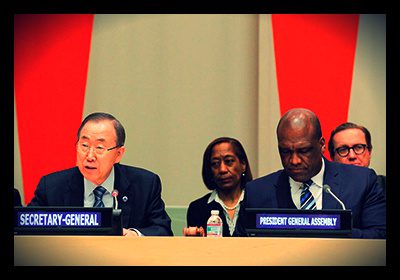
Citing the United Nations’ responsibility to support those who contribute to its work, Secretary-General Ban Ki-Moon stated at the opening that, “No one should have to risk their life standing up and speaking out on violations of human rights and international law.”

The Human Rights Council is a subset of the U.N. and an amalgamation of 47 member states, created in 2006 as a means to exercise the full extent of the U.N.’s movement to protect people globally against tyrannical and abusive governance. Its meetings are known for their thematic organization around various timely issues as well as a complain procedure allowing individuals and organizations to bring attention to various situations of abuse.

The council is responsible for the “Rights Up Front” campaign, launched to ensure the status of human rights as the U.N.’s top priority. Additionally, the uniquely internal focus of the current meeting is hoped to set the stage for the new international development agenda, following the approach of the Millennium Development Goal’s 2015 deadline.

According to an official statement made at the 4th meeting in 2007, the council is founded around the philosophy that “All victims of human rights abuses should be able to look to the Human Rights Council as a forum and a springboard for action.”

In addition to the rights of political activists, the Council hopes to discuss impunity against perpetrators, and the marginalized voices of those who live in poverty. Members hope that these will be essential tools in attaining the rights of advocates, who often operate under oppressive fear and silence within civil society.

U.N. High Commissioner of Human Rights Navi Pillay stressed the importance of advocacy as a public force to ensure security, expressing that, “We need to work together to ensure the space, voice, and knowledge of civil society is nurtured in all countries.”

– Stefanie Doucette

Sources: Women’s News Network, OHCHR, Washington Post
Photo: ISN Blog

March 14, 2014
https://borgenproject.org/wp-content/uploads/borgen-project-logo.svg 0 0 Borgen Project https://borgenproject.org/wp-content/uploads/borgen-project-logo.svg Borgen Project2014-03-14 04:00:092024-12-13 17:50:09Human Rights Council Fights for Advocacy Rights
Development, Global Poverty, Government

Sustainable Irrigation and Development in India

Experiencing a period of drought on a normal basis before the rainy season, the farmers of India often find themselves at the mercy of nature as well as heavily relying on diesel oil in order to irrigate their farms. Not only that, it is estimated that only 32% of India’s farms are irrigated.

For this reason, over the next five years, the government of India is aiming to reduce this reliance by installing solar energy pumps in rural India. This project is also expected to protect the level of groundwater in the Subcontinent.

The investment needed to initiate this clean and sustainable alternative will cost around $1.6 billion, which will be channeled into replacing non-solar pumps with 26 million solar powered ones to provide access to sufficient electricity to farmers in certain areas of the country wherein electricity resource is still insufficient.

If this project proves to be a success, it will enable India to save $6 billion annually in energy subsidies handed out to farmers, a sum that could go a long way in terms of rural development.

This will also allow farmers—many of whom are poor—to be able to water their plants with no operation cost at all. Thus, this project will not only help the state to save, it will also expand the profit margin of rural farmers of the world’s second most populous country. In certain states, such as Punjab, the state authorities are already helping farmers to acquire necessary materials for the installment of drip-irrigation watering system via subsidization.

The drip-irrigation method, also known as the micro-irrigation method, is an agricultural technique used in order to curb both the use of fertilizer as well as water by trickling water in a very small amount directly to the roots of the plants. Thus, in addition to the solar pump the investment of which will be disseminated countrywide, in the southern state of Kerala, another $62 million is going to be spent to put in place drip-irrigation infrastructure.

Once complete, it will allow more people access to water on their farms regardless of where they are, as water will be dispensed equally throughout a larger area.

With the agricultural sector commanding 51% of India’s total workforce but nevertheless providing India with only 15.7% of the country’s gross domestic product (GDP). This indicates a huge disparity when more than half of the country is in a sector that earns less than a fourth of the total GDP. Thus, with the expanded profit margin and more government’s attention in the sector India and its dynamic economic growth will—in the foreseeable future—be able to lift more people out of poverty.

– Peewara Sapsuwan

Sources: We Demain, Bloomberg, India Text, Irrigation Direct, Bloomberg Sustainability, World Bank
Photo: Ingetje Tadros

March 14, 2014
https://borgenproject.org/wp-content/uploads/borgen-project-logo.svg 0 0 Borgen Project https://borgenproject.org/wp-content/uploads/borgen-project-logo.svg Borgen Project2014-03-14 04:00:002024-12-13 17:50:09Sustainable Irrigation and Development in India
Global Poverty, Water

February Brings Dry Spell to Singapore

February 2014 was the driest month in Singapore since 1869. Only seven brief sprinkles fell, giving the area an underwhelming .2 mm of rain. Malaysia has also felt the drought’s impact, as the state of Selangor and the country’s capital, Kuala Lumpur, have begun water rationing.

Singapore relies heavily on Malaysia for its water supply, importing nearly 60% of its water from the region. Under a 1962 water agreement, Singapore imports most of its water from the Malay state of Johore. The agreement has caused tension between the two countries in the past, and Singapore has decided not to pursue a renewal of the agreement past its 2061 expiration.

Therefore, Singapore has increasingly focused on improving its water self-sufficiency. Currently, Singapore’s Minister for the Environment and Water Resources estimates that Singapore could potentially provide up to 55% of the country’s water needs. The government has increasingly emphasized building up desalination and recycled water technology while also pushing to increase the country’s water catchment area.

Unfortunately, Singapore’s current water supply does not stack up to the potential effects of the current drought. The National Environment Agency predicts the dry spell will continue into early March. With the poor weather set to continue in both Singapore and Malaysia, water consumption in the area must decrease accordingly.

Resultantly, the Singaporean government has started a public campaign urging water conservation. It has encouraged citizens to cut down on washing cars, irrigating plants and to be more conscious about switching off water faucets and fountains in between use.

Through increasing the water consciousness of its citizenry, Singapore hopes to effectively combat its water shortage.

As of yet, the drought in Singapore has not had a profound effect on the lives of Singaporeans. However, it has reaffirmed Singapore’s vulnerability to water shortages and droughts and demonstrated the need for water conservation initiatives within the city-state. If Singapore will achieve water-self sufficiency it must prepare itself to withstand episodes such as the current drought.

–Martin Levy

Sources: Today Online, BBC News, NEA, Singapore Infopedia
Photo: Brohenson Files

March 14, 2014
https://borgenproject.org/wp-content/uploads/borgen-project-logo.svg 0 0 Borgen Project https://borgenproject.org/wp-content/uploads/borgen-project-logo.svg Borgen Project2014-03-14 04:00:002024-05-26 23:18:23February Brings Dry Spell to Singapore
Global Poverty

Poverty and Pollution in Bulgaria

As recent events in the Ukraine have shown, former soviet satellites continue to struggle for self-determination and modernization. Often torn between ties to the European Union and Russia, the former Eastern Bloc lags behind the rest of the continent in major areas of development—and none more so than Bulgaria.

Even though Bulgaria is now a member of the E.U., the nation still struggles with high rates of unemployment and catastrophic pollution. As of 2013, the European Environment Agency reports that four of the top six most polluted cites in Europe are in Bulgaria. The tremendous amount of air and water pollution is particularly damning for Bulgaria’s most vulnerable citizens, who are forced to brave the environment in order to scrape by.

In fact, it seems that poverty itself is fueling pollution, creating a perpetual cycle. Old, fuel-inefficient cars, outmoded factories and desperate fuels sources for warmth in the winter (such as raw coal and tires) make Bulgaria’s air the most polluted in Europe.

Beyond environmental factors, the transition to free markets has had troubling societal impacts that often break along ethnic lines. Corruption and organized crime have a firm grasp in the cities, Britain’s Daily Express reports, while the Roma minority lives on the outskirts in abject poverty. The scenes described in the Express from outside the capital city of Sofia bring to mind the most abysmal realities of poverty from across the globe.

The Roma, an ethnic minority, have long been persecuted on the continent, and their living conditions in Bulgaria attest to just how much the country struggles to keep up with the times.

Unemployment in Bulgaria is reported at 12 percent. The BBC suggests, however, that it may be much higher than that. A number of sources claim that governmental corruption is so pervasive that very little of state provided data can be trusted.

In response to the depressed economic conditions, a rash of self-immolations were reported. Several men of varying ages are said to have lit themselves on fire in protest of their living conditions.

For the E.U., these catastrophes hit close to home. The fact that the E.U. has now incorporated Bulgaria has turned Europe’s attention to the humanitarian crisis on their doorstep. With major Western news outlets now reporting on Bulgaria’s woes, perhaps international support will be able to generate some relief for the ailing nation.

– Chase Colton

Sources: Express, Daily Times, BBC
Photo: Plastic Pollution Coalitio

March 13, 2014
https://borgenproject.org/wp-content/uploads/borgen-project-logo.svg 0 0 Borgen Project https://borgenproject.org/wp-content/uploads/borgen-project-logo.svg Borgen Project2014-03-13 16:14:462019-11-05 14:23:29Poverty and Pollution in Bulgaria
Gender Equality, Global Poverty

Poverty in Iraq Dangerous for Pregnant Women

A recent report called Iraq “one of the worst places for children in the MENA region.” The past few decades in Iraq have been marked by warfare and human rights violations. Currently, 3.5 million Iraqi children are living in poverty and over 1.5 million are considered malnourished. Iraq is also a dangerous place for pregnant women and infants, with approximately 100 infants dying per day, according to a Global Research report.

Dozens of pregnant Iraqi women are being admitted to the hospital with life threatening conditions every month. According to UNICEF, maternal mortality rates in the war torn country have increased by 65 percent since 1989, a number that is much higher than neighboring countries. Until political conditions improve and pregnant women have more access to healthcare and basic necessities, doctors in the region fear the problem will get worse.

Dr. Mayada Youssif, a gynecologist in Baghdad, attributed the increasing mortality rate to ‘insecurity and poverty that Iraqis live with due to conflict.’

“Insecurity has forced pregnant women to stay at home during their whole period of pregnancy,” Youssif says, “and they look for a doctor only when they are feeling really ill or feel, near to delivery time, that conditions have become too dangerous.”

UNICEF recommends three basic needs that should be available for pregnant women and their babies: good nutrition, access to antenatal care and access to emergency care if a problem were to arise. All of these services are impeded in Iraq because of limitations such as curfews and a fear of being subject to violence. What often results  is that help isn’t sought out until it is too late.

That is exactly the situation in which Salah Hussein found himself when his wife died during childbirth. The doctors attributed her death to a combination of malnutrition and the effects of constant stress from living in a war-torn country. Now Hussein faces having to raise his child alone with the help of his extended family. Malnutrition is still a problem, as he cannot afford formula for his child.

Even if Iraqi women can get to a doctor, many hospitals are ill-equipped to deal with common pregnancy issues such as anemia. There is a rising call to increase investment in the health department to combat rising mortality rates. The main issue is the lack of specialized care that is available to all pregnant women. Some live in areas where they cannot physically get to a doctor, or worse, there is not even a doctor in the area.

Global Research says that the problem will not be fixed until governments that are actively and militarily involved in the country use their resources to address the problem. Until action is taken to improve women’s health in Iraq, we will continue to see the same problems. Global Research has recommended that this issue be taken up by the international community in order to work together to find a solution.

– Colleen Eckvahl

Sources: IRIN News, Centre for Research on Globalization
Photo: Articlesbase

March 13, 2014
https://borgenproject.org/wp-content/uploads/borgen-project-logo.svg 0 0 Borgen Project https://borgenproject.org/wp-content/uploads/borgen-project-logo.svg Borgen Project2014-03-13 16:09:052024-05-26 23:19:08Poverty in Iraq Dangerous for Pregnant Women
Page 2030 of 2162«‹20282029203020312032›»

Get Smarter

  • Global Poverty 101
  • Global Poverty… The Good News
  • Global Poverty & U.S. Jobs
  • Global Poverty and National Security
  • Innovative Solutions to Poverty
  • Global Poverty & Aid FAQ’s
Search Search

Take Action

  • Call Congress
  • Email Congress
  • Donate
  • 30 Ways to Help
  • Volunteer Ops
  • Internships
  • Courses & Certificates
  • The Podcast
Borgen Project

“The Borgen Project is an incredible nonprofit organization that is addressing poverty and hunger and working towards ending them.”

-The Huffington Post

Inside The Borgen Project

  • Contact
  • About
  • Financials
  • President
  • Board of Directors
  • Board of Advisors

International Links

  • UK Email Parliament
  • UK Donate
  • Canada Email Parliament

Get Smarter

  • Global Poverty 101
  • Global Poverty… The Good News
  • Global Poverty & U.S. Jobs
  • Global Poverty and National Security
  • Innovative Solutions to Poverty
  • Global Poverty & Aid FAQ’s

Ways to Help

  • Call Congress
  • Email Congress
  • Donate
  • 30 Ways to Help
  • Volunteer Ops
  • Internships
  • Courses & Certificates
  • The Podcast
Scroll to top Scroll to top Scroll to top