• Link to X
  • Link to Facebook
  • Link to Instagram
  • Link to TikTok
  • Link to Youtube
  • About
    • About Us
      • President
      • Board of Directors
      • Board of Advisors
      • Financials
      • Our Methodology
      • Success Tracker
      • Contact
  • Act Now
    • 30 Ways to Help
      • Email Congress
      • Call Congress
      • Volunteer
      • Courses & Certificates
      • Be a Donor
    • Internships
      • In-Office Internships
      • Remote Internships
    • Legislation
      • Politics 101
  • The Blog
  • The Podcast
  • Magazine
  • Donate
  • Click to open the search input field Click to open the search input field Search
  • Menu Menu

Archive for category: Global Poverty

Key articles and information on global poverty.

Global Poverty

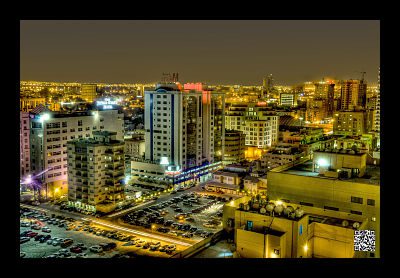
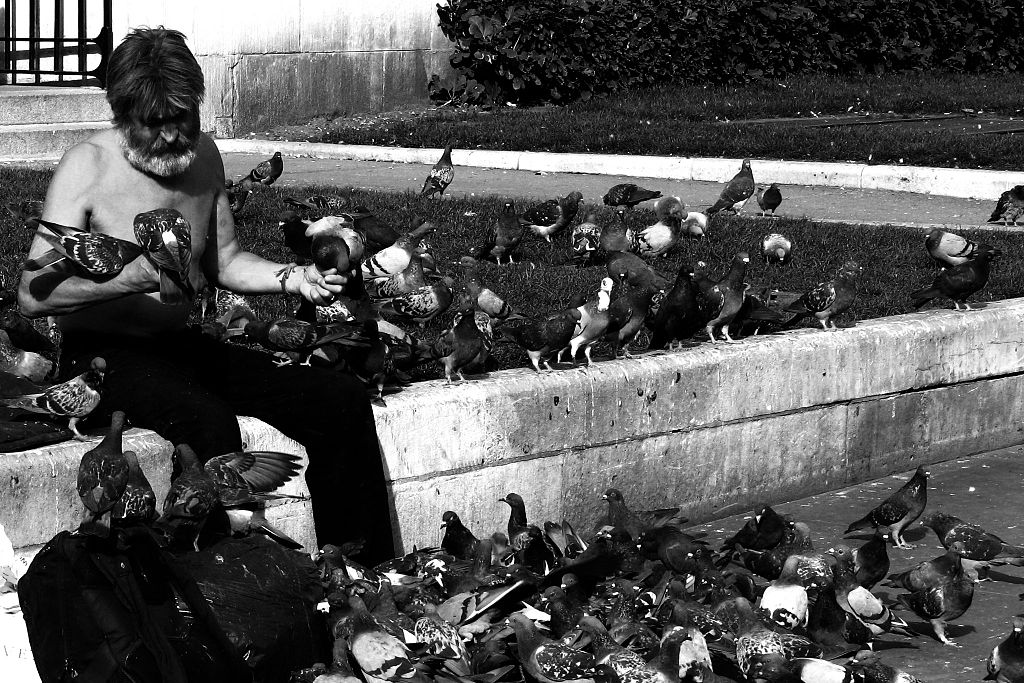
Poverty in Naples, Italy

poverty in naples
There is truth to the common stereotype that Naples, Italy is a poor and dirty city ruled by the mafia. Indeed, organized crime and political corruption have hampered the city’s development for decades.

Despite being a major tourist destination, Naples is one of the poorest cities in Europe. The city has an unemployment rate of about 28 percent, and some estimates even put the rate as high as 40 percent.

Across all of Italy, the economic situation has been on the decline. Ever since the 2008 recession struck, Italy has lagged behind the rest of Europe by a significant margin.

The poverty rate is the highest it’s been in at least 16 years. And matters are far worse in the south — where Naples is located — than in the richer north. Between 2011 and 2012 alone, poverty rose in the north from 4.9 percent to 6.2 percent compared to 23.3 percent to 26.2 percent in the south.

A recent study in Naples showed that only three percent of the population said that it was “easy to find a good job.”

Italy’s economic downfall has hit poor Neapolitans harder than most. The recession has forced a series of spending cuts. In 2010, the Campania region ended its minimum welfare program which delivered over 130,000 families into the clutches of poverty.

And those few Neapolitans who can find legitimate work have found the pay insufficient to support a family. The result has been a shocking increase in child labor.

Thousands of Neapolitan children have been forced to work just to keep their families afloat.

After his father suddenly died of cancer, 10-year-old Gennaro had to drop out of school and begin work as a shop assistant. He wakes up every morning at 7 a.m. and begins his work carrying boxes and crates for less than a euro an hour — which is significantly more than his mother earns.

He and his family live in a tiny 35-square-meter apartment in downtown Naples. Their story is becoming an increasingly common one for the area.

Between 2005 and 2009, 54,000 children in the Campania region dropped out of school, presumably to begin working. Of those kids, 38 percent were under 13 years of age.

As bad as child labor is, the more menacing case is when the kid drops out of school to work for the local mafia. The Camorra crime family — which runs Naples’ lucrative and dangerous black market — is infamous for employing child soldiers.

The mafia in Naples has built up an army of young pickpockets and enforcers. Take for example 12-year-old Marco, who was drafted as a pickpocket when his family fell into debt with mafia loan sharks. Camorra made Marco drop out of school and join their ranks, where he then became addicted to cocaine.

The crime-ridden state of affairs in Naples has made one in five locals say they “rarely or never felt safe” in their neighborhood.

While Italy’s economic crisis has played a large part in the misfortunes of Naples, it is the rampant organized crime that is primarily to blame. For a long-term, sustainable fix to poverty in Naples, the mafia’s grip on the city’s politics must be eliminated.

– Sam Hillestad

Sources: European Commission, Reuters, VoxEurop
Photo: Flickr

August 14, 2014
https://borgenproject.org/wp-content/uploads/borgen-project-logo.svg 0 0 Borgen Project https://borgenproject.org/wp-content/uploads/borgen-project-logo.svg Borgen Project2014-08-14 10:00:032024-05-27 09:21:17Poverty in Naples, Italy
Development, Food & Hunger, Global Poverty

Food Security in Cambodia

A series of 88 hydroelectric dams to be built in the lower Mekong basin of Cambodia by 2030 is projected to put Cambodia’s largest source of food at risk. Cambodians eat 168 more grams of fish daily than the world’s average. The construction of the dams could cut the freshwater fish population up to 42 percent.

The growing demand for electricity in Cambodia, Laos, Thailand, China and Myanmar has prompted multi-national developers to begin planning 88 hydroelectric dams. Eleven of these dams will be located on the Mekong river mainstream and the 77 remaining dams will be on the various tributaries of the river.

“Cambodia is going to pay the highest price for dam development basin-wide, to the point of affecting the food security of its 80 percent rural population,” warned Eric Baran, a specialist with the WorldFish Centre.

The Agriculture, Forestry and Fisheries Minister, Ouk Rabun, reported that Cambodia takes approximately 528,000 tons of fish from freshwater fisheries each year.

Fish is the cheapest food option for Cambodians. Consumed far more frequently than beef or poultry, fish is the primary source of protein for a population where a fifth of the citizens live below the poverty line of $17 U.S. dollars a month.

More than 40 percent of national production — about 300,000 tons of fish per year — comes from Tonle Sap Lake. Located in northeastern Cambodia, Tonle Sap is the most productive inland fishery in the world. WorldFish estimates that 1.5 million Cambodians make 95 percent of their income directly from the lake.

Cambodia has exceeded the Millennium Development Goal poverty target, and the poverty rate has halved, from 53 percent in 2004 to 20.5 percent in 2011.

However, those who have escaped poverty are still vulnerable to slight economic fluctuations. Neak Samsen, Poverty Analyst of the World Bank in Cambodia warns, “the loss of just $0.30 (US) per day in income would throw an estimated three million Cambodians back into poverty, doubling the poverty rate to 40 percent.”

The proposed site for the dam construction is the Mekong basin. Of the fish normally caught in the basin, the Mekong River Commission (MRC) found that at least 39 percent are migratory.

Building dams in the Mekong would obstruct the migratory fish from swimming between the basin and Tonle Sap.

According to the U.N. World Food Program’s country director for Cambodia, Edith Heines, “The reduction of fish stocks due to the construction of the dams could have serious implications on the health, and specifically the well-being of malnourished children under five.”

The World Bank projects future generations of Cambodians will rely more heavily on aquaculture and rice field fisheries to meet their fish consumption needs.

However, this change in food source has implications for Cambodians living in poverty, because “the poorest people will not be able to simply shift to different agriculture practices without reallocating water, building infrastructure, or exploiting other water sources.”

Although government officials argue that the money gained from the dams will go toward agricultural development, there have been no guarantees and the impoverished in Cambodia may likely be the ones to suffer the greatest losses.

– Grace Flaherty 

Sources: IRIN, The World Bank
Photo: IRIN

August 14, 2014
https://borgenproject.org/wp-content/uploads/borgen-project-logo.svg 0 0 Borgen Project https://borgenproject.org/wp-content/uploads/borgen-project-logo.svg Borgen Project2014-08-14 08:00:352024-05-27 09:20:55Food Security in Cambodia
Global Poverty

10 Facts About International Disaster Relief

Disasters are indiscriminate when they strike. They can be anywhere, in any country, at any time and they have devastating effects on the communities and countries they touch. Throughout the world, nearly 25.8 million people are affected by a natural disaster each year. This number is only increasing due to effects of climate change, which increases the severity and destruction caused by these disasters.

In the aftermath, communities can face difficult long-term issues such as drought, famine and disease. International relief must not only address the direct effects of disasters, but also the long-term rebuilding efforts that will mitigate the communities from falling into other disasters like disorder, conflict and violence.

  1. Disaster relief addresses everything from hurricanes and earthquakes to conflict and famine.

Disaster /noun/: something that happens suddenly and causes much suffering or loss to many people

The definition of a disaster includes much more than natural events like earthquakes, tsunamis, fires and floods. Other events like a plane crash, famine, AIDS, disease and war are all disasters that warrant international disaster relief.

  1. Disasters are costly on many levels.

Between 2000 and 2012, natural disasters caused $1.7 trillion in damage and affected 2.9 billion people worldwide. During that time, 1.1 million people were killed as a result of natural disasters. With this much destruction, humanitarian disaster relief is crucial for helping communities rebuild.

  1. Climate change, growing populations and environmental degradation all contribute to the increase in frequency and severity of disasters around the world.

The communities that are most prone to natural disasters are often the ones that are least able to cope with the effects. Just as climate change will most severely affect those contributing to it the least, natural disasters will disproportionally affect people living in disaster-prone areas around the world.

  1. There are a multitude of reputable international agencies that engage in disaster relief.

Organizations such as Relief International, Mercy Corps, International Rescue Committee, Lutheran World Relief, Catholic Relief Services, International Orthodox Christian Charities, United Nations High Commission for Refugees and Office of U.S. Foreign Disaster Assistance (OFDA) are just some of many organizations that provide services and resources when disasters strike around the world.

  1. The Office of U.S. Foreign Disaster Assistance (under USAID) is the main U.S. office that responds to disasters around the world.

On average, OFDA responds to approximately 70 disasters in 56 countries every year. These include everything from volcanoes and floods, to drought and conflict. The office coordinates with USAID as well as with regional government offices to address the needs of those affected by disasters.

  1. The International Committee of the Red Cross is the oldest and most prominent disaster relief organization.

Founded in 1863, ICRC has become one of the most important relief agencies in the world. ICRC addresses not only the immediate disaster effects, but also the long, drawn-out effects that tend to arise afterward: competition for resources, migration, urbanization and environmental degradation. Disaster relief goes beyond just rebuilding the broken infrastructure, but on to addressing longer-term issues.

  1. Competition between organizations can be a problem when responding to disasters.

For many years, despite the good intentions of many organizations in the international community, whenever disaster struck, competition would often ensue between NGOs, and inefficiencies in providing aid would become a major problem.

In response to this, following the 1994 genocide in Rwanda, The Sphere Project along with the U.N. and 400 other NGOs came together and created the Humanitarian Charter and Minimum Standards in Humanitarian Response handbook.  The handbook provides minimum performance guidelines and standards that must be met by NGOs working in a disaster area in order to be most effective.

  1. There are 6 internationally agreed upon core standards for disaster relief.

The Sphere Project created the six standards to serve as guidelines for how organizations should approach their humanitarian responses whenever they work in a disaster hit community. Adhering to the standards increases the chances that aid will be most effective and efficient. The standards are:

  • People-centered humanitarian response
  • Coordination and collaboration
  • Assessment
  • Design and response
  • Performance, transparency and learning
  • Aid work performance
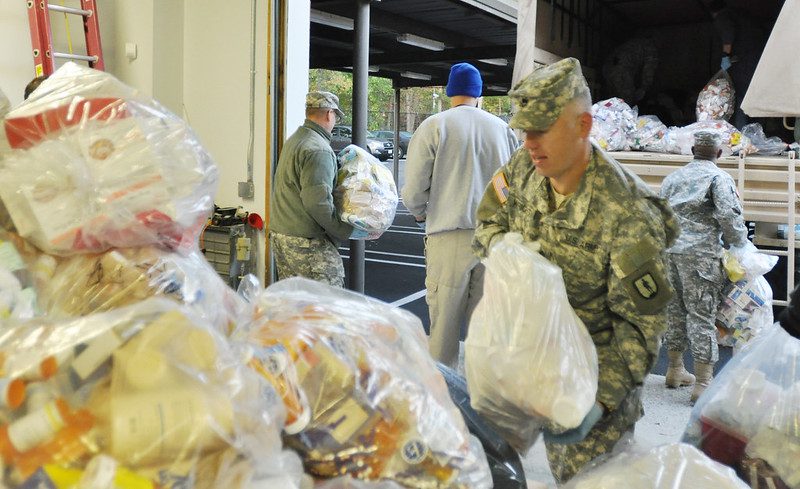
  1. The best way to help victims of international disasters is not by collecting goods, but by giving financial donations.

Cash contributions allow relief organizations to purchase what is most needed – without transportation or storage costs added on. By providing a monetary donation, relief supplies can be bought near or at the disaster site, which decreases the time it takes for relief to reach the victims, while also stimulating the local economy. If cash is the preferred method for agencies, it is important that those contributing feel comfortable with the organization. Cash has a much greater impact than goods, so it is a vital part of relief efforts.

  1. Small or large, all donations make a difference

Even a small amount of money can help purchase life-saving antibiotics for disaster victims. In Haiti, $5 buys a life-saving course of antibiotics. In Zimbabwe, $10 provides regular healthcare for 90 people in one year. In Java, $50 provides 1-month food supply to volunteers rebuilding homes for earthquake victims.

– Andrea Blinkhorn

Sources: ICRC, PSAid, UN, Global Corps, Red Cross, Do Something, Encyclopedia.comDisasterium
Photo: Red Cross

August 13, 2014
https://borgenproject.org/wp-content/uploads/borgen-project-logo.svg 0 0 Borgen Project https://borgenproject.org/wp-content/uploads/borgen-project-logo.svg Borgen Project2014-08-13 08:00:402024-12-13 17:51:0510 Facts About International Disaster Relief
Activism, Charity, Children, Global Poverty, Health

Zachary Levi, Comic-Con Support Operation Smile

While many of the conversations about the San Diego Comic-Con (SDCC) have been about the latest updates and footage from some of the hottest movies, some of the guest panels were doing good deeds.

Zachary Levi, from the television show, Chuck, used the opportunity to entice the fans as well as raise funds for Operation Smile. Some of the “Conversations for a Cause” panels hosted by Levi’s company, The Nerd Machine, included Badass Women, the cast of Orphan Black, and a conversation with Nathan Fillion, among several others. Last year, Nerd HQ, an offshoot of The Nerd Machine, raised around $215,000 for Operation Smile and this year they beat previous fundraising efforts.

Operation Smile is a non-profit organization that helps to pay for cleft palate surgeries in underprivileged areas. The deformity has a high prevalence rate and cleft lip and palates can inhibit a child’s ability to eat, speak, hear and breathe. Unfortunately, like many disabilities, cleft palate is incredibly stigmatized and many people born with it have trouble finding employment.

While Nerd HQ has garnered a reputation for innovation and technology in the four years since its inception, it is also gaining a philanthropic name. Since its partnership with Operation Smile, the non-profit estimates that Nerd HQ has raised over $400,000 to pay for the surgeries.

With many of the attendees noting Nerd HQ’s “Conversations for a Cause” as one of the highlights of the Comic-Con. Over the past two years, attendance and donations have increased so hopefully next year Nerd HQ can continue to increase its philanthropic donations.

– Kristin Ronzi

Sources: The Nerd Machine
Photo: Zachary Levi Star

August 12, 2014
https://borgenproject.org/wp-content/uploads/borgen-project-logo.svg 0 0 Borgen Project https://borgenproject.org/wp-content/uploads/borgen-project-logo.svg Borgen Project2014-08-12 04:00:472024-06-04 03:22:13Zachary Levi, Comic-Con Support Operation Smile
Activism, Global Poverty, Technology

FotoKonbit: Stories Through Photography

To an outsider, Haiti is often synonymous with natural disaster and despair. FotoKonbit is determined, however, to show that Haiti’s society is much more rich and complex than its façade of poverty and turmoil. As a grassroots nonprofit organization, FotoKonbit is a photography workshop designed to give Haitians the freedom to tell their stories through images.

Popular media defines Haiti as a nation in crisis, which isn’t far off from the truth. According to the World Food Programme, even before the earthquake 1.9 million people were ‘food insecure,’ meaning they needed assistance to ward off hunger. Some 55 percent of the nation’s nine million people live below the poverty line of U.S. $1 a day.

Though the statistics are undeniable, the founders of FotoKonbit claim that while Haiti certainly faces challenges, it has a beautiful yet untold culture and history. They have thus made it their mission to ensure that this story is told.

In 2010, a group of American and Haitian educators, photographers and artists founded the organization. The project began in Northern Haiti with a group of adult participants, both men and women, from around the region. With a camera in hand, these citizens used skills acquired from the workshop to capture a story of their culture, still unexposed to the outside world. Noelle Therard, one of the founders, took students to various historical sites to snap photos of the grounds on which Haitian heroes fought for independence.

Since its establishment, FotoKonbit has worked with over one hundred students from nine different communities. They are currently working with five diverse communities: a group of adults in the southern agricultural town of Camp Perrin, adults in the fishing village of Labadie, children in the cities of Jacmel and Cap Haitien and a weekly class at the Zoranje school just outside of Port-au-Prince.

Photos taken by students have been featured on National Geographic’s Instagram account, an achievement that the founders did not foresee. However, this type of renowned coverage is exactly what the organization’s founders had envisioned. The stories of local villages, of Haitian fishermen and farmers, are now accessible to a global audience. With the power of social media, FotoKonbit has a bright future.

Images now have a certain potency that they never once had: they can reach millions of people around the globe within seconds. FotoKonbit is painting an alternative history of Haiti for the world to see – one that is indubitably stricken with poverty, but rich with a resilient population.

– Samantha Scheetz

Sources: Kickstarter, FotoKonbit, World Food Programme
Photo: Kickstarter

August 11, 2014
https://borgenproject.org/wp-content/uploads/borgen-project-logo.svg 0 0 Borgen Project https://borgenproject.org/wp-content/uploads/borgen-project-logo.svg Borgen Project2014-08-11 11:49:422024-06-05 01:57:58FotoKonbit: Stories Through Photography
Global Poverty

Conflict in Nigeria Escalates

Churches and mosques alike have been burned in Nigeria’s most religiously segregated city, Jos. The key city in Nigeria’s middle belt, Jos splits the predominantly Muslim north from the primarily Christian south. Christian tribes receive preferred access to public education, government jobs and other benefits, even though Muslim tribes (deemed “settlers” to their Christian counterpoints, who are viewed as the state’s indigenous people) hold the same obligations, including paying tax and upholding state laws.

While discrimination across Nigeria takes another form in states where Christians are controlled by Muslims, the fight for religious dominance in Jos has quickly escalated. In 1994, a Hausa (a group of Muslim “settlers”) was appointed as Jos North local government chairman, catalyzing the religious conflict in Nigeria between the indigene, who were upset at a settlers’ appointment to office. Nearly 4,000 people have been killed since 2001 in the conflict.

Twenty years ago, Hajiya Badamasi, a practicing Christian, married her Muslim husband in the central city of Jos, where she later converted to Islam. Badamasi claims that, prior to Jos’ evolution as the epicenter of religious strife in Nigeria, religious identification hardly mattered. Now, as the fighting continues to increase between the indigene and settlers in what Human Rights Watch has described as “horrific internecine violence,” many agree Jos remains at a violent standstill.

Some attribute increasing conflict in Nigeria to the country’s wealth gap. In fact, violence and religious conflict in the country is not unique to the city of Jos alone. While Southern Nigerian states boast economic growth through multinational corporations, Northern states suffer extreme cases of poverty. Poverty in the North is perhaps exactly what makes the territory so susceptible to widespread attacks – most recently those perpetrated by Boko Haram, the militant Islamist group.

Around 1,505 Nigerian Christians have been killed so far this year by the extremist group Boko Haram. While the group kills Christians for their religious beliefs, their approach with Muslims is a bit different; according to claims, Muslims are killed for a “reason,” such as working for the government or refusing to pay the group extortion taxes. The group has killed almost as many Christians in seven months as were killed in all of last year.

While most claim these religious problems will not fully disappear until the constitution grants settling tribes equal rights, some Muslim leaders have voiced optimism toward the religious conflict. “I’m an optimist,” said Mohammed Hashir Saidu, a state government official. “People are getting more enlightened.”

Still, older Nigerian couples remember a time when Jos was home to acceptance of inter-religious families and people. “When my parents went to visit my wife’s parents, they were received wholeheartedly,” said Alhaji Abdulaziz Haruna, a 59-year-old Muslim who is married to a Christian. Now, just four decades later, the fate of similar couples seems much more bleak.

– Nick Magnanti

Sources: IBI Times, Yahoo News, Naharnet, BP News
Photo: Naharnet

August 11, 2014
https://borgenproject.org/wp-content/uploads/borgen-project-logo.svg 0 0 Borgen Project https://borgenproject.org/wp-content/uploads/borgen-project-logo.svg Borgen Project2014-08-11 11:12:522024-05-27 09:20:53Conflict in Nigeria Escalates
Global Poverty

USAID Keeps Distance from Nigerian Election

The upcoming election for the governorship of the Nigerian state of Osun was already controversial, but the situation has recently been complicated by a purported United States Agency for International Development poll. The poll, which USAID has subsequently denied, put challenger Iyiola Omisore ahead of incumbent candidate Rauf Aregbesola by a margin of 58 percent to 30 percent.

What ensued was a battle of statistics. Aregbesola’s campaign pointed to research firm TNS-RMS’s poll that put the incumbent governor ahead with an insurmountable 73 percent lead over his competitors.

Omisore’s campaign quickly came out with a statement to legitimize the alleged USAID poll.

The statement pleaded, “The public should note that USAID, an international organization operating all over the world with unrivaled technical competence and impartial perspective on Osun political landscape, had put Senator Omisore ahead.”

However, USAID immediately distanced itself from both the poll and the election. The USAID Democracy and Governance Team claimed, “None of USAID Peace and Democratic Governance Implementing Partners support or plan to support any election related opinion polls in Osun.”

Both camps in the Nigerian election sent inquires to USAID asking to back up the poll. USAID could hardly have been more clear. “No USAID poll was taken in Osun.”

This spelled good news for the Aregbesola campaign, but Omisore was ready to strike back. His campaign lambasted the TNS-RMS poll to even the score.

“We urge the public to discountenance this last minute attempt to hoodwink the public. RMS is an APC outfit doing propaganda for Aregbesola. Its poll lacks integrity and [is] totally jaundiced because of a vested interest,” one of Omisore’s campaign workers said.

It remains unclear why USAID was ever brought into the conversation if there really was no USAID poll. Perhaps the organization’s name was used to give the poll gravitas, or perhaps USAID actually did conduct the poll but is now backpedaling.

Though past elections in Osun have been roiled with fraudulent and undemocratic practices, Nigerian President Goodluck Jonathan promised that “the Osun governorship elections will be very free, fair and credible.”

One way or the other, somebody is lying about the polls. Given the candidates’ willingness to bend the truth during the campaign, it is of the utmost importance that the election itself be free of any trickery.

With the election quickly approaching on August 9, the people of Osun will offer the final word on which poll was more legitimate.

– Sam Hillestad

Sources: Osun Defender, Premium Times
Photo: Premium Times

August 11, 2014
https://borgenproject.org/wp-content/uploads/borgen-project-logo.svg 0 0 Borgen Project https://borgenproject.org/wp-content/uploads/borgen-project-logo.svg Borgen Project2014-08-11 10:23:202024-05-27 09:20:52USAID Keeps Distance from Nigerian Election
Food & Hunger, Food Security, Global Poverty

Palm Weevil: Solution for Food Insecurity


To many in the developed world, insects are nothing more than a 
nuisance. They ruin perfectly fun summers, spread dangerous diseases and can wreak havoc on crop production. They are pestilent almost anywhere, but in some tropical and sub-tropical areas, insects are diverse, plentiful and an excellent source of protein.

One such bug, the palm weevil, is even considered to be a super food by the standards of the Food and Agricultural Organization (FAO). Now a new social enterprise is working to commercially farm the nutritious bug to combat food insecurity.

Aspire, a startup social enterprise that won the prestigious Hult Prize in 2013, is looking to bring insect-based meals to the impoverished masses in Ghana, Mexico, Kenya and Thailand. Originally a five-member team of MBA students from McGill University, the group is now growing in size and has an official partnership with the FAO.

In Ghana, the palm weevil is a culturally accepted staple of the Ghanaian diet, but commercial production of the insect is nonexistent. At the same time, vitamin and mineral deficiencies are pervasive in Ghana, and developmental issues such as growth and mental health in children are growing as a result.

The palm weevil offers an interesting solution to the lack of nutrition in the Ghanaian diet. Whereas producing one pound of beef requires 2,900 gallons of water, 25 pounds of feed and 1,345 square feet of land, producing one pound of crickets (similar to producing palm weevils) requires only one gallon of water, two pounds of feed and 134 square feet of land. Insects like the cricket and the palm weevil are much more cost effective to farm and offer comparable levels of protein to beef production.

But unlike beef, palm weevil protein is also rich in essential micronutrients like iron, zinc, potassium and phosphorous. Growing commercial volumes of the bug for food production is cheaper than growing beef, offers more vitamins and minerals and can promote food security in Ghana quite effectively.

Mohammed Ashour, one of the founding members of Aspire, says farming the insect is easy and straightforward. “The process of farming itself isn’t overly complicated. Someone who is uneducated but industrious can do it and get it up and running in a short amount of time,” Ashour told CNN.

The enterprise is in its earliest stage, having only started in 2013. It will need to grow substantially and learn from its current projects to impact food security globally. Entomophagy, the human consumption of insects for food, is as old of a practice as humans themselves. Perhaps economizing the practice is the way to promote stable and nutritious diets for the world in the future.
– Joseph McAdams

Sources: Aspire, CISR Blog, CNN, World Bank
Photo: LGCNews

August 11, 2014
https://borgenproject.org/wp-content/uploads/borgen-project-logo.svg 0 0 Borgen Project https://borgenproject.org/wp-content/uploads/borgen-project-logo.svg Borgen Project2014-08-11 04:00:132024-06-05 01:57:56Palm Weevil: Solution for Food Insecurity
Advocacy, Global Poverty, Slavery

UK Campaign Raises Awareness of Modern Slavery

“Slavery is closer than you think” is the slogan of a new campaign in the United Kingdom to raise awareness of slavery happening in the country. The Home Office has launched a two-month campaign that aims to encourage those experiencing modern-day slavery to come forward and seek help from the government, as well as to urge the public to report anyone suspected of enslaving others.

Modern slavery is a major problem in the U.K. The Human Trafficking Foundation estimates that around 20,000 people are living in slavery throughout the country. The three most common types of slavery are agricultural labor, sexual exploitation in a brothel and domestic servitude in another’s home.

Many cases of slavery have been reported lately. In November, three women were discovered in a house in south London after being held there for 30 years of domestic servitude. In another case, James and Josie Connors were convicted of manipulating and exploiting destitute men for their own financial gain in Bedfordshire.

The slogan encompasses the campaign’s main idea, which is that these examples of modern slavery are going on everywhere, like in average households and families.


Facts on Modern Slavery


A new national helpline, supported by the National Society for the Prevention of Cruelty to Children (NSPCC), has also been created to offer information for victims of slavery on how to get help, and to educate the general public on how to accurately report persecutors.

The goal of the campaign is to raise awareness for these previously unknown situations. Through various forms of advertising, the U.K. government hopes to see more victims seeking help and more people reporting the crimes.

Home Secretary Theresa May said, “The first step to stamping out modern slavery is acknowledging and confronting its existence. This campaign aims to bring this hidden crime out into the open and challenges us all to report it wherever we suspect it.”

– Hannah Cleveland

Sources: The Guardian, BBC
Photo: The Guardian

August 10, 2014
https://borgenproject.org/wp-content/uploads/borgen-project-logo.svg 0 0 Borgen Project https://borgenproject.org/wp-content/uploads/borgen-project-logo.svg Borgen Project2014-08-10 12:00:042024-05-27 09:20:45UK Campaign Raises Awareness of Modern Slavery
Global Poverty

Peace Corps Volunteers Out of Kenya

The United States Peace Corps has suspended activity in Kenya, pulling out over 50 volunteers across the country. This is the second time in the last decade Peace Corps volunteers have been evacuated from Kenya for safety reasons.

Tensions are high in the East African state, where a spike in grenade and gunfire assaults over the last couple years, including a mall attack leaving 67 dead last fall, has raised serious concerns by Peace Corps officials on behalf of their volunteers. After a recent security assessment failed to meet the organization’s standards, they felt it necessary to put efforts on hold for an undetermined amount of time until conditions improve.

The Peace Corps press director, Shira Kramer, told Devex that “volunteers’ safety and security are the Peace Corps’ top priorities” and they will reassess the situation “at an appropriate future date to determine if and when volunteers can return.”

The U.S. State Department heightened security measures earlier this year and removed various personnel as well, transferred a regional U.S. Agency for International Development office out of the country, and stationed armed Marines outside and on top of the embassy building.

The Associated Press spoke with three Peace Corps volunteers pulled out of Kenya who attested to the increased emphasis on security by the U.S. government organization. Eventually conditions reached a point where, despite any precautionary efforts, the safety of aid workers could not be guaranteed.

“Some volunteers weren’t very pleased with the level of security they provided, but I’m not sure what they were expecting. We don’t have security guards to protect us, and it’s Kenya, so sometimes bad things happen regardless of any preventative measures,” said volunteer Nick Shcuetz.

“They taught us to be smart about our surroundings and to trust the hairs on the back of our necks to sense whether it was a safe situation or not. And some things like bombings or grenade attacks, you just can’t prepare for other than leaving the country,” he added.

The U.S. was in quiet talks for a while about suspending Peace Corps activity in Kenya. The tipping point was, perhaps, the fatal gunshot to a German tourist on a Kenyan beach just days before the official announcement to withdraw. The Peace Corps volunteers pulled out of Kenya thought the decision was reasonable as well.

The Peace Corps’ ability was able to accurately assess the state of security in Kenya and evacuate its members at what seems like the appropriate point in time. The decision is reinforced by the testimonies of the field workers removed from their stations who, for the most part, felt safe up until just before their removal.

The volunteers and officials recognize that the situation is not victimless, however. The Peace Corps assisted in education, health and community and economic development including HIV/AIDS treatment and counseling for numerous Kenyans. Those who depended on the organization’s services will suffer most until conditions stabilize and any developmental progress boosted by the U.S. will stagnate in the meantime as well.

“Kenya is spearheading the growth and trends of so many sectors in East Africa,” said volunteer Travis Axe. “It is a shame to see such a wonderful program be cut from a country that has so much potential.”

– Edward Heinrich

Sources: Daily Mail, Devex, The Star
Photo: Daily Mail

August 9, 2014
https://borgenproject.org/wp-content/uploads/borgen-project-logo.svg 0 0 Borgen Project https://borgenproject.org/wp-content/uploads/borgen-project-logo.svg Borgen Project2014-08-09 04:00:432024-06-05 01:57:56Peace Corps Volunteers Out of Kenya
Page 1982 of 2162«‹19801981198219831984›»

Get Smarter

  • Global Poverty 101
  • Global Poverty… The Good News
  • Global Poverty & U.S. Jobs
  • Global Poverty and National Security
  • Innovative Solutions to Poverty
  • Global Poverty & Aid FAQ’s
Search Search

Take Action

  • Call Congress
  • Email Congress
  • Donate
  • 30 Ways to Help
  • Volunteer Ops
  • Internships
  • Courses & Certificates
  • The Podcast
Borgen Project

“The Borgen Project is an incredible nonprofit organization that is addressing poverty and hunger and working towards ending them.”

-The Huffington Post

Inside The Borgen Project

  • Contact
  • About
  • Financials
  • President
  • Board of Directors
  • Board of Advisors

International Links

  • UK Email Parliament
  • UK Donate
  • Canada Email Parliament

Get Smarter

  • Global Poverty 101
  • Global Poverty… The Good News
  • Global Poverty & U.S. Jobs
  • Global Poverty and National Security
  • Innovative Solutions to Poverty
  • Global Poverty & Aid FAQ’s

Ways to Help

  • Call Congress
  • Email Congress
  • Donate
  • 30 Ways to Help
  • Volunteer Ops
  • Internships
  • Courses & Certificates
  • The Podcast
Scroll to top Scroll to top Scroll to top