• Link to X
  • Link to Facebook
  • Link to Instagram
  • Link to TikTok
  • Link to Youtube
  • About
    • About Us
      • President
      • Board of Directors
      • Board of Advisors
      • Financials
      • Our Methodology
      • Success Tracker
      • Contact
  • Act Now
    • 30 Ways to Help
      • Email Congress
      • Call Congress
      • Volunteer
      • Courses & Certificates
      • Be a Donor
    • Internships
      • In-Office Internships
      • Remote Internships
    • Legislation
      • Politics 101
  • The Blog
  • The Podcast
  • Magazine
  • Donate
  • Click to open the search input field Click to open the search input field Search
  • Menu Menu

Archive for category: Global Poverty

Key articles and information on global poverty.

Global Poverty

Why Somalia has a High Malnutrition Rate

Over the past years, famine and food insecurity have threatened the lives of thousands of people in Somalia. These threats were, and are, some of the worst in decades. The famine in 2011 was the first famine in the Horn of Africa in over 30 years—it killed 250,000 people. Currently, about 1 million people in Somalia are food insecure and are in desperate need of assistance. There are around 236,000 children under 5 who are malnourished.

What makes Somalia so prone to these famines and to having high malnutrition rates?

For 20 years, Somalia has been in conflict. Civil war destroyed the nation. It affects how much food can be grown and destroys crops. People have to flee and cannot tend to their crops and livestock.

The conflict left the country in a state of political turmoil. So, when the drought hit in 2011, Somalia was unable to deal with the disaster. People did not receive aid from the government and foreign aid had difficulty reaching its people.

Droughts, as well as floods, continue to plague Somalia. Having crops destroyed every so many years makes it difficult to make progress in decreasing the malnutrition rate. Additionally, with a still unstable government, aid was not there. In 2014, the country once again had a threat of another famine, with up to 3 million people in need of aid.

Also contributing to the cause of high malnutrition rates is the lack of development in the younger generations. Only 42 percent of children are enrolled in school, with less than half of them being girls. Young people make up 42 percent of the population, with 67 percent of them unemployed because of a lack of education.

Without an education, these youths cannot get jobs to earn a steady income, one that would be enough to provide food for their children. The children are raised in poverty, with little food. Unlikely to escape poverty, the next generation will most likely fall in the same category. It is a difficult cycle to break, one that can contribute to the high malnutrition rates in Somalia.

Despite the hardship in Somalia, the World Food Program continues to work in Somalia to lower malnutrition rates. They provide job vocational trainings so that youths can get a job. They hand out food rations to attract parents to send their children, especially daughters to school. The WFP continues to provide nutritional and health aid in Somalia.

– Katherine Hewitt

Sources: Action Against Hunger, BBC, Huffington Post, WFP, UNICEF
Photo: Global Giving
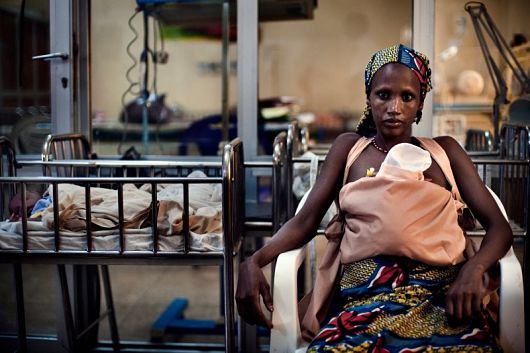
June 23, 2015
https://borgenproject.org/wp-content/uploads/borgen-project-logo.svg 0 0 Borgen Project https://borgenproject.org/wp-content/uploads/borgen-project-logo.svg Borgen Project2015-06-23 15:37:432024-12-13 17:51:34Why Somalia has a High Malnutrition Rate
Global Poverty, Health

Maternal Mortality in Nigeria

maternal_mortality_nigeria
Nigeria is second only to India in terms of the number of maternal deaths it experiences, and along with five other countries—India, Pakistan, The Democratic Republic of the Congo, China and Ethiopia—Nigeria is part of a group which makes up more than 50 percent of the maternal mortalities that occur in the world.

The Maternal Mortality Rate (MMR) in Nigeria was 560 per 100,000 live births in 2013. As UNICEF states, Nigeria loses 145 women to maternal mortality each day. This high level of maternal mortality is also linked to Nigeria’s high rate of deaths for children under 5—newborns account for a quarter of the under-five deaths which occur in the country.

There are many reasons why maternal mortality in Nigeria is so high, including a lack of access to healthcare, rampant poverty, substandard health care and the prevalence of child marriage.

Urban women have more of an opportunity to receive healthcare than rural women do. As stated in a Global One report about Nigeria, women in urban areas have over twice as many deliveries taking place in public and private health facilitates than women in rural areas. This is because women in rural areas are normally not able to afford the transport to the hospitals in urban areas, and have to settle for midwives or traditional birth attendants—or no help at all—when giving birth. Many of these traditional birth attendants do not have the skills and training necessary for delivering a baby—for example, many are not able to perform C-sections—and for treating complications that can occur during birth.

Rural women do not have the money to travel to hospitals to receive better care. Nigeria has a high poverty rate, with a 2010 report stating that 64.4 percent of the population lived in extreme poverty and 83.9 percent of the population lived in moderate to extreme poverty. The fact that many people cannot afford the healthcare that they need contributes to Nigeria’s high MMR.

Even if women in Nigeria are able to have access to a hospital, they sometimes still end up suffering. This is because some hospitals in Nigeria have substandard care. For example, Global One’s report states that substandard birth techniques in government hospitals in North-Central Nigeria, including poor C-section procedures, accounted for 40 percent of all fistula injuries suffered by women in Nigeria.

A fistula, according to the World Health Organization, is a hole in the birth canal. Fistulas are directly connected to obstructed labor, a problem that contributes to high levels of maternal mortality. Even if women survive labor, many of them still have to live with the fistula. Approximately two million women live with an untreated obstetric fistula in Sub-Saharan Africa and in Asia, and women with fistulas suffer incontinence, social segregation and health issues.

Fistulas are more common in women who give birth at a young age. These women’s bodies are not ready for childbirth, leading to many health problems, including obstetric fistulas. Nigeria has an extremely high rate of child marriage—43 percent of girls get married before the age of eighteen—and many of those girls are not given the option of whether or not they want to get pregnant. Contraceptive use is slowly becoming more widespread and acceptable, but in 2008, only 10 percent of women used contraceptives.

Since contraceptive use is still stigmatized, many brides under the age of 18 are forced to give birth, and their bodies are very vulnerable to complications, therefore contributing to a high maternal mortality rate. Nigeria also has a high fertility rate—five children per woman in 2014—which also impacts the MMR.

If Nigeria wants to reduce its high levels of maternal mortality, it has to make sure that access to healthcare is more widespread. It also needs to improve the quality of healthcare available, reduce the number of child marriages and de-stigmatize contraceptive use.

– Ashrita Rau

Sources: UNICEF, WHO 1 WHO 2, WHO 3, WHO 3, Global One Girls not Brides, IRIN News CIA World Factbook
Photo: Healthy Newborn Network

June 23, 2015
https://borgenproject.org/wp-content/uploads/borgen-project-logo.svg 0 0 Borgen Project https://borgenproject.org/wp-content/uploads/borgen-project-logo.svg Borgen Project2015-06-23 10:56:152024-05-27 09:25:17Maternal Mortality in Nigeria
Global Poverty

ICT Aids Education for Visually Impaired in Kenya

ict
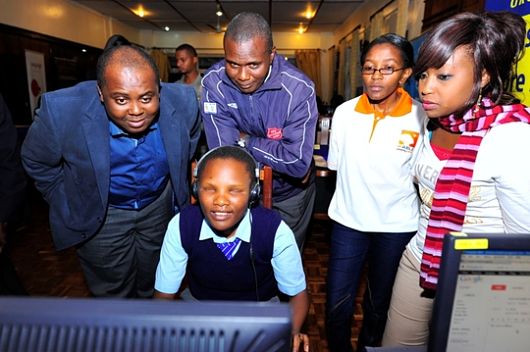
In partnership, AccessKenya, the Rockefeller Foundation and Atlanta-based nonprofit inABLE have launched a “Computer Labs for the Blind” initiative. Thus far, nearly 1,700 Kenyan students are benefiting from the program, which is intended to teach visually impaired learners basic information and communication technology (ICT) aptitude, allowing them to access educational content online and develop employable skills.

True to its name, Computer Labs for the Blind provides assistive technology computer labs and ICT education. The initiative trains visually impaired students and their instructors to use multiple computer and computational device types, including iPads. It also facilitates peer-to-peer training camps that allow advanced students to teach computer skills to the visually impaired.

In order to understand the importance of the Computer Labs for the Blind program, it is necessary to examine the hindrances non-sighted students otherwise experience. Blind and visually impaired students in Kenya face a variety of challenges to their education, including logistical issues, lack of facilities and insufficient teaching resources.

Not the least of these obstacles is the exorbitant cost of materials. In Kenya, braille textbooks can cost nearly nine times as much as ordinary textbooks, a price that most Kenyans are unable to afford. Consequently, four or more visually impaired students are compelled to share each book, limiting individual access and making it more difficult for students to acquire knowledge.

Other materials critical to blind students’ education, such as braille notepaper, are also far more expensive than standard supplies. For this reason, visually impaired and blind students find themselves unable to take notes in class the way their sighted peers do. However, they are still required to sit for the same exams as sighted students, regardless of their disadvantage in preparing for tests.

Additionally, the courses of study open to visually impaired students are limited. For example, at the high school level, students who are not sighted are unable to pursue chemistry and physics. The Kenyan education system does not equip teachers to educate visually impaired students in these subjects because it does not see them as feasible participants.

Even those students who are able to acquire braille skills and graduate high school find their employment prospects severely limited. Few industries accommodate braille skills and many employers are unfamiliar with braille. Continuing education is also rarely an option for visually impaired students in developing countries like Kenya.

Faced with this lack of economic options, many visually impaired and blind Kenyans must turn to begging or prostitution in order to survive. For this reason, access to technology and the development of ICT skills offer blind and visually impaired students a chance to improve their quality of life and offer a degree of financial independence and academic development that would have been previously out of reach.

The Computer Labs for the Blind initiative will help open the futures of blind and visually impaired Kenyan students. However, inABLE founder Irene Mbari-Kirika has hopes for a wider impact.

“inABLE envisions a day when blind and visually impaired students – all over Africa and beyond – have convenient access to life-changing computer-based educational tools,” Mbari-Kirika stated just before beginning inABLE’s first Computer Labs for the Blind project in a Kenyan school. With at least four more Kenyan schools lined up to benefit from the initiative, inABLE and its partner organizations are taking concrete steps toward their goal.

– Emma-Claire LaSaine

Sources: Inable Africa, IT News Africa
Photo: Global Giving

June 23, 2015
https://borgenproject.org/wp-content/uploads/borgen-project-logo.svg 0 0 Borgen Project https://borgenproject.org/wp-content/uploads/borgen-project-logo.svg Borgen Project2015-06-23 00:54:362024-12-13 17:51:34ICT Aids Education for Visually Impaired in Kenya
Global Poverty

Urban Poverty Contributes to Mongolian Air Pollution

Mongolian_Air_Pollution
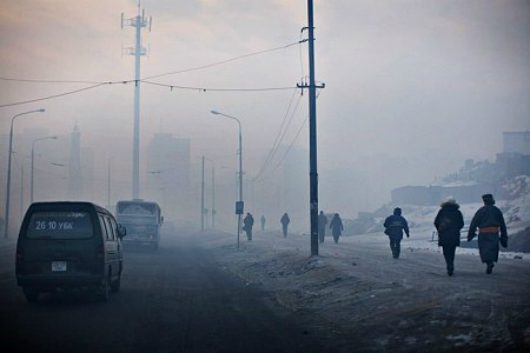
Extreme air pollution in Mongolia continues to place the country among the most polluted in the world, according to the World Health Organization. The WHO’s 2014 report on global air pollution ranks the developing nation the seventh most polluted country on the globe. With a population of only 2.9 million, pollution exposure levels are six to seven times higher than the most lenient WHO numbers. The population shift from rural to urban areas has intensified poor air quality in Ulaanbaatar and made air pollution a main concern for its citizens in recent years.

“Today, children are suffering from many unfamiliar illnesses caused by air pollution,” said Gerelchimeg, a mother living in one of Ulaanbaatar’s low-income districts. “As a mother, I am very worried about my children’s health and my neighbors’ newborns.”

The majority of Ulaanbaatar’s population lives in gers, traditional Mongolian dwellings where the burning of coal and wood for heat significantly contribute to the poor air quality of the city.

The Mongolian government has endorsed efforts to provide smokeless coal, improved stoves, gasification and solar heating to ger families in recent years; however, the challenge to fully implement environmentally-conscious legislation while allowing citizens to maintain their traditional lifestyles remains an issue for government officials.

“Many solutions will require Ulaanbaatar citizens to change technologies and learn how to use them,” said Gailius Draugelis, lead energy specialist at The World Bank. “The local private sector will need to supply and serve these technologies.”

The increase of vehicle use in Ulaanbaatar, from 75,000 to 300,100 between 2005 and 2013, spurred increased promotion of public transportation as well as legislation regarding the disposal of “older” and “too old” vehicles. The Mongolian government has also sought to reduce emissions from three major coal-fueled power plants in the Ulaanbaatar area by regulating the amounts of specific pollutants and endorsing power plant ‘scrubbers’ and other clean energy practices.

Despite governmental efforts to reduce air pollution on a variety of levels, air quality and conditions in Mongolia have improved little. Natural factors, such as geographic location and the topography of the capital city, have also contributed to air pollution and its effects on Mongolian health, including increased rates of non-communicable diseases.

Since 2010, the U.S. foreign aid agency the Millennium Challenge Corporation (MCC) has invested in a $41.5 million project to address the causes of air pollution in the poor outskirts of Ulaanbaatar. In only three years, the corporation sold almost 100,000 energy-efficient stoves and 19,000 ger insulation sets at subsidized rates. While green technology is only a temporary solution to the overarching issue of air pollution, the MCC’s contribution to public awareness and green research activity is an investment in the clean Mongolia of tomorrow.

Although air pollution is a major global health challenge in Mongolia and developing countries throughout the world, smart foreign aid gives hope for a cleaner future.

– Paulina Menichiello

Sources: World Bank, Scientific Research, NCBI, IIP Digital
Photo: Rising Voices

June 23, 2015
https://borgenproject.org/wp-content/uploads/borgen-project-logo.svg 0 0 Borgen Project https://borgenproject.org/wp-content/uploads/borgen-project-logo.svg Borgen Project2015-06-23 00:39:582020-07-15 12:09:25Urban Poverty Contributes to Mongolian Air Pollution
Development, Global Poverty, Technology

How Mobile Phones Help the Poor

How Mobile Phones Help the Poor
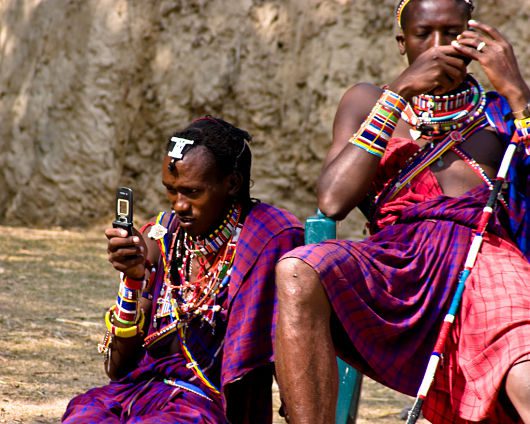
Mobile technology has been shown to have a tremendous effect in helping alleviate global poverty. Over six billion of the approximately seven billion people in the world have access to mobile phones, as shown in a 2014 UNESCO report. By 2016, it is estimated that there will be one billion mobile phones in Africa. Such widespread access opens up a window of opportunity to utilize mobile technology as an instrument in improving the lives of users in developing countries.

According to UN Millennium Project Director Jeffrey Sachs, cell phones are the key instrument in transforming poverty-stricken lives.

“Poverty is almost equated with isolation in many places of the world,” he said, as quoted in a CNN article. “Poverty results from the lack of access to markets, to emergency health services, access to education, the ability to take advantage of government services and so on. What the mobile phone — and more generally IT technology — is ending is that kind of isolation in all its different varieties.”

From the educational sphere to the economy, access to mobile technology has already significantly improved the lives of many across various aspects of life.


4 Ways Mobile Phones Help the Poor

Literacy and education
Where there are no books, there are still mobile phones. Utilizing mobile technology is one of the easiest ways to increase literacy rates simply because phones are already in the hands of members of developing nations. Mobile reading provides a much cheaper and more convenient alternative to reading from books. While cell phones cannot teach users how to read, they are shown to significantly increase literacy retention rates. Several mobile applications and programs exist to increase access to mobile reading in the developing world. Programs such as MobiLiteracy Uganda provide parents with daily reading activities to complete with their children via audio SMS so that illiterate parents can still work to improve their children’s literacy. It is not necessary for users to own smartphones because even the cheapest mobile models allow access to mobile reading.

Agriculture
Mobile technology has completely transformed the lives of farmers in developing nations, as it allows them access to market prices without the timely concession of long-distance traveling to faraway markets. Additionally, access to weather information can help farmers prepare for in-climate conditions that may affect their crops. Several mobile applications exist to provide farmers with information about nearby markets and prices, mapping to potential clients, feeding schedules for cattle and local veterinary information.

Banking
Millions of Africans utilize mobile technology as a banking instrument. Since 2007, Safaricom and Vodafone’s M-PESA application has allowed users to store funds on their mobile decides in order to transfer funds to other users, pay bills, or make other purchases. In 2009, a 10th of Kenya’s GDP was being circulated via M-PESA. Former Safaricom CEO Michael Joseph noted that mobile technology has been transformative for the informal business sector, which comprises about 70 percent of jobs in Kenya. This increase has been instrumental in helping surge GDP rates throughout the developing world.

Health
Mobile phones allow endless distribution of health resources, which has led to the development of mHealth, or mobile health, programs. Field workers can use their mobile devices to work with experts to determine what conditions are treatable at a local level and what patients need to be transported to a hospital. This increased communication saves time and money and also helps to ensure appropriate treatment. Text messages have also shown to be vital in communicating stock levels of medications and resources in remote locations. Additionally, public health organizations have organized text message campaigns to increase preventative habits against fatal diseases.

– Arin Kerstein

Sources: CNN, Fortune, National Geographic, UNESCO, USAID,
Photo: Sustainable Brands

June 22, 2015
https://borgenproject.org/wp-content/uploads/borgen-project-logo.svg 0 0 Borgen Project https://borgenproject.org/wp-content/uploads/borgen-project-logo.svg Borgen Project2015-06-22 11:58:432024-05-30 22:22:56How Mobile Phones Help the Poor
Global Poverty, Sanitation, Water

India’s Sanitation Solutions

India's Sanitation Solutions Poor Sanitation
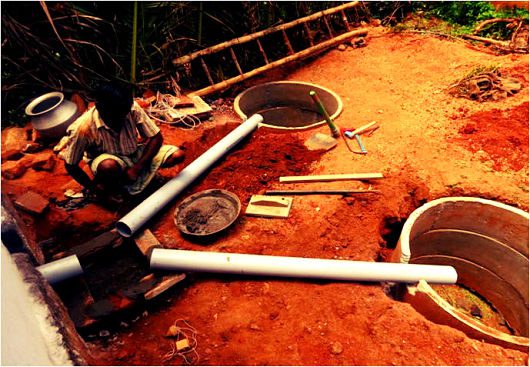
Build toilets, not temples. This is the message from India’s Prime Minister, Narendra Modi, reflecting on India’s sanitation solutions.


A Need for Solutions to Poor Sanitation


The goal is to end defecation in public places by 2019. About 130 million households do not have toilets – 53 percent of India’s population. The number jumps to 70 percent when villages are singled out, where most people simply relieve themselves in fields, on the side of roads or behind bushes.

The issues that come with this are massive. Health is impacted in numerous ways. The spread of disease is pervasive when open defecation is common: “because India’s population is huge, growing rapidly and densely settled, it is impossible even in rural areas to keep human feces from crops, wells, food and children’s hands. Ingested bacteria and worms spread diseases, especially of the intestine.”

Poor sanitation is the reason for 80 percent of illnesses in India, as well as the leading cause of death for children under 5-years-old. Malnutrition is also a huge problem, despite some children’s diets improving and others getting more than enough to eat. When bacteria gets into children’s intestines, it causes something called enteropathy, which prevents bodies from absorbing nutrients and calories. Because of this, half of India’s children are still considered malnourished.

Hundreds upon hundreds die each year from diseases related to poor sanitation, but politicians have been slow to face up to the problem, and locals have been known to actually prefer “going” in a field instead of a government-built toilet. Culture comes into play here: in the Hindu tradition, it is sometimes encouraged to relieve oneself far away from the home to preserve its purity.

There is a safety aspect to the issue, as well as the issue that people have to leave their homes at night to relieve themselves. There have been instances of young women being raped and murdered while venturing out to take care of business.


Innovative Aid at the Heart of India’s Sanitation Solutions


What is being done to help solve India’s waste problems? The government’s toilet building campaign is a good start, despite the usage issues that they face. Convincing the public to forget old ways is never easy. Even more worrisome is the fact that while many toilets have been built – around 77 percent of households under the poverty line have toilets – countless numbers of them are out of order.

While toilets are certainly needed, safe water is also key. The Bill and Melinda Gates Foundation is investing in a machine called the Omni Processor which is capable of turning sewage into drinking water while powering itself independently.

Bill Gates even tried out the water it produces. One machine can produce enough clean water for 100,000 people. Construction is already underway for a machine in Senegal, and Gates says that there is one in India’s near future as well.

A simple Google search provides a multitude of water-filtering devices similar to searching for solar-powered flashlights. However, the problem runs deeper than simply purifying water in India. There simply is not enough of it. The country is home to 16 percent of the world’s population, but it only has four percent of the world’s freshwater. The groundwater for many of India’s major cities is quickly disappearing, with levels so low in places like Mumbai and Delhi that they could be depleted entirely within a few years. Machines like the Omni Processor could be the answer to this water depletion catastrophe.

– Greg Baker

Sources: Economist, The Guardian, The Washington Post, Clean Leap, New York Times, India Sanitation Solutions,
Photo: Acumen

June 22, 2015
https://borgenproject.org/wp-content/uploads/borgen-project-logo.svg 0 0 Borgen Project https://borgenproject.org/wp-content/uploads/borgen-project-logo.svg Borgen Project2015-06-22 11:50:292024-12-13 17:51:33India’s Sanitation Solutions
Development, Global Poverty, USAID

U.S. Support for Mozambican Farmers

mozambican_farmers
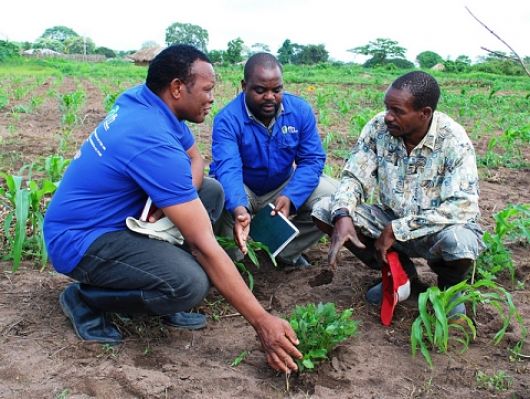
In order to help improve access opportunities between smallholder farmers and private sector distributors in Mozambique, the United States Agency For International Development (USAID) initiated four public-private partnerships amounting to $30 million in 2014. On June 3, USAID signed four memorandums of understanding to further propel the partnerships into action. The memorandums were signed in the presence of Deputy Minister of Agriculture Luisa Meque, and U.S. Ambassador Douglas Griffiths.

USAID launched the partnerships as a part of Feed the Future Partnering for Innovation, a program that creates partnerships for development between USAID missions and the private sector. The partnerships in Mozambique are predicted to increase opportunities for 50,000 smallholder farmers in the provinces of Manica, Nampula, Tete and Zambezia.

The project has partnered the U.S.’s National Cooperative Business Association CLUSA International with farmer-owned company IKURU and start-up seed-provider Phoenix Seeds to facilitate better distribution of services and inputs. Various representatives from IKURU and Phoenix Seeds will also be trained to better serve small communities. This partnership is expected to assist 10,000 smallholder farmers within three years.

Export Marketing Company Limited, Agro Tractors and Techno Brain have also partnered to create 23 retail hubs comprised of agro-input retailers, equipment suppliers and storage facilities to benefit 23,000 smallholder farmers. Rental services and training workshops will be available for farmers, along with new market opportunities.

Additionally, 10,000 Mozambican farmers in Zambezia and Nampula will receive access to imported seeds and inputs through the new partnership between Portuguese supplier Lusosem Mocambique, Lda., Colorado-based International Development Enterprises and HUB Assistancia Technica e Formacao. The partnership will involve guidance in agro-dealer expansion and training for agribusiness development in rural communities.

Through the final partnership, Illinois-based Opportunity International will provide financial training to Banco Oportunidade de Mozambique in order to provide banking services for 5,000 sesame and soybean farmers.

These partnerships are part of a larger 10-year strategic agricultural development plan developed by USAID with the Mozambican government. According to USAID, Mozambique’s agricultural sector provides employment for the vast majority of the nation’s labor force and has the potential to boost the country’s economic growth significantly. Additionally, USAID in Mozambique focuses on agricultural development in order to create sustainable systems, which can ultimately decrease malnutrition and poverty rates throughout the country.

– Arin Kerstein

Sources: All Africa, Feed the Future, Partnering For Innovation, Star Africa, USAID
Photo: Feed the Future

June 22, 2015
https://borgenproject.org/wp-content/uploads/borgen-project-logo.svg 0 0 Borgen Project https://borgenproject.org/wp-content/uploads/borgen-project-logo.svg Borgen Project2015-06-22 10:45:462024-05-27 09:25:13U.S. Support for Mozambican Farmers
Global Poverty, Hunger

Hunger in Macedonia Declining

Hunger-in-Macedonia-Declining
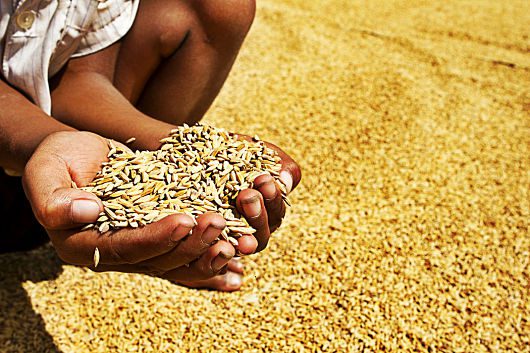
Macedonia FYR (Former Yugoslav Republic) is a country in the crossroads: it is an emerging middle-class country, yet it has a hungry population in many areas. But great strides have been made over the last few years to decrease the number of people who are hungry, especially malnourished children.

The United Nations created the Millennium Development Goals where one goal would be to cut worldwide hunger in half by 2015. For the three years that indicators were completed for Macedonia FYR, the percentage of children under five moderately to severely underweight has dropped from 1.9 in 1999 to 1.8 in 2005 to 1.3 in 2011.

While these numbers do not seem particularly large or dramatic, they are only the percentages of children who are greatly malnourished. The numbers do not indicate the other children that might be slightly malnourished or food insecure. However, those children and their families still suffer from the effects of poverty and hunger.

Hunger in Macedonia FYR is tied to the historic economic instability of the region. According to the World Food Programme (WFP), “when prices [of food] rise, consumers often shift to cheaper, less nutritious foods, heightening the risks of micronutrient deficiencies and other forms of malnutrition.” Even though malnutrition and hunger in Macedonia FYR are less than many other developing countries, in 2006 UNICEF still reported 17 deaths out of 1000 children under five.

There is no delineation in the study between what caused those deaths, yet most can be tied to malnutrition or diseases caused by poor nutrition. Hunger is inherited; an undernourished woman will give birth to an undernourished child. Yet the opposite is also true. According to the WFP, “well-nourished women have healthier, heavier babies whose immune systems are stronger for life. A healthy, well-fed child is also more likely to attend school.”

Malnourished children are more likely to have life-long health problems and not attend school, which creates a state where the economy sees a downturn and hunger rises again. When hunger is reduced, an individual can live longer and more productively, strengthening the economy. This very trend can be seen in Macedonia FYR.

The World Bank has assisted in boosting the nation’s economy, therefore helping to reduce hunger in Macedonia FYR. The country “has been a member of the World Bank Group since 1994 and currently receives funding from the International Bank for Reconstruction and Development.” The World Bank also says that Macedonia FYR “is an upper-middle-income country that has made great strides in reforming its economy over the last decade.”

How does a “middle-income country” still have hunger and malnutrition at levels high enough to be part of the Millennium Development Goals program?

UNICEF says that “disparities in access to health and education between rural and urban areas are obstacles towards achieving the low mortality rate of Western European countries.” The rural areas still need much more help before hunger in Macedonia FYR can be completely eradicated.

Great achievements have been made in helping those who are hungry in Macedonia FYR, but the number of children suffering from malnutrition has not been cut in half yet like the goal states. With the country’s economy becoming stronger and more children receiving good food and an education, it is conceivable that hunger in Macedonia FYR will be eradicated in the near future.

– Megan Ivy

Sources: UNICEF, World Bank, UNICEF, UN, World Food Programme
Photo: Jstor Daily

June 22, 2015
https://borgenproject.org/wp-content/uploads/borgen-project-logo.svg 0 0 Borgen Project https://borgenproject.org/wp-content/uploads/borgen-project-logo.svg Borgen Project2015-06-22 01:51:292024-05-27 09:24:17Hunger in Macedonia Declining
Global Poverty

BRAC Graduation Model: Success in Fight Against Poverty

BRAC
Complex issues call for comprehensive solutions. The significance of this logic cannot be overstated when tackling the most multifaceted issues worldwide, such as extreme poverty. BRAC, a large Bangladeshi nonprofit organization working to support the rural poor, has recently actualized the benefits of such all-inclusive problem-solving.

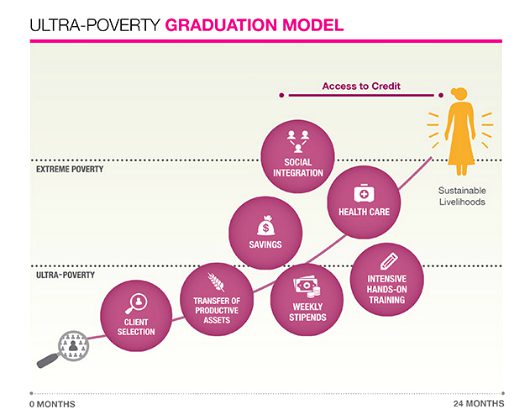
In recent years, BRAC has implemented a new “graduation” program worldwide, in an effort to fight extreme poverty. BRAC’s carefully crafted approach targets the poorest households within smaller communities. Over a fixed period of time, the program provides these households with the wide-ranging set of services they need.

Beneficiaries of the program first choose from a list of productive assets, such as livestock or goods needed to start a small business. Then, the program provides appropriate training and support, life skills coaching, weekly consumption support, access to savings accounts, as well as health and information services.

The thinking behind this approach is that the most extreme cases warrant the most all-encompassing forms of aid. Providing the ultra-poor with a set of such complementary services lays the groundwork for self-employment activities. In this way, the program can additionally achieve its primary goal: increased consumption.

An MIT study analyzing the implementation of the graduation model in six different countries has evidenced the wide-ranging success of BRAC’s strategy. Randomized control trials conducted on more than 21,000 participants in Ethiopia, Ghana, Honduras, India, Pakistan, and Peru reveal the program’s long-term impact.

Results of the study showed that, across the board, increased consumption was not only achieved but also typically maintained one year after the program’s end. In some cases, gains in areas like food security and household assets remained for as long as three years after “graduation”.

Although BRAC’s graduation approach is criticized for being relatively expensive; however, positive returns were seen in five out of the six countries. In short, the program benefits outweigh the costs. In all six countries, experimenters witnessed the program bringing dramatic improvements to the lives of the ultra-poor.

BRAC prides itself in creating a program that is not only comprehensive, but also “codified, scalable, and replicable”. The study’s results certainly serve as a testament to the model’s versatile workability. In fact, groups like Heifer International, Trickle Up, and Fonkoze are currently implementing the graduation model.

By following BRAC’s lead, such organizations have taken a major step in the worldwide fight against poverty. They have followed suit in combating a deeply complex issue with an astutely comprehensive perspective.

The world’s poorest people commonly lack more than just income. Typically, the ultra-poor face challenges that have to do with health, education, and, perhaps most importantly, morale. The most effective way of breaking the poverty cycle is to acknowledge each of these moving parts by attacking from all sides.

The study’s success story helps to show policy-makers what works. The wide-ranging needs of the world’s poorest people necessitate an extensive set of tools. With time, extreme poverty could very well become a thing of the past. With this goal in mind, however, we must remember to always look at the bigger picture.

– Sarah Bernard

Sources: Humanosphere, World Bank, MIT
Photo: Erol Foundation

June 22, 2015
https://borgenproject.org/wp-content/uploads/borgen-project-logo.svg 0 0 Borgen Project https://borgenproject.org/wp-content/uploads/borgen-project-logo.svg Borgen Project2015-06-22 01:13:412024-05-27 09:24:12BRAC Graduation Model: Success in Fight Against Poverty
Global Poverty

What’s Driving People to Terrorist Groups?

Driving-People-Toward-Terrorist-Groups
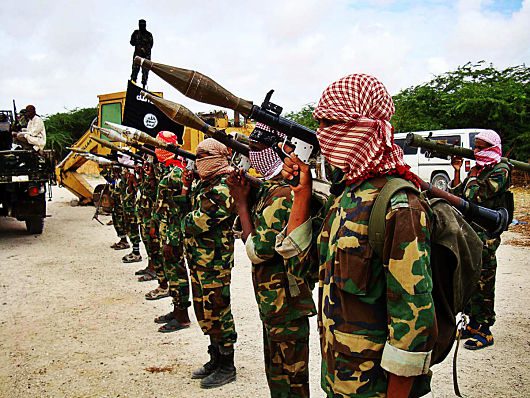
Instability, lack of resources and political corruption are driving everyday people into the “security” of terrorist groups. Most people have a specific understanding of a certain classification of terrorists. These are people in the third world or corrupt countries clinging to radical ideas and concepts of violence and revolution. These individuals are often unable to participate politically in their countries and therefore turn to drastic means in order to have their opinions voiced, which eventually leads to violence.

However, many people are unaware of the influx of people in western countries that are continuing to join such organizations. These include affluent European and American men and women, seeking acceptance in radical terrorist organizations around the world.

In recent years, there has been a particular increase in European women joining terrorist organizations that are established in the Middle East, such as ISIS. What could possibly motivate someone from the western world to join such groups?

In the last year, there have been a number of instances in which Americans were found to be supporting ISIS, both financially and otherwise. While this in itself is frightening, the biggest concern here is that of national security, especially in the United States. What is it that draws people into the group?

What people want is a sense of identity and purpose. As is the case with terrorist recruits in developing nations, individuals in the United States and other Western nations join groups like ISIS as a means for significance and a political voice.

Issues of unemployment and economic insecurity contribute to these motives. As people feel the brunt of economic tensions, they blame the government and often feel helpless when it comes to making a difference politically. Thus, joining a radical group, whose name is seen throughout various modes of information and social media, seems to be a surefire way to be heard.

It is the struggle and disparity that draws people to radical means for change. As examples of Americans and Europeans showing interest in terrorist groups such as ISIS have shown, radicalization can happen under any type of government or societal structure, and in any country. To protect national and international security, and to prevent individuals from radicalizing and seeking a voice elsewhere, it seems that people need a voice that is going to be heard in their home country.

– Alexandrea Jacinto

Sources: CNN, BBC
Photo: The Dark Room

June 21, 2015
https://borgenproject.org/wp-content/uploads/borgen-project-logo.svg 0 0 Borgen Project https://borgenproject.org/wp-content/uploads/borgen-project-logo.svg Borgen Project2015-06-21 01:37:092020-07-15 08:21:42What’s Driving People to Terrorist Groups?
Page 1948 of 2178«‹19461947194819491950›»

Get Smarter

  • Global Poverty 101
  • Global Poverty… The Good News
  • Global Poverty & U.S. Jobs
  • Global Poverty and National Security
  • Innovative Solutions to Poverty
  • Global Poverty & Aid FAQ’s
Search Search

Take Action

  • Call Congress
  • Email Congress
  • Donate
  • 30 Ways to Help
  • Volunteer Ops
  • Internships
  • Courses & Certificates
  • The Podcast
Borgen Project

“The Borgen Project is an incredible nonprofit organization that is addressing poverty and hunger and working towards ending them.”

-The Huffington Post

Inside The Borgen Project

  • Contact
  • About
  • Financials
  • President
  • Board of Directors
  • Board of Advisors

International Links

  • UK Email Parliament
  • UK Donate
  • Canada Email Parliament

Get Smarter

  • Global Poverty 101
  • Global Poverty… The Good News
  • Global Poverty & U.S. Jobs
  • Global Poverty and National Security
  • Innovative Solutions to Poverty
  • Global Poverty & Aid FAQ’s

Ways to Help

  • Call Congress
  • Email Congress
  • Donate
  • 30 Ways to Help
  • Volunteer Ops
  • Internships
  • Courses & Certificates
  • The Podcast
Scroll to top Scroll to top Scroll to top