• Link to X
  • Link to Facebook
  • Link to Instagram
  • Link to TikTok
  • Link to Youtube
  • About
    • About Us
      • President
      • Board of Directors
      • Board of Advisors
      • Financials
      • Our Methodology
      • Success Tracker
      • Contact
  • Act Now
    • 30 Ways to Help
      • Email Congress
      • Call Congress
      • Volunteer
      • Courses & Certificates
      • Be a Donor
    • Internships
      • In-Office Internships
      • Remote Internships
    • Legislation
      • Politics 101
  • The Blog
  • The Podcast
  • Magazine
  • Donate
  • Click to open the search input field Click to open the search input field Search
  • Menu Menu

Archive for category: Global Poverty

Key articles and information on global poverty.

Education, Global Poverty

3 Organizations Providing Books for the World’s Poor

Books for the World's Poor
Globally, approximately 10 percent of men and 17 percent of women over the age of 15 cannot read or write. However, through book donations, many organizations are bringing literature to communities in developing countries as a way to help improve literacy rates. These donations are helping children have a higher quality education and making it easier for adults to learn new skills. Here are three organizations focused on providing books for the world’s poor.

3 Organizations Providing Books for the World’s Poor

  1. Book Aid International
    In 2018, Book Aid International delivered 1.28 million books to people all over the world. They sent books to public and community libraries, university libraries, refugee camps, medical libraries, primary and secondary schools and prisons. As poverty affects people of all ages, genders and ethnicities, Book Aid International focuses on bringing books to all people. They have provided literature to communities where girls are prevented from entering classrooms and libraries, as well as to schools where children have no choice but to share old and torn up textbooks. They believe that without literacy skills the world’s poor will be unable to break away from the cycle of poverty. Thanks to this organization, around 21.4 million people had access to books in 2018.
  2. Brother’s Brother Foundation
    Brother’s Brother Foundation is an organization that promotes international health and education. Founded in 1958, their efforts have provided books for the world’s poor, along with medical, agricultural and educational resources. Their main objective is to bring good health care, education and nutrition to those in the world that lack it. To accomplish this, they work with local agencies in 149 countries. Some of the local agencies they partner with include hospitals, universities, health care departments, schools and religious organizations. With additional support from the United States and other countries, they have provided over $4 trillion in goods and services to the world’s poor. By bringing books to these nations, they have been able to provide some of the tools that the world’s poor need to believe in a better future. The textbooks donated are educating not only children but adults around the world.
  3. Bibliotheques Sans Frontieres (Libraries Without Borders)
    This French-based organization provides books for the world’s poor in over 50 countries. They work in 24 languages and have selected more than 30,000 pieces of literature that will help educate the world’s poor on the major issues of the world. Much of the literature they provide centers around education, health, employment, citizenship, disability and digital knowledge. Since 2007, Libraries Without Borders has touched the lives of more than 2 million people. One of the ways they have been able to reach so many people is through their Ideas Boxes, media library kits that are easily transportable. First designed for refugee camps, they are now found in neighborhoods and rural areas as well. Filled with books, tablets and mobile videos, Ideas Boxes provide vulnerable communities with content that is well adapted to meet their needs and in their own language. Libraries Without Borders has provided Ideas Boxes for more than 850,000 refugees and intends to continue growing this program.

Books and literature are a tool that many of the world’s poor do not have access to but these influential organizations are working to provide books for the world’s most vulnerable people. Due to their donations, more people have access to books that allow them to gain knowledge and new skills.

The next time you are thinking about getting rid of some books in your own library at home, consider donating them to one of these organizations. Help bring joy, knowledge and power to the people who need them the most.

– Jannette Aguirre
Photo: Flickr


October 28, 2019
https://borgenproject.org/wp-content/uploads/borgen-project-logo.svg 0 0 Lynsey Alexander https://borgenproject.org/wp-content/uploads/borgen-project-logo.svg Lynsey Alexander2019-10-28 13:44:182024-05-29 23:13:293 Organizations Providing Books for the World’s Poor
Global Poverty, Sustainable Development Goals, United Nations

Sustainable Development in Uzbekistan

Sustainable Development in Uzbekistan

Doubly landlocked by its neighbors, Uzbekistan is rich in a variety of resources, such as cotton, gold, uranium and zinc. However, since becoming an independent country, the people of Uzbekistan have suffered from high rates of poverty, coupled with a lack of access to a reliable source of clean drinking water and subpar health care. In order to fight poverty in Uzbekistan and improve the quality of life, the government has embraced the United Nations Sustainable Development Goals and worked to establish a variety of reforms within its framework. As of 2018, the Asian Development Bank lists the poverty rate for Uzbekistan at 11.4 percent.

Supporting the UN Sustainable Development Goals

In October 2018, the government of Uzbekistan adopted a resolution titled “On Measures to Implement the National Goals and Targets in the Field of Sustainable Development for the Period Until 2030.” This resolution reaffirmed Uzbekistan’s dedication to the United Nations’ Sustainable Development Goals (SDGs). The resolution also set 16 national sustainable development goals for Uzbekistan that focused on environmental, economic and social issues in the country.

The country’s environmental goals include considerably reducing waste production and significantly increasing renewable energy generation by 2030. Economical goals include reducing youth unemployment, increasing Uzbekistan’s per capita GDP and significantly reducing the poverty rates by 2030.

Electricity, Clean Water and Sanitation

As of 2016, 100 percent of the population of Uzbekistan has access to electricity. However, only 3.2 percent of Uzbekistan’s total energy comes from renewable sources. As part of Uzbekistan’s national sustainable development goals, it hopes to significantly increase renewable energy production by 2030. In addition, it plans to reduce waste production by promoting prevention, reduction and recycling.

Uzbekistan has made major strides in improving its sanitation services and water supply throughout the years. However, despite these efforts, less than half of the population has access to a piped water supply. Only 17 percent of city households receive water for the entire day. The situation is much worse in smaller towns and rural communities.

The situation is particularly poor in the Syrdarya region where low-income families must either rely on small storage tanks that are refilled every month at a high price or spend hours of their day walking to a public tap outlet to fill containers with water. The World Bank has launched the Syrdarya Water Supply Project to help provide clean drinking water to the region of nearly 280,000 inhabitants.

Gender Equality

The Uzbekistan government and the United Nations Development Programme (UNDP) have worked to empower women and support gender equality in the country. They have established laws that support women in the legal system and in government, such as laws against sexual harassment and gender discrimination. The UNDP has also supported initiatives that economically empower Uzbek women. Financial decision-makers are working closely with the Women’s Committee of Uzbekistan in order to ensure that these initiatives receive proper funding. The UNDP has also aided women-run businesses to grow and achieve success domestically and internationally.

The government has worked with the UNDP to ensure that women receive the same help and benefits as men, including the protection against and treatment of HIV infections. With the support of the UNDP, 5,995 women are currently receiving continuous ARV treatment for HIV. Women also make up 38 percent of participants in HIV prevention programs in the country.

Health Care Reforms

The maternal mortality rate in Uzbekistan has significantly decreased from 33.1 per 1,000 live births in 2000 to 20 per 1,000 live births by 2013. In addition, the government of Uzbekistan is currently working with international partners in developing new and effective health care programs. By 2030, they aim to decrease the child mortality rate by 50 percent, the maternal mortality rate by 30 percent and reduce the number of deaths from noncommunicable diseases by 30 percent.

People often suffer from subpar health care, particularly in rural regions. The government began implementing major health care reforms in 2017, particularly focusing on training health care professionals and fighting tuberculosis. They have also worked to improve the quality of health care in rural hospitals and clinics by requiring all graduates of publicly-funded medical schools to work in rural areas for three years. Uzbekistan already offers free health care; however, the cost of medical supplies is often high. In order to make health care more affordable, the government has instituted reforms to lower the costs of medical devices and fight against corruption.

Economic Liberalization

The Uzbek government implemented vital reforms to liberalize its economy. In 2017, the government commissioned 161 major industrial facilities. As a result of these reforms, the economy grew by 5.5 percent in 2017 and exports grew by 15 percent. The som, the national currency of Uzbekistan, was unpegged from the U.S. dollar and allowed to float freely. This increased currency trading and provided more revenue for the government. A dozen new free economic zones were created alongside 45 industrial zones to spur the economy. The government also created national development programs to promote innovation and investment in the economy.

In cooperation with international organizations including the UNDP, the government of Uzbekistan has worked to distribute income more equitably and create new jobs, particularly in rural areas. It has put a particular effort into helping the most vulnerable communities. The government has proven its dedication to the U.N. Sustainable Development Goals by promoting sustainable development throughout the country, supporting women’s empowerment, economic reform, health care reform, clean energy and more. As a result of this dedication, the government of Uzbekistan has successfully reduced poverty and improved the quality of life for its citizens.

– Nicholas Bykov
Photo: Pixabay

October 28, 2019
https://borgenproject.org/wp-content/uploads/borgen-project-logo.svg 0 0 Jennifer Philipp https://borgenproject.org/wp-content/uploads/borgen-project-logo.svg Jennifer Philipp2019-10-28 07:30:312024-05-29 23:12:30Sustainable Development in Uzbekistan
Advocacy, Development, Global Poverty

Nauru’s Economic Relationship with Australia

Image result for nauru

Nauru‘s Economic Relationship with Australia has been an essential part of its economy since it gained its independence in 1968. Australia has continued to aid Nauru in many ways. Its partnership with Nauru has been extremely useful because Australia uses Nauru for “offshore processing” for refugees seeking asylum and protection. This was meant to be a temporary solution until 2008, but it became more of a permanent policy in 2012. Recently, Australia has been implementing aid programs to help improve Nauru’s economy.

History of Nauru’s Economic Status

In the 1980s, the country was known for its large amounts of phosphate and quickly became one of the wealthiest countries per capita. When the supply of phosphate began to run low, however, the government quickly ran into debt. The unemployment rate of Nauru is about 90 percent. This leaves the average national income at about $6,746 a year. In order to bring some income back to the island, the government “started selling passports to foreign nationals for a fee and taking in war refugees.” That is where Australia got the idea to use Nauru as a detention center in 2001.

At that same time, Nauru was also listed on the international blacklist due to a concern that the country had been money laundering. For this reason, licenses for Nauru-registered banks were revoked. This forced the government to shut down the Bank of Nauru in 2006. Since the people of Nauru were not allowed to hold money in the banks anymore, the country was forced to become a cash-based economy. To keep their money safe, residents came up with tactics like burying their money in order to ensure that their money was safe from theft. As a result, Nauru opened to negotiations with Australia to process the refugees.

Nauru’s Economic Relationship with Australia

Australia has been an important financial resource for Nauru for many years. In the 2017-2018 fiscal year, Australia provided development assistance for 25 percent of Nauru’s gross domestic product. The Australian Government plans to provide $25.8 million in aid to Nauru during the 2019-2020 fiscal year. With the help of the Australian government, Nauru has been able to increase its employment rates as many households begin to earn higher incomes. However, external challenges such as energy and clean water have hindered the progression of Nauru’s reducing debt. This is due to the lack of skilled and qualified personnel to ensure that these problems are effectively dealt with.

Australia’s aid program has three objectives that have been outlined in the program’s Aid Investment Plan from 2015-16 to 2018-19. These three objectives include improving public sector management, investing in nation-building infrastructure and supporting human development. In 2017-18, Australia’s aid program was able to help Nauru in many ways including the funding support for the installation of two new 2.8MW diesel generators and switchgear. These installations lead to improvements in the supply and stronger electricity and water desalination services.

Nauru’s economic relationship with Australia has been essential to keeping the country going. Australia has benefitted by maintaining an offshore processing center for refugees. Though the offshore processing centers are not a perfect solution to Nauru’s economic hardships, they have helped its economy. Hopefully, Australia’s Aid Investment plans will help strengthen Nauru’s economic future.

– Emilia Rivera and Jenna Chrol
Photo: Britannica

October 28, 2019
https://borgenproject.org/wp-content/uploads/borgen-project-logo.svg 0 0 Kim Thelwell https://borgenproject.org/wp-content/uploads/borgen-project-logo.svg Kim Thelwell2019-10-28 01:30:412020-01-18 14:37:09Nauru’s Economic Relationship with Australia
Activism, Developing Countries, Development, Global Poverty, Health, Water, Water Quality

Rotary Club’s Water Relief in Haiti

Water Relief in Haiti

Political corruption and unstable governments can be a huge problem for organizations trying to bring aid to a developing country. On top of the already difficult logistics, corrupt governments can heap on restrictions, red tape and, at times, cause violence. The 2008 Transparency International’s Corruption Perception Index ranked Haiti at number four of the most corrupt nations in the world. This same Index also ranked Haiti as the most corrupt country in the Caribbean region in a 2013 study. This political corruption was the main difficulty faced by Brian Merriam and his Rotary Club Chapter when they tried to aid efforts for water relief in Haiti in 2014.

The Rotary Club’s Contribution

For more than 110 years, Rotary Club International and its 1.2 million members have prided themselves in bringing aid to impoverished countries around the globe. With more than 35,000 chapters, Rotary Club is able to make a lasting worldwide change. Brian Merriam, a third-generation member of Rotary Club International, discussed his initial motivation and the challenges involved in helping Haiti.

Merriam took to heart something that his father always said, “find the greatest problems in your community and find a way to solve them.” It was this motto that led him to first visit Haiti in 1999 with the Episcopalian organization, Food For The Poor. What Merriam saw shocked him, “I traveled the world when I was fifteen,” said Merriam “I’ve seen poverty but never the amount of Haiti.” With 59 percent of the country surviving on less than $2 a day, Haiti it the poorest country in the Western Hemisphere.

A Lack of Clean Drinking Water

After a few more visits to the country, Merriam knew something had to be done. Getting everyone from his Rotary Chapter to help was the easy part. Having been to Haiti several times Merriam knew the problems facing the nation and how to help. “Haiti isn’t lacking water,” said Merriam, “it’s lacking clean drinking water.” More than 90 percent of the country has been deforested, leading to poor soil quality. This combined with the country’s predominantly porous limestone bedrock makes the water that comes up from the earth unfiltered and unhealthy to drink.

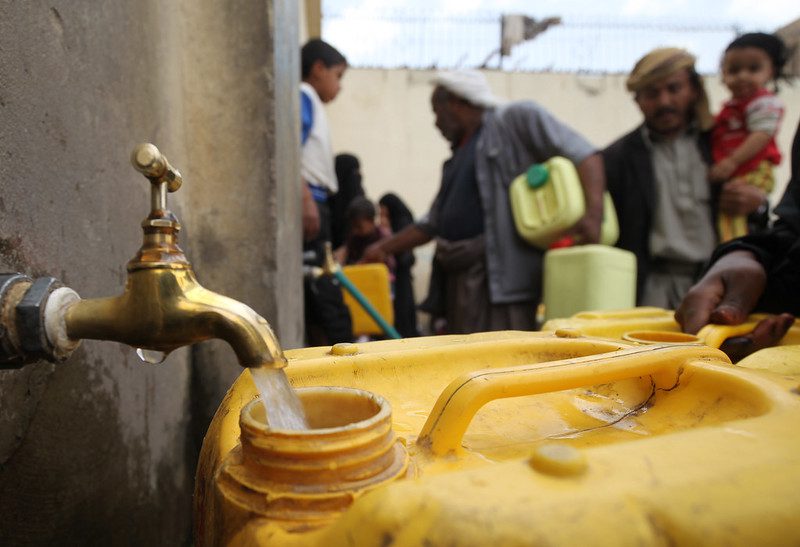
The condition of the water supply is made only worse by the nation’s poverty. People wash themselves and their clothes in Haiti’s waterways, further contaminating the water. With more than two-thirds of the population unemployed, many families can’t afford bottled water. They are forced to drink from these polluted bodies of water instead. With this in mind, the Rotary Club Schenectady Chapter brought filtration systems to the community of Matogou in 2014 in order to boost water relief in Haiti.

Political Instability

Along with the many natural factors, an increase in political protests and the proceeding violence have further crippled the country’s ability to distribute aid. This has made it more difficult for organizations to facilitate water relief in Haiti. Large mobs, vandalism and blocked roads make it harder to get basic goods out to Haiti’s most needy.

The tumultuous protests are a reaction by the Haitian people to both the corruption of President Jovenel Moise’s and the ineptitude of the Haitian parliament. According to Haiti’s senate, President Moise and his predecessor, Michel Martelly, embezzled as much as $2 billion. That money was supposed to go to Haiti’s poor to improve their infrastructure, health and education systems. Adding to the instability, the Haitian parliament failed to ratify a government or appoint a new Prime Minister after the ousting of their last one, Jean-Henry Ceant.

Merriam knows firsthand the difficulties this kind of political instability can cause. The largest problem for the Rotary Club was not financial, nor was it logistical. Getting the water filtration systems to the intended people intact was the real difficulty. Merriam recalls having to sneak the filtration systems past customs, “We have to smuggle them into the country. Not cause they’re illegal but because I’ll get extorted at the airport if they know I have them.” After getting the filtration systems past customs, Rotary Club was ready to bring them into the communities that desperately needed water relief in Haiti.

One Success Story

The Rotary Club Schenectady Chapter has changed lives for the better by increasing water relief in Haiti. The water filtration systems Rotary installed have a shelf life of 10 years and can filter out 99.99 percent of bacteria from 1,000,000 gallons of water. Each system can provide clean water to 40 people per day. The organization shows communities how to maintain and clean the filtration systems. Rotary club exceeded its goal in providing 24-hour clean water to Matogou.

It is Merriam’s belief that people born into good fortune have to social obligation to help those less fortunate than themselves. “We are on this one globe and if we don’t make it better, we’ve squandered it,” said Merriam. It is this attitude that has led him to fight for the people of Haiti for 20 years. His actions through the Rotary Club have provided much-needed water relief in Haiti.

– Henry Burkert
Photo: Wikimedia

October 27, 2019
https://borgenproject.org/wp-content/uploads/borgen-project-logo.svg 0 0 Jennifer Philipp https://borgenproject.org/wp-content/uploads/borgen-project-logo.svg Jennifer Philipp2019-10-27 07:30:432020-01-18 14:37:37Rotary Club’s Water Relief in Haiti
Education, Global Poverty

10 Facts About Child Labor in Pakistan

Child Labor in Pakistan
Child labor defines as the employment of children who are younger than a legally specified age. However, some child domestic workers in Pakistan are still working under the worst form of child labor which deprives them of education. A lack of education contributes to the prevalence of poverty, which could otherwise help them change their socioeconomic standing. This article sheds light on child labor in Pakistan.

Top 10 Facts About Child Labor in Pakistan

  1. Child Labor: In Sindh Province, 21.5 percent of children ages 5 to 14 are working. About 11 million children in Pakistan perform domestic tasks and work in agriculture. Other children work alongside their families as bonded laborers in the brick industry. The use of this type of forced child labor in Pakistan happens in the brick, carpet and coal industries.
  2. Child Labor Laws: Regardless of Pakistan’s introduction of the Bonded Labour System (Abolition) Act 1992, bonded labor still exists due to the country not having enough resources to enforce child labor laws. In 2018, labor law agencies have acted against child labor in Pakistan and are still working toward closing gaps that allow child labor to exist. According to the law, employers who use bonded labor risk punishment of imprisonment for a term of at least two years and a maximum of five years, or a fine of at least PKR 50,000 or both.
  3. Hazardous Work: Pakistan still has the worst form of child labor which includes hazardous work that can damage children’s health and development, or worse, put their lives at risk. Children working in carpet factories sometimes work up to 20 hours a day, seven days a week, and often sleep and eat at their place of work. Many children end up with eyesight and lung issues due to the amounts of dust they come in contact with on a daily basis.
  4. The Carpet Industry: UNICEF (United Nations Children’s Fund) believes that children aged 4 to 14 make up to 90 percent of the carpet industry’s workforce. Workshop owners manipulate parents into believing that their children will learn new skills that outweigh any knowledge gained at school. Such manufacturers target children because they can pay them significantly less than adult weavers which allows them to compete with other companies by offering a quality product at a lesser price.
  5. The Employment of Children Act: To combat the worst form of child labor in Pakistan, more provinces are enforcing laws. The Employment of Children Act states that a child or adolescent cannot work more than seven hours a day which includes one hour of rest during that time. A child also cannot work between the hours of 7 p.m. and 8 a.m. The minimum age for hazardous work is 14 years in Balochistan and ICT, and 18 years in Khyber Pakhtunkhwa, Punjab and Sindh.
  6. Education: According to UNICEF, Pakistan has the world’s second-highest number of children who do not attend school. Only 60.6 percent of children in Sindh Province between the ages of 5 to 14 attend school with 11.6 percent combining work and school. However, UNICEF is working on improving the number of children who attend school through studies, supporting provincial sector plan development, development of review of non-formal education policy and direct program implementation.
  7. The Sex Trade: Due to the prevalence of poverty, approximately 90 percent of the 170,000 street children in Pakistan work in the sex trade, an extreme form of child labor. The federal government in Pakistan convicted its first child pornography case after passing the Prevention of Trafficking in Persons Act in 2018. Pakistan has also approved the Prevention of Smuggling Migrants Act 2018 in order to protect victims who traffickers have smuggled to other countries.
  8. The ILO’s Child Labor Program: The ILO (International Labour Organization) is working through its International Programme on the Elimination of Child Labour, by assisting the government of Pakistan in the elimination of child labor. Pakistan has agreed to enforce laws based on the conventions of the ILO which include the Minimum Age Convention, 1973 and the Worst Forms of Child Labour Convention, 1999. The ILO’s child labor program has carried out many successful initiatives that have helped rehabilitate child laborers by providing formal and non-formal education.
  9. Labor Inspectors: Data from 2017 shows that the number of active labor inspectors is likely less than what is necessary to review the entirety of Pakistan’s roughly 64 million workers. In 2018, the provincial government made efforts to increase the number of inspectors to better enforce child labor laws in Pakistan. With the ILO’s Strengthening Labor Inspection Systems in Pakistan project, labor inspectors in Punjab Province received training to help them with the enforcement of laws. Between January and August 2018, the Punjab Labor and Welfare Department found over 98 cases of child labor during inspections. Of those inspections, 63 of those child labor cases were in brick kiln establishments.
  10. Minimum Age Standards: At a federal level, the minimum age for hazardous work in Pakistan still does not meet international standards. However, the Khyber Pakhtunkhwa, Punjab and Sindh provinces meet the minimum age standards, above 18. Punjab Province also put a law into effect in early 2019 that bans domestic work for children under the age of 15.

Many children in Pakistan must work in order to pay off their familial debt or contribute to the familial monthly expenses, but the main cause for concern is that even after many advancements in 2018, the worst form of child labor still exists. With more resources to enforce child labor laws and consistency on a federal level, the world could see an end to the worst form of child labor in Pakistan.

– Lisa Di Nuzzo
Photo: Flickr

October 27, 2019
https://borgenproject.org/wp-content/uploads/borgen-project-logo.svg 0 0 Jennifer Philipp https://borgenproject.org/wp-content/uploads/borgen-project-logo.svg Jennifer Philipp2019-10-27 07:30:152020-01-18 14:38:0610 Facts About Child Labor in Pakistan
Children, Developing Countries, Education, Global Poverty, Inequality, Nonprofit Organizations and NGOs

A Look at the Importance of Alleviating Inequality in Nigeria

Inequality in Nigeria

The severe inequality in Nigeria is a giant paradox. As the economy has grown to be the biggest in Africa and one of the fastest-growing in the world, poverty remains rampant. The oil-dependent country harbors the largest population of impoverished people in the world according to the Brookings Institute. As of 2018, 87 million people were living in extreme poverty in Nigeria. A sad reality for a country that, according to the African Development Bank, makes up a whopping 20 percent of the continent’s GDP.

Meanwhile, it would take the richest man in Nigeria, Aliko Dangote, 42 years to spend all of his wealth if he were to spend $1 million every day. According to Oxfam, Dangote earns around 8,000 times more per day than the bottom 10 percent of the population combined spends on basic needs annually. This is a stunning statistic for someone residing in a country ranked 157 out of 189 countries on the U.N. Human Development Index.

The Causes of Poverty

There are a few different factors driving poverty and inequality in Nigeria. Government corruption, greed and cronyism are arguably the biggest:

  • Transparency International ranked Nigeria 144 out of 180 countries on the corruption perception index in 2018.
  • The Economic and Financial Crimes Commission found that from 1960 to 2005 around $20 trillion was stolen from the Nigerian treasury by public officeholders.
  • According to Oxfam, lawmakers in Nigeria make $118,000 annually, one of the highest salaries in the world for public officials.
  • An estimated $2.9 billion is lost in tax revenue annually due to crooked and regressive tax policies, according to Oxfam. An example of these policies is the tax holiday given to companies in the Nigerian Liquefied Natural Gas Project that results in around $3.9 billion in lost tax revenues. On top of this, the fragmented government revenue that is collected is inefficiently managed and unfairly allocated.

It is also worth mentioning that the share of the budget dedicated to public well-being is among the lowest in the region. In 2012, only 6.5 percent of the budget went to education, 3.5 percent went to health care and just 6.7 percent went to social protection. On top of this, around 57 million people lack access to clean water and more than 130 million do not have access to proper sanitation.

Gender Discrimination

Another main factor driving inequality in Nigeria is gender discrimination. Women are at a massive socio-economic disadvantage and Nigeria ranked 125 out of 154 countries on the Global Gender Gap Index in 2015. According to Save the Children Federation, 50 percent of girls aged 15 and older are illiterate. Land ownership and income are two aspects that show major gender inequality in Nigerian culture. For example, according to Oxfam, women make up 60 to 79 percent of the rural labor force but men are still five times as likely to own land, and the non-rural labor force is made up of only 21 percent women.

At the same time, more organizations are taking up the mantle to ensure that tackling gender inequality in Nigeria is more of a priority. For instance, Kudirat Initiative for Democracy or KIND for short, is a nonprofit based in Lagos that focuses on reducing barriers for women’s public participation in social, economic and political development. The initiative also concentrates its efforts on bringing an end to gender-based violence in Nigeria.

Children’s Suffering

Children are hit especially hard by the side effects of inequality in Nigeria. Around 32 percent of school-aged children are out of school and 51 percent are driven to child labor. Every 104 out of 1,000 children die before the age of five. The Save the Children Federation is working hard to alleviate some of the challenges of impoverished children. The nonprofit organization has made some impressive progress in helping Nigerian kids. According to Save the Kids website the foundation has:

  • Protected 296,132 children from harm
  • Supported 186,315 children in times of crisis
  • Provided 5,471,422 children with a healthy start in life
  • Provided 5,266,326 children vital nourishment
  • Supported 296,394 parents to provide for their children’s basic needs

The organization also runs a stabilization center for malnourished children and is working to provide adequate maternal health for Nigerians.

To Be Continued

Inequality in Nigeria is a multi-variant problem. Due to government and economic corruption and gender discrimination, Africa’s largest economy is off-limits for over half of the Nigerian population. Oxfam states that for Nigeria to substantially improve inequality and poverty, public policy, gender inequality and tax policies need a complete transformation. Until then, the good work being done by organizations like Save the Children Federation provide a positive but temporary solution. Confronting the issues and creating real reform from the inside out is the only way to halt the unacceptable poverty and inequality in Nigeria.

– Zach Brown
Photo: Flickr

October 27, 2019
https://borgenproject.org/wp-content/uploads/borgen-project-logo.svg 0 0 Kim Thelwell https://borgenproject.org/wp-content/uploads/borgen-project-logo.svg Kim Thelwell2019-10-27 06:42:482020-01-18 14:38:35A Look at the Importance of Alleviating Inequality in Nigeria
Global Poverty, Poverty, Poverty Reduction

3 Examples of Countries Recovering from War Today

Countries Recovering from War

Civil war often erupts in countries that suffer from perpetual poverty. At the same time, war only serves to intensify poor living conditions in regions that are already vulnerable. In countries ravaged by war, people are displaced, infrastructure is destroyed and often entire industries are disrupted, destroying the resources that a country needs to keep its people alive. This devastation often persists even after a war is over. However, several formerly war-torn countries are making significant strides when it comes to post-war reconstruction and sustainable development. Here are three examples of countries recovering from war today.

3 Examples of Countries Recovering from War Today

  1. Yadizi Farmers are Recultivating Former ISIS Territory
    When the Islamic State in Syria and the Levant (ISIS) swept through the Sinjar region of northern Iraq in 2014, they displaced millions of farmers who relied on that land to make their living. ISIS persecuted the local Yadizi people for their religious beliefs and tried to destroy their farms in order to prevent them from ever being able to live in Sinjar again. In 2015, the allied Kurdish forces retook Sinjar, but the devastation of the land and the constant threat of land mines has since caused many Yadizi farmers to fear returning to their homeland.However, the Iraqi government has begun funding post-war recovery efforts in order to allow the Yadizi people to take back their land. A Yadizi woman named Nadia Murad, winner of the 2016 Nobel Peace Prize, has started a project called Nadia’s Initiative. A group called the Mines Advisory Group (MAG) has also begun to clear landmines from the land of the displaced farmers. Although progress has been slow, partly due to limited governmental support in recent years and heavy regulations on the transportation of fertilizer, the region is slowly but surely recovering.
  2. The Central African Republic is Working on Protecting its Forests
    After years of political instability and a series of coups, as of 2016, the Central African Republic has a democratically-elected president for the first time in its history. Although the election of President Touadera signaled a step in the right direction toward peacebuilding, there are many areas that still need to be addressed.One particular problem for the Central African Republic is the widespread practice of illegal logging. The country’s forests are one of its biggest resources and wood is its top export, but corrupt public officials have allowed a massive trade in illegal lumber to arise, threatening the sustainability of the forests and undermining recovery efforts. Forest managers attempt to stop the problem but are often threatened by public officials who profit from the illegal lumber trade. However, many in the Central African Republic are working on changing the status quo. In 2016, the country renewed an accord with the European Union that incentivizes the country to reform forestry laws and crack down on illegal logging in exchange for favorable trade agreements. This renewal of the country’s greatest natural resource will help post-war recovery by strengthening its income from trade, building relationships overseas and giving resources for the reconstruction of damaged buildings.
  3. South Sudan is Using Mobile Money to Reignite the Economy
    The country of South Sudan is in the middle of recovering from a civil war that lasted five years and killed about 400,000 people. Part of the devastation wreaked by this war was the collapse of the South Sudanese economy, as cell towers were destroyed, trust in financial institutions was eroded and corruption began to overtake the country’s banks. According to AP News, “Around 80 percent of money in South Sudan is not kept in banks” primarly because most residents are rural and live too far from the major cities where the banks are located. Of course, there are other barriers as well, including the fact that only 16 percent of the population has a government ID (which means more expensive withdrawals and no money transfers) and concerns about the stability of the country’s banking system.As a part of the country’s post-war recovery, the South Sudanese government is working with mobile carriers to create a system called mobile money, in which people can bank from their phones instead of relying on the country’s physical banks and ATMs. This system allows people to easily participate in the Sudanese economy and since studies have shown that having access to services such as banks helps economic growth, the mobile money boom will be invaluable to South Sudan’s post-war recovery. The government is also working on setting up biometric identification for all citizens to use in banking, and on restoring damaged mobile infrastructure in order to make services like mobile money available anywhere.

– Kelton Holsen
Photo: Flickr

October 27, 2019
https://borgenproject.org/wp-content/uploads/borgen-project-logo.svg 0 0 Kim Thelwell https://borgenproject.org/wp-content/uploads/borgen-project-logo.svg Kim Thelwell2019-10-27 05:31:292020-01-18 14:39:093 Examples of Countries Recovering from War Today
Global Poverty, Technology, Women and Children

The Butterfly iQ and Its Impact in Rural Africa

The Butterfly iQ

Two-thirds of the world lacks life-saving access to medical imaging. However, new technology — such as portable ultrasound machines — brings modern medicine where it might not otherwise take root. According to the World Health Organization (WHO), up to 70 percent of technology designed in developed countries does not work in still-developing nations. Fully-equipped hospitals can be hours, or days, away from villages, leaving conditions undiagnosed and untreated.

A Handheld Ultrasound Finds A Wide Variety of Uses in Africa

In recent years, multiple companies have developed portable ultrasound technology, often with these remote areas in mind. The Butterfly Network, a Connecticut-based company, is one such organization, which launched its prototype known as the Butterfly iQ in 2017. The device costs approximately $2,000 and is around the same size as a cell phone. The company’s founder, Jonathan Rothberg, has donated scanners to 13 low-income countries, partnering with organizations like the Canadian Charity Bridge to Health and Uganda-based Kihefo. The organization also has backing from USAID to help further its reach.

Portable ultrasound machines like the Butterfly iQ, are largely being used to test for and treat pneumonia, which causes 15 percent of the deaths of children under 5 years old, killing more than 800,000 children in 2017 alone. The technology has also been used to examine goiters, tumors and other conditions that were otherwise difficult, or impossible, to assess.

In 2014, portable ultrasound machines in Africa took on a new life. Bridge to Health and Kihefo worked to offer women the opportunity to see their unborn children. They brought suitcase-sized ultrasounds to clinics and pulled in six times the normal number of visitors, among them women who had only seen traditional healers before.

In addition to its uses in ruling out tuberculosis and helping to reduce maternal and infant mortality rates, ultrasound technology is also an important diagnostic tool for patients with HIV.

Portable Technology Carries Back Into the Developed World

The Vscan Access from GE Healthcare was originally intended for frontline health care workers in Africa and Southeast Asia. However, the portable ultrasound machine has now found a place in developed countries such as Norway, where it offers an unobtrusive ultrasound in the maternity ward.

Compared to standard ultrasounds, which can not only be uncomfortable but also intimidating to expectant mothers, the Vscan Access is small, deterring worry. Its screen is still large enough to provide a full view of the womb, including the fetal position. Dr. Birgette Kahrs of St. Olav’s Hospital in Norway also notes how easy it is to teach midwives how to operate Vscan’s touchscreen technology.

An App Expands the Reach of the Portable Ultrasound

In 2018, Philips launched Lumify, an app-based portable ultrasound system in Kenya. The new tech was announced at the launch of Beyond Zero Medical Safari, an event hosted by Beyond Zero, an organization founded by the First Lady of the Republic of Kenya that aims at preventing child and maternal deaths.

Lumify unifies portable ultrasounds and mobile devices, creating channels for secure image exchange and processing. It is primarily designed for emergency centers and urgent care centers. The app would, through a subscription service, connect health care professionals around the world. Lumify will additionally offer support, training and IT help.

Lumify is compatible with soft and hard tissue scans. It allows for audio-visual calls, which can connect doctors to remote patients, allowing for diagnosis and treatment across the body and across the globe.

Portable ultrasound technology is still relatively new, so long-term benefits are still unmeasured. Still, portable ultrasounds in Africa, like the Butterfly IQ, already show massive potential in improving the medical status of people without access to first-world medical care. With supporters including the Bill and Melinda Gates Foundation, Butterfly iQ and devices like it, are only just getting started.

– Katie Hwang
Photo: Unsplash

October 27, 2019
https://borgenproject.org/wp-content/uploads/borgen-project-logo.svg 0 0 Kim Thelwell https://borgenproject.org/wp-content/uploads/borgen-project-logo.svg Kim Thelwell2019-10-27 01:30:412024-05-29 23:10:06The Butterfly iQ and Its Impact in Rural Africa
Global Poverty, Migration

5 Facts About Xenophobia in South Africa

Despite its rebranding as the “Rainbow Nation of Diversity” after the end of the segregationist apartheid regime in 1994, South Africa is still home to prejudice, hate and violence. These five facts about xenophobia in South Africa show that it is creating violence in the country, disrupting communities of refugees and other migrants. Hopefully, the government’s new action plan will help to change the sentiments of those involved in crimes against foreigners.

Foreigners in South Africa

Foreigners and migrants make up roughly 2.8 percent of South Africa’s population. The vast majority of foreign-born residents are from other African countries like Zimbabwe, Mozambique and Lesotho. After the fall of apartheid, South Africa‘s economy grew quickly. Job opportunities and relative political stability turned the country into an attractive location for many African immigrants fleeing conflict, poverty or political turmoil.

Over the past few decades, xenophobic violence against many of these immigrants in South Africa has become a common occurrence. These attacks, targeted at immigrant-owned businesses and homes, foreign nationals and refugees in South Africa. They are robbing them of their livelihoods and causing poverty and distress. Here are five facts about xenophobia in South Africa.

5 Facts about Xenophobia in South Africa

  1. Many South African citizens harbor negative attitudes toward foreigners due to fears about resource-scarcity. A survey by the Southern African Migration Project found that two-thirds of South Africans believe that African foreigners strain basic services. At least 29 percent of South Africans would like the government to prohibit immigration completely, citing crime, disease and job-stealing as justification.
  2. South Africa has a history of violent xenophobic attacks that devastate immigrant communities, divide families and cause a loss of homes and businesses. There have been attacks on foreign nationals since 2009. Foreign-owned businesses were being targeted, looted and burned. The attacks have provoked violent, nation-wide campaigns against foreigners, displacing, injuring and killing thousands. Outbreaks of violence since then, as recent as April of this year, reflect widespread anti-foreign attitudes in the country. On March 28, 2019, armed mobs of South Africans killed six foreign nationals and injured others in the city of Durban. The mob broke into the homes of foreigners and stole their belongings. Similar violent attacks have been reported in 2019. Many of the xenophobic attacks specifically targeted black foreigners, often stereotyping them as criminals, drug dealers and generally unsavory, untrustworthy individuals.
  3. Social media and political leadership may be contributing to xenophobia in South Africa. Prominent politicians, like current President Cyril Ramaphosa, have denied the existence of xenophobia. However, they relied on negative attitudes toward foreigners to drum up political support. In early 2019, Ramaphosa encouraged anti-foreign anger at a political rally by vowing to crack down on illegal migrants who enter their “townships and rural areas and set up businesses without licenses and permits.” However, the South African president recently tried to clarify this statement, condemning violent acts against foreigners and promising to protect South Africa’s immigrants. Analysts have warned against using xenophobia as a political weapon. One scholar argues that xenophobia is strengthened and sustained by the “failure of politicians, policymakers, media [and] intellectuals to problematize assumptions of similarity and differences and preconceptions of peoples and cultures.” Some argue that these assumptions produce inequalities and violence by enforcing narrow and exclusionary ideas of national identity.
  4. Several organizations are involved in the fight against xenophobia in South Africa. Lawyers for Human Rights has been working with vulnerable populations in South Africa for more than 35 years. It provides free legal services to both South Africans and foreign-born residents. The organization participated in the People’s March against Xenophobia in 2015. The African Diaspora Forum provides support to foreign nationals in South Africa by encouraging dialogue among South African-born citizens and immigrants in order to build trust and understanding. It also functions as a watch-dog organization, challenging xenophobic statements made by public officials and working to tear down discriminatory public policies.
  5. In March 2019, the South African government launched a National Action Plan to address xenophobic violence and other injustices in the country. The project aims to raise awareness of the issue of xenophobia in South Africa. It hopes to increase anti-discrimination efforts like protection for victims and legal counsel. However, skeptics accused the plan of missing a key part of the problem; the program has no plan to hold accountable those who have committed acts of xenophobic violence.

Xenophobia in South Africa is perpetuating violence and poverty. Many scholars and human rights activists agree that the government should be increasing its efforts to reduce xenophobia in South Africa to protect the physical and economic safety of all of its residents.

– Nicollet Laframboise
Photo: Flickr

October 27, 2019
https://borgenproject.org/wp-content/uploads/borgen-project-logo.svg 0 0 Jennifer Philipp https://borgenproject.org/wp-content/uploads/borgen-project-logo.svg Jennifer Philipp2019-10-27 01:30:102024-12-13 18:01:545 Facts About Xenophobia in South Africa
Developing Countries, Development, Education, Global Poverty, Health, Technology

4 Ways Augmented Reality Improves Global Health

Augmented Reality
About half of the world’s population lacks adequate access to necessary health care services. Medical expenses become high enough for some families that they often only have $1.90 a day to survive on. However, recent advancements in medicine, medical practice and medical technology plan to improve the situation of hundreds of millions of global citizens. The advancement of incorporating augmented reality technology into surgery, training and research shows great promise in bettering the access and cost-efficiency of health care to impoverished people.

4 Ways Augmented Reality Improves Global Health

  1. Surgical Procedures: Ian Khan, a self-identified “technology futurist” and three-time TedX speaker, focuses on “helping other organizations create unlimited value through multiple avenues and create positive business outcomes.” In this context, he works to simplify complex technological advancements while simultaneously enhancing the reach and application of said technology in real-world settings. Kahn believes augmented reality has the potential to provide medical professionals with an opportunity to safely practice complex surgeries in preparation for performing those surgeries on actual human subjects. This will lead to an overall increased surgery success rate as well as a decrease in the amount of time necessary to train for difficult procedures. Stat News reports that a trial of the supposed miracle-kidney procedure, SYMPLICITY HTN-3, initially reported unsuccessful results. But these results could be inaccurate representations due to the fact that at least half of the physicians who performed the operation had only practiced that very procedure two times before. With today’s constantly evolving field of medical technology, physicians will have to put greater effort into practicing procedures before performing them officially. In this way, augmented reality can effectively provide harmless extra practicum opportunities to a learning surgeon anytime they require. This advancement of overall-increased preparedness is especially useful for high-intensity working environments, like the neighborhoods and cities many people in poverty find themselves in.
  2. Augmented Reality: The surgical technique has improved and can further improve dramatically thanks to updated applications of AR technology. Natacha Rousseau, a marketing and medical research specialist who works with digital health entities and co-owns Rousseau Lineares, stated that augmented reality will allow medical professionals to conduct major surgeries without making a large incision, which comes quite in handy in locations where improperly sanitized procedures can lead to disastrous side results like blood-borne diseases. Augmented reality software can link to specialized goggles for surgeons to wear in surgical use. These goggles will more visually and vividly highlight the regions of the body that a surgeon must avoid during operation. It can also pinpoint areas that they must directly address. In essence, there is more precision in this new style of surgical procedure than ever before.
  3. Medical Professional Training: Training medical professionals will become much more feasible. The time it has taken to prepare professionals for difficult circumstances to practice medicine has always been an obstacle for scientific advancement. But now, some have reimagined the concept of this training. Touch Surgery is one of many companies that have created hundreds of procedural simulations for medical students to follow. More professionals will now have a greater grasp of concepts that before took a great deal of time, guidance and resources to fully understand. Proximie is another advancement allowing surgeons-in-training to access live-streams of operations from thousands of miles elsewhere when in need of visual representation. Such training will help in bringing about balance in access to medical care around the world. With around 67 percent of the world’s citizens currently having access to surgery and only 3 percent of surgeries even occurring in impoverished nations, using technology to grow the span of medical care access is one step in the right direction.
  4. People Can Be Their Own Doctor: Various technology companies have already come out with medical utilities and tests people can conduct on themselves in the comfort of their homes. One group, CliniCloud, has already introduced the world’s first for-home-use stethoscope. In addition, obtaining and prescribing medication could not be simpler. One can handle these crucial parts of a doctor’s visit with a few taps of a smart device and ship or send the results to a pharmacy near a patient’s home. Patients can even access refills and renewed subscriptions with the same ease. By investing smart devices and augmented reality technology in impoverished nations to improve their access to at-home care as well as nearing their proximity to accessible medication, people in poverty can only stand to benefit from AR in medical practice.

As of 2018, the poorest one-third of the world’s population received a minuscule 3.5 percent of all surgeries worldwide.  As advancements in biomedical research continue to progress, medical professionals more resoundingly agree that surgical procedures must see an increase in accessibility if the quality of life is to improve–particularly in the world’s most impoverished regions. With further investment in the growth of equal health care access that augmented reality promises, countries in sub-Saharan Africa and Southeast Asia that have a history of record low surgical procedures (between 50-500 total per capita of 100,000 individuals) are sure to see incredible improvements in the health of their citizens for years to come.

– Fatemeh Zahra Yarali
Photo: Flickr


October 26, 2019
https://borgenproject.org/wp-content/uploads/borgen-project-logo.svg 0 0 Jennifer Philipp https://borgenproject.org/wp-content/uploads/borgen-project-logo.svg Jennifer Philipp2019-10-26 10:30:372024-12-13 18:01:574 Ways Augmented Reality Improves Global Health
Page 1174 of 2162«‹11721173117411751176›»

Get Smarter

  • Global Poverty 101
  • Global Poverty… The Good News
  • Global Poverty & U.S. Jobs
  • Global Poverty and National Security
  • Innovative Solutions to Poverty
  • Global Poverty & Aid FAQ’s
Search Search

Take Action

  • Call Congress
  • Email Congress
  • Donate
  • 30 Ways to Help
  • Volunteer Ops
  • Internships
  • Courses & Certificates
  • The Podcast
Borgen Project

“The Borgen Project is an incredible nonprofit organization that is addressing poverty and hunger and working towards ending them.”

-The Huffington Post

Inside The Borgen Project

  • Contact
  • About
  • Financials
  • President
  • Board of Directors
  • Board of Advisors

International Links

  • UK Email Parliament
  • UK Donate
  • Canada Email Parliament

Get Smarter

  • Global Poverty 101
  • Global Poverty… The Good News
  • Global Poverty & U.S. Jobs
  • Global Poverty and National Security
  • Innovative Solutions to Poverty
  • Global Poverty & Aid FAQ’s

Ways to Help

  • Call Congress
  • Email Congress
  • Donate
  • 30 Ways to Help
  • Volunteer Ops
  • Internships
  • Courses & Certificates
  • The Podcast
Scroll to top Scroll to top Scroll to top