 A 2020 brief by the U.N. Office of Counter-Terrorism denotes a reciprocal relationship between gender inequality and terrorism, whereby terrorism underpins gender inequality by inspiring violence against women. In the same manner, gender inequalities fuel terrorism and gender equality fights terrorism, as most terrorist groups exploit gender norms to violate women’s rights. Research by The Brookings Institution revealed that societies that prioritize gender equality are less likely to engage in internal and external violence. Consequently, gender equality and female empowerment are two of the most critical strategies to put in place to fight terrorism.
The Correlation between Gender Inequality and Terrorism
A study examining the in-depth link between gender, terrorism and foreign fighters hypothesized that countries that tolerate domestic violence against women are more likely to experience political violence and extremism. The same study found that the majority of radicalized individuals have a past history of domestic violence and crimes against women.
A strong correlation coefficient of 0.6 exists between lower levels of violence against women and higher democratic quality. As a higher level of democracy implies a lower prevalence of terrorism, this implicitly indicates that promoting gender equality strengthens efficient and effective democracy, which weakens terrorism. Democratic efforts further support the societal benefits of efforts where gender equality fights terrorism.
Although there is no one-size-fits-all explanation for why both men and women engage in terrorism, compounding factors that primarily affect women may be one of the answers. In a cruelly cyclical manner, such factors include a lack of decision-making power over household finances and a desire for greater independence.
Furthermore, a report by the United Nations Office on Drugs and Crime (UNODC) lists rape and coercive familial relationships as among the factors that push women into terrorism.
Case study: Bangladesh & Morocco’s Success Stories
The strong correlation that exists between gender inequality and terrorism leaves no doubt that promoting gender equality and female empowerment is one of the best strategies to put into place to deter terrorism. This strategy has successfully worked in countries like Bangladesh and Morocco.
Since 2005, Bangladesh has not experienced any significant non-political terrorist attacks. Since 2011, Morocco has not either. A similarity between the two countries, apart from success in suppressing terrorism, is an emphasis on women’s empowerment and integration of counter-terrorism efforts.
As a Bangladeshi representative at the country’s Washington Embassy disclosed, the country substantially owes its success in countering terrorism to the inclusion of female empowerment in its local Countering Violent Extremism (CVE) efforts.
Measures that the Bangladeshi Government has taken to empower women include employment efforts. The Ready-Made Garment (RMG) Industry is the largest employer of women in Bangladesh. For self-employment measures, the government established micro-credit and micro-lending programs for women, which have significantly improved the standards of living of Bangladeshi women. These lending programs have helped women start and successfully run small businesses.
The newfound sense of independence, self-esteem and self-worth among Bangladeshi women has increased their economic participation, furthered their education and boosted their social empowerment. Bangladesh has also worked to inspire girls through education by ensuring that 60% of remote primary school teachers are women.
Likewise, Morocco has implemented various measures which have successfully helped the country to curb extremism and terrorism. These include raising the minimum marriage age to 18 for women; allotting shared property rights through marriage; introducing restrictions on polygamy, which significantly lowered its incidence; allowing women to initiate divorce by law; and making it possible for women to retain custody of children after divorce.
Looking Ahead
Former Secretary to the U.N. Kofi Annan declared, “There is no development strategy more beneficial to society as a whole — women and men alike — than the one which involves women as central players.”
Promoting gender equality and female empowerment has proven to be a crucial measure to fight terrorism. The level of success at which this strategy has helped control terrorism in countries clearly signals its efficacy. Ultimately, gender equality fights terrorism, weakening it across the board and limiting those who engage in it in a variety of ways. Based on national examples, promoting and developing gender equality promises the same — or even better — results if enacted at a global level.
– Divine Mbabazi
Photo: Flickr
 It is no secret that
  A former Soviet Union territory, Uzbekistan has a population of 30 million. In recent years, there have been governmental and societal changes along with a new president, Shavkat Mirziyoyev. Women, who play a pivotal role in the Uzbek family structure, face different issues relating to their rights in the country. There are several key facts to know about women’s rights in Uzbekistan.
 All around the globe, young girls are forced to end their educational careers early as gender inequality is still quite common. Lack of schooling for young girls limits female participation in the workplace and reinforces patriarchal societies. As of 2018, worldwide totals of illiterate girls from the ages of 5 to 25 outnumbered illiterate boys in the same age group by 12 million. Yet, global female participation in
  Across the globe, women face harsh inequalities in education and the promotion of other crucial rights. Women make up more than
  In Africa, nearly
  By 2063, The African Union (AU) hopes to accomplish a “socio-economic transformation” across the continent where poverty is eradicated. This is impossible without achieving gender inequality. Although Africa has made significant progress toward this foreseeable future, progress is still painfully slow. Several countries’ progress is stagnant and only addresses the issue by “acknowledging” that
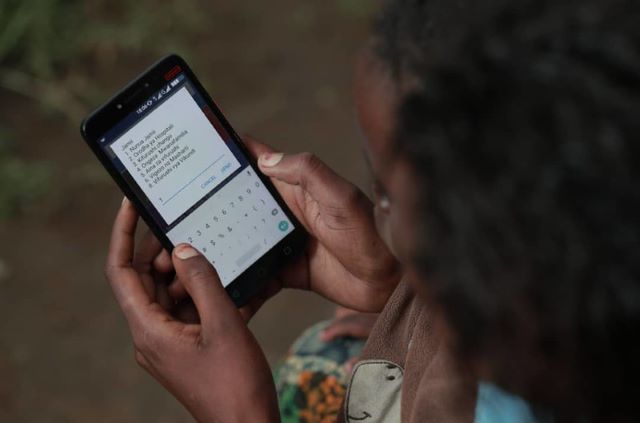 As the world becomes more technologically advanced and digitally connected, access to technology remains an issue, especially in developing countries. More so, the digital gap between women and men continues to expand, with 300 million fewer women than men using mobile internet,