• Link to X
  • Link to Facebook
  • Link to Instagram
  • Link to TikTok
  • Link to Youtube
  • About
    • About Us
      • President
      • Board of Directors
      • Board of Advisors
      • Financials
      • Our Methodology
      • Success Tracker
      • Contact
  • Act Now
    • 30 Ways to Help
      • Email Congress
      • Call Congress
      • Volunteer
      • Courses & Certificates
      • Be a Donor
    • Internships
      • In-Office Internships
      • Remote Internships
    • Legislation
      • Politics 101
  • The Blog
  • The Podcast
  • Magazine
  • Donate
  • Click to open the search input field Click to open the search input field Search
  • Menu Menu

Archive for category: Food & Hunger

Information and stories on food.

Food & Hunger, Hunger

Lingering Malnutrition in Iran

A 1965 study found that 31 percent of children under the age of five who were admitted to hospitals in Tehran during 1965 were suffering from malnutrition, leading to nearly 100 deaths. Moreover, as much as 53 percent of women and girls suffered from anemia around the same time.

Today, though, Iran has the lowest rate of childhood malnutrition in the region that includes the Middle East and North Africa. Roughly four percent of Iranian children are malnourished, a dramatic decrease from the percentages in the 1960s. Adequate vitamin A consumption is the norm, and 99 percent of households consume iodized salt, which provides the iodine necessary for proper brain development in children.

Thus, Iran was remarkably successful in dealing with the malnutrition problem. However, there is still much room for improvement. Iran still demonstrates what one might term “provincial malnutrition.”

For example, the province of Hormuzgan has a rate of underweight children triple that of the country’s average rate. In Sistan-Baluchestan, 21 percent of children will not grow to their full height potential because of malnutrition.

It is a common phenomenon: malnutrition reduction in urban areas and the lack of reduction (or the opposite) in rural areas.

Certain population groups, such as the large Afghan refugee population in Iran, are struggling with food insecurity and higher levels of malnutrition as well. Wasting among Afghan refugee children was found to be 12.7 percent, higher than the urban average. The diet diversity of refugee families is poor, too; around 15 percent of households go without fruits and vegetables for spans longer than a month.

Another population group, the elderly, was also found to have higher levels of malnutrition than the national average.

The reduction of malnutrition in Iran has not been universal, then. And even in urban areas, where people are more food secure, another problem related to malnutrition has appeared—namely, obesity. The obesity rate among children in the cities doubled during the past decade, and obesity is compatible and even correlated with malnutrition.

Fortunately, one expert, Dr. Zahra Abdollahi, the Health Ministry’s deputy for improving nutrition, is working to make the reduction of malnutrition in certain provinces a priority.

Ensuring such a reduction would improve children’s school performance and overall quality of life, according to Abdollahi. It would also improve the health of mothers and newborns, an area for needed improvement across the globe.

One major obstacle these efforts will face is Iran’s increasing population. Iran’s population of over 80 million strains the government’s ability to feed everyone in part because of its heavy reliance on grain imports. Reducing malnutrition requires increasing food security, a requirement that unsustainable population growth makes difficult to achieve.

– Ryan Yanke

Sources: World Bank, UNICEF, Iranian Journal of Epidemiology, IRNA, World Food Programme, Breitbart, Green Party of Iran
Photo: Flickr

September 15, 2014
https://borgenproject.org/wp-content/uploads/borgen-project-logo.svg 0 0 Borgen Project https://borgenproject.org/wp-content/uploads/borgen-project-logo.svg Borgen Project2014-09-15 12:00:512024-06-05 01:58:10Lingering Malnutrition in Iran
Food Security, Global Poverty

Limiting Post-Harvest Loss in Supply Chain


harvest loss
“Over 30 percent of all food produced in the world human consumption every year—which amounts to a staggering 1.3 billion tons of food—gets lost or wasted,” writes Jessica Ernst, of the Initiative for Global Development.

Consumers and producers at all levels are responsible for the waste. Citizens of higher income countries routinely buy more food than they can eat, while developing countries lose food due to harvest, storage and cooling issues as well as poor infrastructure.

One-fourth of the food lost every year would be enough to feed 870 million hungry people.

Dutch Agricultural Development & Trading Company is one company that is harnessing its power to contribute to a more effective use of crops.

Cassava is a root that is native to South America, but has existed in Africa for centuries. One of the issues in producing cassava is that once harvested, it has a limited amount of time to be processed and “split” before it spoils.

DADTCO introduced a technology called the Autonomous Mobile Processing Unit which travels to villages in sub-Saharan Africa during their harvest season so cassava can be processed on sight. DADTCO’s long term goal is to see cassava being used by national and international consumer and industrial products instead of other higher-priced materials.

Another private sector initiative is financed by the Rockefeller Foundation. The Initiative for Global Development received a grant from the Foundation to investigate the issue of post-harvest loss in agriculture supply chains, specifically in Ghana, Kenya and Nigeria.

Helen Mant, vice president of the Initiative for Global Development, explains her initiative, “We hope to identify market-driven solutions as well as opportunities for private sector partnerships that have the potential to significantly reduce post-harvest loss.”

As the world population grows, and demand for food rises, it is not production rates that need to go up. Companies are realizing that more effective ways of processing, distributing and consuming food need to be established, and the private sector is in a unique position to do so.

– Julianne O’Connor

Sources: Business Fights Poverty, Initiative for Global Development
Photo: CNN

September 10, 2014
https://borgenproject.org/wp-content/uploads/borgen-project-logo.svg 0 0 Borgen Project https://borgenproject.org/wp-content/uploads/borgen-project-logo.svg Borgen Project2014-09-10 12:21:042024-05-27 09:21:40Limiting Post-Harvest Loss in Supply Chain
Food & Hunger, Global Poverty

Poverty in Film: Kombit

From rooftop beekeeping in Brooklyn to underground tomato growing in Tokyo, the urban farming movement has become a global phenomenon. One recently produced short film, Kombit, looks at how urban farming has benefited one of Haiti’s poorest communes—Cité Soleil.

The film was produced in response to a Sundance Film Institute’s challenge to filmmakers. The institute had partnered with the Bill & Melinda Gates Foundation and was looking for short films that showed people overcoming poverty.

Directors Jeff Reichert and Farihah Zaman traveled to Port-au-Prince and unearthed a story about one community’s successful project in the post-earthquake context.

Of Cité Soleil, one of the film’s interviewees says the common perception is that the area is “hell,” but this perception ignores how people struggling to live there manage to get by. For example, in this “hell” people have developed a community garden, called Jaden Tap Tap, that has “considerably changed the view that nothing can work in Cité Soleil,” according to the aforementioned interviewee.

Initially, some denizens of Cité Soleil had started a soccer club to foster amity in the community, but many young people said they were too hungry to play soccer. Tactics were changed then, and Jaden Tap Tap was started.

First, some community members appropriated a spot that criminals had been using to covertly execute people, clearing the area to make it suitable for gardening. That was in 2006; now, Jaden Tap Tap is the largest urban garden in Haiti.

The garden has become a recourse for those in need. People can notify the garden manager, Blan, of their needs and stop by to harvest greens, carrots, olives or other produce. One interviewee said, “Thanks to the plants in the garden, like the olive tree, we fight malnutrition.”

“Look at my baby,” he continued. “He’s healthy.”

Jaden Tap Tap has inspired many Haitian families to begin growing their own food—thereby improving their food security and reducing malnutrition in a country where malnutrition is the leading cause of death for children five and younger. Even the smallest gardens, which are grown in car tires, help alleviate some of the burden of poverty.

– Ryan Yanke

Sources: Youtube, The Celebrity Cafe, Time, Partners in Health
Photo: Flickr

September 9, 2014
https://borgenproject.org/wp-content/uploads/borgen-project-logo.svg 0 0 Borgen Project https://borgenproject.org/wp-content/uploads/borgen-project-logo.svg Borgen Project2014-09-09 08:00:402024-12-13 17:53:56Poverty in Film: Kombit
Developing Countries, Education, Food & Hunger, Global Poverty

Corruption Kills Millions, Steals Trillions

In a report released by ONE, an anti-poverty organization, it is estimated that corruption causes 3.6 million unnecessary deaths and costs poor countries $1 trillion each year.

Using three different methodologies to calculate the cost of corruption, all three measures indicated that the loss was either $1 trillion or $2 trillion.

In what is called a “trillion dollar scandal,” corrupt business practices, “anonymous shell companies, money laundering and illegal tax evasion” all serve to severely reduce the effectiveness of poverty relief efforts.

While extreme poverty has been reduced to half its original level over the past 20 years and has the potential to be completely eradicated by 2030, corruption is putting much of that progress at risk.

While corruption is damaging in almost all countries, it is especially dangerous in poorer and developing countries and mostly affects children. It is estimated that millions of deaths could be avoided if corruption was combated and recovered funds were reinvested in essential fields.

Furthermore, the money that is siphoned out of poor countries is not from international development aid, which has helped make a considerable improvement, but rather directly from businesses in these countries. The money is generated by domestic businesses and illegally extracted out of the country. The largest source of financial drain is the illegal manipulation of cross-border trade.

The organization found that even recovering a small amount of the money lost to corruption could dramatically affect development. In Sub-Saharan Africa, a small amount of recovered funds could provide an education to an additional 10 million children each year; pay for an additional 500,000 primary school teachers; provide antiretroviral drugs for more 11 million people with HIV/AIDS and buy nearly 165 million vaccines.

The report stresses action that serves to end the secrecy that allows corruption to thrive. If specific policies were implemented that increased transparency and combated corruption in the four areas of “natural resource deals, the use of phantom firms, tax evasion and money laundering,” developing countries could considerably stem the financial drain.

Natural resources in particular can provide a vital source of funds that could greatly increase economic growth in many developing countries. Corruption concerning natural resources is particularly bad, with approximately 20 countries in Sub-Saharan Africa rich in natural resources but receiving few benefits from these reserves.

Specifically, One calls for mandatory reporting laws for the natural resource sectors and publish open data so citizens are able to track where travels from and to, ensuring that the funds are not lost to corruption.

Published in anticipation of the G20 meeting in Brisbane, Australia in November, the organization stresses the importance for the G20 nations to address the issue. Now that the cost of corruption has been defined in real terms, the fight against corruption can become more directed and effective.

— William Ying

Sources: ONE 1, ONE 2, ONE 3, BBC, The Guardian, ABC News, Yahoo News
Photo: Blogspot

September 1, 2014
https://borgenproject.org/wp-content/uploads/borgen-project-logo.svg 0 0 Borgen Project https://borgenproject.org/wp-content/uploads/borgen-project-logo.svg Borgen Project2014-09-01 03:00:272024-05-27 09:21:45Corruption Kills Millions, Steals Trillions
Extreme Poverty, Food & Hunger, Global Poverty, Human Rights

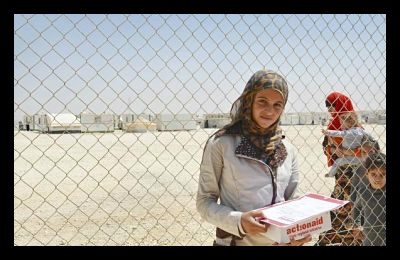
ActionAid USA: Aiding Over 25 Million People

ActionAid USA
ActionAid USA is working to end global poverty and further enhance human rights. Operating in over 40 countries around the world, through their work the organization has been able to reach and impact the lives of approximately 25 million people.

ActionAid addresses a variety of issues that affect the daily lives of people in an assortment of countries. The organization works to change policies surrounding biofuels (in the hopes of stabilizing food prices) and to help countries in poverty adjust to the shifting changes in climate.

It also focuses its attention on aiding countries that are hit by natural disasters and do not have the resources to help themselves. In providing relief, they have been able to respond to 87 of these occurrences and help about 7 million people.

Additionally, the organization has been looking for new ways to empower women, engage the youth and improve the overall quality of life for people across the globe.

One of ActionAid’s most recent projects has been advocating for President Obama to approve the Assessing Progress in Haiti Act, which he signed on August 8, 2014.

In the aftermath of the Haiti earthquake in 2010, although billions of dollars were donated to Haiti, the money was not always  spent in the most efficient way. The new act  requires that the U.S. government submit an extremely detailed report stating exactly how the money donated to provide relief for the Haitian people is being spent.

The organization, however, is not so supportive of President Obama’s backing of the “New Alliance” plan regarding agriculture in Africa. It claims putting agriculture into the hands of big businesses will hurt smaller farming communities and increase poverty levels. Buba Khan, the ActionAid International Advocacy Officer, stated that, “Companies should be part of Africa’s cultural future, but profit should not be prioritized over people’s rights.”

 As part of their efforts to effectively combat global hunger and poverty, ActionAid works to make sure that their opinions on what the U.S. government is doing right and what the U.S. government is doing wrong are clearly expressed. 

– Jordyn Horowitz

Sources: Lee House
Photo: ActionAid USA

August 28, 2014
https://borgenproject.org/wp-content/uploads/borgen-project-logo.svg 0 0 Borgen Project https://borgenproject.org/wp-content/uploads/borgen-project-logo.svg Borgen Project2014-08-28 04:00:312024-12-13 17:53:55ActionAid USA: Aiding Over 25 Million People
Food & Hunger

Cookstoves in Impoverished Countries

The majority of the developing world uses open fires and biomass stoves to cook their food and purify water. These methods are not efficient, requiring constant fuel for the fire to burn. In addition, the emissions are unclean and often cause health hazards for the women and children who breathe them in regularly.

These cooking methods waste valuable time, with the user having to constantly seek out fuel. The cookstoves and open fires further waste time when the user becomes sick more often because of the dirty fumes.

Open fires and burning biomass also release fumes like black carbon and methane into the environment, which speeds up climate change and increases air pollution.

This release of chemicals has taken its toll on its users. About four million premature deaths occur annually from the smoke exposure.

Smoke related illnesses include child pneumonia, lung cancer, chronic obstructive pulmonary disease, cataracts (which lead to blindness), heart disease and even low birth weight (for the babies of mothers who intake smoke regularly during pregnancy).

Luckily, the world’s change makers are acknowledging the importance of this issue, and organizations are being created to solve it.

Colorado University has teamed up with Baylor University to create a clean burning, fuel efficient cooking stove that is affordable and will last five years. They have financial backing from Shell Foundation, which is willing to grant $25,000,000 to make 10,000,000 of the clean stoves if the project is successful.

Top Third Ventures Ltd. has studied the traditional, developing world stove, and has used this model to create a fuel efficient, clean-burning innovation that maintains cultural similarities. The stove has the same physics as the classic “three stone fire,” but it involves less work to operate and produces less smoke.

While some organizations are focusing on the creation of the stove innovations, others are stressing the implementation of these stoves into poor households.

The Global Alliance for Clean Cookstoves has adopted the ambitious goal of ensuring 100 million households are provided with a clean cookstove by the year 2020. They are promoting the use of stoves and fuels that are affordable, sustainable and culturally acceptable among users.

The group has prioritized six countries, Bangladesh, China, Ghana, Kenya, Nigeria and Uganda, to start enabling market growth so households can obtain a stove, and producers in the country can supply them.

With the combined forces of science teams creating cleaner cooking technology and logistic teams focusing on the new stoves’ circulation, the possibility of a cleaner, healthier future is well on its way.

– Courtney Prentice

Sources: Energy for Development, Clean Cookstoves, Baylor, Indie Go Go
Photo: Carbon Finance for Cookstoves

August 27, 2014
https://borgenproject.org/wp-content/uploads/borgen-project-logo.svg 0 0 Borgen Project https://borgenproject.org/wp-content/uploads/borgen-project-logo.svg Borgen Project2014-08-27 03:00:222024-06-04 03:22:14Cookstoves in Impoverished Countries
Developing Countries, Development, Food Security

Obesity and Food Insecurity

According to nutrition epidemiologist Barry Popkin, in roughly 15 years, obesity rates in Mexico among men and women went from a small proportion of each population to 65 and 71 percent, respectively. Mexico’s situation is part of a trend of increasing obesity on a global scale. Around 2.1 billion people in the world are now either obese or overweight.

Because more than half of all the world’s obese and overweight live in fewer than 20 countries—developed countries, mostly—the temptation exists to disregard obesity’s impact on many developing countries.

However, one study found that “obesity rates tripled in developing countries between 1980 and 2008,” whereas it only increased by about half that amount in developed ones.

Developing countries tend to struggle with high levels of food insecurity, though, which one might assume would lead to lower weights, not obesity. Researchers are perplexed as to how the two factors— obesity and food insecurity —can coexist and they have been searching for data that will establish correlation, causation or both.

The recently released Global Food Security Index, which just added a new obesity indicator to its model, studies the matter in detail. Its overall conclusion affirms that co-existence is possible. Despite the correlation, it remains that the relationship between obesity and food security/insecurity is still poorly understood on a global scale.

The index helps to explain the presence of obesity in highly food insecure countries by noting differences between classes. It is the wealthier classes in developing countries, which are more food secure, that have experienced the largest increases in obesity (often after switching to more Western lifestyles).

The study also points out that obesity is increasing among the poor, as well, and experts have proposed various explanations for this phenomenon.

Some maintain the poor have to rely on high-calorie, low-nutrient food, which leads to obesity. Others look to “feast-famine cycles” for answers: poor populations swing between binging and starving—a cycle that changes one’s metabolism. Still others say obesity among the poor is rising because obesity is a wealth-indicator for the poor.

Causality remains exceedingly difficult to prove, though, because many factors, such as diet, wealth and level of physical activity, can all help cause obesity. Moreover, even correlation has been hard to establish in every developing country. In fact, studies in Ghana, Trinidad and Tobago show food insecurity correlated with lower weights, but results from studies in Malaysia were more complex.

Thus, no conclusion can be drawn as to what single factor is causing obesity in developing countries. It may be that no such factor exists.

Nevertheless, researchers will continue to search for causes. Three million people die every year from health problems that obesity contributes to. Researchers know that if they can pin down the causes of obesity, it could help to save the lives of millions.

– Ryan Yanke

Sources: Global Food Security Index, Scientific American, Huffington Post, Reuters
Photo: Today Online

August 25, 2014
https://borgenproject.org/wp-content/uploads/borgen-project-logo.svg 0 0 Borgen Project https://borgenproject.org/wp-content/uploads/borgen-project-logo.svg Borgen Project2014-08-25 04:00:592024-05-27 09:21:28Obesity and Food Insecurity
Development, Food & Hunger, Global Poverty, Hunger

Global Food Security Index 2014

Last May, the Economist Intelligence Unit (EIU) published its annual DuPont-commissioned Global Food Security Index (GFSI). The index aims to “provide a robust and consistent analytical framework for measuring and deepening the understanding of food insecurity around the globe.”

The index showed that food security in 70 percent of countries increased from 2012 to 2013. In that time span, the number of people suffering from chronic hunger decreased from 868 million to 842 million, with a 17 percent decline over the past 24 years.

However, the index also highlighted numerous obstacles inhibiting the growth of food security that both poor and rich countries have yet to surmount.

One hundred nine countries were ranked. The top five, in order, were the United States, Austria, the Netherlands, Norway (tied with the Netherlands) and Singapore. The bottom five were Burundi, Togo, Madagascar, Chad and the Democratic Republic of the Congo. Of all 109 countries, Uganda saw the biggest increase and Myanmar saw the biggest decrease in food security.

To determine these rankings, the GFSI incorporates three categories: Affordability, Availability and Quality & Safety.

The Affordability category incorporates measures like food consumption as a percentage of household expenditure, the proportion of a country’s population living under the $2 dollar per day global poverty line and import tariffs on agricultural goods. This category, a combination of six indicators, seeks to determine the degree to which people can purchase nutritional food without depleting their financial resources. In the top performing countries (U.S. and Singapore), people spent less than 15 percent of their budget on food.

This all matters little if food is affordable, but unavailable, so the GFSI assesses how easily people can access food as well. Acquiring the food one needs can be difficult in countries plagued by corruption, a lack of infrastructure and unpredictable agricultural outputs. Low-income countries in Sub-Saharan Africa scored the lowest in Availability, though the region experienced a notable increase in overall food security.

Lastly, the GFSI analyzes the quality and safety of diets in different countries. It looks at the availability of micronutrients like vitamin A and vegetal iron, protein quality and diet diversification, among other indicators.

According to the index, the majority of countries made gains in Affordability, but many countries lost points in Availability and Quality & Safety. In many countries grouped in the “Asia & Pacific” region, food indeed became more affordable, but only because diet diversification had been markedly reduced.

Two new indicators were added this year: food loss as part of the Availability category and obesity as part of the Quality & Safety category. Both have been controversial in recent years. In India, for example, a lack of food-chain infrastructure results in tremendous food loss—as much as 25 percent of produce every year.

Furthermore, obesity has become a growing concern even in countries with high food insecurity, though experts are still at a loss to explain this phenomenon.

The upshot of the index seems positive, with food security increasing in most countries. Despite this progress, areas for improvement have been pointed out. For one, women farmers across the globe still lack the same access to education, land and machinery that men have. Moreover, governments in developing countries are still struggling to make food more affordable without sacrificing dietary quality.

– Ryan Yanke

Sources: Economist, Blouin News, Dupont, Global Food Security Index
Photo: BlouInNews blog

August 24, 2014
https://borgenproject.org/wp-content/uploads/borgen-project-logo.svg 0 0 Borgen Project https://borgenproject.org/wp-content/uploads/borgen-project-logo.svg Borgen Project2014-08-24 08:00:142024-05-27 09:21:21Global Food Security Index 2014
Activism, Children, Food & Hunger, Food Security, Global Poverty, Health

INMED Partnerships for Children

Institute for International Medicine Partnerships for Children is an organization dedicated to preventing and combating the harm that comes to children through violence, disease, hunger and neglect.

INMED Partnerships for Children values taking a holistic approach to improve children’s health worldwide through addressing the causes of disease and hunger and attempting to remedy them from the source. INMED is dedicated in implementing long-term solutions to enhance both the quality and longevity of children’s lives.

Founded 27 years ago, INMED has stuck by its original goal of helping to improve the health and safety of children all over the globe.  Led by President and CEO Linda Pfeiffer, INMED has been targeting programs and delivering care to help children in both urban and rural areas of the world.  INMED also has offices worldwide, in places such as Virginia, Peru, Brazil, South Africa and the Caribbean.

INMED has partnered with a diverse group of companies in order to make sure they best spread their mission. They have partnered with companies such as Macy’s, the Ronald McDonald House Charities, the International Foundation, United States Agency for International Development, Kids in Distressed Situations, Johnson and Johnson and many more.

INMED maps out large areas they want to improve and then tailors specific projects to fall into those categories. These broader categories include health and nutrition, youth development, education and skill building, and adaptive agriculture and aquaponics.

One of INMEDs upcoming events will be the 2015 Harvest the Future International Conference, which is set to take place June 14-17, 2015 in Montego Bay, Jamaica.  Experts from across the globe will gather at this conference in order to discuss possible solutions to problems such as water scarcity, income generation sustainable livelihoods, nutrition and health, food security and climate change adaptation.

Conference speakers include Christopher Somerville, an Urban Agriculture Consultant at Food and Agriculture Organization of the United States, Denise A. Herbol, Mission Director at US Agency for International Development, and Thad M. Jackson, Executive Vice President of INMED Partnership.

– Jordyn Horowitz

Sources: INMED, INMED 2, INMED 3, Middleburg Women
Photo: Zimbio

August 22, 2014
https://borgenproject.org/wp-content/uploads/borgen-project-logo.svg 0 0 Borgen Project https://borgenproject.org/wp-content/uploads/borgen-project-logo.svg Borgen Project2014-08-22 12:00:532024-06-05 01:58:02INMED Partnerships for Children
Food & Hunger, Global Poverty, Health

Primer on Food Insecurity

Hunger kills more people per year than AIDS, malaria and tuberculosis combined. Nearly 842 million people in the world do not have enough to eat and 98.2 percent of them live in developing countries. Yet hunger is essentially man-made; it is a product of poverty. In a world that can produce more than enough food to sustain everyone, hunger is due to human inefficiencies and inaction.

In the world of global poverty, “food insecurity” is a term often mentioned. But what exactly is food insecurity, what are its effects and how can it be prevented?

What is Food Insecurity?

In order to understand food insecurity, it is important to first define food security. According to the World Food Summit of 1996, food security exists “when all people at all times have access to sufficient, safe, nutritious food to maintain a healthy and active life.”

This condition is based on three components: availability, access and use. First, a sustainable and sufficient food supply must exist to prevent malnutrition. Second, people must have both the physical and economic resources to obtain that food. And third, people must be able to use food in conjunction with clean water and sanitary practices to keep healthy, especially in countries where food-borne diarrhea has the potential to cause serious harm. Food insecurity means being without any of these critical components.

At its core, food security provides recipients with the elements necessary for optimal health and nutrition. But it depends on a sustainable, dependable and sufficient food supply system. Such a system solves not only issues of hunger, but also benefits environmental health, the economy and social equality.

What are the Effects of Food Insecurity?

Without sustainable and dependable food sources, malnutrition can wreak havoc on a population. Lack of access to sanitation and clean water can also spread diarrhea and other food-borne illnesses, which are especially deadly to young children. In addition, lack of proper access to food hinders development and trade. Victims of malnutrition are unable to work productively or put energy into new endeavors. When the majority of a country suffers from food insecurity, it is unlikely that substantial development will occur. This leads to a vicious cycle of poverty, hunger and stagnation.

How Can Food Insecurity be Prevented?

Food insecurity can be ameliorated by increasing local food production, increasing food imports, providing more jobs and higher pay for poverty-stricken communities and improving food distribution infrastructure. But food insecurity is a multifaceted issue, one which complicates any potential solutions. An example of a promising idea gone wrong is that of self-sufficiency.

Food self-sufficiency—in other words, meeting all food needs through domestic production—used to be a promising potential solution for developing nations. Not only would countries be able to buffer themselves from the fluctuations of international prices and trade, they would also be able to allocate more funds to the purchasing of foreign commodities instead of foodstuffs. Self-sufficiency was touted as a method to ensure that sufficient food was always available for a country’s population.

Yet in reality, many issues arose. Climatic factors and natural events such as storms, flooding and droughts could rapidly deplete or destroy resources and force nations to depend on foreign aid or imports. In arid regions, a disproportionate amount of available water and land resources were devoted to irrigation, depriving other sectors of water. Some countries even accumulated massive water deficits trying to produce their own grains.

Today, the most reliable solution seems to be a combination of self-sufficiency and food imports. Because of recent water scarcities, it is no longer feasible for many countries to irrigate their lands or grow certain crops. In addition, labor in industries other than agriculture can lead to higher returns and profits. This makes it easier to exchange national commodities for food imports.

However, poor developing countries in areas such as sub-Saharan Africa and South Asia struggle to both grow their own food and purchase necessary food imports. Food aid is the quickest solution in such dire cases of food insecurity. But this also stresses the need for more long-term, extensive agriculture infrastructure programs. Such programs have great potential to increase food security by stimulating national productivity and reducing poverty.

-Mari LeGagnoux 

Sources: WHO, World Food Programme, FAO
Photo: Agripolicy outreach

August 22, 2014
https://borgenproject.org/wp-content/uploads/borgen-project-logo.svg 0 0 Borgen Project https://borgenproject.org/wp-content/uploads/borgen-project-logo.svg Borgen Project2014-08-22 10:14:482024-12-13 17:49:35Primer on Food Insecurity
Page 53 of 78«‹5152535455›»

Get Smarter

  • Global Poverty 101
  • Global Poverty… The Good News
  • Global Poverty & U.S. Jobs
  • Global Poverty and National Security
  • Innovative Solutions to Poverty
  • Global Poverty & Aid FAQ’s
Search Search

Take Action

  • Call Congress
  • Email Congress
  • Donate
  • 30 Ways to Help
  • Volunteer Ops
  • Internships
  • Courses & Certificates
  • The Podcast
Borgen Project

“The Borgen Project is an incredible nonprofit organization that is addressing poverty and hunger and working towards ending them.”

-The Huffington Post

Inside The Borgen Project

  • Contact
  • About
  • Financials
  • President
  • Board of Directors
  • Board of Advisors

International Links

  • UK Email Parliament
  • UK Donate
  • Canada Email Parliament

Get Smarter

  • Global Poverty 101
  • Global Poverty… The Good News
  • Global Poverty & U.S. Jobs
  • Global Poverty and National Security
  • Innovative Solutions to Poverty
  • Global Poverty & Aid FAQ’s

Ways to Help

  • Call Congress
  • Email Congress
  • Donate
  • 30 Ways to Help
  • Volunteer Ops
  • Internships
  • Courses & Certificates
  • The Podcast
Scroll to top Scroll to top Scroll to top