• Link to X
  • Link to Facebook
  • Link to Instagram
  • Link to TikTok
  • Link to Youtube
  • About
    • About Us
      • President
      • Board of Directors
      • Board of Advisors
      • Financials
      • Our Methodology
      • Success Tracker
      • Contact
  • Act Now
    • 30 Ways to Help
      • Email Congress
      • Call Congress
      • Volunteer
      • Courses & Certificates
      • Be a Donor
    • Internships
      • In-Office Internships
      • Remote Internships
    • Legislation
      • Politics 101
  • The Blog
  • The Podcast
  • Magazine
  • Donate
  • Click to open the search input field Click to open the search input field Search
  • Menu Menu

Archive for category: Food & Hunger

Information and stories on food.

Children, Development, Food & Hunger, Global Poverty

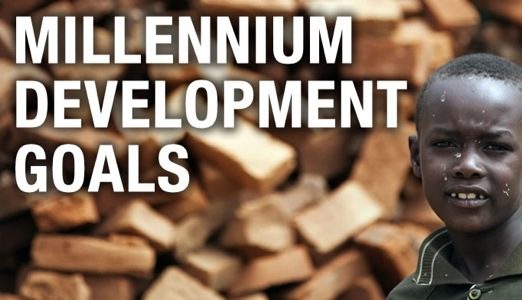
MDGs: What They Achieved After 15 Years

MDGsAt the Millennium Summit in 2000, history was made when a record number of world leaders gathered to adopt the U.N. Millennium Declaration, committing nations to cutting extreme poverty in half through the Millennium Development Goals (MDGs) by 2015 and eradicate poverty through the Sustainable Development Goals (SDGs) by 2030.

Through the agreement, the MDGs target different dimensions of poverty including hunger, disease, insufficient shelter, gender inequality, global education and environmental sustainability.

With an expiration date of December 2015, the achievements made through the MDGs provide evidence that poverty can be eliminated worldwide by 2030.

MDG 1: Cut Extreme Hunger and Poverty in Half

Since 1990, the amount of people living on less than $1.25 per day decreased from 1.9 billion to 836 million in 2015. While extreme poverty was cut in half, extreme hunger narrowly missed the mark, dropping from 23.3 percent to 12.9 percent.

MDG 2: Achieve Universal Primary Education

Primary School Enrollment has seen a slight rise, increasing from 83 percent in 2000 to 91 percent in 2015.

MDG 3: Eliminate Gender Disparity in Education and Empower Women

Since 1990, approximately two-thirds of developing countries have achieved gender unity. In Southern Asia, the primary school enrollment ratio favors girls over boys in 2015.

MDG 4: Reduce Child Mortality by Two-Thirds

The child mortality rate decreased from 12.7 million in 1990 to 6 million in 2015. In addition, the measles vaccine compared to 2000 covered almost 10 percent more children worldwide.

MDG 5: Reduce the Maternal Morality Rate by 75 Percent

Compared to 1990, the maternal mortality rate has been cut in half, narrowly missing the 75 percent benchmark.

MDG 6: Combat HIV/AIDS, Malaria and Other Diseases

Since 2000, the number of new HIV infections decreased by 40 percent, dropping from 3.5 million to 2.1 million in 2013.

MDG 7: Increase Environmental Sustainability

In 2010, the goal to increase access to clean water was achieved five years early. Since 1990, 2.6 billion people have gained access to improved drinking water.

MDG 8: Develop an Open Partnership for Development

Overseas development assistance from developed nations to developing countries increased 66 percent. With the expansion of technology, Internet infiltration increased significantly from 6 percent in 2000 to 43 percent in 2015.

– Alexandra Korman

Sources: The Guardian
Photo: NaijaLog

November 15, 2015
https://borgenproject.org/wp-content/uploads/borgen-project-logo.svg 0 0 Borgen Project https://borgenproject.org/wp-content/uploads/borgen-project-logo.svg Borgen Project2015-11-15 09:33:272024-12-13 18:05:23MDGs: What They Achieved After 15 Years
Food & Hunger, Global Poverty, Health, Malnourishment

Going Door-to-Door to End Malnutrition in South Sudan

malnutrition_in_south_sudan
UNICEF and the World Food Programme announced recently that volunteers will go door to door over the next 12 months in an effort to screen 250,000 children for acute malnutrition in South Sudan.

The initiative will target households in the state of Warrap in Buhr el Ghazi, where an estimated 26,000 children are thought to suffer from life-threatening cases. Volunteers have been chosen from local communities and trained by the state Ministry of Health with support from UNICEF and WFP.

“Visiting every single home will help ensure that children who are malnourished or sick will be referred for treatment and will receive life-saving care,” said Vilma Tyler, Chief of Nutrition for UNICEF in South Sudan.

The announcement comes just as the recent Integrated Food Security Phase Classification warns that the situation in some areas of the country could escalate to famine levels if humanitarian assistance isn’t delivered by December. Nearly 238,000 children in South Sudan are currently experiencing Severe Acute Malnutrition (SAM).

Widespread food insecurity in the newly formed country has been the result of ongoing conflict between various rebel groups and the fledgling South Sudanese governing body.

Civil war came to a head in Juba in 2013 amidst ethnically motivated attacks, civilian massacres, and the displacement of over 750,000 children as people fled their homes to escape the violence.

Record food prices caused by the resulting economic downturn and unreliable rainy seasons have exacerbated an already dire problem; the number of children facing SAM doubled from the previous year.

With time running out, volunteers are working quickly to triage those in need. Children at risk of starvation will receive treatment at UNICEF-supported health facilities and outpatient therapeutic programs while caregivers will be offered guidance on how to keep children healthy through nutrition, hygiene and sanitation practices.

For children with SAM, initial treatment often means utilizing Ready-to-Use Therapeutic Food (RUTF) – 500kcal spreads containing essential amino acids, lipids, and minerals – as their sole nutritional intake.malnutrition_in_South_Sudan

UNICEF is hoping to build on the progress it made in 2014 by prioritizing three strategic objectives: continuing humanitarian intervention in UN Protection of Civilian (PoC) and Internally Displaced Person (IDP) sites, scaling up its Rapid Response Mechanism (RRM) in hard to reach locations and supporting capacity building by engaging community-based organizations.

Until March 2014, UNICEF primarily operated within United Nations’ PoC and IDP sites, which sheltered only a fraction of the 800,000 people displaced by conflict. Ethnic and gender-based harassment and shifting security situations prevented volunteers and specialists from reaching 90 percent of at-risk individuals across the country.

Still, for 90,000 people, life-saving treatment and sustainable training came just in time. In addition to nutrition services, children benefited from guidance on sanitation and hygiene and were enrolled in school.

The development of RRM revolutionized UNICEF’s reach in the country. Mobile teams of specialists are now equipped to deploy to locations previously inaccessible because of deteriorated security.

During the 34 missions these teams conducted last year, more than 500,000 additional people were screened, and the number of children receiving life-saving treatment for SAM climbed to 93,000.

These teams are also equipped to collect more extensive data on the ground and to implement warning systems, which will alert them to return to communities when progress begins to reverse. UNICEF is hopeful that by ramping up RRM capabilities, they will continue to see more patients.

To prevent recurring cases, UNICEF will step up engagement with community-based organizations with a focus on capacity building. Last year, the organization worked with 88 local organizations to train around 1,900 partners on SAM treatment, infant and young child feeding, and nutrition surveys.

It also supported local working groups seeking to maintain progress in affected areas and engaged the government of South Sudan on water sanitation and national planning.

These efforts will be critical to ensuring that sustainable development continues even after these next 12 months, and UNICEF is hopeful that, for children in South Sudan, it will.

– Ron Minard

Sources: IpcInfo 1, IpcInfo 2, UNICEF 1, UNICEF 2
Photo: Flickr, Wikipedia

November 13, 2015
https://borgenproject.org/wp-content/uploads/borgen-project-logo.svg 0 0 Borgen Project https://borgenproject.org/wp-content/uploads/borgen-project-logo.svg Borgen Project2015-11-13 01:30:382024-12-13 18:05:23Going Door-to-Door to End Malnutrition in South Sudan
Developing Countries, Development, Food & Hunger, Global Poverty, Health

Cooking Up a Solution to Poverty and Malnutrition in Haiti

malnutrition_in_haiti
A chef connects solutions to poverty and malnutrition in Haiti with cooking.

Chef José Andrés has discovered a new approach to solving poverty in Haiti, and it starts in the kitchen.

In Huffington Post’s recent feature on Andrés, Lifestyle Blog Editor Zoë Lintzeris details Andrés’ love affair with Haiti, describing his innovative ideas to improve the country’s cooking conditions and, subsequently, save it from poverty.

Andrés’ solution focuses on improving cooking apparatus to decrease safety hazards in the cooking process with his “clean cook stoves.”

Cooking safety hazards in the region include the use of “dirty” firewood and coal, two fuel sources that are unsustainable and not very profitable.

These dangerous methods have gone hand in hand with deforestation and pollution in the region. Erosion of soil, extreme and frequent flooding, degradation of water resources and habitat destruction are some forces linked to socioeconomic turmoil.

“Haiti has the highest rates of deforestation of any country in the world — a mere 2 percent of Haiti’s original forests remain,” says TriplePundit.

In turn, deforestation is responsible for a large portion of Haiti’s increasing poverty rate. Haiti’s real GDP growth has slowed down in the past two years, going from 4.2 percent in 2013 to a forecasted 1.7 percent in 2015, according to the World Bank.

GOOD Magazine suggests that “efficient stoves can help in the meantime, according to Jean Kim Chaix, the founder of the Charcoal Project, which aims to become a clearinghouse on charcoal alternatives and a consultant for green entrepreneurs.”

The Charcoal Project has undertaken a project to provide an energy efficiency program for schools, to teach them to produce fuel for cooking and lighting.

The project utilizes wood and stoves that reduce smoke and save fuel, which is just what Andrés is shooting for with his clean cookstoves.

The Global Alliance for Clean Cookstoves, hosted by the UN foundation, is Andrés’ initiative to save lives and protect the environment by creating a global market for “clean and efficient household cooking solutions.”

The Alliance has set out a 10-year goal to foster the adoption of clean cookstoves and fuels in 100 million households by 2020.

Andrés also discussed Haitian cuisine in his PBS special, “Undiscovered Haiti with José Andrés.” In the video, he describes the deep ties between the food and the country’s history and culture.

Andrés’ relationship with Haiti has led him to uncover a revolutionary solution to a problem that has a long history. Perhaps economic prosperity really can start in the kitchen.

– Ashley Tressel

Sources: Huffington Post, Good.is, TriplePundit, World Bank, Charcoal Project, Clean Cook Stoves
Photo: SCINet

November 13, 2015
https://borgenproject.org/wp-content/uploads/borgen-project-logo.svg 0 0 Borgen Project https://borgenproject.org/wp-content/uploads/borgen-project-logo.svg Borgen Project2015-11-13 01:30:192024-06-04 04:33:52Cooking Up a Solution to Poverty and Malnutrition in Haiti
Development, Food Aid, Foreign Aid, Global Poverty

Myths about Foreign Aid

myths_about_foreign_aid
The fact is that some 795 million people in the world do not get enough food to lead healthy, productive lives, and the vast majority of the world’s hungry live in developing countries. The following are three myths about foreign aid:

1. We shouldn’t bother. Our small contributions won’t make a difference in such an enormous problem as global poverty. When it comes to world hunger, the “one person can’t make a difference” myth can be easily dispelled.

Here in the U.S., mosquitoes are aggravating little pests; however, in Africa, mosquitoes are deadly. In 2005, the Against Malaria foundation was founded; it implements practical, cost-efficient, insecticide-treated bed nets to fight this preventable disease.

Over the past 15 years, approximately 663 million cases have been prevented in Africa — roughly 68 percent of that reduction is contributed to the distribution of a billion bed nets. Each bed net costs around $5, lasts for three to four years and protects two people. So, yes, as little as five bucks can make a difference in a global problem, and this, of course, is just one example.

2. We have no idea where our money really goes. Those fundraisers are scams. Unfortunately, the existence of corruption persists all over the world, and that isn’t a myth. Along with the endless benefits the internet provides there are also the ceaseless hoaxes, which are often in the disguise of charitable organizations.

To some extent, it seems as if charities and even the word “donate” tend to act as repellents, triggering apprehension and uneasiness. Fortunately, programs, such as the Millennium Challenge Account, and laws, such as the Foreign Corrupt Practices Act, monitor and help safeguard aid. And when in doubt, research the organization before providing any type of aid. Consumer Affairs is one helpful website.

3. Taking care of others in developing countries implies that we are failing to “take care of ourselves.” On the contrary, the more independent others become, the more consumers we acquire. Actually, our nation’s safety strengthens as we lift others out of poverty.

Three major myths about foreign aid busted and many more to be exposed. The following are three ways we can effectively help eradicate global poverty and hunger:

  1. Research the organization before providing aid.
  2. Get active and lobby for the world’s poor. Call and/or email Congress in support of poverty reduction. The Borgen Project provides an efficient, simple method to contact Congress.
  3. Believe that you can make a difference in a global epidemic. The very act of providing aid to another is itself a gift.

– Dana McLemore

Sources: Against Malaria, DTIC, FAO, KFF
Photo: Flickr

November 12, 2015
https://borgenproject.org/wp-content/uploads/borgen-project-logo.svg 0 0 Borgen Project https://borgenproject.org/wp-content/uploads/borgen-project-logo.svg Borgen Project2015-11-12 01:30:202020-06-24 19:26:30Myths about Foreign Aid
Food & Hunger, Food Security, Global Poverty

Social Supermarket Buys Out Hunger in Cornwall

Social Supermarket Buys Out Hunger in Cornwall

England is one of the wealthiest countries in the world, but it faces a major food crisis. Last year, close to 100,000 children went hungry. In London alone, 80,000 people earn less than the cost of living. They can’t afford daily, nutritious meals.

In recent years, England has been turning toward a new kind of store to fight hunger and poverty. Social supermarkets, “shop[s] selling discounted food to people on a low income,” have been multiplying since 2013.

Cornwall is the latest area to welcome the new market. Hunger in Cornwall is a serious matter. The Food Bank hands out 9,000 meals every month to poor families.

Charlotte Danks, 20, used her entrepreneurial skills to open a social supermarket in the town of Newquay. Bargain Brand Food Outlet receives its stock from supermarkets who discard the products because of manufacturing flaws, package damage and expired sell-by dates. Many items sell for 25 pence, or 39 cents in U.S. currency.

“If I come in here and buy a loaf for 20 pence, I’ve got money for gas,” Richard Benson, a regular social supermarket customer, told The Guardian.

Social supermarkets do more than save people money; they save food. According to the European Commission, the UK is responsible for the majority of food waste in the European Union—89 million tons per year.

Restocking products keeps them out of landfills and saves supermarkets from paying landfill tax. In turn, tax avoidance encourages markets to donate to their social counterparts.

Because the supplies come from larger stores and franchises, the stock varies from day to day. Some days, chocolate products outweigh meat and vegetables. Everything is first come first serve. Most stores require a card membership to prevent anyone but the needy from taking advantage of the low prices.

The emergence of social supermarkets opens several more job opportunities, lessening the number of struggling households. Danks plans to open two more stores in the next six months in the hope of eradicating poverty and hunger in Cornwall.

“I hope I can bring this to other struggling communities,” Danks told The Telegraph.

England isn’t alone in its efforts to resolve the food crisis through food redistribution. France, which already boasts 800 social supermarkets, unanimously banned stores from disposing of food earlier this May. Instead, stores are required to donate edible food to charities.

If the spread of social supermarkets and food waste elimination continue, hunger in Cornwall, England, Europe and the world could be bought out for good.

– Sarah Prellwitz

Sources: Coin Mill, Collins Dictionary, Food and Cornwall, Independent, London Food Bank, Telegraph, The Guardian 1, The Guardian 2
Photo: Pixabay

November 10, 2015
https://borgenproject.org/wp-content/uploads/borgen-project-logo.svg 0 0 Borgen Project https://borgenproject.org/wp-content/uploads/borgen-project-logo.svg Borgen Project2015-11-10 01:30:352024-12-13 18:05:21Social Supermarket Buys Out Hunger in Cornwall
Aid, Food & Hunger, Global Poverty

Freedom from Hunger: Alleviating Poverty in Mexico

freedom from hunger
As the Mexican economy continues to recover from the most recent recession, social concerns still remain.

Specifically, low wages, underemployment and inequitable income distribution are the causes of suffering in the impoverished southern states.

According to the Ministry of Social Development, 54% of all Mexicans live in poverty. Poverty standards in Mexico equate to $4 per day. However, 32% of the population lives on $2.50, and 24% live on less than $2.00. Characteristics of poverty include the lack of access to basic human needs such as nutrition, clean

Characteristics of poverty include the lack of access to basic human needs such as nutrition, clean water and shelter.

In 2005, nonprofit organization, Freedom from Hunger created Alcance. The organization’s principal focus is to assist financial institutions to integrate education and health protection services that specifically address women and their families.

Alcance works in conjunction with the Mexican government to coordinate microfinance networks. The purpose of these networks is to provide financial education and to equip financial institutions to disseminate funds.

As of 2014, Alcance launched a Saving for Change programs in two Mexican states where traditional microfinance has not reached the rural communities of the chronically poor.

The aim is to help institutions successfully manage social objectives and increase their ability to provide high quality, client-responsive services.

Organizations such as Mastercard also help create programs as global partners. The current program they fund will develop, test and document innovations in the integration of financial services. In addition, education will be provided for youth between the ages of 13 and 24 in Mali and Ecuador.

The program’s focus is to build a range of microfinance providers to offer products and services for youth living in poverty. The goal is to utilize these services to guide youth financially, in order to increase options for their future.

Youth participants’ parents and community leaders will be educated on how to be supportive of youth in ascertaining financial education building.

Programs to address education, health care, social security, quality of basic services in the household and income and social cohesion are necessities in helping to address the nation’s poverty.

– Erika Wright

Sources: Freedom from Hunger, The Mastercard Foundation
Photo: ChildFund.org

November 9, 2015
https://borgenproject.org/wp-content/uploads/borgen-project-logo.svg 0 0 Borgen Project https://borgenproject.org/wp-content/uploads/borgen-project-logo.svg Borgen Project2015-11-09 01:30:382020-06-24 19:22:04Freedom from Hunger: Alleviating Poverty in Mexico
Children, Food & Hunger, Global Poverty

Fighting Malnutrition in Honduras

Malnutrition_in_Honduras
Honduras is the third poorest nation in the Americas. One-third of the population lives below the poverty line and 1.5 million Hondurans or 20% of the population, face hunger on a daily basis.

However, malnutrition is especially problematic for children.

  • In rural Honduras, the problem is especially acute with 48% of the population suffering from malnutrition.
  • 10% of infants born in Honduras are underweight as a result of malnutrition in the country.
  • One out of two children in the poorest communities suffers from stunted growth.
  • 50% of children between the ages of 2 and 6 suffer from anemia.
  • 29% of Honduran children younger than 5 years old suffer from slow growth rates.

Fortunately, several organizations are providing funding to the country to alleviate malnutrition.

World Bank and the United Nations

The growing rates of malnutrition in Honduras have prompted the World Bank and the United Nations to act. Currently, the organization is supporting a program called the AIN-C with the United States and investing $20 million into Honduras.

The money will be divided among nearly 1,000 Honduran communities and benefit 16,000 children.

World Food Programme

In addition, the World Food Programme (WFP) implemented the School Meals Programme in Honduras, which has provided 1.2 million children in primary school with food aid.

The program targets the very poorest communities in the country and provides the children with daily meals in order to encourage school enrollment. In addition to the program, the WFP has implemented the Purchase for Progress (P4P) program.

The P4P is a program that buys products from small farmers in order to help support the community. In partnership with other buyers, they have purchased $60 million in food from local Honduran communities.

Hopefully, as the international community continues to support poverty reducing programs in Honduras, the rate of malnutrition will decrease throughout the country.

– Robert Cross

Sources: Hope International, World Bank, World Food Programme
Photo: Wikimedia

October 24, 2015
https://borgenproject.org/wp-content/uploads/borgen-project-logo.svg 0 0 Borgen Project https://borgenproject.org/wp-content/uploads/borgen-project-logo.svg Borgen Project2015-10-24 01:30:062024-05-27 09:28:13Fighting Malnutrition in Honduras
Activism, Food & Hunger, Global Poverty

What is the Africa Governance Initiative?

africas governance
One of the hallmarks of former UK Prime Minister Tony Blair’s premiership is his commitment to the development of Africa. Since leaving office in 2007, Blair continues his dedication to Africa’s poor through the Africa Governance Initiative (AGI).

In Sub-Saharan Africa, nearly 50 percent of all people live in poverty. Around 239 million Africans face food insecurity and 70 percent do not have electricity.

In 2008, AGI was founded upon a mission to establish enduring governments that will lift impoverished Africans out of poverty.

The AGI team strives to achieve this goal by working with public officials to improve their policies, strategies and capacities to affect change within their respective countries.

Liberia’s President Ellen Johnson Sirleaf, who was elected in 2006, noted, “There you stand, trying to re-build a nation in an environment where everyone wants to see change take place right away…. Only you cannot because the capacity to implement whatever change you have in mind does not exist.”

Liberia is one of six African countries AGI works with. The others are Sierra Leone, Guinea, Nigeria, Ethiopia and Rwanda—where AGI was piloted.

AGI operates by working “shoulder-to-shoulder” with the highest levels of government. With a cornerstone platform of prioritization, planning and performance management, AGI tailors its programs to the specific needs of each country.

In 1994, many Rwandans fled the country or died as a result of genocide. Rwanda felt the devastating effects of the genocide for more than a decade after. In 2008, AGI came to Rwanda to help President Paul Kagame and his government put Rwanda back on a path toward development.

The initiatives AGI undertook in Rwanda were tailored to their Vision 2020 plan. Vision 2020 is the government’s plan to make Rwanda a middle-income country by 2020.

Together the AGI team and the Rwandan government developed the Strategic Capacity Building Initiative (SCBI). The SCBI paired government workers with technical experts to recognize and address the reasons why capacity building in Rwanda failed in the past.

After much research and deliberation, SCBI decided on four measures that would be the key to program implementation in the future.

These measures are priority driven, having government ownership of programs and strategies, focusing on delivery of relevant work in a real context and lastly long-term investment or, in other words, youth involvement.

Phase 1 AGI’s Program

  • Phase 1 of the program targeted energy, agriculture, mining and investment.
  • In the energy sector, Rwanda quickly took the initiative to become a world example for sustainable development.
  • In 2014, Rwanda completed the construction of East Africa’s first large-scale solar power plant.

The process of legal negotiations, considering international guidelines for best practice and leveraging long-term investment leading up to the construction took just seven months—what AGI calls, “lighting-fast by international standards.”

The plant is located about an hour outside of Rwanda’s capital, Kigali. Since its implementation just last year, the plant has already produced 8.5 megawatts of electricity.

This replaced expensive and dirty diesel fuel with clean and cheap solar energy which now powers 12,000 homes.

Plans for the future include increasing solar capacity to 250 megawatts, which could power close to 353,000 more homes.

Other successes from the SCBI include increased wages for farmers and a fairer mining industry. Between 2000 and 2010 Rwanda was considered one of the world’s ten fastest growing economies. Since 2007, poverty in Rwanda decreased by nearly 8 percent.

“I set up AGI to help African governments bridge the gap between plans and results, to get from power plans to power plants, from a line in a speech to a line of children outside their new school,” said Blair.

Rwanda’s successes show that it is not corruption, but a need for proper capacity building that hinders development.

The Rwanda government’s eagerness to continue with SCBI and other projects is a testament to Africa’s ability to become a world leader in raising its people out of poverty.

– Celestina Radogno

Sources: Africa Governance Initiative 1, Africa Governance Initiative 2, Africa Governance Initiative 3, Africa Governance Initiative 4, Africa Governance Initiative 5, CIA World Fact Book, Huffington Post, Tony Blair, World Hunger
Photo: Diallo Kenyatta

October 23, 2015
https://borgenproject.org/wp-content/uploads/borgen-project-logo.svg 0 0 Borgen Project https://borgenproject.org/wp-content/uploads/borgen-project-logo.svg Borgen Project2015-10-23 01:30:332020-06-25 19:45:57What is the Africa Governance Initiative?
Food & Hunger, Food Security, Global Poverty

FAO Social Protection Program to End Cycle of Rural Poverty

fao_social_protection_program
The Food and Agricultural Organization of the United Nations (FAO) updated its social protection plan by adding agricultural and rural development measures.

The Millennium Development Goals (MDGs) on reducing poverty have been met by many developing countries; however, there are still high levels of extreme poverty in Sub-Saharan Africa and South Asia.

Evidence has shown that the three elements of the FAO social protection program: social assistance, social insurance and labor market protection, are very effective in reducing poverty and hunger.

In 2013, the program helped relieve up to 150 million people out of extreme poverty.

The most common form of social protection in developing countries is social assistance, which provides conditional or unconditional cash transfers to households and individuals.

These incentives account for large income losses and lack of savings when farmers are unable to produce enough to survive.

“Most of the world’s poor and hungry continue to live in rural area. According to the World Bank, about 78 percent of the planet’s poor are found in rural areas”, stated FAO Assistant Director-General Jomo Kwame Sundaram.

Rural households depend on subsistence agriculture to survive; the cash incentives provided by the FAO have proven to encourage households to invest in the education and health of their children.

These acts help end the generational cycle of poverty and bring FAO closer to achieving the first “Zero-Hunger Generation” goal.

The FAO social protection program has also allowed impoverished rural farmers in developing countries to weather the effects of external shocks such as floods, pests, droughts and price volatility.

José Graziano da Silva, FAO Director-General, stated that “With climate change, the shocks happen year after year; it eats away at the capacity of rural poor to cope with it.

Social protection offers poor families a kind of buffer to protect them from external shocks.”

The most recent edition of The State of Food and Agriculture 2015 explains how the addition of agricultural and rural development measures to the social protection program will sustainably move people out of poverty and hunger.

The report illustrates that agricultural input subsidies, such as fertilizer, have been well received across Africa, Asia, Latin America and the Caribbean.

There was an increase in food and fertilizer costs in 2007-2008, so the FAO agricultural incentive was instrumental in providing food security for rural households.

The report also addresses the issue of credit and how little of it is allocated to agricultural needs.

It goes on to emphasize that “leveraging public expenditure on agriculture and social programs” is imperative in strengthening agricultural and rural development.

Agricultural incentives and credit fosters independence amongst rural farmers. They become more financially capable and are able to manage household risks.

Providing credit also allows poor rural farmers to make investments in livestock and machinery, therefore increasing their productivity and income.

– Marie Helene Ngom

Sources: BBC, FAO
Photo: Google Images

October 22, 2015
https://borgenproject.org/wp-content/uploads/borgen-project-logo.svg 0 0 Borgen Project https://borgenproject.org/wp-content/uploads/borgen-project-logo.svg Borgen Project2015-10-22 01:30:552020-06-25 19:51:48FAO Social Protection Program to End Cycle of Rural Poverty
Food & Hunger, Global Poverty, Health

How Fortified Ingredients Can Stop Hidden Hunger


With one in three affected by malnutrition globally, hidden hunger is a prevalent but treatable epidemic. Africa is currently home to the highest levels of hidden hunger.

The UN stated in a report that, “of the 34 countries that account for 90% of the global burden of malnutrition, 22 are in Africa,” with 56 million children suffering stunted growth as a result.

But the good news is that an affordable solution appears to be on the horizon.

Marie Konaté, founder of Protein Kissèe-La (PKL), has created a key vitamin and mineral fortified cereal for children. Sourced locally from Côte d’Ivoire, the children’s cereal is targeted at the group most susceptible to hidden hunger: children under the age of 5.

As 46% of the African staple-based diet is composed of cereals, according to the Food and Agriculture Organization (FAO), Marie’s cereal is an affordable and delicious way to fight micro-malnutrition.

The Global Alliance for Improved Nutrition (GAIN) has teamed up with PKL to provide the powdered supplements that are added to the cereal, thus keeping the costs even lower to consumers.

The fortification of food staples has already been implemented in a variety of products, from Nestlé’s bouillon cubes with added iron and iodine in Western and Central Africa to cooking oil with iron and vitamin A in Senegal.

Yet, one of the simplest ingredients used globally could be one of the most effective in fighting hidden hunger: iodized salt.

Commonly used in developed nations, iodized salt looks, smells and tastes the same as non-iodized, costing only 5 to 10 cents per person per year, reports Aljazeera America.

Iodine Deficiency Disorders (IDDs), including goiter, hypothyroidism, reproductive problems in adults and mental and structural defects in infants, can all be combated through the simple consumption of iodized salt.

GAIN estimates that the number of children dying under the age of 5 could be halved if they received better nutrition.

Given that a whole host of staple ingredients, including salt, grain and oil are able to be fortified without compromising the taste and appearance of the product, it’s only a matter of funding to drastically reduce the numbers of micronutrient deficient people globally.

At the 2015 Future Fortified summit in Tanzania, GAIN, the African Union, the Bill and Melinda Gates Foundation, the World Health Organization, UNICEF, the World Food Program and USAID hashed out a viable global plan to put an end to hidden hunger.

They estimated that for every dollar spent on ending malnutrition, $138 would be saved on healthcare and previously lost productivity.

Since then, the African Union has requested $150 million in donations to fund food fortification and progress analytics in 25 nations.

Going forward, as more countries commit to mandating fortification, hidden hunger is closer than ever to being a problem of the past.

– Claire Colby

Sources: Aljazeera America, Associated Press, EurActive, Food and Agriculture Organization, GAIN, Global Post, New York Times, UN, UNICEF
Photo: LinkedIn

October 11, 2015
https://borgenproject.org/wp-content/uploads/borgen-project-logo.svg 0 0 Borgen Project https://borgenproject.org/wp-content/uploads/borgen-project-logo.svg Borgen Project2015-10-11 01:30:312024-05-27 09:28:02How Fortified Ingredients Can Stop Hidden Hunger
Page 44 of 78«‹4243444546›»

Get Smarter

  • Global Poverty 101
  • Global Poverty… The Good News
  • Global Poverty & U.S. Jobs
  • Global Poverty and National Security
  • Innovative Solutions to Poverty
  • Global Poverty & Aid FAQ’s
Search Search

Take Action

  • Call Congress
  • Email Congress
  • Donate
  • 30 Ways to Help
  • Volunteer Ops
  • Internships
  • Courses & Certificates
  • The Podcast
Borgen Project

“The Borgen Project is an incredible nonprofit organization that is addressing poverty and hunger and working towards ending them.”

-The Huffington Post

Inside The Borgen Project

  • Contact
  • About
  • Financials
  • President
  • Board of Directors
  • Board of Advisors

International Links

  • UK Email Parliament
  • UK Donate
  • Canada Email Parliament

Get Smarter

  • Global Poverty 101
  • Global Poverty… The Good News
  • Global Poverty & U.S. Jobs
  • Global Poverty and National Security
  • Innovative Solutions to Poverty
  • Global Poverty & Aid FAQ’s

Ways to Help

  • Call Congress
  • Email Congress
  • Donate
  • 30 Ways to Help
  • Volunteer Ops
  • Internships
  • Courses & Certificates
  • The Podcast
Scroll to top Scroll to top Scroll to top