• Link to X
  • Link to Facebook
  • Link to Instagram
  • Link to TikTok
  • Link to Youtube
  • About
    • About Us
      • President
      • Board of Directors
      • Board of Advisors
      • Financials
      • Our Methodology
      • Success Tracker
      • Contact
  • Act Now
    • 30 Ways to Help
      • Email Congress
      • Call Congress
      • Volunteer
      • Courses & Certificates
      • Be a Donor
    • Internships
      • In-Office Internships
      • Remote Internships
    • Legislation
      • Politics 101
  • The Blog
  • The Podcast
  • Magazine
  • Donate
  • Click to open the search input field Click to open the search input field Search
  • Menu Menu

Archive for category: Food & Hunger

Information and stories on food.

Food & Hunger, Food Aid, Global Poverty

Venezuela’s Food Crisis During the COVID-19 Pandemic

Venezuela's Food Crisis
Venezuela has not suffered a particularly high amount of COVID-19 cases or deaths but the pandemic has not left the country unscathed. In fact, the pandemic has worsened Venezuela’s food crisis. Near the beginning of the pandemic, Venezuela went into a full lockdown, shutting down businesses, halting travel and closing borders. The lockdown left many jobless, with no knowledge of where their paycheck would come from and a limited ability to buy food to feed themselves and their families. Some evidence found that 75% of the population in Venezuela’s capital ate less food as of October 2020 than they did in December 2019. Additionally, 82.3% said their incomes were insufficient to buy enough food to feed their family.

Current Situation in Venezuela

Some people who lost their jobs were able to receive remittances from family members living abroad, but these transfers have reduced by half due to quarantines and economic shutdowns across the globe. Even those who had enough money to buy food often had access to inadequate supplies due to halted transportation of food. Rural areas in Venezuela have been particularly short of food and other essential supplies. Additionally, due to the quarantine, many farmers have not been able to work and have had to let crops rot in their fields. Additionally, farmers have not planted crops that would have normally coincided with the rainy season, which is exacerbating Venezuela’s food crisis further.

Fuel shortages have been another problem. Gas has become scarce in the face of the pandemic and it has left many farmers unable to run their tractors and other equipment. At another time, a solution to this would have been to rely on imports from outside of the country. However, the pandemic and fear of the spread of COVID-19 have limited imports as well. The pandemic has damaged the food supply chain capacity, exacerbating Venezuela’s food crisis and increasing the possibility of humanitarian disaster.

Pre COVID-19 Crisis

In 2019, the World Food Programme (WFP) published a report that found that Venezuela had the fourth-worst food crisis in the world after the war-torn nations of Yemen, Afghanistan and the Democratic Republic of Congo (DRC). It also found that 9.3 million people lacked enough safe and nutritious food for normal human growth and development. The problem is political; President Maduro entered office on the verge of an economic crisis, and in response, he began printing more money which sparked hyperinflation, raising the prices of basic living. Workers living on minimum wage before the pandemic said they could only afford 20% as much food as they could in 2012. To make the situation worse, President Maduro blocked most attempts of foreign aid and help from NGOs, which only worsened Venezuela’s food crisis and raised political tensions.

Solutions to the Crisis

Despite all of the ongoing challenges, hope exists. Many local farmers use traditional community methods of farming, working with local neighborhoods to supply communities of hungry people with a stable and nutritious source of food. Additionally, internal NGOs have led modest, but successful and effective relief efforts. This is not enough to alleviate Venezuela’s food crisis, but ongoing efforts have provided food to families across the country and aided farming programs and initiatives.

Additionally, in June 2020, Venezuelan authorities and the opposition signed a deal to allow the Pan American Health Organization (PAHO) to provide humanitarian aid in Venezuela. While this is only a fraction of the international aid Venezuela could receive, it is making a significant impact on Venezuela’s food crisis. It provides not only physical aid but also support and guidance for internal organizations so they can better aid Venezuelans.

– Lizzie Alexander
Photo: Flickr

May 2, 2021
https://borgenproject.org/wp-content/uploads/borgen-project-logo.svg 0 0 Kim Thelwell https://borgenproject.org/wp-content/uploads/borgen-project-logo.svg Kim Thelwell2021-05-02 10:32:082021-05-27 10:32:22Venezuela’s Food Crisis During the COVID-19 Pandemic
Food Security, Global Poverty, Women and Female Empowerment, Women's Empowerment

The Aisyiyah Women’s Movement in Indonesia

Women’s Movement in Indonesia In Central Java province, Indonesia, a group of Aisyiyah volunteers planted mahogany, sengon and teak trees. Aisyiyah is the oldest Islamic women’s movement in Indonesia, founded in 1917. Aisyiyah has four million members dispersed throughout the country. In March 2021, Aisyiyah pledged to plant five million fruit trees in Indonesian homes and gardens, which will contribute to fighting food insecurity during COVID-19.

The Impact of COVID-19

In the last few decades, Indonesia has reduced poverty significantly. The poverty rate has been reduced by more than 50% since 1999, with a poverty rate of 9.78% in 2020. Unfortunately, the pandemic has disrupted the country’s poverty progress. Between March and September 2020, the national poverty rate increased from 9.78% to 10.19%. Approximately one million more people fell below the poverty line due to the pandemic, reversing three years of progress. The Indonesian Government has taken swift action by implementing emergency monetary aid to support households and companies, ensuring a sufficient vaccine supply and improving social benefits and healthcare systems. In addition, the government promised to reduce emissions by 29% in nine years. Most of Indonesia’s emissions come from land conversion so the government intends on implementing reform to protect land and forests.

Aisyiyah has a quest to plant millions of fruit trees, which will help reduce the pressure on forests and feed families. The group cooperates with the national government and other organizations, enabling Aisyiyah to extend its outreach. The women’s movement in Indonesia has strategically multiplied its impact, becoming a powerful force for change.

Aisyiyah’s Environmental Wing

In 2015, the organization created its environmental wing known as the LLHPB to help women respond to natural disasters and climate-related issues. The sector has since expanded its horizons, helping the country reach its emission goals and fight against natural disasters. In the Kalimantan area of Indonesia, volunteers help prevent wildfires. In rural areas of Indonesia, reforestation efforts have faced numerous roadblocks, including weak seedlings and failure to maintain trees after the seeds were planted. Since the close of 2020, Aisyiyah volunteers have planted 4,700 tree seedlings.

Addressing the drought in the Sukoharjo area of Indonesia, members of Aisyiyah purchased gallons of water for affected families. The LLHPB plans to collaborate with the Peatland and Mangrove Restoration Agency to rehabilitate destroyed forests and land in the province of Riau. Together, the organizations and others will replant 600,000 hectares of mangrove forests by 2024.

Aisyiyah’s Connection to the Muslim Faith

Indonesia’s population is predominantly Muslim so Aisyiyah caters its environmental activism to the Muslim audience. The organization uses teachings of the Muslim faith to explain to people why environmentalism is important. According to the Muslim faith, humans are guardians of nature. Aisyiyah promotes this teaching through “Green Ramadan,” a nightly informational session about plastic waste reduction that lasts through the month of Ramadan. Muslims do good deeds during this month so Aisyiyah promotes environmental consciousness as an easy good deed. LLHPB members consider environmental work as elemental to their faith, which corresponds to a message that spreads to the “Green Ramadan” audience.

History of Aisyiyah

Aisyiyah was founded in 1917 as a female education movement in response to the lack of formal schooling for girls. Today, it operates thousands of schools, supports healthcare centers and runs social programs to promote breastfeeding and improve child and maternal health. The organization encourages its international members to advocate for reproductive rights and discourage child marriage. As a non-governmental organization, donations and fundraising activities fund Aisyiyah’s work.

The Aisyiyah women’s movement in Indonesia now works in 33 provinces and more than 7,500 rural Indonesian villages. As of 2016, it has supported more than 1,000 family business ventures to improve household poverty. Through its Empowering Indonesian Women for Poverty Reduction Program (MAMPU), Aisyiyah reached almost 9,000 women and provided training to more than 1,000 local leaders.

Aisyiyah is addressing issues of poverty and the environment in Indonesia by planting trees and dedicating efforts to education, women’s empowerment and child and maternal health, among other issues. Aisyiyah is an inspiring example of a local organization making a significant impact.

– Rebecca Pomerantz
Photo: Flickr

April 30, 2021
https://borgenproject.org/wp-content/uploads/borgen-project-logo.svg 0 0 Kim Thelwell https://borgenproject.org/wp-content/uploads/borgen-project-logo.svg Kim Thelwell2021-04-30 04:15:502021-06-09 04:16:08The Aisyiyah Women’s Movement in Indonesia
Food & Hunger, Global Poverty, Humanitarian Aid

Addressing Malnutrition in Venezuela

Malnutrition in VenezuelaA meager 3% of Venezuelan families are considered food secure in a country where more than 96% of people live in poverty. Child malnutrition in Venezuela rose to 26% from December 2019 to March 2020. Maduro’s government, a hotbed of mismanagement, corruption and cronyism, has done little to help the poverty and malnutrition in Venezuela. Hyperinflation continues to suppress economic activity, and U.S. sanctions imposed to pressure Maduro into reform or exit, have limited Venezuela’s access to imported food, medicine and other basic goods. On April 19, 2021, the World Food Programme announced that it would be implementing a program to address food insecurity and malnutrition in Venezuela.

Child Malnutrition in Venezuela

A 2021 policy brief by medical researchers called Venezuela’s public health system “practically non-existent.” Especially with U.S. sanctions, many healthcare facilities are unable to obtain the medicine or medical equipment needed to properly function. The impact of the COVID-19 pandemic puts further strain on already limited health resources. As of April 2021, the Venezuelan Government has vaccinated less than 1% of the Venezuelan population.

According to a UNICEF report, 13% of children in Venezuela suffered from malnutrition between 2013 and 2018. Without access to sufficient calories, protein or generally diverse foods, many of these children will be held back developmentally, far beyond their childhood years. Venezuelan nutritionist, Raquel Mendoza, tells Thompson Reuters that “A population suffering from malnutrition implies we are going to have adults with less physical and intellectual potential.” Mendoza states further that “We’re going to see a regression in the development of the country because human resources are diminished.” These words express the urgency and importance of speedily addressing malnutrition in the country.

Before 2009, Venezuela’s infant mortality rate was steadily declining. In the first decade of the Chavez presidency, which began in 1999, infant mortality dropped by half. However, under Venezuela’s ongoing economic and sociopolitical crisis, the infant mortality rate has regressed to where it was in the 1990s. Even though many cases go unreported, statistics show that child mortality increased by 30% in 2016.

The World Food Programme Alleviates Malnutrition

Starting in July 2021, the World Food Programme (WFP) will provide school lunches for children between 1 and 6 years of age. The WFP’s goal is to reach 185,000 students by the end of 2021 and 1.5 million by the end of 2023. These meals will mainly go to preschool and special education schools, but public and private schools will receive aid too.

Despite the pressing need for foreign aid, the Maduro government has historically rebuffed aid attempts by international organizations and governments. According to the Washington Post, Maduro blocked almost $60 million worth of U.S. aid in 2019 and insisted that Venezuela was not a country of beggars.

The agreement reached between Maduro and the WFP Executive Director David Beasley on April 19, 2020, came after months of resistance by the government. The program’s operations will remain independent of the political turmoil and uncertainty of Maduro’s rule.

The Road Ahead

Although the aid cannot catapult Venezuela out of its current crisis, the WFP program will improve the lives of many families who do not know how or when they will eat next. Although rarely dissolving geopolitical tensions or toppling an unjust regime, humanitarian aid organizations can and do protect those who suffer from the impacts of corruption, mismanagement and conflicts of others.

– Alexander Vanezis
Photo: Wikimedia Commons

April 29, 2021
https://borgenproject.org/wp-content/uploads/borgen-project-logo.svg 0 0 Kim Thelwell https://borgenproject.org/wp-content/uploads/borgen-project-logo.svg Kim Thelwell2021-04-29 06:17:482021-06-09 06:18:19Addressing Malnutrition in Venezuela
Food & Hunger, Global Poverty, Hunger

The Way to Solve Japan’s Hunger Crisis

How Japan Can Solve Its Own Hunger Crisis
Despite boasting a reputation as the third-largest economy in the world, Japan has a poverty rate of 15% that continues to worsen throughout the COVID-19 pandemic. In addition, Japan’s hunger crisis has notably risen because efforts to provide consistent meals to children stopped after schools closed. The nation has enough rice and resources to feed its citizens. However, organizations and communities urge the government to take action in acknowledging the lack of infrastructure around federally-mandated food security.

The Role of Kodomo Shokudo

Nonprofit organizations and communities have provided food welfare in Japan through Kodomo Shokudo. Kodomo Shokudo is a series of programs that provide students with a space to eat and socialize. Hiroko Kondo is a restaurant owner who coined the term. She kickstarted the movement when she heard that a student only had one banana to eat for one week. Kondo established the first Kodomo Shokudo so young adolescents could eat affordably. As a result, a network of restaurants and community members participated in helping eliminate Japan’s hunger crisis.

The COVID-19 pandemic has significantly impacted Kodomo Shokudo. There has been a 33% increase in people who rely on food pantries and services. Furthermore, a survey revealed that half of the people had concerns about exposing themselves to the virus at these eating spaces. As a result, many locations and vendors have recoursed alternative solutions such as donating bento boxes. Moreover, some organizations are working towards community-based solutions to simultaneously improve food distribution and aid struggling businesses.

How the Government Could Help

The Japanese government has struggled to distribute food for a long time. Japan holds an emergency supply of rice to prepare itself for potential famines. These reserves currently hold a million tons. Furthermore, it has assisted Kodomo Shokudo vendors in the past. The Ministry of Agriculture, Forestry and Fisheries (MAFF) set a precedent that rice handouts for students receive categorization as food education. However, welfare efforts are strictly dissociated from it. Yet, the demand for food handouts has doubled within the past year. As such, recent challenges suggest the government should implement radical changes.

The government continues to practice extreme budgetary caution. The nation allowed charities to take a limited amount of cooked rice at the beginning of the pandemic. It was careful to eliminate any chances of scheming the system and distributed 10 tons of rice. Additionally, food banks are frustrated with the slow-moving bureaucracy of feeding the hungry and continue to lobby for more generous rations.

The government could resolve Japan’s hunger crisis. However, the government must find it economically and politically beneficial. Fortunately, there are potential avenues to improve government assistance, such as nonprofit organizations and Kodomo Shokudo. Although the food crisis in Japan remains largely unrecognized, the need for improved general governmental welfare has not gone unnoticed. Only 40 food pantries exist in Tokyo to support 14 million residents. In addition, the pandemic has eroded the prospects of economic security. Furthermore, unemployment rates are steadily rising. Addressing Japan’s hunger crisis is the first step in alleviating poverty within the nation.

– Danielle Han
Photo: Flickr

April 14, 2021
https://borgenproject.org/wp-content/uploads/borgen-project-logo.svg 0 0 Kim Thelwell https://borgenproject.org/wp-content/uploads/borgen-project-logo.svg Kim Thelwell2021-04-14 07:31:152024-05-30 22:23:07The Way to Solve Japan’s Hunger Crisis
Food Security, Global Poverty

3 Organizations Improving Chad’s Food Security

Chad's Food Security
Chad’s food security is a persistent issue and challenge. More than 2 million people suffer from malnutrition, and 43% of children under 5-years-old have developed stunting due to malnutrition. In total, 3.7 million people experience food insecurity in Chad. Fortunately, many great organizations work to reduce food insecurity. These organizations include The World Food Programme (WFP), The World Bank and The Food and Agricultural Organization of the United States (FAO).

The World Food Programme (WFP)

The World Food Programme has provided food assistance to 1.4 million people in Chad. Furthermore, this organization has provided food assistance and school meals to 370,000 refugees and 135,000 children.

WFP worked with other nonprofits on a project in Farchana, a refugee camp in Chad in 2018. This project allowed about 30,000 people to unite and help build a more self-reliant, food-secure community. The project consisted of reworking the landscape and providing workers with money to purchase food or other necessities. According to WFP, “The work done by both host communities and refugees expands the availability and diversity of food produced and consumed locally, and ensures that local food production and income-generating activities can continue through shocks and crises.”

Furthermore, WFP has developed a strategic plan for 2019-2023 that includes how the organization plans to aid in improving Chad’s food security. The nonprofit will help ensure that people in targeted areas have access to food year-round, meet their basic food needs and have more self-sustaining ways of obtaining food. WFP also hopes to increase the nutritional levels in the population and make sure the government can help feed the population.

The World Bank

The World Bank has supported over 50 projects in Chad and is currently working on 19 projects. This organization launched the Emergency Food and Livestock Crisis Response AF project in 2017. The project aimed to “improve the availability of and access to food and livestock productive capacity for targeted beneficiaries.” Additionally, the project received an $11.6 million grant from the International Development Association (IDA) that focuses on social protection, agriculture, fishing and forestry, livestock and crops.

The World Bank approved a $75 million grant from the IDA to continue the Refugees and Host Communities Support Project for Chad (PARCA) in September 2020. PARCA has helped improve the lives of impoverished and vulnerable people in the country. The project is set to end in 2025 and has received a rating of “moderately satisfactory” as of October 2020.

The Food and Agriculture Organization of the United States (FAO)

The FAO has been working hard to improve Chad’s food security for the past several years. Furthermore, the World Bank published an analysis of a project that the FAO and other organizations contributed to in 2019. This project consisted of providing agricultural knowledge and tools to people in Goré, a town in Southern Chad. In addition, the project aided almost 500,000 people and established a process for the community to feed itself year-round at an affordable price.

The FAO provided “emergency agricultural assistance to vulnerable populations” in 2019. Additionally, the organization helped just under 300,000 people improve their agricultural output and prevented them from suffering from future climate inconsistencies or disasters.

The FAO completed the Sustainable Revitalization of Agricultural Systems project which aided about 4,000 people in 2020. In addition, it provided irrigation systems and fences to protect crops. The project succeeded in increasing agricultural yields.

Chad rates 187/189 on the Human Development Index and 66.2% of the population lives in severe poverty.  Despite these struggles, organizations are helping improve the lives of the people. The government of Chad has also been working to help improve the lives of its population. Chad created a plan to improve Chadians’ quality of life by developing human and social capital, social protection and economic empowerment by the end of 2021.

– Sophie Shippe
Photo: Flickr

April 13, 2021
https://borgenproject.org/wp-content/uploads/borgen-project-logo.svg 0 0 Lynsey Alexander https://borgenproject.org/wp-content/uploads/borgen-project-logo.svg Lynsey Alexander2021-04-13 07:31:322024-12-13 18:02:253 Organizations Improving Chad’s Food Security
Food Security, Technology

Drones and Precision Agriculture in Africa

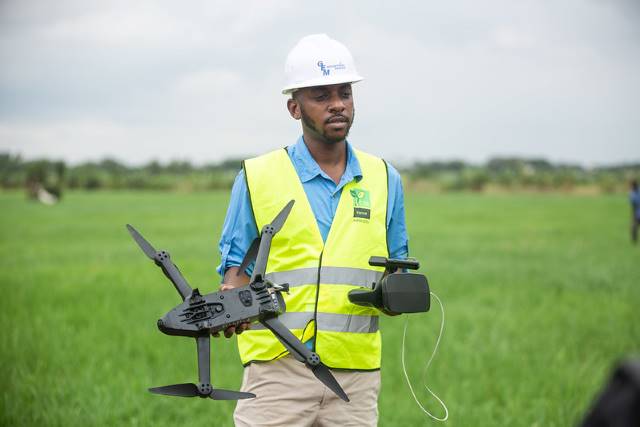
Drones and Precision AgricultureIn Africa, farming provides more than 30% of the continent’s gross domestic product and employs more than 60% of the working class. Unfortunately, Africa’s agriculture sector is hurting because environmental challenges have affected the continent’s weather patterns and temperatures, making farming extremely difficult. Outdated practices also hold Africa back, such as planting based on the moon phases, which further affects productivity. These issues bring new challenges to a struggling market trying to provide for a growing population but drones and precision agriculture may be able to help.

A Growing Population

According to the Food and Agriculture Organization (FAO), in three decades, Africa’s population will rise to about 2 billion people, requiring the farming sector to grow exponentially to sustain Africa. Luckily, a new relationship has formed between technology and agriculture. Drones and precision agriculture are helping farmers increase food production, protect their crops and protect themselves from poverty.

4 Ways Drones and Precision Agriculture Benefit Africa

  1. Drones and UAV’s can speed up the land registration process. Just 10% of Africa’s rural land is mapped and registered, leaving people insecure about land ownership and affecting rural farmers more than others. People involved in trades besides farming would benefit because they could use the land as a backup plan if a period of economic instability occurs instead of falling into poverty.
  2. Drones also provide farmers with an aerial view of their crops, allowing them to manage them better and notice changes. UAV’s with specialized sensors can alert farmers to changes like normalized difference vegetation index (NDVI), leaf area index and photochemical reflectance index. This allows farmers to notice developments the human eye would not. Using NDVI, a person receives information about water pressure, infestations, crop diseases and nutrient problems that may affect crop production. Around 7,000 African farmers in Uganda have used these drone techniques to better manage their crops.
  3. Drones and precision agriculture provide data that helps farmers take inventory of their crops and estimate crop yields faster. Drone use also lets a farmer know the location of livestock and helps to monitor fencing. Additionally, if farmers have detailed layouts of their land, including size, crop health and location, it will improve their ability to get credit, which will provide more economic advantages.
  4. Drone technology is also changing the schema of crop insurance. Crop insurance helps small farmers recover when natural disasters destroy their crops but poor reporting delays payouts. The use of UAVs makes it easier to quickly assess disaster damage and compensate farmers that disasters affect. Some larger reinsurers, such as Munich Re, have partnered with UAV service providers to improve response times and reporting accuracy after natural disasters strike. This use of technology to better assess farm damages keeps farmers from falling into poverty and allows them to protect their livelihood.

Drone Regulations

Over the past couple of years, Africa’s food exports have increased. This rise increases farmers’ productivity, especially those who can grow staple crops, allowing them to sell their produce for more money. Drones and precision agriculture help low-income farmers learn new techniques to keep up with the demand.

While multiple countries have proven the benefit of using drones, African farmers still face a problem. About 26% of African countries have laws about drone usage. Regulations restrict drone use in certain areas, which thus restricts farmers’ productivity. In Mozambique and Tanzania, drones undergo deployment at random to assist small farmers but most drones in Africa monitor wildlife. Increasing beneficial regulations for drone and UAV usage is integral to transforming Africa’s agriculture sector.

Drones and precision agriculture have the potential to revolutionize agriculture in Africa, presenting a way to lift Africans out of poverty.

– Solomon Simpson
Photo: Flickr

April 13, 2021
https://borgenproject.org/wp-content/uploads/borgen-project-logo.svg 0 0 Kim Thelwell https://borgenproject.org/wp-content/uploads/borgen-project-logo.svg Kim Thelwell2021-04-13 01:30:392021-04-08 11:23:49Drones and Precision Agriculture in Africa
Food & Hunger, Food Insecurity, Global Poverty, Hunger

How Students are Fighting Food Insecurity in Mexico

Food Insecurity in Mexico
When the COVID-19 pandemic first struck in March 2020, a group of college students came together to start The Farmlink Project, a nonprofit organization that works to alleviate food insecurity among poor people. Now, nearly a year later, Farmlink is making its mission an international one with The Farmlink Project: Mexico, which will fight food insecurity in Mexico. At the same time that Farmlink was forming, Mexicans living in poverty were experiencing the same disproportionate effects that the pandemic has had on the world’s poor communities.

Food Insecurity in Mexico

The pandemic hit Mexico early. The country had the fourth-highest death toll in the world by June 2020. As a result, impoverished communities suffered the brunt of the consequences. A government agency estimated that about 10 million people in Mexico fell into extreme poverty due to the economic effects of the pandemic. Food insecurity in Mexico became an immediate problem in many communities. Moreover, the government did little to support its citizens. Mexico did not provide stimulus checks or similar measures. Essentially, citizens ended up fending for themselves.

The Farmlink Project has been incredibly successful in its mission to deliver unused food to communities in need. This organization’s strategy is simple, straightforward and effective. It finds inefficiencies in the food distribution system that leads to food waste. Thus, the nonprofit implements measures to prevent that waste. Additionally, it receives donations for supporters. The nonprofit facilitates the transfer of that food directly to impoverished communities through food banks.

Food insecurity in Mexico is a prominent problem. However, the nation produces enough food to feed its citizens. Yet, the infrastructure necessary to feed everyone does not yet exist. Thus, The Farmlink Project is leaving a big impact on citizens by addressing food waste. This is more important now as Mexicans continue to sink into extreme poverty.

The Farmlink Project

The Farmlink Project’s Data Analytics lead Jake Landry talked to The Borgen Project about how it is approaching the unique challenges and opportunities of fighting hunger in Mexico. He stated that the nonprofit’s transfer into Mexico has started positively. It has delivered 112,160 kilograms of produce to Mexico since the beginning of the mission. Additionally, it has prevented 113,464 kilograms of carbon emissions in Mexico. Furthermore, it has begun working with GrupoPaisano, a fair trade organization that supports Mexican farmers. Together the organizations are creating media collaborations and promotional videos to raise awareness of The Farmlink Project’s mission.

This organization has been successful in the United States and is now providing hope to Mexicans during the pandemic. The Farmlink Project’s goal is to lay the groundwork for new infrastructure in the food distribution network in Mexico. It hopes to eliminate the large amount of food waste that Mexico generates every year.

– Leo Ratté
Photo: Flickr

April 5, 2021
https://borgenproject.org/wp-content/uploads/borgen-project-logo.svg 0 0 Kim Thelwell https://borgenproject.org/wp-content/uploads/borgen-project-logo.svg Kim Thelwell2021-04-05 01:30:272024-06-06 00:59:31How Students are Fighting Food Insecurity in Mexico
Food & Hunger, Food Security, Global Poverty, Hunger

Organizations Combating Food Waste in the UK

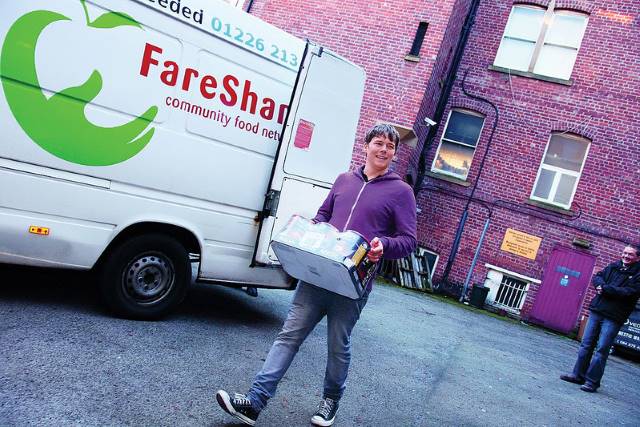
Combating Food WasteThe British Government has led successful campaigns to get citizens to rethink the food they throw away. The British charity, Waste and Resources Action Programme (WRAP), works with larger businesses and local communities to use resources efficiently and sustainably. Charities like FareShare are combating food waste by redistributing food to hungry people in the U.K. For about 25 years, the organization has been keeping communities fed by providing millions of meals to those in need.

The Facts on Food Waste

Since World War I, the U.K. has struggled with food waste. The country implemented rationing methods in both World Wars to combat excess waste in times of crisis. These methods have undergone adaptation to address modern food waste issues.

Several campaigns target the impact of domestic food waste in the U.K. There has been a great success, with household waste falling 6% in a three-year span. Still, an estimated 4.5 million tons of food goes to waste. Meal planning and using food within the home reduce domestic food waste. Small and simple actions on the individual level lead to large change across the nation.

The exact amounts of waste in the food industry are not clear, however, estimates are concerning. Food services waste roughly one million tons, “equivalent to throwing away one in six meals served.” Surplus food is responsible for much of this waste. Food producers produce food in quantities too large to match consumption. Additionally, while some of the food remains edible, it may be undesirable due to its appearance. In 2018, 20-40% of supermarket produce underwent disposal for failing to meet cosmetic standards.

Food waste comes with a price tag for individual households and the food services sector. Industries lose £2 billion due to excess food. Meanwhile households, manufacturing, retail and food services waste an estimated £19 billion worth of food annually. Solving the matter of food waste is not only of humanitarian interest but of economic value too.

The Role of WRAP

WRAP came about in 2000. It has successfully brokered agreements with several industries to reduce waste, including food retail. With the United Kingdom’s population expected to grow in coming years, there will be an increased need for food, resulting in possible excess waste. WRAP’s 2025 Food Vision tackles seven aspects of food waste:

  • Food production
  • Food packaging
  • Supply chain wastage
  • Role of consumers
  • Food waste collections
  • Waste management infrastructure
  • Energy conversion

Each focus point works in tandem. Improving efforts in one sector will benefit the others. Therefore, food waste reduction initiatives must address each aspect to ensure optimal success.

WRAP works with businesses and provides a roadmap and toolkit to guide parties interested in reducing food waste. The organization encourages businesses to set a target goal for reduction, to measure appropriately and to effectively act. The initiative aims to ensure the U.K. meets its Sustainable Development Goals (SDGs).

WRAP began the Love Food Hate Waste campaign in 2007. The campaign raises awareness and teaches simple steps to reduce waste on an individual level. The Love Food Hate Waste campaign also offers recipes to ensure that each food item goes to use.

FareShare: Combating Food Waste

The longest-running food redistribution charity in the United Kingdom, FareShare, has been giving back to communities since 1994 by ensuring that no food goes to waste. The organization solves two problems with one solution: reduce waste and solve hunger by putting surplus food to good use. Powered by volunteers and fueled by charities, FareShare has provided millions of meals to vulnerable populations.

The process is simple: retailers supply FareShare with their surplus food and FareShare redistributes the goods to local charities. FareShare supports almost a million people every week. The U.K. economy also benefits by saving £51 million each year.

FareShare does not tackle its grand mission alone. The Borgen Project spoke with James Persad of FareShare who says, “There are still tons of food going to waste, enough for millions of meals. Our mission is not possible without our partners.” Businesses both big and small have committed to the cause. Nestlé is one of FareShare’s longest ongoing partnerships. From 2005 to 2016, they redistributed “roughly six million meals worth of food” to those in need.

Efforts have led to creative innovations. One such success is FareShare Go, a service that allows local supermarkets to donate surplus food to charities through text messages. The initiative received recognition from the World Food Innovation Awards in 2018.

Addressing Dual Issues

Food redistribution efforts are successfully combating food waste. Hunger and food waste are two dire problems society faces, but thankfully, solutions have emerged that address both. These food rescue solutions combat hunger by ensuring that no food goes to waste.

– Kelli Hughes
Photo: Flickr

March 31, 2021
https://borgenproject.org/wp-content/uploads/borgen-project-logo.svg 0 0 Lynsey Alexander https://borgenproject.org/wp-content/uploads/borgen-project-logo.svg Lynsey Alexander2021-03-31 07:31:102021-03-30 15:22:31Organizations Combating Food Waste in the UK
Food & Hunger, Food Security, Global Poverty

How Insects Can Combat Extreme Hunger in Kenya

combat extreme hungerIn Kenya, hunger and food security are two of the most dire issues faced by impoverished communities. The locust swarms that plagued countries in the Horn of Africa in 2020, devoured millions of hectares of crops resulting in significant food loss. The incident also served to illuminate the precarious insecurity of the food supply in the region. This gave way for creative solutions to combat extreme hunger in Kenya and other African countries alike.

A Promising Solution

The massive inundation of locusts in regions where food is scarce also served as a concrete reminder of the relative abundance of biomass from insects in Africa. This abundance of biomass from insects presents a promising solution for Kenya — use insects to combat hunger by converting them into food products.

Eating insects has a long history in tropical and subtropical climates due to the large populations of insects. Kenya is no exception. Though locusts were long considered a valuable food source, they should not be eaten now due to the widespread usage of insecticides to curb locust outbreaks. However, other related insects like grasshoppers can be eaten. Countries like Kenya can potentially use insects to combat extreme hunger.

Nutrition

Among the millions of undernourished people in Kenya, lack of protein is the main cause and one of the most important areas to focus on to reduce malnutrition.

According to the Global Hunger Index, 24.2% of people in Kenya were undernourished in 2018. In the same year, roughly 26% of children under the age of 5 had experienced stunted growth due to malnourishment.

Insects are an extremely good source of proteins and essential amino acids. Insects like grasshoppers and locusts contain more protein per ounce than traditional forms of protein like beef, chicken or sheep.

Stable and Efficient Production

The production and harvest of insects for consumption provides a stable and efficient method of food production. It takes only three months for crickets to grow to their fully matured state.

Studies have also shown that insects are as efficient as poultry in converting feed into biomass. In addition, insects can feed on waste byproducts such as manure. Both of these facts mean that insect farmers in Kenya will not need to spend much time or money on providing feed to their insects.

Environmentally Sustainable

The cultivation of insects consumes less water and results in lower greenhouse gas emissions than the cultivation of other sources of protein like livestock. Furthermore, contrary to popular belief, insect cultivation is believed to be less likely to result in zoonotic infections.

In Kenya, where insects such as termites are already commonly foraged for consumption by humans, the mass production of insects could combat extreme hunger. Insect cultivation has the potential to provide a cheaper, more efficient and stable solution.

More research and development must occur before entrepreneurs and activists in Kenya can roll out products like insect protein powders, cricket-based flour or just plain fried insects to Kenya’s hungry. Nonetheless, the value of insects presents a possible solution that can be considered to combat extreme hunger in Kenya.

– Willy Carlsen
Photo: Flickr

March 28, 2021
https://borgenproject.org/wp-content/uploads/borgen-project-logo.svg 0 0 Kim Thelwell https://borgenproject.org/wp-content/uploads/borgen-project-logo.svg Kim Thelwell2021-03-28 08:52:242021-05-10 08:52:54How Insects Can Combat Extreme Hunger in Kenya
Food Security, Global Poverty

CIASPE Improves Food Security in Mexico

Food Security in MexicoIn 2018, almost 42% of the Mexican population lived in poverty. Furthermore, in the same year, it was estimated that more than 10.4 million people in Mexico experienced severe food insecurity. This figure has risen since 2016, with 10 million severely food insecure individuals registered. CIASPE is an NGO that believes that sustainable living is vital to improving food sovereignty and food security in Mexico.

CIASPE Mexico

CIASPE is working toward food security and sustainability by empowering families and communities through education. CIASPE is located in the central Mexican city of Querétaro, and its food system designs continue to spread through Latin America. Additionally, CIASPE offers training and consultation services that range from the fundamentals of agriculture to the latest innovations in sustainability. CIASPE was founded in 2011 by agronomist and agricultural engineer Gabriela Lucas Deeke. Deeke strives to equate food sovereignty with food security. Furthermore, she works to give communities the tools and know-how to provide for themselves.

Gabriela Lucas Deeke

Deeke has a master’s degree in integrated watershed management from the Autonomous University of Querétaro and another master’s degree in rural tourism from the University of Argentina. In addition, Deeke served 10 years in public service with the Ministry of Agriculture. Furthermore, she took courses in bio-intensive agriculture, which studies how to achieve the biggest crops out of the smallest plots of land.

Deeke’s dream is to give rise to conscious farmers and ensure families can live off what they produce. Additionally, Deeke and CIASPE strive to teach people about the importance of giving back and creating sustainable systems. The organization’s courses reflect this holistic yet practical approach to agriculture.

Agricultural Education

CIASPE offers courses on the fundamentals of farming, advanced practices in sustainability and much more. It opens with basics such as raising poultry, sheep and rabbits. Additionally, it offers a kitchen workshop that focuses on basic nutritional education. The organization preaches respect and care for the land through courses such as agroecology farming, which focuses on making the best use of nature without doing damage to the resource or land. Lastly, it seeks to complete the circle of life with a workshop on composting.

This philosophy runs counter to many of the farming practices deployed today. For example, pesticides and over-farming detract from the nutrients of the crops on an industrial scale. This renders the land useless in the long term. In addition, local impoverished farmers often resort to shortcuts that are ultimately detrimental to their yield and their health. CIASPE looks to combat these harmful practices from the ground up through its educational offerings and focus on the family unit.

Food Sovereignty

CIASPE’s team believes that food security in Querétaro, Mexico, Latin America and beyond can be achieved family by family, community by community. The organization collaborates with other NGOs, schools and entrepreneurs to plant community gardens. Additionally, it employs women who work in handicrafts to help facilitate the sales of surplus produce. CIASPE’s family projects provide a blueprint on how families can live sustainably.

CIASPE works extremely hard to equip communities with everything that they need to be self-sufficient today, tomorrow and in all years to come.

– Greg Fortier
Photo: Flickr

March 23, 2021
https://borgenproject.org/wp-content/uploads/borgen-project-logo.svg 0 0 Lynsey Alexander https://borgenproject.org/wp-content/uploads/borgen-project-logo.svg Lynsey Alexander2021-03-23 07:30:362024-05-30 22:23:14CIASPE Improves Food Security in Mexico
Page 14 of 78«‹1213141516›»

Get Smarter

  • Global Poverty 101
  • Global Poverty… The Good News
  • Global Poverty & U.S. Jobs
  • Global Poverty and National Security
  • Innovative Solutions to Poverty
  • Global Poverty & Aid FAQ’s
Search Search

Take Action

  • Call Congress
  • Email Congress
  • Donate
  • 30 Ways to Help
  • Volunteer Ops
  • Internships
  • Courses & Certificates
  • The Podcast
Borgen Project

“The Borgen Project is an incredible nonprofit organization that is addressing poverty and hunger and working towards ending them.”

-The Huffington Post

Inside The Borgen Project

  • Contact
  • About
  • Financials
  • President
  • Board of Directors
  • Board of Advisors

International Links

  • UK Email Parliament
  • UK Donate
  • Canada Email Parliament

Get Smarter

  • Global Poverty 101
  • Global Poverty… The Good News
  • Global Poverty & U.S. Jobs
  • Global Poverty and National Security
  • Innovative Solutions to Poverty
  • Global Poverty & Aid FAQ’s

Ways to Help

  • Call Congress
  • Email Congress
  • Donate
  • 30 Ways to Help
  • Volunteer Ops
  • Internships
  • Courses & Certificates
  • The Podcast
Scroll to top Scroll to top Scroll to top