• Link to X
  • Link to Facebook
  • Link to Instagram
  • Link to TikTok
  • Link to Youtube
  • About
    • About Us
      • President
      • Board of Directors
      • Board of Advisors
      • Financials
      • Our Methodology
      • Success Tracker
      • Contact
  • Act Now
    • 30 Ways to Help
      • Email Congress
      • Call Congress
      • Volunteer
      • Courses & Certificates
      • Be a Donor
    • Internships
      • In-Office Internships
      • Remote Internships
    • Legislation
      • Politics 101
  • The Blog
  • The Podcast
  • Magazine
  • Donate
  • Click to open the search input field Click to open the search input field Search
  • Menu Menu

Archive for category: Education

Information and stories on education.

Education, Global Poverty

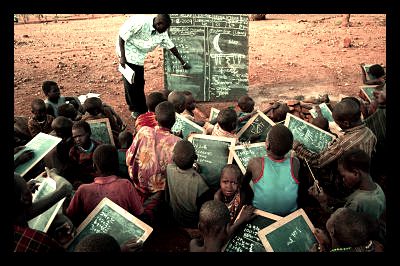
Education in Ethiopia

ethiopia_school_children
In 1999, less than half of the school-aged children in Ethiopia were attending primary school. In 2010, the number increased to 87 percent. As a result, literacy rates have also increased.

How did education in Ethiopia grow so rapidly?

Access to Free Education

Government-led efforts, including building schools in rural areas and abolishing extra fees, have expanded access to free education in Ethiopia. Between 2000 and 2010, the education sector expenditure and aid increased by 25 percent. Participation rates have also increased to 86 percent. The rapid growth in the number of students and schools presents additional challenges including the purchase of academic materials, getting students to the appropriate literacy levels and updating the curriculum.

Local Autonomy

Education in Ethiopia is supported by local leaders and community members. Regional and local leaders have more autonomy over education in their respective areas, creating an environment more conducive to community participation.

The Next Step: Training and Retaining Teachers

Now that Ethiopia has made strides in increasing access to education and involving the community, the country needs to focus on recruiting, training, deploying and retaining qualified teachers. Teachers need to be able to instruct in the mother-language and their training must equip them to meet the needs of students from a diverse range of backgrounds. While incentives can draw teachers to remote and rural areas that have the greatest need, they can also help retain teachers.

Global Education First Education Initiative

In January, Ethiopia joined the UN Secretary General’s Global Education First Education (GEFE) Initiative, which recognizes the prime minister’s commitment to education in Ethiopia. Ethiopia joined the group of Champion Countries, which serve to catalyze political and financial support for education as well as advocate for GEFE. As a Champion Country, Ethiopia will work to rally other countries, particularly in Africa, towards overcoming the challenges created by education expansion.

– Haley Sklut

Sources: All Africa, Global Education First, Voice of America
Photo: Nazret

February 24, 2014
https://borgenproject.org/wp-content/uploads/borgen-project-logo.svg 0 0 Borgen Project https://borgenproject.org/wp-content/uploads/borgen-project-logo.svg Borgen Project2014-02-24 12:45:172024-05-26 23:14:22Education in Ethiopia
Education

READ Global Removes ‘Foreign’ from Aid

Nepal_India_Read_Nonprofit_Literacy
The organization READ Global has turned the concept of ‘foreign’ aid on its head. What once began as a rural library outreach program in Nepal has grown into a massive network of educational centers spanning three countries and reaching 2 million rural villagers.

Founded by Dr. Antonia Neubauer in 1991, the Rural Education and Development (READ) organization creates self-sustaining library and resource centers in rural areas owned and operated by the communities they serve.

Foreign aid programs are commonly criticized for being invasive and generally ineffective in the long run. Some of the problems originate from U.S. foreign aid regulations, which stipulate that at least 80% of funds destined for foreign countries must originate from U.S. sources.

A recent example of this restriction occurred after Hurricane Haiyan, when U.S. aid organizers were forced to ship American rice to the Philippines instead of buying it from neighboring countries like Thailand, an arguably cheaper and faster option.

Such actions flood local markets with foreign goods, making it extremely difficult for merchants to rebuild their businesses and creating a cycle of dependence on foreign aid.

The READ Global program aims to change that. Operating out of Nepal, Bhutan and India, the organization has established community centers in rural areas that establish both standard library services as well as life-changing educational classes.

“They provide the literacy classes, they provide the livelihood trainings, like mushroom farming, organic farming [and] we provide basic health training,” states READ Global’s website. “The opportunities are not only for women but children, [the] elderly population.”

The organization focuses on four main areas: education, economic empowerment, technology and women’s empowerment. It selects regions with particularly high rates of illiteracy and poverty and then creates for-profit enterprises that sustain the centers and educate villagers on financial self-sufficiency.

“All of our centers are owned and managed by the local communities,” said Shrestha.  “For example one of the centers…has raised 70,000 USD and that money will go to the sustaining enterprise of that center.”

Since its inception in 1991, READ Global has established 69 centers in the three countries where it operates and hopes to open 30 more in the next five years. Their enterprises include tractor rental businesses, community radio stations and agricultural cooperatives.

“We envision a world where individual family and societies have equitable access to knowledge, information and resources,” Sanjana Shrestha, the READ Nepal Country Director. “We work in Asia to create the vibrant place where community can live and thrive.”

– Emily Bajet

Sources: Christian Science Monitor, READ Global, NPR

Photo: New Global Citizen

February 22, 2014
https://borgenproject.org/wp-content/uploads/borgen-project-logo.svg 0 0 Borgen Project https://borgenproject.org/wp-content/uploads/borgen-project-logo.svg Borgen Project2014-02-22 04:00:392024-05-26 23:13:11READ Global Removes ‘Foreign’ from Aid
Disease, Education, Food & Hunger, Global Poverty

9 Facts About Poverty in the South Pacific

south_pacific_poverty_women
When economic crises, military conflict and general mayhem plague the continents, few people consider the impact such events may have on the communities located in the South Pacific. Over 10 million people populate the 3,500 islands scattered across the Pacific Ocean, an extremely large number of whom suffer from debilitating disease and poverty.

Save for the extreme natural catastrophes that seem to constantly plague the Philippines, the high rates of poverty, poor education and abysmal health of Pacific islanders fails to gander consistent international attention.

To illustrate the severity of the problem, here are nine facts to learn about poverty in the South Pacific.

1. 38 percent of Papua New Guineans live below the National Basic Needs Poverty Line, which means 2.7 million people are unable to buy sufficient food and meet basic requirements for housing, clothing, transport and school fees. Even more alarmingly, 61 percent of the populace does not have access to safe drinking water. Tweet this fact

2. Pacific islands are disproportionately affected by global disasters. A 2012 World Bank study revealed that of the 20 countries in the world with the highest average annual disaster losses scaled by gross domestic product, eight are Pacific island countries: Vanuatu, Niue, Tonga, the Federated States of Micronesia, the Solomon Islands, Fiji, Marshall Islands and the Cook Islands.

3. Literacy rates are a persistent concern, especially on the Solomon Islands, where only 65 percent of the adult population (330,000 people) can read.

4. Pacific Islanders may be notorious for their love of canned meats like spam and corned beef, but what is not widely discussed is the debilitating effects such imported goods have on their health. As of 2007, eight of the 10 heaviest countries were located in the South Pacific. Nauru, the world’s smallest republic with just over 9,000 inhabitants, earned the number one spot with over 90 percent of their adult population considered obese.

5. Human rights violations also remain high in the pacific. Amnesty International recently reprimanded Papua New Guinea for burning a woman alive amid allegations of sorcery. Although the 1971 Sorcery Law has been repealed, which criminalized sorcery and could be used as a defense in murder trials, the United Nations Special Rapporteur on Violence Against Women in 2012 found that sorcery allegations are often made to mask the abuse of women.

6. Domestic abuse and gendered violence is also a concern but inconsistent reporting makes it difficult to pinpoint exact levels of abuse. In the first National Study on Domestic Violence in Tonga, conducted in 2009, results found that 45 percent of Tongan woman reported having experienced physical, sexual or emotional abuse in their lifetime.

7. Pacific Islanders are at high risk for Neglected Tropical Diseases, which commonly affect the world’s poor, women and disabled. Hookworm, leprosy, scabies and Japanese encephalitis are among the most prevalent; these adversely affect worker productivity, pregnancy outcomes and child cognition and development.

8. In 2010, Oceania unemployment rates reached 14 percent, while the United States average in the same period came in at 9 percent.

9. Since the mid 20th century, approximately 9.2 million people in the Pacific region have been affected by extreme events, resulting in 9,811 deaths and $3.2 billion in damages.

Pacific island nations’ small size, limited natural resources and great distances to major markets makes them particularly vulnerable to external crises and thus results in extremely volatile economies. Greater commitment to development initiatives will enable Oceanic nations to handle stresses caused by external forces and eventually strengthen the autonomy of the respective nations.

– Emily Bajet

Sources: University of Hawaii, Asian American For Equality, Oxfam, The World Bank, The World Bank News, Poodwaddle, Australia Network News, Australia Network, The New York Times, PLOS, Samoaobserver, Matangitonga, Labour
Photo: IFAD

February 22, 2014
https://borgenproject.org/wp-content/uploads/borgen-project-logo.svg 0 0 Borgen Project https://borgenproject.org/wp-content/uploads/borgen-project-logo.svg Borgen Project2014-02-22 04:00:262024-06-04 03:01:159 Facts About Poverty in the South Pacific
Development, Education, Technology

Uruguay Pioneers One Laptop Per Child Project

One Laptop Per Child
Uruguay was the first country in the world to provide a laptop to every primary school student. Plan Ceibal, Uruguay’s national One Laptop Per Child project, provided an XO laptop to each of the 395,000 children in first through sixth grades. The acronym Ceibal stands for Basic Informatic Educative Connectivity for Online Learning (Conectividad Educativa de Informática Básica para el Aprendizaje en Línea).

One Laptop Per Child, a non-profit based in Massachusetts, strives to provide each child in developing nations with a low-cost, low-power laptop. Through this technology, children become more engaged in their education and more connected to one another. The laptops are designed to be highly power efficient, with the ability to use solar power, generators, wind power or water power.

“This is not simply the handing out of laptops or an education program. It is a program which seeks to reduce the gap between the digital world and the world of knowledge,” Miguel Brechner explained, director of the Technological Laboratory of Uruguay and in charge of Plan Ceibal.

In Uruguay, the Plan Ceibal program has a cost of $260 per child, including maintenance costs, equipment repairs, teacher training and internet connection. The total figure represents less than 5 % of the country’s education budget.

The XO laptops, with Linux operating software, can connect directly to one another, meaning that a single point of access can be shared among a community of XO users.

Education in Uruguay is among the best of the Latin American countries. Uruguay has one of the highest adult literacy rates of all of Latin America. Elementary education is mandatory and free; secondary and technical education are also free. As the first country to implement a One Laptop Per Child program, Uruguay is setting the model for other countries, such as Rwanda, Nicaragua, Paraguay and Peru, which have all adapted a One Laptop Per Child program.

– Haley Sklut

Sources: One Laptop Per Child, Sources: BBC
Photo: Kit Guru

February 21, 2014
https://borgenproject.org/wp-content/uploads/borgen-project-logo.svg 0 0 Borgen Project https://borgenproject.org/wp-content/uploads/borgen-project-logo.svg Borgen Project2014-02-21 17:00:322024-05-26 23:13:23Uruguay Pioneers One Laptop Per Child Project
Education, Global Poverty, Women & Children

Advancing Girls’ Education in Africa

Education-in-Africa
As the world’s leading countries and corporations search for new frontiers, all eyes are focused on Africa.  The continent offers many opportunities for economic activity and prosperity.  African nations are seeking to take advantage of their position but face tough obstacles due to an undereducated population.

In Sub-Saharan Africa, 176 million adults are unable to read and write.  47 million youths ages 15-24 are illiterate and 32 million primary aged children are not in school.  In nations like Malawi, one of the world’s poorest nations, where 45 percent of the population is under 14 years old, it is imperative to produce future generations of educated citizens capable of lifting the nation out of poverty.

Malawi is a land locked nation and is home to approximately 17 million people.  The country does not have many natural resources such as oil like its neighboring countries.  The economy is based on agriculture, mainly, the export of tobacco and is supported through financial aid by the World Bank and International Monetary Fund.

In order to turn the tide and help the people of Malawi, Xanthe Ackerman founded Advancing Girls’ Education in Africa, or AGE Africa.

AGE Africa seeks to transform the lives of millions of young girls by providing them with opportunities to become educated leaders.  Beginning with Malawi, the organization’s vision is to ensure all girls in Africa have equal access to secondary education and that they be able to leverage their education into economic opportunities.

Advancing Girls’ Education in Africa seeks to create informed citizens capable of making their own life choices.

The Advancing Girls’ Education in Africa organization has a multidimensional approach to achieving their stated goals.  The first begins with comprehensive scholarships that allow girls to not only attend schools but also complete their education.  Scholarships go towards providing for tuition and school related expenses.

The second approach deals with extracurricular programs that promote life skills, leadership development, self-advocacy and career guidance.  The final piece of the program, post-secondary transitions, ensures that the girls have the necessary information, resources, and support to apply for educational and economic opportunities beyond high school.

AGE Africa’s impact on the girls of Malawi is extraordinary.

By age 20, just 17 percent of Advancing Girls’ Education in Africa participants are mothers compared to 65 percent of 20-year old women in Malawi.  About 88 percent of AGE Africa students finish all four years of secondary school, compared to just 8 percent nationwide.

Among these students, 74 percent are now pursuing higher education, have wage-based employment or engage in economic activity that provides income above the poverty threshold.

The tremendous success of Advancing Girls’ Education in Africa within the country of Malawi is beacon of hope for the nation and a promising sign of the future for other girls throughout the continent.

– Sunny Bhatt

Sources: AGE Africa, AGE Africa, AGE Africa, FAO
Photo: Development Diaries

February 14, 2014
https://borgenproject.org/wp-content/uploads/borgen-project-logo.svg 0 0 Borgen Project https://borgenproject.org/wp-content/uploads/borgen-project-logo.svg Borgen Project2014-02-14 04:00:252024-05-26 23:09:10Advancing Girls’ Education in Africa
Children, Developing Countries, Development, Economy, Education, Global Poverty, Government, Human Rights, Inequality

Education in India Suffers from Income Inequality

education_india
India is known for having one of the fastest growing economies in the world. Currently, the growth for GDP within India rests at 4.9 percent, but this is far below its potential.

Similarly to the United States, India is another one of the world’s largest democracies. However, they both also have some of the worst cases of income inequality. In the past 15 years, the net worth of India’s top billionaires have increased 12 times, enough to eliminate poverty in India twice.

The public infrastructure of India is developing at a decent pace, but there are problems that are often left unaccounted for by the Indian government. For example, education in India is a system in dire need of improvement.

According to UNESCO’s Education For All global monitoring report, “At 287 million, India has 37 percent of the total population of illiterate adults across the world.” The report also asserts that the poorest of India will not expect to receive universal education until around the year 2080.

In regards to the specific problems that India faces with education, access and quality are two of the greatest concerns. Much of it is tied to the proper functioning and funding of Indian government, which may not be reliable in certain instances.

90% of people do not continue to college in India, 58% do not finish primary school and 4% never even have the opportunity to start.

The extensive lack of universal education in India also goes on to provide problems for India’s human capital in general. Out of 122 total countries released by the World Economic Forum’s Human Capital Index, India is ranked a measly 78.th The problems India faces may require the nation to make steps toward realizing more inclusive growth and development.

Income inequality ought to be addressed in India for their human capital to rise.

This means core public services including basic healthcare, education and power or water supply must be established by Indian government at multiple levels. Investment in people has proven a successful method to national development. In other words, India still has a ways to go in realizing its full potential.

– Jugal Patel

Sources: World Bank, India Times, Teach For India, Live Mint, Outlook India
Photo: The New York Times

February 13, 2014
https://borgenproject.org/wp-content/uploads/borgen-project-logo.svg 0 0 Borgen Project https://borgenproject.org/wp-content/uploads/borgen-project-logo.svg Borgen Project2014-02-13 16:33:072019-08-13 13:15:12Education in India Suffers from Income Inequality
Education, Global Poverty

Shining Brightly: The Diamond Empowerment Fund

Africa_Diamond_Mining
Africa is home to some of the world’s largest diamond mines, with 11 countries throughout the continent engaging in diamond extraction industry. The diamond industry has been a major source of wealth for nations like Botswana, South Africa and Angola.  Approximately $8.5 billion of the $13 billion in rough diamonds are produced in Africa, while global diamond jewelry sales total $72 billion per year.  In recent decades, the industry has been under intense scrutiny for some of the barbaric conditions in which the diamond mines operate.

To gain control of diamond mines, rebel groups, governments, and corporations, have battled each other often engaging in war-like tactics to extract the coveted resource.  The Hollywood film “Blood Diamonds” has featured this conflict and helped raise awareness for the millions of Africans who have been killed, injured or displaced throughout the years.

In 2007, in response to this struggle, Hip Hop legend Russell Simmons and leaders of the Diamond and Jewelry industry created the Diamond Empowerment Fund (DEF.) The DEF hopes to transform and empower individuals and societies within the diamond producing countries through education.  To accomplish this mission, the Diamond Empowerment Fund will work with partners in the industry to create innovative product designs where sales help support education initiatives.

DEF partners include Dalumi Group, Malca-Amit, Leo Schachter, Exelco Group, and Tiffany & Co.  These partners offer diamond jewelry and other products that give customers the satisfaction of contributing to Diamond Empowerment Fund education initiatives.

Three major organizations that serve as beneficiaries for the DEF include CIDA City Campus, the African Leadership Academy (ALA) and Botswana Top Achievers.  The DEF has been able to empower 1,800 students through its three beneficiary organizations.

In 2009, the Diamond Empowerment Fund made its first grant available to students at the ALA.  The $4.2 million grant funds the DEF Scholars Scholarship Program.  28 students throughout the continent were able to attend universities such as Harvard, Yale, Cornell and Duke, among others.  On the Diamond Empowerment Fund website, one can read stories from individual students that have benefited from the charity of the DEF and its partners.

The DEF also sponsors the GOOD Awards, which recognizes individuals and corporations that exemplify outstanding leadership in promoting sustainable development, good corporate citizenship and economic opportunity within Africa.  In its third year, the GOOD Awards featured dozens of celebrities and diamond industry executives to raise money in support of the DEF.

As the Diamond Empowerment Fund continues to grow, thousands of children across Africa will get the opportunity to transform into future leaders and help their countries prosper.

– Sunny Bhatt

Sources: World Diamond Council, GOOD Awards, Diamond Empowerment Fund
Photo: DW

February 13, 2014
https://borgenproject.org/wp-content/uploads/borgen-project-logo.svg 0 0 Borgen Project https://borgenproject.org/wp-content/uploads/borgen-project-logo.svg Borgen Project2014-02-13 04:25:292024-05-26 23:08:57Shining Brightly: The Diamond Empowerment Fund
Education, Global Poverty

Ethiopia Takes Stand for Education

Ethiopia_education_Africa_poverty_kids_teacher
In September 2012, Secretary General of the United Nations Ban Ki-moon launched the Global Education First Initiative (GEFI.) Operating under the principle that access to education is the number one factor for promoting global development, the Initiative strives to represent the 250 million children worldwide who struggle with some form of illiteracy. The initiative fights for three priorities: placing every child in school, improving the quality of learning and fostering global citizenship.

A key component of achieving these initiatives is appointing “Champion Countries” to spearhead global education.  And, on January 29, the GEFI welcomed its newest Champion Country: Ethiopia.

Ethiopia’s progress in promoting education is tremendous.  In 1994, roughly three million children were enrolled in primary school throughout the country.  By 2009, that number had risen to an astounding 15.5 million.  And, as of 2011, 87 percent of children were enrolled in school.

Crucial to the impressive strides made for education is the nation’s financial investment in schooling.  Over the past decade, the Ethiopian government has doubled the allotted funds for education in the budget while allowing for more local control over school administration.  This combination of financial stability and autonomy has also increased educational opportunities for young girls.  As of 2009, 90 percent of school-age girls were enrolled in school.

“The movement to get more children into school is unstoppable,” says Hailemariam Desalegn, Prime Minister of Ethiopia. “Now our big challenge is to give those children the best teaching possible.”  With governmental support of education at an all time high in Ethiopia, incentives for teaching are increasing.  Although there are still roadblocks to hurdle, Ethiopia’s role as a Champion Country ensures education will continue to be a priority for the nation.

– Taylor Diamond

Sources: ONE, Global Education First
Photo: nationsencyclopedia

February 13, 2014
https://borgenproject.org/wp-content/uploads/borgen-project-logo.svg 0 0 Borgen Project https://borgenproject.org/wp-content/uploads/borgen-project-logo.svg Borgen Project2014-02-13 02:28:162024-05-26 23:10:15Ethiopia Takes Stand for Education
Education, Global Poverty

Clemson Engineers for Developing Countries

Infrastructure_Water_Clemson_Engineering
Last week the Institute for International Education (IIE) announced the winners of its annual Andrew Heiskell Awards for Innovation in International Education. Among the recipients was an innovative study abroad program called Clemson Engineers for Developing Countries (CEDC).

What makes the CEDC so unique is its focus on service-learning and community development abroad. The program promotes civic duty and international leadership through targeted civil engineering projects.

The CEDC allows its scholars to aid communities on and around the Central Plateau of Haiti in the design and implementation of sustainable infrastructure. These projects include the creation and improvement of water treatment facilities, road designs and waste management plants.

Each of these elements of infrastructure is essential to human health, quality of life and to the economic development of Haiti. The Central Plateau is one of the most impoverished and disaster-prone regions in the world and without the aid of programs like the CEDC, Haiti would have little opportunity to better the lives of its people.

Beyond development, the CEDC aims to prepare the peoples of Haiti to become integral to ensuring the success of this program. While Clemson University scholars and engineers receive the opportunity to gain hands-on experience in the developing world, many Haitian students in the area shadow the engineers and learn the skills necessary to continue their work.

For this reason the CEDC has garnered a lot of attention and created many strategic partnerships with NGOs, private industries and Haitian schools.

The Andrew Heiskell Awards recognize the CEDCs tremendous commitment to, and investment in, both education and community development. According to the IIE, the Heiskell awards are aimed at, “highlighting initiatives that remove institutional barriers and broaden the base of participation in international teaching and learning on campus.”

The award was created in 2001 and named after the former chairman of Time Inc., Andrew Heiskell. The prize has been given annually to innovative university programs in four different categories: Internationalizing the Campus, Study Abroad, International Partnerships and Internationalizing the Community College.

– Chase Colton

Sources: Digital Journal, Clemson
Photo: Clemson Engineering for Developing Countries

February 12, 2014
https://borgenproject.org/wp-content/uploads/borgen-project-logo.svg 0 0 Borgen Project https://borgenproject.org/wp-content/uploads/borgen-project-logo.svg Borgen Project2014-02-12 07:21:012017-11-30 10:52:53Clemson Engineers for Developing Countries
Education, Global Poverty

The Fight For Education Reform in Chile

Chile_Education_reform_protests
The nation of Chile underwent significant change during the 1970s. At the time, General Augusto Pinochet established a military coup d’état (overthrow of the state) aimed at dismantling the Salvador Allende regime. By means of violence, warfare and eradicating opposition, Pinochet was able to come to power and eventually appoint himself as the President of Chile in 1974. Pinochet was a free market fundamentalist policy permeated throughout much of Chilean society.

In 1981, Pinochet privatized the educational system of Chile by slashing government support for public schools. Fearing that government funded schools were inciting social activism and communist ideals, schools became private under the contemporary military regime. Because of Pinochet’s private education policy, the educational system of Chile suffered greatly. Schools became for-profit institutions with extremely high tuition costs that people were unable to afford. Those who were able to afford private education were often forced to paying off years of debt.

The education policies stemming back to Pinochet’s authoritative rule are still largely in effect today, which has recently sparked a significant amount of civil unrest. Preceding the Chilean elections in November of 2013, tens of thousands of students took to the streets of Santiago to voice their protest against the current education system. Ultimately, about 80,000 people took part in the protest to call for progressive education reform in Chile that would make it both affordable and universal.

Popular polls indicate that the demands of the students protesting are supported by roughly 85% of Chileans and the current administration has certainly taken notice. Although they have been criticized for not making any considerable strides in education reform, former Head of State Michelle Bachelet stated that she would make college education free within six years. Many continue to be skeptical, but hope that Bachelet will follow through with her promises of education reform in Chile.

In December of 2013, Michelle Bachelet won the election to solidify her second term as the President of Chile and exclaimed in her victory speech that she would work to improve education and establish equality through her policies. As a nation with poor framework that perpetuates economic discrimination in education, Bachelet will have to address the pressing issues presented by the thousands of students protesting. On an international scale, nations are moving towards establishing systems that allow for affordable and universal education—and with Chile lagging far behind, the people hope to see significant changes made.

– Jugal Patel

Sources: CNN, BBC, Global Post, Merco Press
Photo: SuleKha

February 9, 2014
https://borgenproject.org/wp-content/uploads/borgen-project-logo.svg 0 0 Borgen Project https://borgenproject.org/wp-content/uploads/borgen-project-logo.svg Borgen Project2014-02-09 04:00:242019-08-13 09:18:53The Fight For Education Reform in Chile
Page 230 of 241«‹228229230231232›»

Get Smarter

  • Global Poverty 101
  • Global Poverty… The Good News
  • Global Poverty & U.S. Jobs
  • Global Poverty and National Security
  • Innovative Solutions to Poverty
  • Global Poverty & Aid FAQ’s
Search Search

Take Action

  • Call Congress
  • Email Congress
  • Donate
  • 30 Ways to Help
  • Volunteer Ops
  • Internships
  • Courses & Certificates
  • The Podcast
Borgen Project

“The Borgen Project is an incredible nonprofit organization that is addressing poverty and hunger and working towards ending them.”

-The Huffington Post

Inside The Borgen Project

  • Contact
  • About
  • Financials
  • President
  • Board of Directors
  • Board of Advisors

International Links

  • UK Email Parliament
  • UK Donate
  • Canada Email Parliament

Get Smarter

  • Global Poverty 101
  • Global Poverty… The Good News
  • Global Poverty & U.S. Jobs
  • Global Poverty and National Security
  • Innovative Solutions to Poverty
  • Global Poverty & Aid FAQ’s

Ways to Help

  • Call Congress
  • Email Congress
  • Donate
  • 30 Ways to Help
  • Volunteer Ops
  • Internships
  • Courses & Certificates
  • The Podcast
Scroll to top Scroll to top Scroll to top