• Link to X
  • Link to Facebook
  • Link to Instagram
  • Link to TikTok
  • Link to Youtube
  • About
    • About Us
      • President
      • Board of Directors
      • Board of Advisors
      • Financials
      • Our Methodology
      • Success Tracker
      • Contact
  • Act Now
    • 30 Ways to Help
      • Email Congress
      • Call Congress
      • Volunteer
      • Courses & Certificates
      • Be a Donor
    • Internships
      • In-Office Internships
      • Remote Internships
    • Legislation
      • Politics 101
  • The Blog
  • The Podcast
  • Magazine
  • Donate
  • Click to open the search input field Click to open the search input field Search
  • Menu Menu

Archive for category: Education

Information and stories on education.

Children, Education, Global Poverty, Government

Expanding Preschool Access for Poor Children

Preschool Access
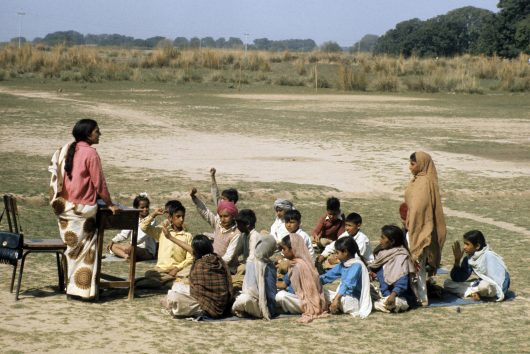
Attending preschool can drastically improve the intellectual capacity of children. Research has demonstrated positive effects on learning and development in both the short and the long run.

A recent study from Northwestern University suggested that children from lower income families tend to perform significantly worse in the first years of elementary school. This is due to the fact that they usually did not have the opportunity to attend preschool.

Policy expert Whitmore Schanzenbach suggested that “by the time they reach kindergarten, disadvantaged children already show an achievement gap relative to their higher-income peers.”

Schanzenbach emphasized that “the poverty gap in school readiness appears to be growing as income inequality widens.”

Teachers at elementary schools have reported that children from less privileged families have more difficulty paying attention and exhibit more behavioral problems given no kind of education prior to elementary school.

This is because the state and the government usually do not focus their attention on expanding preschool access to children from marginalized sectors. They have concentrated mainly on improving education for children over five years of age.

According to Schanzenbach, a common proposal to bridge this gap is to make formal preschool accessible to poor children under the age of five. Given many ways to expand these educational programs, specialists at Northwestern designed a program that is cost-effective.

In their proposal, a well-developed framework would introduce the highest quality curriculum and nurturing assistance that would ultimately help these young children prepare themselves for further education.

It is important to emphasize that this is a project designed to be introduced in developing countries and rural sectors, where preschool access needs to be attainable.

Schanzenbach concluded that “the expansion of early education programs along these lines will lead to improved educational outcomes for disadvantaged children.” She added a list of other benefits which included lower crime rates, reduced teenage pregnancy and a decreased reliance on the social safety net.

Read Schanzenbach’s full study here.

– Isabella Rölz

Sources: Brookings, U.S. Department of Education, NYTimes
Photo: U.S. News

February 13, 2016
https://borgenproject.org/wp-content/uploads/borgen-project-logo.svg 0 0 Borgen Project https://borgenproject.org/wp-content/uploads/borgen-project-logo.svg Borgen Project2016-02-13 01:30:542024-12-13 18:05:41Expanding Preschool Access for Poor Children
Education, Global Poverty, USAID

Five IGO Plans For Global Educational Improvement In 2016

Five-IGO-Plans-For-Global-Educational-Improvement-In-20162015 was an active and often successful year for global education in terms of aid and education programs. UNESCO and USAID have several programs that will continue to be enforced into 2016. The following list of International Governmental Organization, or IGO plans provide various global education agreements.

1. UNESCO’s International Institute for Educational Planning

This program is designed for communicating the importance of a quality primary and secondary education. The site includes education reports on several countries, suggestions for improving learning outcomes such as a “contextualized [education] to each regions specific realities,” and financial strategies for covering program costs.

The learning portal has been accessible since January 2016, from anywhere and at no cost to individuals.

2. The Joint Programme

This program,continuing enforcement in 2016, consists of educational focus in Mali, Nepal, Niger, Pakistan, Sudan and Tanzania. The program lists its four main components:

  • Improving the quality of education in the regions
  • Increasing relations between health and education sects
  • Creating an enabling environment
  • Advancing the data and evidence-base

The program is unique in that it seeks to eliminate the social problems young girls deal with beginning in puberty. It seeks to educate girls about the risks of pregnancy, and their rights to refrain from young and enforced marriages.

3. UNESCO And Panasonic

UNESCO has entered a public-private relationship with Panasonic, launching the program Strengthening Schools for Education for Sustainable Development in Myanmar. The program seeks to teach young children to read while promoting sustainable and effective global citizen lifestyles.

It will also advocate the principles of protecting the environment, ethical and civil principles and sustainable development.

Additionally, Panasonic has donated 500 Eneloop Solar Storage Units to 40 schools for an effective learning environment. The Chief Representative of Panasonic expresses their hopes the donation will be useful to students studying late at night and during power outings.

4. USAID in Jordan

Through USAID, the U.S. Government plans to build 25 new schools in Jordan in collaboration with the Let Girls Learn Initiative. With overcrowded classrooms the norm in urban Jordan, the plan is to construct more schools. The initiative will be available to 25,000 children each year.

The funds will be directed towards 70 percent of girls’ schools, also available to the thousands of Syrian refugees finding safe haven in Jordanian schools. The initiative will be particularly advantageous for girls in Jordan who are known to have limited access to education.

5. USAID’s Enrichment Initiative To Increase Literacy At The Primary School Level

This initiative is planned to continue into March 2016 in Jamaica. The program has successfully shown improvements in literacy in 2015. This has been accomplished through integrating technology into lessons and advocating for parental and teacher participation. To date, the program has reached 43,000 students and hopes to reach thousands more in 2016.

UNESCO claims that worldwide 250,000 children are not learning the basic skills needed to successfully participate in society and receive a decent livelihood. Furthermore, the organization explains that it isn’t enough to increase student enrollment alone, but also the quality of the education they’re receiving.

– Mayra Vega

Sources: UNESCO 1, USAID 1, UNESCO 2, UNESCO 3
Photo: Google Images

February 10, 2016
https://borgenproject.org/wp-content/uploads/borgen-project-logo.svg 0 0 Borgen Project https://borgenproject.org/wp-content/uploads/borgen-project-logo.svg Borgen Project2016-02-10 01:30:082024-12-13 18:05:38Five IGO Plans For Global Educational Improvement In 2016
Education, Global Poverty, Women, Women and Female Empowerment

Six Ways Education Empowers Women in Poverty

Education Empowers WomenEducation empowers women and girls, and investing in their education is one of the most effective ways to reduce global poverty. Still, females face many barriers to educational opportunities. According to the Global Partnership for Education, 63 million girls are not in school worldwide, and women represent almost two-thirds of the world’s illiterate.

A recent report by the World Bank found that girls who receive little to no amount of education are more likely to live in poverty, be married as children, suffer domestic abuse and lack control over their own health care decisions, which is detrimental to their families and communities.

Here are six of many ways education empowers women in poverty:

1. Education Helps Women Avoid Child Marriages

“Child marriage is an appalling violation of human rights and robs girls of their education, health and long-term prospects,” Babatunde Osotimehin, M.D., the Executive Director of the United Nations Population Fund, said to UNICEF. “A girl who is married as a child is one whose potential will not be fulfilled.”

Providing girls with access to educational can be an effective way to reduce child marriage rates worldwide. According to the United Nations Educational, Scientific and Cultural Organization (UNESCO), the rate of child marriage within sub-Sahara, South and West Africa would fall by 64 percent if every girl within the region received a secondary education level.

2. Education Empowers Women to Family Plan

The amount of education a woman receives influences a women’s choice and ability to plan family sizes. Family planning allows women to give birth to the number of children they desire and determine the spacing of their pregnancies.

In sub-Saharan Africa, women with no education have an average of 6.7 births on average, compared to 3.9 for women within the region who have obtained a secondary education level, as reported by UNESCO.

3. Education of Mothers Decreases Child Mortality

A woman’s education is integral to the health of her family. The more education a girl gains throughout her childhood, the better chance her future child has for survival.

According to the United States Agency for International Development (USAID), the probability of infant mortality decreases by five percent to 10 percent for each extra year of education a mother has.

Around four million child deaths have been prevented over the last four decades due to an increase in female education, according to a study in The Lancet journal funded by the Bill and Melinda Gates Foundation.

4. Education Increases the Likelihood of Women Surviving Pregnancy and Birth Complications

Education isn’t just integral to the health of a woman’s child; it is also important for the mother. Pregnancy and birth pose extreme health risks for women in poverty stricken areas, and education plays a significant role in helping mothers survive them. Women with higher levels of education are more likely to adopt simple and low cost hygienic practices throughout pregnancy, and react to health issues.

According to UNESCO, maternal mortality would fall by 66 percent if all women had completed primary education.

5. Education Gives Women Higher Income Earning Power

Each extra year of schooling a girl receives is incredibly valuable, raising her ability to enter the labor force. Every year of secondary school education a girl receives is directly correlated with an 18 percent increase in her future earning, according to a World Bank study.

6. Education Empowers Women to Stand Up to Domestic Violence

Gender-based violence is a global phenomenon. One-third of women who have been in a relationship have experienced physical or sexual violence, according to the World Health Organization (WHO). Low education levels are associated with an increased risk of experiencing domestic violence.

Through education, women have the opportunity to gain knowledge to stop this phenomenon. In Sierra Leonne after a large expansion of school opportunities, women’s tolerance of domestic violence dropped from 36 percent to 26 percent according to UNESCO.

“I firmly believe that when you invest in a girl’s education she will support herself and her children and contribute to her community and her nation, charting a path towards a better world in which human rights are respected and there is dignity for all,” Prime Minister of Norway and co-chair of the MDG Advocacy Group, Erna Solberg, said in an interview with Daily Development. “Education empowers women. It increases their economic contribution, strengthens their political voice and boosts their influence across the board. That is why delivering education to all girls is so vital.”

– Lauren Lewis

Sources: United Nations Development Program, UNESCO, White House, USAID, World Bank, The Lancet, Global Partnership for Education, UNICEF, World Health Organization, Daily Development
Photo: The Clinton Foundation

February 10, 2016
https://borgenproject.org/wp-content/uploads/borgen-project-logo.svg 0 0 Borgen Project https://borgenproject.org/wp-content/uploads/borgen-project-logo.svg Borgen Project2016-02-10 01:30:032024-05-27 09:28:50Six Ways Education Empowers Women in Poverty
Education, Global Poverty

KIND Fund Exceeds Expectations

KINDMillions of children throughout Africa struggle to learn while sitting on dirt floors or the ground outside for hours at a time. In Malawi, three out of five students don’t have a desk or chair.

Since 2010, Kids In Need of Desks (KIND) has placed more than 148,755 desks in 575 primary schools in Malawi, providing actual workspaces to nearly half a million students who would otherwise be sitting on the floor. The fund has also provided over 718 scholarships to girls to complete all four years of high school.

KIND also benefits the Malawian community outside the classroom. Every desk made for Malawian children is manufactured locally. This has created numerous jobs for residents over the past five years.

The fund was created by MSNBC’s Lawrence O’Donnell after a 2010 service trip to the country. There, O’Donnell learned firsthand that the number one item Malawian school teachers said would best improve the lives of students was desks.

According to Malawian teacher Saulos Mzuwala, “In as far as education is concerned a learner is more comfortable sitting at desks than on floors. They use their knees as desks which leads to poor handwriting.”

Students too, complain about the difficulty of learning and practicing writing from this position. “We fold our legs when we’re sitting and when we try to write, our papers get damaged and that wastes a lot of our time. It’s distracting and makes it hard to do well in school,” says student Lajab Saidi.

On top of this, sitting on the floor makes their clothes dirty faster, says teacher Nema Samalira. “It’s hard for these kids to afford soap especially if they have to clean their clothes every day. If their clothes are dirty they don’t come to school.”

During that trip, O’Donnell connected with UNICEF and a Malawi woodworking shop. He paid for them to make 30 student desks. With three kids to every desk, that first delivery enabled 90 students to move from dirt floors to desks. This change happened within a single week. Now, five years later, the KIND fund has received more than $10.5 million in donations.

“Ten million dollars was beyond my wildest dream when I started KIND with UNICEF. I am in awe of the generosity of our audience. There are hundreds of thousands of students sitting at desks instead of on the floor today thanks entirely to our audience. There are girls in high school today thanks entirely to our audience. This is proof that small acts of kindness can make a big difference in our world,” says O’Donnell.

– Kara Buckley

Sources: MSNBC, PR News Wire, UNICEF USA, Vimeo
Photo: MSNBC

February 3, 2016
https://borgenproject.org/wp-content/uploads/borgen-project-logo.svg 0 0 Borgen Project https://borgenproject.org/wp-content/uploads/borgen-project-logo.svg Borgen Project2016-02-03 01:30:012024-12-13 18:05:33KIND Fund Exceeds Expectations
Education, Global Poverty

New Tier Education System in South Africa

Education System in South Africa
The City Press has reported a possible new tier education system in South Africa where students will be divided into three tiers based on their strengths and weaknesses.

According to Business Tech, students will be placed into one of three categories based on their assessed aptitude for each. The tiers are academic, technical occupational and technical vocational.

The academic tier will mirror the current matriculation program.

On the other hand, the technical occupational tier aims to produce students who can leave the education system in South Africa and enter the workplace immediately with skills such as spray painting, hairdressing and woodwork.

According to Mathanzima Mweli, Director General of DBE, “We will introduce these (technical occupational) subjects at grade four and will increase the number of schools offering the new subjects to hundreds or thousands.”

The technical vocational tier will include subjects such as engineering and technical drawing and focus on students who want to study trades. The technical vocational stream will offer 12 subjects.

The department of basic education hopes the new school system will result in 60 percent of students completing technical qualifications.

Moira de Roche, MD of Aligned4Learning, said, “There is no point in forcing a new learner who is good with their hands to do academic subjects. They end up failing and feeling useless, whereas they are good at many things. Hopefully, it will also result in less kids (and their parents) thinking the only option for them is a university.”

Education activist and founder of Partners4Possibility, Louise van Rhyn noted that the new tier system will enable young people to find fruitful careers by providing opportunities that are not solely focused on academic success.

Van Rhyn also said, “In addition to implementing this change, we also need to ensure that we still create opportunities for learners to participate in the knowledge economy, as this is a sure way out of poverty and these skills are critical for our future. We need a much higher percentage of learners with a solid foundation in maths and science.”

According to Business Tech, the new school system is being developed this year and will be tested in 58 schools in 2017.

– Jordan Connell

Sources: All Africa, Business Tech, It Web
Photo: The Guardian

February 1, 2016
https://borgenproject.org/wp-content/uploads/borgen-project-logo.svg 0 0 Borgen Project https://borgenproject.org/wp-content/uploads/borgen-project-logo.svg Borgen Project2016-02-01 01:30:492024-12-13 18:05:35New Tier Education System in South Africa
Education, Global Poverty, Technology

Etisalat Raise ICT Literacy Through Donations

EtisalatEtisalat contributed 30 desktop computers in an attempt to improve Information Communication Technology (ICT) education at the Nuhu Bamali Primary School in Kano State. Etisalat hopes the computer donations will raise ICT literacy at the primary school.

The computers were presented to the school during a commissioning of facilities ceremony where Etisalat also unveiled school renovations, according to It News Africa.

The Vice President of Government and Regulatory Affairs for Etisalat, Ibrahim Dikko, said the donation was in line with their commitment to improving education in Nigeria through partnerships with the government.

ICT education has become a basic component of learning and will provide a greater benefit if students in primary and secondary schools are exposed to it early on. The company is dedicated to creating an improved and conducive learning environment for Nigerian children, according to Dikko.

Headmistress of Nuhu Bamali Primary School, Hajia Asmau Mohammed Lawan, hopes the computers will go a long way in giving pupils the cutting edge education to prepare them for their individual career paths according to It News Africa.

In October 2015, Etisalat donated desktop computers to the ICT center of Girls’ Government College in Nigeria, which is also located in Kano State.

According to Etisalat’s Head of Government and Community Relations, Mohammed Suley-Yusuf, “Etisalat is proud to be able to contribute positively to achieving the government’s objective of improving Kano State, especially in the area of education.”

Etisalat Group is a telecommunications provider who offers services to 18 countries throughout the Middle East, Asia and Africa. It is one of the world’s leading telecom groups and ranks among the most profitable telecom groups in the world. They work with the British Council to provide a Pan-Nigerian teacher training program and they continue to focus on improving education through their Adopt-a-School program.

The company is currently working on an initiative to create an Etisalat Telecommunications Engineering Postgraduate Program within the education sector.

– Jordan Connell

Sources: Etisalat, It News Africa, Prompt News Online
Photo: Manic

February 1, 2016
https://borgenproject.org/wp-content/uploads/borgen-project-logo.svg 0 0 Borgen Project https://borgenproject.org/wp-content/uploads/borgen-project-logo.svg Borgen Project2016-02-01 01:30:342024-05-27 09:28:46Etisalat Raise ICT Literacy Through Donations
Education, Global Poverty

O’Donnell’s KIND Fund Raises $10.5 million for Malawi


KIND fundIn the 2015 holiday season, Lawrence O’Donnell’s KIND Fund (Kids in Need of Desks), which supplies desks and scholarships to students in Malawi, reached over $10.5 million in donations. The organization’s goal is to build tables for rural schools in Malawi that lack school furniture.

In 2010, Lawrence O’ Donnell saw firsthand the struggles of schoolchildren lacking essential school supplies in Malawi. Every day in rural villages, children would attend school without basic school equipment, like desks and chairs.

Most students would sit in the dirt or on hard cement floors, using their knees as makeshift tables to write notes. The lack of a physical platform would lead to poor handwriting and damaged papers. Because the students only have a single pair of clothing, their families would spend every other day washing their shirts and pants, often causing children to miss class.

Wanting to help improve the bleak situation, O’Donnell contacted UNICEF and a local woodworking shop, paying them to make 30 student desks — enough for a full classroom. Realizing how easily he could improve student education, O’ Donnell created the KIND Fund after his visit.

Since 2010, the organization has built and placed more than 148,755 desks in 575 primary schools in Malawi, creating legitimate work spaces for more than half a million students who would otherwise be sitting on the dirty floor. On his show, O’Donnell thanked his viewers for their ongoing support for the KIND Fund. To him, $10 million dollars “was beyond my wildest dreams when I started [the fund].”

The KIND Fund has also benefited the Malawian communities outside the classroom by manufacturing the desks locally, creating jobs for residents since its inception.

In addition to building desks for schools, the KIND Fund also provides scholarships to young women to complete their secondary school education. Because of their impoverished situation, families choose to not send their daughters to school.

With the scholarships that the KIND Fund offers, the girls receive an education that diminishes their chances of being exploited, making them less likely to fall victim to human trafficking. Girls who finish secondary school also marry at an older age, and their babies are more likely to survive.

Knowing this, the KIND Fund promotes its scholarships and makes sure both young men and women have a brighter future and better education.

“This is proof that small acts of kindness can make a big difference in our world,” O’Donnell said.

– John Gilmore

Sources: Look to the Stars, UNICEF USA
Photo: Flickr


Clint Borgen will be speaking at Yale on February 12th. Order tickets online.


January 31, 2016
https://borgenproject.org/wp-content/uploads/borgen-project-logo.svg 0 0 Borgen Project https://borgenproject.org/wp-content/uploads/borgen-project-logo.svg Borgen Project2016-01-31 01:30:252024-12-13 18:05:36O’Donnell’s KIND Fund Raises $10.5 million for Malawi
Development, Education, Global Poverty

Education in Namibia and Its Role in Development

Education in Namibia
The United Nations recently presented its Human Development Report in Windhoek, Namibia. The Report included the U.N.’s Human Development Index (HDI) which not only measures a nation’s economic well-being but also that of its citizens. Many find the HDI useful because it takes into account the citizenry’s quality of life.

The Report provided sobering news for the host nation when it was revealed its HDI rank was 126 out of 188. Despite its status as an upper middle-income nation, Namibia ranks fairly low on quality of life metric.

The HDI shows that a rising gross domestic product cannot cover up the citizen’s poor standard of living. The HDI points out that there is wealth inequality, poverty, poor healthcare and educational underperformance in Namibia.

Babatunde Omilola, the United Nations Development Programme’s chief of development planning in New York offered his opinion on solutions to these issues. In particular, Omilola noted that Namibia “could do better if it invests more in education.”

For example, Namibia invests billions of dollars in its education, yet only 30 percent of 12th graders in 2013 met the requirements for college admissions. With statistics showing that college graduates earn more throughout their lifetime, Namibia’s lack of collegiate students translates to unrealized potential.

By improving education in Namibia, it is likely that its citizens will benefit from increased opportunities and a higher HDI as the country tries to overcome a staggering poverty rate of 30 percent.

Omilola also noted that education “allows people to enhance their capabilities by providing them with acquired skills and knowledge.”

He then concludes this by saying Namibia’s “Education and skills need to be boosted.”

With a greater focus on education in Namibia, it is hoped that the country will produce more college graduates that have 21st century skills. These graduates will be able to fill the nation’s skills gap, and take advantage of the nation’s abundant resources.

– Andrew Wildes

Sources: Capacity4dev, World Bank, UNDP, Namibian 1, Namibian 2, Namibian Sun, WHO
Photo: UNDP

January 30, 2016
https://borgenproject.org/wp-content/uploads/borgen-project-logo.svg 0 0 Borgen Project https://borgenproject.org/wp-content/uploads/borgen-project-logo.svg Borgen Project2016-01-30 01:30:052024-06-07 05:07:35Education in Namibia and Its Role in Development
Education, Global Poverty

Finding Solutions for Unemployed Youth in Zambia

Zambia
While Zambia continues to make strides economically and socially, there are clear problems that need to be addressed, according to a report by the International Development Research Centre (IDRC). The most pressing issue, the report states, is the growing number of unemployed youths in Zambia.

The Statistical Context

This past decade has been quite fruitful for Zambia’s economy, which has grown at an annual rate of 6 percent since 2000. However, poverty still afflicts 60.5 percent of the population. Moreover, from 2004 to 2013, the population has increased by 3.3 million to 14.5 million. The result is a disproportionately large population of Zambian youths.

This expansion amounts to an annual average rate of 3 percent, which exceeds the 2.7 percent average of other sub-Saharan countries.

According to the U.N.’s World Population Prospects, the working age youth population is expected to grow at a rate of 34 percent for the next two decades. This means that the youth labor force is expected to nearly double from 5.5 million to 10.1 million.

While Zambia’s economy has shown significant growth, the expected influx of youth into the labor market presents a challenge and a question: How can they all be absorbed into the workforce?

Currently, youth make up 64.2 percent of the working-age population. And of that pool, only 11 percent obtain public jobs. The private sector, on the other hand, accounts for a small percentage of the employed youth.

Not surprisingly, agriculture accounts for the majority of the jobs that youths hold as the economy continues to rely on that industry for growth.

This fact suggests that the economy has not undergone a structural transformation. In other words, the Zambian market has not yet incorporated technology-intensive manufacturing firms. And this has left otherwise able youth underemployed, performing marginal jobs of an irregular nature.

The Underlying Factors

Zambia boasts tremendous improvement in primary school enrollment rates, having increased from 72 percent in 2002 to 94 percent in 2012. However, as the report notes, the true indicator of a stable and effective education system is the progression rate of students from primary school all the way to tertiary school.

In that regard, Zambia performs poorly: out of every 100 primary school children, only 1.07 will enroll at a tertiary institution (i.e. university or vocational school).

This rate is six times below the average of neighboring countries and 19 times below the world average. Since many Zambian youth do not complete secondary or tertiary school, they are unable to find jobs and many may resort to agricultural or household work.

The struggle in transitioning from school to work depends on several factors. The quality of education is one, but it is not uncommon for young Zambians to be in and out of school trying to find sponsors to pay for their education.

Some end up graduating secondary school (i.e. high school) in their twenties.

For this reason, entrepreneurship is quite popular among Zambians as a compelling option for those who leave school. And, while the business set up have so far not been very stable — as a result of their establishment being out of economic necessity rather than opportunity — many see promise if these individuals are better supported.

The Solutions

Technical and vocational educational training schools or TVETs have been created to address the huge scarcity of skilled workers and a need for out-of-school students to find training.

However, there are two challenges facing these schools. First, is a lack of capacity: about 300,000 Zambians leave the school system every year, yet the universities and TVETs can only absorb 14,000 students.

Second, there has yet to be much stock put in the graduates of TVETs as compared to graduates of universities. Historically, TVET graduates are viewed as favorably as university graduates even though they possess the technical skills needed for a growing young economy like Zambia’s.

The government has enacted soft policies to help combat youth unemployment. The National Youth Policy (NYP) was first adopted in 1994 and was later readdressed in 2013.

The result was the National Action Plan on Youth Employment in Zambia, which developed a framework to monitor and evaluate youth unemployment to better produce jobs and resources.

Donor communities and Zambia’s NGO sector also assist. Street Kids International established the Youth Skills Enterprise Initiative, giving youth in Lusaka, Zambia’s capital, opportunities to earn daily income and learn life skills. Another venture, BongoHive, acts as a networking hub for young graduates to program and gain employable skills.

– Shehrose Mian

Sources: Bloomberg, IDRC, Bongohive
Photo: The World Bank

January 28, 2016
https://borgenproject.org/wp-content/uploads/borgen-project-logo.svg 0 0 Borgen Project https://borgenproject.org/wp-content/uploads/borgen-project-logo.svg Borgen Project2016-01-28 01:30:432024-05-27 09:28:45Finding Solutions for Unemployed Youth in Zambia
Education, Global Poverty

Karam Foundation: Reconstructing Education in Syria

Karam_Foundation
The Karam Foundation is an American-based charity, that operates outside of Turkey. Its main purpose is to raise funds to rebuild schools in Syria, as well as to secure opportunities for Syrian children.

The organization’s mission is especially important at a time when the conflict in Syria has led to the recent closure of some schools in the protectorates of Raqqa, Deir-ez-Zour and other rural areas. These combined factors have disrupted the education of more than 670,000 students, according to UNICEF.

In addition, the majority of the country’s 5,000 schools cannot be used because they have been damaged, destroyed, or recently bombed. Some schools have even become bases for the armed forces and rebel groups. In 2015, more than 120 schools were bombed, in some cases, deliberately.

Not surprisingly, many parents have stopped sending their children to school. Syrian teachers have also paid a heavy price, as many have been forced to leave their jobs as a result of the ongoing conflict.

However, Karam Foundation has proposed that even in the face of adversity, it is necessary to invest in the children living in Syria by rebuilding their education and promoting prosperity.

The Foundation is focused on reconstructing the education system to ensure sustainability instead of finding short-term solutions that may not be durable.

The Karam Foundation also explains on its website that it is, “On a mission to build better future for Syria, this initiative is dedicated to providing aid that matters and finding the most effective and impactful ways to help the Syrian people.”

The Foundation has implemented both creative and therapeutic programs, with the help of dozens of experts that bring inspiration to thousands of displaced Syrian children. Through its sustainable development mechanism, the organization also provides innovative technology, effective business models and grants for Syrian children who desire to maintain themselves.

Moreover, year round, Karam Foundation provides basic necessities, such a food, clothing and heating fuel to thousands of Syrian families.

– Isabella Rölz

Sources: Karam Foundation, UNICEF, FIP
Photo: Wikipedia
                                                                                  

January 26, 2016
https://borgenproject.org/wp-content/uploads/borgen-project-logo.svg 0 0 Borgen Project https://borgenproject.org/wp-content/uploads/borgen-project-logo.svg Borgen Project2016-01-26 01:30:552024-12-13 18:05:37Karam Foundation: Reconstructing Education in Syria
Page 196 of 241«‹194195196197198›»

Get Smarter

  • Global Poverty 101
  • Global Poverty… The Good News
  • Global Poverty & U.S. Jobs
  • Global Poverty and National Security
  • Innovative Solutions to Poverty
  • Global Poverty & Aid FAQ’s
Search Search

Take Action

  • Call Congress
  • Email Congress
  • Donate
  • 30 Ways to Help
  • Volunteer Ops
  • Internships
  • Courses & Certificates
  • The Podcast
Borgen Project

“The Borgen Project is an incredible nonprofit organization that is addressing poverty and hunger and working towards ending them.”

-The Huffington Post

Inside The Borgen Project

  • Contact
  • About
  • Financials
  • President
  • Board of Directors
  • Board of Advisors

International Links

  • UK Email Parliament
  • UK Donate
  • Canada Email Parliament

Get Smarter

  • Global Poverty 101
  • Global Poverty… The Good News
  • Global Poverty & U.S. Jobs
  • Global Poverty and National Security
  • Innovative Solutions to Poverty
  • Global Poverty & Aid FAQ’s

Ways to Help

  • Call Congress
  • Email Congress
  • Donate
  • 30 Ways to Help
  • Volunteer Ops
  • Internships
  • Courses & Certificates
  • The Podcast
Scroll to top Scroll to top Scroll to top