• Link to X
  • Link to Facebook
  • Link to Instagram
  • Link to TikTok
  • Link to Youtube
  • About
    • About Us
      • President
      • Board of Directors
      • Board of Advisors
      • Financials
      • Our Methodology
      • Success Tracker
      • Contact
  • Act Now
    • 30 Ways to Help
      • Email Congress
      • Call Congress
      • Volunteer
      • Courses & Certificates
      • Be a Donor
    • Internships
      • In-Office Internships
      • Remote Internships
    • Legislation
      • Politics 101
  • The Blog
  • The Podcast
  • Magazine
  • Donate
  • Click to open the search input field Click to open the search input field Search
  • Menu Menu

Archive for category: Development

Information and stories on development news.

Developing Countries, Development, Water

MENA Focuses on Water Reduction

rsz_drip_irrigation
For many North African and Middle Eastern (MENA) countries, the goal of greater water acquisition had been the standard policy for developers and government officials aiming to combat the low annual rainfall and dry climate of the region. Huge projects involving the construction of desalinization plants, dams, and canals resulted in only marked successes in solving the region’s water scarcity problems. Enter the Canadian-led International Development Regional Centre (IRDC) in 2004 that – with a fresh set of eyes and a renewed focus on efficiency – set out to implement a new policy of development that focuses on water reduction as opposed to acquisition.

The water conservation project, known as WaDlmena and co-sponsored by the IRDC, introduced a “demand management” program that focused on decreasing the amount of water used through innovative water conservation methods and development that focuses on water reduction. Techniques such as greywater – which utilizes non-sewage wastewater for crops – along with drip irrigation and nightly crop watering were researched, implemented, and tested by local farmers, policymakers, and community members. Various concerns such as issues involving poor farmers and tariffs on water usage were also addressed, leading to creative new ideas such as allowing small amounts of free well water to local growers.

Since the WaDlmena program has been enacted, nations such as Jordan and Morocco have adopted water conservation techniques ranging from mandatory wastewater systems in new buildings and drip irrigation for the agricultural industry. Thanks to the IRDC’s efforts in funding development that focuses on water reduction instead of water acquisition, a realistic solution to the water scarcity problem in the Middle East may soon be reached.

– Brian Turner

Source: Science Daily
Photo: National Geographic

April 16, 2013
https://borgenproject.org/wp-content/uploads/borgen-project-logo.svg 0 0 Borgen Project https://borgenproject.org/wp-content/uploads/borgen-project-logo.svg Borgen Project2013-04-16 10:04:322020-06-12 01:19:30MENA Focuses on Water Reduction
Aid Effectiveness & Reform, Development

6 Factors for Successful Development

economic-development-sustainability
Since 1945 the United Nations has established the contemporary global, obligation to address the economic and social well-being of ordinary citizens. A very new concept when written into their charter: “The United Nations shall promote higher standards of living, full employment, and conditions of progress and development in the economic and social order.”

Over time, for at least economists and policy makers, this development agenda has become synonymous with “improving economic opportunities through increased production of goods and services.” The implicit assumption is that economic growth will increase quality of life standards, life expectancy, improve nutrition and health.

Since 1945, there have been impressive advancements in the elimination of extreme poverty, but still many professionals wonder how to accelerate growth even more throughout the world – particularly in Africa and South Asia, two regions with a great number of poor. The issue has prompted economists and policymakers to analyze the importance of several factors, policies and institutions, finding six factors for successful development:

1. Social inclusion – With a healthier and more educated population, nations can enjoy a more effective economic and political life. Illiteracy is a major barrier to participation in the economy. Without widespread education, citizens are more easily manipulated by un-just governments – allowing for the empowerment of counter-productive leadership.
2. Quality management – Governments must manage their national macro-economic environment; if there is no over-arching/holistic governance, the nation loses its credibility both in private sector business, and the citizenry. The “political capital” of a country cannot be wasted, and moreover, if public resources and urgent needs are not continually addressed, then the country falls into a burden of “catch up” where they are always behind in development, comparatively.
3. Transparency and accountability – Transparency is essential to prevent corruption and financial fraud, and promotes citizen participation. Experience shows that trust in one’s government encourages citizens and businesses to pay their taxes, thus advancing development and social services. Companies invest and expand more, creating greater confidence in the government and a “virtuous circle” of development ensues.
 4. Technology and innovation – Economic production is no longer just about capital and labor, now knowledge and innovation are just as important. It has been proven that technology gaps can explain the disparity in productivity between different countries. Technological adoption, knowledge dissemination and information communication technology (ICT) are imperative for national competitiveness.
5. Economic opportunities – Increasing the access and use economic resources to citizens is imperative. Free and open access to markets can contribute significantly to development; access to goods, labor and financial markets for personal use, production and exchange; especially the promotion of small-businesses.
6. Administrative Infrastructure – Business and society often come down to bureaucratic needs:  issuance of licenses, permits, birth certificate, passport, filing taxes, starting a business, registering a title, property rights, contract settlements, foreign trade authorization, hiring an employee, use the public health services, etc. The efficiency of bureaucracy is pertinent to advancing greater and more equal access to public resources.
 – Mary Purcell

Source: ITC
Photo: amateurinafrica.com

April 5, 2013
https://borgenproject.org/wp-content/uploads/borgen-project-logo.svg 0 0 Borgen Project https://borgenproject.org/wp-content/uploads/borgen-project-logo.svg Borgen Project2013-04-05 13:11:012024-05-24 23:46:376 Factors for Successful Development
Children, Development, Foreign Aid, Global Poverty

China: A Model for Ending Poverty

China_Foreign_Aid_Africa
It is predicted that by 2015 China will decrease the number of its citizens living in poverty by 50 million. Other developing countries are taking note of China’s success and, with the help of foreign investment, hope to employ the same methods. With its growing economy and monetary assistance, China is, by example, taking a leading role in foreign aid and assisting the developing world.

China’s representative for the World Food Programme, Brett Rierson, explains how China used a bottom-up method of alleviating poverty. The Chinese government focused on aiding poor farmers by implementing policies that permitted farmers to keep a higher percentage of their profits and allocating foreign investment and technology to small villages. Investment in infrastructure, as well as improving nutrition education, women’s health, and agriculture production, are also factors responsible for China’s success story.

A majority of China’s aid goes to countries in Asia and Africa. These developing countries can mimic China’s strategy by investing in infrastructure and farming communities. Deborah Brautigam, director of the international development program at Johns Hopkins University in Baltimore, reminds us that it was China’s decision to invest in agriculture that helped reduce poverty, not just foreign assistance. African countries have the potential to lift themselves out of poverty, but it depends on how they invest the money they received from foreign aid.

China formerly received foreign aid from Western countries and is now ready to begin investing in other developing countries. With China’s help, the United Nations is on track to reaching the Millennium Development Goal of ending extreme poverty by 2030.

-Mary Penn
Source: SCMP
Photo: The Guardian

April 4, 2013
https://borgenproject.org/wp-content/uploads/borgen-project-logo.svg 0 0 Borgen Project https://borgenproject.org/wp-content/uploads/borgen-project-logo.svg Borgen Project2013-04-04 14:48:542020-05-04 08:04:43China: A Model for Ending Poverty
Development, Global Poverty, Philanthropy

International Women Development Champion Award

International Women Development Champion AwardThe International Women Development Champion Award honors exemplary women who have dedicated their lives and have committed their efforts to the economic development of Africa and African women. On 24th March, the President of UN Women National Committee Canada, Almas Jiwani, was awarded the International Women Development Champion Award in Paris. She is the first Canadian and the first UN Woman representative to receive this award. The initiatives she took in trying to connect the gaps between the corporate world and the humanitarian world made her a new face for humanitarianism. She has put tremendous efforts into establishing change through excellence and dedication to philanthropy.
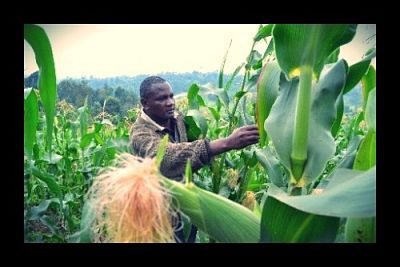
Almas Jiwani expressed how this award promotes equality, “We must continue investing in African women and increase their involvement in the political structures in place and in everyday life.” Furo Giami, the Executive Director of the Center for Economic and Leadership Development said that it’s an honor to present Almas Jiwani with this award to recognize her efforts and achievements at contributing to the end of global poverty and “all forms of vices militating the development of African women.”

Some of the women who have received this award in the past include President Joyce Banda of Malawi, Vice President Joice Mujuru of Zimbabwe, Business Leader Wendy Luhabe of South Africa, Ida Odinga (wife of the Prime Minister of Kenya), Rt. Hon. Anne Makinda (the Speaker of Parliament in Tanzania) and others.

– Leen Abdallah

Source: Market Wire

March 29, 2013
https://borgenproject.org/wp-content/uploads/borgen-project-logo.svg 0 0 Borgen Project https://borgenproject.org/wp-content/uploads/borgen-project-logo.svg Borgen Project2013-03-29 10:00:542024-05-24 23:46:07International Women Development Champion Award
Development, Food Security

Scientific Breakthrough in Stressed Free Crops

Scientific Breakthrough in Stress: Free CropsThe ability to grow crops in acidic soil environments has, up until recently, been feasible with only a few species of maize. However, current scientific research into the genes responsible for plant tolerance may enable the cultivation of stressed free crops in soils once considered impossible, opening up exciting new frontiers in the field of sustainable farming.

Researchers from Cornell University in cooperation with the United States Department of Agriculture (USDA) and the Boyce Thompson Institute for Plant Research have been conducting fascinating studies into the high aluminum tolerance of Ethiopian Maize and Brazilian Sorghum. Why aluminum? Well to start, the aluminum present in the clay of soils with a highly acidic pH dissolves, which is toxic when absorbed by nearby root systems. Amazingly, researchers were able to break down the genome of the aluminum tolerant species of maize and identify key gene copies known as MATE1 that were linked to the unusual trait. Moreover, by isolating and identifying the genes that enable crops to thrive in lands regarded as non-arable, stress-free crops can be grown in all types of climates and soil compositions.

In regards to stressed free crops, USDA Director of the Agricultural Research Service Leon Kochian remarked that “Aluminum tolerance in Maize is associated with higher MATE1 gene copy number. This could be a key factor for other traits of agricultural importance.”

The prospect of farmers being able to grow stress-free crops in areas that were once written off as unusable gives pause for optimism in nations that have been plagued with chronic food shortages and low soil efficacy. By unlocking the amazing potential of stressed free crops, remote areas that were once dependent on foreign aid can now reach the goal of sustainable development through aluminum tolerant maize.

– Brian Turner
Source: Science Daily
Photo:Nation Sydication

March 26, 2013
https://borgenproject.org/wp-content/uploads/borgen-project-logo.svg 0 0 Borgen Project https://borgenproject.org/wp-content/uploads/borgen-project-logo.svg Borgen Project2013-03-26 12:00:112020-05-26 01:11:11Scientific Breakthrough in Stressed Free Crops
Development

Sir Richard Branson Makes Pledge to Give

Branson_Charity_Wealth
Sir Richard Branson and his wife, Joan, have joined a handful of billionaires who have pledged much of their wealth to charity. Branson joined Warren Buffett and Bill Gates as the latest billionaire to make such a pledge as part of The Giving Pledge, started by Microsoft founder Bill Gates.

Branson, the UK’s fourth richest person, whose net worth is estimated at $4.2 billion, declared half of his wealth to charity in an open letter in which he also said that he would like to use a majority of his wealth to “make a difference in the world” through “entrepreneurial approaches,” also saying that money and objects do not bring happiness.

The entrepreneur behind the Virgin Group of companies, Branson went on to state that he and his wife realized how little they valued material possessions after a series of disasters caused them to lose a number of personal items, including a house in London that burnt down and one in the British Virgin Islands that was struck by lightning.

Richard Branson asserted that he and his wife would like a portion of their fortune to go towards creating a “healthy, equitable and peaceful world for future generations to enjoy.” The Giving Pledge, started three years ago by Gates, has already seen a around 30 additional American billionaires pledge a good amount of their wealth to charity.

– Christina Kindlon

Photo: Time

March 23, 2013
https://borgenproject.org/wp-content/uploads/borgen-project-logo.svg 0 0 Borgen Project https://borgenproject.org/wp-content/uploads/borgen-project-logo.svg Borgen Project2013-03-23 11:00:262024-05-24 23:45:15Sir Richard Branson Makes Pledge to Give
Development, Technology

The Wheelchair Foundation

wheels8
Maintaining mobility and independence can be challenging for millions of disabled people around the world. While a physical handicap may make life more difficult no matter where you live, many physically disabled people in the developing world aren’t able to purchase a wheelchair either for lack of funds or they simply because aren’t available. That’s where The Wheelchair Foundation comes in.

The Wheelchair Foundation, a branch of the Global Health and Education Foundation, works to provide wheelchairs to the people that need them throughout the developing world. The chairs are given at no cost to the families that receive them. An estimated 100 million people in the developing world are physically disabled and either wheelchair-bound or in need of a wheelchair to move around. The Wheelchair Foundation works with many non-governmental organizations (NGOs) that operate in the countries to which the wheelchairs are delivered and from there, the chairs are equipped and delivered in person. The organization also distributes chairs to Americans in need by working with Goodwill, Catholic Charities, and groups that work to help American veterans.

Organizations such as this one are great because of their specialization and their use of existing networks. Specialization without the great connections could lead to a less efficient organization but utilizing their relationships with other NGOs and government programs allows The Wheelchair Foundation to be a real success that addresses an important problem that many people in the developing world face each day.

– Kevin Sullivan

Source: The Wheelchair Foundation
Photo: Mental Floss

March 23, 2013
https://borgenproject.org/wp-content/uploads/borgen-project-logo.svg 0 0 Borgen Project https://borgenproject.org/wp-content/uploads/borgen-project-logo.svg Borgen Project2013-03-23 09:25:432024-06-04 02:43:50The Wheelchair Foundation
Development, Women and Female Empowerment

Development Through Art in Afghanistan

afghanistan art gallery
Art is a powerful form of expression and has been a tool artists have used to document the world around us for ages. Created by ART WORKS Projects and co-presented by UN Women, ten international photojournalists entered the lives of women and girls in Afghanistan to document and photograph their everyday lives in a country of conflict and fear. This was their way of presenting  development through art in Afghanistan.

Behind the camera lens, these photojournalists were able to depict these women and girls by revealing the immense courage they have for strengthening women’s rights. The highlight of these photographs are representative of how much the world has changed, depicting the status of these women in focuses of healthcare, education, peace and security, and economic development.

This women’s rights focused exhibition is a powerful contribution for the celebration of International Women’s Day in March. Joining in on the exhibition includes a collection of essays and writings by journalist Elizabeth Rubin and curator Leslie Thomas.

Some of the photographers includes Jean Chung, with one of her images above, Jared Moossy, Ron Haviv, and Moises Saman are just a few of them who have their work in this gallery. The exhibition is already open for public viewing at the Rayburn Foyer in Washington, DC. For more information on the artwork and project, visit the website here.

– Jada Chin

Source: UN Women

March 23, 2013
https://borgenproject.org/wp-content/uploads/borgen-project-logo.svg 0 0 Borgen Project https://borgenproject.org/wp-content/uploads/borgen-project-logo.svg Borgen Project2013-03-23 06:30:152020-04-27 05:59:36Development Through Art in Afghanistan
Developing Countries, Development, Poverty Reduction

Can Aid For Trade Reduce Poverty?

Can Aid For Trade Reduce Poverty?In 2005, the World Trade Organization (WTO) launched its Aid for Trade initiative, which works to reduce poverty in developing countries through trade. In most developing countries, supply-side and trade-related infrastructure problems hinder the ability to participate in international trade. The Aid for Trade initiative works to educate governments on the potential for trade to work towards development.

The World Trade Organization has managed to raise $200 billion worth of funding for the initiative that will go towards resource mobilization, the mainstreaming of trade into development plans and programs, regional trade integration, private-sector development, and the monitoring and evaluation of Aid for Trade. Emphasis is placed on gathering support and resources to counter constraints that deter trade in developing countries. Aid for Trade works on the assumption that “a rising tide floats all boats,” meaning that as national wealth increases, the poor will profit as well.

Some NGOs, however, question the viability of this method in reducing poverty. A study was commissioned by Traidcraft and the Catholic Agency for Overseas Development to look into the real impacts of these projects on the poor. Saana Consulting reported that most of the funding had gone to middle-income rather than low-income countries. They had also found that the program had little impact on the poor, calling the assumption that it will have an effect “a leap of faith.”

Donors have admitted that impacts are indeed difficult to track. Adaeze Igboemeka, head of Aid for Trade at the UK Department for International Development, concedes that there is indeed a lack of information, as the programs impacts on poverty are seemingly indirect.“The assumption,” Igboemeka said, “is – and there is a lot of evidence to support it – that if a country is able to trade more, it will grow, and that will create jobs and increase incomes and lead to poverty reduction.”

The consensus seems to be that, generally, trade is good. However, for now, there is not enough information and time to accurately project its impact on poverty reduction.

– Rafael Panlilio

Sources: The Guardian, WTO

March 17, 2013
https://borgenproject.org/wp-content/uploads/borgen-project-logo.svg 0 0 Borgen Project https://borgenproject.org/wp-content/uploads/borgen-project-logo.svg Borgen Project2013-03-17 11:18:152024-06-04 02:43:50Can Aid For Trade Reduce Poverty?
Developing Countries, Development, Education, Technology, USAID

USAID and Cisco Promote Development in Burma

Cisco_USAID_Burma
The U.S. Agency for International Development (USAID) has partnered with U.S. technology and communications giant, Cisco, to provide Burma with two new technical education centers. The two Cisco Networking Academies will provide valuable skills in information and communications technology to the developing nation, and provide citizens with job-ready abilities to bolster the country’s growing information and communications tech (ICT) industry.

The USAID Administrator, Dr. Rajiv Shah, has said that technology infrastructure can create stable and continued economic growth and development, and that “ICT can expand economic opportunities, transform public service delivery, and provide more opportunities for citizen engagement.”

Cisco has been a continual partner of USAID, having established networking education centers in over 165 countries, which have provided relevant skills for entry-level careers in ICT while also developing other valuable general career abilities including “problem-solving, collaboration, and critical thinking.”

In Burma, Cisco has agreed to donate the equipment needed to start the two Networking Academies and the training for 15 faculty members. Sandy Walsh, Director of Cisco’s Social Innovation Group, said that Cisco is dedicated to providing education to help continue technological development in “emerging economies,” and that the academies will aid Burmese citizens in gaining career skills needed in the 21st century.

Three additional American tech leaders, including Intel, Microsoft, and Hewlett-Packard, participated in a technology delegation to Burma, also led by USAID, in hopes of continued collaboration that will increase internet access and promote digital literacy and government openness. The partnership between USAID and Cisco hopes to create alliances with American tech companies, the local government, and the private sector to increase “social and economic development” using technological resources.

 – Christina Kindlon

Source: USAID
Photo: VOA

March 17, 2013
https://borgenproject.org/wp-content/uploads/borgen-project-logo.svg 0 0 Borgen Project https://borgenproject.org/wp-content/uploads/borgen-project-logo.svg Borgen Project2013-03-17 09:01:592020-05-01 20:05:56USAID and Cisco Promote Development in Burma
Page 161 of 163«‹159160161162163›»

Get Smarter

  • Global Poverty 101
  • Global Poverty… The Good News
  • Global Poverty & U.S. Jobs
  • Global Poverty and National Security
  • Innovative Solutions to Poverty
  • Global Poverty & Aid FAQ’s
Search Search

Take Action

  • Call Congress
  • Email Congress
  • Donate
  • 30 Ways to Help
  • Volunteer Ops
  • Internships
  • Courses & Certificates
  • The Podcast
Borgen Project

“The Borgen Project is an incredible nonprofit organization that is addressing poverty and hunger and working towards ending them.”

-The Huffington Post

Inside The Borgen Project

  • Contact
  • About
  • Financials
  • President
  • Board of Directors
  • Board of Advisors

International Links

  • UK Email Parliament
  • UK Donate
  • Canada Email Parliament

Get Smarter

  • Global Poverty 101
  • Global Poverty… The Good News
  • Global Poverty & U.S. Jobs
  • Global Poverty and National Security
  • Innovative Solutions to Poverty
  • Global Poverty & Aid FAQ’s

Ways to Help

  • Call Congress
  • Email Congress
  • Donate
  • 30 Ways to Help
  • Volunteer Ops
  • Internships
  • Courses & Certificates
  • The Podcast
Scroll to top Scroll to top Scroll to top