• Link to X
  • Link to Facebook
  • Link to Instagram
  • Link to TikTok
  • Link to Youtube
  • About
    • About Us
      • President
      • Board of Directors
      • Board of Advisors
      • Financials
      • Our Methodology
      • Success Tracker
      • Contact
  • Act Now
    • 30 Ways to Help
      • Email Congress
      • Call Congress
      • Volunteer
      • Courses & Certificates
      • Be a Donor
    • Internships
      • In-Office Internships
      • Remote Internships
    • Legislation
      • Politics 101
  • The Blog
  • The Podcast
  • Magazine
  • Donate
  • Click to open the search input field Click to open the search input field Search
  • Menu Menu

Archive for category: Developing Countries

Information and stories about developing countries.

Developing Countries, Development, Foreign Aid, Global Poverty

Ethiopia No Longer Crippled in Poverty

Ethiopia No Longer Crippled in Poverty
Ethiopia has proven to be a country to model economic growth for other African nations. The World Economic Forum on Africa will be meeting soon to discuss, among other issues, how Ethiopia was able to bring itself out of high poverty levels and into a relatively flourishing state. As a country that has a history of civil, Ethiopia’s progress is an inspiration to all of Africa.

Ethiopia has made huge strides in its economic sector as well as healthcare and government accountability. In the past two decades, Ethiopia has decreased the child mortality rate by 60 percent and built more than 15,000 primary healthcare facilities in rural areas. The country is also well on its way to meet the Millennium Development Goals by 2015.

The government of Ethiopia has been adamant about implementing policies that will better the economy and all aspects of the country. Haddis Tadesse, a representative of the Bill and Melinda Gates Foundation in Addis Ababa, has described Ethiopia’s policymakers as shifting from the mentality of “we can’t” to “we can.” This philosophy has done wondrous things to inspire hope for everyone living in Ethiopia.

Politicians and government authorities are now developing strategies to end hunger and create food stability for all citizens, build a new, impressively large hydro electronic power plant, an electrified railway system and a light manufacturing industry. Once these projects are complete, Ethiopia’s economy will continue to boom.

By following the examples of India, Malaysia, China, Brazil and Turkey, Ethiopia has been able to mold itself into a prospering economy and society. As Haddis Tadesse says, “Ethiopia is well-positioned to escape the poverty trap. But it won’t be easy.” With further improvements in infrastructure, human rights and creating a stable market, the country is likely to become dependent on foreign assistance and begin to provide aid to other African countries.

– Mary Penn

Source: World Economic Forum
Photo: Celebrate Children

July 2, 2013
https://borgenproject.org/wp-content/uploads/borgen-project-logo.svg 0 0 Borgen Project https://borgenproject.org/wp-content/uploads/borgen-project-logo.svg Borgen Project2013-07-02 17:15:222024-06-05 01:53:29Ethiopia No Longer Crippled in Poverty
Aid Effectiveness & Reform, Developing Countries, Extreme Poverty

Bread For The World Institute

Bread For The World Institute

Finding up-to-date information on research concerning hunger, poverty, and agriculture can be a difficult task.  To make this easier, the Bread for the World Institute compiles all their research into easy-to-understand formats. Bread for the World Institute is the research arm of Bread for the World. The institute focuses on research in several key areas including U.S. hunger and poverty, trade and agriculture, the Millennium Development Goals, maternal and child nutrition, immigration, global hunger and poverty, foreign assistance to reduce poverty, and climate change and hunger.  The staff work on policy analysis focused on hunger and strategies to end it. They use their research to educate world leaders, policymakers, and the public about hunger in the United States and abroad.

Within each research area, working papers can be found highlighting current research and findings happening. In addition, the institute is committed to the idea that development assistance does indeed work. They have a section of seven short essays telling stories and providing facts relating to the results of effective development aid. The essays are available for use by anyone from activists to politicians to Sunday school teachers. The essays serve to help individuals get a better picture of the fight against global hunger and extreme poverty.

The Bread for the World Institute also has a blog that provides current updates on what is going on within the fight to end world hunger and extreme poverty. The blog breaks down some of the information into a more comprehensible format. The goal of the institute and the research is to help people become informed and take action in the fight.

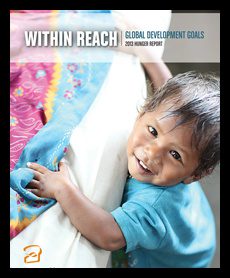
The 2013 Hunger Report is also produced by the Bread for the World Institute. The Hunger Report looks at issues surrounding global hunger such as malnutrition and food insecurity. The 2013 edition calls for a final push towards meeting the Millennium Development Goals.  Overall, the Bread for the World Institute is an excellent resource for information and facts on global hunger and on the fight to end it.

– Amanda Kloeppel
Source:Bread for the World Institute,Hunger Report

July 2, 2013
https://borgenproject.org/wp-content/uploads/borgen-project-logo.svg 0 0 Borgen Project https://borgenproject.org/wp-content/uploads/borgen-project-logo.svg Borgen Project2013-07-02 16:29:462024-06-04 02:43:54Bread For The World Institute
Developing Countries, Development, Extreme Poverty, Global Poverty

Camel Milk: The Future of Nutrition in Ethiopia?

Camel_milk_USAID

USAID is partnering with Somalia groups to form the Camel Milk Value Chain Development project. This project is part of the U.S. President’s Feed the Future Initiative in Ethiopia. Feed the Future is a project started by the Obama Administration that focuses on helping countries become self-sustainable through agriculture reforms and improvements. The goal of the Camel Milk Development project is to improve the production of camel milk and to make it more marketable and competitive in Ethiopian communities.

The camel milk initiative is projected to benefit 50,000 “targeted households” in the country. Abdifatah Mohamud Hassan, Somali Regional State Vice President, said, “The Camel Milk Value Chain Development project is an innovative project that addresses cultural wealth of the pastoralists and contributes to the Ethiopia Agricultural Growth and Transformation Plan.”

Once the project is underway, local farmers will be educated on camel productivity, which includes breeding, better feed, and improvements to the camels’ health. The last aspect of this strategy to increase productivity will be a main focus as USAID trains more animal health care workers. Another goal of the organization is improved camel milk quality. This will happen through extensive trainings that teach workers about proper sanitation.

Finally, USAID hopes to create a better market for camel milk by connecting local milk markets with larger milk networks. This will generate a more stable market for farmers, negating some of the uncertainty and stress that goes along with the agriculture sector. Along with a stronger market, USAID will improve hygiene, food safety standards, and infrastructure.

Given Somalia’s unpredictable weather patterns that often include drought, camels could prove to be a vital source of nutrients for a majority of the country. The USAID Ethiopia Mission Director, Dennis Weller, has even called camels the “animal of the future.” As camel milk becomes more common, those living in Somalia will experience better food security as well as economic independence.

– Mary Penn

Source: USAID
Photo: Mercy Corps

July 1, 2013
https://borgenproject.org/wp-content/uploads/borgen-project-logo.svg 0 0 Borgen Project https://borgenproject.org/wp-content/uploads/borgen-project-logo.svg Borgen Project2013-07-01 10:25:082024-05-24 23:52:05Camel Milk: The Future of Nutrition in Ethiopia?
Advocacy, Developing Countries, Development

Nominees Sought for Development Achievement Award

Nominees Sought for Development Achievement Award
Nominations are now available for The Guardian‘s Development Achievement Award.  Anyone who has traveled to the developing world has met outstanding individuals changing the lives of the impoverished and marginalized. The Guardian’s Development Achievement Award seeks to reward and recognize individuals making a huge impact in the poorest parts of the world.

These individuals work hard in the face of intense challenges. They spend tireless hours fighting for those they represent and deliver help that goes far beyond their pay grade.  However, often their work is known only by those who are directly impacted by it or those who happen to come across them in the areas where they work. The Development Achievement Award, now in its fifth year, seeks to bring some publicity and awareness to these hardworking individuals.

The winner of the award will receive public recognition for his or her work and achievements. Their accomplishments will be publicized to both colleagues and a broader global audience. Dr. Kshama Metre, last year’s winner, is a pediatrician who runs an organization called Cord that has helped thousands of poor in rural India by dealing with the causes and effects of poverty in a holistic manner. Renwick Rose, the winner from 2011, is an advocate for farmers’ rights in the Caribbean and works hard to fight for fair trade wages and practices within the region.

The nominees for the Development Achievement Award must be unsung heroes and have made an exceptional contribution to alleviating poverty. They should be individuals whose work deserves more recognition than it has received thus far and people who have gone above and beyond their regular line of work.  The winners will receive a film about their work, a profile in a Guardian supplement, and a presentation of the award in their own country. Nominations are welcome from anyone in the world for anyone in the world. The closing date for nominations is August 5, 2013.

– Amanda Kloeppel

Source:The Guardian

July 1, 2013
https://borgenproject.org/wp-content/uploads/borgen-project-logo.svg 0 0 Borgen Project https://borgenproject.org/wp-content/uploads/borgen-project-logo.svg Borgen Project2013-07-01 04:00:492020-07-08 19:14:37Nominees Sought for Development Achievement Award
Developing Countries, Development, Water

Brazil Pledges Development for Favelas

rio-de-janeiro-development
The Rousseff administration in Brazil has announced that its next step in its Growth Acceleration Programme (PAC) will be to allocate more than $1.2 billion for improving three favelas in Rio de Janeiro. The announcement comes three years before Rio de Janeiro is set to host the 2016 Olympic Games. Next year Brazil also will host the football World Cup.

PAC was launched in 2007 by the previous administration, that of President Lula da Silva, and focused on six initiatives to improve infrastructure, sanitation, and social development. Within three years, positive results were reported. Brazilian finance minister Guido Mantega called the effects of PAC on Brazilian growth “a great success.”

PAC 2, President Rousseff’s continuation of the program, has since been implemented. A June report from the Brazilian government announced major highlights by sector, including more than 3 million electricity connections, 540 water supply improvement projects in urban areas, and more than 7 million km of highways in progress throughout the country.

The Rio favelas that will receive the aid are Rocinha, Jacarezinho, and the Lins complex. Rocinha is the biggest slum in Brazil with a population of over 70,000, and it is also among the most developed favelas in Brazil. Many favelas are not as developed, suffering from lack of proper sewage and water facilities, as well as a high crime rate.

– Naomi Doraisamy
Source: BBC News, World Bank
Photo: iWall Screen

June 28, 2013
https://borgenproject.org/wp-content/uploads/borgen-project-logo.svg 0 0 Borgen Project https://borgenproject.org/wp-content/uploads/borgen-project-logo.svg Borgen Project2013-06-28 05:06:032024-12-13 17:49:26Brazil Pledges Development for Favelas
Advocacy, Developing Countries, Foreign Aid, Global Poverty

Caterpillar’s Role in International Development

Caterpillar's Role in International Development

Caterpillar Inc. is an Illinois based company that plays a dominant role in energy, trade, and infrastructure for developing countries. Yet Caterpillar is more than just business. The philanthropic efforts of the Caterpillar Foundation, founded in 1952, have contributed more than $550 million towards human development around the world. The Foundation has partnered with a variety of key organizations to fund projects in the areas of environmental sustainability, access to education, and meeting basic human needs for food, shelter, and healthcare.

As a Fortune 100 company with 2012 sales and revenues of $65.875 billion, Caterpillar is the world’s leading manufacturer of construction and mining equipment, diesel and natural gas engines, industrial gas turbines, and diesel-electric locomotives. They are best known for their big, yellow tractors. Caterpillar’s global reach and presence are unmatched in the industry. They have a presence in more than 180 countries around the globe and over 500 locations worldwide. More than half of their sales are outside the United States. As a powerful multinational corporation, Caterpillar has a very influential role in human development.

The Caterpillar Foundation invested $3 million during 2012 in a partnership with a World Resources Institute (WRI) project to promote the development of sustainable cities in China, India and Brazil. Through this “smart cities” initiative, WRI will work with five cities on strategies to increase energy efficiency, curb greenhouse gas emissions, and improve water quality, urban mobility and land use.

Specific project goals include solutions that will reach one billion people with new public transportation options; avoid 617,000 metric tons of CO2 emissions in the transportation area; reduce nitrogen, phosphorus and ammonia water pollution by 15 percent; and provide more reliable energy to 11 million industrial, corporate and residential consumers. In total, the Caterpillar Foundation expects to support this project with $12.5 million over five years – all in an effort to curb the negative environmental side effects of rapid urbanization in the developing countries.

The Resource Foundation is another partner of the Caterpillar Foundation. This $3 million partnership will reach more than 11,000 children in Latin America and the Caribbean over three years, beginning in January 2013. Through a regional strategy targeting specific communities in 10 countries, the program seeks to improve academic achievement, gender equity and life skills among primary school-age boys and girls from 54 schools.

The Caterpillar Foundation has also been a long-time supporter of Opportunity International’s microfinance programs in more than 20 countries around the world. The Caterpillar Foundation’s investment has helped Opportunity International provide life-changing microloans to more than 75,000 small entrepreneurs, create 30,000 jobs and give more than 60,000 rural families access to basic banking services. A majority of Opportunity International’s clients are women who reinvest more of their earnings into health care, education and their communities, which helps break the cycle of generational poverty. As of July 2012, Opportunity International has four million clients, 17,600 employees, 2.3 million insurance policies, and a 95 percent loan repayment rate.

– Maria Caluag

Source: Caterpillar,CSR Wire
Photo: Companies and Markets

June 28, 2013
https://borgenproject.org/wp-content/uploads/borgen-project-logo.svg 0 0 Borgen Project https://borgenproject.org/wp-content/uploads/borgen-project-logo.svg Borgen Project2013-06-28 04:00:432024-12-13 17:53:46Caterpillar’s Role in International Development
Developing Countries, Development, Extreme Poverty

The Butterfly Effect

The Butterfly Effect
Often, consumers in the developed world assume that the greatest impact they can have on developing countries is philanthropic: by choosing certain products, certain brands and certain charities, they can improve the lives of citizens far away. It is a widely held belief that the developed world’s major interaction with the developing is that of a benevolent elder sibling: offering advice and help when necessary, while also attending to their own, separate affairs.

A recent report by The Atlantic once again highlights how incorrect this idea is. Indeed, the activities of the first world often have profound consequences for the developing world as they bear the brunt of paying for the sins of those who are more advantaged.

From the 1960s to the 1980s, a famine devastated parts of northern Africa, leaving 100,000 dead and upward of 700,000 relying on foreign food aid for survival. Infamous across the world, photos of starving cattle marching across dusty plains and children with shriveled arms and distended bellies still remain burned in many minds. Initially, this was blamed on poor farming practices leading to desertification. New research by scientists, however, shows that the drought which caused the famine was triggered by the number of factory emissions from Western Europe and the United States of America. The release of sulfate aerosols, which cool the climate around them, disrupted rainfall patterns for decades until clean-air laws were passed in the industrialized countries.

It is an uncomfortable reality that the world is interconnected and that the decisions of one country will undoubtedly have ramifications for another. More than ever in today’s connected and globalized world, countries have to work in sincere cooperation, not just for individual benefit, but for the good of the international community.

The developed world, having such power, also carries an immense amount of responsibility in wielding it. To a large extent, it is failing at that responsibility: smartphones continue to fly off the shelves, despite the myriad controversies surrounding them, including Apple’s suicidal factory workers and the conflict minerals necessary for production. Fairtrade products are still pushing to be the norm, and clean energy bills struggle to be passed.

Too often, citizens rely on governments to take the initiative in social progress. As we continue to dive deeper and deeper into climate change and growing levels of inequality, however, the average citizen has to start harnessing their individual power. The old saying goes that a butterfly flapping its wings can cause a hurricane; while this may be an exaggeration, one must ask themselves what the potential impact of human life can be, even the most ordinary one, across the globe.

– Farahnaz Mohammed
Source: Science Daily,The Atlantic
Photo: The Guardian

June 28, 2013
https://borgenproject.org/wp-content/uploads/borgen-project-logo.svg 0 0 Borgen Project https://borgenproject.org/wp-content/uploads/borgen-project-logo.svg Borgen Project2013-06-28 04:00:272020-07-06 18:34:49The Butterfly Effect
Developing Countries, Global Poverty

Five Myths About Global Slums

Global Slums
The word “slum” usually evokes images of filth, crime, chaos, and deprivation. People typically perceive slums as places to avoid or escape from, places where nothing good ever happens. As many people who live and work in slums know, however, the stereotypes fail to tell the whole story. A publication by the United Nations Settlements Programme, U.N. Habitat, helps to separate myth from fact.

Myth: “Slums serve no purpose.”

Fact: Slums often provide low-cost housing and services to urban populations. They also offer networks of much-needed social support to people migrating from rural to urban areas.

Myth: “All slum dwellers are poor.”

Fact: While it is true that poverty in slums is extremely visible, many people who are not the poorest of society choose to live in or near slums because they run businesses located in the same area.

Myth: “Slum dwellers are a burden on the economy.”

Fact: In many global cities, as much as 60% of employment lies in the ‘informal’ sector of the economy. Research in developed and developing countries proves that by providing opportunities for small-scale entrepreneurship, slums often serve as vital “incubators” for upward social and economic mobility.

Myth: “Slums are the fault of slum dwellers who do not want to help themselves.”

Fact: Failed, inadequate, or non-existent housing policies and laws are more to blame for the presence of slums than the people who inhabit them. In fact, most people move to slums from rural villages because they wish to find work and improve their lives.

Myth: “The poor contribute nothing to society and nothing good ever came out of slums.”

Fact: The largest producers of shelter in today’s global cities are poor people. Slums have also been vital contributors to culture by providing spaces to nurture art including music genres reggae, jazz, hip-hop, and funk.

– Délice Williams

Source: UN-Habitat

June 22, 2013
https://borgenproject.org/wp-content/uploads/borgen-project-logo.svg 0 0 Borgen Project https://borgenproject.org/wp-content/uploads/borgen-project-logo.svg Borgen Project2013-06-22 07:45:572021-12-14 01:50:44Five Myths About Global Slums
Aid Effectiveness & Reform, Developing Countries, Extreme Poverty

Economic Freedom Essential to Reduce Poverty

Economic_Freedom_Poverty
Poverty is a global issue affecting every nation on earth. Over the past hundred years, life expectancy ranged from 30 to 40 years for many people. And if they made it that far, often they did so without adequate food, clothing, and shelter. The past decade has seen massive reductions in the numbers of the global poor, but there is still much work to be done. Today, the number of people in the world living on less than $1 a day is down to around 20% and dropping.

Essential to reducing poverty is economic freedom. China and India have become leaders in economic enterprise and in improving the economic freedoms within their nations. As a result, they have seen millions of people lifted out of poverty. To back up the numbers, the Cato Institute and Canada’s Frazier Institute put out a report called the Economic Freedom of the World report. The study annually looks at five major indicators of economic freedom. Those indicators are size of government, legal system and property rights, sound money, freedom to trade internationally, and regulation. From the indicators, the report lists 141 countries in terms of economic freedom.

The report has found that countries with higher levels of economic freedom grow more rapidly, have higher per capita incomes, and greater longevity than countries with lower levels of economic freedom. The top fifth of countries had per capita incomes seven times higher than the the bottom fifth and the results among the poor are significant. The poor in the bottom tenth in terms of economic freedom had incomes of $1,061 versus poor in the top tenth who had incomes around $8,735.

The report also pointed out that income inequality does not seem to be a factor in economic freedom. As a country becomes more free, the rich do not grow richer at the expense of the poor. Rather the poor also gain an advantage.  Economic freedom improves wealth which also improves health and mortality rates especially among women and children.

People are the solution to poverty and equal distribution of economic freedom will have a greater impact on reducing poverty than redistribution of wealth.

– Amanda Kloeppel
Source: The York Daily Record
Photo: The Guardian

June 20, 2013
https://borgenproject.org/wp-content/uploads/borgen-project-logo.svg 0 0 Borgen Project https://borgenproject.org/wp-content/uploads/borgen-project-logo.svg Borgen Project2013-06-20 04:00:002016-02-08 14:27:16Economic Freedom Essential to Reduce Poverty
Advocacy, Children, Developing Countries, Food & Hunger

Nutrition for Growth Summit Combats Hunger

malnutrition
United Nations officials met with key country leaders at the Nutrition for Growth summit held in London last week to discuss pledged funds and political agreements in the fight against global hunger.  Millions of infants and pregnant women are at risk for stunting and deaths from malnutrition; the Nutrition for Growth summit was a key step in securing hope and help in the fight against malnutrition. UN Secretary-General Ban Ki-moon sent a video message confirming the organization’s commitment to ending hunger and malnutrition in all forms worldwide.

One in four children will grow up stunted by chronic malnutrition. In today’s world, this number must be reversed. There is no reason for children to suffer from malnutrition. Commitments of funds and political support will help millions of children and boost the economies of some of the world’s most vulnerable countries. The UN is committed to do whatever it takes to see the goals reached and hunger ended.

The Nutrition for Growth summit brought together leaders from governments, the private, and non-profit sector. It was hosted by the governments from Brazil and the United Kingdom as well as the Children’s Investment Fund Foundation (CIFF). The event resulted in renewed commitments to continue to fight stunting and malnutrition worldwide. Funds pledged at the event exceeded $4 billion.

Stunting in children robs them of their health and their ability to grow up to be productive, contributing citizens. The summit focused on eliminating that prognosis for children. UNICEF also strengthened its desire to invest in fighting malnutrition and to continue to support programs working in over 65 countries to combat malnutrition.

Also signed at the summit was the Global Nutrition for Growth Compact which formalizes commitments to make nutrition a top political and socio-economic priority for donors and countries. It will focus on scientific knowledge, innovation to nutrition, and transparency and monitoring of results. Strong nutrition is key for individuals, nations, and economies to grow and become successful and the Nutrition for Growth summit is another step towards the elimination of global hunger and malnutrition.

– Amanda Kloeppel

Source: UN News Centre

June 18, 2013
https://borgenproject.org/wp-content/uploads/borgen-project-logo.svg 0 0 Borgen Project https://borgenproject.org/wp-content/uploads/borgen-project-logo.svg Borgen Project2013-06-18 07:19:072024-06-10 03:29:02Nutrition for Growth Summit Combats Hunger
Page 154 of 157«‹152153154155156›»

Get Smarter

  • Global Poverty 101
  • Global Poverty… The Good News
  • Global Poverty & U.S. Jobs
  • Global Poverty and National Security
  • Innovative Solutions to Poverty
  • Global Poverty & Aid FAQ’s
Search Search

Take Action

  • Call Congress
  • Email Congress
  • Donate
  • 30 Ways to Help
  • Volunteer Ops
  • Internships
  • Courses & Certificates
  • The Podcast
Borgen Project

“The Borgen Project is an incredible nonprofit organization that is addressing poverty and hunger and working towards ending them.”

-The Huffington Post

Inside The Borgen Project

  • Contact
  • About
  • Financials
  • President
  • Board of Directors
  • Board of Advisors

International Links

  • UK Email Parliament
  • UK Donate
  • Canada Email Parliament

Get Smarter

  • Global Poverty 101
  • Global Poverty… The Good News
  • Global Poverty & U.S. Jobs
  • Global Poverty and National Security
  • Innovative Solutions to Poverty
  • Global Poverty & Aid FAQ’s

Ways to Help

  • Call Congress
  • Email Congress
  • Donate
  • 30 Ways to Help
  • Volunteer Ops
  • Internships
  • Courses & Certificates
  • The Podcast
Scroll to top Scroll to top Scroll to top