• Link to X
  • Link to Facebook
  • Link to Instagram
  • Link to TikTok
  • Link to Youtube
  • About
    • About Us
      • President
      • Board of Directors
      • Board of Advisors
      • Financials
      • Our Methodology
      • Success Tracker
      • Contact
  • Act Now
    • 30 Ways to Help
      • Email Congress
      • Call Congress
      • Volunteer
      • Courses & Certificates
      • Be a Donor
    • Internships
      • In-Office Internships
      • Remote Internships
    • Legislation
      • Politics 101
  • The Blog
  • The Podcast
  • Magazine
  • Donate
  • Click to open the search input field Click to open the search input field Search
  • Menu Menu

Archive for category: Developing Countries

Information and stories about developing countries.

Aid Effectiveness & Reform, Developing Countries

BRICS Plans For Development Bank

Fifth_BRICS_Summit_2013_Brazil_Russia_India_China_Sout_Africa_conference_leadership_global_business

Leaders of BRICS (Brazil, Russia, India, China, and South Africa) announced at the end of their summit in March in Durban their intention to start a new Development Bank.  This Development Bank will be used to mobilize resources within developing countries to build infrastructure and promote sustainable development projects.

Over the last four decades, the nations of BRICS have seen enormous success in economic development and are coming together to see that their futures are bright and full of opportunities.  As developed nations struggle through their own economic difficulties, the Development Bank will serve to bridge a gap in funding.  Infrastructure requirements in emerging-market economies point to the need for the availability of credit and sources of financing. With 1.4 billion people lacking reliable electricity, 900 million lacking access to clean water, and 2.6 billion without adequate sanitation, the Development Bank will be a key player in addressing the long-term sustainable solutions to those problems.  In addition, the forecasted large migration to cities calls for policymakers to fund environmentally sustainable investments.

Predictions for infrastructure spending within the developing world top $2 trillion annually in the coming decades.  This spending will allow nations to achieve long-term poverty reduction and economic growth. The private market will still be relied upon, but their dollars can only go so far. The Development Bank will fill the gap and become a catalyst for change in developing countries.

As the world economy is changing, the Development Bank provides BRICS a chance to reflect on those changes within an institution that utilizes modern financial instruments, strong governance, and broad-based mandates.  The bank can capitalize on new development partnerships and collective action as well as innovative and cost-effective approaches.  While developed countries still have a strong role to play in global development, the shortfall in assistance and need for quick decisions make the Development Bank a welcome institution in the marketplace of emerging countries.

– Amanda Kloeppel

Source: The Korea Herald
Photo: BRICS

May 8, 2013
https://borgenproject.org/wp-content/uploads/borgen-project-logo.svg 0 0 Borgen Project https://borgenproject.org/wp-content/uploads/borgen-project-logo.svg Borgen Project2013-05-08 11:00:232024-05-24 23:49:34BRICS Plans For Development Bank
Developing Countries, Development, United Nations

Progress Is Being Made Towards MDGs

Millennium Development Goals

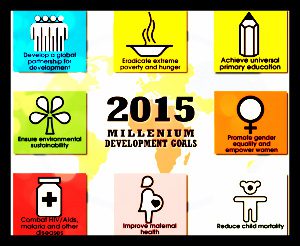
Twenty nations have made huge strides in just a few years towards the Millennium Development Goals (MDGs). The Millennium Development Goals are a series of international development goals set by the United Nations in 2000 that aim to eradicate poverty, hunger, and disease and improve the quality of life for the world’s poorest by the year 2015. Nations, that were described as troubled and conflict-hit, had not met any of the MDGs in 2010 have now at least met one. The World Bank cites better data collection and monitoring that have made progress more discernible.

The World Bank noted that countries Afghanistan, Nepal and Timor-Leste have decreased the number of people in extreme poverty by fifty percent or increased the number of girls enrolled in schools.

The World Bank aims to find ways to help countries that have relapsed such as Yemen which until the Arab Spring in 2011 was on course to reduce maternal mortality. It also aims to help conflict-hit countries transition from receiving humanitarian aid that ends once the cameras leave to building foundations for long-term development. To do so, the World Bank is working with the UN which has historically assisted with peace-keeping and humanitarian assistance.

World Bank President, Jim Yong Kim, called the results a wake-up call to “the global community [to] not dismiss these countries as lost causes. Development can and is being achieved, even amid fragility and violence.”

The World Bank plans to focus on aid effectiveness by studying how aid money is used and if it actually impacts the poor, particularly with the reduction of aid from the U.S. and Europe.

– Essee Oruma

Source: Reuters
Photo: A Celebration of Women

May 7, 2013
https://borgenproject.org/wp-content/uploads/borgen-project-logo.svg 0 0 Borgen Project https://borgenproject.org/wp-content/uploads/borgen-project-logo.svg Borgen Project2013-05-07 13:00:252020-05-26 08:45:52Progress Is Being Made Towards MDGs
Developing Countries, Development

Urbanization to Curb Poverty

urbanization-in-developing-countries
According to a study done by the World Bank, urbanization has proven to be a key factor in eradicating poverty. The bank’s Global Monitoring Report 2013 offers statics that positively reflect urbanization in developing countries and in countries that have made the most progress in reaching the 2013 Millennium Development Goals.

The Global Monitoring Report says that countries with large population centers such as Southeast Asia or China have made large strides in reducing poverty in comparison to sub-Saharan Africa, where 70% of the population lives in rural areas. Infant mortality rates are also up to nine percentage points lower in urbanized areas than in rural cities and villages.

Urbanized areas create jobs and are generally better at service delivery such as access to sanitation, health care, education and electricity. Access to sanitation varies as much as thirty percent, 80 percent in urban areas to 50 percent in rural areas. Poverty is also significantly lower in urban areas at 11.5 percent versus the 29.5 percent in rural areas. In Africa, poverty in urban areas stands at 33 percent in urban areas to 47 percent in rural areas.

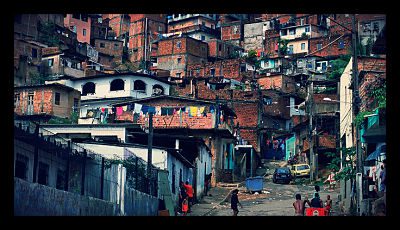
The next step to urbanizing is to ensure resources are available and to move forward at a steady pace to avoid slum areas. Some people favor state support and the finance of health and education systems while others support a combination of public and private financing. The World Bank encourages countries with oil and mineral resources to use the revenues to finance urbanization and health care systems. However, countries such as Uganda, that do not have an abundance of natural resources, prefer to use those revenues to improve the infrastructure in rural areas. According to Maria Kiwanuka, Uganda’s Minister of Finance, there are trade-offs. When the government uses the oil revenue to strengthen the infrastructure in rural areas, it allows the people living there to make more money to eventually contribute to the health care system.

While there are many different ways to fund health and social services and contribute to urbanization and the ultimate end of poverty, the assurance of resources to create the change is most important, says Joe Verbeek, the lead economist for the Global Monitoring Report. By improving the health and education services for people living in rural areas, it will make the transition easier and improve their job skills if they choose to migrate to a city.

– Kira Maixner

Source Voice of America
Photo World Bank

May 5, 2013
https://borgenproject.org/wp-content/uploads/borgen-project-logo.svg 0 0 Borgen Project https://borgenproject.org/wp-content/uploads/borgen-project-logo.svg Borgen Project2013-05-05 02:55:352020-05-26 08:09:20Urbanization to Curb Poverty
Developing Countries, Development, Global Poverty, Poverty Reduction

The Open Borders Theory and Ending Global Poverty

Border_opt
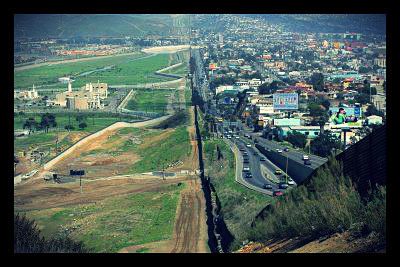
Immigration has always been a hot button issue, especially considering the comprehensive reform laws currently being debated by U.S. congressional leaders. However, what effect would the opening of the nation’s borders have on global poverty? According to several developmental thinkers, quite a bit, as adopting many of the mass migration policies called for in the open borders theory could hypothetically eliminate global poverty forever.

The researchers responsible for the open borders theory, drawn from such disparate fields as Mathematics, Economics, and Philosophy, argue that through the enforcement of a closed border policy, individuals are stripped of their basic human right of self-determination. Furthermore, by allowing migrants to move freely between nations, the net loss of labor productivity could theoretically double the world’s GDP through the mitigation of capital flow inefficiencies.

In regards to the open borders theory, developmental economist Michael Clemens noted that, “Immigration is very, very far from being a zero-sum game of their poverty or ours. Within ranges that even slightly resemble current migration levels, it is rather simply ‘their poverty or their prosperity,’ while we remain prosperous.”

Additionally, supporters of the open borders theory debunked the notion that a huge influx of migrants would depress the wages of developed countries based upon the net employment gains of the managerial sector. And by enabling efficient use of migrant skill sets underutilized by the inadequate facilities of the global south, developed economies would reap huge financial dividends.

Although the open borders theory is still in its infancy and years away from being considered as a realistic solution to global poverty, innovative ideas such as these help to encourage further debate involving current developmental policy. Michael Clemens remarked that, “Development is about people, not places.”

– Brian Turner

Source: The Atlantic
Photo: Women On The Border

May 5, 2013
https://borgenproject.org/wp-content/uploads/borgen-project-logo.svg 0 0 Borgen Project https://borgenproject.org/wp-content/uploads/borgen-project-logo.svg Borgen Project2013-05-05 01:18:512020-05-26 08:23:47The Open Borders Theory and Ending Global Poverty
Advocacy, Aid Effectiveness & Reform, Developing Countries

Business and Africa: A Continent on the Move

africaglobalbusinessforum

May 1, 2013 was the kick-off of the two-day Africa Global Business Forum in Dubai.  Africa, a continent on the move, has been showing promising signs of economic growth and development.  The Africa Global Business Forum is just one more step in the right direction for a continent on the move.

The Africa Global Business Forum, as announced by the UAE Prime Minister, is set to become an annual event.  The forum brings together leaders from Africa and the UAE to promote business investment, development, and collaboration between the nations of Africa and Dubai.  More than 3,500 delegates are in attendance.  The Prime Minister of Uganda gave the keynote address and stressed the importance of the forum as a signal of the interest in African business and investment opportunities.  He also discussed the importance of the private and public sectors working together as has been done in Dubai.

Dubai serves as a center of 150 different shipping lines and could be a very key logistics hub for Africa to export goods.  The young population and growing middle class in Africa are indicators of the potential for increased growth within Africa. Consumer spending is set to hit US $1.4 trillion by 2020. The forum will seek to strengthen alliances between Africa and outside investors with the goal of reducing poverty in Africa and increasing economic growth and self-sufficiency.

Other topics of note at the forum are looking at boosting Africa’s trade through the role of free trade areas and private equity.  Already major telecom companies are looking to invest in Africa and the prospects for future growth and development are exciting.

– Amanda Kloeppel
Source: CPI Financial

May 4, 2013
https://borgenproject.org/wp-content/uploads/borgen-project-logo.svg 0 0 Borgen Project https://borgenproject.org/wp-content/uploads/borgen-project-logo.svg Borgen Project2013-05-04 14:00:032020-05-26 08:24:21Business and Africa: A Continent on the Move
Aid Effectiveness & Reform, Developing Countries, Extreme Poverty, Global Poverty, Nonprofit Organizations and NGOs, Poverty Reduction

$500 Million ‘Rescue Mission’ Initiative Launched

$500 Million 'Rescue Mission' Initiative LaunchedWith cuts to foreign aid looming and some already in place, humanitarian organizations are going to become even more important in the fight against global poverty. Evangelical organization World Vision launched a $500 million ‘Rescue Mission’ initiative to help 10 million children living in poverty.  The ‘Rescue Mission’ initiative will focus on clean water, access to health care, and child protection.

Under the budget cuts that went into effect as of January 1, 2013, non-profits are predicting that there will be 1.1 million fewer mosquito nets distributed, 300,000 fewer people with access to clean water, and 2 million people with reduced or zero access to food aid.  This is cause for serious concern as we look at being less than 1,000 from the end date for the Millenium Development Goals (MDG).

World Vision launched the $500 million ‘rescue mission’ dubbed “For Every Child” which seeks to raise $500 million by 2015.  It is the farthest-reaching endeavor World Vision has ever taken on.  The initiative will focus on clean water, fighting communicable diseases, providing small loans to families, and protecting children from human trafficking.

When the government cuts budgets, it can be difficult for non-profit organizations to get the start-up capital they need to start new ventures. This campaign is important to continue the life-saving work World Vision is already doing around the world.  It will hopefully fill the gap from government funds and continue to promote the MDGs as we near the final stretch.  We have halved poverty in the last decade and it is very possible to continue the downward trend, but it is going to take a lot of hard work.

While the needs are great and the costs seem high, the alternative to pushing forward is not an option. As Richard Sterns, Executive Director of World Vision put it, “We’ve taken a hard look at the needs that exist today. They are great, but we refuse to believe that poverty is too big, too expensive, or too difficult to overcome-because for the millions of children living in poverty, the stakes couldn’t be higher.”

– Amanda Kloeppel

Source: Christian Post

April 24, 2013
https://borgenproject.org/wp-content/uploads/borgen-project-logo.svg 0 0 Borgen Project https://borgenproject.org/wp-content/uploads/borgen-project-logo.svg Borgen Project2013-04-24 09:00:522020-06-12 23:12:22$500 Million ‘Rescue Mission’ Initiative Launched
Advocacy, Developing Countries

High School Students Fight World Hunger

High School Students Fight World Hunger
For the fourth year, more than 200 Ottawa Township High School students became part of the solution to world hunger.

Each year, students in the school’s Freshman Academy have been asked to come up with solutions to the problems of world hunger and limited access to clean drinking water, said teacher Pamela Cronkright.

“Students research local and international organizations and then choose which one they want to help,” she said. They sometimes raise funds for the organization; often they volunteer at a local organization or “create and present a public service announcement”encouraging others to get involved.

Preliminary totals show this year the students raised more than $12,000, volunteered more than 250 hours, and created public service announcements seen by thousands, Cronkright said.

Students can select from a list of organizations, or suggest one, to send the money they have raised.

Triplets Sam, Matt and Emily Poundstone, of Marseilles, with the help of their family, held a pancake breakfast that brought in $565 for the Marseilles Food Pantry.

Officially, it was Sam and Matt’s project. Emily and a friend saved their lunch money to raise $50 more in contributions.

Silver Young, Bethany Crum, Shelby Leonard and Sarah Lyons held a bake sale outside Handy Foods. Rachel Thrush and another student sold candy bars, which raised $150.

Cronkright said one non-auditory special needs student programmed a presentation into a speech machine and went homeroom to homeroom and gave his “talk” while his aide held his poster. He collected $83.

Students decided to send most of their funds to charity: Water, a global nonprofit organization, builds wells to provide drinking water in developing nations, and Heifer International, another global nonprofit, provides livestock, seeds, and trees to those in need.

Locally, in addition to the Marseilles Food Pantry, students volunteered or raised money for the Community Food Basket, Illinois Valley Public Action To Deliver Shelter, and the Ottawa YMCA.

Tom Hart, another Freshman Academy faculty member, also led this year’s World Hunger Awareness Project, but shifted the credit to Cronkright.

“She was the one who came up with this idea,” Hart said. “I’m just following along.”

– Katie Brockman

Source My Web Times
Photo The Wild

April 20, 2013
https://borgenproject.org/wp-content/uploads/borgen-project-logo.svg 0 0 Borgen Project https://borgenproject.org/wp-content/uploads/borgen-project-logo.svg Borgen Project2013-04-20 11:00:562020-06-12 23:05:20High School Students Fight World Hunger
Developing Countries, Food Aid, Foreign Aid

Future of Foreign Aid

future-of-foreign-aid
Amid the debate as to whether or not foreign aid helps or hinders developing countries, World Bank Director of Economic Policy and Poverty Reduction Programs for Africa Marcelo Giugale believes that the tables are turning. While the number of people in poverty and countries in need of financial assistance gradually falls, the need for foreign aid will remain a constant. However, the players will change as well as the type of aid needed.

Currently, foreign aid is criticized for many reasons. Corruption, insensitivity and imposition to local markets and businesses, and a growing sense of “aid-dependency” in recipient countries are just a few of the concerns. While the list is long, Giugale believes that the role of foreign aid and a country’s dependence on the monetary assistance is diminishing. He says that the future of foreign aid will become a search for knowledge instead of cash. To reiterate this point, he cites past aid recipients turned donors such as China, India and Brazil and their roles in assisting Africa.

As donor countries begin to regard foreign aid more as investment and partnership, they begin to export goods and assist in building a sound infrastructure rather than imposing a certain way of life or thinking. As developing countries are embracing the income and value of their own natural resources in an economy where oil, gas and minerals generate revenue, the assistance turns to a need of knowledge.

Giugale believes that developing countries already know how to build schools and can pay the teachers that work in them. The aid that supports these developments may diminish in the future. However, the aid that developing countries might seek in the future includes solutions to problems that the government cannot solve alone. In the future of foreign aid, a donor country may lend assistance through experience in improving educational curriculum, health insurance systems, or regulating private suppliers of infrastructure.

– Kira Maixner

Source: The Huffington Post
Photo: INHABITAT

April 17, 2013
https://borgenproject.org/wp-content/uploads/borgen-project-logo.svg 0 0 Borgen Project https://borgenproject.org/wp-content/uploads/borgen-project-logo.svg Borgen Project2013-04-17 10:00:412024-06-10 03:04:43Future of Foreign Aid
Developing Countries, Development, Water

MENA Focuses on Water Reduction

rsz_drip_irrigation
For many North African and Middle Eastern (MENA) countries, the goal of greater water acquisition had been the standard policy for developers and government officials aiming to combat the low annual rainfall and dry climate of the region. Huge projects involving the construction of desalinization plants, dams, and canals resulted in only marked successes in solving the region’s water scarcity problems. Enter the Canadian-led International Development Regional Centre (IRDC) in 2004 that – with a fresh set of eyes and a renewed focus on efficiency – set out to implement a new policy of development that focuses on water reduction as opposed to acquisition.

The water conservation project, known as WaDlmena and co-sponsored by the IRDC, introduced a “demand management” program that focused on decreasing the amount of water used through innovative water conservation methods and development that focuses on water reduction. Techniques such as greywater – which utilizes non-sewage wastewater for crops – along with drip irrigation and nightly crop watering were researched, implemented, and tested by local farmers, policymakers, and community members. Various concerns such as issues involving poor farmers and tariffs on water usage were also addressed, leading to creative new ideas such as allowing small amounts of free well water to local growers.

Since the WaDlmena program has been enacted, nations such as Jordan and Morocco have adopted water conservation techniques ranging from mandatory wastewater systems in new buildings and drip irrigation for the agricultural industry. Thanks to the IRDC’s efforts in funding development that focuses on water reduction instead of water acquisition, a realistic solution to the water scarcity problem in the Middle East may soon be reached.

– Brian Turner

Source: Science Daily
Photo: National Geographic

April 16, 2013
https://borgenproject.org/wp-content/uploads/borgen-project-logo.svg 0 0 Borgen Project https://borgenproject.org/wp-content/uploads/borgen-project-logo.svg Borgen Project2013-04-16 10:04:322020-06-12 01:19:30MENA Focuses on Water Reduction
Children, Developing Countries, Health

Innovation Saves Lives of Underweight Babies

Innovation Saves Lives of Underweight Babies

Approximately 20 million babies are born underweight each year with 96% of them being born in developing countries. Further, underweight babies have a higher risk of becoming one of approximately 4 million babies that die within 27 days of birth every year.

One of the difficulties associated with premature, underweight babies is a lack of the necessary fat to regulate body temperature. If a low body-weight baby is not placed into a warm environment as a way to regulate temperature early on, death is highly possible. For hospitals located in areas where electricity is spotty or where resources are low, creating the necessary warm environment may be very difficult, if not impossible. Incubators may not emit enough heat or may fail to work at all and hospital heating generators may not be present or go out occasionally.

This is why Embrace Global has created a simple, low-cost product that will help save the lives of many babies at the fraction of the price of current solutions, such as incubators. The product, notedly named Embrace BabyWrap, resembles a mini sleeping bag and helps to regulate a baby’s internal temperature effectively and for long periods of time. This is done with the use of a WarmPak. A WarmPak is placed into a AccuTemp heater for 25 minutes then transferred to the back of the BabyWrap where it slowly releases heat for up to 6 hours. Further, the BabyWrap traps heat inside, providing a warm and insulated place for the baby at the perfect temperature – 37 degrees Celsius.

The Embrace BabyWrap is a great innovation that is “embracing embrace” and saving the lives of underweight babies worldwide.

– Angela Hooks

Sources: AllAfrica, Embrace Global

April 15, 2013
https://borgenproject.org/wp-content/uploads/borgen-project-logo.svg 0 0 Borgen Project https://borgenproject.org/wp-content/uploads/borgen-project-logo.svg Borgen Project2013-04-15 12:49:382020-06-12 01:26:48Innovation Saves Lives of Underweight Babies
Page 156 of 157«‹154155156157›

Get Smarter

  • Global Poverty 101
  • Global Poverty… The Good News
  • Global Poverty & U.S. Jobs
  • Global Poverty and National Security
  • Innovative Solutions to Poverty
  • Global Poverty & Aid FAQ’s
Search Search

Take Action

  • Call Congress
  • Email Congress
  • Donate
  • 30 Ways to Help
  • Volunteer Ops
  • Internships
  • Courses & Certificates
  • The Podcast
Borgen Project

“The Borgen Project is an incredible nonprofit organization that is addressing poverty and hunger and working towards ending them.”

-The Huffington Post

Inside The Borgen Project

  • Contact
  • About
  • Financials
  • President
  • Board of Directors
  • Board of Advisors

International Links

  • UK Email Parliament
  • UK Donate
  • Canada Email Parliament

Get Smarter

  • Global Poverty 101
  • Global Poverty… The Good News
  • Global Poverty & U.S. Jobs
  • Global Poverty and National Security
  • Innovative Solutions to Poverty
  • Global Poverty & Aid FAQ’s

Ways to Help

  • Call Congress
  • Email Congress
  • Donate
  • 30 Ways to Help
  • Volunteer Ops
  • Internships
  • Courses & Certificates
  • The Podcast
Scroll to top Scroll to top Scroll to top