• Link to X
  • Link to Facebook
  • Link to Instagram
  • Link to TikTok
  • Link to Youtube
  • About
    • About Us
      • President
      • Board of Directors
      • Board of Advisors
      • Financials
      • Our Methodology
      • Success Tracker
      • Contact
  • Act Now
    • 30 Ways to Help
      • Email Congress
      • Call Congress
      • Volunteer
      • Courses & Certificates
      • Be a Donor
    • Internships
      • In-Office Internships
      • Remote Internships
    • Legislation
      • Politics 101
  • The Blog
  • The Podcast
  • Magazine
  • Donate
  • Click to open the search input field Click to open the search input field Search
  • Menu Menu

Archive for category: Children

Information and stories addressing children.

Children, Development, Education, Global Poverty, Health

The Effects of COVID-19 in Somalia

Effects of COVID-19 in Somalia
In November 2019, flooding that caused more than 500,000 people to lose their homes hit Somalia. These floods also created the perfect conditions for the largest locust invasion in 25 years. The destruction of crops by locusts led to widespread hunger in Somalia. Then, in April 2020, the media’s attention turned away from locust invasions as the onset of the COVID-19 pandemic posed a far greater threat. With several compounded issues, the effects of COVID-19 in Somalia are harsh.

Healthcare in Somalia

According to the Global Health Security (GHS) Index, “Somalia ranks 194th out of 195” countries in terms of its health system capabilities. The GHS Index is “the first comprehensive” evaluation of the health security capabilities of “the 195 countries that make up the States Parties to the International Health Regulations.” The creators of the GHS Index, namely the John Hopkins Center for Health Security, the Nuclear Threat Initiative and The Economist Intelligence Unit, believe that the index will improve the international ability to handle “infectious disease outbreaks that can lead to international epidemics and pandemics.”

In numbers, Somalia employs only two healthcare workers per 100,000 citizens although the international standard is 25 healthcare workers per 100,000 people. For a nation of more than 15 million citizens, Somalia’s healthcare resources are minimal, with only 15 intensive care unit beds. As such, Somalia ranks “among the least prepared countries in the world to detect and report epidemics.”

Inadequate Testing and Reporting

Due to poor healthcare surveillance and reporting and as well as inadequate testing, it is difficult to gauge the full effects of COVID-19 in Somalia. As of May 2021, the country of 15 million people only administered 156,000 COVID-19 tests. Somalia’s Ministry of Health has officially reported more than 14,000 cases and more than 720 deaths as of May 2021. However, Mohamed Mohamud Ali Fuje, chief medical adviser of Somalia’s COVID-19 National Task Force tells The New Humanitarian that “the actual death toll is higher than the figures reported” because the country lacks documentation and adequate healthcare coverage.

In the predominantly Muslim nation of Somalia, most ill Somalians receive care within the confines of their homes. When a sickness leads to a fatality, the burial usually occurs “according to Islamic tradition within 24 hours.” These factors make tracing and reporting difficult. A United Nations healthcare worker employed in Kismayo, Somalia, told The New Humanitarian that even if a person with COVID-19 complications is able to get to a hospital, “there’s almost a zero chance of surviving” due to inadequate hospital equipment and a shortage of supplies and oxygen.

Vaccine Donations

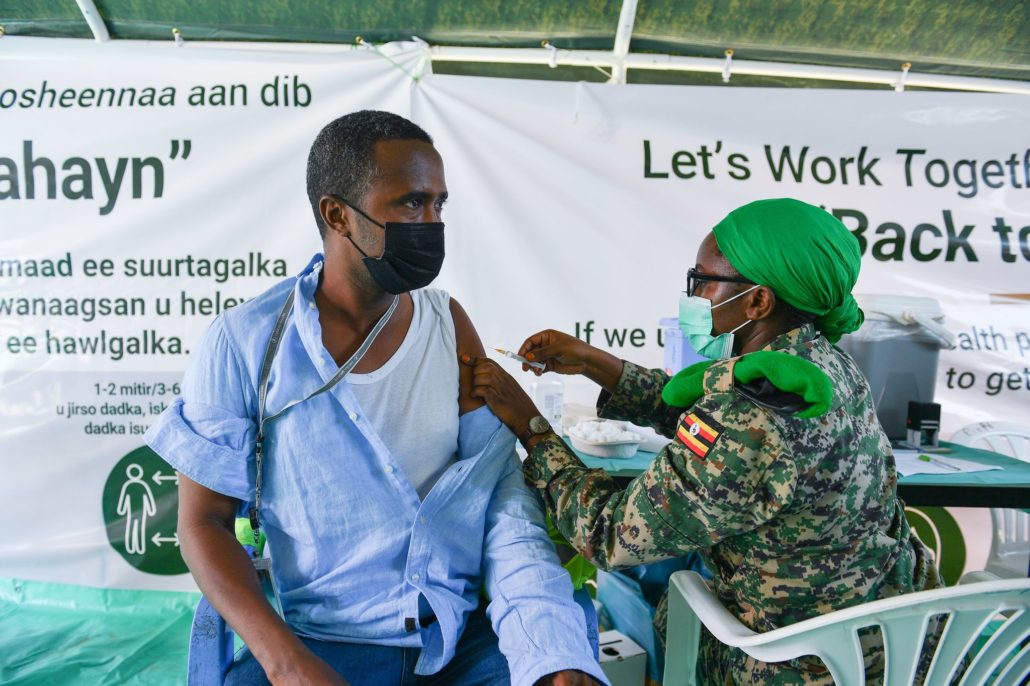
The Federal Government of Somalia has worked together with the World Health Organization (WHO) to gather vaccines for Somalis ever since a safe and effective COVID-19 vaccine became available. About 12 months after Somalia’s first confirmed COVID-19 case, vaccine donations started coming in.

On March 15, 2021, Somalia received its first donation of 300,000 AstraZeneca vaccines from the COVAX Facility. Another delivery of 108,000 AstraZeneca vaccines arrived in Somalia on August 8, 2021, a donation from the Government of France through COVAX. Soon after, the United States gave 302,400 Johnson & Johnson vaccines to Somalia via COVAX. China also supported Somalia with a donation of 200,000 Sinopharm vaccines. As of September 12, 2021, Somalia administered 83% of the donated vaccines. Still, Somalia’s full vaccination rate stands at only 0.77% of the population at this point.

The Progress

Aside from vaccine donations, Somalia is also receiving aid from the Ministry of Health and Human Services along with WHO and the United Nations Children’s Fund (UNICEF) to lessen the effects of COVID-19 in Somalia. In order to advance Somalia’s vaccine campaign, the organizations employed a number of strategies. In both Somaliland and Banadir, “special outreach teams of vaccinations” went to different areas. Trained community health workers educated Somalis on COVID-19 prevention measures and the advantages of receiving a COVID-19 vaccination. Health workers were also on the lookout for people with COVID-19 in order to provide them with sufficient aid and support.

Although Somalia faces “a triple threat” of flooding, an infestation of locusts and a global health pandemic, organizations and donors commit to assisting the nation. With continued support, the nation can successfully overcome the effects of COVID-19 in Somalia.

– Trystin Baker
Photo: Flickr

October 29, 2021
https://borgenproject.org/wp-content/uploads/borgen-project-logo.svg 0 0 Lynsey Alexander https://borgenproject.org/wp-content/uploads/borgen-project-logo.svg Lynsey Alexander2021-10-29 01:30:032021-10-27 13:53:03The Effects of COVID-19 in Somalia
Children, Global Poverty

3 Olympic Stars Supporting Children Around the World

Olympic Stars
There are three Olympic stars who have not only earned gold medals in their individual and team competitions, but also in providing support for children around the world. During the late months of July 2021 and early August 2021, these stars’ faces were present on television stations, as people watched them compete against other nations in sports. However, media does not always show their behind-the-scenes work.

Despite traveling to new countries every four years and having children of their own, these stars have devoted both time and money toward organizations. They are not just traveling around the world, they are also changing it. Here are three Olympic stars making a difference.

Allyson Felix

Many people know Allyson Felix for her speedy running skills on the track, competing in the past three Olympics and bringing home six gold medals. However, the star does much more than this. Since 2011, Felix has been a supporter of Right to Play, after visiting a program in Lebanon and continuing to devote funds toward vulnerable children.

Right to Play is an organization with a focus on providing children with an education and protection. Its main goal is to protect these children from the harsh realities of war and abuse and teach important life lessons regarding relationships and sexual health, by teaching children the importance of graduating from school and receiving a degree.

The main areas of focus are games, sport, creative and free play. Through these areas, Right to Play is able to engage these children in healthy ways that allow them to express themselves in a safe way, and overcome obstacles they see and experience each day within their countries. Right to Play has helped reach over 2.3 million children each year, in 14 countries such as Ghana, Mali, Thailand and Uganda.

In a chance to win yet another gold medal at the Tokyo Olympics in 2021, Felix has committed to donating a portion of her earnings toward Right to Play. Through her continued advocacy and visits to other countries along with Right to Play, Felix has continued this organization’s legacy, as well as the importance of helping children in underdeveloped countries.

Michael Phelps

Phelps is one of the most decorated Olympians and many know him as one of the best swimmers in history. Phelps’ love for swimming prompted the creation of the Michael Phelps Foundation in 2008 with the money he earned from the Beijing Olympics. The Foundation’s main focus is to promote water safety and to provide children with the encouragement that all their dreams can come true.

Named as a Global Ambassador in 2011 from Special Olympics China, Phelps has continued to provide opportunities for children through the use of his IM program. The IM program is a program that the Michael Phelps Foundation designed to help children overcome the fear of drowning and other water-related accidents. Since 2011, children from more than 35 countries have received the opportunity to become more confident and faster swimmers through the work of Phelps and his program.

Serena Williams

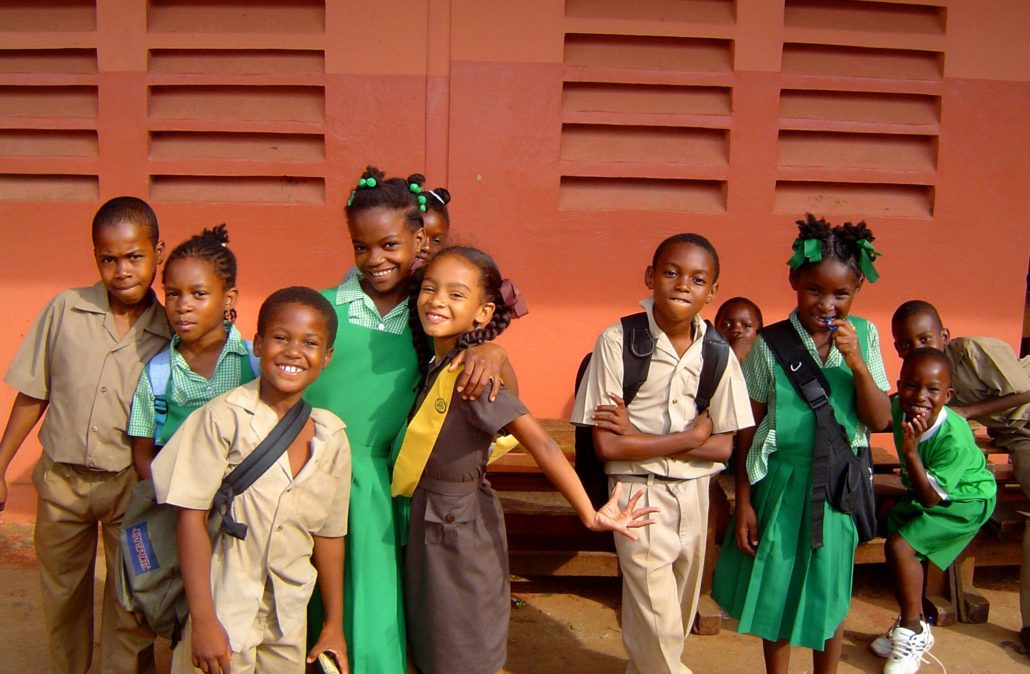
Tennis star Serena Williams created the Serena Williams Fund, which has the main goal to create equity and promote education for children in other countries. Over the years, Williams has partnered with various organizations in a quest to design and build new schools. In 2019, Williams helped build the Salt Marsh Elementary School in Jamaica through her Foundation, in partnership with Helping Hands Jamaica.

Currently, Williams serves as a Goodwill Ambassador for UNICEF continuing to build schools and provide an education for vulnerable children. UNICEF mainly tailors these initiatives toward children of Africa and Asia, but Williams’ work in providing an education for children extends far beyond that.

These three Olympic stars have made significant strides in combating inequities through work with several organizations. Through their continued work, circumstances should only improve.

– Nia Hinson
Photo: Flickr

October 28, 2021
https://borgenproject.org/wp-content/uploads/borgen-project-logo.svg 0 0 Lynsey Alexander https://borgenproject.org/wp-content/uploads/borgen-project-logo.svg Lynsey Alexander2021-10-28 01:30:332021-10-27 09:25:243 Olympic Stars Supporting Children Around the World
Children, Global Poverty

Efforts to Reduce HIV/AIDS in Zambia

Reduce HIV/AIDS in Zambia
HIV (human immunodeficiency virus) is an infection that can transfer through sex. It attacks cells in the human body that fight diseases, thus making it a dangerous infection. With about 38 million people in the world suffering from HIV, it has become a prominent issue, especially since there is no definite cure for the infection. As a result, in many African countries like Zambia, the number of HIV cases is significant. Through the exploration of HIV in impoverished countries, research has shown that there is a correlation between poverty and a lack of education with the numbers of HIV cases. Here is some information about HIV in Zambia including efforts to reduce HIV/AIDS in Zambia.

About HIV/AIDS in Zambia

Evidence shows that Zambia is among the first 10 countries with the most cases of HIV. An estimated 1.5 million inhabitants of Zambia had HIV/AIDS as of 2020, with an adult prevalence of 11.1%. Additionally, Zambia has experienced a total of 24,000 deaths due to HIV/AIDS.

HIV/AIDS is quite prevalent among adults from ages 15 to 59 in Zambia, with a greater prevalence among females than males. Additionally, HIV is most prevalent among older adults, with 73.5% of infected women and 73% of infected men being 45 to 59 years of age. This demonstrates that approximately 980,000 people between the ages of 45 and 59 in Zambia suffer from HIV/AIDS.

The Link Between Poverty and HIV/AIDS

Research has found a strong connection between poverty and HIV cases; those living under the poverty line are more likely to obtain a sexually transmitted infection, such as HIV. Studies have found that those who are in circumstances of poverty in Zambia are often likely to resort to illegal means of work, such as sex trafficking or prostitution. The U.S. Department of State’s annual reports state that sex traffickers often exploit women in Zambia with money or food, placing Zambia on a severe Tier 2 ranking for sex trafficking. Additionally, the loss of jobs from COVID-19 resulted in an increase in the poverty rate in Zambia, going from 11.19% in 2019 to 12.17% in 2020. This shows that vulnerable young women below the poverty rate became desperate for money, thus resorting to the sex trafficking industry, where the circumstances led to the transmission of HIV.

Children’s Risk for HIV/AIDS in Zambia

Zambia’s population of children with HIV is a prominent issue; infections among children between the ages of 0 and 15 border at approximately 6,000 a year. In 2018, 79% of the children with HIV received antiretroviral therapy (ART), which is an effective means of treating HIV/AIDS. Of the children in Zambia who did not receive ART, 50% of them died before their second birthday. Additionally, the U.N. estimates that there is a total of 1 million children in Zambia who are either orphans or vulnerable to bribery, resulting in them being frequent targets of the sex trafficking business.

Potential Solutions to Reduce HIV/AIDS in Zambia

An example of an NGO (non-government organizations) in Zambia that focuses on preventing HIV in Zambia is the Kara Counseling and Training Trust (KCTT). This organization began in 1989 with the purpose of counseling people in Zambia who suffer from HIV/AIDS. Additionally, UNICEF’s HIV program in Zambia provides preventative resources for Zambian citizens in order to prevent the spread of HIV/AIDS. It has initiated several new programs, such as the National Paediatric and Adolescent Prevention, Treatment and Care Implementation Plan of 2017. Though there is currently a prevalence of HIV cases in Zambia, NGOs like the KCTT and UNICEF can be of great aid to people in need and can provide hope for resolving this issue.

Though the issue of HIV has been prevalent in Zambia for a long time, recent developments from different organizations have provided hope for the issue to reduce. By spreading awareness of the danger of HIV/AIDS and its causes, along with the distribution of preventative resources in Zambia, there is a high chance that the rates of HIV/AIDS in Zambia will reduce over the next few years.

– Andra Fofuca
Photo: Wikipedia Commons

October 27, 2021
https://borgenproject.org/wp-content/uploads/borgen-project-logo.svg 0 0 Lynsey Alexander https://borgenproject.org/wp-content/uploads/borgen-project-logo.svg Lynsey Alexander2021-10-27 07:30:172024-05-30 22:23:27Efforts to Reduce HIV/AIDS in Zambia
Child Poverty, Children, Global Poverty, Nonprofit Organizations and NGOs

3 NGOs Empowering Children in Turkey

Empowering Children in Turkey
Approximately 5.6 million children under age 15 in Turkey live in poverty. To combat that dire statistic, there are several Turkish non-governmental organizations (NGOs) empowering children in Turkey despite their poverty and their refugee status.

A large percentage of those in poverty are Turkey’s significant Syrian refugee population. With around 3.6 million Syrian refugees, Turkey hosts the world’s largest Syrian refugee population. More than 71% of Syrian refugees live in moderate or extreme poverty. Further, about 50% of  Syrian refugees living in Turkey are under 18 years old.

Luckily, several organizations target these Syrian refugees and other impoverished Turkish children to empower them to succeed in gaining the education, skills and confidence they need to thrive as Turkish adults. Here are overviews of three non-governmental organizations (NGOs) empowering children in Turkey.

Darussafaka Society

Founded in 1863, Darussafaka Society initially sought to provide equal educational opportunities for talented and impoverished Turkish children who had lost their fathers. The Society supports fifth graders through high school seniors who qualify with an entrance exam at Darussafaka schools. In 2012, the Society broadened its mission to include children who lost mothers as well as children who lost their fathers.

The Darussafaka Society provides a full scholarship and board to Darussafaka boarding schools. On top of fully-covered tuition and board, the Darussafaka Society covers the costs of clothing, food and other living accommodations to support qualified students as well as their guardians.

Today, 1,000 children in Turkey benefit from the Darussafaka Society. Darussafaka schools and the Darussafaka Society open doors to a world-class education. Darussafaka alumni include some of Turkey’s renowned mathematicians, artists, entertainers, financiers and government officials. Also, the schools take no state funding, truly reflecting equal opportunity for education.

Lab4Future

In 2020, Telecoms Sans Frontiere launched Lab4Future for Syrian refugee children in Gaziantep. The program offers free workshops on basic digital literacy for students ages 6 to 17. Through the workshops that Labs4Future provided, refugee children gain the basic knowledge to enter schools and acclimated to Turkish society. Each workshop focuses on different skills and opens up more opportunities for the children.

Lab4Future recognizes the trauma and exploitation refugees face; therefore, its approach centers on the well-being and comfort of the children, not only their education. It promotes self-determination and critical thinking while simultaneously offering four workshops: Computing and Internet, Programming and Robotics and Electricity and Fabrication.

The Computing and Internet workshop covers the basic information necessary to use and understand computers and tablets, such as emailing, surfing the internet or interpreting fake news. The Programming and Robotics workshop aims to introduce programming in an engaging way. Meanwhile, the Electricity workshop teaches basic principles of circuitry and allows students to apply experiments to real-world situations and the Fabrication workshop provides students access to digital fabrication tools.

Association in Support of Contemporary Living

The Association in Support of Contemporary Living, the third of the featured NGOs empowering children in Turkey, focuses on financial support for quality education. This organization raises money to fund a wide variety of scholarships and grants to support children, youth and university-age adults. During the past 30 years, the Association in Support of Contemporary Living has funded over 37,000 scholarships for university students and almost 90,000 scholarships for girls in secondary school and high school. Importantly, the scholarships for girls support gender equity which, in turn, contributes to eliminating poverty in Turkey.

Beyond direct financial support, the Association in Support of Contemporary Living has built two high schools, six preschools, 32 village schools and one university education center. This is the much-needed educational infrastructure for students in poverty. While the Association for Contemporary Living has created numerous other supports, just these few examples reflect the immense positive impact this organization has on Turkish youth.

Empowering Children in Turkey

Globally, children face the catastrophic consequences of the adult world, and poverty remains one of those catastrophes. In Turkey, poverty for children is a significant issue, especially for refugees fleeing the circumstances of their home countries. Organizations including the three NGOs featured above provide significant support for the children living in poverty. Ultimately, they also support a pathway for students to become more capable individuals in modern society.

Though these NGOs provide essential resources and basic skills to support individuals, the fight to end poverty and improve children’s lives must come with enormous change, such as advocacy for governmental policy changes that further combat poverty and ensure education. However, these three NGOs empowering children in Turkey lay the groundwork to advocate for change and positively impact people’s lives.

– Mikey Redding
Photo: Flickr

October 26, 2021
https://borgenproject.org/wp-content/uploads/borgen-project-logo.svg 0 0 Lynsey Alexander https://borgenproject.org/wp-content/uploads/borgen-project-logo.svg Lynsey Alexander2021-10-26 07:30:432021-10-25 10:37:523 NGOs Empowering Children in Turkey
Child Poverty, Children, Global Poverty, Women and Children, Women and Female Empowerment, Women's Empowerment

How Emotional Support Programs Save Lives

Emotional Support Programs Save Lives in Low-Income Communities
Emotional support programs for children and pregnant women in low-income communities can improve participants’ mental and physical health. Daily challenges of living below the poverty line often result in high-stress levels that can lead to a variety of health complications in children, pregnant women and babies. Emotional support programs save lives in low-income communities by reducing stress and resultant health issues.

The Benefits for Pregnant Women and Babies

Emotional support groups for pregnant women can make impactful differences in their lifestyles and health. A study by psychologist Greg Miller found that pregnant women who took part in a support group called Centering Pregnancy had less inflammation in their placentas than pregnant women who received standard prenatal care. Inflammation within the placenta can restrict the flow of nutrients, oxygen and blood from mother to child, potentially leading to health complications. Within Centering Pregnancy, pregnant women received guidance on nutrition, stress management and parenting. As a result, they had lower stress levels and less inflammation in their placentas, allowing them to have more relaxed and healthy pregnancies.

Groups like Centering Pregnancy can be particularly valuable in low-income communities where women experience high-stress levels from everyday challenges linked to poverty. For example, a study that a teaching hospital in Lahore, Pakistan conducted found that during their pregnancies, 25% of women in the antenatal clinic experienced depression and 34.5% experienced anxiety. In developing countries like Pakistan, emotional support programs save lives by improving pregnant women’s health and, in turn, the health of their babies.

The Benefits for Children

According to the National Scientific Council on the Developing Child, conditions with links to poverty, such as “‘overcrowding, noise, substandard housing, separation from parent(s), exposure to violence, [and] family turmoil’” can have toxic effects on the developing human brain, just like drug abuse and alcoholism. Cortisol, a hormone that helps manage stress, can be overly abundant in children who grow up in poverty, which can lead to stunted brain development over time. As a solution, mentorship programs for children in low-income communities can improve kids’ emotional and physical wellbeing. A study by Miller and fellow Psychologist Edith Chen found that a single supportive, high-quality relationship with someone like a teacher, friend or mentor can substantially minimize a child’s risk of cardiovascular disease in a low-income community. Mentorship programs help children relieve stress and resolve social conflicts, potentially leading to fewer long-term health concerns.

Organizations at Work

Mental health organizations work across the globe to help people of every age improve their mental, emotional and sometimes even physical health. For example, United for Global Mental Health is an international organization that began in 2017 to improve mental health around the world, including in Pakistan, Nigeria, France, Canada and Japan. The website provides an extensive list of international mental health resources, including organizations that specifically focus on supporting children. United for Global Mental Health’s goal is to improve mental health globally and make mental health resources accessible to everyone, despite socioeconomic status. The organization works alongside partners such as UNICEF and the World Health Organization (WHO) to advocate for rights, financing, systems and educational resources that improve mental health around the world.

Organizations like Mothers2Mothers (M2M) also work to help pregnant women and new mothers to achieve the best mental and physical health possible in developing countries. M2M began in 2001 when South Africa was facing a record number of HIV infections. The organization employs women with HIV in nine African countries, including Ghana, Kenya and South Africa, to work as Mentor Mothers. Mentor Mothers are community health workers who serve women and adolescents in 10 countries across Africa by providing support, education and medical services. M2M has created more than 11,000 jobs for women with HIV and has provided over 13.5 million people in sub-Saharan Africa with crucial health services. The organization models how emotional support programs save lives in developing countries.

Spread around the world with a variety of causes, emotional support programs save lives by relieving stress and the health complications that result from it. People experiencing poverty often experience heightened levels of stress, so emotional support programs can be particularly useful to people in low-income areas.

– Cleo Hudson
Photo: Pixabay

October 24, 2021
https://borgenproject.org/wp-content/uploads/borgen-project-logo.svg 0 0 Lynsey Alexander https://borgenproject.org/wp-content/uploads/borgen-project-logo.svg Lynsey Alexander2021-10-24 01:30:232021-10-21 09:05:35How Emotional Support Programs Save Lives
Children, Education, Global Poverty

Julian Lennon’s White Feather Foundation

Julian Lennon’s White Feather Foundation: Improving Children's Literacy Rates
Julian Lennon, a well-known singer, songwriter and filmmaker, is also a philanthropist who created the White Feather Foundation (TWFF). Lennon founded TWFF in 2007, and the organization addresses humanitarian issues. Recently, the World Literacy Foundation announced that Lennon and his Foundation would be honored for work done to improve children’s literacy rates, especially in still-developing nations and among those who cannot afford an education.

Julian Lennon’s Path to The Foundation

The Foundation’s ideals, and its name, come from the same source: Julian Lennon’s father, John Lennon. A white feather is typically a symbol of peace and goodwill. Before his death, John Lennon told his son that one day he would receive a message as a white feather, and it would be a way of letting Julian know that his father was at peace.

Then on tour in Australia, Julian met with a tribe of aboriginals, the Mirning tribe, and they asked for his help to tell the story of their tribe. As an offering, they presented him with a white feather, and Lennon recognized it as a symbol of peace. Inspired and motivated, he helped the tribe create a documentary to tell their history, with all proceeds going to the tribe. From there, the White Feather Foundation was born.

About The White Feather Foundation

The White Feather Foundation promotes and funds clean water projects, efforts dedicated to improving child literacy rates and work to address humanitarian issues across the globe. Lennon has authored several books, the proceeds of many going to help the foundation or the programs it runs. Money that Lennon’s work acquires helps fund TWFF. The organization is entirely nonprofit and is a non-government organization as well.

TWFF has countless projects running. As of October 2021, it had programs including a clean water project in Cameroon and a campaign for earthquake relief in Nepal. In addition, TWFF continuously has applications for Cynthia Lennon’s Scholarship for Girls.

Improved Children’s Education

The Cynthia Lennon Scholarship for Girls is awarded based on location and need. Lennon established the scholarship in 2015 after the passing of Cynthia Lennon, his mother. Julian added the Cynthia Lennon Scholarship to the Foundation’s recurring programs to honor her memory.

As a result of the scholarship, TWFF has sent almost 40 girls to school since 2015. Working with different projects, the scholarship aims to fulfill “educational support” for girls. It has covered housing, uniforms, textbooks and transportation. It funds all years of high school or continued education for each girl. This scholarship has worked to improve female child literacy rates since 2015.

 Improving Girls’ Education and Literacy Rates

In Kenya, children receive free primary and secondary education, but economic costs weigh down the ability to attend secondary school, potentially in costs like textbooks. Moreover, girls have historically been disadvantaged in completing their education, which has been particularly notable during the pandemic. In Kenya, girls can face challenges from pregnancy to sexual violence, damaging educational prospects as a consequence.

TWFF has begun funding girls’ educations in Kenya, working to further a growing trend regarding the gender gap in schools. Between 2015-2020, the female population in schools surpassed the male population. Between 2000-2018, the youth literacy rates have improved, especially in closing the gender gap.

In 2007, girls’ childhood literacy rates stood at 81.6% and boys’ at 82.3%. In 2014, the rates were 86.1% and 86.6% respectively. Then, in 2018, a few years into the funding provided by TWFF, the rates grew to 88.1% and 87.6% respectively.

The World Literacy Foundation Award

As recognition for efforts toward improvements in child literacy and education across the globe, the World Literacy Foundation (TWLF) honored Julian Lennon and TWFF with the World Literacy Award. The Award works to “[p]ut a spotlight on people and organizations who are doing exemplary and innovative work in the literacy sector.”

This award comes from a panel of 16 judges, who deemed Lennon’s work crucial and worthy of recognition. One judge, Lord Julian Fellows, stated that “Literacy is the ticket to learning, opportunity, and empowerment.”

– Clara Mulvihill
Photo: Flickr

October 21, 2021
https://borgenproject.org/wp-content/uploads/borgen-project-logo.svg 0 0 Lynsey Alexander https://borgenproject.org/wp-content/uploads/borgen-project-logo.svg Lynsey Alexander2021-10-21 01:30:552021-10-18 10:33:46Julian Lennon’s White Feather Foundation
Aid, Children, Global Poverty

The World Bank Approves Aid for Lebanon

Aid for Lebanon
At the beginning of the year, in January 2021, the World Bank approved and accepted the United States’ $249 million project proposal to bring aid into Lebanon. The social and economic situations in Lebanon over the past several months and years have become desperately dire, and the United States, the World Bank and its parent organization, the United Nations, are all seeking to meet the needs of the many suffering Lebanese people.

The Situation in Lebanon

Lebanon has been facing a prolonged financial crisis as well as economic upheaval, which, in 2020, resulted in severe inflation of the country’s currency, the Lebanese Pound (LBP), and led to a 19.2% drop in the GDP. As of September 2021, the U.N. reported that the multidimensional poverty rate in Lebanon has risen to 82%, with 32% of the Lebanese population living in extreme multidimensional poverty.

The Lebanese people are lacking in basic commodities and healthcare services, which has also exacerbated the COVID-19 pandemic’s effect on Lebanon. Unable to reach treatment facilities or even get diagnoses, the Lebanese people have suffered greatly from the pandemic. The pandemic’s stifling effect on businesses in Lebanon has also further compounded the financial struggles that Lebanon is already facing.

The Emergency Crisis and COVID-19 Response Social Safety Net Project (ESSN)

The Emergency Crisis and COVID-19 Response Social Safety Net Project (ESSN) began official operations in February 2021, providing funds and services to those struggling under the combined crises of Lebanon’s dismal financial state, complicated geopolitical relations and poor COVID-19 response infrastructure. The ESSN will attempt to work with and bolster existing active programs within Lebanon; the goal is to complement other projects without collateral damage to the already fragile internal systems.

The ESSN has been working closely with social programs that are already established, and that both the Lebanese Social Development Centers of the Ministry of Social Affairs and the Ministry of Education run. Understanding the importance of using every available resource, the ESSN has also been working closely with other third-party projects, most notably Lebanon’s National Poverty Targeting Program (NPTP), which also runs through the U.N. and the World Bank to identify problem areas within the country and help codify response programs.

How the ESSN is Providing Aid for Lebanon

To try to get Lebanon back on its feet, there are two main fronts on which the ESSN is attempting to help revitalize economic growth and stem the tide of poverty. The first is basic aid packages in the form of cash deposits for families, individuals, and those with unfortunate circumstances. These are to provide immediate relief and bring some sense of stability to the people stranded in poverty. In order to accomplish this, the ESSN had been providing financial and technical support in order to greatly increase the capabilities and operations of the NPTP. Using the infrastructure already put in place through the NPTP, both projects hope to be able to proliferate aid quickly, effectively and fairly.

The second front that the ESSN is attempting to fight poverty on is that of human capital, specifically the promise of the young people of Lebanon. Recognizing that people are the most valuable resource, the ESSN’s work with the Lebanese Ministry of Education has begun to keep children in schools. Education is the key to opportunity, and ESSN is working to subsidize both the public school systems in Lebanon and also the schooling costs for individual students. By ensuring the quality of education and by granting students the socioeconomic stability to be able to continue attending school, the ESSN is attempting to assist Lebanon with investing in its future.

Becoming fully approved and operational in 2021, the ESSN will receive funding, and it will remain running for three years as it provides aid for Lebanon. Reports as recently as July 2021 have positive responses, and already, a large amount of aid has undergone disbursement to individuals, families and students alike. The ESSN has plans to continue to show support by investing in Lebanon and its people, a hearty show of humanity.

– John J. Lee
Photo: Flickr

October 19, 2021
https://borgenproject.org/wp-content/uploads/borgen-project-logo.svg 0 0 Lynsey Alexander https://borgenproject.org/wp-content/uploads/borgen-project-logo.svg Lynsey Alexander2021-10-19 07:30:222021-10-17 12:25:48The World Bank Approves Aid for Lebanon
Children, Global Poverty

An Insider’s Look: HIV/AIDS Clinics in South Africa

An Insider’s Look: HIV/AIDS Clinics in South AfricaAccording to the Joint United Nations Program on HIV/AIDS (UNAIDS), roughly 7.8 million adults and children are currently HIV positive in South Africa. HIV is a life-threatening immunodeficiency virus transmitted through bodily fluids. Upon infection, the virus causes acquired immunodeficiency syndrome (AIDS) which cannot be reversed or cured. As a result, people living with HIV/AIDS have weak immune systems and cannot fight off common diseases.

Considering the seriousness of HIV/AIDS, affected communities in South Africa require immediate attention and assistance. Below are 3 facts about a non-governmental organization called Child Family Health International (CFHI) that sends healthcare students to work in HIV/AIDS Clinics in South Africa. Afterward, a CFHI healthcare student recalls his experience working at an HIV/AIDS clinic in Durban, South Africa.

3 Facts about Child Family Health International (CFHI)

Firstly, CFHI offers health education programs around the world. Every year, the organization sends undergraduate students and faculty members abroad to experience healthcare systems in different countries. To date, the organization offers programs in Argentina, Bolivia, Costa Rica, Ecuador, Mexico, Ghana, India, the Philippines, Uganda and South Africa. For the South Africa program, participants have an opportunity to work in a tertiary public hospital, a Parochial Hospital, a hospice center or an HIV/AIDS clinic.

Secondly, CFHI partners with HIV/AIDS clinics in South Africa. To help mitigate the rising number of HIV-positive cases in Durban, South Africa, CFHI sends students and staff to a local HIV/AIDS clinic called the “Blue Roof Clinic.” Originally, the Blue Roof building housed a local nightclub renowned for drug and alcohol abuse. However, in 2006 the non-profit organization Keep a Child Alive (KCA)‘s cofounder, professional singer Alicia Keys, helped to buy the building. After years of renovations, it became a local HIV/AIDS clinic dedicated to providing free medication and treatment to South Africans testing positive for HIV.

Thirdly, CFHI helps to combat poverty in South Africa. By sending students to the Blue Roof Clinic, the organization assists thousands of HIV-positive patients every month. This type of assistance includes giving patients anti-retroviral medicine, psychological support, legal advice, nutrition guides and HIV prevention tips. Best of all, HIV/AIDS treatments are free of charge and offered to everyone in need. The only cost to patients includes transportation to and from the clinic. Overall, CFHI continues enrolling thousands of students from over 35 different countries to help people around the world.

3 Interview Questions with a CFHI alumnus

To learn more about CFHI, The Borgen Project interviewed Christian Warner, a CFHI healthcare alumnus.

  1. Tell me about yourself and why you participated in the South Africa CFHI program. “My name is Christian Warner and I studied public health at Oregon State University (OSU). I had an internship in South Africa through CFHI my senior year of school. I chose CFHI’s program in South Africa because students have an opportunity to work in local HIV clinics and help local populations living with HIV/AIDS and tuberculosis. Overall, I wanted to gain healthcare experience working in a foreign environment.”
  2. What does an average day working in HIV/AIDS Clinics in South Africa look like? “I spent time working at an HIV/AIDS clinic called Blue Roof Clinic. Each morning, I arrived at the clinic to make sure we had adequate supplies. Typical supplies included sanitation gloves, cleaning supplies and antiretroviral treatments for patients. A couple hours later, patients would start showing up. During the day, I shadowed retired nurse practitioners working in the clinic. The nurses would ask patients a variety of medical history questions before administering treatment. They also asked whether patients had trouble getting to the clinic transportation-wise. Our mission is to ensure everyone can access the clinic and its resources.”
  3. How do HIV/AIDS Clinics in South Africa ensure treatment is available to all, regardless of socioeconomic status? “The Blue Roof Clinic offers free walk-in appointments and HIV treatments for everyone in need. This allows people to seek medical assistance without visiting the hospital or acquiring insurance. The clinic also makes people feel comfortable because their medical and visitation history is 100% confidential.”

Ending the HIV/AIDS Pandemic

The U.N. pledged to end the HIV/AIDS pandemic by 2030. To accomplish this goal, 90% of people living with HIV must know that they carry the disease and have access to treatment. Therefore, governments and non-governmental organizations worldwide are donating billions of dollars to provide affected communities with antiretroviral medicines and other treatments. However, governments must also monitor antiretroviral medicine supply chains and stockpiles to ensure economic ramifications caused by the COVID-19 pandemic do not disrupt people’s access to treatment.

– Chloe Young
Photo: Flickr

October 15, 2021
https://borgenproject.org/wp-content/uploads/borgen-project-logo.svg 0 0 Lynsey Alexander https://borgenproject.org/wp-content/uploads/borgen-project-logo.svg Lynsey Alexander2021-10-15 07:30:012024-05-30 22:25:10An Insider’s Look: HIV/AIDS Clinics in South Africa
Child Soldiers, Global Poverty, War

Child Soldiers in Somalia

Child Soldiers in Somalia
Among Somalia’s numerous human rights crises is the recruitment of child soldiers. Not only is Somalia one of the countries with the most child soldiers, but its living standards are not improving. This article discusses five facts about Somalia’s child soldiers, along with hopeful measures which could improve the situation in the foreseeable future.

5 Facts About Child Soldiers in Somalia

  1. Somalia possesses the largest number of children who have died during war in the world. Somalia’s ongoing civil war led to drastic measures, including child recruitment into armed forces. In 2017, Somalia recorded 931 children killed at war, along with 2,127 children used in conflict. Additionally, Somalia verified the recruitment of 6,163 children between 2010 and 2016.
  2. There are many different ways to recruit child soldiers. Children’s rights in Somalia rank a 3.6/10 on the Children’s Rights Index. This ranking places Somalia in the Black Level for children’s rights, within the worst conditions in the world. This is due to several prominent factors, including the lack of education, forced displacement, sexual abuse and lack of food. All of these things happen to the majority of child soldiers in Somalia. Children as young as 9 years old suffer enlistment into Somali armed forces, both willingly and forcefully. According to reports, a majority of these children actually recruit themselves voluntarily. Often, militant groups trick child soldiers into believing that they are helping their country by doing so. Additionally, in many cases, militant groups kidnap these children and forced them into armed services. The abduction of children occurs strategically. The children targeted usually congregate in places where they are vulnerable and in large numbers, including churches, schools and orphanages. Others choose them based on their height and physical conditions.
  3. Militant terrorist organizations recruit most child soldiers. Many believe that Somalia’s government willingly allows the military to recruit children. However, this is not true. Contrary to popular belief, it is not the military that recruits these children, but, instead, terrorist groups fighting against the Somali government. The most prominent of these groups, Al-Shabaab, defines itself as an independent militant group that broke away from the Union of Islamic Courts. Al-Shabaab often demands teachers, elders and rural communities to provide them with children 8 years old and older to help them fight. Al-Shabaab has taken the most extreme measures, such as beating, raping, torturing and killing people who refused to give away their children. Over the past 10 years, Al-Shabaab recruited thousands of children to be child soldiers. In total, Al-Shabaab recruited 70% of all child soldiers in Somalia.
  4. Militant groups choose child soldiers for various strategic reasons. One might question why groups like Al-Shabaab target children since children are physically weaker than adults and lack fighting skills. However, targeting children as recruits supports Al-Shabaab’s goal to oust Somalia’s government. Firstly, children are likely to be more vulnerable than adults. Others can easily persuade them to fight for their country, thus making them believe that their contribution is voluntary and will benefit Somalia. The children who become child soldiers do not only serve as frontline fighters. Militant groups use many children as looters, spies, messengers or informants. Additionally, the physical weakness of children makes them prone to sexual assault from their terrorist leaders, who entrap some children as sexual slaves. Lastly, children present better targets than adults since they require less food and water to live. Groups like Al-Shabaab feed child soldiers just enough to survive and function in the war while remaining weak enough for physical manipulation.
  5. Organizations working against child soldiers in Somalia are making progress. The African Union Mission in Somalia (AMISOM) is an organization that supports residents from areas liberated from Al-Shabaab. Recently, its work focuses on helping residents resettle after losing their homes in battle. Since child soldiers have a high risk of re-recruitment unless properly reintegrated into society, its initiative to take on such a difficult issue demonstrates progress. The AMISOM Civil Affairs Officer, Christopher Ogwang, speaking about recent developments, stated, “Our responsibility is to do reconstruction where necessary. We are also extending our services to rehabilitate social facilities like schools, hospitals and police stations.”

Concluding Thoughts

In the end, this treacherous issue will not undergo resolution overnight. However, organizations like AMISOM are doing their part in saving Somalian children from becoming child soldiers. The rest of us can contribute to the struggle by keeping informed about these issues and spreading information. Doing as little as this can help take a huge step towards saving child soldiers in Somalia.

– Andra Fofuca
Photo: Wikipedia Commons

October 10, 2021
https://borgenproject.org/wp-content/uploads/borgen-project-logo.svg 0 0 Lynsey Alexander https://borgenproject.org/wp-content/uploads/borgen-project-logo.svg Lynsey Alexander2021-10-10 07:30:292024-05-30 22:25:14Child Soldiers in Somalia
Child Poverty, COVID-19, Global Poverty

Aiding Impoverished Children in New Zealand

Impoverished Children in New Zealand
In New Zealand, the COVID-19 pandemic pushed 18,000 children into poverty, on top of the already large amount of children struggling with unmet basic needs. However, one organization, Share My Super, is working hard to change these statistics and reduce the number of impoverished children in New Zealand.

Impoverished Children in New Zealand

Against the backdrop of New Zealand’s 4.8 million population, more than 235,000 children lived in poverty before the pandemic’s effects. While reducing child poverty is one of Prime Minister Jacinda Ardern’s signature goals, the country has only seen rising numbers of struggling children in recent years.

A recent study shows a 10% increase in child poverty due to the country’s pandemic policies, mostly impacting minority groups such as the Māori and Pasifika. The report lists several main reasons for child poverty in New Zealand including lack of government support, “unemployment and education disruptions” due to the COVID-19 pandemic and “inadequate income support for children.”

Share My Super

One organization, Share My Super, recognizes the detrimental effects of this issue and is working toward alleviating child poverty in New Zealand. Founded by Liz Greive, the organization functions by uniting citizens older than the retirement age of 65 and allowing them to share their leftover pensions with charities that are helping eliminate child poverty.

“I came to the conclusion that the most needy people in New Zealand, where real progress could be achieved, would be with children who were having a hard start,” Greive told The Spinoff, a New Zealand-based magazine. “I was well aware of the poverty that many people experience and how hard it is to raise a family when there is quite simply not enough money coming in.”

Share My Super hand-selects charities that it believes in and trusts for donors to donate to. The organization fosters relationships with these organizations and ensures that there is a variety of organizations, so people can choose to put their money toward immediate needs like shelter or food, or alternatively, they can put their money toward long-term solutions like mentorship or education.

Additionally, the organization receives 100% private funding. Therefore, the full donations go directly to the organization that the person chooses. Users also do not have to be at the retirement age to set up a donation — anyone can donate through Share My Super.

Impact

According to Share My Super’s 2020 Annual Report, the organization raised $294,296 in donations for charities through Superannuants, which refers to retirement-aged people donating their surplus pension through the organization. Share My Super also has benefits both ways: New Zealand’s children benefit and the country’s older population is also able to make a difference for the next generation. The organization also runs a blog detailing the tangible impacts of the charities on the country’s children so that the Superannuants can see the direct impact of their donations.

Although child poverty rates have been climbing in New Zealand, especially in the wake of the COVID-19 pandemic, organizations like Share My Super are working to help impoverished children in New Zealand through donations, uniting the older generations with the younger generations.

– Laya Neelakandan
Photo: Flickr

October 8, 2021
https://borgenproject.org/wp-content/uploads/borgen-project-logo.svg 0 0 Yuki https://borgenproject.org/wp-content/uploads/borgen-project-logo.svg Yuki2021-10-08 07:30:512021-10-06 11:28:43Aiding Impoverished Children in New Zealand
Page 42 of 137«‹4041424344›»

Get Smarter

  • Global Poverty 101
  • Global Poverty… The Good News
  • Global Poverty & U.S. Jobs
  • Global Poverty and National Security
  • Innovative Solutions to Poverty
  • Global Poverty & Aid FAQ’s
Search Search

Take Action

  • Call Congress
  • Email Congress
  • Donate
  • 30 Ways to Help
  • Volunteer Ops
  • Internships
  • Courses & Certificates
  • The Podcast
Borgen Project

“The Borgen Project is an incredible nonprofit organization that is addressing poverty and hunger and working towards ending them.”

-The Huffington Post

Inside The Borgen Project

  • Contact
  • About
  • Financials
  • President
  • Board of Directors
  • Board of Advisors

International Links

  • UK Email Parliament
  • UK Donate
  • Canada Email Parliament

Get Smarter

  • Global Poverty 101
  • Global Poverty… The Good News
  • Global Poverty & U.S. Jobs
  • Global Poverty and National Security
  • Innovative Solutions to Poverty
  • Global Poverty & Aid FAQ’s

Ways to Help

  • Call Congress
  • Email Congress
  • Donate
  • 30 Ways to Help
  • Volunteer Ops
  • Internships
  • Courses & Certificates
  • The Podcast
Scroll to top Scroll to top Scroll to top