• Link to X
  • Link to Facebook
  • Link to Instagram
  • Link to TikTok
  • Link to Youtube
  • About
    • About Us
      • President
      • Board of Directors
      • Board of Advisors
      • Financials
      • Our Methodology
      • Success Tracker
      • Contact
  • Act Now
    • 30 Ways to Help
      • Email Congress
      • Call Congress
      • Volunteer
      • Courses & Certificates
      • Be a Donor
    • Internships
      • In-Office Internships
      • Remote Internships
    • Legislation
      • Politics 101
  • The Blog
  • The Podcast
  • Magazine
  • Donate
  • Click to open the search input field Click to open the search input field Search
  • Menu Menu

Archive for category: Children

Information and stories addressing children.

Child Soldiers, Global Poverty

The Situation Regarding Child Soldiers in Iraq

Child Soldiers in Iraq
The use of child soldiers in Iraq is pervasive, with the practice going as far back as 1975, manifested in Saddam Hussein’s Ba’ath party initiative that strove to create a paramilitary organization for children as young as 14 years of age. Thousands of child soldiers volunteered by 1988, many of them wishing to fight against Iran between 1983 and 1985. Drafting became relatively unpopular due to labor shortages, a ramification of child deaths. As ISIS paraded through countries like Iraq and Syria in the coming years, it also learned of the idea of recruiting children to become soldiers.

The Nearer Past

The 1969 Military Service Act, coupled with resolutions that the Revolutionary Command Council (RCC) engendered, determined that the pickings for conscription during times of war were up to the RCC’s discretion. According to Human Rights Watch, conscripting children younger than the age of 15 is a war crime and the age that constitutes a violation under international law is 18. Human Rights Watch has censured the People’s Defense Forces (HPG), operating as the armed wing of the Kurdistan Workers’ Party, also known as PKK, and the Shingal Resistance Units (YBS), also with ties to PKK, following an investigation uncovering 29 documented cases of child conscription.

“The PKK should categorically denounce the recruitment and use of child soldiers and commanders in affiliated armed groups should know that the recruitment and use of children younger than 15 constitute war crimes,” says Zama Coursen-Neff, children’s rights director at Human Rights Watch.

The Influence of Poverty

COVID-19 briefly exacerbated poverty in Iraq, with children and adolescents in Iraq bearing much of the burden. An additional 4.5 million Iraqis who moved below the poverty line increased the percentage of impoverished people in Iraq by 11.7% from the 20% mark in 2018. However, the 20% statistic has since fallen to 24.8% due to the governmental decision to attenuate health regulations, somewhat stimulating the economy.

Eliminating child soldiers in Iraq and beyond requires, among other things, a focus on ending poverty. NGOs like the International Rescue Committee (IRC) and the Iraq Child Rights Network are taking a crucial step in the fight by succoring Iraqi and Syrian refugees and empowering them to rebuild their lives. These NGOs also champion healthy childhood development by working in tandem with official bodies like UNICEF to enable laws that bode well for children in Iraq respectively.

Many factors, including poverty, abduction, threat, manipulation, survival and protection, compel children to prematurely engage or aid armed combatants, although poverty and manipulation tend to be especially pervasive. A suffusing of refugee camps, an answer to conflict, especially explosive ones, presents an abundance of children who are devoid of proper guidance through loss of family or legal guardianship, leaving them at mercy of manipulative and despotic fighters to fill the void. Whatever the reasons, child involvement in armed conflict is a solemn breach of child rights and international humanitarian law.

A Ramification of the Past

The power vacuum that resulted from the deposition of Saddam Hussein left many combatants struggling for power in the region, eventually giving birth to ISIS, a Sunni-insurgency from Iraq, which caused devastation that the world came to know. As ISIS annexed parts of Iraq and Syria and declared a caliphate in 2014, the group began to envision a lasting caliphate that could not and would not last, except with an incoming generation of properly indoctrinated subjects. The recent conquests of ISIS, which displaced approximately 700,000 students from proper education, left the terrorist group with a sea of students susceptible to recruitment.

The Child Soldier’s Prevention Act of 2008

Remedying the issue of child soldiers in Iraq and elsewhere is perplexing. Military action risks both a moral dilemma and the potential for intra-conflict for any given military that may otherwise intervene. One can attribute some progress in the battle against the conscription of child soldiers in Iraq to the enactment of the Child Soldier’s Prevention Act of 2008, which has employed the method of engagement of publicly identifying countries involved with child soldiers and restricting security assistance to such countries under the condition that the call to cease child involvement in war goes unheeded.

Prohibition of licenses for direct commercial sales of military paraphernalia, foreign military financing, international military schooling, peacekeeping operations and superfluous military equipment have undergone implementation in order to target countries, albeit said countries may receive a full or partial waiver under the condition that the response to active restrictions brings forth a favorable response. Although Iraq remains a designated country under CSPA ruling, it received a full waiver of restrictions from the Trump administration in 2020, indicating that the country took steps to demobilize, reintegrate and rehabilitate child soldiers.

Geneva Call

Although states largely experience penalties for child conscription, non-state organizations are the usual perpetrators. The restrictions push these states to fight against the issue at home, though this has not kept non-state actors out of earshot of organizations like Geneva Call, a nongovernmental organization (NGO) that began in March 2000. Geneva Call tasks itself with enlightening conflict actors on their responsibility as soldiers and informing an inflicted population of their rights.

The HPG and YBS came under close scrutiny by Geneva Call following a Human Rights Watch report noting their involvement in recruiting child soldiers in Iraq. In November 2016, 31 leaders, commanders and advisers of armed movements from several countries, including Iraq, partook in workshops and discussions regarding child protection in armed conflict. The opportunity aimed to educate groups on international norms while seeking pragmatic means of achieving and maintaining adherence to these guidelines.

Using children for military gain branches out of poverty, itself a progenitor of war. Legislation, advocation, education and its complements are not without merit, but eradicating the use of child soldiers once and for all is only possible if countries commit to reducing abject poverty within their borders.

– Mohamed Makalou
Photo: Flickr

September 10, 2021
https://borgenproject.org/wp-content/uploads/borgen-project-logo.svg 0 0 Jennifer Philipp https://borgenproject.org/wp-content/uploads/borgen-project-logo.svg Jennifer Philipp2021-09-10 11:14:302021-09-13 02:25:17The Situation Regarding Child Soldiers in Iraq
Charity, Child Poverty, Children, Global Poverty

Children International Works to End Global Child Poverty

Children InternationalThe poverty disparity between adults and children is ever-growing. Children are twice as likely to live in poverty in comparison to adults, according to UNICEF. Globally, one billion children live in multidimensional poverty and approximately 365 million live in extreme poverty. Moreover, the COVID-19 pandemic has pulled 150 million more children, including some from the wealthiest countries, into poverty. For this reason, the work of nonprofits addressing child poverty, such as Children International, is especially urgent.
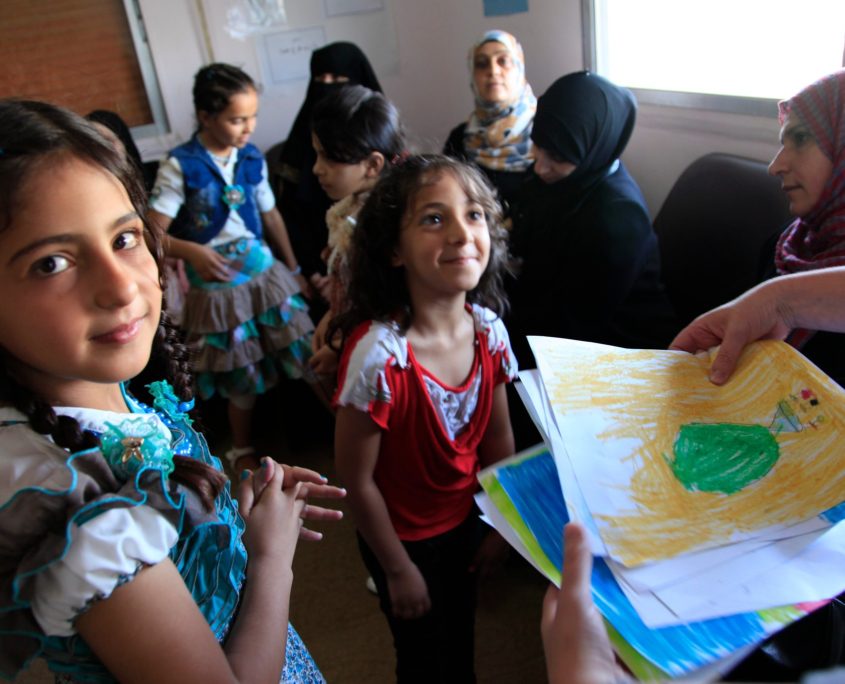
Children International

Children International, a nonprofit that has worked to end poverty for nearly 80 years, is renowned for its transparency. Its website displays the many tangible positive changes the organization has brought about for children living in poverty. Children International believes addressing the needs of children is the way to end global poverty. Through its unique child sponsorship program, a person from anywhere in the world can fund the health, educational, security and nutritional needs of a child.

Through its Employment Program, Empowerment Program and various health and education programs, Children International works to end global child poverty through sustainable short-term and long-term approaches. These include providing basic health and dental services, boosting children’s confidence and creating post-graduation employment opportunities.

Safe Community Centers

Children International has also created more than 67 community centers to ensure that children can grow in secure and safe environments. Holistic child care in these safe spaces addresses the nutritional, educational and physical needs of children up to age 20. Children International believes that safe spaces and programs tailored to the unique needs of each child will ultimately end global poverty.

Nuanced Attention to Every Child

Children International’s customized programs focus on the individual needs of each child. The child sponsorship program enables donors to choose a child to sponsor, then give directly to that child’s specific needs. This “contextualization” ensures that both “a 6-year-old in Zambia” and “a 14-year-old in Honduras” have their particular needs met. The child sponsorship program focuses on the nuanced needs of every child by truly listening to the children themselves and allocating the necessary resources to lift them out of poverty.

Children International’s customized programs ensure that children are educated, healthy, employed and empowered as they transition into adulthood. The education program also provides children with shoes, books, uniforms, tutoring and scholarships and builds community centers with computers and other useful resources. Nearly 88% of children engaged in tutoring programs from Children International have improved profoundly in reading, writing and math and 71% of those involved in the Employment Program have found employment.

Ending Global Child Poverty

Success stories from four continents illuminate the astounding work of Children International, which has helped more than one million children. Children International is working to end global child poverty and has already taken off immensely in its success.

– Nora Zaim-Sassi
Photo: Flickr

September 4, 2021
https://borgenproject.org/wp-content/uploads/borgen-project-logo.svg 0 0 Kim Thelwell https://borgenproject.org/wp-content/uploads/borgen-project-logo.svg Kim Thelwell2021-09-04 01:30:242021-09-06 00:56:19Children International Works to End Global Child Poverty
Child Poverty, Children, Education, Global Poverty

Ahmad Joudeh and SOS Children’s Villages

Ahmad Joudeh and SOS Children's VillagesAhmad Joudeh is a world-renowned ballet dancer and is famous for his performance in Eurovision 2021. His background is less well-known. Growing up in a refugee camp in Syria, Joudeh dreamed of dancing. In 2021, he began volunteering with SOS Children’s Villages, a nonprofit dedicated to supporting children and families in poverty and providing humanitarian assistance where it is needed.
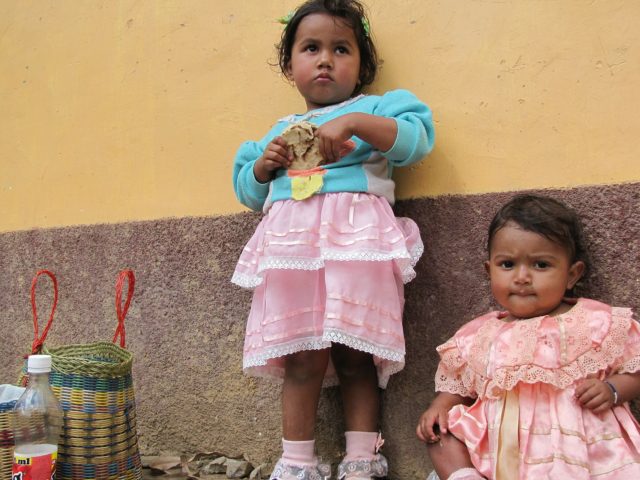
Ahmad Joudeh Growing Up

Ahmad Joudeh grew up with aspirations of dancing since he was young. For much of his young life, he lived in a refugee camp. Joudeh lived in an environment where poverty is the norm. The people around Joudeh were primarily unsupportive of his dancing. However, he defied traditional expectations of men in Syria and would dance in the streets.

Joudeh studied dance at the Enana Dance Theatre for almost a decade from 2006 to 2015. He made his biggest appearance on the world stage in Eurovision 2021. In his free time, Joudeh teaches at the SOS Children’s Villages. Joudeh dances with the children and volunteers to inspire them in the art of dance and help them build confidence to navigate any issues that may arise while living in poverty.

SOS Children’s Villages

SOS Children’s Villages is an international organization with more than 130 “villages” in operation. The organization was founded by Herman Gmeiner in 1949 after witnessing the effects of World War II on local children. Gmeiner developed SOS Children’s Villages with the help of family, friends and generous donors. Since then, Gmeiner’s organization has blossomed to help children on an international scale.

The SOS Children’s Villages help families struggling financially by training parents in skills for workplace environments or counseling families as needed. The organization works one-on-one with children to provide education and health services while advocating at policy levels and providing safe spaces to explore.

Children and Families Using SOS Children’s Villages Services

Since children and families involved with SOS Children’s Villages face financial difficulties, they often do not have the tools or resources to help themselves. As a result, a significant number of SOS Children’s Villages residents rely on education. With volunteers, the organization reaches out within the communities where volunteers operate. The volunteers engage the families and children struggling and provide quality education on life skills.

When SOS Children’s Villages are helping a child or a family, the villages provide a safe space. For hours each day, the families are cared for in a safe environment to foster new habits and skills until each individual or family no longer requires the organization’s services. SOS Children’s Villages operate in areas where poverty is high. For example, in the main village in Syria where Ahmad Joudeh volunteered, the poverty rate reached 80%. The village works with families to ease financial burdens in both the short and long terms.

Building Community

The education provided to parents and children worldwide through this organization helps each person find a good job or mentorship. In addition, with its advocacy work, SOS Children’s Villages helps build protection within communities and in governments to support families in poverty.

Because people born into poverty often do not have access to higher education, they are likely to remain in poverty. In 2018, the United Nations Educational, Scientific and Cultural Organization (UNESCO) surveyed childhood education, attendance and poverty and found that more than 250 million children globally cannot attend school due to the cost. SOS Children’s Villages provide education to children at no cost to the families to break the cycle of poverty.

Understandably, Ahmad Joudeh knows the strains poverty can have on children. The mental health issues that develop in children living in poverty are most commonly anxiety and depression. So while SOS Children’s Villages operate to ease physical and financial difficulties, Joudeh dances with the children and strives to help them achieve their dreams.

Ahmad Joudeh’s Involvement and His Hopes for the Children

Joudeh has a deep respect for the work of SOS Children’s Villages. For some time, he has taught dancing in the organization’s village in Damascus to help build long-term goals for children. In 2016, Joudeh also did a workshop with the children in the SOS Children’s Village Vicenza. Joudeh dances with the children and guides them to work through their anxieties and constant worries around them. The mental toll on children in poverty in the areas where SOS Children’s Villages operate is devastating.

Joudeh dances with the children step-by-step, providing undivided attention, teaching them to focus on the music and not the world. The safe space he creates through dance grants these children an opportunity to explore and feel free without worries about what the outside world may bring or what challenges await their families. Joudeh dances with the children because his dreams of dance have expanded over the years. The freedom Joudeh finds in dancing is a feeling he hopes to extend to the children in the SOS Children’s Villages.

– Clara Mulvihill
Photo: Flickr

August 31, 2021
https://borgenproject.org/wp-content/uploads/borgen-project-logo.svg 0 0 Kim Thelwell https://borgenproject.org/wp-content/uploads/borgen-project-logo.svg Kim Thelwell2021-08-31 07:30:262021-08-31 11:05:21Ahmad Joudeh and SOS Children’s Villages
Children, Global Poverty

Orphans Learn Life Skills Through Honduran Café

orphans learn life skillsNestled at the base of the Santa Bárbara Mountain in Honduras lies Santa Bárbara, a city known for producing sugarcane, coffee beans and livestock. The city is also home to El Jardin De Amor y Esperanza, also known as the Garden of Love and Hope. An orphanage that opened in 2011, the Garden of Love and Hope takes in children that have outlived their parents or whose parents cannot provide for them. This orphanage, though small, has an incredible impact on children through its ability to rescue them from destitute situations. Orphans learn life skills that will prepare them to be successful in life outside of the orphanage. One way the orphanage accomplishes this is through the use of its Selva Café, which helps the orphans learn real-world skills.
The Garden of Love and Hope

The Borgen Project spoke with Lukas Dale, a volunteer that traveled to the Garden of Love and Hope with a group organized through Olivet Nazarene University. Dale describes a home visit he did on his final volunteering day, giving him the opportunity to “experience the kind of conditions the local people live in.” The home “was a tiny 7x7x7-foot clay and mud box that had no plumbing and only one bed. It housed a family of grandparents, a mom, five kids and a dog.” Dale says the experience gave him “a new and more accurate understanding of the situation people in impoverished countries must live in.”

Though much of Honduras struggles with poverty, the Garden of Love and Hope works to give orphans the best resources and education possible. Its primary mission is to provide the children with food, shelter, clothing and medicine while helping them with school. Footsteps Missions significantly supports the orphanage. A nonprofit organization, Footsteps Missions works to send volunteers to Santa Bárbara to assist the orphanage.

Dale shared more of what he witnessed at the orphanage, explaining that the children were treated well by staff who are “happy to volunteer their time to care for the kids.” Furthermore, he explains that “There were many children and teenagers who didn’t have any tangible hope for their futures. A lot of the teenage girls had been raped and either had children to take care of or were just working through their trauma, for example.”

He describes the orphanage as “a very loving, accepting environment that focuses on giving the children hope for the future by equipping them with practical skills.” By providing children with safety from their former circumstances, the orphanage also supports the children’s futures.

Selva Cafe

One of the most pertinent ways that the Garden of Love and Hope helps children learn life skills is through Selva Café. Owned by the orphanage and Footsteps Missions, the small coffee shop’s funds support the costs of caring for the children at the orphanage. The café also employs children from the orphanage. By running the cash register, preparing food and coffee and serving customers, children gain work experience.

Dale reflected on his experience when he visited the orphanage. He said, “Footsteps Missions was also in the process of opening a café near the orphanage that would help fund the orphanage and give the children a place to gain work experience. Since the café was in the process of opening, we helped with some physical labor projects they had around the property, taught the owners how to use financial programs on the computer and set up a cash register for them to use.” The Garden of Love and Hope works to help orphans learn some of the life skills needed to succeed in the world outside the orphanage. It does this while serving the community through the production of coffee and baked goods that can be purchased at the café.

Importance of Helping Orphans Learn Life Skills

The concept of “life skills” means a young person possesses the qualities needed to succeed, such as confidence and personal and social skills to interact with others. The Garden of Love and Hope realized children needed to have both formal and life education, the latter of which only comes with experience. Traditionally, the family unit teaches life skills. However, since orphaned children do not always have a family to rely on, it is more difficult for them to acquire the necessary experience to succeed. By establishing Selva Café, the Garden of Love and Hope fosters a place to learn skills. Teaching children life skills will also give them the desire to serve their community, including those also in poverty.

Though it is small and relatively new, the Garden of Love and Hope and its partnership with Selva Café give the Honduran children of Santa Bárbara hope for their futures. By equipping children with valuable life skills learned through serving tourists and their community in the café, these children have the potential to rise above their life circumstances and grow into capable adults.

– Allie Degner
Photo: Pixabay

August 29, 2021
https://borgenproject.org/wp-content/uploads/borgen-project-logo.svg 0 0 Kim Thelwell https://borgenproject.org/wp-content/uploads/borgen-project-logo.svg Kim Thelwell2021-08-29 12:37:152024-05-30 22:24:50Orphans Learn Life Skills Through Honduran Café
Child Soldiers, Children, Global Poverty

History of Child Soldiers in Myanmar

child soldiers in MyanmarFor half a century, Myanmar has struggled to reduce its number of child soldiers. Formerly known as Burma, Myanmar has a long history of using children in armed conflict, which began when the country gained independence in 1948. In 2002, Human Rights Watch listed Myanmar as the country with the highest number of child soldiers. Though Myanmar has taken action to reduce this, the number of child soldiers in Myanmar is still disturbingly high, requiring greater intervention.
Previous Use of Child Soldiers

According to the Child Soldiers Global Report 2001, 20% of Myanmar’s army was made up of children younger than 18. Although Myanmar’s legislation does not establish compulsory military service laws, it does require each district to meet a recruitment quota. District authorities that fail to meet the quota often receive fines. Hence, to meet the quota, many underage children are coaxed into joining the army through financial rewards or prestige. Other times, the army abducts children from public areas, forcing them to become soldiers. The highest number of recruited child soldiers in Myanmar occured between 1990 and 2005 when the military junta was in power.

During this time, Myanmar received several on-ground assessments by the Committee of Experts of the ILO, followed by recommendations to revise the Village Act and the Towns Act. The Committee requested that the government amend these Acts to comply with the Forced Labor Convention of 1930. Hence, the Convention on the Rights of the Child was ratified by Myanmar in 1991.

After several concerns raised by the United Nations, Human Rights Watch verified that Myanmar had approximately 70,000 child soldiers in 2001. Myanmar’s government responded to international concerns in a letter to the U.N. Security Council in 2004. In the letter, the government demonstrated no interest in making any legislative amendments nor any intention to prosecute local authorities for forced labor and child abuse by stating that “the Myanmar Armed Forces is an all-volunteer force and those entering military services do so of their own free will.”

Gradual Measures to Reduce Child Recruitment

Finally, in 2005, four local officials received prison sentences for the illegal imposition of forced labor after supposedly recruiting child soldiers. In 2009, several rebel groups such as the Chin National Front signed unilateral deeds pledging to stop recruiting child soldiers.

In 2012, Myanmar signed the Joint Action Plan. This committed the government to work alongside the U.N. to prevent child recruitment. Following the Plan’s implementation in 2012, which established stronger age assessment procedures and the adoption of military directives prohibiting the recruitment of minors, 956 children and young people were released from the army. Further improvements occured in 2015 when Myanmar signed the Optional Protocol to the Convention on the Rights of the Child regarding the use of minors in armed conflict.

Since then, Myanmar’s government and the U.N. have launched several public awareness campaigns, also establishing a hotline so that citizens can report cases of recruitment of minors. As a result of the continuing decrease in child recruitment and Myanmar’s efforts to protect children, U.N. Secretary-General Antonio Guterres removed Myanmar from his annual “list of shame,” which names countries that have committed grave violations against children.

The Need for More Action

Despite Myanmar’s recent efforts to decrease the number of child soldiers, in 2021, the United Nations verified the recruitment and use of 790 children in the previous year. With 56 children dead and 17 children abducted, the U.N. believes Myanmar will return to the “list of shame” unless the government follows U.N. recommendations, including:

  • Release children using the framework of the Joint Action Plan
  • Make the 156 pending cases of suspected minors a priority among national courts
  • Prosecute those who are guilty

With 10 armed attacks in national schools in 2020, the United Nations also strongly recommends that Myanmar endorses the Safe Schools Declaration, which requires states to commit to safeguarding schools and universities from armed hostilities.

Existing efforts as well as implementing U.N. recommendations will help to fully eliminate the use of child soldiers in Myanmar, protecting the well-being of children across the country.

– Carolina Cadena
Photo: Flickr

August 26, 2021
https://borgenproject.org/wp-content/uploads/borgen-project-logo.svg 0 0 Jennifer Philipp https://borgenproject.org/wp-content/uploads/borgen-project-logo.svg Jennifer Philipp2021-08-26 01:30:032021-08-26 00:19:39History of Child Soldiers in Myanmar
Children, Education, Global Poverty

Facebook Creates Sabee App to Improve Education in Nigeria

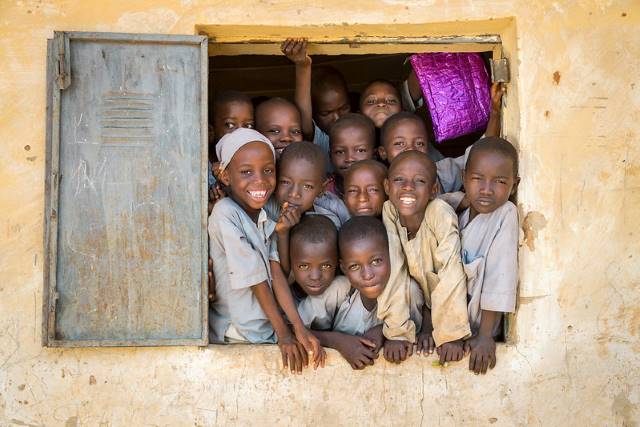
Sabee AppNearly 200 million people currently live in Nigeria. Out of all the children in the world who are not attending school, one in five of those children live in Nigeria. The statistics of education in Nigeria paint a bleak picture as only 61% of children aged 6-11 attend primary school on a regular basis. Furthermore, in 2018, only 20% of Nigerian adults who finished primary school were literate. However, Nigeria might be turning the corner in education as many educational tech startups focus on facilitating education in Nigeria. Facebook is the latest company to invest in the development of Nigerian education through the Sabee app.
Education in Nigeria

At the moment, Nigeria’s education system suffers from a severe lack of funding. In 2020, Nigeria dedicated only 6.7% of its annual budget to education even though UNESCO recommends that a government should allocate a minimum of 15% of the annual budget toward education. Therefore, Nigeria allocates far less than is recommended.

Although education is free in Nigeria, Nigerian public schools do not have many teachers. In some regions, the teacher-to-student ratio is an astounding 1:73. The schools also lack the vital resources needed to learn and lack quality and clean facilities. There is also insufficient training for teachers in schools. The government does not have established guidelines for hiring teachers, leaving students with inadequately trained instructors. Unqualified staff means the quality of learning severely decreases.

Lastly, terrorism has impacted the learning ability of Nigerian students. Due to the Boko Haram group terrorizing the northern parts of the country, less than half of female students in Northern Nigeria attend school. Furthermore, the ongoing violence has left many schools damaged and destroyed.

The History of the Sabee App

Sabee is an educational app that “aims to connect learners and teachers in online communities to make educational opportunities more accessible.” Facebook aims to develop Sabee as a part of its long-term investment strategy in Africa. Since most people will live in urbanized areas by 2030, and with Africa’s population rising fast, Facebook wants to establish a market in the African region. The platform particularly focuses on Nigeria. This decision is based on studies that estimate that Nigeria will become the second-most populated country by the turn of the century.

The Nigerian word “sabi,” which means “to know,” is the inspiration behind the app’s name, Sabee. The Sabee app will increase access to educational opportunities and bridge the literacy gap in Nigeria. With COVID-19 still affecting many parts of the world without vaccine access, the Sabee app will help many gain access to education remotely. In addition, the Sabee app seeks to address the poor literacy rates of Nigerian women and girls.

Development and Implementation of Sabee

Currently, more than 100 million Nigerians have access to the internet and more than 95% of internet users utilize mobile broadband data. Additionally, 250,000 new internet users in Nigeria were online by the end of 2019. Facebook aims to ensure Sabee works with 2G networks to make it accessible to more people, even those with less advanced internet connections.

As of now, the app is in the testing phase, “with fewer than 100 testers” assessing the app. Facebook plans to develop the app further based on the testers’ feedback and implement another phase of testing before the close of 2021.

Several technology startups and companies such as Facebook are investing in improving the system of education in Nigeria. However, to make a lasting impact, Nigeria must dedicate more of its resources toward ensuring quality education for all youth.

– Matthew Port Louis
Photo:Flickr

August 25, 2021
https://borgenproject.org/wp-content/uploads/borgen-project-logo.svg 0 0 Kim Thelwell https://borgenproject.org/wp-content/uploads/borgen-project-logo.svg Kim Thelwell2021-08-25 07:30:442024-05-30 22:24:54Facebook Creates Sabee App to Improve Education in Nigeria
Child Poverty, Education, Global Poverty

Providing an Education for Street Kids in Afghanistan

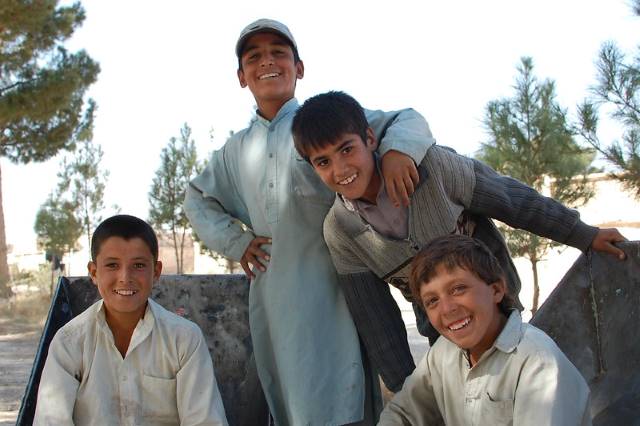
education for street kids in AfghanistanThe issue of providing quality education to children in Afghanistan persists. According to UNICEF, approximately 3.7 million children in Afghanistan are not in school, including more than two million girls. Afghan children face several barriers to education. These include “a shortage of schools and insufficient transportation” as well as a scarcity of qualified teachers. Only 48% of teachers possess the “minimum academic qualifications” to teach. For girls specifically, continued antiquated cultural practices, including child marriage in impoverished areas, continues to serve as a significant hurdle. Securing education for children in Afghanistan is important since education is a proven tool for breaking cycles of poverty. Furthermore, providing education for street kids in Afghanistan is especially important because these children are more vulnerable to the impacts of poverty.

The Plight of Street Children in Afghanistan

The term “street children” refers to children who live and/or work on the streets. In Afghanistan, the number of street kids is rising steadily, with at least 50,000 in the capital of Kabul. Endemic poverty and parental deaths caused by decades of war have forced many children into labor. Some of these children are as young as 3 years old. According to Mahboba’s Promise, an Australian aid organization, street children earn an average of less than $2 a day through menial jobs including collecting garbage and polishing shoes. These meager wages are barely enough to survive on. As such, working on the streets has become synonymous with malnutrition, illnesses and even sexual assault. Ensuring access to education for street kids in Afghanistan is paramount if Afghan children are to break free of cycles of abuse and poverty.

Organizations Providing Education for Street Kids in Afghanistan

While the current status of education in the country and the plight of its street kids is lamentable, the work of several organizations on the ground in providing an education for street kids in Afghanistan suggests that not all hope is lost.

  1. Mahboba’s Promise. Founded by Mahboba Rawi, an Afghan refugee, this organization is committed to rehabilitating street kids in Kabul by placing them in “safe houses.” The safe houses provide the children with well-balanced meals and teach fundamental subjects such as English, math and Islamic studies. Partnering with Architects Without Frontiers, Mahboba’s Promise successfully opened the Hope House in 2007. The Hope House is a shelter for women and children living in poverty that comes fully equipped for educational and recreational facilities while serving as an oasis of safety away from the turbulent streets of Kabul.
  2. Aschiana. Engineer Mohammed Yousef founded Aschiana in 1995. He was spurred to action after witnessing the harsh living and working conditions of street kids in Kabul. At its Day-Care Center, Aschiana provides basic education and vocational training for women and children while offering art-based therapy to help children who may have been traumatized by war, among other initiatives. Aschiana also organizes “mobile library units” to improve literacy and arranges legal aid for children charged with crimes. Today, Aschiana operates in seven provinces in Afghanistan and has impacted the lives of more than 150,000 women and children.
  3. The Noor Foundation. Founder Noor Ramazan was once an Afghan street kid himself. However, he broke free from his family’s cycle of poverty and became a successful businessman. He opened a tour guide service, Let’s Be Friends Afghanistan, in 2015. Recognizing the importance of providing an education for street kids in Afghanistan, Ramazan founded The Noor Foundation early in 2021 with the hope of saving street kids in Mazar-i-Sharif from the fate he managed to escape. At present, Ramazan is concurrently working on two projects. The first, Noor’s Nest, will be a shelter for about 30 street kids. It will have comfortable lodging facilities and staff to support the children’s educational and extracurricular endeavors in a “family-type setting.” The other project, The Noor School, will accommodate up to 200 children. Street kids will receive free tuition and priority access. Ramazan intends to start constructing the school by 2022 and has obtained financial support from 264 Education, a German NGO that reached out to Ramazan after hearing about his aspirations through the popular YouTube channel, Yes Theory.

Looking Ahead

Both local and international organizations have managed to make inroads concerning education in Afghanistan. However, the ongoing withdrawal of U.S. troops from the country threatens to undermine current and future progress. As the Taliban expands control of the country due to the power vacuum created by the United States, the future of education for Afghan children, especially girls, remains precarious. Without the continued provision of education for street kids in Afghanistan, there is a high risk of child recruitment by the Taliban. In a land rife with volatility and instability, prioritizing the education of children is imperative to equip Afghan children with the knowledge and tools to create a better and brighter future.

– Vyas Nageswaran
Photo: Flickr

August 20, 2021
https://borgenproject.org/wp-content/uploads/borgen-project-logo.svg 0 0 Kim Thelwell https://borgenproject.org/wp-content/uploads/borgen-project-logo.svg Kim Thelwell2021-08-20 01:30:042021-08-31 23:30:52Providing an Education for Street Kids in Afghanistan
Children, Global Poverty

Trueheart: Donations with a Click

TrueheartMarried couple Amy and Scott Malin allow people to transform the lives of the poor with just one click. In late June 2021, the couple developed a search engine called Trueheart, enabling individuals to donate merely by surfing on the website. About 80% of the search engine’s proceeds go toward six major nonprofit companies including Smile Train, Action Against Hunger, Global Green, 4 Paws for Ability, PFLAG National and the Variety Boys & Girls Club.

Why Amy and Scott Malin Created Trueheart

Amy and Scott Malin made it possible to search and donate with Trueheart so that anyone can make an impact worldwide. Because the couple values honesty, they have made a website where people can view what the donations go toward. Inspirational video and image content show the benefits of the proceeds. As a result, this encourages people to click and donate as the donors view the significant influence of others collaborating to change the world.

Also, according to Authority Magazine, Scott stated that he and his wife support utilizing technology in a positive way where people who care about improving society can join forces. In addition, Amy noted that helping the less fortunate is important to their family. For example, the couple helps people by aiding low-income households, donating food to the homeless, cheering up sick children and children without their parents over the holidays and more.

Trueheart’s Celebration

Look To The Stars also reported that, in celebration of Trueheart’s introduction, “Beverly Hills 90210” star and “The Masked Dancer” panel member Brian Austin Green and “Dancing With The Stars” expert performer Sharna Burgess will collaborate to present the #Search4Smiles promotion. This promotion will assist Smile Train in treating babies and kids with cleft lips globally. If this condition does not receive treatment, it can cause challenges with food consumption, breathing, listening and talking. Smile Train has helped to treat over 1.5 million kids with cleft lips worldwide for 21 years. Thus, since people can search and donate free with Trueheart, people can significantly reduce this condition’s global impact.

More About Smile Train

According to the Smile Train website, the company trains and funds healthcare practitioners in more than 70 nations worldwide to help cleft patients at no cost. Babies and children that have clefts require more than merely surgical procedures. It may also be crucial for them to receive help with eating, chewing and speaking. Smile Train provides services for children in low-income areas. For instance, the company’s surgeons can finish a surgery in less than an hour. In addition, dentists are available to provide tooth care for children with cleft lips. Smile Train also supports kids with cleft lips emotionally as the children tend to suffer from scarring, speech impediments, low self-confidence and more. Other celebrities that support the organization include Kylie Jenner, Karrueche Tran, Quincy Brown and Howie Mandel.

Helping People Made Simple

According to Amy Malin, people often think that if they do not have fame or money to spare, that they will not have a significant impact. With support from celebrities, she and Scott Malin have made it possible for anyone to search and donate free with Trueheart. As a final point, Amy stated that many people wish to help change the world and now people can, even in a small way, by clicking and searching on Trueheart via cellular devices, tablets and computers.

– Jannique McDonald
Photo: Flickr

August 19, 2021
https://borgenproject.org/wp-content/uploads/borgen-project-logo.svg 0 0 Kim Thelwell https://borgenproject.org/wp-content/uploads/borgen-project-logo.svg Kim Thelwell2021-08-19 11:49:312021-08-29 04:04:49Trueheart: Donations with a Click
Child Marriage, Children, Global Poverty, Women's Rights

Addressing Child Marriage in Morocco

Child marriage in MoroccoChild marriage in Morocco is still widely prevalent in 2021, though there are efforts to expand girls’ rights and empower women. A worldwide issue, child marriage is an issue Morocco has long struggled with because of various legal frameworks. But, there is hope for the country’s girls as activists and groups work to reform laws and curb child marriage in Morocco.

Child Marriage and Poverty

There are many reasons why child marriage in Morocco is so prevalent. Most significantly, it is a longstanding cultural tradition as well as a widespread practice in Islam. Once a girl starts menstruating, according to Moroccan society, she has reached “the marriageable age.” Additionally, girls in rural Morocco must preserve their virginity until they become wed. Since the act of reproduction is so signifcant, families marry off their daughters at early ages because it “allows young women to have more children than those married later.”

Child marriage also enforces economic and social stability as marriage comes with money, status and property. Often, these girls come from families suffering in poverty. Because girls get married off early, they miss out on educational opportunities, making them completely dependent on their husbands. Consequently, poverty and illiteracy are driving factors in the girls’ futures, exacerbating cycles of poverty even further.

Moudawana

According to Morocco World News, Morocco’s Family Code, also known as Moudawana, is the root of the problem in permitting child marriage. In 1958, Morocco established Moudawana, a traditional family law that permits practices such as “polygamy and forced marriage.” The traditional family law was the main legal framework responsible for legitimizing forced child marriage.

However, the Family Code was officially reformed in 2004 to raise the minimum marriageable age of girls to 18 and provide more rights to women in marriages. This includes rights to inheritance and the sharing of marital property. While the law still permits polygamy, it is legal only under strict conditions. Activist groups like the Moroccan Women’s Rights Movement have been advocating for these changes to allow more rights to women and girls. Nonetheless, challenges persist.

Looking at the Numbers

According to Reuters, 16% of Moroccan girls younger than the age of 18 marry illegally, despite the revised Family Code law prohibiting this. Since the 2004 reform, the number of underage marriages surged by almost 50% by 2016, though some activists claim this statistic should be higher. Families get around the Moudawana through loopholes in the law, allowing them to marry off their daughters at earlier ages. According to Morocco’s Ministry of Justice, in 2019, 98% of requests for marriage to underage girls came from rural regions. This exemplifies the difference in ideology and practice between rural and urban areas as well as how circumstances of poverty increase the likelihood of child marriage.

Hope for the Future

Despite these statistics, there is hope for combating child marriage in Morocco. In 2020, the National Council for Human Rights and the United Nations Population Fund partnered for “a collaborative effort to end child marriage and promote sexual and reproductive health in Morocco.” Through education and awareness, the organizations’ joint missions will ensure poverty is alleviated alongside ending child marriage.

Additionally, the Moroccan organization called Droits & Justice is also working to end child marriage in the country. The organization launched the Combatting Underage Marriage through Legal Awareness (CUMLA) Project in 2014. The initiative educates young girls, parents and entire communities about the severe consequences of child marriage.

By partnering and collaborating with local associations, Droits & Justice hopes to increase local awareness and create large-scale change. With these methods, the organization is hoping to get closer to eradicating child marriage in Morocco. Droits & Justice “has succeeded in educating more than 500 women, including 250 underage girls.” The organization also helped with almost 30 child marriage cases.

Although child marriage has been a longstanding issue in Morocco, legal reform and the efforts of activist groups are encouraging. These are signs that Morocco is approaching a culture free of child marriage, and consequently, a future free of poverty.

– Laya Neelakandan
Photo: Unsplash

August 18, 2021
https://borgenproject.org/wp-content/uploads/borgen-project-logo.svg 0 0 Kim Thelwell https://borgenproject.org/wp-content/uploads/borgen-project-logo.svg Kim Thelwell2021-08-18 07:30:312024-05-30 22:24:49Addressing Child Marriage in Morocco
Child Labor, Child Poverty, Child Soldiers, Children, Global Poverty

10 Things to Know About Child Poverty in Syria

Child Poverty In SyriaFor the past decade, Syria has been the center of a brutal civil war. As a result, millions of Syrians face the everyday threats of violence, hunger and disease that wartime poverty brings about. Those most vulnerable to the effects of poverty include Syria’s children. A closer look at child poverty in Syria provides insight into the lives of Syrian children.

10 Facts About Child Poverty in Syria

  1. Roughly six million Syrian children rely on humanitarian assistance. Syrian children are among the most vulnerable groups in the Syrian civil war. The war has affected more than 11.1 million Syrians, almost half of whom are children.
  2. Children are unable to attend school. The civil war greatly fuels child poverty in Syria. As parents struggle to afford to send their children to school, many teachers are unpaid and destitute school buildings are collapsing. Nearly 2.5 million Syrian children are unable to attend school. This number does not include the 750,000 displaced Syrian children in nearby countries who also have no access to education. According to World Vision, the Syrian conflict has “reversed two decades of educational progress.”
  3. More than half of all Syrian children suffer from hunger. An estimated 60% of the nation’s children are suffering from hunger and 28% endure stunting as a consequence of malnutrition. The percentage of Syrian people suffering from food insecurity is currently the highest it has ever been since the beginning of the Syrian civil war in 2011. With 6.2 million children currently living in hunger, the numbers are only rising, having increased by roughly 35% from November 2020 to February 2021.
  4. Child labor is increasing. Faced with the threat of extreme child poverty in Syria, many school-aged boys drop out of school to support their families. These boys regularly work in unsafe situations for little pay. The research study “Survey on Child Labour in Agriculture in the Bekaa Valley of Lebanon: The Case of Syrian Refugees” provides statistics on Syrian child labor. The 2019 study concluded that about 70% of Syrian refugee “children between 4 and 18 years old” were employed, “with an average age of 12.9 years.” Additionally, about 75% of these children worked in the agricultural sector. In this sector, about 30% of working children have experienced injuries.
  5. Boys are targets for child soldiers. As boys drop out of school to support their families, they are at higher risk of being recruited as child soldiers. With no income to provide for their children, many families resort to sending their young boys for training as child soldiers, believing that it is the best option. In 2021 alone, almost 840 children were recruited as child soldiers, among other roles, with 797 of these children being boys.
  6. Child marriage is rampant. Many families resort to child marriage to solve their economic situations. Sexual abuse of young girls also runs rampant in crowded refugee camps. Desperate to save their daughters from “child trafficking and sexual exploitation” and unable to economically provide for their children, many families arrange marriages for teenage girls. Out of girls aged 15-19, about 3.8% give birth every year.
  7. Weather has significant impacts. Millions of displaced and homeless children in Northwest Syria face brutal winters. Their only shelter from the harsh cold is often a tent or severely damaged and unsafe buildings that serve as emergency shelters. Roughly 75% of all Syrian children killed in 2020 came from this part of the country.
  8. COVID-19 exacerbates poverty: The COVID-19 pandemic has only exacerbated child poverty in Syria. In addition to the 11.1 million Syrians already in need of urgent humanitarian aid, an additional 1.1 million Syrians have found themselves in poverty as a consequence of the pandemic. COVID-19 has also caused the gross domestic product to fall by up to 15% in the nation’s nearby countries, meaning that Syrian refugees seeking refuge in neighboring countries have fallen further into poverty.
  9. Infrastructure is failing. Only 53% of hospitals are currently in service, greatly adding to child poverty in Syria. Since the start of the war, more than 25,000 children have been killed, a number that is only increasing due to limited healthcare services and lack of access to clean water.
  10. Children are vulnerable to diseases. Poor sanitation caused by a lack of infrastructure, resources and clean water makes Syrian children vulnerable to cholera and other diarrheal diseases. The lack of accessible healthcare means many children miss their regular health checkups. Extremely cold weather in the northwest part of Syria also makes children susceptible to pneumonia.

Addressing Child Poverty in Syria

To address the issue of child poverty in Syria, UNICEF has sent humanitarian assistance on the ground. UNICEF’s efforts focus on children’s education, health and sanitation, among other goals. In 2020 alone, UNICEF “screened 2.6 million Syrian children and women for acute malnutrition,” improved water services for 3.2 million people and vaccinated roughly 2.6 million children against polio. UNICEF also “supported 2.2 million children with education services in formal settings.”

While the conflict in Syria continues, vulnerable groups are disproportionately affected. The efforts of UNICEF ensure the protection and well-being of millions of Syrian children, reducing child poverty in Syria.

– Caroline Bersch
Photo: Unsplash

August 18, 2021
https://borgenproject.org/wp-content/uploads/borgen-project-logo.svg 0 0 Kim Thelwell https://borgenproject.org/wp-content/uploads/borgen-project-logo.svg Kim Thelwell2021-08-18 07:30:112024-06-04 01:03:2010 Things to Know About Child Poverty in Syria
Page 44 of 137«‹4243444546›»

Get Smarter

  • Global Poverty 101
  • Global Poverty… The Good News
  • Global Poverty & U.S. Jobs
  • Global Poverty and National Security
  • Innovative Solutions to Poverty
  • Global Poverty & Aid FAQ’s
Search Search

Take Action

  • Call Congress
  • Email Congress
  • Donate
  • 30 Ways to Help
  • Volunteer Ops
  • Internships
  • Courses & Certificates
  • The Podcast
Borgen Project

“The Borgen Project is an incredible nonprofit organization that is addressing poverty and hunger and working towards ending them.”

-The Huffington Post

Inside The Borgen Project

  • Contact
  • About
  • Financials
  • President
  • Board of Directors
  • Board of Advisors

International Links

  • UK Email Parliament
  • UK Donate
  • Canada Email Parliament

Get Smarter

  • Global Poverty 101
  • Global Poverty… The Good News
  • Global Poverty & U.S. Jobs
  • Global Poverty and National Security
  • Innovative Solutions to Poverty
  • Global Poverty & Aid FAQ’s

Ways to Help

  • Call Congress
  • Email Congress
  • Donate
  • 30 Ways to Help
  • Volunteer Ops
  • Internships
  • Courses & Certificates
  • The Podcast
Scroll to top Scroll to top Scroll to top