• Link to X
  • Link to Facebook
  • Link to Instagram
  • Link to TikTok
  • Link to Youtube
  • About
    • About Us
      • President
      • Board of Directors
      • Board of Advisors
      • Financials
      • Our Methodology
      • Success Tracker
      • Contact
  • Act Now
    • 30 Ways to Help
      • Email Congress
      • Call Congress
      • Volunteer
      • Courses & Certificates
      • Be a Donor
    • Internships
      • In-Office Internships
      • Remote Internships
    • Legislation
      • Politics 101
  • The Blog
  • The Podcast
  • Magazine
  • Donate
  • Click to open the search input field Click to open the search input field Search
  • Menu Menu

Archive for category: Children

Information and stories addressing children.

Children, Developing Countries, Development, Education, Global Poverty

How Hip-Hop Helps Improve Education in South Africa

Hip-Hop Helps Improve Education
In schools worldwide, mathematics is a leading subject that is necessary for people to progress and complete their education. Although educational systems differ across countries, many still see math as one of the most crucial skills for developing critical thinking building blocks that drive logic and decision-making. While mathematics is held to a high standard in countries within Africa, education in South Africa lags behind its counterparts in terms of performance on international standardized assessments. With a lack of trained math teachers in schools, large class sizes and “deficient and outdated infrastructure, instrumentation and teaching materials,” many students are unable to reach their full potential. As countries seek different methods like technology to better educational outcomes, one specific school in Cape Town has adopted a unique approach: Hip-Hop. Hip-hop helps improve education in South Africa by recognizing the various methodologies of learning.

Hip-Hop Helps Improve Education in South Africa

Kurt Minnaar, a former dancer and current eighth-grade teacher, decided to test a creative approach when he saw his students struggling to grasp concepts in school. Minnaar recognizes that while the current system of education in South Africa may have worked for the older generation, it is failing today’s kids. As a student who once struggled with math himself,  Minnaar believes in recognizing four different types of learning methodologies in education. Acknowledging these different learning styles, Minnaar uses music and dance in the classroom to engage students in their learning and improve math outcomes. With the rise of social media, especially music-focused platforms such as TikTok, engaging students with the activities that appeal to them can help improve their math outcomes.

The Rise of Social Media

Social media is growing in South Africa, with the rate of social media use increasing 19% since 2019. Of the current South African population, roughly 40% are active users on Facebook, Instagram and Twitter. Young people aged 18-24 account for 40.4% of these users.

Confirming the rise in social media use, a survey of 200 South African university students shows that 88% of students identified as users of social media. This illustrates the large role and the growing influence of social media on the lives of the current generation of students. Although some see the increase in the use of social media as unhealthy, young educators like Minnaar see it as an opportunity to use the current culture and trends to make learning enjoyable for all.

Creative Learning

Since Minnaar began teaching, he has created several rap beats that stimulate the minds of his students while increasing their ability to retain information. Some of his pieces include “Cre-eight,” “Trick-onometry” and “Van Guard,” all of which address multiplication tables through catchy hip-hop beats. To ensure that students are gaining the most out of his classes, Minnaar has students rap the songs to the beat of the music he plays off his laptop and encourages students to dance during class. He sees creative activities like singing and dancing as essential to helping students enter a headspace conducive to learning. Thus far, Minnaar has only created content for multiplication tables. However, the results have been so positive that he is currently working on new material and lesson plans to address different areas of education in South Africa.

While Minnaar enjoys creatively interacting with his students, he also recognizes the importance of scholastic performance and his role as an educator to ensure students’ progress. Thus far, he has seen success in helping his students in their academic achievements. He also recognizes, however, that some students respond best to traditional methods. Minnaar’s only hope is that people remain open-minded to the many approaches to education in South Africa. After all, the approaches of some of the greatest individuals of all time were once met with skepticism. Thus, perhaps mathematics and hip-hop are not the most unusual pair after all.

– Chloe D’Hers
Photo: Flickr

November 14, 2021
https://borgenproject.org/wp-content/uploads/borgen-project-logo.svg 0 0 Jennifer Philipp https://borgenproject.org/wp-content/uploads/borgen-project-logo.svg Jennifer Philipp2021-11-14 07:30:182024-05-30 22:25:23How Hip-Hop Helps Improve Education in South Africa
Children, Developing Countries, Development, Education, Global Poverty, Health, Malaria

Vaccine Aids in the Fight Against Malaria in Malawi

Malaria in Malawi
Malaria in Malawi remains a top concern for public health and the safety of the country. On a global scale, Malawi accounts for 2% of all malaria cases, placing it in the leading “20 countries with the highest malaria prevalence and mortality rates.” In 2019, Malawi’s population totaled more than 19 million. That same year, health facilities in the country reported almost 5.2 million cases of malaria. The sheer amount of malaria cases in Malawi is alarming in comparison to the total population number.

Malaria-endemic Regions

Looking at malaria objectively helps explain its high prevalence throughout Africa. As the World Health Organization (WHO) reported in 2019, Africa accounted for 94% of the 229 million malaria cases and 409,000 deaths worldwide. WHO notes that children younger than 5 made up 67% of these deaths. The transmission of the deadly parasite allows it to thrive in many countries throughout Africa, specifically after the spike in annual rains in November. The malaria parasite thrives in very humid, often hot and wet conditions, making Malawi a prime location for the spread of the parasite. While the country has worked to control rates of malaria in Malawi by offering health services, the country still struggles to control the sheer amount of cases present.

The Beginning of the Malaria Vaccine Pilot Program

In 2019, Malawi welcomed the world’s first malaria vaccine pilot program. The vaccine, referred to as RTS,S, targeted children ages two and younger. GlaxoSmithKline is the producer of RTS,S, which underwent clinical trials after 30 years of refining. The vaccine trials found that RTS,S was able to prevent about four out of every 10 cases of malaria. The pilot project in Malawi aimed to gather observations and evidence of actual vaccine implementation to guide WHO in its policy recommendations for the use of RTS,S on a broader scale. The criteria observed included child mortality, vaccine follow-up and vaccine safety. Although the intention of the vaccine is not to replace other preventative measures, WHO hopes to add it to its bundle of malaria prevention recommendations.

The World Health Organization Approves the Vaccine

On October 6, 2021, WHO officially endorsed the use of the RTS,S vaccine worldwide, now called the Mosquirix malaria vaccine. This approval comes after two years of trials in three African countries (including Malawi) where more than 800,000 children received the vaccine. The vaccine can prevent severe and fatal cases of malaria at a rate of 30%. Since the pilot program implementation in 2019, WHO has been able to justify the ability of countries to roll out the vaccine safely. Although the vaccine itself is not 100% effective, it works as a preventative measure, reducing the likelihood of contracting a deadly case of malaria in Malawi. The rollout of this vaccine comes after decades of unsuccessful attempts to find a form of protection against malaria.

Economic Benefits of a Preventative Measure

Access to the Mosquirix vaccine will not only protect public health and safety but will also relieve the stress on Malawi’s economy. For years, programs focused on treating malaria in Malawi reactively. Given that treatment options are more widely available than prevention methods, health system responses have centered on reactivity rather than proactivity. As a result, the first response to malaria cases is often drugs. Drugs are both expensive and difficult to obtain. Furthermore, the malaria parasite adapts over time, becoming resistant to medications and decreasing the efficacy of drugs. Access to a proactive vaccine addresses the issue beforehand, saving costs in both healthcare visits and treatments in the long run.

Moving Forward

Malaria is a unique illness in that it involves a parasite that can strike an individual several times. In many parts of sub-Saharan Africa, this reality is concerning. On a yearly basis, children average a total of six malaria infections. The continued attacks on their immune systems leave them susceptible to other diseases. However, with the new vaccine comes new hope in the fight against malaria in Malawi. While the approval of the vaccine is only the first step in widespread change, the next few years present a strong opportunity for progress in some of the most vulnerable communities.

– Chloe D’Hers
Photo: Flickr

November 14, 2021
https://borgenproject.org/wp-content/uploads/borgen-project-logo.svg 0 0 Jennifer Philipp https://borgenproject.org/wp-content/uploads/borgen-project-logo.svg Jennifer Philipp2021-11-14 01:30:072021-11-10 13:53:31Vaccine Aids in the Fight Against Malaria in Malawi
Children, Development, Education, Global Poverty, Health

IMANA’s SaveSmile Initiative in Sudan

SaveSmile
Every three minutes, a child is born with a birth defect called a cleft lip and/or palate. These cleft defects “occur when a baby’s lip or mouth do not form properly during pregnancy.” The impacts of clefts go deeper than just physical appearance as clefts can also have major effects on eating, “speech, hearing, dental development, facial growth” and psychological well-being. Surgery can repair a cleft lip or palate. Medical teams often perform these within the initial two years of a child’s life, however, some adults seek these surgeries as well. Despite the far-reaching impacts of clefts, many parents cannot afford the costs of the surgery their child desperately needs to lead a normal life. In Sudan and many other developing countries, a cleft lip can be the sole cause of extreme shame and ridicule. Those with facial deformities are subject to mockery, ostracism and isolation. Due to severe social stigma, many are unable to leave their homes, gain an education or marry. The Islamic Medical Association of North America (IMANA) spearheaded the SaveSmile initiative to help people with cleft defects in Sudan. Through surgical mission trips and free, high-quality care, IMANA is changing the lives of those afflicted with clefts, one surgery at a time.

IMANA and SaveSmile

Over the span of 156 medical missions, IMANA has helped more than 2.6 million patients in impoverished countries. Not only does IMANA do medical relief work but it also aids many health professionals in gaining an education and volunteering their talents to those in need.

In an interview with The Borgen Project, former president of IMANA and current chair of the IMANA Medical Relief program (IMR), Dr. Ismail Mehr, said that IMANA is blessed to have gained recognition for its medical humanitarian work from USAID, the U.S. State Department, the United Nations, the World Health Organization (WHO) and President Obama. “SaveSmile is just one little part of our work. We’re present in [more than] 36 countries around the world where we carry out medical-surgical missions,” said Mehr. While SaveSmile is only a small part of IMANA’s impact, the initiative has completely transformed the lives of more than 1,500 patients suffering from cleft lips and palates.

Dr. Mehr and his team have carried out 11 annual missions to Sudan to provide free surgical correction to patients who otherwise would not receive the care that they need. Although these surgeries usually cost around $200 and each mission costs about $35,000 in total, IMANA strongly believes that financial status should not decide who can or cannot receive surgery. IMANA has made these surgeries accessible to Sudan, a country with no other medical relief teams working there due to Sudan’s placement on several sanctions and embargo lists. All donations fund surgical care and materials; the volunteers even pay for their own travel expenses to ensure that all donations go directly toward helping patients.

The Importance of Cleft Surgeries

Those with cleft defects often face extreme social ostracism from their communities. In Sudan, there are many stories of children whose families do not allow them to go to school or leave the house because families fear embarrassment. This ostracism has social and psychological impacts. Cleft lips can also be detrimental to the patient’s health. Firstly, a newborn infant with a cleft lip is usually unable to properly suckle, leading to extreme malnutrition. As they age, they still have trouble eating as it is difficult to chew with this disformity. Cleft lips also often create a speech impediment, subjecting the individual to even more ridicule and difficulty expressing themselves. Lastly, those with cleft lips are more prone to ear infections and other respiratory tract infections, which are especially difficult to treat when the patient does not have access to proper healthcare.

The Origin of Project SaveSmile

Noting the poverty and lack of proper healthcare in Sudan, IMANA took action, setting its sights on repairing cleft lips, mainly among children. The first team flew to Sudan in 2009, and since then, a team has traveled to perform surgeries in Sudan every year other than 2021 due to COVID-19 concerns and restrictions.

In the United States, stores, schools and businesses shut down in March 2020. Fortunately, the SaveSmile team operated in Sudan just a week before international travel came to a halt, giving the team the ability to complete a mission trip in 2020. However, due to a lack of vaccinations in Sudan and the Delta variant, the team had to cancel its March 2021 trip. The team has yet to decide whether it is safe to visit Sudan in 2022 as their number one priority is keeping both patients and volunteers healthy.

Dr. Mehr’s Message

Dr. Mehr emphasizes the importance of medical relief work. He notes that medical relief work is not the most significant focus of humanitarian efforts. There are many organizations focusing on important aspects such as shelter, food and education, but few that work in the realm of medical relief. “People need access to healthcare and that is why we feel so strongly here at IMANA about the work that we do,” said Mehr. Often, medical relief organizations such as IMANA do not receive enough funding, which creates barriers in procuring surgical supplies and travel funds to carry out medical missions.

By supporting organizations like IMANA, an ordinary individual can play a role in transforming the lives of thousands of people who would otherwise end up in the outskirts of society simply because of a repairable birth defect. Supporting the SaveSmile initiative allows IMANA “to fly those miles and heal smiles.”

– Mariam Abaza
Photo: Flickr

November 13, 2021
https://borgenproject.org/wp-content/uploads/borgen-project-logo.svg 0 0 Jennifer Philipp https://borgenproject.org/wp-content/uploads/borgen-project-logo.svg Jennifer Philipp2021-11-13 07:30:382024-05-28 00:15:07IMANA’s SaveSmile Initiative in Sudan
Children, Education, Global Poverty, Health, Hunger

Rescued Food Market Fights Hunger in Canada

Rescued Food Market
According to the United Nations, almost half of all fruits and vegetables produced worldwide go to waste. The world’s total wasted food “is enough to feed about three billion people.” In the city of Vancouver in Canada, food waste is a rising issue along with food insecurity. The Rescued Food Market aims to tackle hunger and food waste at the same time.

Food Waste in Canada

In Canada, about $30 billion worth of food goes to waste annually. As a consequence of this food waste, Canada is responsible for a significant carbon footprint of “56.6 million tonnes of CO2-equivalent emissions.” Yet, in Canada alone, roughly $49.5 billion worth of “food waste can be avoided by taking specific measures.” According to the Food Stash Foundation, every one in six children in British Columbia goes hungry. With less food wastage, “consumers and society at large will be able to save money, support efficiency in the food and agriculture sector, improve food security and reduce greenhouse gas emissions.”

Rescued Food Market

A local Vancouver market seeks to aid in the fight against hunger by reducing food waste. Launched in October 2021, the Rescued Food Market is open every Friday to people from every income background. The market is the product of a larger organization that David Schein started in 2016 called the Food Stash Foundation. Rescued Food Market’s webpage describes the market as “a zero-waste grocery store that is stocked with nutritious surplus food from farms, grocers and wholesalers.”

Before the Rescued Food Market’s opening on October 1, 2021, the Food Stash Foundation collected surplus food and delivered it to charities and households in need. The Rescued Food Market itself operates through a “pay what you feel” policy and only asks shoppers to bring reusable bags to collect the food. By using the terms “pay what you feel” instead of “pay what you can,” the market aims “to eliminate any shame associated with not being able to afford the rising cost of food.”

The Success of the Market

Carla Pellegrini, the current executive for Food Stash Foundation, told Good News Network (GNN) that the Rescued Food Market aims to assist the Food Stash Foundation in distributing roughly 70,000 pounds of surplus food that the organization collects monthly. About “85% of that 70,000 pounds of food doesn’t even make it back to our warehouse, it goes right back out the same day with our drivers to other organizations,” Pellegrini tells GNN. However, at the end of a week, the organization still sometimes has surplus food that needs distributing. The Rescued Food Market assists in this regard.

In June 2021 alone, the Food Stash Foundation rescued more than 74,000 pounds of perishable foods, which, in turn, prevented almost 64,000 kilograms of CO2 emissions from entering the atmosphere. The overwhelming success of this food redistribution initiative not only helps protect the environment but also instills a sense of mindfulness on a local, community-based level through the Rescued Food Market.

Worldwide Communal Markets

Besides relying on the Food Stash Foundation’s surplus of food received from farms and grocers alike, the Rescued Food Market also encourages families in Vancouver to donate food that will otherwise go to waste. Indeed, community markets and fridges, as indicated by Katherine Oung in her article “Community fridges are lifelines for the neighborhoods they serve,” are especially crucial in areas “where traditional forms of food assistance are difficult to access.” Low-income families without cars, for example, would have an easier means of acquiring food at a community market than at a more remote food bank location. Community fridges are located throughout the world.

The Rescued Food Market brings to the forefront an innovative way to combat two issues at once. Reducing food waste is a significant step in fighting a more extensive, prevalent world injustice.

– Maia Nuñez
Photo: Flickr

November 13, 2021
https://borgenproject.org/wp-content/uploads/borgen-project-logo.svg 0 0 Jennifer Philipp https://borgenproject.org/wp-content/uploads/borgen-project-logo.svg Jennifer Philipp2021-11-13 07:30:072024-05-30 22:25:24Rescued Food Market Fights Hunger in Canada
Children, Developing Countries, Development, Education, Global Poverty, Health

4 Poverty Reduction Programs to End Poverty in India

End Poverty in India
Between 2005 and 2006, there were 640 million people experiencing multidimensional poverty in India. Multidimensional poverty means the people are lacking more than just finances, they are also lacking clean water, electricity, access to healthcare and education. By 2017, that number had dropped to 365 million, a 271 million improvement. Massive strides have occurred in India to improve living conditions. In July 2019, 99.45% of the country had access to basic sanitation, compared to only 40% in previous years, this is all apart of the process to end poverty in India.

About End Poverty

End Poverty in India is a non-governmental organization (NGO) that began in 2009 with the goal of reducing poverty in India. End Poverty currently focuses on helping uneducated girls, struggling women, small farmers, agricultural farmers without land and traditional craftsmen, among others. Currently, its work occurs in the states of Rajasthan, Haryana, Karnataka, Madhya Pradesh, Jharkhand and Delhi. The organization develops and implements self-sustaining programs to act as a catalyst for social impact. Its four main areas of program intervention are sustainable livelihood creation, girls’ education, rural development and civil society development.

 4 Poverty Reduction Programs that End Poverty Implemented

  1. Sustainable Livelihood Creation: At End Poverty in India, sustainable livelihood creation provides equal opportunities to those who are less privileged. The organization helps individuals create sustainable, independent livelihoods with limited reliance on external resources. The interventions that End Poverty in India implemented include sustainable farming, dairy farming development, women’s economic empowerment and a skills training and vocational education program. Recent accomplishments include planting 5,759 saplings in India as part of the sustainable farming intervention between 2019 and 2020, bringing the total of planted saplings to 41,579 since the program began.
  2. Girls’ Education: Education is a constitutional right in India, but female literacy often lags behind that of men. For example, in Tijara, Rajasthan the literacy rate among females is only 38.88% in comparison to 75.01% among males. One of the most notable programs that End Poverty started is the Kishori Shiksha Program (KSP), which is a one-year, intensive “catch-up” education program for adolescent girls who are no longer in school. As part of the KSP Program, End Poverty in India helped 304 new students enroll in school and 126 girls were able to complete their literacy classes. KSP trains local women in course delivery, teaching methods and record keeping. The organization then supplies both teachers and students with learning materials.
  3. Rural Development: The 2011 census illustrated that 68.84% of India’s population lived in rural villages. Over the last few decades, various groups have worked to alleviate existing issues in rural communities, including End Poverty in India. Under its rural development program in Tijara, the organization created the Village Development Group (VDG). It will act as coordinators accessing government plans, supporting rural development and making requests based on the needs of their village and tracking the requests through the various levels of government until they reach completion. End Poverty participates in VDG’s meetings and provides help in the preparation and processing of documents and decisions. Accomplishments include opening 147 new bank accounts, installing 45 hand pumps and providing 160 families throughout 19 villages with solar-powered LED light panels.
  4. Civil Society Development Program: In Indian culture, the idea of civil society organization is deeply important and has been a major reason for the increase in NGOs. Civil society organizations have contributed to the well-being of many communities in India. However, End Poverty has found that many of them still struggle with basic issues such as a lack of funding, structured planning and recognition. These issues were the catalyst for End Poverty to create its N/Core program, which helps early-stage nonprofits that focus on poverty reduction. Mentors of the N/Core program work with the heads of the new nonprofits to speed up their progress and help them create adaptable models for economic development.

End Poverty in India’s work is important and has helped significantly to reduce poverty, but it has more work to do. The organization hopes that its four programs will make a significant difference and provide individuals with the opportunity to live better lives.

– Trystin Baker
Photo: Flickr

November 12, 2021
https://borgenproject.org/wp-content/uploads/borgen-project-logo.svg 0 0 Jennifer Philipp https://borgenproject.org/wp-content/uploads/borgen-project-logo.svg Jennifer Philipp2021-11-12 01:30:452024-05-30 22:25:214 Poverty Reduction Programs to End Poverty in India
Children, Developing Countries, Development, Education, Global Poverty, Health, Women and Children, Women and Female Empowerment, Women's Empowerment, Women's Rights

The Evolution of Women’s Rights in Liberia

Women’s Rights in Liberia
Although there have been steps toward equal rights for women, some countries are struggling more than others. In Liberia, gender disparities and imbalances are common. To put it another way, there is little appreciation or recognition for the contributions of women to the Liberian community. However, progress has occurred in regard to improving women’s rights in Liberia and gender equality.

The Root of Inequality

In Liberia, traditional and religious insight impacts gender inequality and the neglect of women. This leaves women underrepresented, uneducated and undermined. Gender inequality plays a major role in the rights of women. They have no one to advocate for their rights but themselves. This would not be as unfortunate if women had a right to equal education. While contributing all of their time to family and working, women have less time to focus on education and social life. Furthermore, the stringent roles and responsibilities of women have prevented them from being able to partake in society and benefit development.

The Roles of Women

Women account for more than 50% of the labor in agriculture, cash production and food crop production, along with marketing and trading in Liberia. Despite their heavy role in the workforce, private and public sectors do not even honor the law of allowing pregnant women to go on maternity leave. They are also responsible for taking care of the household and doing additional work on the side, such as gathering wood and water. Despite their roles in agriculture, women own less property and have no other option than to be dependent on male relatives. The discrimination in land ownership is due to biases in the formal legal framework and customary law. Men are also more likely than women to inherit the land, control decision-making, allocation, management and the use of land.

Besides a woman’s role economically, they also experience a high risk of violent behavior against them in Liberia. These acts of violent behavior can include female genital mutilation, wife burning, dowry-related violence, rape, incest, wife battering, female femicide, female infanticide, trafficking, early marriage, teenage pregnancy, execution and prostitution. Any violence against women is a human rights violation according to the Geneva Conventions. The Geneva Conventions and their protocols provide protection against discrimination against women, allowing women to be equal to men under the Humanitarian Law, subsequently improving women’s rights in Liberia.

Aid and Hope

Another aid established is the 2009 National Gender Policy, which fights to abolish all gender issues. The main goal is to form a fair society where girls and boys along with women and men enjoy their human rights equally on a basis of non-discrimination. In other words, where the full potentials of all, regardless of sex, are harassed toward achieving unprejudiced rapid economic growth which includes equal access to social, financial and technological resources.

Inconsistency in the national legislature has delayed the implementation of the National Gender Policy. After President Ellen Johnson-Sirleaf became Africa’s first female president, men began to recognize the possibility of a woman in power. As the President of Liberia from 2006 to 2018, she secured millions of dollars in foreign investment. She also formed a Truth and Reconciliation Committee to investigate corruption and heal ethnic tensions.

The history and roles of women in Liberia are what drive the ongoing evolution of women’s rights. The more women who have representation, the better the chances are for their rights. Changes start as small policies and fill bigger shoes such as presidencies. Although improvements are still necessary, any is better than none at all.

– Destiny Jackson
Photo: Flickr

November 12, 2021
https://borgenproject.org/wp-content/uploads/borgen-project-logo.svg 0 0 Kim Thelwell https://borgenproject.org/wp-content/uploads/borgen-project-logo.svg Kim Thelwell2021-11-12 01:30:412021-11-08 14:49:29The Evolution of Women’s Rights in Liberia
Children, Developing Countries, Development, Education, Global Poverty, Health

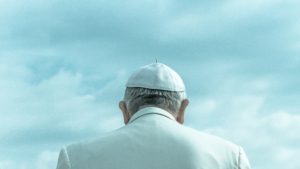
Pope Francis’ View on Poverty

Pope Francis' view on Poverty
The Roman Catholic Church has a following of approximately 1.2 billion people around the globe. Pope Francis currently stands as the 266th pope. Pope Francis’ view on poverty emulates the values of his namesake, St. Francis of Assissi, putting poverty relief at the forefront of his mission. Pope Francis has the power to bring together people from all over the world in order to combat global poverty.

Leading by Example

As the figurehead of a major global entity, Pope Francis has a tremendous influence on a significant number of people. Even before his election as pope, as the first pope from Latin America, Pope Francis had been exposed to poverty as a youth in his homeland. Born Jorge Mario Bergoglio, Pope Francis was born in Buenos Aires to Italian immigrants. Growing up in his native land of Argentina, Pope Francis saw the gap between the wealthy and impoverished widening drastically. This issue, occurring in several areas of the world, is a topic of concern for Pope Francis.

Poverty Reduction Efforts

Speaking on poverty, Pope Francis says, “There is such a large number of people who are on the margins. And we don’t see them because poverty is bashful. They have become part of the landscape; they are things.” As far as religious figures go, Pope Francis is notably unconventional. He calls on world leaders to fight poverty and hunger by readjusting the budgeting of tax dollars and redistribution of immense wealth in order to provide for the most at risk.

He also preaches about remaining true to an ascetic lifestyle, which means possessing the discipline to reject modern luxuries in the name of equality. For example, the title of cardinal is a tremendous honor in the Roman Catholic Church and is often cause for celebration. Practicing what he preaches, Pope Francis requested that those wishing to travel to the Vatican to witness his appointment to the position of cardinal not do so. Rather, Pope Francis suggested donating these travel funds to people most in need.

In March 2021, the Pope donated $350,000 while in Iraq, $250,000 of which went directly to families living in poverty. The Pope has also made significant donations toward the fight against COVID-19, particularly with the purchase of ventilators sent to several countries in need. Additionally, the Pope contributed to funding for medical supplies through donations to Colombia in April 2021 and Brazil in August 2021.

Calls to Action

Regardless of one’s belief system, it is easy to recognize the Pope’s humanitarianism simply by considering Pope Francis’ view on poverty. It is inspiring to have a leader who so valiantly fights for those in poverty. The Pope typically follows the teachings professed in the Gospel of Matthew, verse six, which states, “Beware of practicing your righteousness before other people in order to be seen by them, for then you will have no reward…” This means that the Pope does not make public the nature of his charity. The known instances of his charity are only public knowledge because of public statements made out of gratitude by the recipients. The Pope’s empathy and authenticity are notable features that are changing the world for the better.

It is easy to recognize injustice in the world, however, it is not always easy to remain steadfast in ethics and intervene in global poverty with bravery. In his speeches, Pope Francis declares that even the most ordinary individual can play a role in global poverty reduction.

– Michelle Schwab
Photo: Unsplash

November 11, 2021
https://borgenproject.org/wp-content/uploads/borgen-project-logo.svg 0 0 Kim Thelwell https://borgenproject.org/wp-content/uploads/borgen-project-logo.svg Kim Thelwell2021-11-11 00:07:102021-11-16 07:17:35Pope Francis’ View on Poverty
Children, Development, Education, Global Poverty, Health

Cambodia’s School Feeding Program Tackles Undernourishment

Cambodia’s School Feeding Program
In Cambodia, 15% of the population suffers from undernourishment and 32% of children younger than 5 experience stunting. Children are not consuming enough food and the food that they do consume does not have the nutrients necessary for healthy development. Considering these dire statistics, as early as 1999, the World Food Programme (WFP) committed to helping the Cambodian government provide school meals for children. Although combating undernourishment is a daunting task, Cambodia’s school feeding program has expanded over the years and is continuing to make a profound impact on Cambodian communities.

Food Production and Intense Weather: Food Security Challenges

One of the factors contributing to high undernourishment rates in Cambodia is limited production and efficiency in the agricultural sector. According to the United States Agency for International Development (USAID), “nearly 80% of Cambodians live in rural areas and 65% rely on agriculture, fisheries and forestry for their livelihoods.” At the same time, a fifth of the Cambodian population suffers from food deprivation. Although Cambodia has a large agriculture industry, the nation is not able to meet the needs of its people.

Challenges within agricultural production affect crop yields, and therefore, also affect the capacity to increase people’s access to food. In Cambodia, crop plots are small, leading to limited agricultural output. Additionally, many areas with rainfall-dependant crops do not receive consistent rainfall and these same areas are unable to produce during the dry season. Also, a growing number of rural Cambodians do not have access to cropland. These factors pose challenges to Cambodian farmers and agricultural production expansion.

Compounding issues of food insecurity and poverty further, Cambodia regularly experiences natural disasters. Monsoons are common, and on the opposite end of the spectrum, some areas experience severe droughts. The loss of land and the reduction in shared resources as a result of natural disasters harshly impact food-insecure Cambodians already in vulnerable positions.

Investing in Children and Communities Through Food

In 1999, the WFP began to support government-backed school meal programs, helping to implement these programs across 908 Cambodian schools. Pre-primary and primary schools provide meals, which is particularly important because children younger than 5 are especially vulnerable to the impacts of malnutrition.

In 2014, the WFP and the Cambodian government reached one of their goals for school meal programming, a “home-grown school meals model.” The model calls for schools to locally purchase ingredients for meals, which increases demand for and develops the local agriculture industry while spurring job growth. At first, a couple of schools tested the home-grown school meals model, and now, more than 200 schools implement the model.

The Benefits of School Meals

Cambodia’s school feeding program is an important source of food for Cambodian children, providing them with the nutrients necessary for healthy development. Before Cambodia’s school feeding program, some children were unable to eat during the school day because they did not have enough money to buy food at school. The implementation and growth of the school meal program mark an important investment in Cambodian children, especially as the Cambodian government works with the WFP in the transition to run the home-grown school feeding program on its own.

In Cambodia, school meals benefit children’s health and improve their engagement in school. An added and possibly unforeseen benefit of Cambodia’s school feeding program is that parent engagement with schools and teachers has increased. Through the program, parents have become more knowledgeable about nutrition, to the benefit of themselves and their children. Furthermore, parents are eager to get involved in the program. Parents, even the most impoverished ones, donate ingredients and money and volunteer when the program requires extra help. Parents even helped to build a kitchen in one of the participating schools.

Turning the Tide

Although Cambodia has high levels of undernourishment and challenges to its agricultural sector, the government is working hard to turn the tide. The school feeding program’s promising results and growth thus far exemplify how far Cambodia has come in tackling undernourishment and hunger, illustrating the far-reaching impacts of school meal programs. With continued efforts, Cambodia will begin to see reductions in its undernourishment statistics, especially among the youth, as Cambodia’s school feeding program continues to develop and benefit Cambodian children and communities.

– Anna Ryu
Photo: Unsplash

November 8, 2021
https://borgenproject.org/wp-content/uploads/borgen-project-logo.svg 0 0 Jennifer Philipp https://borgenproject.org/wp-content/uploads/borgen-project-logo.svg Jennifer Philipp2021-11-08 01:30:122021-11-05 07:32:27Cambodia’s School Feeding Program Tackles Undernourishment
Children, Development, Global Poverty, Health

COVID-19 Vaccinations in Seychelles

COVID-19 Vaccinations in Seychelles
Seychelles is an archipelago of 115 islands located at the eastern edge of the Somali sea and is home to Africa’s smallest nation with just 97,625 people. The tropical climate, white sand beaches and crystal-clear lagoons make it a popular vacation destination. However, like many tourist economies, Seychelles’ tourism sector struggled under COVID-19 pandemic restrictions on travel. But, thanks to an ambitious campaign, COVID-19 vaccinations in Seychelles is a success story, putting the island in the spotlight for holding one of the highest rates of vaccinations in the world. This is despite a May 2021 surge in infections that led to the reimposition of mandates (such as school closures and a ban on bars and nightclubs), causing global concern about the efficacy of vaccination programs.

Facts About COVID-19 Vaccinations in Seychelles

  • On January 10, 2021, COVID-19 vaccinations in Seychelles hit the news when the nation became the first in Africa to roll out the vaccine after receiving a donation of 50,000 doses of the Chinese-made Sinopharm vaccine from the United Arab Emirates (UAE). As part of an effort to bolster vaccine confidence, President Wavel Ramkalawan stood as “the first African head of state” to receive this particular vaccine, followed by former president Danny Faure and other senior officials.
  • On January 23, 2021, Seychelles received a second donation of COVID-19 vaccinations, this time from India: 50,000 doses of the Oxford-AstraZeneca vaccine, also known as Covishield.
  • Seychelles had vaccinated more than 60% of its population against COVID-19 by May 2021. Still, the country saw a sharp increase of new cases, from 120 new COVID-19 cases confirmed on April 30, 2021, to more than 300 cases per day recorded on May 7 and May 8, 2021.  More than a third of these new cases were among people who received two doses of the vaccine. The remaining cases were people who only received a single dose or no dose at all.
  • In September 2021, the U.S. Embassy to Mauritius and Seychelles announced the delivery of more than 35,000 doses of the Pfizer COVID-19 vaccine from the United States. The donation forms part of the Biden-Harris administration’s commitment to sharing the U.S. vaccine supply with countries worldwide.
  • According to the World Health Organization (WHO), between January 3, 2020, and October 21, 2021, Seychelles has recorded 22,071 cases of COVID-19 and 114 deaths. As of October 15, 2021, the nation has administered a total of 159,392 COVID-19 vaccines.

Paving the Path to Recovery

With a majority vaccinated population, Seychelles is open for business and welcomes foreign visitors. To protect Seychellois, the government requires a negative COVID-19 test for all arrivals to the islands, including fully vaccinated travelers. As Seychelles rebuilds its tourist industry, the government is making progress with strategies to diversify the economy and is calling on investors. In a July 2021 interview with China Global Television Network (CGTN), President Ramkalawan reported that Seychelles’ new economic plan emphasizes fisheries and agriculture, construction of hotels and the launching of fish processing facilities. Ramkalawan’s administration is actively seeking ways for Seychelles to “build itself anew” in order to create a balanced and robust economy. A successful and robust vaccination campaign has paved the way for Seychelles to rebuild and recover.

–  Jenny Rice
Photo: Flickr

November 7, 2021
https://borgenproject.org/wp-content/uploads/borgen-project-logo.svg 0 0 Kim Thelwell https://borgenproject.org/wp-content/uploads/borgen-project-logo.svg Kim Thelwell2021-11-07 01:30:572024-12-13 18:02:36COVID-19 Vaccinations in Seychelles
Child Poverty, Children, Global Poverty

Child Poverty in The Bahamas

the-bahamas-challenges-the-children-face
Of the several nations and the many diverse peoples of Central America and the Caribbean, The Bahamas is one of the most beautiful and iconic. Well known for its thriving tourist industry, many U.S. citizens visit this collection of islands on vacation. The Bahamas has continued to rise in GDP and other metrics of quality of life for its citizens due to its successful tourism industry and offshore financing industry. Despite the growth that The Bahamas continues to present, there have been some concerning trends that have threatened this. Specifically, there have been problems and uncontrollable circumstances that the children have had to face. These problems affect the country and its future. Amongst these struggles, external catastrophes hit many of the most vulnerable children hardest, exacerbating child poverty in The Bahamas. This includes Hurricane Dorian in 2018 and more recently, the COVID-19 pandemic.

Child Poverty Rates

The Bahamas’ poverty rate is comparable to some of its Caribbean neighbors. Studies found that 12.5% of the population is living under the poverty line with under $5,000 a year. Many of these households support children. Additionally, children under the age of 14 represent the group with the highest poverty rate in the country.

Without access to resources and basic needs, these children are likely to have trouble maturing. The lack of food, sleep and time for a developing child who poverty affects will directly affect their performance in academics, recreation, social interactions and other aspects of their life.

Blocks in Education

As The Bahamas has grown its economy and infrastructure its education systems have also grown to match. However, there has been an alarming disparity in the quality and access to education. The literacy rate in people over the age of 15 decreased from 98% in 1995 to 93% in 2020. Many have largely attributed this trend to the difference in the quality of education between private and public schools.

Public state-run schools have a graduation rate of 44% for boys and 51% for girls while the graduation rate is 87.6% for those in private institutions. The reason for this variance is the lack of funding and resources for teaching materials, school supplies, and internet access for those in public schools.

Home Situations

The Bahamas has a very low dual household dynamic. More than 50% of all children in The Bahamas are born out of wedlock and a single parent often raises them. This is a holdover from times when large families lived together, so children did not feel the absence of a parent so harshly. However, the commonality of this has faded.

Children that single parents raise, especially those suffering from poverty, have more developmental and material disadvantages in life. The education challenges and dropout rates among the youth of The Bahamas reflect this issue.

Children are the Future of The Bahamas

Help from NGOs and other countries has been stagnant because of the  COVID-19 pandemic and lack of awareness. Project Hope is an organization that has a consistent presence in The Bahamas, although there are no large organizations. However, Project Hope’s work should receive commendation and undergo replication because they have been instrumental in shedding light on the challenges that people in The Bahamas face.

Project Hope is an NGO that focuses primarily on health care needs and services. They have been bringing aid, resources and expertise to The Bahamas. Beginning after Hurricane Dorian, Project Hope has focused on providing health care services for children, including those who experience child poverty in The Bahamas. This helps the children to further their education.

The Bahamas has been in a vicious cycle of struggling children becoming struggling adults. Rather than beautiful beaches or offshore tax evasion, children are at once the most vulnerable and most valuable resource that The Bahamas has.

– John J. Lee
Photo: Flickr

October 30, 2021
https://borgenproject.org/wp-content/uploads/borgen-project-logo.svg 0 0 Jennifer Philipp https://borgenproject.org/wp-content/uploads/borgen-project-logo.svg Jennifer Philipp2021-10-30 19:27:142024-05-30 22:25:26Child Poverty in The Bahamas
Page 41 of 137«‹3940414243›»

Get Smarter

  • Global Poverty 101
  • Global Poverty… The Good News
  • Global Poverty & U.S. Jobs
  • Global Poverty and National Security
  • Innovative Solutions to Poverty
  • Global Poverty & Aid FAQ’s
Search Search

Take Action

  • Call Congress
  • Email Congress
  • Donate
  • 30 Ways to Help
  • Volunteer Ops
  • Internships
  • Courses & Certificates
  • The Podcast
Borgen Project

“The Borgen Project is an incredible nonprofit organization that is addressing poverty and hunger and working towards ending them.”

-The Huffington Post

Inside The Borgen Project

  • Contact
  • About
  • Financials
  • President
  • Board of Directors
  • Board of Advisors

International Links

  • UK Email Parliament
  • UK Donate
  • Canada Email Parliament

Get Smarter

  • Global Poverty 101
  • Global Poverty… The Good News
  • Global Poverty & U.S. Jobs
  • Global Poverty and National Security
  • Innovative Solutions to Poverty
  • Global Poverty & Aid FAQ’s

Ways to Help

  • Call Congress
  • Email Congress
  • Donate
  • 30 Ways to Help
  • Volunteer Ops
  • Internships
  • Courses & Certificates
  • The Podcast
Scroll to top Scroll to top Scroll to top