• Link to X
  • Link to Facebook
  • Link to Instagram
  • Link to TikTok
  • Link to Youtube
  • About
    • About Us
      • President
      • Board of Directors
      • Board of Advisors
      • Financials
      • Our Methodology
      • Success Tracker
      • Contact
  • Act Now
    • 30 Ways to Help
      • Email Congress
      • Call Congress
      • Volunteer
      • Courses & Certificates
      • Be a Donor
    • Internships
      • In-Office Internships
      • Remote Internships
    • Legislation
      • Politics 101
  • The Blog
  • The Podcast
  • Magazine
  • Donate
  • Click to open the search input field Click to open the search input field Search
  • Menu Menu

Archive for category: Child Soldiers

Child Soldiers, Global Poverty

The Much Needed Release of Child Soldiers

Since 2013, various countries have taken steps to end child soldiering in order to meet international human rights standards.

In accordance with these standards, the Tatmadaw, the Myanmar Armed Forces, has released 176 child soldiers since signing a joint action plan to end the recruiting of children for military service.

Earlier this year, Yemen signed an action plan with the United Nations to end recruitment of child soldiers and by doing so, “formalized its commitment to protect its future generations,” says Leila Zerrougui, the Special Representative of the Secretary-General for Children and Armed Conflict.

Similarly, UNICEF and partners arranged for the release of over 1,000 children from military service in the Central African Republic after the country made headlines earlier this year for having over 6,000 children involved in armed conflict.

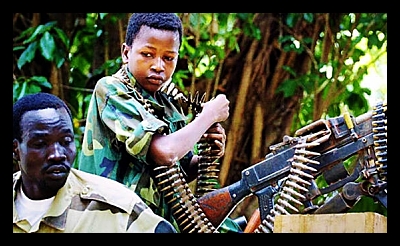
It is estimated that there are 300,000 child soldiers in the world today, and 40 percent of armed forces around the world use children to fight in their battles. Although the thought of a child soldier is foreign to Americans and citizens of developed countries, it is all too familiar to those of undeveloped nations. Child Soldiers International has reported that since January 2011, the use of child soldiers has been found in 19 different countries.

Children are taken by militias to fight because children are far more malleable than adults. They are also less costly due to the fact that they are given fewer resources and smaller weapons – although they are more likely to be seen on the front lines. Because of this, children are more likely to die in battle than adult soldiers.

Children who survive have lasting psychological effects, which include PTSD and stunted mental development. When there is failure to integrate back into society, there’s a likely chance these once child soldiers will return to battle because it’s all they’ve known.

If the children are released from duty with the help of UNICEF, like in the Central African Republic, they meet with social workers, are taken to a transition center where they can receive an education or learn a vocational skill and are given help in locating their families.

Upon the release of the child soldiers, UNICEF Representative in the Central African Republic Souleymane Diabaté said, “Every single child we spoke to said they wanted to leave the armed group and return to school. We cannot fail them.”

– Kori Withers

Sources: Child Soldiers International, Child Soldiers International: FAQ, Forbes, United States Institute of Peace, UN News Centre, UNICEF Press Centre 1, UNICEF Press Centre 2, UNICEF Connect
Photo: UN
August 29, 2014
https://borgenproject.org/wp-content/uploads/borgen-project-logo.svg 0 0 Borgen Project https://borgenproject.org/wp-content/uploads/borgen-project-logo.svg Borgen Project2014-08-29 03:00:272024-06-05 01:58:08The Much Needed Release of Child Soldiers
Child Soldiers, Children, War and Violence

10 Facts about Child Soldiers

child soldier facts -borgen project
When the word “soldier” comes to mind many people think of a strong heroic adult who is fighting for their country. Many people think of a soldier as a person who has voluntarily put their life at risk once again for their country. But many people when they hear the word “soldier” do not think of children. When people hear the words “kids or children” they often think of a young person in school who enjoys playing. People most often think of a child as a young person with few responsibilities and very little stress. But for millions of children around the world this is not the case, many of them are recruited by governments to fight in wars. They are called child soldiers.

Top 10 Facts about Child Soldiers:

  1. Child soldiers are children under the age of 18 who are recruited by armed groups who use children as shields, cooks, suicide bombers, fighters, spies, messengers and/or for sexual purposes.
  2. Some children are under the age of 10 when they are forced to serve.
  3. Children who are forced to serve as soldiers most likely are displaced, poor, have little access to education or live in war zones.
  4. Some children willingly volunteer themselves as child soldiers because they believe it will give them a form of income and/or security.
  5. 10 to 30 percent of kid soldiers are girls. They are used for fighting and are especially vulnerable to sexual violence they are also given to commanders as wives.
  6. The following countries have reported use of child soldiers since 2011: Afghanistan, Colombia, India, Iraq, Israel, Libya, Mali, Pakistan, Thailand, Sudan, Syria, Yemen and more.
  7. In 2007 there were between 7,000 to 10,000 child soldiers in combat although there was a government agreement in the District of Chad to demobilize the recruitment of child soldiers.
  8. Since there have been many technological advances in the making of war weapons they have been made real easy to use, which has contributed to the increase in child soldiers.
  9. Some child soldiers are forced to act violently against their families and communities to make sure they do not return home.
  10. Since 2001 child soldiers have been recruited in 21 armed conflicts all around the world.

Children’s childhoods and human rights are taken away once they are recruited to become child soldiers. Many of them are brainwashed to think it is okay to be serving in war zones at such a young age and often end up having psychological problems.

— Priscilla Rodarte

Sources: Human Rights Watch, Amnesty International, Do Something
Photo: IB Times


z1


July 11, 2014
https://borgenproject.org/wp-content/uploads/borgen-project-logo.svg 0 0 Borgen Project https://borgenproject.org/wp-content/uploads/borgen-project-logo.svg Borgen Project2014-07-11 09:21:322024-12-13 17:50:2410 Facts about Child Soldiers
Child Soldiers, Children, Global Poverty, Slavery

Eight Child Labor Facts

child labor facts
The act of using children for free or cheap labor has been around for centuries, and while it is not often brought up in conversation, this dirty little secret lives on in numerous countries, including the U.S.

Here are eight Child Labor facts from all over the world:

1.  Child labor is not just something that happens overseas
China, Asia and Africa are not the only nations that use children for cheap labor. Tobacco fields in the U.S. use young children to pick the plants. These children are exposed to dangerous pesticides and nicotine on a regular basis and sometimes get so sick they can hardly stand.

2. Child labor in tobacco fields is legal in the U.S.
The U.S. allows children as young as 11 to legally work in tobacco fields where they spray harmful chemicals so close to them they can hardly breathe. To put this in perspective: a child working in tobacco fields is illegal in countries like Russia and Kazakhstan, but is legal in the United States.

3.  Pakistan participates in selling children as slaves
Children in Pakistan can be sold by their parents or, more often, are abducted and sold into slavery to companies for profit. Companies that have utilized this backwards practice include Nike and the Punjub province, which is the largest seller of stitched rugs, musical instruments and sports equipment.

4.   Afghanistan gives away young girls to pay off debts
Another fact about child labor comes from Afghanistan where children make up roughly half of the population. Children often work in the textile industry, the poppy fields, cement and food processing. Parents may also sell their underage daughters into slavery in order to pay off a debt.

5.  Zimbabwe’s Learn as You Earn Program
The Learn as You Earn Program in Zimbabwe may not sound too bad at first glance, but it is another ploy to bring in children for cheap labor. The program brings children into the forestry and agricultural sectors so they can “learn” about those markets. Children often choose this in place of a formal education.

6.  Child Soldiers
Children who are displaced in war-torn countries like Afghanistan or Sudan are often put to work as child soldiers. These children are given guns and minor training and are told to defend their country. Some children may even be used as suicide bombers.

7.  Underage girls and sexual slavery
Young girls from all over the world who are either displaced by war, abducted while visiting foreign countries or even sold by their parents for money often find themselves in forced sexual slavery.  This problem is growing in Sudan, Somalia, Thailand, Japan, India and the United States.

8.  North Korea outlaws underage labor, continues to hire children
The government of North Korea officially outlawed child labor, but children still make up a large percentage of the people who work in factories. They also have labor camps where they send children to work in order to be re-educated for any type of political offenses.

These facts about child labor around the world can seem gruesome and a maybe a little far-fetched, but the point is that there are children who live these nightmares every single day.

– Cara Morgan

Sources: Business Insider, CNN, The Nation
Photo: Flickr

June 6, 2014
https://borgenproject.org/wp-content/uploads/borgen-project-logo.svg 0 0 Borgen Project https://borgenproject.org/wp-content/uploads/borgen-project-logo.svg Borgen Project2014-06-06 12:54:272019-08-21 10:51:12Eight Child Labor Facts
Child Soldiers, Global Poverty, Women and Female Empowerment

Mend: Restoring Hope One Stitch at a Time

After being abducted by Joseph Kony’s Lord’s Resistance Army (LRA) at the age of 13, Grace survived two years in the Northern Ugandan bush before she was able to escape. Today, Grace, among 22 other formerly abducted women, are employed as seamstresses by an organization known as Mend.

Since 1987, Kony’s army has abducted over 30,000 children, forcing them to become soldiers in his army or wives to his soldiers.

Grace, among thousands of other women, suffered the physical, emotional, and mental pain of being held captive by these men. Although the seamstresses were fortunate to escape, many were ostracized by friends and family upon return due to involvement with the rebels. In order to address these issues and work through traumatization, all of the women employed by Mend received three months of counseling and tailoring training through Invisible Children.

The Invisible Children is an organization that began in 2006 as an initiative to end the LRA conflict in Uganda. In addition to establishing numerous campaigns that rehabilitate and educate formerly abducted people, Invisible Children formed Mend as a social enterprise in 2009 in order to give women employment opportunities and create awareness around circumstances in Uganda.

As their Mother’s Day promotion, Mend seamstresses created beautiful limited edition clutches for women to receive on Mother’s Day. The clutches are a thoughtful gift for a mother that supports a mother in need.

In addition to clutches, MEND seamstresses, like Grace, also sew purses, handbags, and laptop sleeves all specifically designed by the Mend design team. Mend products range anywhere from $35 to $300. “It is an immense responsibility,” designer Juan-David Quinnones shared, “to make something that will last, add value to people’s lives, and tell an amazing story.” As Quinnones refers to, each bag shares a message from the woman who created it through a tag that has her picture and story on it.

When asked “Where did you get that great bag,” customers have the opportunity to share not only where their bag is from, but also who made it and why. Exchanges like these, thanks to Mend’s dedication, has transformed consumerism into a form of activism.

“One of our bottom lines is the growth of our seamstresses in all aspects of their lives,” professed Mend director Chris Sarette. In addition to the employment opportunity, Mend provides their seamstresses with a full-time social worker, literacy classes, and financial meetings to help the women grow holistically, for themselves and their families.

The Invisible Children Shop

– Heather Klosterman

Sources: Mend
Photo: MPc Magazine 

April 28, 2014
https://borgenproject.org/wp-content/uploads/borgen-project-logo.svg 0 0 Borgen Project https://borgenproject.org/wp-content/uploads/borgen-project-logo.svg Borgen Project2014-04-28 10:45:582024-05-26 23:29:26Mend: Restoring Hope One Stitch at a Time
Child Soldiers, Global Poverty, Human Rights

Human Rights Violations in Somalia for 23 Years

The history of human rights violations against Somali citizens by their government under the rule of Siad Barre contributed to an overthrow that forced him to flee in 1991. The subsequent power vacuum led to the Somali civil war that continues to rage on to this day. For over 23 years, Somalia has been ravaged by human rights abuses, war crimes and the lack of a developed justice system to deal with these issues.

The main players at this moment are the Islamic backed forces, al-Shabaab, and the pro-government forces, the Federal Republic of Somalia, Ethiopian troops and African Union troops operating under the African Union Mission to Somalia. While the faces have changed throughout the 23 year conflict, the main points of contention  remain the same.

The Islamic forces wish for the country to become an Islamic state ruled under Sharia law, while government forces aim for the country to follow through with the constitution that founded the federal republic in 2012. Major human rights violations are committed on both sides of the Civil War, limiting positive change in the country.

Human rights violations include indiscriminate attacks against civilians, displacement of persons, restrictions on humanitarian aid, rape, recruitment and use of child soldiers, unlawful killings and torture by armed groups and armed piracy off the Somali coast. Various treaties including the Geneva Convention and the Universal Declaration of Human Rights forbid the indiscriminate use of force against civilians. According to Amnesty International, “all parties to the conflict use mortars and heavy weapons in areas populated or frequented by civilians, killing and injuring thousands of people, many of which are women and children under the age of 14.”

The killings not only affect those being killed, but they also the education of the Somalis. A report by Amnesty International states that, “in Somalia’s capital, Mogadishu, many schools have closed down as students and teachers fear being injured and killed on their way to school.” These indiscriminate killings by forces on both sides will lead to the further destruction of the country and its future. The Somalis need to continue their education in order to push the country towards a better path.

The topic of child soldiers has gained popularity in the last few years due to campaigns such as “Kony 2012.” The use of child soldiers is not limited to Uganda, however, and Somalia is a prime example of the horrible atrocities that occur while using them. According to a January 2013 Human Rights Watch report, “al-Shabaab has increasingly targeted children for recruitment, forced marriage, and rape, and has attacked teachers and schools.”

However, government forces have also used child soldiers, as described later in the same article. “In July 2012, the TFG [Transitional Federal Government] signed a plan of action against child recruitment; yet the same month, 15 children were identified among a group of new recruits sent to a European Union-funded training in Uganda.” Abuses are occurring on on both sides of the conflict, and further action may need to be taken by outside parties.

The problems with human rights violations occurring in Somalia do not seem to be getting any better. Unfortunately, humanitarian access to those who need aid is limited at the moment because of restrictions from allies to the conflict, diversion of aid and insecurity. The few humanitarian workers still in the country are being targeted, further limiting access to much needed aid.

– Kenneth W. Kliesner

Sources: Amnesty International, Human Rights Watch, Human Rights Watch
Photo: Global Post

March 9, 2014
https://borgenproject.org/wp-content/uploads/borgen-project-logo.svg 0 0 Borgen Project https://borgenproject.org/wp-content/uploads/borgen-project-logo.svg Borgen Project2014-03-09 04:00:572024-05-26 23:17:43Human Rights Violations in Somalia for 23 Years
Activism, Child Soldiers, Children, Global Poverty

China’s Soldiers Have Grown, PLA Reports

china's soldiers
China’s People’s Liberation Army (PLA), the largest army in the world, recently released a report on the physical well-being of its troops. The study, published in the PLA’s official newspaper, reported that China’s soldiers have gotten physically bigger in recent years, growing .8 inches taller and two inches larger around the waist in the last 20 years.

While this increase in size has caused some problems with army equipment, experts are celebrating the news and attributing better nutrition in China for the growth.

Malnutrition has long been a problem in China, especially in rural areas. Poor Chinese soldiers were traditionally more likely to be malnourished and underweight. As China modernized, so did its military, which was forced to design its own military technology due to trade sanctions.

The equipment created during this period, however, is based on a now-outdated body type. Rifle butts are proving too short for soldier’s arms; tanks are becoming more crowded by the bigger average bodies of soldiers.

The United States military is experiencing similar problems, but it is largely due to higher obesity rates.

The size increase in both the U.S. and China is related to development. As China has modernized and become a wealthier nation, the Chinese population, including China’s soldiers, have become more nourished. In the case of the U.S., as nations move from middle-income to high-income status, obesity rates tend to increase.

Experts warn that as the nation continues to develop, China may be headed on the path towards an obesity problem.

According to the World Health Organization, only 5 percent of Chinese people are obese, but that figure can jump to 20 percent in certain parts of the country. Furthermore, 45 percent of Chinese men and 32 percent of women are overweight.

Youth in urban areas are those particularly represented in the increased obesity rates, with wealthier people having higher obesity rates than those with less money. This economic link to obesity is the opposite of many nations such as the U.S.

Along with greater wealth, access to fast food and better nutrition, placing less emphasis on physical activities starting in childhood is contributing to the average size increase of Chinese people.

Athena Foong of University of Southern California’s Institute for Global Health explains, “The only way people look at the way you advance in life [in China] is getting a better education so you can get a better job, and sports is not considered a job.”

Despite rising obesity rates, many Chinese people are also still going hungry. In China, there are roughly 12.7 million children with stunted physical growth caused by chronic nutritional deficiency in the first 1,000 days of life. In low-income, rural parts of the country, 10 percent of children under the age of 5 have stunted growth.

While these figures are concerning, they have also been steadily declining in recent decades. In 1987, 22 percent of Chinese people were underweight. This number decreased to 12 percent by 1992.

Improvements in the health of Chinese people have many causes including economic advances, better access to clean water, increased distribution of food and better health facilities and resources.

China’s rapid development has brought better health and nutrition to its populace, but as long as childhood malnutrition and obesity rates persist and rise, the nation will be combating development-related public health issues.

– Kaylie Cordingley

Sources: The Washington Post, Telegraph, UNICEF, Food and Agriculture Organization of the United Nations, World Health Organization, US-China Today, National Geographic, Financial Times
Photo: Growing Taller

March 1, 2014
https://borgenproject.org/wp-content/uploads/borgen-project-logo.svg 0 0 Borgen Project https://borgenproject.org/wp-content/uploads/borgen-project-logo.svg Borgen Project2014-03-01 04:00:122024-12-13 17:50:07China’s Soldiers Have Grown, PLA Reports
Child Soldiers, Children

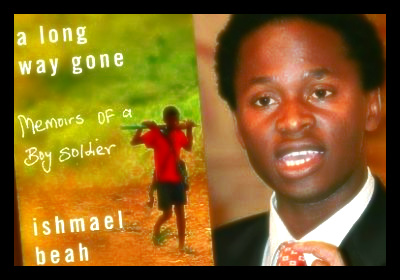
3 Extraordinary Former Child Soldiers

Ishmael_Beah_child_soldiers
These three African men have used their horrific childhoods as fuel for activism to heal and prevent the abuse of future children.

Ishmael Beah – Author and UN Ambassador

During Sierra Leone’s civil war, which lasted from 1991 to 2002, 12-year-old Beah became separated from his family and wandered the country with a group of other children. The group stumbled across a battalion of anti-rebel soldiers and the children were taken in and taught to kill.

Beah was rescued by UNICEF after living as a soldier for two years, and was taken to a rehab center where he struggled for eight months to remember who he was before the war. When he was 17, Beah was adopted by a member of UNICEF as a means to get out of Sierra Leone and attend school.

It was during his time at Oberlin College in Ohio that he wrote “A Long Way Gone: Memoirs of a Boy Soldier,” which Beah claims he never meant to publish, but wrote to “find a way to give the human context that was missing in the way the issue of child soldiers were discussed.” His book has become a best-seller, and Beah has recently released his second book, “Radiance of Tomorrow.”

Beah is now a UN ambassador for children affected by war, and he travels with UNICEF to work with former-child soldiers. He remembers what it was like to suddenly find himself expected to be a kid again, and he wants former child-soldiers to know that they have options – that they can choose to live a life devoid of war.

Ricky Anywar Richard – Founder of Friends of Orphans (FRO)

At 14, Ricky was forced to watch as his entire family was corralled into their house, locked in, and burned alive. He was then bound into a service of slavery for the Lord’s Resistance Army (LRA) of northern Uganda where he regularly witnessed torture, rape, and murder.

He was one of the few who managed to escape and, after obtaining his degree, he set up Friends of Orphans (FRO), an organization that works to reintegrate former child-soldiers back into village life and provide them with the therapy and education necessary to become peaceful members of society. So far, the organization has helped 25,000 children attend school and learn a trade.

The organization also educates those with HIV/AIDs on how to deal with their disease and prevent further transmission. They have distributed over 100,000 condoms since beginning the program.

FRO has been awarded the John Templeton Foundation ‘Freedom Award’ and Ricky was awarded the ‘World of Children Humanitarian Award’ for his tireless work to provide a life for those who’ve had theirs stolen by war.

Emmanuel Jal – Musician, Activist & Founder of Gua Africa

Growing up in south Sudan, Jal was 7 when his father left to join the Sudan People’s Liberation Army (SPLA), his mother was killed by soldiers and he saw his aunt raped. He was promised an education in Ethiopia as part of a group of kids, but upon arrival they were forced to become soldiers of the SPLA.

After nearly five years living as a soldier, Jal was rescued by British aid worker Emma McCune, who smuggled him into Kenya. When McCune was killed, Jal completed his education and now makes it his life’s work to share his story and is an advocate for the Make Poverty History campaign, the Coalition to Stop the Use of Child Soldiers and the Control Arms campaign.

Jal has made a name for himself as a recording artist, releasing the album ‘War Child’ as well as a film and autobiographical book both under the same name. He travels the world speaking on the global issues that have played a hand in his life, and he’s most recently appeared at the TED Global Conference in Oxford.

Jal stresses that education is the only way to move forward and prevent further genocides, and has founded Gua Africa, a foundation to educate children. After being disappointed with the level of donations he recently embarked to eat only one meal a day, something he says is regular for the people in his country, and he donates the unspent money to his own organization.

-Lydia Caswell

Sources: CNN, Gariwo , Friends of Orphans , Huffington Post , Emmanuel Jal, Gua Africa
Photo: Tallawah Magazine

February 15, 2014
https://borgenproject.org/wp-content/uploads/borgen-project-logo.svg 0 0 Borgen Project https://borgenproject.org/wp-content/uploads/borgen-project-logo.svg Borgen Project2014-02-15 05:05:402024-06-05 02:51:433 Extraordinary Former Child Soldiers
Child Soldiers, Human Rights

5 Facts about Child Soldiers

child soldiers
The subject of many a documentary, news report, and even novel, the figure of the child soldier emerged onto the global stage in the late 20th century, largely the result of publicized conflicts in places like Uganda and the Democratic Republic of Congo.  The heartbreaking and sometimes frightening images of children—almost all of them African boys—turned into violent killers captured the attention of many in the west.  Like most images, these tell only a part of the story.  Here are five important and sobering facts about child soldiers.

1. Not all child soldiers are African. The organization Child Soldiers International reports that “since 2000, the participation of these soldiers has been reported in most armed conflicts and in almost every region of the world.” No exact figures have been compiled, but some estimates put the number at 250,000 child soldiers currently fighting in conflicts around the world. Countries, where child soldiers can be found, include Afghanistan, Burma, Iraq, the Philippines, Colombia, Thailand, India, Somalia, and Yemen.

2. They do more than just fight. Child soldiers not only fight on the front lines, but they also serve as runners, spies, and in some cases human shields. Many of them are also sexually abused and exploited.

3. Not all child soldiers are boys. Girls under 18 are often recruited or captured during conflicts, and most of the time they suffer sexual abuse and exploitation. An estimated 40% of them are girls.

4. They are both recruited and forced into serving. Many soldiers are violently kidnapped and forced to serve in armies or in opposition groups.  Some, however, are drawn in because poverty and deprivation leave them vulnerable to the promise of money, food, and clothing if they take up arms. Desperation proves to be a powerful motivating force for some children.

5. They can be and have been rehabilitated. Despite the horrors they have suffered and in many cases committed, these soldiers are children forced or lured into war. Many organizations around the globe work to provide the therapy, medical attention, and education that these children need. Hundreds of former soldiers have benefited from this kind of care and been reunited with family members and loved ones.

– Délice Williams

Sources: Child Soldiers.org, Peace Direct USA
Photo: MW

July 3, 2013
https://borgenproject.org/wp-content/uploads/borgen-project-logo.svg 0 0 Borgen Project https://borgenproject.org/wp-content/uploads/borgen-project-logo.svg Borgen Project2013-07-03 16:25:372024-06-05 01:53:345 Facts about Child Soldiers
Page 6 of 6«‹456

Get Smarter

  • Global Poverty 101
  • Global Poverty… The Good News
  • Global Poverty & U.S. Jobs
  • Global Poverty and National Security
  • Innovative Solutions to Poverty
  • Global Poverty & Aid FAQ’s
Search Search

Take Action

  • Call Congress
  • Email Congress
  • Donate
  • 30 Ways to Help
  • Volunteer Ops
  • Internships
  • Courses & Certificates
  • The Podcast
Borgen Project

“The Borgen Project is an incredible nonprofit organization that is addressing poverty and hunger and working towards ending them.”

-The Huffington Post

Inside The Borgen Project

  • Contact
  • About
  • Financials
  • President
  • Board of Directors
  • Board of Advisors

International Links

  • UK Email Parliament
  • UK Donate
  • Canada Email Parliament

Get Smarter

  • Global Poverty 101
  • Global Poverty… The Good News
  • Global Poverty & U.S. Jobs
  • Global Poverty and National Security
  • Innovative Solutions to Poverty
  • Global Poverty & Aid FAQ’s

Ways to Help

  • Call Congress
  • Email Congress
  • Donate
  • 30 Ways to Help
  • Volunteer Ops
  • Internships
  • Courses & Certificates
  • The Podcast
Scroll to top Scroll to top Scroll to top