• Link to X
  • Link to Facebook
  • Link to Instagram
  • Link to TikTok
  • Link to Youtube
  • About
    • About Us
      • President
      • Board of Directors
      • Board of Advisors
      • Financials
      • Our Methodology
      • Success Tracker
      • Contact
  • Act Now
    • 30 Ways to Help
      • Email Congress
      • Call Congress
      • Volunteer
      • Courses & Certificates
      • Be a Donor
    • Internships
      • In-Office Internships
      • Remote Internships
    • Legislation
      • Politics 101
  • The Blog
  • The Podcast
  • Magazine
  • Donate
  • Click to open the search input field Click to open the search input field Search
  • Menu Menu

Archive for category: Charity

Aid, Aid Effectiveness & Reform, Charity, Global Poverty

5 Reasons to Donate Money, Not Stuff

Donate money, not stuffIn the midst of global tragedies, many charitable people decide to send old junk or underused resources to foreigners in need. Here are five reasons why one should donate money, not stuff if one wants to solve global hunger.


  1. “Junk” is a logistical nightmare for volunteers. The people brave enough to enter disaster sites must provide emergency care to people in immediate need. They lack the necessary time to sort, transport and store cheap diapers or old sweaters sent in by well-meaning folks. Yahoo Finance reports an incident where, in the aftermath of Hurricane Katrina, a benefactor sent thousands of pounds of cheese to New Orleans. The trouble was that no working refrigerator could hold such a gift. Lots of material goods appeal to a customer’s wants… they’re not so effective in situations of dire need.
  2. Material donations can wreck a nation’s economy. Kathleen Tierney, the director of a Natural Hazards Center in Colorado, notes how economic problems occur in recovering nations when supply outstrips demand. “If you want to see economic recovery, you don’t want to send so many supplies that you create a situation where people can’t survive in a business sense,” said Tierney. Ultimately, the best use of aid is to help a country until they can take care of themselves. It’s difficult to make one’s living selling T-shirts if a global superpower dropped off millions of shirts for one’s potential customers to wear for free.
  3. Local groups know what resources they need. The Central Texas Food Bank, the largest provider of emergency food distributions in the country, was shut down by flooding during 2017’s Hurricane Harvey. The group’s president, Derrick Chubbs, supports monetary donations instead of material aid. He reasons that relief groups in a disaster area know exactly what they need for certain situations. They only lack the funds to acquire the most helpful tools for the job. The chance to clean one’s house and accomplish a moral good is tempting for a lot of do-gooders. But one can achieve similar results by selling old junk to a consignment store (like Goodwill or Half-Priced Books) and donating the proceeds to a respected charity. With one additional step in giving aid, the effectiveness of a donation multiplies.
  4. “Stuff” is a short-term solution to a long-term problem. The media focuses on the immediate aftermath of a tragedy but often loses interest by the time victims have to return to their homes. Groups like the Salvation Army understand that maintaining emergency shelters and rebuilding destroyed sites takes a long time. This is why nonprofits want people to donate money, not stuff. Not only do charities know what to spend cash on, but they know how to divide that cash to ensure a complete job. Such relief groups cannot fix a community with a stuffed animal sent from across the country.
  5. It’s more effective to call/email your representative. So how can someone help if they feel they lack the money to keep themselves afloat? One free solution would be to contact your representative and ask that your government contribute aid to a country or region in need. The Center for Global Development reports that the U.S. donates only 1 percent of its budget towards International Affairs, which includes disaster relief. Not only can this amount be increased through advocacy, but concerned citizens can ask their representatives to support revenue-neutral bills to solve global problems. Anyone interested in this surprisingly easy path to advocacy should explore The Borgen Project’s page on calling Congress.

– Nick Edinger

Photo: Pixabay

November 12, 2017
https://borgenproject.org/wp-content/uploads/borgen-project-logo.svg 0 0 Borgen Project https://borgenproject.org/wp-content/uploads/borgen-project-logo.svg Borgen Project2017-11-12 01:30:262024-05-29 22:27:535 Reasons to Donate Money, Not Stuff
Charity, Global Poverty

Philanthropic Powerhouse Warren Buffett on Poverty Reduction

Warren Buffett

Warren Buffett is known for being on the top of the world’s most wealthy list. Today, he sits at number two on Forbes 2017 Billionaires List and runs the multinational Berkshire Hathaway conglomerate. While he may be most recognizable for his wealth, Buffett is a proven philanthropic powerhouse as well. He utilizes his status around the globe as a platform to promote his philanthropic movements and build support for global aid.

In 2006, Warren Buffett made the “the biggest single gift anyone ever gave anybody for anything” when he donated $30 billion to the Bill and Melinda Gates Foundation. In 2010, Buffett coupled with Bill Gates to build The Giving Pledge, which asks wealthy individuals around the world to join them in “publicly dedicating the majority of their wealth to philanthropy.”

This year, Buffett made his largest summer donation yet of nearly $3.2 billion in one day. Buffett is one of the most philanthropic individuals in the United States and his reputation amongst the wealthy serves to boost the motivation of others to donate.

On October 3, 2017, Warren Buffett spoke about the national poverty epidemic at the Purpose Built Communities conference in Omaha. At the meeting, Buffett called on the “government and philanthropists (to) do more to ensure that poverty doesn’t remain a barrier success.”

Buffett’s call to action is not lost on the global poverty front. As part of the 1 percent of the world that owns more than the other 99 percent, Buffett’s words reverberate around the world. His recognition of the importance of government and philanthropist involvement is something that should spark action worldwide, leading to global changes in poverty reduction efforts.

Reducing poverty is a multi-faceted, multi-dimensional and cross-sectional goal that requires the support of all able members of societies. Buffett’s involvement with the Gates Foundation and The Giving Pledge exemplify his understanding of the collective power. Buffett has pledged to give more than 99 percent of his fortune to charity and has garnered similar pledges from over 170 donors in 21 countries.

With the promises of other wealthy individuals, Gates and Buffett have collected funds for humanitarian efforts around the world. His partnership with Bill Gates augments the publicity for their mutual missions to combat global issues such as poverty, hunger and human rights.

By funding and creating charity-focused endeavors, Buffett has proven his status as a powerhouse in the philanthropy sector. Buffett’s notoriety and wealth bring attention to his actions and put a global spotlight on his philanthropic efforts, to garner support for poverty reduction and encourage global humanitarian movements.

– Eliza Gresh

Photo: Flickr

November 4, 2017
https://borgenproject.org/wp-content/uploads/borgen-project-logo.svg 0 0 Borgen Project https://borgenproject.org/wp-content/uploads/borgen-project-logo.svg Borgen Project2017-11-04 01:30:482019-12-29 17:55:24Philanthropic Powerhouse Warren Buffett on Poverty Reduction
Charity

Nathan Fillion Supports the Sawla Children’s Home

Nathan Fillion Supports the Sawla Children's Home

Actor Nathan Fillion spent much of July 17 on Twitter personally thanking donors to the Sawla Children’s Home. In May, he announced the chance to “Win A Shiny Birthday Lunch” through a special Prizeo sweepstake. Everyone who donated $10 or more was entered to win a ticket to Los Angeles and Facetime with Fillion on his birthday.

With true fundraising prowess, Fillion offered a slew of services to his donors, including thank you videos, voicemail messages, merchandise and personal tweets. Close to 1200 donors left comments on Prizeo thanking Fillion for supporting Sawla Children’s Home.

The International Assistance Program

The Sawla Children’s Home is one of the six main projects of the International Assistance Program, also known as iAssist. iAssist is a faith-based nonprofit which seeks to meet the needs of impoverished communities. In addition to the Children’s Home in Ghana, they sponsor a school for indigenous Guatemalans, a loan agency in Ethiopia, family services in Costa Rica and international sustainable water solutions.

Problems Facing Children’s Homes in Ghana

According to a report by the Department of Social Welfare, child care across Ghana suffers from institutional failures. Many children’s homes are unauthorized by the government, under-trained and use unreliable sources of income. They also have unreliable strategies for transitioning residents out of foster care. This is partly because Ghana lacks quality training programs and the government has an overall lack of political will to institute changes. As a result, the local communities are disinterested in supporting children’s homes. The DSW also reports cases of neglect within existing facilities.

Sawla Children’s Sustainable Practices

The Sawla Children’s Home began in 2007. Ten years later, they report well-fed, healthy residents who are excelling in school and impacting their local community. As a successful facility, the Sawla Children’s Home models unique strategies that help to overcome the institutional failures common in Ghana.

This success is largely due to its sustainability initiatives. Three main projects support the Children’s Home: farming, a tractor business and a van business.

  • Van business: The Sawla Children’s Home owns a 15-passenger van. The van becomes a sort of taxi for local points of interest. In particular, the van regularly takes tourists to the region’s national parks.
  • Tractor business: In addition to selling surplus crops at the local market, Sawla Children’s Home contributes to food security in the region by leasing their tractor. When it is not in use, the tractor travels to local farms as a method of generating revenue. The secondary consequence is that all farms in the region are able to produce more crops.
  • Farming: The Sawla Children’s Home uses a 20-acre farm to grow maize, yams, cashews and mangoes. They use these crops to feed residents and sell the surplus. This also teaches residences basic agricultural principles that can be used when they exit the program.

How Sustainability Overcomes Institutional Failures

These sustainable initiatives are an important tactic for overcoming institutional failures common throughout Ghana. First, they provide reliable sources of income. Second, they teach residents practical life skills like farming and business. Third, they foster respect for the local community.

In turn, this means that the Sawla Children’s Home can afford trained staff members. Access to quality nutrition gives students an advantage in school. That advantage, along with the skills they learn from these initiatives, aides in transitioning into the community. Finally, as residents leave the Children’s Home successfully, they will place a higher value on their experiences. This means that when they become community members, they are more likely to promote the interests of the foster care sector and overcome stigmas preventing the community from caring for its orphans.

– Brandon J. White

Photo: Flickr

October 22, 2017
https://borgenproject.org/wp-content/uploads/borgen-project-logo.svg 0 0 Borgen Project https://borgenproject.org/wp-content/uploads/borgen-project-logo.svg Borgen Project2017-10-22 07:30:312024-06-05 23:55:31Nathan Fillion Supports the Sawla Children’s Home
Aid, Charity, Global Poverty

BOBS for Skechers Charitable Program Helps Children in Need

Skechers Shoes Leave a Charitable FootprintAlong with a reputation for designing comfortable performance shoes, Skechers is a brand praised for its philanthropic efforts. In the past year, through the BOBS for Skechers charitable program, more than 13 million pairs of new shoes have been donated to children in need around the world as well as throughout the nation, reaching those struggling with poverty, homelessness and natural disasters.
Skechers shoes leave a charitable footprint through its BOBS for Skechers charitable program, in collaboration with charities such as Delivering Good, Inc. and Soles4Souls. Delivering Good, Inc. (formerly K.I.D.S./Fashion Delivers) is a nonprofit that accepts donations in the fashion, home and children’s industries, which are then sent to help millions of kids, adults and families facing poverty and disaster. Since 1985, over $1.6 billion of donated products have been distributed through the charity’s network of community partners. Delivering Good, Inc. has been a partner of Skechers for five years and has distributed a total of 7.5 million pairs of shoes in that period to organizations domestically and internationally.

Founded in 2006, Soles4Souls has distributed more than 30 million pairs of shoes in 127 countries and all 50 U.S. states. Skechers, through its alliance with Soles4Souls, provides short-term relief and long-term solutions to individuals without access to a good pair of shoes. Every day children are kept from attending school and adults are unable to work because of the burden of walking without proper shoes, and a single pair has the power to provide relief in many developing nations around the globe. Furthermore, Soles4Souls states, “Our micro-enterprise model provides entrepreneurs the ability to start small businesses by providing a steady supply of high-quality, low-cost product; a powerful and sustainable way for people to lift themselves and their families out of poverty.”

In addition to working with various charities, Skechers involves celebrities in the process to help raise awareness about the brand and its mission to give back. Singer-songwriter Camila Cabello is the latest celebrity to work on a campaign with Skechers. The 20-year-old recently took to Twitter to share her upcoming involvement with the brand, on which she expressed, “One of the things that attracted me to Skechers is their philanthropic efforts to children in need and animals in need… because that’s something that’s important to me and close to my heart.”

Through its nonprofit partners and millions of donations, Skechers helps deliver individuals from extreme poverty, even in the simplest of ways. The Skechers movement has reached children and adults struggling with a variety of circumstances across the nation and in more than 30 countries worldwide, helping each of them one step at a time.

– Mikaela Frigillana

Photo: Flickr

September 8, 2017
https://borgenproject.org/wp-content/uploads/borgen-project-logo.svg 0 0 Borgen Project https://borgenproject.org/wp-content/uploads/borgen-project-logo.svg Borgen Project2017-09-08 01:30:592020-07-08 08:04:27BOBS for Skechers Charitable Program Helps Children in Need
Aid, Charity, Global Poverty

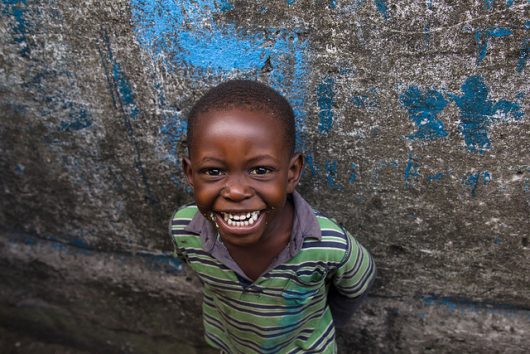
How to Help People in Liberia

Help People in LiberiaApproximately 64 percent of Liberians live below the poverty line. Liberia is ranked at 182 out of 187 in the human development index. This poverty is caused by lack of sufficient farming methods, little to no access to healthcare and lack of political power. Here are some solutions for how to help people in Liberia.

How to help people in Liberia starts with the food insecurity rate. Chronic malnutrition is high, 41 percent of Liberians are considered food-insecure. Farmers that can barely support their own families are common in Liberia, this has led to more than one-third of the population being malnourished. More effective measures of farming need to be put in place to help people in Liberia.

The country has plentiful rainfall and good soil, yet it is not being used effectively. The government of Liberia has granted large plots of land to multinational companies for rubber, timber and palm oil. This has reduced opportunities for farmers to produce large amounts of food at a rapid pace. Agricultural reform needs to be made in order to fix the measures of farming and the allocation of land.

More than 75 percent of the population has little to no access to referral care services. The health care system in Liberia is heavily dependent on aid from outside resources. USAID funded Rebuilding Basic Health Services (RBHS), and since 2008, RBHS has been working closely with the Liberian Ministry of Health and Social Welfare to rebuild the health system in Liberia.

Training organized groups and volunteers, investing in basic infrastructure, and supporting the prosperity of the health system are crucial. Interventions must be put in place to develop a line of communication with village chiefs, community health committee members and political representatives. A multi-faceted approach is necessary when addressing the health system in Liberia.

Poor conditions Liberia can be traced back to the military coup in 1980. An absence of political stability in any country causes conflict and poor conditions. In Liberia’s case, being unable to change economic conditions through political activism condemns the poor to stay poor. Lack of opportunity alone does not cause poverty, it is also a lack of political power to change the systems and practices that cause impoverishment.

How to help people in Liberia starts with knowledge and action, both being essential factors. Influencing public policy, financial contributions and working directly with the poor are all impactful. Even though Liberia has not had a prosperous history, there are many successful programs that are encouraging future growth for this West African country.

– Lucy Voegeli

Photo: Flickr

August 13, 2017
https://borgenproject.org/wp-content/uploads/borgen-project-logo.svg 0 0 Borgen Project https://borgenproject.org/wp-content/uploads/borgen-project-logo.svg Borgen Project2017-08-13 07:30:242024-05-28 00:15:25How to Help People in Liberia
Aid, Charity, Global Poverty

Best Ways to Help the Homeless

How to help the homelessThe most recent global homelessness survey was conducted in 2005 by the United Nations. It estimated that about 100 million people were homeless worldwide. According to Habitat for Humanity, as many as 1.6 billion people around the globe lacked adequate housing 10 years later, in 2015. The United States is pushing to provide adequate housing for all of the poor in the country, but what are some other basic ways that everyone could help the homeless globally?


Top 3 Ways to Help the Homeless


  1. End stereotypes and stigma. The first step in helping the homeless is understanding who they are. You can help the homeless by dispelling the stereotypes and stigmas surrounding homelessness and learning about the reasons why people become homeless, remembering that everyone and every situation is unique. According to the National Coalition to End Homelessness, the top five reasons that people fall into homelessness are a lack of affordable housing, a lack of a living wage, domestic violence, medical bankruptcy and mental illness. Many people have a difficult time getting past the many negative stereotypes that burden the homeless population. They also have trouble sympathizing with the homeless population because of these stereotypes. Educating others is as simple as correcting someone who expresses a homelessness stereotype, or talking with local publications about the problems homeless people face.
  2. Support nonprofits. To help the homeless, you can also support nonprofit organizations by donating money and clothing that will aid their projects and their missions. This is usually the easiest way to help. It ensures that social workers and professionals who best understand how to help the homeless will have the resources necessary to do their important work. Donating used items or new items is another easy way to help. These items can be donated to local organizations that house the homeless or otherwise support them. Additionally, you can always support your local homeless population by donating items directly. If you can’t donate money or goods, you can sign up to volunteer with a nonprofit organization. You can also encourage local publications to publish information about shelters. Many people are unaware that there are shelters for the homeless in their communities. To help the homeless, contact local papers, religious institutions and the editors of local civic group newsletters and ask if they would consider running a weekly or monthly listing of local services available to the homeless.
  3. Be an advocate. To help the homeless from a political standing, you can support mental health services. Mental health problems can be both a cause and an effect of homelessness. One of the best ways to make a difference for homeless people is to encourage and support access to free or low-cost mental health services and make sure that your politicians are encouraging other countries to do the same and discussing it at summits.You can support affordable housing initiatives, free and low-cost health care, day shelters and local libraries where people can research jobs and places to find help. Basic medical care is also a huge problem for homeless people. They are more prone to serious health problems but are stuck in a position where they cannot afford help. Day shelters are another service which can help homeless people get back on their feet. They give people a safe place to stay and store their things. Day shelters are uncommon, so if your city doesn’t have one, talk to your local city councilors or mayor about establishing one.

If the world works together to solve our poverty problem, we can help the homeless. To do this, people around the globe must first educate themselves about each issue and push for legislation that will improve the lives of the homeless population. Continuing to dispel stereotypes and volunteering time and items for nonprofit organizations are important steps to improve lives of others and make the world a better place.

– Rilee Pickle

Photo: Flickr

August 13, 2017
https://borgenproject.org/wp-content/uploads/borgen-project-logo.svg 0 0 Borgen Project https://borgenproject.org/wp-content/uploads/borgen-project-logo.svg Borgen Project2017-08-13 01:30:222024-05-28 00:15:24Best Ways to Help the Homeless
Aid, Charity, Global Poverty

Three Organizations That Help People Without Shoes

Three Organizations That Help People Without ShoesShoes are much more than a fashion statement. Shoes play a major role in granting people health and access to opportunities. Several nonprofits and charities work to give shoes to people who need them. Before learning about three organizations that help people without shoes, here is why living barefoot is problematic and even deadly.

Across the world, around 300 million people cannot afford shoes. Shoes are often part of a school or work uniform, so without shoes, children and adults have a harder time getting an education or contributing to the household income.

In addition, going barefoot presents a number of hazards, from burns and injury to catching an illness or fungus. Any one of these dangers could negatively impact someone by keeping them sick at home or in a hospital.

More than 20 million orphaned children are without shoes in sub-Saharan Africa, where temperatures frequently rise above 100 degrees Fahrenheit. These harsh temperatures can be physically agonizing to bare feet.

Orphaned or homeless children who are shoeless can be at further risk of injury if they search for food or other items in places like abandoned buildings and garbage dumps. They could step on glass, nails and other sharp objects that could cause an infection.

People without shoes, especially in underdeveloped areas of Africa and Asia, are also susceptible to hookworm disease. A hookworm burrowing into the foot causes this parasitic disease. Hookworms live in soil or water contaminated by feces.

Without treatment, hookworm disease and other parasitic infections can lead to chronic illness, amputations and death. Hookworm disease has adverse effects on school performance, childhood growth, work productivity and pregnancy, according to the World Health Organization.

Here are three organizations that help people without shoes.

  1. The Shoe That Grows
    This organization believes in “putting kids in the best possible position to succeed.” It provides long-lasting shoes to children in need. It’s adjustable, expandable shoe design solves the problem of kids quickly outgrowing their shoes and needing new ones. The Show That Grows is working toward producing shoes in countries that need shoes and jobs, such as Haiti and Ethiopia. The organization works with partners that distribute the expandable shoes to underserved communities on every continent except Antarctica.
  2. The Shoe Project
    Shoes are not just a dream for people in underdeveloped countries. Some homeless people and others living in poverty in the United States need shoes to stave off extreme temperatures and infection, as well as to help them get back on their feet. The Shoe Project works around the world and in its home city of Cincinnati. In addition to breaking down education barriers and improving health, the organization believes “new footwear empowers people psychologically and economically to find a job.” With a new pair of shoes, people can regain confidence and find opportunities.
  3. Souls4Soles
    This nonprofit began as a disaster relief agency, distributing shoes to people impacted by natural events like tsunamis and hurricanes. Today it has expanded distribution year-round. Souls4Soles accepts all kinds of shoes and sends good quality ones to distribution centers in 127 countries. Shoes in need of repair are sent to micro-enterprise programs where workers clean and refurbish the shoes to sell in their small businesses. The Souls4Soles website says donations provide a constant supply of product to thousands of entrepreneurs, which allows them to sustain their businesses and rise out of poverty.

These three organizations that help people without shoes, as well as several others around the world, have helped millions of children and adults that cannot afford the basic necessity of footwear. The shoes can change the life of someone living in poverty by allowing them to go to school or work, safeguarding them from injury and infection and giving them the confidence they need to take hold of their future.

– Kristen Reesor

Photo: Google

August 12, 2017
https://borgenproject.org/wp-content/uploads/borgen-project-logo.svg 0 0 Borgen Project https://borgenproject.org/wp-content/uploads/borgen-project-logo.svg Borgen Project2017-08-12 01:30:372024-05-28 00:15:20Three Organizations That Help People Without Shoes
Aid, Charity, Global Poverty

Rafiki Bracelets Are Changing Lives Around the World

Rafiki Bracelets
On a normal day in rural Kenya, women in this poverty-stricken nation seek to better their lives. The solution they’ve discovered is surprisingly simple; these women make “Rafiki Bracelets.” These bracelets are sold in developed nations, and the proceeds help rural villages in Kenya.

The word “Rafiki”—probably best known from the character Disney’s The Lion King—is Swahili for “friend.”

Rafiki bracelets are a part of the Me to We program, a social enterprise system that allows impoverished individuals to make certain goods (in this case bracelets). In turn, Me to We makes a donation to certain life-changing initiatives, like clean water or education.

The Me to We program makes donations to six different programs:  health, food, opportunity, education, freedom and water. Some initiatives are fairly straightforward, like providing access to primary education, clean water, and clean food. Others, however, are not. The “opportunity” initiative helps women in impoverished nations with financial planning. The “freedom” initiative allows American students to help combat poverty.

Cinemark movie theaters sell Rafiki bracelets in their lobbies and even advertise the bracelets with an infomercial before the screening of films. This is a great way for this social enterprise to reach a larger audience. By advertising before feature films, the Me to We program can reach those who otherwise may never hear of their programs.

Additionally, celebrities like Pretty Little Liars star Shay Mitchell wear Rafiki bracelets as a way to raise awareness. Mitchell has been quoted as saying, “I’m almost never without a Rafiki around my wrist. It looks cool, reminds me to live my life with a sense of gratitude, and is a symbol of the power we all have in our wallets to change the world.”

Rafiki bracelets are a great way for social enterprises to educate the public on global poverty. Due to their efforts, the plight of the world’s extreme poor reaches the world’s developed nations.

– Raymond Terry

Photo: Flickr

July 28, 2017
https://borgenproject.org/wp-content/uploads/borgen-project-logo.svg 0 0 Borgen Project https://borgenproject.org/wp-content/uploads/borgen-project-logo.svg Borgen Project2017-07-28 07:30:092024-05-28 00:03:26Rafiki Bracelets Are Changing Lives Around the World
Aid, Charity, Global Poverty

10 Books About Nonprofits to Change Your Mind


Within the world of nonprofit work, many have incredible stories to share that expand others’ perspectives. Here is a list of books about nonprofits specifically focused on global poverty. Some are about what inspired certain organizations, some about the work that they do and some about behind-the-scenes logistics.

  1. “Mountains Beyond Mountains: The Quest of Dr. Paul Farmer, A Man Who Would Cure the World” by Tracy Kidder; Founder of Partners in Health, Paul Farmer is a believer in change when change seems impossible. This book describes Farmer’s pursuit of improving global health by working in places from Harvard to Peru and Haiti. His goal is to cure the world because “the only real nation is humanity.” For a list of books about nonprofits, this one is a must.
  2. “Pathologies of Power: Health, Human Rights and the New War on the Poor” by Paul Farmer; Paul Farmer’s own book details his personal experiences working in developing countries. He describes the social and economic injustice that the poorer citizens of the world face and explains why it should be among everyone’s priorities to help. He writes with optimism, believing that our sense of justice will evolve with medical and social technology.
  3. “The Blue Sweater” by Jacqueline Novogratz; By blending personal stories and theory, Jacqueline Novogratz’s memoir demonstrates her approach to ending world poverty. Moving from credit analysis to nonprofit work, she started the Acumen Fund, which invests in ideas and companies fighting against poverty. She illustrates the global reach of the need for this kind of work by using personal stories from her travels.
  4. “Three Cups of Tea: One Man’s Mission to Promote Peace…One School at a Time” by Greg Mortenson; This is the story of one man’s journey from mountaineering to the school building in Pakistan. Mortenson’s 55 schools, many for girls, offer education in a dangerous place and illustrate the power one individual can have for change.
  5. “Out of Poverty: What Works When Traditional Approaches Fail” by Paul Polak; Polak focuses on a grassroots approach to ending poverty based on his 25 years of experience. He wants to help those who make less than a dollar per day stand on their own two feet rather than have developed countries swoop in and save them. His approach involves low-cost and innovative ways to implement change.
  6. “Managing to Change the World: The Nonprofit Manager’s Guide to Getting Results” by Alison Green and Jerry Hauser; Another highlight of management on the list of books about nonprofits, this one focuses on getting results through effective management skills. It reminds us that office work can be just as important as getting dirty on the ground.
  7. “Forces for Good: The Six Practices of High-Impact Nonprofits” by Leslie R. Crutchfield, Heather McLeod Grant and J. Gregory Dees; This book discusses the six characteristics that make 12 different nonprofits successful, especially when one looks at their levels of impact. Big or small, organizations can apply these six ideas to their own work, especially in the wake of the global recession.
  8. “Good to Great: Why Some Companies Make the Leap…and Others Don’t” by Jim Collins; As the title suggests, this book outlines certain companies that were able to go from average to amazing. Collins and his research team list seven characteristics that helped these companies build strong and long-term foundations for success.
  9. “The Networked Nonprofit” by Beth Kanter and Allison H. Fine; In today’s society, businesses rely heavily on social media to engage consumers, and nonprofits are no exception. In terms of books about nonprofits, this is another that focuses on management. Social media can be a great tool for raising awareness as well as fundraising and reaching donors.
  10. “A Fistful of Rice: My Unexpected Quest to End Poverty Through Profitability” by Vikram Akula; This personal story about the intersection between philanthropy and capitalism shows how business ideas can be applied to global problems. Akula writes about using capitalism to transform many of India’s poor citizens first into first consumers and then into business owners.

Everyone has a book, movie or song that completely changed the way he or she sees the world. Perhaps it was a particularly inspiring character or a plot that defied imagination. Often the most amazing stories humans tell each other are true.

– Ellen Ray

Photo: Flickr

July 14, 2017
https://borgenproject.org/wp-content/uploads/borgen-project-logo.svg 0 0 Borgen Project https://borgenproject.org/wp-content/uploads/borgen-project-logo.svg Borgen Project2017-07-14 07:30:592024-05-28 00:02:3110 Books About Nonprofits to Change Your Mind
Aid, Charity, Global Poverty

How to Score a Ticket to the Global Citizen Festival


The Global Citizen Festival launched in 2012 as part of the Global Poverty Project, founded by Hugh Evans and Simon Moss. The movement is based on an online platform and mobile application that utilizes the power of education, communications, advocacy, campaigning and the media to take action against extreme poverty. The Global Poverty Project partners with other organizations such as UNICEF, OXFAM, ONE, Save the Children, The Global Fund and more.

The result of last year’s festival was 1.3 million online actions taken, leading to 44 commitments and announcements. Combined, these announcements are worth $1.9 billion and could impact 199 million people, just from the Global Citizen Festival of 2016 campaign. Commitments have not only been made by U.S. companies such as Walmart, UPS and Johnson & Johnson but also by nations such as the Netherlands and Canada.

With more than 60,000 participants attending the first festival on the Great Lawn in Central Park, the event quickly became popular. In 2016, the performance lineup included Rihanna, Demi Lovato, Kendrick Lamar and Metallica. There were also special guests like Coldplay’s Chris Martin. The band headlined the previous year and Martin is the current Global Citizen Festival curator.

The festival is free, but spectators cannot just attend. Instead, fans must engage with campaigns in order to win Global Citizen Festival spots. Activists can accumulate points that act as currency to bid on tickets to the Global Citizen Festival and other live events. The restriction is that only current campaign points can be used during each campaign.

For the upcoming July Global Citizen Festival in Hamburg, Germany, the organizers plan on handing out 9,000 free tickets to the show to people who sign up and pledge action.

“In bringing the Global Citizen Festival to Germany for the first time, we are calling on the G20 to take action and responsibility for moving forward on the Global Goals,” Global Citizen CEO Hugh Evans said.

– Stefanie Podosek

Photo: Flickr

July 13, 2017
https://borgenproject.org/wp-content/uploads/borgen-project-logo.svg 0 0 Borgen Project https://borgenproject.org/wp-content/uploads/borgen-project-logo.svg Borgen Project2017-07-13 01:30:452020-06-08 08:44:52How to Score a Ticket to the Global Citizen Festival
Page 28 of 42«‹2627282930›»

Get Smarter

  • Global Poverty 101
  • Global Poverty… The Good News
  • Global Poverty & U.S. Jobs
  • Global Poverty and National Security
  • Innovative Solutions to Poverty
  • Global Poverty & Aid FAQ’s
Search Search

Take Action

  • Call Congress
  • Email Congress
  • Donate
  • 30 Ways to Help
  • Volunteer Ops
  • Internships
  • Courses & Certificates
  • The Podcast
Borgen Project

“The Borgen Project is an incredible nonprofit organization that is addressing poverty and hunger and working towards ending them.”

-The Huffington Post

Inside The Borgen Project

  • Contact
  • About
  • Financials
  • President
  • Board of Directors
  • Board of Advisors

International Links

  • UK Email Parliament
  • UK Donate
  • Canada Email Parliament

Get Smarter

  • Global Poverty 101
  • Global Poverty… The Good News
  • Global Poverty & U.S. Jobs
  • Global Poverty and National Security
  • Innovative Solutions to Poverty
  • Global Poverty & Aid FAQ’s

Ways to Help

  • Call Congress
  • Email Congress
  • Donate
  • 30 Ways to Help
  • Volunteer Ops
  • Internships
  • Courses & Certificates
  • The Podcast
Scroll to top Scroll to top Scroll to top