• Link to X
  • Link to Facebook
  • Link to Instagram
  • Link to TikTok
  • Link to Youtube
  • About
    • About Us
      • President
      • Board of Directors
      • Board of Advisors
      • Financials
      • Our Methodology
      • Success Tracker
      • Contact
  • Act Now
    • 30 Ways to Help
      • Email Congress
      • Call Congress
      • Volunteer
      • Courses & Certificates
      • Be a Donor
    • Internships
      • In-Office Internships
      • Remote Internships
    • Legislation
      • Politics 101
  • The Blog
  • The Podcast
  • Magazine
  • Donate
  • Click to open the search input field Click to open the search input field Search
  • Menu Menu

Archive for category: Charity

Charity, Global Poverty, Humanitarian Aid

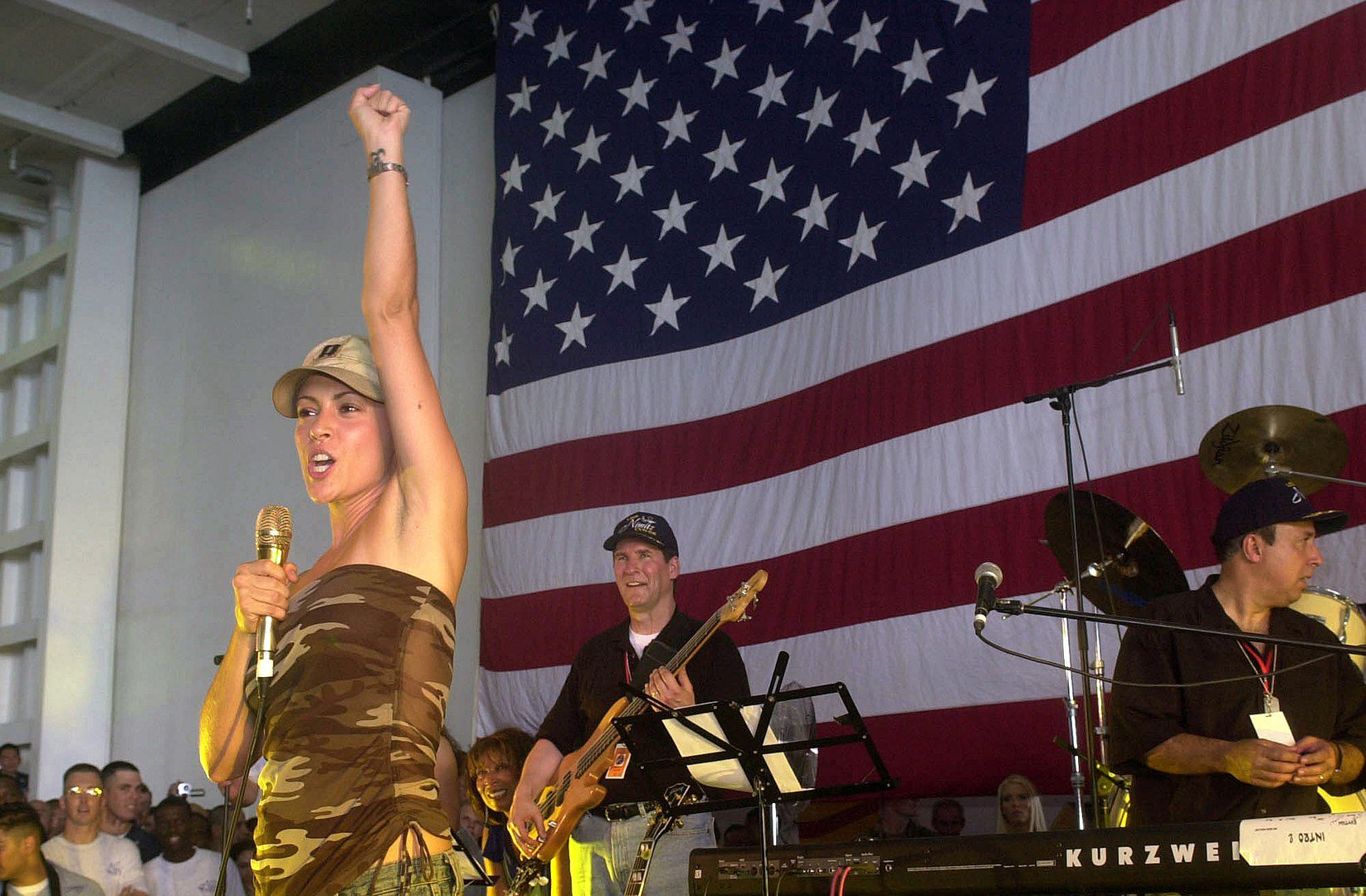
The Humanitarian Efforts of Alyssa Milano

Humanitarian Efforts of Alyssa MilanoEver since she was a child, Alyssa Milano has spent almost all of her entire life in the public eye. Memories of “Who’s the Boss?” and “Charmed” come to mind when recalling her television career. Moreover, of late, Milano was featured prominently at the Brett Kavanaugh Supreme Court hearings, along with involvement in the #MeToo movement. Few know that Alyssa Milano is a philanthropist who gives to charity regularly on both global and domestic level. This is a closer look at some of the humanitarian efforts of Alyssa Milano.

Early Humanitarian Efforts

In 2002, the humanitarian aid of Alyssa Milano began in hosting a photography exhibition and auction in Los Angeles to raise money for a charity in South Africa. An avid photographer in her own right, Milano displayed her own work, as well as the photos of the children attending Los Angeles’s Venice Arts program. Nkosi’s Haven, an organization that runs care centers in South Africa for AIDS-afflicted mothers and children, received close to $50,000 from this event.

UNICEF Ambassador

In 2003, UNICEF invited Milano to become an ambassador due to her charitable work on behalf of children. Milano’s first trip to Angola was to see the issues that plagued the newly-liberated country. Milano launched UNICEF’s Trick or Treat campaign in the fall of 2004. Traveling with UNICEF to India six months after the tsunami disaster, she visited the worst-affected tsunami zones in South India to witness the relief and rehabilitation efforts. Milano’s trip also focused on education and spreading awareness about HIV/AIDS. India has the second highest infection rate in the world. Since her appointment as a UNICEF Ambassador, Milano has been influential in raising funds and awareness for UNICEF and its mission of saving and improving the lives of children worldwide.

As a founding lead ambassador for the Global Network for Neglected Tropical Disease Control, Milano’s her first action was to donate $250,000 to the charity’s Drug Fund. This was used to battle lymphatic filariasis (LF) in Myanmar.

The Global Network is an advocacy group dedicated to raising awareness, inspiring policymakers and working with the necessary funding to control and eliminate the most common Neglected Tropical Diseases (NTDs). NTDs are a group of disabling, disfiguring and deadly diseases affecting people worldwide, living on less than $1.25 a day. The World Health Organization (WHO) has partnered with the Global Network to raise the profile of the neglected disease. In addition to the other humanitarian efforts of Alyssa Milano, she remained focused on bringing this issue to the public.

Charity

In addition to the humanitarian efforts of Alyssa Milano are her charity efforts. In 2009, she became involved with charity work. She began with Water, a grassroots non-profit that engaged more than 75,000 donors around the world and raised over $13 million for operations and water projects. For her 37th birthday, Milano asked in lieu of any presents or parties, that her charity campaign receive donations.

Clean and safe drinking water is not accessible to millions of people. Many suffer from waterborne schistosomiasis, caused by parasitic worms. Not having access to clean drinking water perpetuates the cycle of poverty, Milano believes, as it keeps children out of school and women from pursuing economic growth.

Milano’s campaign brought clean water to Adi Berakit Elementary School in Ethiopia. The campaign also reached 18 other projects. She raised over $50,000 in less than a week and 250 families benefited from her actions. Projects like this one use clean water as a catalyst to improve the overall health of children and the surrounding community.

Recognition

For her commitment to making a positive difference in the lives of others, Milano received:

  • a humanitarian award from Sri Chinmoy
  • The Peace Meditation at the United Nations
  • The John Wayne Cancer Institute 2004 Spirit of Hollywood Award

Milano remains involved with the charities reported in this article, in addition to many other organizations. All of the humanitarian efforts of Alyssa Milano show how she used her fame, along with constant dedication and generosity, to turn her work into something incredible that helps other people.

-Colette Sherrington
Photo: Wikimedia
June 19, 2019
https://borgenproject.org/wp-content/uploads/borgen-project-logo.svg 0 0 Kim Thelwell https://borgenproject.org/wp-content/uploads/borgen-project-logo.svg Kim Thelwell2019-06-19 10:17:232024-05-29 23:00:07The Humanitarian Efforts of Alyssa Milano
Charity, Children, Global Poverty

5 Charities Helping Street Children Around the World

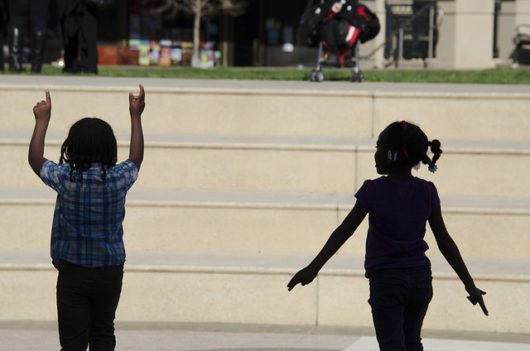
Helping street childrenToday, there are an estimated 100 million homeless children in the world. Many more children, due to family instability, poverty or abuse, spend the majority of their days on the street either working or begging. The U.N. defines a “street child” as any child for whom the street has become his/her habitual abode and/or source of livelihood and who is not sufficiently supervised or protected by adults.

Street children are at high risk of verbal, physical and sexual abuse; girls are highly vulnerable to sexual assault, sex trafficking and may resort to commercial sex work. Street life poses other risks such as hunger, drug abuse, violence, disease, labor exploitation and police brutality. Worse yet, many street children are viewed with contempt by the public; they are seen as dirty, criminal, and are subject to discrimination.

Street children are in desperate need of guidance and support. Fortunately, there are many nonprofit agencies and organizations around the world helping street children through advocacy and outreach. Here are five organizations fighting for justice and rehabilitation for street children:

I Care in South Africa

I Care is a small nonprofit organization based in Durban, South Africa that provides support, rehabilitation and education for street children. The main goals at I Care are to help children learn crucial life skills like honesty, good work ethic and a collaborative attitude. These skills will help them get off the streets and live successful lives. The organization has been helping street children since 2002, directing donations to rehabilitation and skills programs. Rather than giving directly to children, I Care urged the public to direct funds to its programs, which include safe-houses, free meals and skills training for kids living on the streets.

The Africa Educational Trust

The Africa Educational Trust (AET) recognizes the severe problem that homeless and street children pose in Africa. Street children are at high risk for disease, drugs, exploitation, physical and sexual abuse. The AET believes that education is key in improving the lives of street children. The organization works with schools to help them understand the unique needs of street children, who have trouble successfully integrating into classroom settings. By partnering with local organizations, the AET provides psychological and academic support to children beginning or re-entering school. “School starter kits,” which include uniforms, textbooks, and other materials are prepared and distributed to children in need.

Railway Children

This U.K. based organization works to find children in abusive, neglectful, and/or impoverished conditions in order to prevent them from running away and living on the streets. Railway Children works in India and East Africa, where millions of orphans and runaways fill the streets. They also work in the U.K., where hundreds of children run away from home each year to escape violence and neglect. Railway Children makes a point to partner with local authorities and civil society because “[local partners] know the area, children, and local culture best.” Outreach workers reach out and gain the trust of street children, return them home when possible, and tailor to the needs of each unique case. The organization also works with policymakers, advocating for children on the street and making sure they are prioritized in the creation of legislation.

The Consortium for Street Children

This NGO unites member organizations around the world to fight for homeless children through international advocacy, legal services, outreach, research, grassroots casework and policy analysis. The global network consists of more than 100 NGOs, lawyers, researchers and individuals helping street children in 135 countries. The organization facilitates cooperation between members and adopted a five-year plan in 2019 to mobilize global action for street children’s rights by pressuring U.N. member states to amend policies and protect children. In 2018, the Consortium for Street Children hosted an international conference focused on equality and inclusion. The organization asserts that every single person on this planet matters and that street children should be afforded the same rights and opportunities as their peers.

Street Child

Founded in the U.K. in 2008, Street Child has helped over 200,000 street-associated children and families by providing educational opportunities and poverty relief. The organization believes that universal basic education is crucial in the elimination of global poverty and recognizes the many obstacles to education facing street children. Street Child creates low-cost, sustainable solutions informed by research in 1o countries across Asia, Africa and the Middle East.

Millions of children around the globe have to live and work on the street to survive. This dangerous environment makes them vulnerable to violence, exploitation, hunger and disease. Helping street children should be a global priority. Luckily, organizations providing outreach, advocacy, education and protection for street children have made great strides in the global fight against poverty.

– Nicollet Laframboise
Photo: Flickr

June 7, 2019
https://borgenproject.org/wp-content/uploads/borgen-project-logo.svg 0 0 Kim Thelwell https://borgenproject.org/wp-content/uploads/borgen-project-logo.svg Kim Thelwell2019-06-07 14:47:132024-12-13 18:01:525 Charities Helping Street Children Around the World
Charity, Global Poverty, Philanthropy

Top 7 Most Generous Billionaires

Generous Billionaires
The most generous billionaires prefer to start charitable institutes or foundations with experts to distribute their money to worthy causes. Some accept applications for grants; others prefer to seek out organizations. Keep reading to learn more about the top seven most generous billionaires.

Top 7 Most Generous Billionaires

  1. Bill Gates
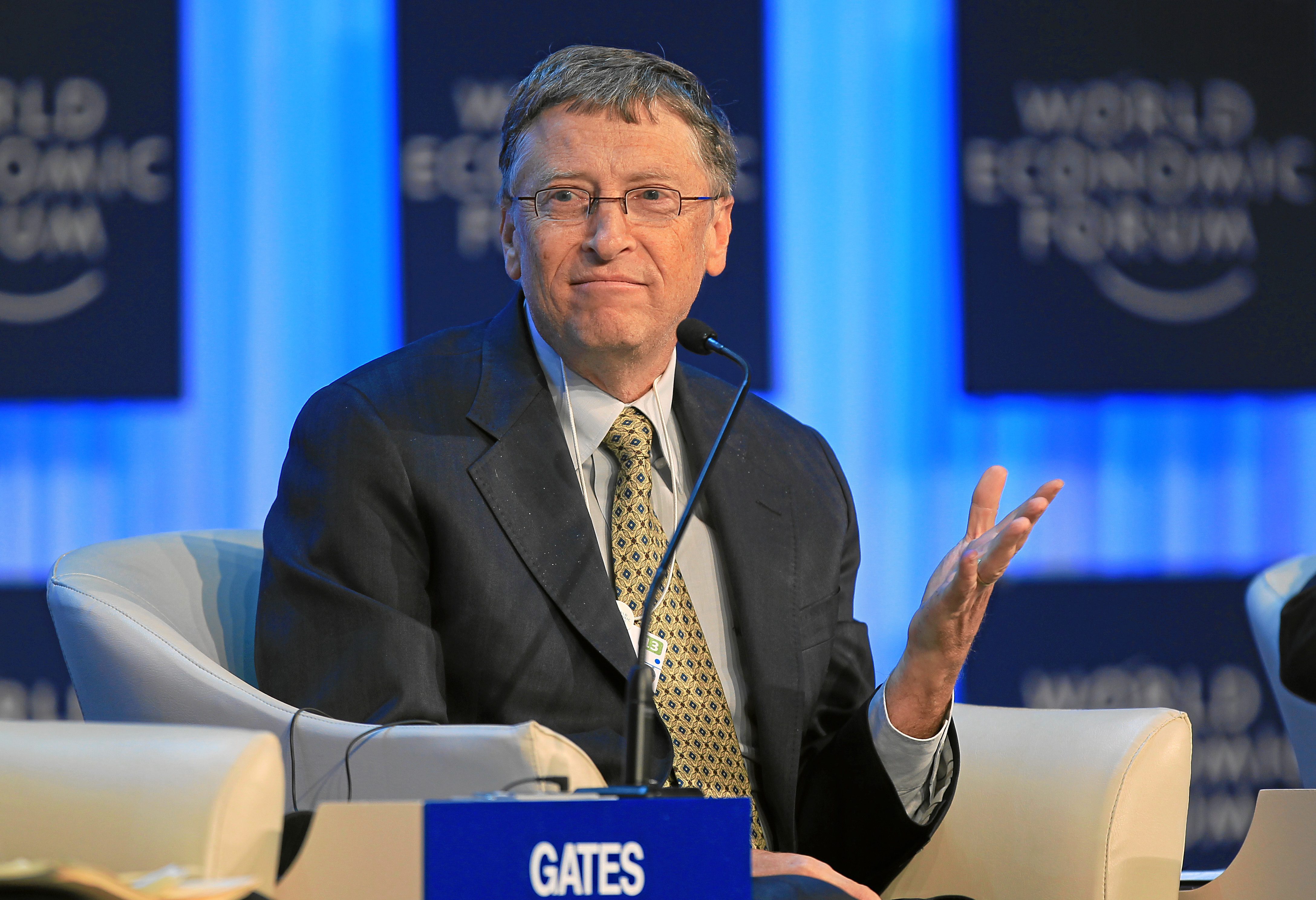
    The co-founder of Microsoft is now the co-chairman and trustee of the Bill and Melinda Gates Foundation, currently the wealthiest foundation in the world. Since 2000, the foundation has spent $36 billion on global health, disaster relief, poverty relief and more. It offers grants to a variety of nonprofits for-profits, and government agencies to carry out data-driven programs. The organization focuses on issues such as global health, such as vaccinations, malaria eradication and safe disposal of human waste.
  2. Chuck Feeney
    This entrepreneur and real estate mogul has earned the nickname “James Bond of Philanthropy.” He is an Irish-American who became a billionaire in the 60s and 70s. But in 1984, he agreed to sign away everything to his foundation, Atlantic Philanthropies. In 2003, he decided to spend his entire fortune in his lifetime, or, as he puts it, “giving while living.” Atlantic Philanthropies is currently in eight countries and has given away $8 billion to “promote fairness and equity for all.” Chuck Feeney’s generosity index (amount given versus current net worth) is 420,000 percent. The foundation is expected to close its doors in 2020 when he achieves his goal of giving everything away.
  3. Warren Buffett
    Warren Buffett is the most charitable billionaire in America, outranking even Bill Gates. He has given away $46 billion since 2000, about 71 percent of his fortune. The Susan Thompson Buffett Foundation, named in honor of his late wife, pledged $150 million a year in grants to help disadvantaged women by making reproductive healthcare accessible, in addition to other social causes. He has created the now-famous Giving Pledge, in which he calls on generous billionaires to donate half their wealth.
  4. Azim Premji
    The chairman of information technology company Wipro, Azim Premji, dedicates his wealth to improving India’s primary education. Rather than distributing grants, Premji’s foundation, the Azim Premji Foundation, chooses to work with state and local governments to build schools, write curriculum, buy supplies and many other tasks.  He has given away $21 billion and reached 3.5 billion schools. When the foundation could not find enough teachers, Premji created the Azim Premji University to focus on education and development. His donations make him the most generous man in Indian history.
  5. Michael Bloomberg
    The founder and CEO of Bloomberg Media, Michael Bloomberg has given $6 billion through his foundation Bloomberg Philanthropies and has promised half his wealth to the Giving Pledge. His philanthropy is focused on five areas he is passionate about: the environment, public health, the arts, government innovation and education. He is particularly drawn to global warming and other issues, where others might refuse to act due to controversy.
  6. Sheikh Sulaiman bin Abdulaziz bin Saleh Al Rajhi
    Al Rajhi began his career in 1939 at age 10 as a kerosene seller. In 1957, he and his three brothers co-founded the Al Rajhi Bank. The bank saw great success during the oil boom of the 1970s. The family is currently Saudi Arabia’s richest non-royal family. His charitable institution currently funds 1,200 projects across the kingdom. He has given approximately $5.7 billion toward educational, health and religious causes.
  7. George Soros
    After nine years as a successful hedge fund manager, George Soros created his charitable Open Source Foundations. “Open society is based on the recognition that our understanding of the world is inherently imperfect…what is imperfect can be improved,” says Soros on the name of his foundation. His first venture started by offering scholarships to black South Africans and Eastern European dissidents at the University of Cape Town to study abroad. It is now the second-largest American charity, behind the Bill & Melinda Gates Foundation. Soros has given $8 billion to Open Source Foundations.

According to Forbes, there are more than 2,000 billionaires in the world. Many only donate a nominal amount to charity. The generous billionaires on this list have been chosen not by the dollar amounts of their donations, but the percentage of their fortune they have given away.

In 2010, the Gates partnered with Warren Buffett to create the Giving Pledge, a commitment by wealthy individuals to give over half of their wealth away. The Pledge started with 40 individuals but has since grown to 190. Buffet stated, “More than 99 percent of my wealth will go to philanthropy during my lifetime or at death. Measured by dollars, this commitment is large. In a comparative sense, though, many individuals give more to others every day.”

– Jackie Mead
Photo: Google Images

June 3, 2019
https://borgenproject.org/wp-content/uploads/borgen-project-logo.svg 0 0 Kim Thelwell https://borgenproject.org/wp-content/uploads/borgen-project-logo.svg Kim Thelwell2019-06-03 01:30:272024-05-29 23:00:27Top 7 Most Generous Billionaires
Charity, Global Poverty

John Oliver Supports the Touch Foundation

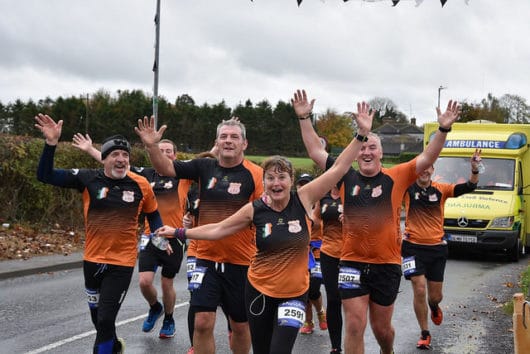
John OliverJohn Oliver, comedian and the host of Last Week Tonight with John Oliver, is renowned for putting a comedic spin on recent news stories. Indeed, he has mocked everything from horses to cereal mascots to his own self-professed bird-like appearance. However, fans of Last Week Tonight know that he has a soft spot for the less fortunate and endeavors to help them. What they may not know, however, is that John Oliver also supports the Touch Foundation.
John Oliver’s Philanthropy

Fans of John Oliver will know that his penchant for philanthropy is nothing new. On his show, he has been known to do outrageous, often hilarious, things to help those in need. Sometimes, this comes in the form of a plea made from the set of Last Week Tonight. For example, during the 2017 French election, John ended an episode by switching to a film noir style and urging the people of France not to vote for the far right extremist candidate Marine Le Pen. Another time, he hired singer Weird Al Yankovic to sing an accordion-filled song begging North Korea not to nuke the U.S.

Sometimes, however, John Oliver’s contributions to helping people are much more tangible. For instance, his team created a children’s book called A Day in the Life of Marlon Bundo. This book, which stars Vice President Mike Pence’s rabbit, supports the Trevor Project and AIDS United by allowing people to donate to one or both of those charities to receive a free ebook. The profits from sales of physical copies of the books also go towards those charities.

Another time, he bought several items from Russell Crowe’s The Art of the Divorce auction, including the jock strap from Cinderella Man, and donated them to one of the last remaining Blockbusters in the U.S. to help it keep its doors open. However, the fact that John Oliver supports the Touch Foundation financially was never mentioned in the show.

About the Touch Foundation

The Touch Foundation is an organization that seeks to improve healthcare in Tanzania. Healthcare in sub-Saharan Africa is lacking, as is evident by the fact that the life expectancy of the average adult is 20 years less than that of the average American. In fact, one in five children won’t even live to see his or her fifth birthday. Tanzania, in particular, suffers from an abysmal number of healthcare workers, a high rate of childbirth complications, limited access to basic healthcare services and many deaths from treatable and/or preventable diseases.

The Touch Foundation fights the poor healthcare in Tanzania by looking for flaws in the country’s healthcare system, bringing them to the attention of the Tanzanian government and obtaining funding for long-term programs that teach sustainable techniques for good health care. They do all of this by using institutions that already exist in Tanzania.

The Touch Foundation’s focus is spread across the healthcare system. One of their main goals is training new healthcare workers and helping existing ones improve. That way, access to healthcare will become much more widespread. They also target specific healthcare priorities that impact Tanzania the most, including maternal and newborn health, non-communicable diseases and cardiovascular health. On top of that, they send detailed reports of their results to their local and international partners.

The Touch Foundation’s Impact

The Touch Foundation has spent more than $60 million improving Tanzania’s healthcare system. This has resulted in better lives for 17 million Tanzanians (one-third of the people who live there). The Touch Foundation has trained more than 4,000 healthcare workers. For the ones who are still in training, 900 of them are housed in new and refurbished dormitories. Also thanks to Touch, the enrollment rate at the Weill Bugando Medical College has increased from 10 to 900 since 2004, and 96 percent of graduates remain within the healthcare system.

The Touch Foundation has helped reduce maternal deaths by 27 percent. The number of surgical centers at the Bugando Medical Centre has increased from 7 to 13, allowing for 30 percent more surgeries. The Touch Foundation has also worked to install electricity generators, water pumps, high-speed Internet, waste incinerators and laundry facilities at medical centers across Tanzania.

John Oliver is very outspoken about what he believes in. He will do ridiculous things for those who he feels needs his help. However, the fact that John Oliver supports the Touch Foundation is relatively obscure. Despite this, his contributions go to making Tanzania a better, healthier place to live. He doesn’t need to do something insane to show that he cares about Tanzania; his quiet contribution to the cause is enough.

– Cassie Parvaz

Photo: Flickr

May 6, 2019
https://borgenproject.org/wp-content/uploads/borgen-project-logo.svg 0 0 Kim Thelwell https://borgenproject.org/wp-content/uploads/borgen-project-logo.svg Kim Thelwell2019-05-06 01:30:072024-12-13 18:01:46John Oliver Supports the Touch Foundation
Charity, Global Health, Global Poverty, Health, Malaria

Bill Gates Plans to Eradicate Malaria

Gates Plans to Eradicate Malaria

Bill Gates is currently the second richest person in the world, with a net worth of $95 billion. But he also has a reputation for humanitarianism. As one of the world’s leading philanthropists, Gates is widely considered to be the most prominent humanitarian public figure. Together, he and his wife established The Bill and Melinda Gates Foundation, a private, charitable foundation that globally combats poverty and enhances healthcare. Now, Gates plans to eradicate malaria by 2040.

What is Malaria?

Malaria is a disease caused by a parasite, commonly transmitted to humans through the bites of infected mosquitoes. While malaria occurs in roughly 100 countries, it is most common in tropical and subtropical regions. To this end, the disease is common in regions of sub-Saharan Africa and South Asia. Upon contracting malaria, a person will exhibit symptoms resembling the flu. And if left untreated, malaria can be fatal. However, this is largely preventable.

According to the World Health Organization, there were 207 million cases of malaria reported in 2012. Approximately 627,000 of these cases resulted in death. Significantly, roughly 90 percent of these estimated deaths occurred in sub-Saharan Africa and 77 percent in children under 5 years of age. Given these statistics, the mortality rate of malaria is incredibly slight, at around 0.003 percent. Therefore, malaria does not have to result in death and, moreover, may be prevented entirely. And as Gates plans to eradicate malaria, this possibility may soon become reality.

What’s the Plan?

At the Malaria Summit London 2018, the Gates Foundation pledged to invest $1 billion through 2023 to end malaria. To date, the Gates Foundation has committed $1.6 billion to the Global Fund to Fight AIDS, Tuberculosis and Malaria. Additionally, it has committed almost $2 billion in grants to eradicate the disease. At the summit, Gates states, “It’s a disease that is preventable, treatable and ultimately beatable, but progress against malaria is not inevitable. We hope today marks a turning point against the disease.”

Malaria is not a mystery anymore. Cures and vaccinations already exist to combat the disease. There is a solution, it simply needs funding. Between 2000 and 2012, malaria incidence rates declined 25 percent globally. By establishing protocol, proper resources can render malaria a manageable issue. While this is no small order, Gates plans to eradicate malaria and has the capability to fund it. Undoubtedly, this will leave an indelible, positive mark on the fight for better healthcare and war against global poverty.

– Lacy Rab
Photo: Flickr

April 20, 2019
https://borgenproject.org/wp-content/uploads/borgen-project-logo.svg 0 0 Kim Thelwell https://borgenproject.org/wp-content/uploads/borgen-project-logo.svg Kim Thelwell2019-04-20 11:27:022024-05-29 22:59:48Bill Gates Plans to Eradicate Malaria
Charity, Global Poverty

6 Brands That Engage in One-for-One Giving

One-for-One Giving
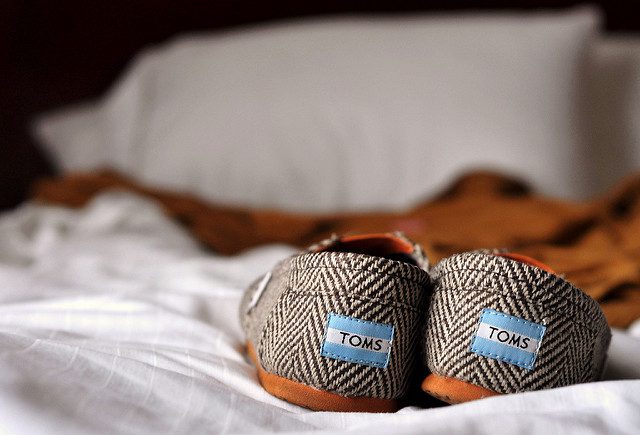
In 2006, the shoe and eyewear brand, TOMS revolutionized a charitable business model now known as one-for-one giving. This ‘buy one, give one’ model is now used by many brands in an effort to improve their image and do their part in fighting global poverty. When a customer buys a certain item, these brands will match their purchase by donating an item to those in poverty or providing some service that helps those in need.

TOMS started out by donating shoes to more than 60 countries and has now given more than 35 million pairs of shoes. The company has also expanded its charitable giving initiatives, providing eyeglasses to those in need as well as restoring the sight of more than 250,000 people to date.

6 Brands That Engage in One-for-One Giving

Here are six other brands that have followed TOMS’s socially conscious lead.

ROMA Boots

ROMA Boots is a socially conscious footwear company founded in 2007. After seeing countless children in Romania running through every type of weather with either broken shoes or no footwear at all, the founder decided to integrate the one-for-one giving model into this company. Now, for every pair of ROMA boots the company sells, a new pair of rainboots is donated to children and families in who are living in poverty. To date, the company has reached 26 countries and counting through the ROMA Foundation.

Better World Books

Better World Books is a website that buys and sells new and used books across the country at reduced prices. Their business model engages in one-for-one giving, and every time a book is bought, they donate a book to children and families who cannot afford books on their own. To date, the company has donated over 26 million books. Better World Books also enables its customers to support global literacy efforts with each purchase thanks to partnerships with organizations including Room to Read, the National Center for Families Learning and Books for Africa.

Project 7

Project 7 is a gum and mint company that partners with non-profit organizations in the United States and abroad. This company gives back to seven different causes, hence its name ‘Project 7’. One of the areas the company donates to is “Heal the Sick,” which delivers life-saving malaria treatments to people living in poverty. Another is “Quench the Thirsty,” which provides clean drinking water to those living without it. While this model isn’t exactly one-for-one, it uses proceeds from the products sold to provide other services to those in need.

WeWOOD

WeWOOD is a watch and eyewear company founded in Italy in 2010. Their one-for-one giving model is unique because for every wooden watch sold, the company plants a tree in return, restoring forests across the globe. To date, WeWOOD has planted over 600,000 trees and hopes to plant 1 million by 2020.

Warby Parker

Warby Parker is an eyeglass company that has distributed glasses to over 50 countries through their one-for-one giving program. Since its inception, the company has donated more than 4 million pairs of glasses to people with impaired vision all across the globe. The work they do has allowed for people living in poverty to work more effectively, and for children to learn.

This Bar Saves Lives

This Bar Saves Lives is a brand of snack bars that is aiming to end childhood malnutrition worldwide. The company has donated over 10 million nutritious bars to children worldwide thanks to one-for-one giving. Every time a customer purchases a bar, the company provides food aid to children in need, helping to minimize the number of children that are hungry every day.

One-for-one giving is an easy way to make an impact with little effort. Buying goods and doing good can now go hand in hand, and the one-for-one giving model is to thank for that.

– Charlotte Kriftcher
Photo: Flickr

April 1, 2019
https://borgenproject.org/wp-content/uploads/borgen-project-logo.svg 0 0 Borgen Project https://borgenproject.org/wp-content/uploads/borgen-project-logo.svg Borgen Project2019-04-01 10:36:532024-05-29 22:59:286 Brands That Engage in One-for-One Giving
Charity, Global Poverty, Volunteer

Top Five Most Generous Countries in the World

Top Five Most Generous Countries in the World
Each year, the Charities Aid Foundation (CAF) publishes the World Giving Index, highlighting the most generous countries in the world pertaining to how they respond to polls and research conducted by Gallup.

According to the 2018 Index, the most important questions were: In the past month, have you helped a stranger or someone you didn’t know who needed help? Donated money to a charity? Volunteered your time to an organization?

Top Five Most Generous Countries in the World

CAF tallies the scores and produces rankings for each. In the article below, CAF’s top five most generous countries in 2018 are presented.

5. Ireland

The Irish received high marks in helping a stranger and donating money, as 64 percent of pollsters saying yes to doing both in the last month, but only 40 percent affirmed that they had volunteered their time, bringing them down to fifth.

This ranking marks a three-spot improvement from 2017’s World Giving Index when the country came in at number eight.

Another interesting aspect of charity and giving in Ireland is the Charities Regulator organization. Under Ireland’s Charities Act 2009, the organization is an independent authority, appointed by the Minister of Justice whose key functions are to “establish and maintain a register of charitable organizations operating in Ireland and ensure their compliance with the Charities Acts.”

The Charities Regulator regulates the charity sector to ensure no malpractice or gross negligence on part of the charities and nonprofits operating in the country.

4. United States of America

The U.S. comes in at number four this year, a one spot improvement from last year’s index. Similar to Ireland, the U.S. received high marks in the helping a stranger and donating money categories, at 72 percent and 61 percent respectively. However, only a mere 39 percent of people said they volunteered their time.

Though the U.S. comes in at number four this year, they are number two on CAF’s five-year average list.

It’s important to note that only around 1 percent of the U.S. budget goes to foreign assistance, so even though the citizens of the country should be proud of themselves, there is still a lot of work to do to alleviate poverty around the world.

3. New Zealand

Coming in at number three on the list of the most generous countries in the world is an island country in the southwest Pacific, New Zealand. This is a one-spot bump for New Zealand from landing at fourth in 2017.

Over 65 percent of New Zealanders say they helped a stranger in the past month, while 68 percent donated money. Only 40 percent of New Zealand’s population mentions volunteering their time. New Zealand comes in at number three in CAF’s five-year average index as well.

2. Australia

The runner-up on the list of most generous countries in the world is New Zealand’s neighbor, Australia. Almost 65 percent of people from the country helped out a stranger, 71 percent donated money and 40 percent of them donated their time.

The number two spot represents a four-spot jump for the country from 2017. Like the other nations on the list, Australia is ranked in the top ten for the five-year average index as well, landing in the number four spot behind their neighbor, New Zealand.

Like Ireland, Australia has an organization devoted to monitoring and aiding charities and nonprofits called the Australian Charities and Not-for-profits Commission (ACNC).

Unlike Ireland’s Charities Regulator, however, the ACNC is endorsed and operates under the Australian government.

The ACNC helps the 56,650 registered Australian charities understand and meet their obligations to the public through information, advice and guidance. They also help the public understand the work of the nonprofit sector and offer a free searchable database of all Australian charities.

1. Indonesia

While only 46 percent of Indonesian residents say they helped a stranger in the last month, a whopping 78 percent say they donated money and 53 percent say they volunteered their time, making Indonesia the only country in CAF’s top 20 to break the 50 percent mark in this category.

The number one spot represents a one-spot raise from last year’s rankings where the country was number two, behind only Myanmar. Indonesia ranks seventh in the index’s five-year average.

It could be expected to see countries like the United States and Australia toward the top of the list. These countries are quite wealthy, but perhaps the most astonishing thing about Indonesia coming in number one is that the country is quite poor. Despite having a steady economy and labor force, 40 percent of the country lives below the poverty line, making their number one ranking even more impressive and inspiring.

These five nations listed in the article as the most generous countries provide a good example for other countries to increase their work in helping the people in need and eradicating world poverty.

– Nick Hodges

Photo: Flickr

December 27, 2018
https://borgenproject.org/wp-content/uploads/borgen-project-logo.svg 0 0 Kim Thelwell https://borgenproject.org/wp-content/uploads/borgen-project-logo.svg Kim Thelwell2018-12-27 13:30:302024-05-27 09:34:59Top Five Most Generous Countries in the World
Charity, Global Poverty, Nonprofit Organizations and NGOs, Philanthropy

Similarities and Differences Between Charities, Nonprofit Organizations and Philanthropy

Similarities and Differences Between a Charity, Non-profit Organization and Philanthropy
To get a better understanding of the different ways in which one can contribute to the community, it’s important to know the similarities and differences between charities, nonprofit organizations and philanthropy.

A large part of progress in the world is due to humanitarian aid and contribution, whether it be people donating money or food to the less fortunate or people coming together to work for and promote human welfare. Charities, nonprofit organizations and philanthropy are important to communities because each is effective in bringing positive change and offers valuable opportunities and programs to people.

Giving USA reports that charitable donations surged to an estimated $410.02 billion in 2017, a major increase of 5.2 percent from $389.64 in 2016. This is the first time that Giving exceeded $400 billion in one year.

While charities, nonprofit organizations and philanthropy can be used interchangeably and are similar in that each brings positive change, they differ significantly in the way they operate.

Charities

A charity is an immediate but emotional monetary donation or short-term contribution usually intended for crisis and relief efforts and supported completely by the public.

People usually donate to a charity that they have a personal connection to or are emotionally affected by. For instance, if a person is deeply concerned about animals, he or she may give a monetary donation at a local animal shelter.

According to Score, one of the ways to understand the differences between charities, nonprofit organizations and philanthropy is to remember that a nonprofit’s purpose is educational or religious and if its funds promote a cause that affects the general public and uses public solicitation to operate, it is most likely a charity.

Examples of donations to a charity include giving money or food to a homeless shelter, donating to an animal shelter, giving money to The Salvation Army bell-ringers outside one’s local supermarket during the holiday season, etc.

Nonprofit Organizations

A nonprofit organization and a charity are similar in that they both operate on a not-for-profit basis but differ based on whether it is tax-deductible and even in the way it operates. A charitable donation can count as tax-deductible while nonprofit organizations have to meet certain requirements and file with the IRS as a charitable organization.

A popular nationwide nonprofit organization is the American Red Cross. The American Red Cross website states that a donor’s donation goes toward strengthening the Red Cross response to nearly 64,000 disasters a year, providing a safe place, food and other necessities to affected individuals and their families. In 2016, the Red Cross provided 385,000 emergency assistance services, gave millions CPR and AED training and supplied 7 million blood products to patients in need.

Philanthropy

One way to remember the differences between charities, nonprofit organizations and philanthropy is by understanding that charities and nonprofits give/contribute while philanthropy involves action. For instance, while a charity can be a quick one-time donation to a school, philanthropy would work toward providing academic scholarships to students or funding to build a better school. Charities aim to lessen the suffering caused by social problems while philanthropists work toward ending social problems.

According to Medium, philanthropy is a long-term strategic investment and intervention dedicated to building long-lasting and successful change in individuals and communities.

While many think a philanthropist is someone who donates large amounts of money to an organization, a philanthropist can be somebody devoted to ending a certain social problem and promoting human welfare.

Impact and Importance

Although there are several differences between charities, nonprofit organizations and philanthropy, the important part is that all of these are effective in building a more efficient and progressive world. It doesn’t matter if someone donates to charities or nonprofit organizations or decides to become a philanthropist, what matters is their contribution serves to help those in need and is also another step toward progress.

– Kristen Uedoi
Photo: Flickr


December 18, 2018
https://borgenproject.org/wp-content/uploads/borgen-project-logo.svg 0 0 Borgen Project https://borgenproject.org/wp-content/uploads/borgen-project-logo.svg Borgen Project2018-12-18 18:14:102019-10-31 08:30:58Similarities and Differences Between Charities, Nonprofit Organizations and Philanthropy
Advocacy, Charity, Global Poverty, Humanitarian Aid, Poverty Reduction

The Pelé Foundation and the Empowerment of the Disenfranchised

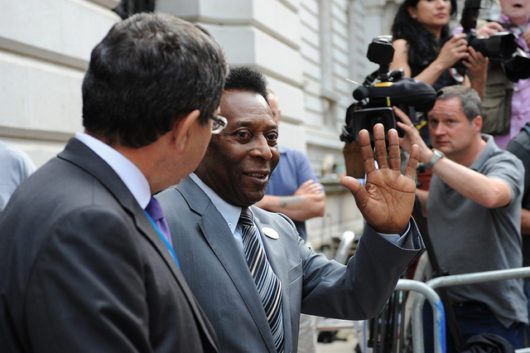
The Pele Foundation and the Empowerment of the Disenfranchised Edson Arantes do Nascimento, known widely by the moniker Pelé, is arguably the most popular Brazilian football player and had led his team to trebled triumph in the World Cup. But Pelé doesn’t have a one-track mind: he has one leg in the sports pool and the other leg in the social activism pool.

Previously, Pelé worked with FIFA as an ambassador against racism as well as with UNICEF to advocate children’s rights. He has moved on to inaugurating his own organization called The Pelé Foundation to empower impoverished, disenfranchised children around the world.

The Pelé Foundation

When first announcing the launch of his foundation Pelé said, “In 2018, I am launching The Pelé Foundation, a new charitable endeavor that will benefit organizations around the world and their dedicated efforts to empower children, specifically around poverty and education.”

Having grown up poor, Pelé developed an affinity for charity work. In the past, he had supported a multitude of different organizations including 46664, ABC Trust, FC Harlem, Great Ormond Street Hospital, Prince’s Rainforests Project and The Littlest Lamb.

In the future, Pelé’s organization plans to expand and cover issues such as gender equality and will eventually birth offshoot programs, not unlike other organizations of its nature.

Partner Organizations

Pelé isn’t alone in this endeavor. During the initial announcement, Pelé blazoned that he would be partnering with both charity:water and Pencils of Promise to fulfill his goals.

Founded in October 2008, Pencils of Promise (PoP) is a nonprofit dedicated to improving the state of education for children in Nicaragua, Guatemala, Ghana and Laos. Besides improving the quality of education, PoP also constructs schools and educational facilities, trains faculty, champions scholarships and supports sanitary programs. Backed by big names such as Justin Bieber and Scooter Braun, PoP is a big name itself in the humanitarian space.

Established in 2006 and having funded 24,537 different projects, charity:water is spearheaded by Scott Harrison. charity: water gives all donations to projects working to end the current water crises. Harrison said, “We’re excited to partner with The Pelé Foundation to bring clean water to thousands of people in the years to come. Having access to clean water not only saves hours of wasted time, but it also provides safety, health and hygiene. It directly impacts the future of children, and we believe it’s the first step out of poverty for rural communities all over the world.”

– Jordan De La Fuente
Photo: Flickr


December 18, 2018
https://borgenproject.org/wp-content/uploads/borgen-project-logo.svg 0 0 Borgen Project https://borgenproject.org/wp-content/uploads/borgen-project-logo.svg Borgen Project2018-12-18 15:51:012024-05-29 22:57:21The Pelé Foundation and the Empowerment of the Disenfranchised
Charity, Global Poverty, Sustainable Development Goals

How ACE Africa Has Impacted Kenya

ACE Africa has

ACE Africa was established in Kenya in 2003 with only four staff members: a U.K. expatriate and three Kenyans. They had a tall order, as the city of Bungoma, Kenya was near the point of collapse in 2003. Nearly one in three households in the community were infected with HIV/AIDS and all government and community structures were falling apart. ACE Africa began their work and 14 years later, Bungoma is a drastically different place.

Focus and Work

ACE Africa focuses on three core areas to improve a community over the long term: child development, community health and wellbeing and community livelihoods. Using specific programs to mold projects to communities in Kenya and East Africa, ACE Africa has grown from four to 58 staff indigenous to Africa and 12,500 community volunteers. ACE Africa is a registered NGO in Kenya, the United Kingdom, the United States and Tanzania, employing small staffs in each country. The organization has also partnered with investment banks, world-leading universities, Dame Judi Dench and other NGOs and international organizations.

In 2010 the Star Foundation, an independent charity founded in London by a wealthy Saudi Arabian family-owned business conglomerate, awarded ACE Africa with an Impact Award. The award was given for the organization’s work in rural Kenya to reduce the spread and increase the treatment of HIV/AIDS. The organization began by opening testing centers and educating the community at all levels about the spread of HIV/AIDS and the necessary treatment. They also educated the population about the importance of a healthy diet, which can improve health increase the productivity of a village. As of 2010, ACE Africa had helped to improve the lives of more than 300,000 children in Kenya.

Beyond Kenya

ACE Africa has begun to branch out of Kenya into the north of Tanzania. In 2014 the organization began working with the Innocent Foundation in Tanzania. According to the Innocent Foundation, the project will last 10 to 12 years. When the project began in 2014, over 93 percent of the wage-earners in the villages where ACE and Innocent are working earn less than $1 a day. Nearly 44 percent of the children in the schools are orphans, and it is estimated that only 4 percent of the villagers eat a balanced diet.

ACE Africa and the Innocent foundation will work with six community organizations within these villages to improve the quality of life. Training the locals ensures that skills will stay and flourish within the community. ACE Africa is working closely with the Tanzania government and more than 7,000 local volunteers to see that this plan succeeds.

ACE Africa’s Impacts

The organization has improved the lives of more than 1 million children through their programs. It has helped to establish more than 500 community garden clubs, resolved more than 12,000 cases of child neglect and abuse and engaged nearly 100,000 children in school guidance programs. ACE Africa has screened roughly 100,000 people for HIV/AIDs and has helped around 80,000 people seek treatment and counseling. As part of their community livelihood programs, the organization has trained more than 35,000 people on the proper techniques for sustainable farming. This has allowed approximately 87,000 kitchen gardens to be established. The group also works with partners and third-parties to research better techniques to help people and make their projects more efficient.

In 2017 ACE Africa founder Jonna Waddington was invited to the Sustainable Development Goals for Africa conference, where the United Nations development plan for Africa through 2030 will be discussed. With six awards and international cooperation and recognition from the United Nations, it appears that ACE Africa will continue to make a positive impact on the world.

– Nicholas Anthony DeMarco
Photo: Flickr

October 25, 2018
https://borgenproject.org/wp-content/uploads/borgen-project-logo.svg 0 0 Borgen Project https://borgenproject.org/wp-content/uploads/borgen-project-logo.svg Borgen Project2018-10-25 01:30:432024-05-29 22:53:20How ACE Africa Has Impacted Kenya
Page 26 of 42«‹2425262728›»

Get Smarter

  • Global Poverty 101
  • Global Poverty… The Good News
  • Global Poverty & U.S. Jobs
  • Global Poverty and National Security
  • Innovative Solutions to Poverty
  • Global Poverty & Aid FAQ’s
Search Search

Take Action

  • Call Congress
  • Email Congress
  • Donate
  • 30 Ways to Help
  • Volunteer Ops
  • Internships
  • Courses & Certificates
  • The Podcast
Borgen Project

“The Borgen Project is an incredible nonprofit organization that is addressing poverty and hunger and working towards ending them.”

-The Huffington Post

Inside The Borgen Project

  • Contact
  • About
  • Financials
  • President
  • Board of Directors
  • Board of Advisors

International Links

  • UK Email Parliament
  • UK Donate
  • Canada Email Parliament

Get Smarter

  • Global Poverty 101
  • Global Poverty… The Good News
  • Global Poverty & U.S. Jobs
  • Global Poverty and National Security
  • Innovative Solutions to Poverty
  • Global Poverty & Aid FAQ’s

Ways to Help

  • Call Congress
  • Email Congress
  • Donate
  • 30 Ways to Help
  • Volunteer Ops
  • Internships
  • Courses & Certificates
  • The Podcast
Scroll to top Scroll to top Scroll to top