• Link to X
  • Link to Facebook
  • Link to Instagram
  • Link to TikTok
  • Link to Youtube
  • About
    • About Us
      • President
      • Board of Directors
      • Board of Advisors
      • Financials
      • Our Methodology
      • Success Tracker
      • Contact
  • Act Now
    • 30 Ways to Help
      • Email Congress
      • Call Congress
      • Volunteer
      • Courses & Certificates
      • Be a Donor
    • Internships
      • In-Office Internships
      • Remote Internships
    • Legislation
      • Politics 101
  • The Blog
  • The Podcast
  • Magazine
  • Donate
  • Click to open the search input field Click to open the search input field Search
  • Menu Menu

Archive for category: Advocacy

Information and news on advocacy.

Activism, Advocacy, Charity, Global Poverty, Nonprofit Organizations and NGOs

Can One Person Change the World?

BuildOn_EducationVenture into a forest, and the trees are a hard thing to miss. Trees come in all shapes and sizes, but even the giant sequoia tree had a small beginning. All trees are grown from minuscule seeds. How does something so expansive and enormous come from such an insignificant beginning? Just like any other great wonder, all things start from small beginnings. Trees had to grow, buildings had to be constructed, and people are grown from swaddling babes. Everybody and everything had a small beginning; it’s the decisions made and actions done that determine what grows from it.

Jim Ziolkowski is the founder, president, and CEO of buildOn, a non-profit organization established to build schools in developing countries while also running after-school programs for America’s toughest inner-city environments. The seeds for buildOn were planted on an after-college excursion into the Himalayan Mountains. Ziolkowski came across a village in Nepal that was celebrating the opening of a new school. During his trip, Ziolkowski gained first-hand experience of poverty-stricken areas and the conditions that lay therein. But in this village, Ziolkowski saw something that forever changed him. He saw a community that was hanging its hopes on the power of education.

Ziolkowski returned to the United States, and began his job in corporate finance at GE. However, the memories of his cross-country hiking could not be forgotten. 15 months into his job, Ziolkowski walked out forever, pursuing a life that would enlighten the lives of others throughout the world by founding buildOn.

In 1992, Ziolkowski traveled to Misolami, a village located in Malawi. Ziolkowski planned to build his organization’s first school here, but he soon succumbed to malaria. Ziolkowski barely escaped with his life, and had another life-changing moment in the process; barely anybody in the area diagnosed with malaria escapes with their life. Ziolkowski only survived because he was not entrenched in extreme poverty, unlike most of the people in the area. Ziolkowski saw education as a way to escape extreme poverty, and his fire to change the world’s education for the less fortunate was strengthened.

Ziolkowski returned to the U.S knowing he also had to impact the lives of the urban youth in a positive way. Ziolkowski was unable to connect with these kids on a deeper level because he had been raised in a stable small town in Michigan. To solve this problem, Ziolkowski moved into a rough neighborhood in Harlem, so he could experience the difference in person. He lived there for three years, and he learned the urban youth did not want to participate in the dangerous style of life, they wanted to change it. Ziolkowski wanted to assist this mindset to the best of his ability.

Twenty years later, the results from Ziolkowski’s experiences have helped launch buildOn into a successful program. On Ziolkowski’s return to Misolami in 2012, the village had constructed four other schools thanks to support from buildOn. Instead of 150 kids attending school, now well over 1,000 were enrolled. Ziolkowski’s success can be seen on the forefront of this village, and in neighborhoods throughout urban America. The tree (buildOn) started out as a small idea, but Ziolkowski’s drive and determination turned it from a seed into a giant sequoia.

Ziolkowski’s success has been printed in his book, Walk in Their Shoes, available on Amazon.

– Zachary Wright

Sources: Amazon, buildON, NC State University
Photo: WorldOz

October 17, 2013
https://borgenproject.org/wp-content/uploads/borgen-project-logo.svg 0 0 Borgen Project https://borgenproject.org/wp-content/uploads/borgen-project-logo.svg Borgen Project2013-10-17 04:00:292024-05-25 00:24:54Can One Person Change the World?
Advocacy, Education, Gender Equality, Global Poverty, Philanthropy, Women & Children, Women and Female Empowerment

5 Great Female Writers on Giving Back

Anne_Frank_Giving_Back
This author’s previous post illuminated philanthropic quotes from five of the greatest male writers of our times. Here, we introduce to you five great female writers and what they have to say about giving back:

So many gods, so many creeds,
So many paths that wind and wind,
While just the art of being kind,
Is all this sad world needs

—Ella Wheeler Wilcox
Wilcox was an American poet whose style was simple, but the meanings therein were often profound. Some of her great works include Poems of Passion, A Woman of the World, and Poems of Peace.

I’ve learned that you shouldn’t go through life with a catcher’s mitt on both hands; you need to be able to throw something back.

—Maya Angelou, As a writer, poet, and a significant member of the Civil Rights Activists during the 1960s, Angelou is perhaps most known for her autobiographies, including I Know Why the Caged Bird Sings. Other famous works include Just Give Me a Cool Drink of Water ‘Fore I Die, The Heart of a Woman, and Letter to My Daughter.

As we work to create light for others, we naturally light our own way.

―Mary Anne Radmacher. Radmacher is a writer and artist, and teaches writing seminars. She is best known for Lean Forward into Your Life, and Live Boldly.

No one has ever become poor by giving.

—Anne Frank. While hiding with her family from the Nazis during World War II with another family in Amsterdam, she kept a diary which was discovered after her death in a Nazi concentration camp. Her diary, The Diary of a Young Girl, is well known across the world as the heartbreaking memoir of a young girl’s transition into adolescence and an attempt at understanding an adulthood she’d never reach.

Indifference and neglect often do much more damage than outright dislike.

—J.K. Rowling, a writer with a rags-to-riches story, is not one who needs to be convinced of the importance of giving back. After making it to the list of richest people in the world in 2011, Rowling managed to donate so much money that she failed to make it to the list in 2012. Along with her multi-faceted fantasy Harry Potter novels, JKR is known for The Casual Vacancy, and The Cuckoo’s Calling, which was written under the pseudonym Robert Galbraith.

– Aalekhya Malladi

Sources: GoodReads, Poetry Foundation, Telegraph
Photo: HTML Giant

October 16, 2013
https://borgenproject.org/wp-content/uploads/borgen-project-logo.svg 0 0 Borgen Project https://borgenproject.org/wp-content/uploads/borgen-project-logo.svg Borgen Project2013-10-16 09:27:522024-12-13 17:49:435 Great Female Writers on Giving Back
Activism, Advocacy, Charity, Global Poverty

Birmingham Partnership Walk Raises Money to Fight Global Poverty

birmingham_partnership_walk
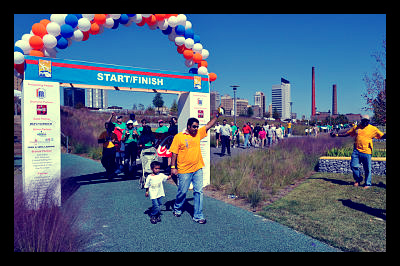
On September 22, 2013, over 2,200 people participated in the Birmingham Partnership Walk in order to raise awareness and money for those around the world living in poverty as well as the organizations that are pledged to help them.

The partnership walk was held at the city’s Railroad Park, and hosted a 5K run, a 1K youth run, a 100-yard dash, and a 3K family walk. Attendees could partake in these events while various groups, such as local marching bands and choirs, entertained the participants. Last year, 1,950 people participated in the partnership walk, raising $300,000. This year’s walk matched that goal.

The annual paternship walk is an event conducted by Aga Khan Foundation USA (AKF USA), which conducts similar Partnership Walks in 10 other cities around the United States. Aga Khan Foundation USA is a nonprofit humanitarian organization that focuses on agriculture, education, healthcare and other forms of development in Africa and Central Asia. All of the money raised at the walks organized by AKF USA goes to fund projects that directly battle global poverty.

Volunteer organizer Salima Mulji remarked that people should consider themselves part of a single global community, and, as such, it is the responsibility of everyone to help those in need. As a native resident of Southeast Asia, Mulji knows the advantages of growing up in the United States. Volunteering with AKF during the partnership walk is her way of giving back.

– Rahul Shah

Sources: ALL Alabama, Partnerships in Action, Alabama 13
Photo: Aga Khan Foundation USA

October 12, 2013
https://borgenproject.org/wp-content/uploads/borgen-project-logo.svg 0 0 Borgen Project https://borgenproject.org/wp-content/uploads/borgen-project-logo.svg Borgen Project2013-10-12 04:00:352020-06-25 08:15:02Birmingham Partnership Walk Raises Money to Fight Global Poverty
Advocacy

10 Ways to Make a Difference in Someone’s Life

10 Ways to Make a Difference
The world is a big place filled with billions of people. It is easy to think that one person can’t possibly do enough to change the world. When the weight of global issues simply feels too huge for one person to handle, we have to remember that we do have power to make a difference, even if it starts on a small scale. Listed below are 10 ways to make a difference that may not change the whole world, but will be sure to change someone else’s world.


Do Good: 10 Ways to Make a Difference


1. Smile! Being friendly to others is a great way to brighten someone else’s day. Whether it’s at the store, work, or simply walking along the street, a nice gesture like a smile could go a long way for someone having a bad day.

2. Do Some Volunteer Work. Volunteering is an amazing experience that gets us out of our daily routines, and makes us turn our efforts outwards. Go out and help feed the homeless, volunteer at local events, even picking up trash in your city is a great way to give back to the community!

3. Sponsor a Child. There are tons of organizations looking for people to sponsor children in need in countries around the world. These organizations are literally only a click away, and don’t take much time to sign up for. It is a small price to pay to make an incredible difference in a child’s life.

4. Invest and Listen. Society has become so drenched in the buzz of technology that real face-to-face interaction and relationship is growing scarce. Next time you throw out the standard, “Hi, how you doin?” make an effort to really invest in what is going in that person’s life. Ask questions that show you really care and want to listen.

5. Teach! Go out and teach a skill to someone who wants to learn. Whether it’s teaching someone how to drive, or helping a student with their homework, your lessons will make a huge impact on their lives.

6. Donate. If you’re anything like the typical American, you have a lot of stuff. When it comes time to get rid of something or buy something new, make a donation instead! There are many ways to make donations online and in your community.

7. Stop What You’re Doing and HELP. It’s easy to think that our priorities are the ones that matter the most. When you’re driving and see someone along the road struggling with a flat, stop to help. Wouldn’t you want a person to do the same for you? There are tons of ways for us to lend a helping hand throughout our day.

8. Team Up with Someone to Live Healthier. Oftentimes having a workout partner is the best kind of motivation out there. If someone you know keeps talking about how he/she wants to get in shape, join them! This will make a huge impact on their lives, and together, you’ll both be on your way to a healthier life.

9. Make a Care Package. Care packages are easy and affordable to make, and they can be used in so many different ways. They can be sent overseas, or used locally! Next time you’re out and about and see a homeless person with a sign offer them a care package. The packages are great to keep a supply of in your car, and they go a long way.

10. Have an Outward Gaze. We live in a pretty self-centered society. Many of us are taught at a young age to do what is going to make us most successful; this can lead us to do a lot things that are only self-serving. It’s time for a change of perspective! Start thinking in ways that turn that self-centered gaze outward. See what it’s like to put others’ needs before yours. You won’t regret it.

– Chante Owens

Sources: Zen Habits, Forbes
Photo: Compassion

October 11, 2013
https://borgenproject.org/wp-content/uploads/borgen-project-logo.svg 0 0 Borgen Project https://borgenproject.org/wp-content/uploads/borgen-project-logo.svg Borgen Project2013-10-11 01:23:522018-01-10 13:20:1910 Ways to Make a Difference in Someone’s Life
Advocacy, Global Poverty

Music Stars Help Fight Global Poverty

global-citizen-project-concert-endpoverty
The long line of musicians joining the fight against global poverty has added a few more names to the roster. More than 70 artists, including Jay-Z, Beyonce, Pearl Jam, and Bruce Springsteen, have teamed up with the Global Poverty Project to turn their fans into advocates for global poverty.

The Global Citizen Tickets Initiative is the innovative way the Global Poverty Project has been using to further their cause. Artists have donated two tickets from each of their shows, totaling over 20,000 tickets to be won by their fans. To win the tickets, fans must earn points by signing petitions, pledging volunteer hours, writing to elected leaders, or donating money to aid organizations. The points they earn can either be used to enter a lottery, or, with enough points, redeemed for tickets directly.

Hugh Evans, the CEO and co-founder of the Global Poverty Project, told the New York Times, “It provides us with an opportunity to get really powerful activism worldwide.” Over the last year, Evans has collaborated with the two largest concert promoters, three major talent agencies, and dozens of band and festival managers to acquire the tickets.

The Global Poverty Project is no stranger to the music scene. The organization  has hosted the Global Citizen Festival twice in Central Park, featuring artists such as Neil Young, Stevie Wonder, the Foo Fighters, and Kings of Leon.

The initiative was created shortly after the first Global Citizen Festival, when Evans asked Kelly Curtis, the manager for Pearl Jam, to play at the festival. The concept caught on quickly with artists due to the small sacrifice, and lack of controversy about the cause.

The Global Poverty Project focuses on educating and advocating for those living in extreme poverty, as well as raising funds for their partners. Along with The End of Polio campaign, they have raised over $118 million in pledges towards the eradication of polio.

– David Smith

Sources: New York Times, Global Poverty Project
Photo: The Roosevelts

October 10, 2013
https://borgenproject.org/wp-content/uploads/borgen-project-logo.svg 0 0 Borgen Project https://borgenproject.org/wp-content/uploads/borgen-project-logo.svg Borgen Project2013-10-10 19:33:592024-05-25 00:24:29Music Stars Help Fight Global Poverty
Activism, Advocacy, Charity

5 Cool Things Leonardo DiCaprio Has Done for Humanity

Leonardo DiCaprio Humanitarian SOS Childrens Villages
Leonardo DiCaprio is a 38-year-old American actor and film producer. He has received three nominations for Academy Awards, as well as nine Golden Globe Awards. DiCaprio has not only received praise regarding his acting career, but also for his efforts in philanthropy.

First and foremost, Leonardo DiCaprio has a strong passion for environmental activism. His longing to protect the environment is one that heavily influences his everyday life. He owns electric and hybrid cars and has even installed solar panels on his home. His personal life is filled with environmentally friendly alternatives to products that would normally cause harm to the earth. His passion also extends into his career – many humanitarian causes can be seen in the movies he’s been in like Blood Diamond and The 11th Hour, for example.

With that being said, here are five things DiCaprio has done for humanity:

  • The Leonardo DiCaprio Foundation – DiCaprio has founded the Leonardo DiCaprio Foundation. This foundation works to “protect Earth’s last wild places” while also “fostering a harmonious relationship between humanity and the natural world.” Established in 1998, LDF has worked on several significant environmental and humanitarian issues through grant making, campaigning, and media projects.
  • Wildlife preservation – World Wildlife Fund led a tiger habitat conservation effort in Nepal along with DiCaprio’s foundation that turned out to be quite successful. Prior to the event, DiCaprio held an auction which raised $39 million for this effort. This money fueled the effort even more so and allowed WWF to increase the number of tigers in Nepal by 63 percent. Other wildlife conservation efforts focus on endangered shark species and the preservation of rainforest habitats.
  • Ocean Health – Partnering with international funders, the collaborative Oceans 5 marked another great effort in humanitarianism and environmental improvement. Oceans 5 tackles the two highest ecological priorities: stopping overfishing and establishing marine reserves. Thanks to a generous grant, the organization was able to more easily combat these issues.
  • Providing Access to Clean Water – The Leonardo DiCaprio Foundation’s grant to Concern Worldwide provided 430,000 people in Tanzania, Mozambique, Sierra Leone, and Darfur with access to clean water.
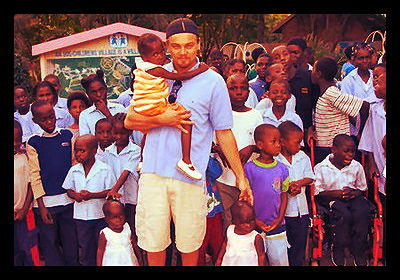
  • SOS Children’s Villages – Aside from working with the foundation, DiCaprio also takes interest in humanitarian work in film. In fact, while filming the movie Blood Diamond, DiCaprio worked with 24 orphaned children from SOS Children’s Villages. This independent organization provides family-based care for children with deceased or missing parents. They also support those deemed “vulnerable” through family strengthening programs, which focus on ensuring access to education, healthcare, and psycho-social support. In addition, SOS Children’s Villages offers emergency relief programs.

– Samantha Davis

Sources: Leonardo DiCaprio, Look To The Stars, CCF
Photo: SOS Children’s Villages

October 7, 2013
https://borgenproject.org/wp-content/uploads/borgen-project-logo.svg 0 0 Borgen Project https://borgenproject.org/wp-content/uploads/borgen-project-logo.svg Borgen Project2013-10-07 18:09:532024-06-05 01:53:395 Cool Things Leonardo DiCaprio Has Done for Humanity
Advocacy, Children, Global Poverty

Advertisers Without Borders Promote Social Causes

Advertisers_Without_Borders
Advertisers Without Borders (AWB), founded in 2002 by Guillermo Caro, is an international network of advertising professionals who donate their time to promote global social causes. Through innovative public service campaigns, AWB brings awareness to issues like poverty, health, environmental care, and peace culture.

One of their recent campaigns, The Children Notwork, was designed to create awareness about global child labor. AWB created profiles on the professional network LinkedIn for textile, coffee, toy, and food companies. It then created dozens of fictitious profiles of children who supposedly worked for those companies. The “children” began to send direct messages to random LinkedIn professionals, executives, entrepreneurs, and leaders on the website. If these messages were read, AWB provided the recipient with a link to The Children Notwork website and detailed information about child labor.

This innovative campaign spurred conversation across the world, finally meeting AWB’s objective to create awareness about the 215 million children who are victims of exploitation and child labor.

Another of AWB’s campaigns, Whatever you do to the world you do to yourself, is composed of a series of four ads to promote greater care for the environment. The four images mirror each other in design, but depict four different issues, namely deforestation, littering, whale poaching, and pollution. Each ad contains a self-inflicted environmental wrong and the connection to the arm that commits it.

Each of AWB’s campaigns is designed to get the public engaged in the world’s issues through innovative, thought-provoking advertising techniques. Said best by anthropologist Margaret Mead, “Never doubt that a small group of thoughtful, committed citizens can change the world.” Advertisers Without Borders is doing just that.

– Tara Young

Sources: Advertisers Without Borders, The Children Notwork, The CreTimes

October 4, 2013
https://borgenproject.org/wp-content/uploads/borgen-project-logo.svg 0 0 Borgen Project https://borgenproject.org/wp-content/uploads/borgen-project-logo.svg Borgen Project2013-10-04 04:38:212024-06-05 01:53:38Advertisers Without Borders Promote Social Causes
Activism, Advocacy, Global Poverty, Philanthropy, Poverty Reduction

State Street Foundation: Providing Sustainability in Poor Communities

State_Street_Foundation
The State Street Foundation is a unique organization that focuses on providing grants to deserving groups that offer services to the poor. By “actively engaging in our global communities,” State Street is able to empower impoverished people through education, affordable housing and small business programs. The company also assists businesses by offering financial guidance in investment, research and trading.

State Street mainly operates 25 countries; most of its programs are in Australia, China, Hong Kong, India, Japan, Singapore, South Korea and Taiwan. The organization’s vast number of volunteers and supporters work in low-income communities to create sustainable poverty alleviation projects. These volunteers worked 78,000 hours and completed 4,900 projects in 2010. Since its formation in 2001, State Street employees and alumni have contributed 430,000 hours and 15,600 service projects.

These projects vary based on the needs of local communities, but all have the goal of improving quality of life in these areas. State Street’s Supplier Diversity Program works with businesses owned by minorities and women to ensure that these small businesses have the same opportunities as other larger companies. Providing grants to these businesses helps them financially thrive, thus creating jobs and increasing economic growth for the entire community.

In addition to distributing local grants, State Street Foundation sponsors community fundraising events for charities the organization supports. In 2010, State Street donated $3.2 million to these charities. For these reasons, the company has won copious awards for its philanthropy, including the Custody Risk’s Mutual Fund Administrator of the Year and Transfer Agent of the Year (2013), Best Securities Financing House in Asia Asset Management’s Best of the Best Awards (2013), European Transfer Agent of the Year (with IFDS) in the 2012 Funds Europe Awards (November 2012) and numerous other awards since its founding.

State Street is a foundation devoted to helping impoverished businesses and communities and hopes to contribute to poverty alleviation, one region at a time.

– Mary Penn

Sources: State Street, AVPN
Photo: Time

October 2, 2013
https://borgenproject.org/wp-content/uploads/borgen-project-logo.svg 0 0 Borgen Project https://borgenproject.org/wp-content/uploads/borgen-project-logo.svg Borgen Project2013-10-02 21:07:012024-06-04 01:17:32State Street Foundation: Providing Sustainability in Poor Communities
Advocacy, Global Poverty, Poverty Reduction, Women and Female Empowerment

Why Female Education Fights Poverty

Female_Education_Fights_Poverty_Afghan_Girl_In_School
While providing equal education to girls is necessary from a moral standpoint, it is also essential for a more peaceful and poverty-free world.

Education affects the age at which women marry and have children. Therefore, until girls have equal access to quality education, maternal mortality, overpopulation, and other factors contributing to poverty will continue to terrorize our world.

In sub-Saharan Africa, and South and West Asia, child marriage affects 1 in 8 girls. By the age of 17, 1 in 7 females will have their first child. Since girls in these areas are not given access to education or job opportunities, they are often locked into these marriages, and forced to become mothers far before they are ready.

In the long run, these women can’t afford to take care of their children or even attain proper health services during labor. The line of poverty continues as children are born into impoverished families that are unable to help their offspring escape this cycle.

Providing women with a secondary education brings enormous benefits to both women and to the world. Educated women are empowered women. They can make their own choices and follow their own dreams. If girls receive a secondary education, 64 percent of them won’t get married while still attending school. By giving girls a chance to pursue their own future and making them aware of the risks associated with consecutive childbearing, the vicious cycle will finally reach its end.

The advantages in investing in female education are endless – for individuals, for the fight against poverty, and for lowering child mortality rates. The rise in female education between 1970 and 2009 prevented more than 4 million child deaths. With the Millennium Development Goals still met, perhaps this is an essential place for the U.N. to make a change.

– Sonia Aviv

Sources: Global Post, TIME, Huffington Post
Photo: The Guardian

October 2, 2013
https://borgenproject.org/wp-content/uploads/borgen-project-logo.svg 0 0 Borgen Project https://borgenproject.org/wp-content/uploads/borgen-project-logo.svg Borgen Project2013-10-02 21:05:432018-02-05 15:14:31Why Female Education Fights Poverty
Advocacy, Development

Gender Equality and the Developing World

1_opt-7
According to the World Bank, gender equality enhances economic development, improves prospects for future generations and strengthens political and social systems. Though women now comprise more than 40 percent of the world’s labor force, they still lag behind men in terms of earnings and productivity. Women also face greater obstacles when it comes to participation in social and political institutions. Particularly in developing nations, the gender gap hinders economic and social development and destabilizes the political environment.

In it’s 2012 World Development Report: Gender Equality and Development, the World Bank suggests four priority areas for improving gender equality. The first is reducing gender gaps in human capital, specifically female mortality and education. Second, improving female access to education and economic opportunities. Third, addressing women’s under-representation in communities and political systems. Finally, understanding how gender inequality applies across generations. These four priority areas help policymakers understand and address problems associated with the gender gap.

Many factors are helping alleviate the gender gap and promote gender equality in developing nations. Globalization and increased access to information are providing women with stronger connections to markets and economic opportunities. These factors also contribute to increasing knowledge about women’s roles in other cultures throughout the world. Perhaps most importantly, there seems to be a broad understanding and growing consensus about the importance of women’s economic, political, and social empowerment.

One area where gender equality seems particularly important is that of agricultural production and food security. The World Bank Report suggests that improving resource access for women could increase agricultural productivity by 4 percent in developing countries. For example, maize production increased by more than 15 percent in Malawi and Ghana when women farmers were provided with the same resources as men. And, according to the World Food Programme, the number of hungry people in the world could be reduced by as much as 150 million if women farmers had the same access to resources as men.

These reports and accompanying statistics suggest that improving gender equality in developing nations will enhance economic production and create stronger social and political systems. With these systems in place, nations and leaders will be better equipped to address the many issues that confront the developing world. Progress has certainly been made when it comes to gender equality. With more and more evidence confirming the importance of empowering women, policymakers would be well served to improve women’s access to healthcare, education, and economic opportunities as well as increasing female participation in social and political systems.

– Daniel Bonasso

Sources: Council on Foreign Relations, World Bank, World Food Program
Photo: Fincon

August 30, 2013
https://borgenproject.org/wp-content/uploads/borgen-project-logo.svg 0 0 Borgen Project https://borgenproject.org/wp-content/uploads/borgen-project-logo.svg Borgen Project2013-08-30 12:28:132024-12-13 17:49:35Gender Equality and the Developing World
Page 67 of 77«‹6566676869›»

Get Smarter

  • Global Poverty 101
  • Global Poverty… The Good News
  • Global Poverty & U.S. Jobs
  • Global Poverty and National Security
  • Innovative Solutions to Poverty
  • Global Poverty & Aid FAQ’s
Search Search

Take Action

  • Call Congress
  • Email Congress
  • Donate
  • 30 Ways to Help
  • Volunteer Ops
  • Internships
  • Courses & Certificates
  • The Podcast
Borgen Project

“The Borgen Project is an incredible nonprofit organization that is addressing poverty and hunger and working towards ending them.”

-The Huffington Post

Inside The Borgen Project

  • Contact
  • About
  • Financials
  • President
  • Board of Directors
  • Board of Advisors

International Links

  • UK Email Parliament
  • UK Donate
  • Canada Email Parliament

Get Smarter

  • Global Poverty 101
  • Global Poverty… The Good News
  • Global Poverty & U.S. Jobs
  • Global Poverty and National Security
  • Innovative Solutions to Poverty
  • Global Poverty & Aid FAQ’s

Ways to Help

  • Call Congress
  • Email Congress
  • Donate
  • 30 Ways to Help
  • Volunteer Ops
  • Internships
  • Courses & Certificates
  • The Podcast
Scroll to top Scroll to top Scroll to top