• Link to X
  • Link to Facebook
  • Link to Instagram
  • Link to TikTok
  • Link to Youtube
  • About
    • About Us
      • President
      • Board of Directors
      • Board of Advisors
      • Financials
      • Our Methodology
      • Success Tracker
      • Contact
  • Act Now
    • 30 Ways to Help
      • Email Congress
      • Call Congress
      • Volunteer
      • Courses & Certificates
      • Be a Donor
    • Internships
      • In-Office Internships
      • Remote Internships
    • Legislation
      • Politics 101
  • The Blog
  • The Podcast
  • Magazine
  • Donate
  • Click to open the search input field Click to open the search input field Search
  • Menu Menu

Archive for category: Advocacy

Information and news on advocacy.

Advocacy, Global Poverty, Health

Canada’s Missing Link: Health and Housing

Canada-Housing-Health
For quite some time, Canadian health officials have conducted thorough research to trace the cause of unstable housing. Now, officials have sorted out the missing link: bad health.

A 2005 published study by researcher Liz Evans presented the connection shared between HIV-sufferers and occupied hotel residency. At the time of the research, Evans illustrated the fact that 80% of Canada’s single-rooming units in hotels (estimated at 6,000) were located in Canada’s poorest Downtown Eastside, in which rooms were frequently occupied by those suffering from HIV.

One solution was to remove the hotel units; however, Evans knew that such an approach would result in “catastrophic” consequences. The analyst went on to state that the units were not “evils,” but rather an escape for HIV-sufferers who live in fear caused by social rejection.

Years would progress with minimal updates that validated Evans’ work until 2007, when TimesArgus.com broke a story on the 2010 Vancouver Games’ organizers deliberating if low-income housing should be moved elsewhere before the event. Although the organizers initially told the public that housing rights would be “respected,” over 700 low-income residents were displaced that same year in addition to inexpensive housing being converted into tourist venues. This action ignited strong backlash from a league of protestors.

The incident served as a rubric sheet for medical analysts to test theories that have longed signified a potential connection between housing issues and the trend of bad health yielded by the likes of street-involved youth.

Unearthed by the Public Health Agency of Canada, street-involved youths typically have a background of family abuse and a violent home environment. The aftermath follows with subjection to low income, low education, and lack of support or inability to pay first/last month’s rent; all of which are triggers to unstable housing.

Once housing becomes an issue, the vulnerability of infections caused by negative coping systems, such as drug use or unprotected sex, serves as a high risk.

In studying further developments, lead researcher C. Kim went on to run tests involving Vancouver-native drug users and non-drug users. Based on the test results, Kim discovered that active drug users were hepatitis C viral-carriers and singled out unstable housing as the prime connection.

With these results, varying researchers revisited the work done by Evans, who attempted to signify a connection involving HIV-sufferers and extreme occupancy within hotel units. It was in 2014 that analysts determined that the significant increase in emergency department-styled housing was being led by HIV-sufferers.

As conducted in Evans’ work, researchers indicated that those residing in the housing feared social backlash, further contributing to poor health caused by guilt and depression. In both the study and a separate one occurring one year later, analysts conclusively noted that like street-involved youths, unstable housing holds a poor-health effect on HIV-sufferers, where potential enablement of guilt, depression and drug use patterns pose as big risks.

So what exactly is being done to aid the problem?

For street-involved youths who have endured a brutal history, several intervention programs have been established to help those in need. Other establishments like Calgary-based Infinity Project provide youths with a permanent home in a community of their choosing, equipped with support and affordable options to secure them a better life. Similarly, support centers are urged, for those suffering from HIV, to decrease health-care costs and to minimize health problems relating to depression.

As positive networks continue to decrease the rate of unstable housing, optimism for more awareness of the issue comes with wishful thinking of the conflict fading away.

– Jeff Varner

Sources: NCBI, TimesArgus.com, NCBI, Public Health Agency of Canada, NCBI
Photo: Huffington Post

July 7, 2015
https://borgenproject.org/wp-content/uploads/borgen-project-logo.svg 0 0 Borgen Project https://borgenproject.org/wp-content/uploads/borgen-project-logo.svg Borgen Project2015-07-07 09:34:572024-12-13 17:51:36Canada’s Missing Link: Health and Housing
Advocacy, Aid, Global Health, Health

Report Uncovers Decline of Global Health Funding

global_health_funding_decline

According to a new report, countries around the world contributed 1.6% less to global health projects in 2014 as compared to 2013. This is only the second time in the past 15 years a reduction in funding has been documented.

The report, published by The Institute for Health Metrics and Evaluation in Seattle, shows that while global health funding grew by 5.4% annually in the 1990s and increased to 11.3% annually from 2000-2010, it stalled around a year later.

Overall, the world has contributed $227.9 billion to global health funding in poorer countries since the turn of the century, when the United Nations revealed its Millennium Development Goals.

The eight goals, which focus on providing monetary funding to pressing global issues, led to a surge in global health funding.

The largest donor has consistently been the United States, which gave $12.4 billion last year toward the treatment and prevention of AIDS and malaria in developing countries.
However, only three nation’s governments increased overall funding between 2013 and 2014: the United Kingdom, Australia and Japan.

Specifically, funds allocated to improving maternal health around the world decreased by 2.2% and supplies used for the treatment and prevention of tuberculosis were cut by 9.2%.

In addition to revealing the decrease in funding for global health projects, the report also gives insight into disease funding. It shows that some treatments and programs are favored over others.

For example, last year, over $3 billion was allocated toward vaccines for children, over $1 billion was spent on children nutrition initiatives, and $778 million was put toward family-planning projects.

In contrast, only $164 million was spent addressing mental health issues and only $31 million was used for anti-tobacco programs.

David Molyneux, Peter Hotez and Alan Fenwick are three scientists who became frustrated that certain treatments and programs receive more funding than others. Specifically, the three wanted the world to know about 17 largely ignored diseases in the world’s poorest countries.

These diseases can result in blindness, deformed limbs and stunted growth, but are ignored because they have disappeared from the developed world.

With 1.4 billion people suffering from these illnesses, which include onchocerciasis, lymphatic filariasis and leishmaniases, the scientists decided to stimulate awareness about them by coining the term “neglected tropical diseases.”

Molyneux and Hotez first used the term at a World Health Organization (WHO) meeting in Berlin in 2003 to “market” the diseases to politicians and private foundations. It was approved at another WHO meeting the following year, which was also in Berlin.

As a result, the Department of Control of Neglected Tropical Diseases was formed, and since 2006, around a billion dollars has been pledged by government and aid organizations to the fight against neglected tropical diseases.

Pharmaceutical companies are also donating 1.4 billion treatments of the diseases each year, resulting in 700 million people being treated in 2014.

In addition, last month Dr. Matshidiso Moeti, who directs WHO operations in Africa, announced a plan to create an entity with the sole purpose of directing work related to neglected tropical diseases. This is just one part of efforts by the international community to rid the continent of some of these diseases within the next five years.

While some treatments and programs are favored over others, people like Molyneux, Hotez and Fenwick are giving a voice to those in developing countries suffering from largely ignored illnesses such as the neglected tropical diseases.

– Matt Wotus

Sources: International Business Times, International Business Times, Humanosphere
Photo: Johns Hopkins University

July 7, 2015
https://borgenproject.org/wp-content/uploads/borgen-project-logo.svg 0 0 Borgen Project https://borgenproject.org/wp-content/uploads/borgen-project-logo.svg Borgen Project2015-07-07 07:13:282020-07-13 11:53:05Report Uncovers Decline of Global Health Funding
Advocacy, Nonprofit Organizations and NGOs, Philanthropy

How to Donate to a Nonprofit

donate-to-a-nonprofit
Want to donate to a nonprofit? Here are three easy steps to donate to a nonprofit organization that may interest you:

1. Find a Worthy Cause.

With so many causes worthy of your donation, finding the right one can be intimidating. For example, is it better to cure a certain disease or to make healthcare more accessible? Is providing shelter more important than providing education?

The answer to these questions largely depends on you, the donor.

In the fight against global poverty, for example, consider the following causes: international development, humanitarian relief, global health, education, gender equality and human rights advocacy. These are all important motivations for giving and many nonprofit organizations work in these fields.

If you are strapped for cash, you can also donate your time. All campaigns need volunteers and you may be able to gain hands-on experience by giving a few hours each week.

2. Find a Reputable Organization.

Once you have found a cause worth donating to, the next step is to find an organization that will meet your needs. Typically you will want an organization that is trustworthy and effective.

Finding one is no small task: the National Center for Charitable Statistics estimates there are over 1.5 million nonprofits registered in the United States.

To find a nonprofit, it is important to use GuideStar, a leading nonprofit information service. GuideStar indexes millions of IRS Form 990, a series of important financial documents that shed light on the trustworthiness of a nonprofit.

The website also allows donors to review an organization that they care about. For example, The Borgen Project has an average rating of Five Stars. You can view the page here.

You can also find worthy causes through crowdfunding websites; Crowdrise is typically a popular choice for charitable causes.

3. Donate. (And Don’t Forget Your Receipt!)

As soon as you have found a great cause and a trustworthy organization, it is time to donate. Most nonprofits have a donate page where you can select the amount among other options. You can often donate in your own name, someone else’s or anonymously. Whatever you decide, the nonprofit will thank you!

Don’t forget your receipt. Many donations are tax deductible but often require documentation.

If you choose to donate to a nonprofit, you will be in good company. According to the National Philanthropic Trust, Americans donated $358.38 billion in 2014. About 95.4% of American households give to charity and more donors are choosing to give online.

– Kevin McLaughlin

Sources: GrantSpace, GuideStar, National Philanthropic Trust

Photo: Flickr

July 7, 2015
https://borgenproject.org/wp-content/uploads/borgen-project-logo.svg 0 0 Borgen Project https://borgenproject.org/wp-content/uploads/borgen-project-logo.svg Borgen Project2015-07-07 06:16:302024-05-27 09:25:19How to Donate to a Nonprofit
Advocacy, Education, Global Poverty, Technology

Computer Game Educates Players About Global Issues

Computer_Game_Educates
Five years ago, a group of students from the Philippines created the computer game “Wildfire” to win the Microsoft Imagine Cup Game Design Competition, one of five major categories in the annual contest. The theme of the contest was, “Imagine a world where technology helps solve the toughest problems.”

The technology competition brings together students from all around the world with the goal of helping solve the globe’s biggest issues. Overall, the 2010 contest saw over 300,000 students from more than 100 countries go head-to-head.

The five creators of “Wildfire,” a mix of college students and graduates, call themselves By Implication. The group of friends decided to enter the contest after Typhoon Ketsana brought devastation to Manila, the capital of the Philippines, in 2009.

On its website, By Implication stresses that worldwide problems must be tackled head on, as they cannot be overcome by using magic or potions.

“Wildfire,” which is free and can be played an unlimited number of times, demonstrates just this. The computer game educates players about global health issues and how they can help solve them.

Designed and created with a virtually nonexistent budget, the game permits users to navigate their own city in an attempt to defeat the health issues, known as the “bad guys.”

Players are on their own until they collect “inspiration points,” which they can then use to obtain the assistance of volunteers around them. This teaches that a player is powerless if he or she is alone. Transition to the real world, and this idea illustrates that by working together, people have the ability to do something great.

In addition, the computer game educates players with informative buttons. A player can encounter the buttons, which contain short facts about crises including poverty and water quality, while navigating his or her own city. In the end, if players and volunteers can defeat not only the problems they encounter, but also the time limit, their city will thrive.

For the creators of “Wildfire,” they hope that by learning about certain issues, those who play the game will become motivated to help solve them.

– Matt Wotus

Sources: ABC News, Imagine Cup, Imagine Cup Wildfire by Implication
Photo:Neogaf

July 6, 2015
https://borgenproject.org/wp-content/uploads/borgen-project-logo.svg 0 0 Borgen Project https://borgenproject.org/wp-content/uploads/borgen-project-logo.svg Borgen Project2015-07-06 09:55:192020-07-11 11:53:29Computer Game Educates Players About Global Issues
Advocacy, Foreign Aid, Poverty Reduction

International Advocacy Organizations

international_advocacy_organizationsInternational advocacy organizations are at the heart of improving the lives of millions all over the world. But what exactly are they? How do they function? How do they differ from other “charity” organizations? How effective are they?


A simple Google search provides a basic definition of an advocacy organization: “an ‘advocacy group’ is an organized collection of people who seek to influence political decisions and policy, without seeking election to public office.” Apply this to an organization working on a global scale and voila, an international advocacy organization.

However, things get sticky when the distinction is made between an international advocacy organization and other global nongovernment organizations (NGOs). But, there is a difference between an advocacy organization and a charity or other global NGO. For example, The Borgen Project is strictly an international advocacy organization. It advocates for the world’s poor.

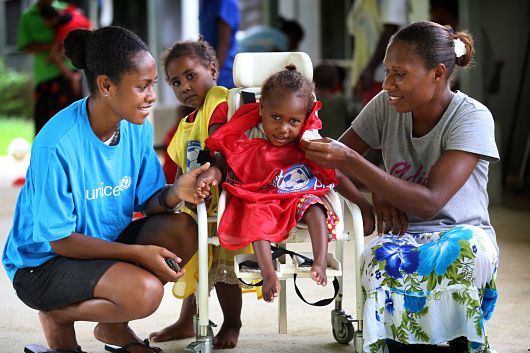
However, another popular NGO named UNICEF is different. It provides aid, as well as a bit of advocacy as well. This is the difference. International advocacy organizations usually focus more on advocacy and not providing physical aid to those in poverty.

ONE Campaign is a perfect example of an international advocacy organization. ONE advocates for the world’s poor, with a particular focus on those in Africa. Their mission fits the definition of an advocacy organization perfectly: “we raise public awareness and work with political leaders to combat AIDS and preventable diseases, increase investments in agriculture and nutrition, and demand greater transparency so governments are accountable to their citizens.”

ONE does not focus on raising the funds to build hospitals and schools. Instead, ONE does its work by educating and mobilizing thousands of volunteers who advocate and campaign to keep programs related to key issues regarding poverty funded by governments.

Global Citizen is another international advocacy organization, with a focus on advocacy and campaigning instead of direct aid. Global Citizen focuses on a broader group of issues and global challenges including health, education, water, sanitation and food security. Just like the ONE Campaign, Global Citizen mobilizes volunteers to campaign for awareness of these issues.

What do international advocacy organizations do to ensure efficiency and impact? The World Health Organization (WHO) suggest seven points to make sure that advocacy efforts are effective:

  1. Define the situation – identify the issue. For example, global poverty.
  2. Establish goals and objectives – specific, targeted, measurable long-term goals that can be met.
  3. Identify target audience – usually decision-makers (Congress) and people who influence decision-makers.
  4. Develop key messages – a clear, compelling, and structured message to deliver to target audiences.
  5. Develop and implement advocacy plan – plan by which messages are delivered to audience.
  6. Engage media interest – social media, advertising, and opinion pieces.
  7. Monitoring and evaluation – important to assess and monitor the impact of advocacy efforts in order to make improvements.

Global advocacy organizations are generally effective at what they do. In 2014, Global Citizen along with 18 partners successfully saw the passage of the Water for the World Act in the United States and $639 million secured for the provision of quality education to kids in impoverished countries. The ONE Campaign has a long list of successful accomplishments, including seeing the United Kingdom become the first country to meet the 0.7% as a share of national income international aid target set 43 years ago, as well as successful advocacy for the African Growth and Opportunities Act which mutually improved trade ties between the United States and Africa.

These are only a few of the many successes of Global Citizen and the ONE campaign, and only a minute number when the multitude of other international advocacy organizations around the world are taken into account. Global advocacy organizations are key to fighting poverty and with more successes, they will continue to improve the lives of millions around the world.

– Greg Baker

Sources: ONE 1, ONE 2 Global Citizen, WHO
Photo: Unicef

July 2, 2015
https://borgenproject.org/wp-content/uploads/borgen-project-logo.svg 0 0 Borgen Project https://borgenproject.org/wp-content/uploads/borgen-project-logo.svg Borgen Project2015-07-02 13:36:162024-05-27 09:25:22International Advocacy Organizations
Activism, Advocacy, Global Poverty

5 Famous YouTubers Who Give Back

Youtubers
YouTube has become one of the largest, most influential mediums in the world. According to the website, YouTube has more than one billion users in 75 countries, watching hundreds of millions of hours each day.

More than one million channels receive proceeds from their videos due to the YouTube Partner Program, and a small amount of these channel owners make six figures per year.

Elite YouTubers Zoella, Jack and Finn Harries, and Hank and John Green are a part of the select group who achieved super-stardom from their videos.

However, these YouTubers have more than just a high-paying salary in common. They all participate in numerous charities to give back to those who are struggling.

Zoe Sugg

With about eight and a half million viewers subscribed to her fashion and beauty blog, Zoe Sugg, also know as Zoella, donates some of her time to raising awareness for fatal diseases. Sugg starred in “The Comic Relief Bake Off” in February that funded vaccinations for babies in Uganda. Sugg has also worked with Trekstock, which gives support to young adults with cancer.

“Doing what I do, I get to meet a lot of young people that have been through the stresses and the traumas that go with [cancer],” Sugg said.

Along with this, Sugg is the first digital ambassador for Mind, a mental health charity and has participated in fundraising for the Stroke Association and Band Aid 30.

Jack and Finn Harries

Identical twins Jack and Finn Harries run the YouTube channel JacksGap that has more than 180 million views. The channel’s videos feature the brothers traveling the world, occasionally stopping to film a video for charity. In March of 2013, the twins posted a video about their time in South Africa visiting some Comic Relief projects. More than five million people live with HIV in Africa, according to the video.

“We were shocked to hear how serious the issue had become, but excited to see what was being done to help and meet the people behind the project,” Jack Harries said.

Jack and Finn Harries have helped raised awareness for this issue, because their video now has over two million views.

The twins have also helped The Rainbow Centre, Teenage Cancer Trust and Charity: Water.

Hank and John Green

Another set of philanthropic YouTube siblings with the channel name VlogBrothers hold an online presence of about two and a half million subscribers, and they use this power to promote their charity projects. Hank and John Green created Project for Awesome in 2007.

“During Project for Awesome, thousands of people post videos about and advocating for charities that decrease the overall level of world suck. As a community, we promote these videos and raise money for the charities,” Hank and John Green said.

The charity has taken place for seven years, and last year, the project raised over one million dollars.

Aside from this success, the brothers have also taken part in Partners in Health.
For more information about these YouTubers, visit youtube.com/zoella, youtube.com/jacksgap, and youtube.com/vlogbrothers.

– Fallon Lineberger


Sources: BBC, Boohoo, Charity Water, Mind, Prizeo 1, Prizeo 2, Project for Awesome, YouTube 1, YouTube 2, YouTube 3, YouTube 4, YouTube 5, YouTube 6, YouTube 7
Photo: Telegraph


July 1, 2015
https://borgenproject.org/wp-content/uploads/borgen-project-logo.svg 0 0 Borgen Project https://borgenproject.org/wp-content/uploads/borgen-project-logo.svg Borgen Project2015-07-01 14:01:452024-12-13 17:54:005 Famous YouTubers Who Give Back
Advocacy, Development, Global Poverty

5 Countries Committed to Ending Extreme Poverty

extreme_poverty
The end to extreme poverty will not occur solely as a result of charities, businesses or governments. Defeating extreme poverty entails changing the rules, systems and structures that are designed to keep people poor. Change must occur through a country’s specific policies and practices that contribute to keeping people in extreme poverty.

Countries should ensure that governments, businesses and individuals act to establish alignment in the vested interests of the world’s poor. If executed progressively and strategically, such systems, structures, policies and processes can make a change. Five countries have made a boisterous and public commitment to ending poverty – Brazil, Colombia, Malawi, the United Kingdom and the United States.

Brazil – The Bolsa Familia Program

Efforts to end extreme poverty in Brazil originated from Bolsa Familia. The program directly transfers cash to pre-designated households deemed impoverished. The decisions about allocation are based on assessments of the depth of poverty rather than household composition. Over 45 million people are currently enrolled in the program. As a direct result of Bolsa Familia, the number of those living in extreme poverty in Brazil has dropped from 20.4 million to 11.9 million.

Colombia – Oxford Poverty and Human Development Initiative

In 2010, Colombia created a poverty reduction plan and multidimensional solution to address poverty. Their national development plan has three pillars: employment, poverty reduction and security. Due to a lack of successful poverty reduction results by the original program, adoption of a new poverty reduction strategy called the GOC occurred. According to the Oxford Poverty and Human Development Initiative, the strategy outlines the poverty index designed to monitor and measure different indicators of multidimensional poverty. This initiative will reflect the multiple deprivations that people suffer by identifying disparities across health, education and living standards. It will indicate the number of people who are poor on a multidimensional level and assist in allocating funds and determining efforts to eliminate extreme poverty.

Malawi – Malawi Growth and Development Strategy and the Farm Input Subsidy Programme

In 2002, the Malawian government launched the Malawi Poverty Reduction Strategy (MPRS), which had the express purpose of achieving “sustainable poverty reduction through empowerment of the poor.” In 2005, the MPRS was reorganized as the Malawi Growth and Development Strategy (MGDS). Currently, the MGDS comprises the overarching policy framework for social and economic development to reduce extreme poverty. In 2005, the Farm Input Subsidy Programme was introduced as a measure to increase agricultural production. In an effort to ensure food security, the government provides subsidized agricultural inputs to farmers with smaller land holdings. This has matured into agricultural policy. An estimated 50 percent of the Ministry of Agriculture’s budget is spent on methods to reduce expenditures of research and extension. The subsidy program is now a firmly established pillar of Malawian agricultural policy.

The United Kingdom – The Department for International Development

In the United Kingdom, The Department for International Development (DFID) leads national efforts to end extreme poverty. Their primary areas of focus are creating jobs, empowering girls and women and saving lives. The DFID honors the international commitments and purpose to achieve the United Nations Millennium Development Goals. Their objectives are achieved through the effective improvement of governmental transparency, openness and value of money and policy development on economic growth and wealth creation.

The United States – USAID

In the United States, the USAID is the leading agency that works to end extreme global poverty. Their philosophy suggests an interconnected world in which instability anywhere around the world can impact us domestically. Thus, the focus is on military collaboration in active conflicts, efforts to stabilize countries and the building of responsive local governance. Essentially, the main objective is to utilize the transition period between conflict and long-term development by investing in agriculture, health systems and democratic institutions.

In order to end global extreme poverty, we must invest in common solutions. If all countries make the pledge commitment to end 0.7 percent of poverty, we can end extreme poverty by 2030.

– Erika Wright

Sources: Global Citizen, Global Humanitarian Assistance, Global Poverty Project, UK GOV Rural Poverty Portal, World Bank USAID
Photo: The Atlantic

June 30, 2015
https://borgenproject.org/wp-content/uploads/borgen-project-logo.svg 0 0 Borgen Project https://borgenproject.org/wp-content/uploads/borgen-project-logo.svg Borgen Project2015-06-30 01:30:502024-05-27 09:25:185 Countries Committed to Ending Extreme Poverty
Activism, Advocacy, Global Poverty

How Advocacy Groups Work

advocacy_groups
Advocacy takes on a broad range of meanings and connotations in our society. Advocacy and advocacy groups are terms that generally conjure up images of the 1960s Civil Rights Movement or the numerous groups today, which advocate for a whirlwind of causes like environmental protection, expanded access to healthcare or even poverty reduction. The Oxford English Dictionary defines an advocacy group as “a group of people who work together to achieve something, especially by putting pressure on the government…usually on behalf of people who are unable to speak for themselves.”

What the Oxford definition illuminates is the difference between an advocacy group and, say, a non-governmental organization (NGO). While advocacy groups and NGOs share several similarities and may even have the same objective, advocacy groups have a special emphasis on altering public policy, while an NGO or grassroots organization might try to work around or outside of the public sphere. Sometimes, organizations pursue advocacy as well as field work.

Advocacy groups have a variety of ways to affect public policy as well as public opinion. These ways include disseminating relevant information about the issue which they raise, engaging local communities to become involved in an issue and, perhaps most importantly, directly lobbying government leaders to create policies that will help address the issue.

In the case of the U.S. Civil Rights Movement, many demonstrations, local campaigns, publications and direct lobbying of U.S. leaders led to the Civil Rights Act of 1964. Outreach and education of the general public was, and is, highly important to any successful advocacy venture because the primary way that public policy is shaped is through the demands of the constituency and the pressure they put on their representatives to support or create legislation that reflects their interests.

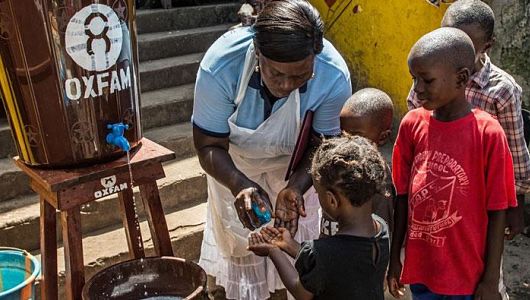
One example of a well-known advocacy group is Oxfam International. Founded in 1995, their name derives from an early predecessor to their organization, the Oxford Committee for Famine Relief, a group which advocated for the delivery of emergency aid to people caught in the midst of World War II. Today, Oxfam supports a wide variety of poverty reduction and economic development ventures, pursuing issues which constitute a fulfillment of basic human rights.

Oxfam International is a combination advocacy group and grassroots non-governmental organization, working both on the policy level and directly coordinating and delivering services to people internationally. The organization has 17 chapters in different countries, as well as advocacy offices in high-impact government centers such as Brussels and Washington, D.C.

The Sierra Club is another famous, long-standing advocacy group, which was founded in the U.S. by conservationist John Muir in 1892. Originally, the group was formed to lobby for the conservation of vast tracts of U.S. land, which resulted in the establishment of Yosemite National Park and other wilderness areas.

The Sierra Club, because its mission is environmental conservation, is naturally more predisposed to pure advocacy; that is, lobbying U.S. leaders and organizing demonstrations. They have influenced the passage of several pieces of legislation including the Clean Air Act, Clean Water Act and Endangered Species Act.

The Borgen Project also operates as a classic advocacy group. This is because the greatest potential for poverty reduction comes through U.S. policies and institutions, rather than private or public donations funding fieldwork outside the policy sphere. The Borgen Project’s aim is to help people become aware of the need to fight poverty internationally, help them become civically engaged and, therefore, directly influence government leaders to adopt policies that strengthen poverty reduction efforts.

– Derek Marion

Sources: Oxfam, Sierra Club Oxford English Dictionary
Photo: Oxfam

June 30, 2015
https://borgenproject.org/wp-content/uploads/borgen-project-logo.svg 0 0 Borgen Project https://borgenproject.org/wp-content/uploads/borgen-project-logo.svg Borgen Project2015-06-30 01:30:092024-05-27 09:25:22How Advocacy Groups Work
Advocacy, Global Poverty, Volunteer

The Impact of “Clicktivism”

Clicktivism
In the digital age, it is easier than ever to voice one’s support for a cause or raise awareness about a particular issue, all it takes is the click of a button.

In the wake of the recent devastating earthquake in Nepal, Facebook gave users the option to donate to the International Medical Corps’ relief efforts. According to a Facebook post by CEO Mark Zuckerberg, over $10 million was raised by the Facebook community — in just two days.

Social media provides a platform to quickly support a cause without exerting much — if any — personal effort. This phenomenon has been labeled as “clicktivism,” or “slacktivism,” and has been widely criticized for creating an impression of support, rather than actually accomplishing anything for the cause.

Many critics point out that clicktivism satisfies the urge to respond to an issue, thus reducing eagerness to take further action.

However, according to a study conducted by Georgetown University’s Center for Social Impact Communication and Ogilvy Public Relations Worldwide, the truth is quite the contrary. Researchers found that Americans who promote causes using social media by creating posts, joining a group on Facebook or taking other similar actions, actually participate more in offline activist efforts than non-social media promoters.

“The presumption was that these individuals were replacing more ‘meaningful’ actions with simple clicks and shares. But what we found is that they’re actually supplementing—not replacing— actions like donating, volunteering and planning events,” Senior Associate Dean and Executive Director of the Center for Social Impact Communication Denise Keyes was quoted in the research report.

The study showed that so-called clicktivists are over four times as likely than non-social media promoters to encourage others to contact political representatives about an issue, twice as likely to volunteer time to a cause, more than twice as likely to participate in an event or a walk and just as likely to donate money.

It is unlikely that every user who donated to relief efforts in Nepal dedicated himself or herself to volunteering and staying informed about progress in the nation. But whether or not clicktivists take action offline, sharing a post inherently increases visibility and raises awareness, regardless of the amount of effort (or lack thereof) exerted by the “sharer” or “retweeter.” It is possible that a certain user does not accomplish anything further after pressing “share,” but that user’s friend might be scrolling through their newsfeed and be inspired to do more. Although using a hashtag and retweeting a human rights organization does not necessarily equate to action, the importance of such actions in rallying support for global issues cannot be diminished.

It is not a new concept to use whatever tools necessary to mobilize supporters of a cause. Activism is a spectrum comprised of many levels of involvement and dedication. Whether it be signing a petition or putting money in a donation box while purchasing groceries, lower levels of commitment exist and have existed, regardless of their portrayal on the Internet.

Clicktivists should remember that while their online actions are definitely helpful, it should not suffice or constitute full-fledged activism. Therefore, clicktivists should push themselves to stay committed to issues that pique their interest. That is not to say that they should stop sharing, liking and retweeting. The benefits of those actions are immeasurable.

– Arin Kerstein

Sources: Daily O, Facebook, Daily O, Georgetown University, Daily O
Photo: Invisible Children

June 27, 2015
https://borgenproject.org/wp-content/uploads/borgen-project-logo.svg 0 0 Borgen Project https://borgenproject.org/wp-content/uploads/borgen-project-logo.svg Borgen Project2015-06-27 08:00:122024-12-13 17:51:34The Impact of “Clicktivism”
Activism, Advocacy, Philanthropy, Volunteer

What Does it Mean to Be Philanthropic?

What-is-Philanthropic
What does it mean to be Philanthropic? Philanthropy is a noun that the Oxford English Dictionary defines as the “love of mankind” and “the disposition or active effort to promote the happiness and well being of others.” In our current society, the word philanthropic tends to be an interchangeable term with entrepreneurial. As those who are seen as philanthropic tend to be those individuals who are financially involved with an organization promoting effort to help those in need.

This current view on philanthropy by society is harmful in the way that it seems to prevent, or even stigmatize, philanthropic efforts on the small scale. These small-scale efforts can be seen as insignificant and unrealistic by a public assuming that only grandiose donations from entrepreneurial individuals can make a difference, which is a major factor for why many people do not get involved with social problems.

Philanthropy at its core is having a love for humanity, and there are many ways for people to become involved. Individual efforts over long periods of time can be as effective, if not more so, as a grand one-time financial gesture. While an entrepreneurial spirit can help with the sustainability of a philanthropic organization, they should not rely solely on financial gain. This would defeat the purpose of trying to make positive change.

Other than participating financially, volunteering time and effort to a philanthropic cause can make a difference in helping create positive change.

So as philanthropy exists to benefit others, it should be no surprise that participating in these efforts can help create a personal benefit and fulfillment within the individual. In recent studies regarding volunteer work and its physical benefits, the results showed a 22 percent reduction in mortality of the volunteer work participants. It has been proven that when an individual is involved with the helping of their fellow man, the reward center in the brain that produces the neurotransmitter dopamine creates a feeling of fulfillment and greater happiness, or a “helper’s high.” In addition, there are many other benefits to an individual volunteering within philanthropic organizations, such as better pain management and lower blood pressure.

To be philanthropic is to express love for all of mankind and to help in any way. While the majority of individuals choose to participate financially, it is important to realize that not all philanthropic ventures need this. Choosing to volunteer can help these philanthropic organizations continue to make a positive change within our society.

– Alysha Biemolt

Sources: Oxford English Dictionary, Inc., Huffington Post
Photo: Blake Rubin

June 27, 2015
https://borgenproject.org/wp-content/uploads/borgen-project-logo.svg 0 0 Borgen Project https://borgenproject.org/wp-content/uploads/borgen-project-logo.svg Borgen Project2015-06-27 01:58:352024-12-13 17:51:36What Does it Mean to Be Philanthropic?
Page 46 of 77«‹4445464748›»

Get Smarter

  • Global Poverty 101
  • Global Poverty… The Good News
  • Global Poverty & U.S. Jobs
  • Global Poverty and National Security
  • Innovative Solutions to Poverty
  • Global Poverty & Aid FAQ’s
Search Search

Take Action

  • Call Congress
  • Email Congress
  • Donate
  • 30 Ways to Help
  • Volunteer Ops
  • Internships
  • Courses & Certificates
  • The Podcast
Borgen Project

“The Borgen Project is an incredible nonprofit organization that is addressing poverty and hunger and working towards ending them.”

-The Huffington Post

Inside The Borgen Project

  • Contact
  • About
  • Financials
  • President
  • Board of Directors
  • Board of Advisors

International Links

  • UK Email Parliament
  • UK Donate
  • Canada Email Parliament

Get Smarter

  • Global Poverty 101
  • Global Poverty… The Good News
  • Global Poverty & U.S. Jobs
  • Global Poverty and National Security
  • Innovative Solutions to Poverty
  • Global Poverty & Aid FAQ’s

Ways to Help

  • Call Congress
  • Email Congress
  • Donate
  • 30 Ways to Help
  • Volunteer Ops
  • Internships
  • Courses & Certificates
  • The Podcast
Scroll to top Scroll to top Scroll to top