• Link to X
  • Link to Facebook
  • Link to Instagram
  • Link to TikTok
  • Link to Youtube
  • About
    • About Us
      • President
      • Board of Directors
      • Board of Advisors
      • Financials
      • Our Methodology
      • Success Tracker
      • Contact
  • Act Now
    • 30 Ways to Help
      • Email Congress
      • Call Congress
      • Volunteer
      • Courses & Certificates
      • Be a Donor
    • Internships
      • In-Office Internships
      • Remote Internships
    • Legislation
      • Politics 101
  • The Blog
  • The Podcast
  • Magazine
  • Donate
  • Click to open the search input field Click to open the search input field Search
  • Menu Menu

Archive for category: Advocacy

Information and news on advocacy.

Advocacy, Global Poverty, Refugees

Amber Heard Is Helping Syrian Refugees

Amber HeardAmber Heard is a model and actress who has dedicated her career to being more than just a “pretty face.” She is best known for her roles in Zombieland (2009), The Stepfather (2009) and The Danish Girl (2015). Heard was also featured in The Justice League (2017) as Mera, a role which she will be reprising in the upcoming Aquaman film.

The actress has always been a strong advocate for the importance of charity work and helping those who are in need. Now, through a lot of time and dedication, Amber Heard is helping Syrian refugees that need medical attention by partnering with The Syrian American Medical Society (SAMS).

The Syrian American Medical Society

SAMS is an organization that provides medical relief to Syrian refugees by working on the front lines. The non-governmental organization (NGO) prides itself on being one of the most active and trusted organizations on the ground in Syria. Its main goal is to provide medical care to every patient who needs it.

SAMS is dedicated to providing these medical services all while promoting medical education in Syria with the assistance of hard-working humanitarians from around the globe. Its vision is to strengthen the medical community for Syria’s future. In 2017 alone, SAMS worked to provide more than 3.5 million health services to vulnerable populations, serving patients regardless of religious affiliation, race, ethnicity or political affiliation.

SAMS primarily operates in Syria, Jordan, Lebanon and Turkey where it has provided support to 110 medical facilities and over 3,000 personnel. Now, its programs are quickly expanding to other countries that are facing extreme poverty. For example, in 2016, it launched SAMS Global Response (SGR) to address the medical needs of vulnerable populations in Greece.

In 2017, SAMS expanded its operation to Egypt and Bangladesh where it set up to meet the increasing medical needs of those who have no access to health care. SAMS does what is called “medical missions” where it brings in skilled health professionals from around the world to provide life-saving care free of charge.    

SAMS is a leader for advocacy and works closely with policymakers both within the United States and on the global level. It advocates increasing political action to help end the crisis in Syria and allow for the voices of its workers on the ground who continue to risk their safety to save the lives of the vulnerable. It advocates for:

  • Protection of medical facilities, healthcare workers and civilians
  • Provisions for access to trapped civilians
  • Increasing involvement of NGOs in decision-making
  • Support for both Syrian refugees and host communities

Amber Heard Is Helping Syrian Refugees

SAMS asked Amber Heard to join its crew on a medical mission to help assist with the 660,000 displaced Syrians in a camp. “My biggest takeaway from this trip is the indelible mark left on my soul after spending a week on the ground here…” Heard spent a week in Jordan with SAMS to visit one of the largest camps for Syrian refugees, which also doubles as a rehabilitation center for those who have been injured.  

Amber Heard is helping Syrian refugees by starting a fundraising campaign. During her trip to Jordan, Heard met a 12-year-old girl named Weam, who is in desperate need of medical assistance. She suffers from a disease called thalassemia, which means she needs blood transfusions every 20 days. This is an expense her family simply cannot afford. Weam had been receiving treatments from an NGO; unfortunately, due to budget cuts, the treatment had to stop. There are 12 more children that have to live with this disease who also need help.  

Amber Heard is helping Syrian refugees by partnering with SAMS to offer a trip to the Aquaman premiere as well as a meet and greet with Heard and her co-star Jason Momoa. The money raised will be used to help treat the 12 children suffering from thalassemia in Jordan.

Amber Heard is using her influence to raise awareness of the important work being done by SAMS. With her fundraiser, 12 children will get the blood transfusions they need to fight thalassemia. Medical attention for Syrian refugees is an important cause, and thanks to people like Amber Heard and organization like SAMS, some of the suffering that these refugees are experiencing can be lessened.

– Olivia Hodges

Photo: Flickr
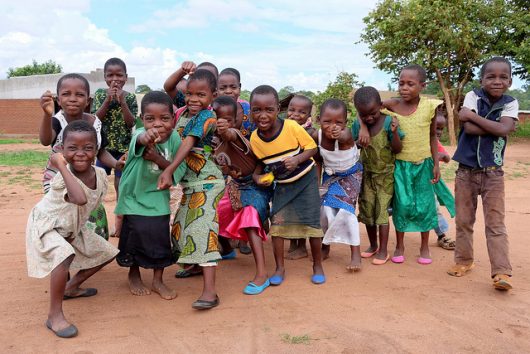
September 10, 2018
https://borgenproject.org/wp-content/uploads/borgen-project-logo.svg 0 0 Borgen Project https://borgenproject.org/wp-content/uploads/borgen-project-logo.svg Borgen Project2018-09-10 06:30:212024-05-27 09:22:46Amber Heard Is Helping Syrian Refugees
Activism, Advocacy, Global Poverty, Human Rights, Human Trafficking

Top 10 Non-Profit Human Rights Organizations

Top 10 Non-Profit Human Rights Organizations
Human rights are universal moral values that should protect individuals and allow them to live free and safe lives. Certain human rights include the right to life, freedom from torture, right to education, etc. These rights, however, are not always protected by regulations and laws, which can lead to ethical concerns. Non-profit human rights organizations focus on getting individuals the rights they deserve. Here are 10 non-profit human rights organizations.

10 Non-Profit Human Rights Organization

  1. Human Rights Watch
    The Human Rights Watch was created in 1987 in order to shine a light on the human rights violations that were happening in the Soviet Union and Eastern Europe. The non-partisan, non-governmental organization has gained recognition from citizen movements and other humanitarian causes. It now has 400 staff members working around the globe. Human Rights Watch investigates abuse and effectively spreads this information, increasing public awareness and working with government officials and corporations to make a change.
  2. Human Rights First: Based in America, Human Rights First puts pressure on those in power, whether government or private companies, to combat social injustice. Like the Borgen Project, Human Rights First creates campaigns that not only inform the public on issues but also encourage them to email and call Congress in favor or against certain legislative laws. Examples of their campaigns include ending modern-day slavery, stopping Trump’s Refugee Ban, and closing Guantameno Bay.
  3. Human Rights Foundation: Unlike other non-profit organizations, the Human Rights Foundation focuses on closed societies. Closed societies are authoritative regimes and dictatorships that restrict individual freedom and expression. Established in 2005, the Human Rights Foundation promotes freedom and democracy by supporting activists and exposing political and social corruption in totalitarian governments.
  4. Ella Baker Center for Human Rights: Ella Baker was an activist and a leading figure during the Civil Rights Movement. The Ella Baker Center for Human Rights works with people of color to attack racial injustice in the U.S, specifically the prison system. People of color are disproportionately targeted by the police, so it isn’t surprising that they make up more than ½ of prisoners in correctional facilities. The Ella Baker Center for Human Rights breaks the cycle of incarceration by organizing campaigns around the country to protest in support of their freedom. Their recent victories include closing five out of the eight youth prisons in California, creating Books Not Bars, starting community safety plans and more.
  5. Refugees International: Refugee International was created in 1979 to protect Indochinese refugees. Since then, this independently funded, non-profit human rights organization has provided hands-on assistance to displaced refugee families. Advocates travel to areas in need to assess the situation and compile crucial resources for refugees.
  6. FINCA International: By giving small loans to the poor, entire communities can grow. FINCA International addresses poverty through microfinancing and social enterprise. There are 20 community-based microfinance banks placed across low-income neighborhoods throughout the world. These services help build small businesses that, in turn, improve economic development and sustainability.
  7. Mending Kids: Mending Kids is a life-saving, non-profit human rights organization that sends surgical teams to over 60 countries to mend children in need of surgical procedures. The surgical staff trains local doctors in developing countries to effectively provide more complex surgical procedures. For children who are facing serious, life-threatening problems, host-families are set up around the U.S. to care for them while they undergo medical procedures
  8. War Child: War Child is comprised of three major offices in the U.K, Holland and Canada. The organization protects children who have been and who are still being affected by armed conflict. War Child’s approach includes improving access to education, helping children understand their legal rights through training and programs and offering support to children who endured mental trauma during acts of armed conflict. In fact, many of the staff have also been survivors of armed conflict.
  9. Habitat for Humanity: Families around the world are struggling to find affordable, decent housing. Habitat for Humanity works in the U.S. and 70 other countries helping low-income families apply for homeownership. In the case of natural disasters, Habitat for Humanity works with local communities to supply resources for those whose homes were damaged.
  10. Polaris: Polaris is named after the North Star, which was used during slavery as a guide to freedom. Today, Polaris serves as an assistance hotline to victims and survivors of human trafficking. As one of many non-profit human rights organizations focused on human trafficking victims, Polaris builds public data sets to better understand human trafficking. With this information, Polaris designs strategies to target the system and engages law officials to enforce plans that will stop trafficking both nationwide and internationally.

This list is only a fraction of the organizations in the world trying to make a difference. There are many groups fighting for important causes like ending world hunger and poverty, providing clean drinking water and providing medical aid. If you are looking to donate or volunteer, one of these top 10 non-profit human rights organizations would definitely be a good place to start.

– Lilly Hershey-Webb
Photo: Flickr

August 26, 2018
https://borgenproject.org/wp-content/uploads/borgen-project-logo.svg 0 0 Borgen Project https://borgenproject.org/wp-content/uploads/borgen-project-logo.svg Borgen Project2018-08-26 01:30:142024-06-07 05:07:53Top 10 Non-Profit Human Rights Organizations
Advocacy, Global Poverty, Poverty Reduction, Volunteer

Mandela’s 100: 6 Ways to Alleviate Poverty in Africa

Mandela
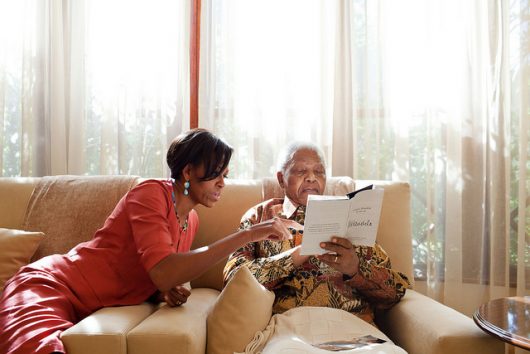
Nelson Mandela is known internationally for his great activism for equal rights for all. Mandela was a South African political leader, beginning his career as a lawyer determined to free his fellow black Africans.

July of 2018 marked his centennial, and though he may no longer be alive, his legacy continues on. His anti-apartheid revolution improved levels of poverty in Africa, and his words of inspiration will forever impact others: “Like slavery and apartheid, poverty is not natural. It is man-made and it can be overcome and eradicated by the actions of human beings.”

The Nelson Mandela Foundation

Today, many people still celebrate Nelson Mandela’s work through the Nelson Mandela Foundation. Barack Obama recently gave a speech in celebration of Mandela, encouraging philanthropists everywhere to honor his work. Celebrities like Oprah, Jay-Z, Usher, Ed Sheeran and others are coming together to put on a concert for the Mandela 100 Fest in South Africa.

For those interested in celebrating Mandela, there are several ways to get involved. Action occurs at three levels:

  • Having the humanitarian mindset to care for supporting poverty in Africa
  • Being willing to communicate that concern and the need for aid
  • Finally jumping into action to provide the hands-on work.

Here are the most impactful ways to follow in Nelson Mandela’s legacy and help alleviate poverty in Africa.

6 Ways to Alleviate Poverty in Africa

  1. Believe in Humanity. Before one can bring about change and support for equality and basic human rights for all, the mindset has to exist. It is crucial to truly believe that all humans are deserving of the same dignity and respect. No cultural group is less human than another. Find commonality in humanity and advocate for justice in all corners of the Earth.
  2. Support Democracy. Democracy is the form of government that is ruled by elected officials in which members of the political boundary or state have been given the power to elect. Democracy means that everyone has a voice; thus, less oppression is allowed to take place. Though Africa as a continent is moving toward democracy, some countries remain oppressed, especially those in extreme poverty in rural areas. By supporting democracy in Africa, corruption and widespread violence can be eliminated.
  3. Empowerment. Being oppressed means that your voice isn’t being heard and that you are part of a marginalized, automatically disadvantaged group. The situation often seems hopeless when you are treated as insignificant. Any support for poverty in Africa is helpful, but when individuals feel empowered, minds expand and spirits rise. Be a part of lifting people up to feel empowered to seek out basic human rights — health, education, equality and social justice.
  4. Educate Yourself. With so many ways to access current events, it is fairly simple to stay current on global news. In developed nations, internet access is readily available to almost all persons. Take it upon yourself to seek out the facts and stay informed. Read the newspapers, subscribe to newsletters through your email or on your smartphone, or even search the internet for international happenings. It is important to be aware of credible sources versus not, so that you don’t fall victim to unnecessary hysteria. Another part of being informed about foreign affairs is to know who your public officials are as well as what policies exist for poverty in Africa — both pending in status and already in place.
  5. Dialogue. Don’t underestimate the power of communication. Poverty is a gruesome reality in Africa and many other underdeveloped nations. In a busy day-to-day life, there are many social interactions with people in social and professional circles. Many of these people will be aware of what is going on, and many will not. If people are having the conversations about poverty in Africa, its ramifications and how the U.S. as a leading global country can help, then the more likely it is for social action to ensue.
  6. Volunteer Your Time. Individuals in America and other developed nations can help alleviate poverty in foreign lands without having to travel or donate money. You can make a difference by taking action. Simple acts like calling your representative or sending an email can help bring attention to foreign aid. If time allows, meet with that representative to discuss the importance of supporting poverty in Africa. Contribute to an organization by organizing or volunteering for a fundraiser.

Leave a Mark

Nelson Mandela advocated for citizens of Africa to have the right to education, health, hunger, gender equality, literacy, peace and poverty while also supporting many charities. He has left his mark by not only his influence on political change but also his passionate and relentless motivation of people around the globe.

– Heather Benton

Photo: Flickr

August 23, 2018
https://borgenproject.org/wp-content/uploads/borgen-project-logo.svg 0 0 Borgen Project https://borgenproject.org/wp-content/uploads/borgen-project-logo.svg Borgen Project2018-08-23 01:30:422019-08-21 11:26:01Mandela’s 100: 6 Ways to Alleviate Poverty in Africa
Advocacy, Human Trafficking

Five Creative Ways to Fight Human Trafficking

Creative Ways to Fight Human Trafficking
When one mentions the word ‘slavery,’ many people think back to the darker days of American history; they lament this tragedy and sigh with relief that slavery is over. But in reality, an estimated 27 million people are still enslaved today — this number surpasses the total number of slaves transported during 400 years of the trans-Atlantic slave trade. Human traffickers today coerce people of all shapes and sizes, men, women, and children, into all different types of slavery. To help end this ever-present problem, here are five creative ways to fight human trafficking.

Get educated with the book “Sold” by Patricia McCormick.

“Sold” by Patricia McCormick is the fictional story of a 13-year-old Nepali girl named Lakshmi who is sold by her family into sex slavery. McCormick captures both Lakshmi’s innocence and the horror of her circumstance in a beautifully written, verse novel. Despite the book’s heavy content, it is considered a children’s novel (recommended for ages 12 and up) as McCormick’s desire was to activate and inspire the next generation to act rather than scar.

Easy to understand, well-researched and heartbreaking, “Sold” is the perfect novel to read to better comprehend and empathize with victims of human trafficking.

Be an advocate for change with your political representatives.

Despite what many Americans believe, reaching out to political leaders is incredibly simple, and representatives really do want to hear from their constituents. Speak up and advocate on behalf of those who cannot for themselves by letting delegates know that they should fight against human trafficking and make it a priority.

Give them a call, send an email or schedule a meeting to show just how important this issue is and why it should be important to them.

Use social media to inform your circle of influence.

One of the simpler creative ways to fight human trafficking is to simply post on social media. Whether it be Facebook, Instagram, Twitter or any other myriad of social media outlets, sharing a helpful Ted Talk, graphic or simply reiterating some of the facts can get others involved.

Everyone has a sphere of influence, so utilize one of the best ways to connect with them by taking to social media.

Make a conscious decision to avoid products by some of the biggest companies in America.

Some of America’s biggest brands benefit from and exploit the use of slave labor in making their products. Nestle, Hershey’s, Walmart and H&M are all massive companies and some of the most notorious offenders. What will get the attention of these big businesses?

Stop using their products and frequenting their stores. Hit these companies where it will hurt the most – their profits. In a society that thrives in a competitive marketplace, consumers can demand ethical practices by simply refusing to buy anything from corporations that benefit from human trafficking.

Stay positive.

It is all too easy to become discouraged when fighting a human rights violation as widespread and horrific as human trafficking. Do not give up. As people continue to implement these small changes and make it clear that this kind of unethical behavior will not be tolerated, change will come. Look for the changes that are already happening and focus on what can be controlled and done to create change.

As the battle to end slavery rages on, these five creative ways to fight human trafficking can help make small, constructive changes for the good of others.

– Sarah Dean
Photo: Flickr

August 8, 2018
https://borgenproject.org/wp-content/uploads/borgen-project-logo.svg 0 0 Borgen Project https://borgenproject.org/wp-content/uploads/borgen-project-logo.svg Borgen Project2018-08-08 01:30:582024-05-29 22:52:41Five Creative Ways to Fight Human Trafficking
Advocacy, Refugees, Volunteer

Local and Global: UNHCR Works to Help Refugees and So Can You

help refugeesJune 20 marked the 18th anniversary of world refugee day. There are currently 68.5 million forcibly displaced people worldwide. Of those millions, 25.4 million people are classified as refugees.

World Refugee Day holds a long history of support for those in need. This day is celebrated in order to give all an opportunity to help refugees and to create a public awareness for millions of lives that are in need of saving.

Since the beginning of World Refugee Day in 2000, the refugee crisis has increased greatly. Growing from 12 million in 2000 to more than 20 million in 2018, refugees can be found seeking shelter in many countries.

The United Nations

The United Nations High Commissioner for Refugees has taken steps to fight the refugee crisis. The UNHCR provides assistance and support to refugees all over the world. Present in 128 countries and 478 locations around the world, the UNHCR is helping those wherever they can.

For example, in Ukraine, the UNHCR is working with the Ukrainian government to help strengthen the asylum system and gives medical, material and social assistance to those refugees and internally displaced people. In Ukraine, there are currently 1,800,000 people who are internally displaced and 3,253 refugees from other countries.

Along with working with the government and giving assistance to those in need, the UNHCR in Ukraine provided 843 homes with winter cash assistance in 2018.

Another recent effort presented by the UNHCR was their assistance in Montenegro. On April 3 the UNHCR paired with the Red Cross and opened the first Community Centre for persons seeking international protection.

Education

The UNHCR doesn’t only just provide physical materials and goods; they also are committed to bringing education to refugees all over the world.

By the end of 2016, the UNHCR had encouraged 64 out of 81 countries to put policies in place to support the inclusion of refugee children in the respective countries education system. After this push, more than 984,000 refugee children were enrolled in primary education.

Of that 984,000 refugee children, 250,000 were not attending school at the time.

How to Help

While the UNHCR is continually working to better the lives of refugees all over the world, there is still plenty of work that can be done on the individual level for refugees. Here are five ways that anyone can get involved no matter where they may be.

  1. Volunteer a skill: Having a specific skill or talent can be used for good to help refugees. Whether knowing how to budget extremely well or how to create a website, there are refugees in local communities who would appreciate learning a new talent or skill to help them with their future endeavors.
  2. Spread awareness: Hold fundraisers, raffles, yard sales or meetings to spread the word about the refugee crisis. There are some that may know there is a problem, but don’t know much more than that. By putting on events and spreading the word, education about this crisis will increase awareness.
  3. Call the House Representatives and the Senate: Calling local state representatives is a quick and easy way to let one’s voice be heard. Placing a call to a member of the House or Senate will let them know that this is an issue that you care about and want to address.
  4. Support business and organizations run by refugees: Moving to a new country and facing the economic challenges of that country can be one of the hardest things for refugees. Supporting their family can be difficult for refugees in a new country. Make an effort to buy from refugees to help them get started in a new place.
  5. Donate: Donating can be one of the easiest ways to help refugees in need. Donations can be for organizations that go out into the field and provide physical goods or they can be for organizations, like The Borgen Project, that push elected officials to support and pass laws to help those in need.

While the refugee crisis continues to grow, it is important to know that anyone can take part in getting laws passed to protect refugees or can offer kindness to those who are adjusting to drastic life changes.

– Victoria Fowler
Photo: Flickr

June 29, 2018
https://borgenproject.org/wp-content/uploads/borgen-project-logo.svg 0 0 Borgen Project https://borgenproject.org/wp-content/uploads/borgen-project-logo.svg Borgen Project2018-06-29 07:13:562024-05-29 22:42:55Local and Global: UNHCR Works to Help Refugees and So Can You
Advocacy, Gender Equality, Women's Empowerment, Women's Rights

Justice for Women Must Be Made a Priority

Justice for WomenThe United Nations estimates that there are currently four billion people excluded from the rule of law, with over 150 countries that have one or more laws that discriminate against women. To address this inequality and bring more women access to justice, the High-level Group on Justice for Women (HLG) had its inaugural meeting at the Hague from May 28-29, 2018.
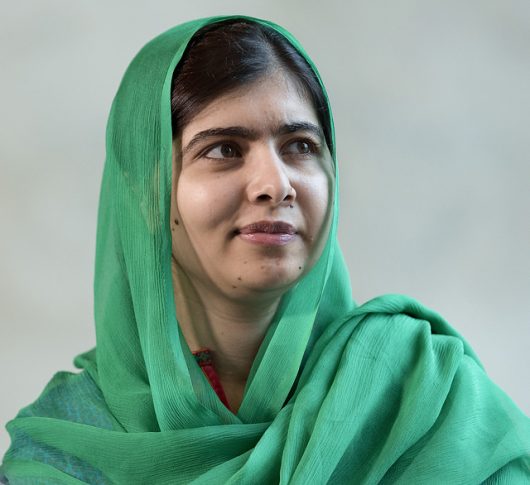
What is the High-level Group on Justice for Women?

This group was started by U.N. Women along with the Pathfinders for Peaceful, Just and Inclusive Societies and the International Development Law Organization (IDLO). Its members include experts on human rights, gender and justice from civil society organizations, governments, academics and intergovernmental organizations.

The main purpose of this group is to act as advocates for women’s access to justice during the High-level Political Forum in 2019 where the 2030 Sustainable Development Goals (SDGs) will be reviewed. In particular, the HLG is focused on SDG 16 with its stated goal being to “promote peaceful and inclusive societies for sustainable development, provide access to justice for all and build effective, accountable and inclusive institutions at all levels.”

One of the HLG’s main purposes is to ensure the implementation, monitoring and reporting of SDG 16 in the years to come. The group wishes to highlight the justice gaps that women and girls face around the world, ways to improve global access to justice and why this is a necessary cause to invest in. To address these issues, the HLG is focused on these approaches:

  • Reforming the legal and policy framework
  • Reforming justice institutions
  • Legally empowering women to access justice and claim rights
  • Addressing customary and informal justice

Why Justice for Women Matters

The HLG argues that ensuring justice for women is at the heart of achieving the Sustainable Development Goals because, without this measure, other SDGs such as education, equality, health and employment will not be realized. The SDGs are key to fighting global poverty, with the first goal being to end poverty in all its form everywhere. Equal justice is a means to recognizing and respecting women’s rights as it allows women to function as equal members of society who can contribute to development and ending poverty.

Beyond equality and respect for human rights, the HLG strongly believes that women’s access to justice is both a requirement and enabler of development. There has been more and more evidence that with greater gender equality comes greater economic development. For instance, when women are permitted to work and contribute to household incomes, studies have shown that more money is allocated for health, education, food and children. Improving justice for women gives social, economic and environmental benefits instead of continuing poverty, social exclusion, bad health, violence and crime.

Closing the Justice Gap

All of this work highlights the contrasts between what is promised in SDG 16 and what women are really experiencing and the contrasts between what women need and want when seeking justice and what they actually receive. In other words, this is known as the justice gap.

Around the world, 104 economies have laws preventing women from working specific jobs like manufacturing, construction, agriculture, water and transportation. Equally shocking, 45 countries have no laws on domestic violence and 59 economies have no laws about sexual harassment in the workplace.

This unequal justice and lack of respect for women’s rights is a hindrance to development and ending global poverty. The HLG is an important ally in the fight to end global poverty and its work to combat the justice gap will hopefully see great results in the years to come.

– Alexandra Eppenauer
Photo: Flickr

June 17, 2018
https://borgenproject.org/wp-content/uploads/borgen-project-logo.svg 0 0 Borgen Project https://borgenproject.org/wp-content/uploads/borgen-project-logo.svg Borgen Project2018-06-17 07:30:452024-05-29 22:42:45Justice for Women Must Be Made a Priority
Advocacy, Education

Malala Visited Pakistan for the First Time Since 2012

Malala Visited Pakistan

The story of Malala Yousafzai’s survival is widely known around the globe. Recently, Malala visited Pakistan for the first time since 2012 when she was shot in the head by the Taliban.

Returning to Pakistan

In 2018, Malala returned to Pakistan and, under security protection, visited her home in the northwest town of Mingora. Back in 2012, Mingora was controlled by the Taliban under the rule of Mullah Fazlullah. At the age of 15, Malala was already vocal about female education, something that wasn’t supported under Taliban rule.

The Attack and Recovery

One day, Malala was traveling on a school bus with other students when it was stopped by men who were part of the Taliban. They boarded the bus, asking for Malala by name. When her friends turned to look at her, the trigger was pulled and she was shot in the head. 

Malala was rushed to the hospital, where her recovery was difficult. Within the first 72 hours of being shot, her brain swelled and she got an infection. She was transported to England to receive rehabilitative care at the Queen Elizabeth Medical Center, which specialized in emergency and rehabilitative care. Malala survived her attack after various surgeries but was left with some facial paralysis and deafness in her left ear.  

Continuing the Fight for Education

After recuperating, Malala continued her fight for the education of girls. She became the youngest Nobel laureate in 2014 when she received the Nobel Peace Prize for her “struggle against the suppression of children and young people and for the right of all children to education.” 

Malala has a foundation in her name, which is set up to support groups in Pakistan, Nigeria, Jordan, Syria and Kenya that support education. Apple has also partnered with Malala and the Malala Fund to help girls get an education.

According to 9 to 5 Mac, Apple will help the Malala Fund reach its goal of providing secondary education to more than 100,000 girls who would otherwise be unable to attend school.

Since the murder attempt in 2012, Malala has become the biggest advocate for girls education in Pakistan. She has become a beacon of hope. After Malala’s last visit to Pakistan, she hopes to return to live there after she finishes her studies in England.

– Valeria Flores

Photo: Flickr

May 21, 2018
https://borgenproject.org/wp-content/uploads/borgen-project-logo.svg 0 0 Borgen Project https://borgenproject.org/wp-content/uploads/borgen-project-logo.svg Borgen Project2018-05-21 07:30:152024-12-13 17:58:46Malala Visited Pakistan for the First Time Since 2012
Advocacy

Labour Behind the Label Advocates for Clothing Workers’ Rights

Labour Behind the Label
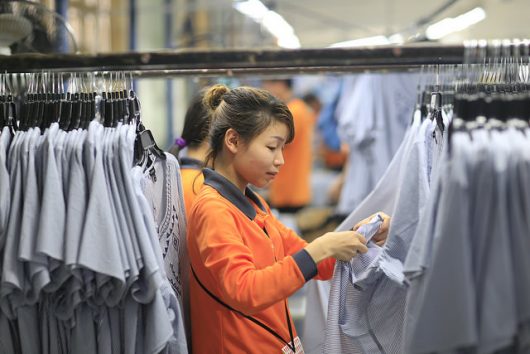
The Clean Clothes Campaign’s United Kingdom-based nonprofit, Labour Behind the Label, is taking action to improve the deplorable work conditions found in factories across the world and provide support to workers in the garment industry. The organization promotes ethical clothing and collaborates with brands and trade unions to push for the reform of systemic problems found in the clothing business.

Change Your Shoes and Labor Rights

Recently, Labour Behind the Label held campaigns to uphold worker rights, such as the “Change Your Shoes” campaign, a project that called for shoe brands to provide greater transparency in their production process. Through its tireless efforts, Labour Behind the Label is working to amend the garment industry, combatting low wages, unsafe working conditions and abusive treatment, thereby holding brands accountable.

According to the organization, Labour Behind the Label is the United Kingdom’s only campaign group dedicated solely to labor rights in the worldwide garment industry. Past activity has included urging retailers to sign the Bangladesh Accord on Fire and Building Safety, pushing for living wages for Cambodian garment workers, and bringing victims of the Rana Plaza factory disaster compensation.

Clean Clothes and Living Wages

The nonprofit was founded in 2001 as part of the Clean Clothes Campaign, the garment industry’s most prominent alliance of labor unions and non-governmental organizations (NGOs). Labour Behind the Label’s endeavors include raising awareness and putting pressure on companies to support workers’ rights, as well as lobbying governments and policymakers.

The group is currently advancing programs such as the “Living Wage” campaign, working with the Asia Floor Wage Alliance to demand a living wage in Asian garment producing countries. The campaign would help provide garment workers, 80 percent of whom are women, with living wages to cover their basic needs.

Worker Safety and the Shoe Industry

The organization is also holding a “Worker Safety” campaign,” providing compensation for victims of Pakistan’s 2012 Ali Enterprises factory fire. In addition, it has led actions such as a weeklong initiative to lobby brands to ban dangerous practices such as the sandblasting of jeans.

Labour Behind the Label launched the “Change Your Shoes” campaign to look specifically at the operations of the shoe industry. Twenty-four billion pairs of shoes were produced in the year 2013, with 87 percent of them manufactured in Asia. The program has called upon leading shoe brands in the United Kingdom, as well as brands such as Prada, Birkenstock and Camper, to provide information pertaining to their production processes.

The program also asks members of the shoe industry to publish the names and addresses of suppliers, report on steps taken to move away from dangerous chemicals and demonstrate that the companies are providing fair wages and safe working conditions. The campaign has led research and investigations into the manufacturing processes of major shoe brands, observing that the system involves high-intensity labor, short deadlines and worsening living conditions of exploited workers.

Ending Fear and Silence

In many countries, there is a climate of fear and silence in the production chains. The project acknowledges that some companies, such as Nike and Adidas, have already begun to publish information about its processes and will hand its petition to brands to promote change.

Through projects such as the “Change Your Shoes” campaign, Labour Behind the Label is taking action to bring about fairer conditions in the garment industry worldwide. The organization is working to hold companies more accountable and create transparency in the industry, demanding living wages and calling for safer work environments in the clothing manufacturing business.

Ongoing Positive Change and Accountability

Labour Behind the Label’s activism has led to the creation of “codes of conduct” for companies, as well as “ethical trading” initiatives, which have promoted the annual inspection of factories. Labour Behind the Label acknowledges that sweatshop abuses are an elusive and deeply ingrained problem, as there are no easy solutions. But through its advocacy, campaigning, and research, Labour Behind the Label is taking steps to galvanize change in the clothing business on an international scale.

– Shira Laucharoen
Photo: Flickr

May 16, 2018
https://borgenproject.org/wp-content/uploads/borgen-project-logo.svg 0 0 Borgen Project https://borgenproject.org/wp-content/uploads/borgen-project-logo.svg Borgen Project2018-05-16 01:30:062019-11-10 09:07:55Labour Behind the Label Advocates for Clothing Workers’ Rights
Advocacy, Children, Global Poverty

How the Youth Make a Difference in the Face of Poverty

Youth Make a Difference in the Face of PovertyPeople will often live up to the expectations set for them, and leaders of youth the world over understand this simple idea. Too frequently, these expectations do not reach beyond circumstances, and young people entangled in poverty can find little encouragement or direction. However, when given the right support and motivation, youth make a difference beyond the sum of their years or situations.
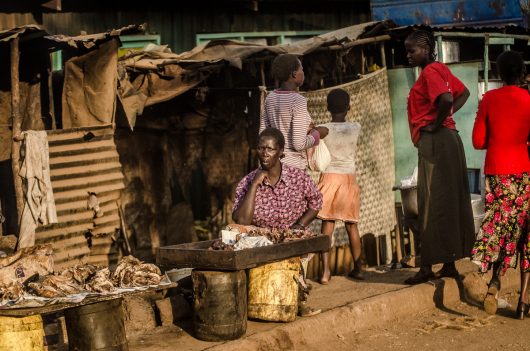
Mark McCord, former Director of the Young African Leaders Initiative Regional Leadership Center in Nairobi, Kenya, sees the possibilities for those not yet jaded by the world and states that “…Young people can be transformative in their communities and countries.”

Mohamed Arshad Ibrahim, Executive Director of the Youth Peer Education Network in Somalia (Y-PEER), understands this as well. Ibrahim, whose organization targets vulnerable youth who might otherwise join militant groups, says “by discussing issues that affect them, youth come up with solutions.”

Breaking Barriers

These solutions vary as much as the stories of the young people behind them. Youth make a difference in ways that speak to the strength that comes from struggle. For adolescents in Gaza, that struggle is 430,000 strong. With that many young people, initiative and opportunity are and become vital to the development of a region.

Sokaina Girls’ School in Deir al Balah City, in the middle of the Gaza Strip, now has a library because of the initiative of some 40 young women. With $300 in funding from the United Nations’ International Children’s Fund (UNICEF), the girls challenged the social attitudes surrounding them, went to the market (for the first time ever) and bought books. With some tables and chairs provided by the Education Ministry, they built shelves from wooden boxes and seats from old tires.

In addition, youth make a difference in the State of Palestine, where UNICEF helps 18,000 disadvantaged adolescents develop through life skills, civic engagement, sports and entrepreneurial initiatives. This library project was part of a larger program that the organization started in 11 schools, involving 1,200 high school students.

The Power of One

Though it has been said that there is strength in numbers, youth make a difference by simply seeing and responding to a need. For Toby Little, a nine-year-old English boy, that need started with a desire to learn more about the world. During his campaign to write to somebody in every country, Toby became empathetic to his new pen-pals.

Soon, Toby found himself working with ShelterBox, a charity focused on providing those in need with aid and essentials, such as:

  • Shelter
  • Tools
  • Stoves and cooking utensils
  • Water purification, and
  • Small gifts for children

A Portrait of Promise

Sometimes, youth need a guiding hand to help those in need. Teacher Amy Hall provided just that when she collaborated with Memory Project, an organization that invites students and art teachers to create portraits of abused or neglected children, in order to make them feel valued.

The students in her class chose to work with Syrian children and orphans, feeling that this population would benefit the most from their assistance. For the children in the refugee camps and orphanages, barely having anything, a portrait became a big deal and a reminder of their worth.

Goals for Peace

Youth make a difference in communities such as one in Brazil, where the country’s Goals for Peace project fights against gender inequality. This admirable group hopes to provide opportunities for the empowerment of young girls. For boys like Taniel (18), and Clibson (15), the chance to help is inspiring. Sometimes, just standing with those who challenge the impediments of progress is doing enough. With violence against women acting as an everyday occurrence, a change in the status quo provides hope for a new direction.

The desire to help cannot be quantified in years, and youth make a difference when given the freedom and reigns to do so.

– Daniel Staesser
Photo: Flickr

May 12, 2018
https://borgenproject.org/wp-content/uploads/borgen-project-logo.svg 0 0 Borgen Project https://borgenproject.org/wp-content/uploads/borgen-project-logo.svg Borgen Project2018-05-12 01:30:402024-05-29 22:42:19How the Youth Make a Difference in the Face of Poverty
Advocacy, Aid, Charity, Developing Countries, Global Poverty

Six Lesser Known Organizations Addressing Poverty

Lesser Known Organizations Addressing PovertyMany U.S.-based organizations work hard to reduce poverty internationally. Not all of them have the same name recognition or notoriety, but they are all engaging in equally important and effective work. From nonprofits to research organizations, these are just some of the lesser known organizations addressing poverty in developing nations.

Lesser Known Organizations Addressing Poverty

  1. Africare
    Africare, one of the largest African-American led organizations with an almost entirely African-American staff, focuses on community-driven development in Africa. Working with the tools of community engagement, local public-private partnerships, locally driven behavior change and capacity building, Africare seeks to improve economic development, nutrition, water and sanitation and women’s and youth empowerment. Since Africare’s founding, it has provided more than $1 billion in assistance to people across Africa.
  2. The Hunger Project
    Operating for 40 years, The Hunger Project develops women-centered, grassroots strategies to help individuals out of poverty and hunger. Working in more than 16,000 communities internationally, The Hunger Project promotes self-reliant, community-led development, and partnerships with local governments to create sustainable change in communities facing poverty. Working in 12 countries and reaching 17 million people, The Hunger Project is creating community-led development for many, representing one of many lesser known organizations addressing poverty.
  3. Trickle Up
    Trickle Up, a U.S.-based nonprofit organization seeks to help people rise out of poverty internationally, focusing on those who are disproportionately affected – refugees, individuals with disabilities, women, indigenous populations and people in rural areas. The organization uses a program called Graduation, which involves a step by step process to lift individuals out of poverty. Recipients are given a small grant to start a business and paired with other local people to create a savings group. From there, individuals are coached and taught skills to build their business, confidence and livelihoods. With 250,000 participants and more than 1 million lives impacted, this nonprofit is generating great change.
  4. The Earth Institute
    Based out of Columbia University in New York City, The Earth Institute is a group of researchers, policy experts, scientists, economists and students all seeking to guide policy towards sustainability worldwide. It works domestically and internationally on a wide variety of topics, including climate, urbanization, water and energy, but also helping individuals out of poverty. By working on sustainable and efficient policy, such as preventing flooding in developing nations, The Earth Institute creates policy that improves the quality of life of individuals worldwide.
  5. Innovations for Poverty Action
    Innovations for Poverty Action (IPA) is one of the lesser known organizations addressing poverty through dedicated evaluations of current programs designed to help impoverished populations and providing evidence showing which approaches work and which do not. IPA identified a gap in the data available and created a mission to fill it. It works closely with governments, for-profit companies, nonprofits and civil society to create evidence-based programs to help poor individuals out of poverty. The work is evaluation focused but provides a body of evidence that can be drawn upon for program design and development.
  6. Bread For The World
    Bread For The World is a Christian nonprofit that works in a bipartisan way to urge policymakers to pass policies focused on food security that improve the lives of those living in poverty both domestically and abroad. Working at the policy level, Bread For The World provides individuals with advocacy tools to help them write letters, email or call members of Congress to promote poverty reducing policy. Since its inception in 1974, Bread For The World has successfully funded foreign aid and domestic policy to reduce poverty worldwide.

The field of international development is vast, and with many different organizations trying to address poverty internationally, it can be hard to know where to look to see what is being done. In addition to the many large organizations working internationally, we cannot forget about lesser-known organizations addressing poverty in developing nations.

– Katherine Kirker

Photo: Flickr

May 3, 2018
https://borgenproject.org/wp-content/uploads/borgen-project-logo.svg 0 0 Borgen Project https://borgenproject.org/wp-content/uploads/borgen-project-logo.svg Borgen Project2018-05-03 01:30:182019-08-01 10:30:46Six Lesser Known Organizations Addressing Poverty
Page 33 of 77«‹3132333435›»

Get Smarter

  • Global Poverty 101
  • Global Poverty… The Good News
  • Global Poverty & U.S. Jobs
  • Global Poverty and National Security
  • Innovative Solutions to Poverty
  • Global Poverty & Aid FAQ’s
Search Search

Take Action

  • Call Congress
  • Email Congress
  • Donate
  • 30 Ways to Help
  • Volunteer Ops
  • Internships
  • Courses & Certificates
  • The Podcast
Borgen Project

“The Borgen Project is an incredible nonprofit organization that is addressing poverty and hunger and working towards ending them.”

-The Huffington Post

Inside The Borgen Project

  • Contact
  • About
  • Financials
  • President
  • Board of Directors
  • Board of Advisors

International Links

  • UK Email Parliament
  • UK Donate
  • Canada Email Parliament

Get Smarter

  • Global Poverty 101
  • Global Poverty… The Good News
  • Global Poverty & U.S. Jobs
  • Global Poverty and National Security
  • Innovative Solutions to Poverty
  • Global Poverty & Aid FAQ’s

Ways to Help

  • Call Congress
  • Email Congress
  • Donate
  • 30 Ways to Help
  • Volunteer Ops
  • Internships
  • Courses & Certificates
  • The Podcast
Scroll to top Scroll to top Scroll to top