• Link to X
  • Link to Facebook
  • Link to Instagram
  • Link to TikTok
  • Link to Youtube
  • About
    • About Us
      • President
      • Board of Directors
      • Board of Advisors
      • Financials
      • Our Methodology
      • Success Tracker
      • Contact
  • Act Now
    • 30 Ways to Help
      • Email Congress
      • Call Congress
      • Volunteer
      • Courses & Certificates
      • Be a Donor
    • Internships
      • In-Office Internships
      • Remote Internships
    • Legislation
      • Politics 101
  • The Blog
  • The Podcast
  • Magazine
  • Donate
  • Click to open the search input field Click to open the search input field Search
  • Menu Menu

Archive for category: Advocacy

Information and news on advocacy.

Advocacy, Global Poverty

Why Are More People Crossing the Border?

why are more people crossing the border
In early 2019, Congress approved a humanitarian aid plan for migrants at the U.S.-Mexico border. Nevertheless, the political crisis of migrant treatment and their arrival to the U.S. continues. In February 2019, President Donald Trump declared a national emergency to obtain funding for his planned border wall. He has repeatedly called the situation at the U.S. border an invasion. The question remains: why are more people crossing the border?

People should note, however, that the number of border apprehensions dropped by 28 percent in the course of a month. The number decreased from the apprehension of an estimated 120,000 plus people in May 2019 to an estimated 80,000 plus people in June 2019.

In the past, most of the undocumented immigrants found in the U.S. southern border were single men from Mexico. Recently, most immigrants trying to cross the U.S.-Mexico border are families coming from countries in Central America’s Northern Triangle, namely Guatemala, El Salvador and Honduras. These countries have severe instabilities. The number of people from these three nations applying for asylum around the world has increased seven-fold since 2010.

High Murder Rates in the Northern Triangle

High murder rates are a reason why more people have been leaving the Northern Triangle. Murder rates in the area have been considerably higher than in other areas, like the U.S. or Europe. These numbers peak at approximately 108.6 murders per 100,000 inhabitants in El Salvador and 63.8 in Honduras. Residents of Honduras also face extortion as criminals may kill them if they do not pay a war tax.

Many families try to seek asylum in Mexico to escape these murders. Nevertheless, the number of migrants at the Mexican border tell a similar story to that of the U.S. border. The number of deportations from Mexico back to the Northern Triangle has considerably increased between 2014 and 2015.

Poverty and Migration

Another reason for the rise in migrants at the southern border in recent years has been economic imperatives. Most recent migrants hail from impoverished regions such as the western highlands of Guatemala, in search of a life better suited to raising a family.

Everyday life in the area beckons land rights conflicts, environmental instabilities and depressed prices for their crop, which undermines the ability of citizens to make a living for their family. Nearly 70 percent of Honduras’ population lives in poverty. In Guatemala, nearly 60 percent live in poverty.

Gangs and Drug Cartels

In the Northern Triangle, drug cartels and gangs are a part of everyday life and threaten national and personal security. Violent groups often impose informal curfews, make absurd tax demands and recruit youth against their will. After the fight between in Mexican government and former drug boss Joaquin “El Chapo” Guzman, many other groups moved into the drug trade, leading to the killings of many innocent people in the country. In 2018, the number of people who made claims of credible fear and asked for asylum at the U.S. border skyrocketed to 92,000, compared to 55,000 claims in 2017.

Thousands of immigrants are facing the impossible choice of living in constant fear or seeking asylum, risking the possibility of detainment for indefinite periods or deportation back to their home nations where they risk a violent death.

No More Deaths

Illegal border crossing should not be a death sentence. No More Deaths, or No Más Muertes, is a humanitarian organization based in southern Arizona that is dedicated to stepping up efforts to stop migrant deaths in the desert. The organization works in the U.S.-Mexico borderlands through the civil initiative.

It is crucial for every American citizen to realize that migrants are not entering the United States because they want to, but because they have to. Entering the detention centers at the southern border comes after a perilous journey. Migrants ride trains where gang members demand tolls of upwards of $100 per station. Gang members kidnap more than 20,000 migrants in these situations.

Action is imperative to help people crossing the border as countless lives depend on it. Nevertheless, it is possible for individuals to help. Individuals can volunteer with organizations such as No More Deaths to provide food, advocacy and mapping efforts. They can also use their voice and email Congress through The Borgen Project’s website. Lastly, it is important for all citizens to educate themselves about migrants, their treatment in detention centers and why more people are crossing the border, even when circumstances seem dire.

– Monique Santoso
Photo: Flickr
August 4, 2019
https://borgenproject.org/wp-content/uploads/borgen-project-logo.svg 0 0 Kim Thelwell https://borgenproject.org/wp-content/uploads/borgen-project-logo.svg Kim Thelwell2019-08-04 07:43:332020-01-25 16:11:34Why Are More People Crossing the Border?
Activism, Advocacy, Global Poverty

10 Interesting Facts About Mahatma Gandhi

10 Interesting Facts About Mahatma Gandhi
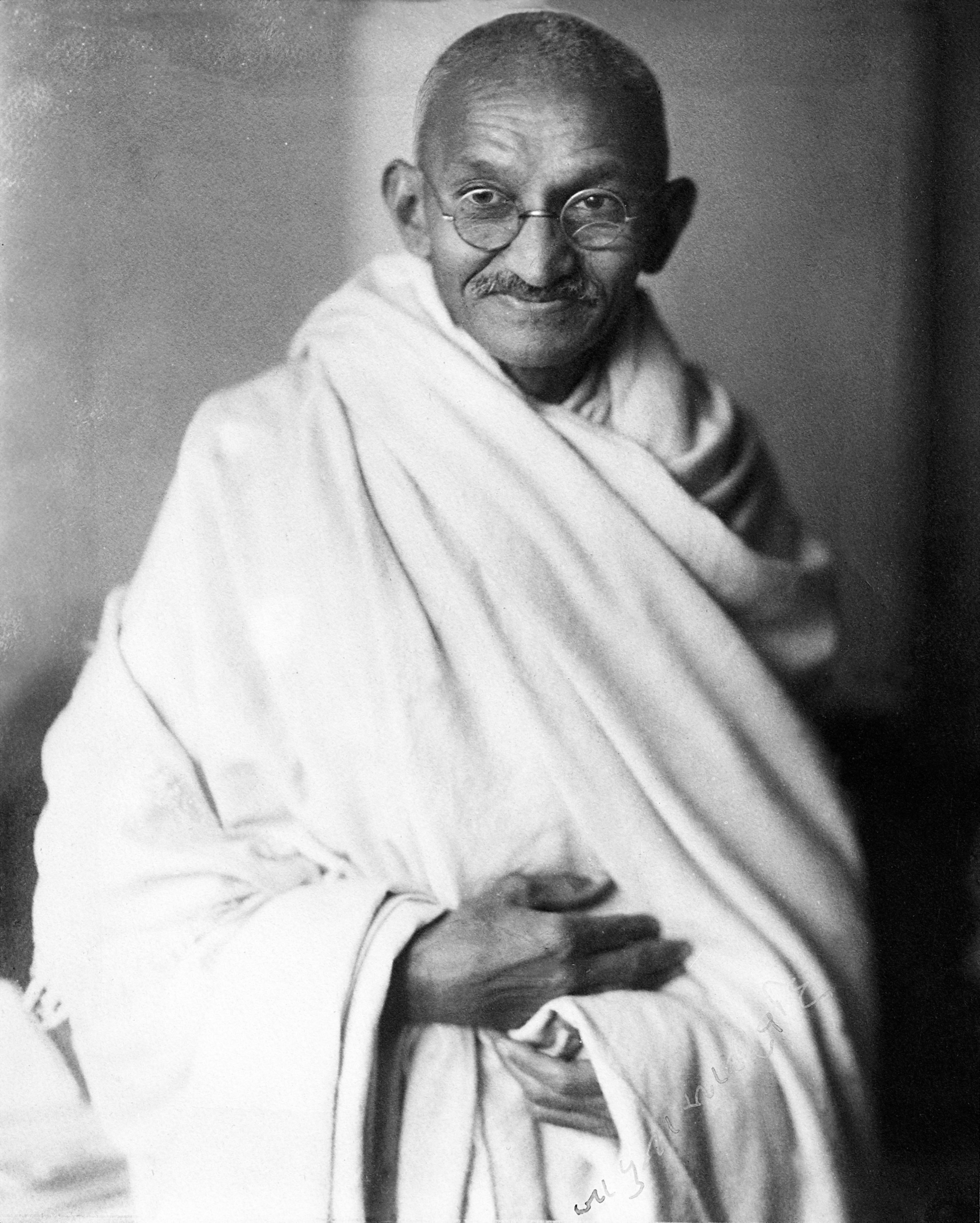
Revered as a Mahatma, or “great soul,” by the poet Tagore, Mohandas Karamchand Gandhi was an activist who changed India forever. Known for dressing in only a loincloth and a shawl, Gandhi became a leading figure in gaining India’s independence from Great Britain. Here are 10 interesting facts about Mahatma Gandhi.

10 Interesting Facts About Mahatma Gandhi

  1. Gandhi’s birthday, Oct. 2, is commemorated as the International Day of Non-Violence. Gandhi believed that the highest degree of consciousness was sacrifice. To purify, Gandhi would fast. Satyagraha, meaning “holding on to truth,” or the “truth force” was what Gandhi developed as a form of passive, civil resistance.
  2. Gandhi’s activism began in South Africa. In 1893, he was in Natal under a one-year contract, where he was subjected to racism by white South Africans. Gandhi specifically recounts being removed from a first-class railway compartment as his earliest experience in South Africa. Despite having a first-class ticket, he was thrown off a train. From that point onward, Gandhi decided to oppose the unjust treatment of Indians.
  3. Gandhi and Russian author, Leo Tolstoy, wrote letters to each other. The author and the activist both came from backgrounds leaning toward aristocracy and they both advocated for social equality. Gandhi’s first letter explained the religious duties and state laws experienced by Indians living in the South African province of Transvaal, and he asked Tolstoy to express his views on morality. Gandhi read Tolstoy’s works during his jail time in 1909. But he was most influenced by Tolstoy’s “The Kingdom of God is Within You,” which urged his search for religious truth in Hinduism. Afterward, Gandhi purchased a farm near Johannesburg and named it Tolstoy Farm. Bringing in about 80 residents, Gandhi experimented with a communal lifestyle he witnessed at a Trappist monastery.
  4. Gandhi was arrested more than once for opposing the mistreatment of Indian people. At 24, Gandhi started the Natal Indian Congress in order to fight discrimination against Indians in South Africa. In 1906, Gandhi and his followers protested the British policemen for profiling. He was jailed for seven years. Between 1921 and 1923, he was imprisoned for promoting civil rebellion. In 1930, he returned to jail in India for one year after illegally producing salt from saltwater and leading the Salt March, which he did to protest the government’s heavy tax on salt in India.
  5. When Gandhi returned to his birthplace in the Gujarat province, he worked against poverty by cleaning the area and building new schools and hospitals. During this time, he earned the nickname “Bapu,” meaning father. Gandhi advocated for better systems of education, and the offering of more consistent employment by the rich instead of small charities. Gandhi worked to feed millions of poor Indians, stating “You and I have no right to anything that we really have until these 3 million are clothed and fed better.”
  6. Gandhi’s method of charkha, or the spinning wheel, represented interdependence, self-sufficiency and a quiet revolution against British control of indigenous industries. Used to make textiles, the wheel is a staple of cotton growers and weavers. It gave employment to millions of Indians. It also makes up the “sun” in Gandhi’s Constructive Programme, a system for carrying out a struggle through community. Gandhi was a master of spinning himself. He encouraged his fellow Indians to make homespun cloth instead of purchasing overtaxed British goods.
  7. Gandhi demanded fair treatment for people in lower castes known as Dalits or the ‘untouchables,’ who he referred to as Harijans, or the children of God. Now, the term Harijan is considered offensive. Until the Indian Constitution of 1949, Dalits made up 15 to 20 percent of India’s population. Since then, many Dalits have gained political power, such as K.R. Narayanan who served as India’s president from 1997 to 2003. Dalits now make up 20 percent of Nepal’s population. Although caste discrimination is outlawed, they are still restricted from many public services. Gandhi tried to inform Indians about the evils of untouchability and the old caste system. Moreover, he conceptualized the ideas of cooperation and sharing between classes.
  8. Gandhi wrote two letters to Adolf Hitler, addressing him as “Dear Friend” and imploring him to stop the war. As tensions mounted in Europe after Germany occupied Czechoslovakia, Gandhi wrote a clear plea to Hitler. However, it never reached Hitler due to an intervention by the British government. One month after, Germany invaded Poland. Gandhi sent a second letter, explaining his own approach to British Imperialism. He asserted that Hitler and himself had both taken very different routes in protest—that of violence and nonviolence respectively.
  9. Gandhi believed in a unified India. In 1947, leaders chose to divide anyway, resulting in a Hindu India and a Muslim Pakistan. On Aug. 15, an outbreak of bloody violence erupted across the land, with many crossing the borders into India or Pakistan. Gandhi responded by fasting until all communities reunited. He became very sick during this time until Hindu and Muslim leaders came and pledged peace. Days later, Jan. 30, 1948, Gandhi was assassinated by a Hindu extremist while on a vigil in New Delhi.
  10. Gandhi was nominated for the Nobel Peace Prize five times but he never won. As one the strongest symbol of nonviolence in the 20th century, later members of the Nobel Committee publicly regretted this. He was nominated in 1937, 1938, 1939, 1947, and a few days before his assassination in 1948. Up until 1960, the Nobel Peace Prize was awarded almost exclusively to Europeans and Americans.

In 1948, a crowd of nearly 1 million people lined Gandhi’s funeral procession along the Yamuna River. These 10 interesting facts about Mahatma Gandhi show why he became the father of India. Although he never lived to see a united India, Gandhi’s teachings influenced the world with powers of nonviolence and love.

– Isadora Savage
Photo: Google Images

July 27, 2019
https://borgenproject.org/wp-content/uploads/borgen-project-logo.svg 0 0 Kim Thelwell https://borgenproject.org/wp-content/uploads/borgen-project-logo.svg Kim Thelwell2019-07-27 09:18:502024-06-06 00:15:3310 Interesting Facts About Mahatma Gandhi
Advocacy, Global Poverty

Top Quotes on Global Poverty from US Presidents

As the leader of the United States, each past president has had a massive responsibility to serve the people of the U.S. However, many U.S. presidents have also made foreign policy a key part of their agendas. From John Adams to Barack Obama, presidents throughout American history have shared inspirational thoughts on helping those suffering from poverty across the globe in both speeches and colloquial conversation. Listed below are some of the top quotes on global poverty from U.S. presidents.

Top Quotes on Global Poverty from US Presidents:

  1. “We all do better when we work together. Our differences do matter, but our common humanity matters more.” —Bill Clinton, 42nd President of the United States
  2. “As the wealthiest nation on Earth, I believe the United States has a moral obligation to lead the fight against hunger and malnutrition, and to partner with others.” —Barack Obama, 44th President of the United States
  3. “To be good, and to do good, is all we have to do.” —John Adams, 2nd President of the United States
  4. “The test of our progress is not whether we add more to the abundance of those who have much; it is whether we provide enough for those who have little.” —Franklin Delano Roosevelt, 32nd President of the United States
  5. “The duty of great states is to serve and not to dominate the world.” —Harry Truman, 33rd President of the United States
  6. “If a free society cannot help the many who are poor, it cannot save the few who are rich.” —John F. Kennedy, 35th President of the United States
  7. “Many in our country do not know the pain of poverty, but we can listen to those who do. And I can pledge our nation to a goal: When we see that wounded traveler on the road to Jericho, we will not pass to the other side. America, at its best, is a place where personal responsibility is valued and expected.” —George W. Bush, 43rd President of the United States
  8. “We know that a peaceful world cannot long exist one-third rich and two-thirds hungry.” —Jimmy Carter, 39th President of the United States
  9. “Progress in the most impoverished parts of our world enriches us all.” —Barack Obama, 44th President of the United States

All in all, these top quotes on global poverty from U.S. presidents highlight the importance of investing in foreign assistance not just from a humanitarian perspective but also as it relates to bolstering the global economy. Whether it’s John Adam’s simplistic message or George W. Bush’s illustrative parable, these wise words will hopefully inspire both U.S. citizens and future presidents to support policy and fund the world’s poor.

– Sam Elster
Photo: Pixabay

July 22, 2019
https://borgenproject.org/wp-content/uploads/borgen-project-logo.svg 0 0 Kim Thelwell https://borgenproject.org/wp-content/uploads/borgen-project-logo.svg Kim Thelwell2019-07-22 11:49:122024-05-29 23:01:04Top Quotes on Global Poverty from US Presidents
Advocacy, Developing Countries, Education, Global Poverty

The Power of Poverty-Fighting Poetry

poverty-fighting poetry
Poetry can offer a vision of a more just and fair world, a world which often runs contrary to conventional and established socioeconomic norms. For centuries, poets have used their pens to dispel myths and misconceptions about the poor with poverty-fighting poetry. Especially in the camp of written works, representations of poverty have caused a rift between poetry and the well-circulated novels and plays of renown authors and playwrights. The cryptic undertones of poetry force us to internalize and think about the hardships associated with poverty, while many novels and plays simply use poverty as a setting, or a stage on which authors and playwrights can effectively deploy their storylines.

Poverty-Fighting Poetry

Today, young people are harnessing the power of poetry to emphasize the burdens of poverty and to champion for a better world. Poetry competitions not only serve as a forum to advocate for change but as a means of giving back to the world’s most vulnerable communities.

Poetry at Menstrual Hygiene Day

In the United Kingdom, the Women and Girls organization launched a poetry competition for Menstrual Hygiene Day (May 28th) in which British youth were encouraged to write poems about period poverty. The goal of the organization and of the poetry competition is to expand access to sanitary protection and menstrual hygiene products for impoverished women in India. In many parts of South Asia, it is considered taboo to openly talk about menstruation and to even search for period products. This lack of understanding of the importance of female hygiene promotes the inability of women to care for themselves while on their periods, a plight commonly known as period poverty.

One of the judges of the competition, Perdita Cargill, thinks that poetry will help break down misunderstandings of menstruation and barriers to menstrual hygiene: “Let’s talk about periods and write poems about them and do whatever we can to help others get the fair access to sanitary protection they need for dignity and health.” Poverty-fighting poetry encompasses a breadth of struggles related to various forms of impoverishment, from period poverty to more common perceptions of poverty, such as economic inequality and hunger.

The Steps to Happiness Event

In Florence, Italy, the Lorenzo de’Medici school recently held The Steps to Happiness event where students wrote poems to inspire other young people to join Malala Yousafzai’s campaign to provide education for all. The winner of the competition, Katelin Pierce, captures the essence of expanding educational opportunities for young girls:

“These little girls may have little voices

but they have large hearts and many hands

and they grab all they can of letters and words and ideas

whispered to them in hushed tones.”

Hunger in the UK

Another poetry competition in the United Kingdom merged the Young Poets Network with End Hunger UK to address the crisis of food poverty in Britain. Statistics cited by the End Hunger organization claim that 1 in 4 parents with children aged 18 and under skip meals because they lack financial means; in fact, the United Kingdom falls only behind Albania as the second most food insecure country in Europe. The Young Poets Network and End Hunger UK teamed up to challenge British writers aged 11-25 to write about their personal experiences with food insecurity and to offer solutions to solve the food crisis. While poverty-fighting poetry enables young people to speak about their struggles with impoverishment, it also builds bridges of understanding and empathy.

These examples are all instances of poverty-fighting poetry that challenge traditional notions of which means can and cannot be used to address issues of global poverty. Innovative humanities-based approaches to poverty can accomplish something that more clinical and statist-based approaches cannot offer: understanding.

– Grayson Cox
Photo: Flickr

July 21, 2019
https://borgenproject.org/wp-content/uploads/borgen-project-logo.svg 0 0 Kim Thelwell https://borgenproject.org/wp-content/uploads/borgen-project-logo.svg Kim Thelwell2019-07-21 10:30:032024-05-29 23:09:56The Power of Poverty-Fighting Poetry
Activism, Advocacy, Global Poverty

Emerging Social Activists from Around the World

Emerging Social Activists
There are many people around the globe who are standing up and advocating for themselves and the human rights of the people around them. Whether their countries allow them to speak freely about their oppression or try to silence them, these social activists are making an impact. These are some of the top emerging social activists from around the world.

Shamma bint Suhail Faris Mazrui – United Arab Emirates

The youngest government minister in the world, Shamma bint Suhail Faris Mazrui became Minister of State for Youth Affairs in the UAE in 2016. One of her main views on what youths can add to public affairs and relations is resourcefulness, arguing, “Hopelessness results when youth are not seen as resources, and apathy results they’re not seen as assets.”

Mazrui’s vision is to bring more youths into the private sectors of the UAE and not just into public affairs. She believes that the change of a nation starts with the investment of the youth. Ultimately, her goal is to set a vision into the youth’s eyes that there is something more important than living solely for yourself.

Majandra Rodriguez Acha – Peru

In 2009, the government of Peru released its jungles from protection and opened them for scavenging and oil extraction. That year, nineteen-year-old Majandra Rodriguez Acha decided she would not stand for her jungles to be exploited. A group of activists including Ahca chanted “La selva no se vende, la selva se defiende.” In English, “You don’t sell the jungles, you defend them.”

Since then, Acha has formed a group called TierrActiva Perú. The group advocates for the voice of the jungle. It reconciles urban youth groups to indigenous youth groups in Peru directly affected by the exploitation of the jungles.

In 2014, Acha organized a conference that brought together over 100 indigenous and urban youths, mainly under 30 years old. Acha says, “We believe that people are experts of their own reality” and the conference was one of little convention. The people were free to come up to the stage, write on a whiteboard, and express their own emotions and ideas towards bettering Peru.

Li Maizi – China

China has been under the rule of the communist party for sixty-six years. The country runs on the traditional principles of efficient work and a conventional, stable family-core. However, in 2015, emerging social activists like Li Maizi challenged these values.

China has no laws or allowance for activism which does not conform to the structure of society within the country. Maizi and others handed out stickers on International Women’s Day in 2015. They were protesting and raising awareness of sexual abuse and harassment. These women were detained and interrogated. Maizi herself was imprisoned for over thirty-five days but was released after being labeled a spy.

Four other women were detained alongside Maizi. All either queer or labeled as free-women, meaning they do not wish to have children, they have been called the Feminist Five. The group realize public rallies in their country are not possible. To succeed in fighting against the oppression of women,  they have to formulate different tactics to raise awareness.

Maizi believes that the U.S. is a breeding ground for social activism. She believes it has the right political and social atmosphere to transcend borders and empower China. “If we don’t set up this group in the U.S., China’s feminist movement will become too passive. The position of our core activists is extremely fragile and we don’t know when the police will come and arrest someone again—it could be today or tomorrow,” she says.

Alioune Tine – Chad

The government of Chad has cracked down on social activism and freedom of speech within the last two years. It has also banned peaceful protests within the country. Alioune Tine is the Amnesty International West and Central Africa Director. He has said that officials have made criticism of their government something that cannot be voiced or acted upon.

Many of the known political and social activists in Chad have reached out to Amnesty International, stating that they have received phone calls and harassment. They allege that the calls include interrogatory questions which leave them afraid and confused.

Tine says that Chad is at a crossroads. It must choose between muzzling citizens and critics of its government or to walk in the promises made by the president during his election.

These emerging social activists are just a few among many around the world who are standing up and speaking out despite opposition. As Acha said, “people are experts to their own reality.” These experts believe people have a right to be heard.

– Hannah Vaughn
Photo: Flickr

July 18, 2019
https://borgenproject.org/wp-content/uploads/borgen-project-logo.svg 0 0 Kim Thelwell https://borgenproject.org/wp-content/uploads/borgen-project-logo.svg Kim Thelwell2019-07-18 09:23:362024-06-06 00:15:29Emerging Social Activists from Around the World
Activism, Advocacy, Global Poverty

The Informal Economy in South Africa

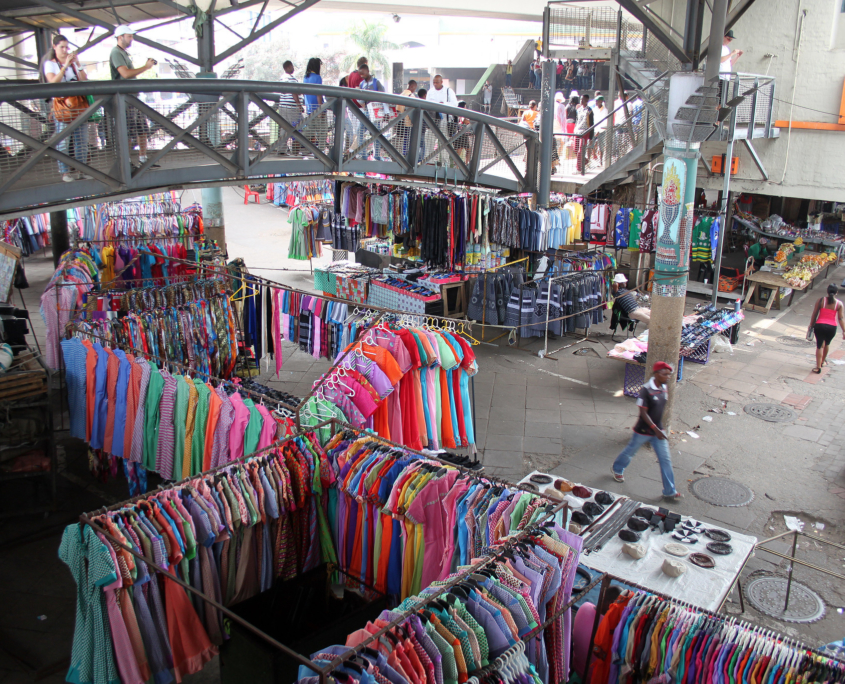
informal economy in South AfricaIf you walk down a busy street in any of South Africa’s major cities, you are bound to witness some type of informal economic activity. Whether it be a fruit stand, street-hawker selling earphones or an informal car wash business, the informal economy in South Africa is a crucial part of life for many of its residents.
The Importance of Informal Trade

Informal trade refers to any unregulated, unregistered, unprotected and untaxed activities, enterprises, or transactions. Informal jobs are an essential source of income for many poor South Africans—18 percent of working citizens work in the informal sector—a total of over three million workers. Additionally, the sector accounts for 18 percent of South Africa’s GDP. While these numbers are smaller than those of other developing countries, they emphasize the importance of informal trade in an economy with stark unemployment rates—26.6 percent as of 2016. Informal markets, like Durban’s Warwick Markets, provide jobs for those who are unable to find formal employment. Thousands depend on these markets for produce, cooked meals and clothing at affordable prices. Furthermore, the informal workforce in South Africa is overwhelmingly poor, young females. In fact, the poverty level in an area correlates positively with the proportion of people working in the informal economy.

The government recognizes the informal economy in South Africa as a viable and important form of employment and enabler of economic mobility for the country’s poor. Experience in the informal sector can help untrained people acquire skills, potentially aiding future integration into the formal sector. According to economist Loane Sharp, the informal economy in South Africa is growing faster than its formal counterpart. This prompts the government to pass policy encouraging and protecting the sector. The National Informal Business Upliftment Strategy of 2014 set up a framework of government assistance with skills development, marketing, technical support, infrastructure improvements and management training. This “inclusive growth” strategy focuses on enabling South Africa’s poor to participate in the economy rather than merely redistributing wealth through social welfare programs.

Non-governmental organizations are also working to improve conditions for informal traders. Asiye eTafuleni is an NGO in Durban that works with local government officials and vendors in the informal sector (particularly the Warwick Markets) to assist in developing infrastructure, consultations for urban planning and advocacy for informal workers. The organization also directs tourism to the Warwick Markets, educating foreigners and visitors on the functions and importance of the markets, and bringing the vendors eager customers. Asiya eTufuleni is a member of the Inclusive Cities mission, which focuses on uplifting and strengthening groups of working poor in the informal economy. The Inclusive Cities project aims to support the urban poor through lobbying, policy planning, and research. One of the ways the project does this is by advocating for “waste pickers’ rights,” the legal right of individuals to collect garbage to recycle into sellable goods. These rights are under threat by the privatization of solid waste management in many cities across Africa. Inclusive Cities also conducts research and analysis of the informal economy to support future endeavors and activism.

A Struggle for Informal Business Owners

There are many downsides to informal trade which make its participants particularly vulnerable. Informal business owners are often deterred from registering their enterprises by high taxes and strict regulations. Informal working conditions are unregulated by nature and therefore often poor. Dangerous locations, limited book-keeping skills and lack of insurance put informal traders at constant risk of losing their livelihoods. Average earnings for informal workers are less than half of what the formally employed earn. And although recent policies are attempting to expand this sector of the economy, informal workers still face significant intimidation and harassment by local law enforcement.

In July 2018, hundreds of informal traders protested by-laws which would prohibit trading in certain areas. These potentially harmful by-laws would allow law enforcement to confiscate the goods of traders without permits. The leader of the activist group responsible for organizing a march on Durban City Hall complained that the traders themselves were not included in the creation of these laws. The permit allocation procedure, he says, is corrupt, with officials soliciting bribes in exchange for permits.

It is clear that despite efforts by the government and NGOs, conditions of the informal sector have remained unsatisfactory. The disconnect between national policy, like the National Informal Business Upliftment Strategy, and local municipalities is one obstacle in the way of a safer, healthier informal sector. The informal economy in South Africa provides crucial wages for the country’s poorest and most vulnerable populations; resources should be channeled to encourage and protect laborers and merchants in the sector.

– Nicollet Laframboise

Photo: Flickr

July 18, 2019
https://borgenproject.org/wp-content/uploads/borgen-project-logo.svg 0 0 Kim Thelwell https://borgenproject.org/wp-content/uploads/borgen-project-logo.svg Kim Thelwell2019-07-18 05:34:462024-06-11 03:08:23The Informal Economy in South Africa
Advocacy, Global Poverty

Top 10 Interesting Facts About Thomas Jefferson

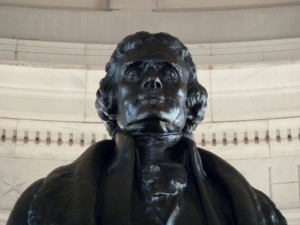
Top 10 Interesting Facts About Thomas JeffersonWho was Thomas Jefferson? Most people would answer that he is the author of the Declaration of Independence, a former president or a founding father. All of these answers would be correct, however, there are more interesting facts about Thomas Jefferson that many people are unaware of. Aside from earning an array of political titles, Jefferson did work trying to improve poverty, education and diplomacy both in and outside of the United States of America, yet these actions are frequently unheard of. It’s time to unearth Jefferson’s efforts in these areas by taking a look at the top 10 interesting facts about Thomas Jefferson.
Top 10 Interesting Facts About Thomas Jefferson

  1. He served as a U.S. Minister to France. Jefferson had a vast appreciation for the French culture. He was enamored with its cuisine, art and architecture. However, he also developed a distaste for France’s aristocracy and was dissatisfied with the state of poverty in France. Jefferson was disheartened with the mass amounts of poverty in France and is quoted saying, “I find the general fate of humanity here, most deplorable.”
  2. Jefferson supported poorhouses. Poorhouses were institutions that tended to members of the lower class. Jefferson strongly believed that poorhouses were underfunded and had failed in achieving their mission. Throughout his political career, Jefferson endorsed and sought to reform poorhouses.
  3. He wanted all children to have access to education. In his Notes on the State of Virginia, Jefferson states that all children should learn some sort of “some art, trade or business”, but first, they should attend public school for a minimum of three years. He wished to ensure education for all children, specifically those who could not afford it, even if it came at public expense.
  4. Jefferson wrote his personal views on poverty into the Declaration of Independence. Jefferson spent much of his political career trying to save ordinary citizens from oppressive aristocrats. Jefferson touches on his personal views in the Declaration of Independence when he wrote that all men are born with the right to “life, liberty and the pursuit of happiness.” In Jefferson’s eyes, all men were born equal.
  5. He believed in self-reliance. Jefferson believed the government should assume responsibility for the poor, but he also wished to go beyond this. Jefferson wanted to make the poor self-reliant so they could prosper. Many of his poverty proposals were geared towards urgent needs and were meant to be used as a temporary solution until a person could get back on their feet.
  6. Jefferson believed in health care. Jefferson believed in the importance of leading a healthy lifestyle. Jefferson thought that “without health, there is no happiness.” Throughout his life, Jefferson made numerous attempts to improve health care. While he was in Paris, Jefferson worked alongside health care reformers to try to revise the French health care system. He carried his passion for health back with him to the United States and fought to reduce disparities in health amongst Americans.
  7. He supported the French Revolution. From one revolution to another, Thomas Jefferson believed that all people should have liberty, and he was a vigorous advocate of the French Revolution. During the revolution, Jefferson allowed Marquis de Lafayette and his fellow rebels to host meetings in his private residence. He also assisted Lafayette in drafting the Declaration of the Rights of Man.
  8. Jefferson wanted slaves to receive an education. In a letter that Jefferson wrote to Robert Pleasants, he advocated that Virginia’s educational system should provide education for slaves to prepare them for freedom. Jefferson pushed Peasants to introduce this legislation. Jefferson saw education as a means of empowering the powerless to empower themselves.
  9. Jefferson was a diplomat. Jefferson made numerous contributions to U.S. foreign policy. While the Minister in France, he negotiated a highly successful commercial treaty with Prussia. As President, he solved longstanding quarrels with France over navigation rights in the Mississippi River when he purchased the Louisiana Territory from Napoleon Bonaparte.
  10. He was George Washington’s Secretary of State. Thomas Jefferson was the first Secretary of State. He was appointed in 1790 and served until 1793. During his time as Secretary of State, Jefferson successfully enacted a policy of neutrality in the war between England and France.

These top 10 interesting facts about Thomas Jefferson illustrate how even more than 200 years ago, founding fathers were working to address issues that the world still faces today. As for Jefferson, if being the author of the Declaration of Independence and President of the United States wasn’t already enough, these top 10 interesting facts about Thomas Jefferson reveal his efforts to improve poverty, education and hostile foreign relations.

– Gabriella Gonzalez
Photo: Flickr

July 17, 2019
https://borgenproject.org/wp-content/uploads/borgen-project-logo.svg 0 0 Kim Thelwell https://borgenproject.org/wp-content/uploads/borgen-project-logo.svg Kim Thelwell2019-07-17 01:30:372024-05-29 23:00:47Top 10 Interesting Facts About Thomas Jefferson
Advocacy, Education, Global Poverty

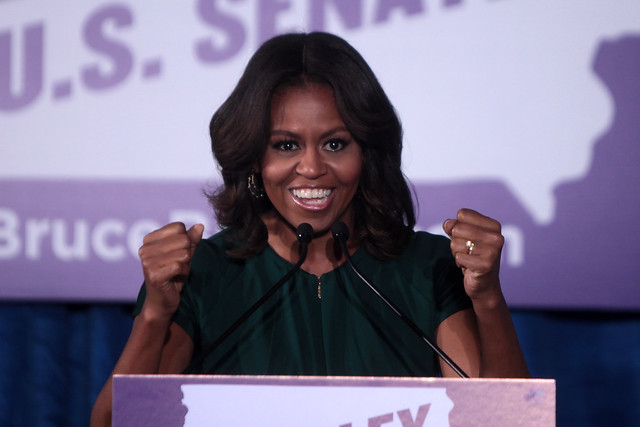
Michelle Obama Quotes on Girls’ Education

Michelle Obama Quotes

Former First Lady Michelle Obama has dedicated her life to her own education and the education of others. From growing up in the slums of Chicago, to going to Princeton University, Obama’s hardwork and determination is truly inspiring.

After her time at Princeton, Obama traveled back to Chicago to work with the mayor as an assistant. Then, in 1993, she became the exclusive director for the Chicago office of Public Allies, a non-profit organization that helps young people develop leadership skills. Her resume is extensive and includes many different titles, but Obama has kept one thing consistent: her desire to better the lives of children.

Whenever she is giving a speech, Obama makes a point to speak about education and giving back to the community. These Michelle Obama Quotes demonstrate her commitment to focusing attention on the issue of girls’ education around the world.

Michelle Obama Quotes Girls Education

  1. Obama’s initiative Global Girls Alliance, which helps women around the world receive an education, was inspired by a conference she attended in the U.K. in 2009 to speak to a group of schoolgirls about education. In the Penguin Talks U.K., an interview series with Penguin Publishings’ most influential authors, Obama answered questions about her life and her work in bettering girls’ education around the world.

    “The visit (in 2009) set my course in one of my initiatives: to work on girls education,” Obama said. “It was after that visit that I went back and said ‘we have to find a way to have these conversations around the world’ because meeting with the girls here and the girls at Mulberry just reminded me of how much talent and how much courage and how much hope there is in our girls who are struggling to do everything right, when they have so much working against them.”

  2. In an interview with The Chicago Tribune, Obama was asked about the initiative she announced on the Today Show. The initiative is a clear indication of the type of platform the former First Lady wishes to take: girls’ education worldwide.

    “We want to lift up the grassroots leaders in communities all over the world who are clearing away the hurdles that too many girls face,” Obama said. “Because the evidence is clear: educating girls isn’t just good for the girls, it’s good for all of us.”

  3. In 2014, Obama gave a speech at the Brookings Institution, an institution that has been helping girl around the world receive an education. Obama not only discusses the importance of girls’ education, but the external forces that prevent girls from participating in education.

    “We really can’t take up the issue of girls education unless we are also willing to confront all of the complex issues that keep so many girls out-of-school. Issues like early and forced marriage, genital cutting,” Obama said.

  4. “A few years ago, when I had the honor of meeting Malala Yousafzai, who was shot in the head just for trying to go to school, this issue got really personal for me… That’s why I decided to work on global girls’ education as first lady: because right now, there are tens of millions of girls like Malala in every corner of the globe who are not in school- girls who are so bright, hardworking and hungry to learn. And that’s really the mission of the Let Girls Learn initiative.”
  5. At a conference held by Glamour entitled “The Power of Educated Girls” Obama, actress and activist Charlize Theron and Australian Prime Minister Julia Gillard discussed the importance of girls’ education globally.

    “If we want to end poverty, educating girls is key to all of that. You were able to leave and shine and to learn and to teach,” Obama said.

  6. Michelle Obama delivered a powerful keynote speech at the Wise 2015 World’s Innovation Summit For Girls’ Education. In her speech, she discussed the importance of girls’ education and the importance of their protection. She explained that getting girls into school is a great stride, but it’s keeping girls in schools and supplying them with resources that poses a challenge.

    “We cannot address our girls’ education crisis until we address the cultural norms and practices that devalue women’s intelligence, that silence their voices and limit their ambitions,” Obama said.

These Michelle Obama quotes encapsulate who she is, before and after being in the White House. Her work to better the education of girls all around the world is ambitious but doable. Obama gives everyone hope that making education available to girls everywhere is achievable. By using her platform and her personal story to promote girls education worldwide, Obama continues to uplift and drive girls and women all over the world.

– Andrew Valdovinos
Photo: Flickr

July 17, 2019
https://borgenproject.org/wp-content/uploads/borgen-project-logo.svg 0 0 Kim Thelwell https://borgenproject.org/wp-content/uploads/borgen-project-logo.svg Kim Thelwell2019-07-17 01:30:362024-12-13 18:01:48Michelle Obama Quotes on Girls’ Education
Advocacy, Global Poverty, Human Rights

The Time 100 List: Global Poverty Advocate Edition

global poverty advocatesThe Time 100 is published in April every year, presented as a list of 100 of the most influential people from all over the globe. The list is highly anticipated, selected by the editors of Time Magazine, and centers a range of change-makers separated into five categories: pioneers, artists, leaders, icons and titans.

All are trailblazers of change in their own right, but several important mentions include the global poverty advocates. These figures drew attention to issues surrounding global poverty and human rights abuses around the world. They are inspirations for the many activists who hope to follow their blueprint of innovative change.

Fred Swaniker

Fred Swaniker is a Ghanaian entrepreneur and a pioneer, especially for the African Youth. He realized that Africa’s greatest asset is also its biggest challenge, the youth.

This led to the birth of the African Leadership University. Founded in 2013, ALU is opening campuses around Africa and aims to train 3 million entrepreneurial, ethical leaders for Africa and the world by 2035. Africa faces some of the highest global rates of extreme poverty, largely due to histories of corruption and exploitation. This history resulted in low incidences of democracy and economic opportunities. Swaniker is one of the most innovative figures equipping a future generation to manage and tackle these grave issues, and a true ally for the global poor.

Yalitza Aparicio

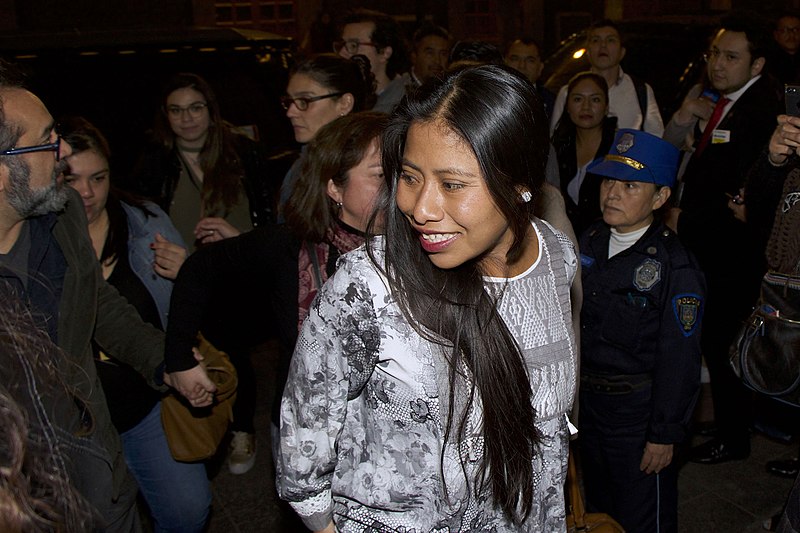
Yalitza Aparicio is a Mexican actress and ‘artist,’ best known for her academy award nominated performance in the 2018 hit film “Roma”. But, her story is particularly important due to her heritage as an indigenous Oaxacan woman, who before her acting success, was a preschool teacher in rural Mexico. Having an advocate for this population is particularly important since Mexico’s indigenous people are far poorer than its non-indigenous people. About three-quarters of indigenous peoples in Mexico are poor, while only half of the non-indigenous people live below the official poverty line. Her inspirational story sheds light on the cause of the long disenfranchised group including the everyday racism that they face. It positions her as a role model for many generations behind her.

Abiy Ahmed

Because of ‘leader’ Abiy Ahmed, Ethiopia is cautiously learning to embrace a new system of democracy and human rights, a rare occurrence in the country’s fractured political history. Since his ascension to power in 2018, Ahmed embraced notions of transparency and gender equality as part of his political platform. He released all journalists incarcerated under the previous regime. Ahmed also made half of his cabinet female and appointed the first female head of the supreme court. He negotiated a new peace treaty with Eritrea, effectively ending a 20-year civil war. In 2020, the country will have its first free elections in 15 years.

Although this is a test of the current turbulent political climate punctuated by extremist dialogue, it does give the country new hope for democracy and prosperity in the future that seemed impossible before his ascension to power.

Radhya Almutawakel

Radhya Almutawakel is a Yemeni human rights defender and ‘icon,’ most commonly known for her work documenting human rights abuses by all parties. Since the start of the conflict in Yemen in 2014, nearly 7,000 civilians were killed and 14 million remain at risk of starvation.

Almutawakel traveled around Europe and advocated on behalf of the people, encouraging leaders to take steps to end violence. She also founded the nonprofit Mwatana for Human Rights, designed to “advocate for human rights through the verification and documentation of violations, provision of legal support to victims, lobbying, as well as awareness raising and capacity building.” These actions help increase the visibility of the conflict and the consistent suffering of the people. This itself is a big step forward in the road to peace.

LeBron James

LeBron James is undoubtedly a ‘titan.’ Most commonly known as one of the most successful basketball players in history, he is also a passionate philanthropist. Born in Akron, Ohio, to a teenage mother, he is described as being “sharp minded” and “grounded,” overcoming many challenges to become as successful as he is. His most famous initiative is the “I Promise School” for disadvantaged kids. Opening in his hometown in 2018, it secured educational opportunities for at-risk youth he personally never had access to. His foundation consistently donates to a wide range of charities with similar ideals. One of them is ONEXONE, a global children’s charity that runs programs based on five fundamental pillars: water, health, education, play and nutrition.

At only 34 years old, his work as a global poverty advocate is just beginning.

This list is a selection of just five global poverty advocates from the Time 100, all of whom are noteworthy advocates for a variety of ideals in their individual and often original ways. Many more global poverty advocates exist around the world, all fighting to generate change for the global poor.

– Holly Barsham
Photo: Wikimedia Commons

June 21, 2019
https://borgenproject.org/wp-content/uploads/borgen-project-logo.svg 0 0 Kim Thelwell https://borgenproject.org/wp-content/uploads/borgen-project-logo.svg Kim Thelwell2019-06-21 06:40:172024-05-29 23:00:13The Time 100 List: Global Poverty Advocate Edition
Advocacy, Global Poverty, Women, Women and Female Empowerment, Women's Empowerment

The Impact of the International Women’s Coffee Alliance

The International Women's Coffee Alliance
The International Women’s Coffee Alliance aims to empower women to achieve sustainable, meaningful lives through international coffee communities. IWCA recognizes the integral part women play in both a business and an economic aspect. As such, IWCA believes women need to be involved in both family sustainability and economic choices. When this happens, multiple aspects typically leading to poverty in a community decrease.

“When women are fully involved, the benefits can be seen immediately: families are healthier; they are better fed; their income, savings and reinvestment go up. And what is true of families is true of communities and, eventually, whole countries,” states Kofi Annan, as quoted on IWCA’s homepage.

Strong Women = Strong Coffee

IWCA’s motto is “Strong Women = Strong Coffee: Connect. Empower. Advance.”

According to IWCA chapter manager Blanca Castro, “The chapters have very localized issues that they centralize their work around to be a collective force. The common denominator for the groups is that they are all mothers, daughters and workers and share many of the same challenges around the world, not just specific to coffee, such as the price of coffee but the also laws and customs that make women earning a dignified living that much more of a challenge.”

Now how is the IWCA taking action to implement and empower women?

IWCA Ethiopia

Strong Partners Build Economic Empowerment

IWCA is involved in multiple parts of the world, including Ethiopia. The Ethiopian Women in Coffee (EWiC) partnered with the International Trade Center, which brings platforms for corporations to empower companies to connect with women-owned supply companies. As a result, the EWiC and ITC are working together to build a foundation for the same goal.

The EWiC is one branch under IWCA. It moves to improve the economy and the importance of women within a community. Through the incorporation of women in international trade, IWCA believes that poverty within Ethiopia will soon be alleviated.

IWCA Burundi

Working Together Grows Quality and Premiums

The IWCA also has a chapter in Burundi, specifically in the regions of Ngozi and Kayanza where they have seen a growing impact of empowering the women of this region. Since their start in Burundi in 2012, there has been an increase in job opportunities for the community. Moreover, this has led to improved livelihoods based on coffee bonuses and pay raises.

In Burundi alone, there has been an increase in green coffee bags. In 2012, 94 green coffee bags were produced, as compared to 2,065 green coffee bags in 2017.

WCA-India

Building Awareness, Strengthening Communities

Coffee Santhe (Coffee Market) is held annually in India’s coffee capital, Bangalore. Santhe is a program that helps raise funds for communities. It also unites different states within India’s massive demographic to come together and learn how they can impact and improve their communities.

Santhe generates funds and provisions for children who are in government-run schools in coffee regions. These funds and provisions support their education. It also teaches them how they can impact their own lives and those around them.

The IWCA has a presence in 22 different countries. And it promotes economic sustainability by empowering women to enter the workforce of international trade, specifically through the coffee industry. Ultimately, the International Women’s Coffee Alliance believes by uniting different nations and closing the gender gap in the workforce, the issues of global poverty will disperse.

– Hannah Vaughn
Photo: Google Images

June 21, 2019
https://borgenproject.org/wp-content/uploads/borgen-project-logo.svg 0 0 Kim Thelwell https://borgenproject.org/wp-content/uploads/borgen-project-logo.svg Kim Thelwell2019-06-21 04:13:522019-06-21 04:13:52The Impact of the International Women’s Coffee Alliance
Page 31 of 77«‹2930313233›»

Get Smarter

  • Global Poverty 101
  • Global Poverty… The Good News
  • Global Poverty & U.S. Jobs
  • Global Poverty and National Security
  • Innovative Solutions to Poverty
  • Global Poverty & Aid FAQ’s
Search Search

Take Action

  • Call Congress
  • Email Congress
  • Donate
  • 30 Ways to Help
  • Volunteer Ops
  • Internships
  • Courses & Certificates
  • The Podcast
Borgen Project

“The Borgen Project is an incredible nonprofit organization that is addressing poverty and hunger and working towards ending them.”

-The Huffington Post

Inside The Borgen Project

  • Contact
  • About
  • Financials
  • President
  • Board of Directors
  • Board of Advisors

International Links

  • UK Email Parliament
  • UK Donate
  • Canada Email Parliament

Get Smarter

  • Global Poverty 101
  • Global Poverty… The Good News
  • Global Poverty & U.S. Jobs
  • Global Poverty and National Security
  • Innovative Solutions to Poverty
  • Global Poverty & Aid FAQ’s

Ways to Help

  • Call Congress
  • Email Congress
  • Donate
  • 30 Ways to Help
  • Volunteer Ops
  • Internships
  • Courses & Certificates
  • The Podcast
Scroll to top Scroll to top Scroll to top