• Link to X
  • Link to Facebook
  • Link to Instagram
  • Link to TikTok
  • Link to Youtube
  • About
    • About Us
      • President
      • Board of Directors
      • Board of Advisors
      • Financials
      • Our Methodology
      • Success Tracker
      • Contact
  • Act Now
    • 30 Ways to Help
      • Email Congress
      • Call Congress
      • Volunteer
      • Courses & Certificates
      • Be a Donor
    • Internships
      • In-Office Internships
      • Remote Internships
    • Legislation
      • Politics 101
  • The Blog
  • The Podcast
  • Magazine
  • Donate
  • Click to open the search input field Click to open the search input field Search
  • Menu Menu

Archive for category: Advocacy

Information and news on advocacy.

Advocacy, Global Poverty

Addressing How to Stop Poverty: Steps Everyone Can Take

how to stop poverty
Poverty in the world is a topic constantly present in the news, media and everyday life. With nearly half of the world’s population living on less than $1.25 a day, it can be discouraging to say the least when asking how to stop poverty.

Researchers estimate that it would take $60 billion annually to completely end poverty, which would only be a fourth of the income from the top richest billionaires in the world. But what can be done when there is not as much money to give? Fortunately, there are multiple ways every person can help end poverty.

Donate

The most common but just as helpful step is donating. Multiple websites accept donations to help end poverty. Websites such as Self Help Africa, Habitat for Humanity, and Save the Children use donations to help build new homes, provide clean water and food and help when disaster strikes.

Many of these organizations allow people to volunteer and work hands-on in the program, but if this isn’t an option, donating is a great way to help out. Try searching around for different organizations! There are a lot of programs that work on poverty, and they should state exactly where their donations go.

Talk to Your Representatives

Congress is made up of multiple representatives and senators from all over the country who are there to represent their constituents’ worries, wants and where they believe action should be taken. Calling your representative is a very simple action with huge impacts — plus it only takes about thirty seconds to complete!

You can find the representatives for your area right on the Borgen website. If talking on the phone is a bit stressful, emailing Congress works just as well! Email and/or call every week to continuously encourage Congress to support fighting poverty in foreign countries.

The representatives need to make note on what issues are called in about, and the more calls an issue gets, the more attention and action it will receive at the legislative level. 

Clean Out that Pantry and Closet!

No one likes clutter, but it can be difficult to motivate oneself to go through all of those old clothes in the closet. However, by donating, one can remember that it is all going to a good cause! Haven’t worn that sundress in a few years? Do those jeans just not fit right anymore? Give them to someone who could use them!

Sometimes it can be difficult to get rid of things that have sentimental value, but by donating you can be reassured that your old favorite outfit will have another life with someone who could really use it.

The exact same thing can be done with food as well! Check through the cupboards for non-perishable foods that you won’t use and give them to a food bank. This website can help locate the closest food shelf, their hours and how to contact them!

Buy Fair Trade products

There is an unfortunate and dangerous power imbalance between international trade and large corporations. Fair Trade Products, however, works on improving worker conditions, higher wage for the farmers and workers, and works against child and forced labor. The website also includes a list of products, brands and retailers certified under their name.

When asking how to stop poverty, simply switching up the brand of morning coffee or going to a different grocery store is one simple way to help farmers and workers get the living wage they deserve.

Demand Action

Poverty has been a huge crisis in the world for a very long time, and people often find themselves asking how they can stop it. While the question of how to stop poverty is a loaded one with multiple elements, there are little things that anyone can do everyday to help. Donating, volunteering, helping at a food shelf, switching coffee brands — all of these are ways that everyone can help.

As discussed, talking to local representatives and bringing their attention to important issues like poverty is a huge step to helping end it; but sometimes the task can be overwhelming. However, working together, getting involved and communicating with local government can all be catalyzed by just one person. Don’t be discouraged — demand action.

 – Marissa Wandzel

Photo: Pixabay
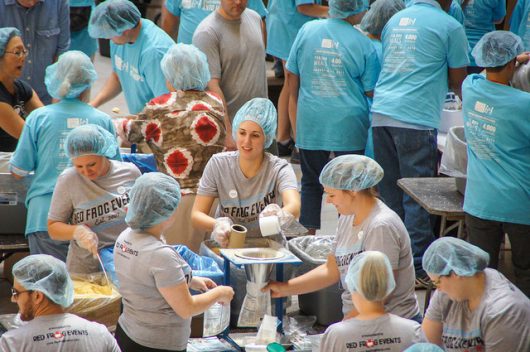
April 25, 2018
https://borgenproject.org/wp-content/uploads/borgen-project-logo.svg 0 0 Borgen Project https://borgenproject.org/wp-content/uploads/borgen-project-logo.svg Borgen Project2018-04-25 01:30:532019-11-03 18:40:41Addressing How to Stop Poverty: Steps Everyone Can Take
Advocacy, Global Poverty, Poverty Reduction

5 Effective Advocacy Examples that Fight Global Poverty

advocacy examples
These are five effective ways that people who want to help end global poverty can advocate for change. While some methods — such as contacting elected officials — are easier than others (going to another country), every single method is valuable, and everything that people do to advocate for change is important. The most important thing to remember is that it does not matter what is done to advocate for change just as long as people take some action that helps to achieve the change.

Example 1: Educate people at work or on campus about global poverty.

Of all the advocacy examples that people could choose from, education is one of the most important ways to advocate for change. Unless people are educated about a problem, there is no way to mobilize others to make a difference. An easy way to educate people about global poverty, then, is to direct them to the Borgen Project’s website.

Another way to educate people about poverty is to direct them to first-hand reports about the problems people who live in impoverished countries face on a day-to-day basis. This visual could be accomplished by showing people a documentary about poverty, for instance.

Example 2: Contact and encourage an elected official to fight global poverty.

While contacting local representatives is one of the most powerful ways to advocate for change, few people realize how profound of an impact either calling or writing to elected officials can have. Contacting a representative allows the elected official to know that an issue is important to their constituents, and that knowledge can then be translated into actionable change in regard to global poverty.

Elected officials do not have an abundance of time to deal with every issue that comes across their plate, so they generally will spend their time working on issues important to the people who live in their district. Representatives assume that the issues that people in their district contact them with are the most important matters to their districts.

Example 3: Volunteering to help fight global poverty locally and/or abroad.

One of the advocacy methods that first comes to mind with the topic of ‘fighting global poverty’ is volunteering. There are generally two types of volunteering:

  • Volunteering for a local group working to bring awareness to global poverty
  • Volunteering for a relief organization working in another country to address issues caused by global poverty

While both raising awareness about an issue and actively trying to address the issue are important, causing more people to be aware of an issue ensures that people will attempt some form of solution. Even though going to a foreign country is a rewarding experience, it is also just as helpful to raise awareness domestically to the problems caused by global poverty so that the roots of the problem can become fixed on the policy level.

Example 4: Educate the larger community about global poverty.

Let members of the community know about the problems caused by global poverty. An easy way to let people know about global poverty is to write a letter to the editor, creating a short show to air on the local community television station or posting flyers about poverty around the community.

Letting the whole community know about global poverty is even more important than educating people at work or at school because informing more people about a problem is more likely to lead to lasting change.

Example 5: Hold a rally about global poverty.

While this is more difficult than other advocacy examples, it is also one of the most effective ways to advocate for change. If a large group of people rally for an issue, more people will take notice of the problem. Contacting larger media outlets and having them cover the rally would bring the issue of global poverty to the attention of a larger group of people.

There’s significant opportunity at these rallies to inform people about the Borgen Project and other advocacy/awareness organizations, pass out information about how to fight global poverty, and if the rally is large enough, hold a press conference is shown around the nation.

The most important aspect of advocacy is getting other people to notice that some people care deeply about an issue. Specific actions people take when they advocate for change is yes, important, but getting more people aware of an issue, and getting more people to become an advocate for change, will bear incredibly impactful long-term results.

Every person who decides to become an advocate is a small, vastly important cog in the machine of change. As long as each person makes a small effort to advocate for an issue such as global poverty, it is possible to both raise awareness of a problem and create solutions.

– Michael Israel

Photo: Flickr

April 10, 2018
https://borgenproject.org/wp-content/uploads/borgen-project-logo.svg 0 0 Borgen Project https://borgenproject.org/wp-content/uploads/borgen-project-logo.svg Borgen Project2018-04-10 01:30:552024-05-29 22:40:075 Effective Advocacy Examples that Fight Global Poverty
Activism, Advocacy, Charity, Global Poverty

5 Fashion Companies that Address Extreme Poverty

Fashion companies that address extreme poverty
Some would say that fashion is their life. Others say they don’t care about what they wear. For fashion companies that address extreme poverty, finding a middle ground can make all the difference. Companies like the ones below would argue that fashion can both impassion the apathetic and give cause to the already passionate.

Raven and Lily – Empowering Women. Alleviating Poverty.

Live thoughtfully. With this as one of her life axioms, Kirsten Dickerson created her unique and ethical brand of fashion, Raven and Lily, in 2008. In 2013, Dickerson met a group of female Afghan artisans living for decades as refugees on the Pakistan border. The experience moved her to expand her business.

Since then, Raven and Lily formed 17 partnerships throughout 10 countries while employing more than 1,500 women. Dickerson provides jobs and educational opportunities as well as an ethical and sustainable product. “We are genuinely trying to think through all levels of our production practices and how people on the planet are affected,” Dickerson said.

By providing steady employment, including fair wages and education, Raven and Lily has established itself among the fashion companies that address extreme poverty on the most foundational of levels.

Accompany – Where Every Purchase has a Purpose.

If asked about its mission, Accompany will say its first priority is to help human beings. Ranked among the fashion companies that address extreme poverty head-on, the organization has an uncomplicated approach to the way it does business. Its three-tier system ensures the products have a purpose by:

  • Being handmade.
  • Abiding fair trade practices.
  • Having philanthropy at the center.

The results of this system are exponential: cultural heritage is preserved for generations to come, self-sufficiency is rooted in a new-found education and services are provided to the community at large. In short, change happens.

Socially-conscious industries help create that change. When Jason Keehn founded the organization, his vision was to leverage a thriving industry for global communities in need. As they boldly proclaim on their website: Welcome to a New Style Culture. It’s a culture that seems to be shared by all fashion companies that address extreme poverty.

Apolis – Advocacy through Industry.

With Apolis, the name says it all—a name that means “global citizen.” When they created their company in 2004, brothers Raan and Shea Parton believed business could be the impetus for social change. They have taken that belief, along with their investment in people, and have created a model for other fashion companies that address extreme poverty.

A certified B Corporation, Apolis meets high standards with regard to social and environmental performance, transparency and accountability. When asked about their brand of activism, Shea Parton stated, “[it’s] really about how you can go into an impoverished country and find a resource or product or raw material that allows you to bring it into the marketplace and to give an opportunity rather than charity.”

This mindset likely formed from a young age, according to Parton, who says “our parents knew that if we stayed in Santa Barbara, we would never know how good we had it.” With constant travel to countries like Uganda and India, the Parton brothers learned perspective early on, and they have put their perspective into action.

Bloom + Grace – Beautifully Made. Ethically Sourced. Globally Minded.

Bloom and Grace was founded in 2013, a jewelry company resulting from an inspired founder. When Dani Lachowicz found herself working in sub-Saharan Africa, she seized an opportunity she knew would change the lives of children in developing countries. Partnering with the U.N. Foundation’s Shot@Life campaign and with local artisans, proceeds from Bloom and Grace go toward life-saving vaccinations.

Just how life-saving are vaccinations in developing countries? Here are some facts:

  • A child dies every 20 seconds from a disease that can be prevented by a vaccine.
  • The World Health Organization, UNICEF and the Global Alliance for Vaccinations have already seen a 99 percent reduction in polio and a 78 percent reduction in measles-related deaths.
  • Increasing access to vaccines can prevent 1.5 million deaths each year.

It is Bloom and Grace’s hope to empower communities and to promote entrepreneurship, while also living up to their namesake by allowing children the opportunity to bloom by the grace of socially-conscious patrons.

Krochet Kids, Intl. – Creating Jobs. Changing Lives.

Kohl Crecelius, Stewart Ramsey and Travis Hartanov founded Krochet Kids, Intl. from a shared high school hobby of crochet. Krochet Kids Intl. looks for ways to empower people to rise above poverty and provides life-changing job opportunities for women in need in Uganda and Peru.

With each purchase, consumers are invited to meet the maker of their product and are encouraged to write a note of thanks and encouragement. With this very personal approach to business and a partnership with We Are Capable, an organization with 10 years of experience fighting extreme poverty, the organization is able to stay committed to its desired areas of impact:

  • Women in poverty-stricken regions
  • Job opportunities
  • Education

Fashion companies that address extreme poverty understand that behind every fabric is a face, and behind every accessory is an opportunity for access to those who wouldn’t otherwise have it.

– Daniel Staesser

Photo: Flickr

April 9, 2018
https://borgenproject.org/wp-content/uploads/borgen-project-logo.svg 0 0 Borgen Project https://borgenproject.org/wp-content/uploads/borgen-project-logo.svg Borgen Project2018-04-09 01:30:122024-12-13 17:58:405 Fashion Companies that Address Extreme Poverty
Activism, Advocacy, Global Poverty

Top Civil Rights Leaders: A Timeline

Top Civil Rights Leaders
During the earlier years of U.S. history, slavery and oppression created some of America’s oldest top civil rights leaders. Susan B. Anthony, Chief Joseph, Rosa Parks and Martin Luther King Jr. are only a few of the many people who fought back in the face of adversity.

Paving the Way

1851: Susan B. Anthony and Elizabeth Cady Stanton are two big names in women’s civil rights. Together, they worked toward social and political advances for women. They established the American Equal Rights Association, which aimed to earn women and African American men voting rights. Other accomplishments were forming the Women’s Loyal National League, which gave women a political platform, and writing an amendment that was proposed to the Senate every year for 40 years. These two women are responsible for some of the rights American women have today.

1853: Harriet Tubman is one of the most well known civil rights leaders associated with U.S. slavery. Tubman helped more than 300 slaves reach freedom with the well-known Underground Railroad. Tubman saved her own money, and supporters donated funds to help her continue her mission to free enslaved African Americans. While Tubman is most famous for her work with the Underground Railroad, she also provided invaluable services during the Civil War.

1877: In an effort to avoid the slaughter and oppression of his tribe, Chief Joseph led the Nez Perce people on a 1,400-mile journey from the Wallowa Valley (now Oregon) toward Canada. This four-month long venture was treacherous for the Nez people. Many of the original 700 had lost their lives and the remaining could not continue, which forced Chief Joseph to surrender just 40 miles from the Canadian border. Although he admitted defeat in the end, Chief Joseph is one of the top civil rights leaders because he stood up to fight for what he believed in while facing an oppressive government.

These inspirational people carved the road for the next civil rights leaders to come a century later.

Civil Rights Movement

1955: Rosa Parks faced discrimination on a bus ride, where she was asked to give up her seat to a white man. She refused, which led to her arrest and her rise to civil rights leadership. Her wrongful arrest led to the Montgomery Bus Boycott, a protest by 17,000 African American citizens. This caused a substantial drop in revenue and a Supreme Court ruling to desegregate the Montgomery buses, because the law was deemed unconstitutional. Parks received severe backlash after the boycott and even lost her job as a tailor, but she still persevered. Parks is one of America’s top civil rights leaders because she continued the fight for African Americans and created change.

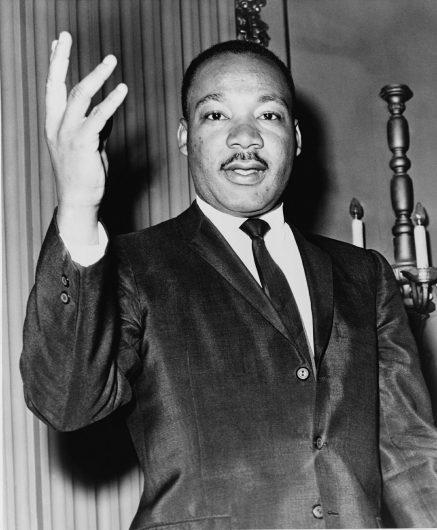
1963: Dr. Martin Luther King Jr. is maybe the most famous champion of human rights. He led peaceful marches and demonstrations protesting the discrimination African Americans faced in the U.S. His movement inspired the Civil Rights Act of 1964, and his words are often the inspiration of equality speeches today. Dr. King was faced with arrest, hate and violence from the people of Birmingham, Alabama. Yet he stood tall in the face of controversy and remained peaceful throughout his civil rights leadership. He preached of a world in which people were no longer divided by race, a message which still resonates with many today.

1965: Malcolm X faced racism all his life and channeled it through anger for a significant portion of his activism. He was known for a radicalized activism during the Civil Rights Movement and was viewed as a black nationalist who had an alternative approach to change. It was widely known that his delivery of the message of change contrasted Dr. King’s peaceful message. However, toward the end of his civil rights leadership, he had an apparent ideological change. Unfortunately, like many other civil rights trailblazers, he was assassinated before he could see a significant change in America.

The Fight Continues

The effortless work of past civil rights leaders has not ended; they merely passed the torch on to activists fighting today. Some of the current top civil rights leaders are:

Tarana Burke: Burke fights for the rights of victims of sexual assault and abuse. She is also the creator of the Me Too movement.

Alicia Garza, Patrisse Cullors and Opal Tometi: Creators of the Black Lives Matter group, which protests police brutality and institutional racism.

Chad Griffin: President of Human Rights Campaign, which is one of America’s largest gender and sexual minorities civil rights organization.

Nihad Awad: The leader of the Council on American-Islamic Relations, an Islamic advocacy organization that monitors hate crimes, profiling and discrimination against Muslim Americans.

Benjamin Crump: A civil rights attorney who speaks and represents cases for minorities who have experienced police brutality.

Michelle Alexander: Alexander is a civil rights lawyer who works against the systematic racial oppression of the African American men that disproportionately fill the nation’s prisons.

Throughout history, people have fought for their own civil rights around the world. Whether it was Nelson Mandela creating a national strike against the South African government, Malala Yousafzai journaling girl’s right to education, or Mohandas (Mahatma) Gandhi refusing to get out of his first-class seat on a train—activism is everywhere and has a ripple effect. Through protesting and standing up for their own rights, these former and current activists have made the top civil rights leaders list.

– Courtney Hambrecht


April 1, 2018
https://borgenproject.org/wp-content/uploads/borgen-project-logo.svg 0 0 Borgen Project https://borgenproject.org/wp-content/uploads/borgen-project-logo.svg Borgen Project2018-04-01 01:30:262024-12-13 17:58:39Top Civil Rights Leaders: A Timeline
Advocacy, Global Poverty

How Guaranteed Basic Income Can Solve Poverty

Income_Africa
The idea that guaranteed basic income can solve poverty was first proposed by lawyer Thomas More in the 16th century. Guaranteed basic income, also known as universal basic income is an unconditional periodic money transfer to ensure that a citizen can pay for his or her basic necessities no matter what. The idea that everybody will be paid money every month, whether or not they have a job, is undeniably radical.

Guaranteed Basic Income Has Supporters and Detractors

Economists are divided into two groups over the idea: one in favor of guaranteed basic income and the other against it. Those opposing the idea believe that it will undermine the incentive to do a job, that more people would end up in low-wage jobs or that a “handout” is by no means a tool to “turn things around”. Some of them also argue that even if guaranteed basic income can solve poverty, a program like this can be very expensive and hence negatively affect a nation’s economic growth.

On the other hand, the idea has found acceptance among several intellectuals, politicians, historians, economists and entrepreneurs alike. One of them is Facebook CEO Mark Zuckerburg, who has called for others to embrace the idea, in case people start losing their jobs to automation and artificial intelligence.

Current Studies Testing the Efficacy of Basic Income

To see how guaranteed basic income can solve poverty, many experiments are underway around the world. A nonprofit organization in Kenya called GiveDirectly has launched one of the most comprehensive economic and social experiments in human history. They will be selecting groups of people who will receive $22 per month for a period of two to 12 years, no strings attached.

To date, the organization has distributed more than $70 million among 80,000 households in Kenya, Rwanda and Uganda. “What’s interesting about basic income is that, coincidentally, it’s a conversation people are having all the way from Silicon Valley, where they are worried about job loss to robots, to some of the poorest countries in the world,” said Paul Niehaus, professor of economics at the University of California San Diego, co-founder of GiveDirectly and a firm believer that guaranteed basic income can solve poverty.

In Finland, the government randomly selected 2,000 unemployed citizens for a one of a kind experiment started at the beginning of 2017. To study how guaranteed basic income can solve poverty, these people will receive €560 every month for two years, tax-free. A key goal of the Finland experiment is to give unemployed people incentive to work by providing them with financial assistance even after they become employed again. Researchers chose the €560 monthly amount because it roughly equals the current level of unemployment benefits.

In a recent interview given to NPR, Stockton, California mayor Michael Tubbs said,” In fact, I think [it] will make people work better and smarter and harder and be able to do things like spending time with their families [be]cause we’re not robots.” Stockton will start a similar experiment by the end of this year.

What Basic Income Can Do for Impoverished People

The proponents of guaranteed basic income caution that the amount paid must be sufficient to be of assistance when misfortune strikes but not large enough to satisfy all of a person’s wants. They also argue that the freedom to start a new business or to say yes to a job that pays little but yields joy, or to say no to a job that pays too little or is demeaning, should not be reserved only for the wealthy.

Historian Rutger Bregman highlights an experiment conducted in India by American psychologists involving Indian sugarcane farmers. These farmers get around 60 percent of their income all at once. Hence, they are relatively rich during one part of the year but poor the rest of the year. The farmers were subjected to an IQ test before and after the harvest. The results showed that farmers gained nine IQ points after the harvest, as the extra money freed up mental resources that were previously concerned with making ends meet.

A similar study conducted between 1974 and 1979 in Dauphin, Canada proved that a guaranteed basic income can solve poverty by making the recipients smarter, healthier and richer. Further studies can bolster the effectiveness of basic income worldwide and could lead to it becoming an important tool in ending global poverty.

– Himja Sethi

Photo: Flickr

March 31, 2018
https://borgenproject.org/wp-content/uploads/borgen-project-logo.svg 0 0 Borgen Project https://borgenproject.org/wp-content/uploads/borgen-project-logo.svg Borgen Project2018-03-31 07:30:132019-11-17 11:55:37How Guaranteed Basic Income Can Solve Poverty
Advocacy, Government

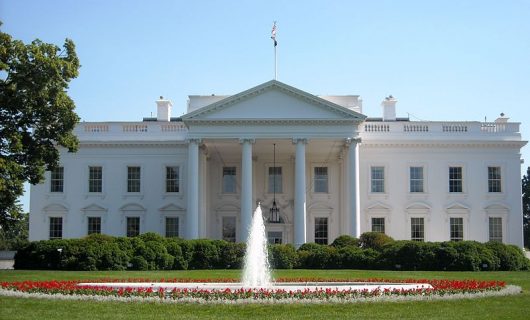
How to Contact the White House

Contact the White House
Getting in touch with the President of the United States to let the White House know opinions on certain matters of the government, just to say hello or to send a gift is surprisingly easier than most would think. There are multiple ways to get a message to the nation’s leader. One can contact the White House by email, written mail, packages or by phone. The quickest way to get in touch with the White House, according to its official website, is by email.

Emailing the White House

Emailing is both the quickest and simplest way to get in touch with the President of the United States. The White House has a form on its website on which one can fill out their email address. The form asks for the message type, full name, email, phone number, address and provides a text box to compose the message. Unfortunately, the White House cannot respond to every message due to the large volume of messages it receives.

Want to know how to contact the White House the old-fashioned way? A written letter to the White House should be on an 8.5”-by-11” sheet of paper. If hand-written, the letter should be written in ink pen as neatly as possible. Both the actual letter and the front of the envelope should include a return address. The front of the envelope should also read the White House address:

The White House
1600 Pennsylvania Avenue NW
Washington, D.C. 20500

To contact the White house with a package, use the same address as written above on the top of the package. Sending gifts to the White House is allowed; however, the President and First Lady encourage all citizens to send contributions to their favorite charities in place of sending gifts to them. If one still wishes to send a package to the First Family, the White House prohibits food, liquid or flowers, and it is not able to accept cash, checks, bonds, gift certificates or foreign currency. If sending a package, there will be a significant delay and it is more likely to be harmed throughout the screening process of security. Any items sent will not be returned.

How to Contact the White House

Contacting the White House to send announcements and invitations is also possible, as long as one follows the guidelines. There is a possibility that one would receive a greeting back if the required information is filled out and the sender has given the greeting office enough notice.

Contacting the White House can be an exciting and patriotic thing to do for all Americans. Whether it is to send greetings or to let the government hear your voice on a certain matter, it is always encouraged to contact the White House.

– Chloe Turner

Photo: Wikimedia Commons

March 30, 2018
https://borgenproject.org/wp-content/uploads/borgen-project-logo.svg 0 0 Borgen Project https://borgenproject.org/wp-content/uploads/borgen-project-logo.svg Borgen Project2018-03-30 07:30:482024-05-29 22:39:57How to Contact the White House
Activism, Advocacy

Sahar Speaks Gives Voice to Female Afghan Reporters


The stories of female Afghan writers and reporters are critical to the journalistic landscape of a country that sharply discriminates against women. Founded in 2015, Sahar Speaks brings these unique voices to light, providing mentoring, training and publishing opportunities for Afghan female journalists.

According to the organization, the name “Sahar” translated into English means “dawn,” meant to imply that a new period in time is commencing in which women can share their narratives and bring them to light. The program is transforming the journalism career path, allowing female correspondents to participate in international media and fostering their representation in the global field.

Women represent a marginalized group in Afghanistan and many cannot even openly speak with men. While the press corps is comprised of 9,000 journalists, only about 1,000 are female. After the 2001 expulsion of the Taliban, many news offices were established in Afghanistan by foreigners who primarily hired men and their close relatives. Until the origination of Sahar Speaks, no female reporters worked at foreign news outlets in Kabul.

British-American journalist Amie Ferris-Rotman founded the program to address this issue of gender inequity, giving women a platform through which they can freely communicate their perspectives. The project has helped to support insight into the lives of Afghan women whose experiences and accounts have been absent from the public eye.

While Afghan men or people from different countries are usually the ones telling the stories of Afghan women, the organization aims to return agency to Afghan female correspondents. Sahar Speaks has trained 22 Afghan female journalists and has prepared them for work on an international level. Through the program, budding reporters are paired with mentors and learn foundational journalism skills while addressing the challenges that they may face in the workplace.

Women face obstacles such as security threats and social barriers, including disapproval from family, yet Sahar Speaks aims to equip these women with the confidence to tell accurate stories. In 2016, 12 members of Sahar Speaks were selected to have their work published in The Huffington Post. Subjects ranged from the experience of having to dress like a boy in order to attend school to the practice of being married as a child. In 2017, journalists worked with The Huffington Post again to tell visual stories.

Alumnae of Sahar Speaks have gone on to pursue careers at the BBC, al Jazeera and The New York Times. In the fall of 2017, Ferris-Rotman collaborated with her mother, Lesley Ferris, to stage the stories that journalists had developed for The Huffington Post into a theatrical production.

Working with Ferris’ London-based drama company, Palindrome Productions, the performance debuted at Theatre 503 and brought to life three half-hour plays based on the experiences of the Afghan reporters. By presenting issues of gender and cultural restrictions through this medium, the production brought new attention to commonly overlooked conditions and sources of conflict, raising awareness on an international level.

Sahar Speaks is doing the essential job of giving Afghan women a voice in international media that has been absent for too long a time. By training reporters and equipping them with the skills they need to pursue a career in journalism, the organization is creating a changing culture where women can share accounts and seek out equity in society. While the perspectives of Afghan women have been obscured until recently, Sahar Speaks is shining a light on a new era where women will be empowered to express their stories and join a global discussion.

– Shira Laucharoen

Photo: Flickr

March 30, 2018
https://borgenproject.org/wp-content/uploads/borgen-project-logo.svg 0 0 Borgen Project https://borgenproject.org/wp-content/uploads/borgen-project-logo.svg Borgen Project2018-03-30 01:30:412019-11-17 12:00:05Sahar Speaks Gives Voice to Female Afghan Reporters
Activism, Advocacy

Article 19 Defends Freedom of Expression and Information

Article 19The United Nation’s Universal Declaration of Human Rights states in article 19 that “everyone has the right to freedom of opinion and expression; this right includes freedom to hold opinions without interference and to seek, receive and impart information and ideas through any media and regardless of frontiers.”
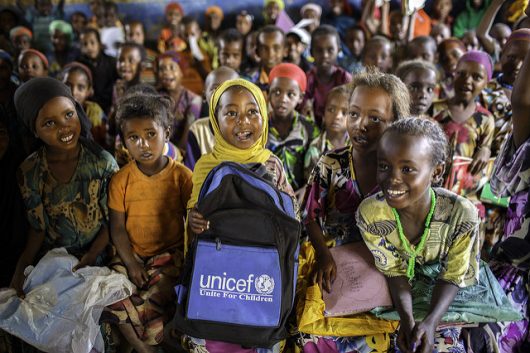
Named after this assertion, Article 19 is a human rights organization whose mission is to protect the freedom to speak globally. The group has worked in many different nations to address censorship, access to information and equality and hate speech, among other subjects.

Founded in 1987, Article 19 is based in London but has regional offices throughout the world, working with 100 organizations in more than 60 countries. The organization protects free speech on a global level by lobbying governments, intervening in individual incidents of rights violations and shaping legal standards relating to media and access to information.

With a commitment to combatting censorship, Article 19 has advocated on behalf of journalists arrested in Gambial, as well as Tanzanian politicians imprisoned for insulting the president. It has launched a petition that calls for a binding agreement for Latin American and Caribbean governments to guarantee access to information and justice in environmental matters, asserting that openness and transparency can help to monitor political corruption.

The organization has also written on the need for hate speech to be addressed in Myanmar and has taken a stance on racial discrimination in Tunisia, stating that racism inhibits pluralism of voices. Article 19 is a founding member of the International Freedom of Expression Exchange, a global network of 119 organizations committed to defending the basic liberty of freedom of expression. The nongovernmental organization raises awareness, acts through advocacy coalitions, forms petitions and conducts conferences and workshops.

Article 19 is also a founding member of the Freedom of Information Advocates Network, a group connecting organizations and individuals promoting access to information. The coalition runs projects such as a discussion list of lawyers, academics and civil society representatives concerned with the right of access.

In March 2017, Article 19 participated in a session of the U.N. Human Rights Council to draft The Global Principles on Freedom of Expression and Privacy, a document that will protect the openness of the media and safeguard the liberties of individuals and organizations internationally. The document is intended to inform policy makers and legislators in navigating liberties online and offline.

The Global Principles on Freedom of Expression and Privacy affirms the right of individuals to exercise freedom of expression anonymously and to use secure communication tools, while calling for the regulation of mass surveillance, describing this practice as interfering with privacy and freedom of expression. Additionally, the plan calls for the protection of confidential information given to companies online, as well as the right for confidential journalistic sources to not be disclosed. Through these measures, The Global Principles on Freedom of Expression and Privacy safeguard fundamental liberties in light of the digital age.

Article 19 is taking a stand against political censorship, the spreading of misinformation and the challenges that journalists face across multiple countries, calling for greater transparency and accountability. The organization operates on an international level, envisioning a world where freedom of expression and information are held in value. Navigating the digital era and the dangers of an oppressed media presence, Article 19 continues to fight for a diverse global community of voices, intervening in cases across the world and engaging in policy work to advance human rights.

– Shira Laucharoen

Photo: Google

March 27, 2018
https://borgenproject.org/wp-content/uploads/borgen-project-logo.svg 0 0 Borgen Project https://borgenproject.org/wp-content/uploads/borgen-project-logo.svg Borgen Project2018-03-27 07:30:502024-06-06 00:07:52Article 19 Defends Freedom of Expression and Information
Advocacy, Global Poverty, Nonprofit Organizations and NGOs, Volunteer

Ways to Get Involved: Eight Impactful Types of Advocacy Work

types of advocacy work
Advocacy can be done and acknowledged in many different forms. In simple terms, advocacy is the public support for particular causes and policies. The following list delineates eight types of advocacy work to help people worldwide, and some you can help with right from the comfort of your home. To support these programs and groups to continue their advocacy work, you can share their websites on social media, as well as donate and volunteer to their cause.

Eight Types of Advocacy Work

  1. Eastern Congo Initiative (ECI)
    Founded by Ben Affleck in 2010 the ECI works within the bounds of advocacy and public and private partnerships to help the people of the Eastern Congo. Its goals are to raise public awareness, promote policy change through the U.S. government, and help communities locally. Some of the types of advocacy work that ECI does daily are helping improve maternal and newborn health care, aiding the DRC security sector and creating more economic opportunities in the Eastern Congo.
  2. International Child Resource Institute (ICRI)
    ICRI is working to help improve the lives of children and families globally through education, empowerment, health care, children’s rights and community development. ECRI offers travel goals anyone can take so you can travel with a purpose. You can go to places such as The Great Wall of China, the Kakadu National Park in Australia and Mount Kilimanjaro in Tanzania and help fundraise for IRCI along the way; everything raised through the trips goes directly to the organization’s programs.
  3. ONE
    ONE is an advocacy group that fights and alleviates extreme poverty and preventable disease through public awareness. Due to ONE’s specific type of advocacy work, the group has been able to help over 110 million people; ONE takes on issues in disease, agriculture, energy, maternal and child health, water and education.
  4. Aids Healthcare Foundation (AHF)
    AHF a nonprofit organization that helps people in over 39 countries fight against HIV/AIDS. Some of the types of advocacy work that AHF does include testing one billion people every year for HIV/AIDS, finding new cutting-edge medicine and discovering new ways to educate, treat and prevent further spread of the disease.
  5. Global Citizen
    Global Citizen is a movement that started in 2012 that aims to help fix the world’s most significant every-day challenges. Due to their types of advocacy work, Global Citizen has gotten over $30 billion in financial aid to help over one billion people worldwide; in addition, the organization gained 130 commitments and policy announcements from world leaders. Their ultimate goal is to end extreme poverty by 2030.
  6. Survival International
    Survival International works towards the global movement for tribal people’s rights. The goal is to help defend tribal people’s lives, protect their lands and allow them the autonomy to determine the course of their own futures.
  7. UNICEF: For every child
    UNICEF works in over 190 countries to help save children’s lives and defend their rights. The types of advocacy work UNICEF focuses on are education, child survival, child protection, equality for women and girls and innovation.
  8. Intern for The Borgen Project
    The Borgen Project offers five different types of internships which can be done right from home. The internships available are Public Relations/Marketing, HR, Writing, Journalism and Political Affairs. All of these internships can further help show the types of advocacy work both The Borgen Project and one intern can do.

With just these eight options, everyone has the opportunity to get and stay involved. Increased awareness and action can change the world, it’s just a matter of picking the cause you want to fight for.

– Amber Duffus

Photo: Flickr

March 25, 2018
https://borgenproject.org/wp-content/uploads/borgen-project-logo.svg 0 0 Borgen Project https://borgenproject.org/wp-content/uploads/borgen-project-logo.svg Borgen Project2018-03-25 01:30:542024-05-29 22:39:53Ways to Get Involved: Eight Impactful Types of Advocacy Work
Advocacy, Politics

How to Influence Congress

how to influence Congress
Lobbying the government for one’s self-interest is often seen as the dirty business of big corporations. According to the Center for Responsive Politics, $3.36 billion was spent on lobbying in 2017 by more than 11,500 lobbyists. While these figures may seem daunting to the novice voter, the power to bring change is still strongly held by constituents. The First Amendment to the U.S. Constitution reads, in part, “Congress shall make no law…prohibiting the free exercise…to petition the Government for the redress of grievances.”

With big corporations having many financial tools at their disposal, it may seem that they have the ear of those in Congress. However, most of the lobbying industry is funded by a variety of other organizations. Some of these include local banks, schools, hospitals and religious institutions, all of them lobbying for great causes such as ending breast cancer and diabetes and preventing AIDS. When learning how to influence Congress, persistence, organization and dedication are required, but anybody can make a change.

How to Influence Congress Effectively

  1. Learn the Best Way to Communicate
    Reach out to staffers or to a member of Congress to find out the best way to communicate with them. Different congressional offices weigh messages differently. (202) 224-3121 is the Capital switchboard and they can direct the call straight to your representative’s office.
  2. Send Effective Messages
    When reaching out to a member of Congress, make sure to identify yourself, state the issue you are advocating and explain how it relates to the community. The Graduate School of Political Management at George Washington University polled 3,000 congressional staffers about which activities have the biggest influence on members of Congress. They considered “providing consistently reliable information” and “presenting a concise argument” to be the two most effective actions when lobbying or advocating for an issue.
  3. Use Social Media
    The Congressional Management Foundation, an organization dedicated to figuring out the inner workings of Congress, says “social media is often the most effective way to reach members of Congress online.” Twitter was found to be the most used social media platform of congressional offices, but the usage of and the impact varies from member to member.
  4. Respect Congressional Staffers
    It is important to treat congressional staffers with respect. They hold a great amount of leverage and often act as gatekeepers to certain members of Congress. Staffers can be the greatest ally a constituent can have in Washington and can help mold certain inquiries.
  5. Show Up in Person
    Calling, messaging and tweeting are certainly impactful and convenient ways on how to influence Congress, but showing up in person at town halls and public events is the most powerful way to reach members of Congress. Make sure to bring talking points and questions. Bring friends if possible; large numbers have large voices. Get there early and connect with staffers, as most town halls are staffed by senior-level state staffers. Many constituents assume that only D.C. staffers can influence the policy-making decisions, but getting to know the state players is a key part of advocacy.

Influencing a member of Congress is not achievable only by those in the upper echelons of society. Anybody can reach out and tell their story. Members of Congress want to hear from their constituents. They want to make policy decisions that best adhere to the voices in their community, but they can only do those if those voices speak out.

– Aaron Stein

Photo: Google

March 24, 2018
https://borgenproject.org/wp-content/uploads/borgen-project-logo.svg 0 0 Borgen Project https://borgenproject.org/wp-content/uploads/borgen-project-logo.svg Borgen Project2018-03-24 07:30:562024-05-29 22:39:57How to Influence Congress
Page 34 of 77«‹3233343536›»

Get Smarter

  • Global Poverty 101
  • Global Poverty… The Good News
  • Global Poverty & U.S. Jobs
  • Global Poverty and National Security
  • Innovative Solutions to Poverty
  • Global Poverty & Aid FAQ’s
Search Search

Take Action

  • Call Congress
  • Email Congress
  • Donate
  • 30 Ways to Help
  • Volunteer Ops
  • Internships
  • Courses & Certificates
  • The Podcast
Borgen Project

“The Borgen Project is an incredible nonprofit organization that is addressing poverty and hunger and working towards ending them.”

-The Huffington Post

Inside The Borgen Project

  • Contact
  • About
  • Financials
  • President
  • Board of Directors
  • Board of Advisors

International Links

  • UK Email Parliament
  • UK Donate
  • Canada Email Parliament

Get Smarter

  • Global Poverty 101
  • Global Poverty… The Good News
  • Global Poverty & U.S. Jobs
  • Global Poverty and National Security
  • Innovative Solutions to Poverty
  • Global Poverty & Aid FAQ’s

Ways to Help

  • Call Congress
  • Email Congress
  • Donate
  • 30 Ways to Help
  • Volunteer Ops
  • Internships
  • Courses & Certificates
  • The Podcast
Scroll to top Scroll to top Scroll to top