 Too often, safari tourism across Africa comes at the expense of local communities and environmental sustainability. In 1999, Imvelo Safari Lodges set out to offer a counter-model. Operating on community-owned land on the edges of Hwange National Park in Zimbabwe, Imvelo has spent more than two decades showing that ecotourism can be both protective and empowering, supporting a symbiotic relationship between conservation, responsible tourism and rural livelihoods.
Communities and Conservation: A Necessary Connection
Conservation efforts have historically overlooked a critical reality: communities living beside national parks must be aligned with wildlife protection. When they are not, wildlife can become a liability rather than an asset.
In an interview with Hannah Tranter from the Community Rhino Conservation Initiative (CRCI), a partner organization of Imvelo, she explained that “local support is fundamental—local people need to have the means to be able to live with wildlife, rather than against it. They need access to water, food, safety from wildlife, employment, education, health care… so if you want to conserve wildlife and habitats, you need to make sure the local people’s needs are also covered and satisfied.”
For families facing poverty, food insecurity and limited economic opportunity, the negatives of living alongside wildlife often outweigh the benefits. Animals may destroy crops that people rely on, and predators such as hyenas and cheetahs may kill livestock. This imbalance often fuels subsistence poaching, which is driven not by malice but by necessity when no alternative livelihoods exist.
This disconnect weakens conservation outcomes and erodes trust between local people and park authorities. Imvelo’s model is designed to counter this cycle. By ensuring that wildlife contributes directly to community well-being through employment, services and long-term development, Imvelo helps reduce the economic pressures that drive poaching and replaces them with shared incentives to protect wildlife.
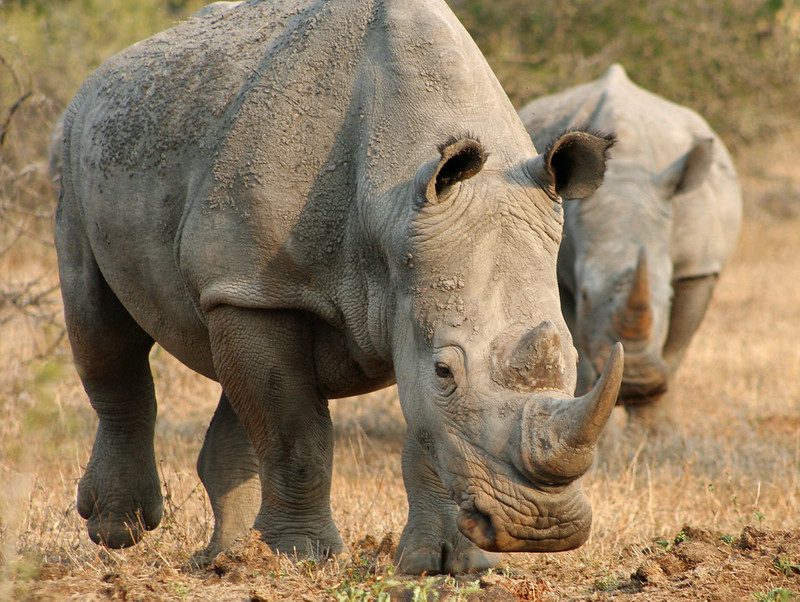
Reintroducing White Rhinos to Community Land
Historically, Hwange National Park was home to a robust white rhino population. By the 1980s, there were more than 100 rhinos, but poaching in the 1990s led to their disappearance. In 2007, the last white rhino in the area was killed.
CRCI has now successfully brought white rhinos back to Hwange, placing them on communal lands rather than solely protected government parks—this time with local communities as custodians.
Local communities have designated grazing land specifically for rhino conservation, giving up usable land for long-term goals. Importantly, revenue from rhino-viewing tourism through Imvelo’s lodges flows directly back into communities—100% of the income generated from rhino-related tourism is returned.
In 2022, Thuza and Kusasa became the first white rhinos ever to roam community-owned land in Zimbabwe. Since then, a second sanctuary has been built for two more male white rhinos, Mlevu and Asenze.
While the second sanctuary marks major progress, challenges persist. “A larger area is harder to protect. We need to recruit and train more local community members as scouts, need to buy another vehicle, more uniforms, pay more salaries, more food, more equipment,” Tranter explained. “It’s a larger cost and a bigger poaching threat, but growing the area and rhino population is essential… we need to get a bigger population of rhinos—not just four male rhinos!”
Employment and the Cobras Wildlife Protection Unit
The initiative also employs a local wildlife protection unit known as the Cobras, a team of community-based scouts. Recruited from nearby villages, Cobras receive training in first aid, weapons handling, conservation law, radio communications, rhino monitoring and human-wildlife conflict resolution.
A stable salary is transformative—improving food security, supporting school fees and reducing economic pressures that might drive poaching. Beyond income, placing community members at the heart of wildlife protection fosters ownership and pride. As one Cobra scout said, guarding rhinos is about “protecting what we can best describe as our own future.”
Since the arrival of Mlevu and Asenze, CRCI is training 24 more scouts, including three women who will become cheetah scouts.
Supporting Education in Wildlife-Adjacent Communities
While employment is vital for poverty reduction, education is the foundation for long-term change. Young people living on the frontline of Hwange’s wildlife areas face barriers such as long travel distances, understaffed classrooms and limited resources. Imvelo’s education program responds directly to these challenges, supporting 14 local schools through infrastructure development, learning materials and staffing assistance.
Support has included constructing classroom blocks, building teachers’ cottages, drilling boreholes for safe water and supplying desks, textbooks and uniforms. In 2010, Imvelo built its first high school classroom block with donor help. By the next year, the school had expanded to include two double classroom blocks, an ablution block and three teachers’ cottages, serving 110 students. In 2023, Imvelo provided two new dormitories and an ablution block, allowing boarding students from remote villages to attend school consistently.
Tranter emphasized the importance of education: “Investing in education is a priority. But so is actual experience. It’s important to simultaneously educate students about conservation and wildlife protection as well as allow community members to feel and appreciate the benefits of wildlife and the potential for improved livelihoods that wildlife can bring.”
Improving Health Care Access
Access to reliable health care is essential for communities, especially those in remote wildlife areas. In 2017, Imvelo began constructing Ngamo Clinic with donor support, and by September 2022, it treated its first patient—an important milestone for surrounding villages.
Imvelo also runs the Smile and See Safari, launched in 2011, which brings volunteer dentists and eye specialists from Smile Is a Foundation to provide free care to rural villagers. Over the past decade, the initiative has treated more than 36,000 patients. Support from Imvelo guests and partners in Australia has further strengthened health care and education facilities in Sidinda, providing essential infrastructure and economic uplift.
A Community-Centered Conservation Model
By placing communities at the center of wildlife protection—through education, health care, employment and the Community Rhino Conservation Initiative—Imvelo has built a model that benefits both people and nature. In a region where exclusion once weakened conservation, Imvelo offers an example of a more equitable approach, one in which communities and ecosystems can thrive together for generations to come.
– Elysha Din
Elysha is based in Guildford, UK and focuses on Good News and Politics for The Borgen Project.
Photo: Flickr

5 Ways Kenya is Reducing Poverty
Social Protection Programs
As part of Kenya Vision 2030, social protection programs have been pushed to be implemented as a solution to rising poverty and inequalities (SDG 1 and 10). For instance, the Inua Jamii Programme transfers cash to vulnerable people, like orphans, the elderly and people with disabilities. Since 2018, the initiative has spent more than $230,000 per year helping the people of Kenya stay out of poverty. In Kenya, around 80% of its land is classed as arid and semi-arid (ASAL), meaning the amount of rainfall the regions receive annually is little to none.
The Hunger Safety Net Program (HSNP) helps provide regular cash transfers to these dry regions, which struggle to grow crops. Approximately, this program has helped stop almost 800,000 people from going hungry despite their agricultural limitations. These programs are all part of the National Safety Net Program (NSNP), which funds and promotes these various frameworks in hopes of improving the efficiency and reach of these initiatives. The NSNP is vital in helping Kenya reduce poverty across its lands.
Agricultural Transformation
Agriculture largely remains the backbone of Kenya’s economy, employing around 70% of the rural population. Under the Big Four Agenda, a presidential initiative first launched in 2017, food security is a large area of focus. The government began to promote the leasing and sales of agricultural equipment to enable farmers to have access to otherwise expensive equipment.
Similarly, the implementation of more support for those in agriculture allows for a more stable income. These acts are crucial to achieving zero hunger and decent work and economic growth (SDG 2 and 8) in aid of Kenya reducing poverty while also advancing Vision 2030’s goal of a stable and growing economy.
Universal Health Coverage
Kenya’s recent push toward Universal Health Coverage (UHC) is transforming access to health care across the country. The expansion of the National Health Insurance Fund (NHIF), which now includes access for informal sector workers and vulnerable groups, is part of this shift. Community health volunteers (CHVs) are beginning to play a key role in delivering primary care at the lower grassroots levels of society.
Pilot programs in counties like Kisumu and Nyeri have proven the potential of UHC to reduce unnecessary expenses and improve health outcomes. These initiatives help support good health and well-being (SDG 3) and promote equitable health care as part of Kenya Vision 2030.
Education Access Equity
Education reforms are expanding across Kenya, improving access and quality of teaching. Free primary and subsidised secondary education have increased enrolment rates, while school feeding programs in marginalised areas have been shown to enhance attendance and nutrition amongst the children. Technical and Vocational Education and Training (TVET) institutions are equipping youth with market-relevant skills for the wider world. Digital literacy programs like Ajira Digital and the Presidential DigiTalent Program are aiming to prepare young Kenyans for the future of work, like learning key skills of data entry or transcription. These efforts are instrumental for quality education (SDG 4) to be achieved, as well as promoting Kenya Vision 2030’s focus on human capital development; these factors reflect Kenya’s reduction in poverty as well as a sense of changing hope for the new generations to come.
Youth Employment and Skills Development
Youth employment is a huge priority for the Kenyan government, with over 75% of its population being under 35. Programs like the Kenya Youth Employment Opportunities Project (KYEOP) offer training opportunities, internships and business grants. The project has helped more than 145,000 Kenyans participate in its programs, with around 125,000 direct jobs being created. It has promoted a 50% increase in wages for its beneficiaries and allowed the employment rate to rise to around 85% among its participants.
Looking Ahead
Overall, Kenya has made significant progress toward its SDGs, helping improve Kenyan livelihoods every day. Its poverty reduction strategy is bold and inclusive; however, challenges like the changing climate and urban poverty remain. Nonetheless, Kenya is reducing poverty levels and showing ongoing reform and innovation, offering hope for the future. As the country moves toward 2030, its vision remains clear for the future of its citizens.
– Megan Burrows
Photo: Flickr
Community-Led Conservation in Hwange With Imvelo
Communities and Conservation: A Necessary Connection
Conservation efforts have historically overlooked a critical reality: communities living beside national parks must be aligned with wildlife protection. When they are not, wildlife can become a liability rather than an asset.
In an interview with Hannah Tranter from the Community Rhino Conservation Initiative (CRCI), a partner organization of Imvelo, she explained that “local support is fundamental—local people need to have the means to be able to live with wildlife, rather than against it. They need access to water, food, safety from wildlife, employment, education, health care… so if you want to conserve wildlife and habitats, you need to make sure the local people’s needs are also covered and satisfied.”
For families facing poverty, food insecurity and limited economic opportunity, the negatives of living alongside wildlife often outweigh the benefits. Animals may destroy crops that people rely on, and predators such as hyenas and cheetahs may kill livestock. This imbalance often fuels subsistence poaching, which is driven not by malice but by necessity when no alternative livelihoods exist.
This disconnect weakens conservation outcomes and erodes trust between local people and park authorities. Imvelo’s model is designed to counter this cycle. By ensuring that wildlife contributes directly to community well-being through employment, services and long-term development, Imvelo helps reduce the economic pressures that drive poaching and replaces them with shared incentives to protect wildlife.
Reintroducing White Rhinos to Community Land
Historically, Hwange National Park was home to a robust white rhino population. By the 1980s, there were more than 100 rhinos, but poaching in the 1990s led to their disappearance. In 2007, the last white rhino in the area was killed.
CRCI has now successfully brought white rhinos back to Hwange, placing them on communal lands rather than solely protected government parks—this time with local communities as custodians.
Local communities have designated grazing land specifically for rhino conservation, giving up usable land for long-term goals. Importantly, revenue from rhino-viewing tourism through Imvelo’s lodges flows directly back into communities—100% of the income generated from rhino-related tourism is returned.
In 2022, Thuza and Kusasa became the first white rhinos ever to roam community-owned land in Zimbabwe. Since then, a second sanctuary has been built for two more male white rhinos, Mlevu and Asenze.
While the second sanctuary marks major progress, challenges persist. “A larger area is harder to protect. We need to recruit and train more local community members as scouts, need to buy another vehicle, more uniforms, pay more salaries, more food, more equipment,” Tranter explained. “It’s a larger cost and a bigger poaching threat, but growing the area and rhino population is essential… we need to get a bigger population of rhinos—not just four male rhinos!”
Employment and the Cobras Wildlife Protection Unit
The initiative also employs a local wildlife protection unit known as the Cobras, a team of community-based scouts. Recruited from nearby villages, Cobras receive training in first aid, weapons handling, conservation law, radio communications, rhino monitoring and human-wildlife conflict resolution.
A stable salary is transformative—improving food security, supporting school fees and reducing economic pressures that might drive poaching. Beyond income, placing community members at the heart of wildlife protection fosters ownership and pride. As one Cobra scout said, guarding rhinos is about “protecting what we can best describe as our own future.”
Since the arrival of Mlevu and Asenze, CRCI is training 24 more scouts, including three women who will become cheetah scouts.
Supporting Education in Wildlife-Adjacent Communities
While employment is vital for poverty reduction, education is the foundation for long-term change. Young people living on the frontline of Hwange’s wildlife areas face barriers such as long travel distances, understaffed classrooms and limited resources. Imvelo’s education program responds directly to these challenges, supporting 14 local schools through infrastructure development, learning materials and staffing assistance.
Support has included constructing classroom blocks, building teachers’ cottages, drilling boreholes for safe water and supplying desks, textbooks and uniforms. In 2010, Imvelo built its first high school classroom block with donor help. By the next year, the school had expanded to include two double classroom blocks, an ablution block and three teachers’ cottages, serving 110 students. In 2023, Imvelo provided two new dormitories and an ablution block, allowing boarding students from remote villages to attend school consistently.
Tranter emphasized the importance of education: “Investing in education is a priority. But so is actual experience. It’s important to simultaneously educate students about conservation and wildlife protection as well as allow community members to feel and appreciate the benefits of wildlife and the potential for improved livelihoods that wildlife can bring.”
Improving Health Care Access
Access to reliable health care is essential for communities, especially those in remote wildlife areas. In 2017, Imvelo began constructing Ngamo Clinic with donor support, and by September 2022, it treated its first patient—an important milestone for surrounding villages.
Imvelo also runs the Smile and See Safari, launched in 2011, which brings volunteer dentists and eye specialists from Smile Is a Foundation to provide free care to rural villagers. Over the past decade, the initiative has treated more than 36,000 patients. Support from Imvelo guests and partners in Australia has further strengthened health care and education facilities in Sidinda, providing essential infrastructure and economic uplift.
A Community-Centered Conservation Model
By placing communities at the center of wildlife protection—through education, health care, employment and the Community Rhino Conservation Initiative—Imvelo has built a model that benefits both people and nature. In a region where exclusion once weakened conservation, Imvelo offers an example of a more equitable approach, one in which communities and ecosystems can thrive together for generations to come.
– Elysha Din
Photo: Flickr
Everything To Know About HIV/AIDS in Bolivia
Background on HIV/AIDS
According to the World Health Organization (WHO), HIV is a virus that targets the immune system by attacking white blood cells. Bodily fluids from an infected person can spread HIV. This can include blood, breast milk, semen and vaginal fluids. Antiretroviral therapy treats HIV. Without treatment, HIV can develop into AIDS.
The Response
The United Nations developed UNAIDS, the Joint Programme on HIV/AIDS, to lead the global effort to eradicate it. UNAIDS’ main focus is to advocate for affected communities, provide technical support, collect data on the illness and assist countries that are most affected. The joint program in Bolivia has carried out various efforts to address HIV through prevention, testing and treatment. Community-based programs, supported by the Joint Programme, have provided access to HIV prevention packages in 2023 to MSM and transgender women. Furthermore, the Triple X (Xpressa, eXplora and eXige) campaign has run a social media initiative aimed at increasing condom usage. It has reached 111,000 young people and resulted in a 12% increase in condom distribution within the public health system in one year. Additionally, the government has developed national guidelines for pre-exposure prophylaxis with support from the World Health Organization (WHO) following its adoption of the preventive drug regimen.
Impacts of People in Poverty With HIV
People who live with HIV/AIDS in Bolivia face conditions conducive to poverty, such as food insecurity and unstable livelihoods face major obstacles in managing their treatment, indicating a connection between economic struggle and HIV-related health outcomes, according to a study performed by Palar and a team. The Pan American Health Organization (PAHO) states that more than a third of Bolivia’s population lived below the national poverty line in 2021, indicating economic strain that reflects the hardships patients described in the study.
Palar’s team determined that time conflicts with their jobs prevented many participants from getting their doses, the stigma of HIV caused the loss of jobs and that many HIV patients struggled to balance their treatments with expectations from informal or unpredictable employment. The study observes that these conditions directly impact antiretroviral adherence, especially for those who lack a stable income or consistent access to food. The team also notes that a food-assistance pilot program has helped ease these pressures through improving patients’ nutritional stability. This has helped patients take their medication correctly.
Addressing Disparities and Prejudices
Fighting HIV/AIDS in Bolivia importantly involves addressing the disparities within the populations it affects and the prejudices surrounding the disease. Capacity-building training and catalytic funding have supported civil society organizations in Bolivia to strengthen the HIV response, address stigma and discrimination and protect human rights. As UNAIDS reported, the Bolivian Network of People Living with HIV and the Ministry of Health have introduced a pulsometer, a pilot stigma and discrimination self-assessment tool, to gather data on stigma and discrimination directed toward people living with HIV and key populations within the healthcare system. This aims to address barriers to accessing services.
In 2022, officials created an essential care standard for vulnerable communities and integrated it across 3,000 health facilities. As UNAIDS outlined, this protocol includes guidelines that prevent stigma, ensure adherence to care and diagnosis standards for HIV and promote condom use. In an effort to decriminalize HIV transmission, REDBOL and the community-centered organization Asociación Un Nuevo Camino have created a project to modify the 2008 HIV law. Advocates organized social dialogues to pressure Congress.
Looking Ahead
Although HIV is not an epidemic among the general population in Bolivia, it is prevalent within concentrated communities. The government and external organizations have made consistent efforts to address and treat this disease. HIV carries significant societal stigma and prejudice; as such, the response has acknowledged discrimination against marginalized groups. The response has addressed the disease itself and has also worked to undo prejudice and discrimination toward marginalized communities.
– Sasha Banaei
Photo: Flickr
How Reusable Diapers Are Fighting Poverty, Waste & Inequality
The Economic Community of West African States (ECOWAS) aims to transform this landscape by launching three regional factories to produce reusable sanitary diapers and pads. This, in turn, will boost employment in local communities and directly address issues of inequality, poverty and environmental degradation.
The Issue at Hand: A Silent Crisis
Across West Africa, 401.9 million people currently face health and education challenges and 60% of them are young people. Obstetric fistula affects a vast number of women as well, where social exclusion risks coming as a result. Furthermore, the lack of sanitary products in schools contributes to school dropouts among girls and the elderly struggle with a lack of products to help manage urinary leaks.
What ECOWAS is bringing to the table is an opportunity to address these gaps by integrating education, health and socioeconomic issues in a way that promotes human development in the region. It also offers a pathway to tackle the current global waste crisis. “This isn’t just about hygiene-it’s about dignity, economic inclusion and breaking cycles of poverty,” as stated by an ECOWAS commissioner during a signing ceremony.
Governments, together with private entities, can ensure civilians receive safe sanitary products by reinforcing product standards and increasing supply. This approach helps restore both dignity and the market for these products.
ECOWAS Reusable Diaper and Pads Initiative
In 2024, the ECOWAS Commission, through its Gender Development Center (CCDG) initiative, launched this project to establish three factories for producing reusable sanitary pads and diapers. The goal is to meet the needs of teenage girls, fistula survivors and older people, advancing both gender equality and human development.
By initiating this project, ECOWAS objectives centered on decreasing the rates of school dropout, enhancing reproductive health for fistula victims by producing affordable sanitary items and providing them with economic independence by creating jobs.
The management of these factories was entrusted to the States. However, it has a multi-stakeholder Board of Directors, including ECOWAS, partners and ministries, which oversee its training, implementation and advocacy.
Countries in the Spotlight
Within West Africa, several countries have positively responded to this initiative, including Sierra Leone, Togo and Liberia.
The Bigger Impact
Using reusable pads and diapers offers a major environmental advantage, especially since disposable versions are among the biggest global contributors to plastic waste. More than 300,000 diapers are thrown away every minute, ending up in landfills and polluting the environment and oceans. This issue is even more serious given how difficult they are to recycle, often taking years to break down. By promoting a circular diaper and pad industry, this initiative could prevent 38 million tonnes of waste each year.
What ECOWAS proposed and initiated was far beyond just hygiene; it is about dignity, breaking cycles of poverty within West Africa and socioeconomic inclusion.
– Liz Mendes
Photo: Wikimedia Commons
Amazon’s Disaster Relief Hubs and Hurricane Melissa Relief Efforts
Hurricane Melissa’s Impact
A recent NBC News report stated that Hurricane Melissa killed 32 people in Jamaica and described it as the most devastating storm ever to make landfall in the country. The British Red Cross also noted that more than 30,000 Jamaicans have been displaced, with the number rising daily. Hurricane Melissa’s financial toll is also being felt throughout Jamaica.
According to a recent report by Reuters, the storm could cost Jamaica as much as $7 billion, a conservative estimate. Experts say that all totaled, Hurricane Mellisa could cause a 30% drop in Jamaica’s GDP, severely weakening its economy.
How Amazon Is Helping
In 2021, Amazon opened its first disaster relief hub in Atlanta, Georgia. It subsequently built 14 additional disaster relief hubs, strategically placed in areas prone to disasters, to assist with a variety of natural disasters. According to WSB-TV Atlanta, the Amazon disaster relief hub in the city is sending emergency supplies to Jamaica. These include a range of portable technology solutions designed to power and connect hospitals, police stations and emergency operations in Jamaica.
The hub can deploy up to 1.4 million pre-packaged relief items within 72 hours of a natural disaster. According to Amazon’s website, its disaster relief hubs are stocked with muck and gut kits to help with flooding, hygiene kits to keep people clean and sensory kits to help children who may be overwhelmed by staying in shelters. These kits provide them with noise-canceling headphones, a weighted blanket and toys.
The WSB-TV Atlanta report also notes that since launching in 2021, Amazon’s disaster relief hubs have supported more than 190 disaster zones. Additionally, they have delivered more than 26 million relief items.
Conclusion
Hurricane Melissa has had a devastating impact on Jamaica — one that will be felt for years to come. However, relief efforts from Amazon’s disaster relief hubs, as well as collaboration with a host of nonprofits, are expected to strengthen recovery efforts. Furthermore, efforts will help to ensure that displaced residents have homes to return to.
– Charlie Means
Photo: Pixabay
New Paths: Migration to Georgia Is Changing the Story
Migration Statistics
In recent years, migration to Georgia has surged. In 2023, more than 245,000 people left the country, nearly twice the number from the year before, while about 205,857 people arrived. Most were of working age, according to Civil Georgia, meaning the movement reflects shifts in both labor and opportunity.
By 2024, Georgia recorded a small but positive migration balance: 135,811 people immigrated, while 121,425 emigrated. For the first time in years, Georgia gained more people than it lost, a subtle but hopeful sign for a nation long shaped by departures.
Economic hardship remains the main reason people leave. Many Georgians move abroad for higher wages, while others seek education or reunite with family members overseas. Yet the same openness that encourages travel also makes Georgia attractive to newcomers. Students, entrepreneurs and remote workers are drawn in by low living costs and simplified visa rules.
The dual flow tells two stories: one of aspiration and one of adaptation. Emigration can stretch families thin, but remittances often sustain those who remain. At the same time, immigration insinuates new energy, filling labor gaps and bringing cultural exchange that enriches the social fabric.
Migration and Poverty
For many families, migration to Georgia, whether incoming or outgoing, is directly tied to poverty. Workers abroad send home billions of dollars each year, providing relief from daily expenses and financing children’s education. According to the World Bank, remittances reached $4.06 billion in 2024, equal to more than 12% of Georgia’s GDP.
However, there’s a hidden cost. When working-age adults leave, communities lose labor, expertise and stability. Rural areas suffer most, as young people head abroad while older generations stay behind. The imbalance widens inequality and slows local development.
Yet migration can also become a lifeline. When returning, Georgians bring new skills or investments; they help create jobs, strengthen local economies and build resilience against poverty.
Building Solutions That Work
The government and its partners are working to make migration a tool for growth rather than loss.
These efforts are gradual but promising. With strategic investment and stronger protections, migration could serve as a bridge between local development and global integration.
A Shared Future
Migration to Georgia is not just about movement; it’s about connection. The same forces that push people to leave also bring others in, reminding the country that growth often comes from openness, exchange and return. If nurtured with care, migration can become one of Georgia’s greatest assets: a driver of innovation, inclusion and economic stability.
In a world constantly on the move, Georgia’s strength may lie not in resisting migration, but in learning how to make it work for everyone involved.
– Salome Jincharadze
Photo: Freepik
Food Aid Theft Solutions
In some cases, this renders food aid less effective. For instance, in Yemen, despite increased levels of support in 2019, hunger persisted and even increased in some areas. However, innovative grassroots, structural or community-based initiatives have shown potential to reduce the problem in deeply affected places such as Somalia, Ethiopia and Yemen.
Grassroots Initiatives
Action Against Hunger launched a grassroots campaign in Somalia by establishing community call centers to improve aid reporting measures. The approach helps track aid deliveries in areas affected by limited resources and conflict. Addressing these issues is essential because Action Against Hunger reports that limited road access and control of territory by non-state actors significantly contribute to aid diversion.
The organization hired and trained local volunteers in tracking and reporting aid deliveries. The team handles complaints and verification and also manages real-time crises. In 2023, the call center was alerted by community members about a cholera outbreak, allowing the organization to intervene immediately. In two years of operation, the call center has answered more than 30,000 calls regarding aid delivery verification, feedback on aid received and requests for emergency assistance. The calls are prepaid, meaning even people in remote regions can contact the center.
Structural Changes
A growing approach among humanitarian organizations is shifting from in-kind aid to direct financial assistance. According to the WFP, sending money is empowering because cash is often the most important asset during a disaster or crisis. It provides flexibility, allowing recipients to use it for food, medical bills, rent or school fees based on their needs. This has become an increasingly common practice. In 2023, the WFP sent about $2.8 billion to countries including Yemen, Somalia and Afghanistan, directly supporting 51.6 million people.
The Poverty Action Lab, a research center founded by Massachusetts Institute of Technology professors, evaluated cash assistance positively. The organization reported that in Niger, financial support helped families eat more frequently. Delivery costs are relatively low, making this solution cost-effective. Their findings suggest that cash can improve economic conditions and have positive effects on mental well-being. For example, Afghan women who received cash transfers reported feeling happier and more confident about their economic situation. While the Poverty Action Lab notes the need for more research, it concludes that cash has a tangible, positive impact on food security. Provided an area has functioning markets, the organization suggests this type of assistance can support long-term stability by helping families build more secure futures.
Community Approaches
Community-based strategies are another of the solutions addressing food aid theft. Humanitarian organizations engage local residents in various ways, including empowerment projects in Ethiopia’s Tigray region and feedback desks in Sudan.
Omna Tigray, a nonprofit in Ethiopia, addresses food aid theft by involving residents in planning, implementing and monitoring food aid programs. The organization states that local engagement cultivates responsibility among community members. According to Omna Tigray, empowering residents helps identify and report aid diversion and strengthens relationships between donors and beneficiaries, which can be strained by theft. Community engagement is particularly important in a region where 5.4 million residents depend on aid deliveries.
Similar approaches have been implemented elsewhere, including feedback desks in refugee camps in Sudan established by World Vision. A committee of camp residents and World Vision staff selects and trains local volunteers who assist with reports and inquiries from camp residents. These desks help quickly address distribution issues and are recognized positively by locals. During a discussion session with World Vision staff, an anonymous female refugee said the “community help desk system is the best for food distribution.”
Looking Ahead
These various food aid theft solutions demonstrate multiple ways to address the issue. Ranging from grassroots initiatives to structural and community-based approaches, they show potential for reducing the problem. These measures have contributed to more equitable aid distribution in some areas. Furthermore, they have been positively received by local communities and researchers focused on food aid programs.
– Karol Hejduk
Photo: Flickr
WSLB: Global Stewardship Through Youth Leadership in Spain
Recent years have seen an increase in similar initiatives for youth across the world, creating a rapidly growing network of globalized communities. The WSLB is an example of regional governments integrating the United Nations Sustainable Development Goals (SDGs) into long-term community planning. Local institutions play a uniquely crucial role in alleviating poverty at the grassroots level, and employing the rising generation is central to this work. “If we’re not taking care of our citizens, the whole society suffers,” says WSLB Director of Programming, Amy Ubungen.
WSLB programs for youth leadership in Spain are necessary avenues that reflect a growing global presence in the development of sustainable communities.
A Long-lasting Global Network
The WSLB backs two international programs, both designed as accessible, cost-free opportunities for underserved youth from Washington and Northern Spain to travel abroad. Washington World Fellows began in 2017 as a sister exchange program to World Fellows España, which in 2022 sent its first cohort of Spanish students to Washington State.
World Fellows, many of whom are first-generation college students facing community-specific education barriers, embark on a college readiness track while abroad. In July 2025, World Fellows connected with local government officials during an annual International Youth Summit in Viana, Spain, where students issued a magazine to voice concerns about universal socioeconomic barriers facing youth.
The Compassion Scholars initiative launched in 2019, when the inaugural cohort of Washington students traveled to Dharamsala, India, to discuss global inequalities with the Dalai Lama.
Compassion Scholars now visit the La Rioja region in Northern Spain, where they observe measures in both urban and rural settings to alleviate poverty. Upon returning home, Scholars implement community projects that range from reducing education barriers to partnering with local immigrant support agencies.
Sustainable Development Goals at the Micro Level
WSLB’s partners in La Rioja each incorporate SDGs, enriching the region with a strong network of resources. El Colletero is an innovative, grassroots effort based in the agricultural community of Nalda, Spain. It is driven by local women who offer training sessions in food production to prevent food insecurity and promote ecofeminism. La Rioja Acoge is a regional immigrant and refugee resettlement agency in Logroño whose Reception and Integration System accommodates asylum seekers fleeing humanitarian crises in areas such as Gaza and Ukraine. The regional branch of La Cruz Roja in La Rioja tailors its emergency response services to local vulnerable populations. All three agencies promote youth leadership in Spain and provide an exemplary framework for communities worldwide pursuing para-diplomacy.
How the WSLB and Its Partners Thrive
The success of World Fellows and Compassion Scholars is due in part to the WSLB’s history as a longstanding, state-funded institution, providing a legal foundation in Washington State for an international framework. However, this level of institutional support is not present for World Fellows España. “You could say… that we are the Spanish agency of the WSLB, [but World Fellows España doesn’t] have any support here locally,” explains World Fellows España Director, César Martínez Lorenzo. “We do have the support of organizations that get involved in Compassion [Scholars]. They support us. They do it out of compassion, so to speak. But other than that, at any institutional level, we don’t have any support just yet.”
Despite Spain’s developed social safety net, community-driven initiatives like World Fellows España often struggle to gain the institutional recognition needed to lift programs off the ground. The pandemic delivered a particular blow to World Fellows and other youth programs globally. However, César remains optimistic about the WSLB’s continued success. “Policy should be implemented to make these programs a thing,” he says. “It’s like planting a seed… and we need to let it grow. But that is a process. That doesn’t happen overnight… I think we have to wait and see. It’s a ‘trust the process’ kind of thing. And that’s what we do, we trust the process. And we can invest in it, because we believe in it.”
Missions for Underserved Youth
Early in World Fellows España’s development, the regional initiative Los Pioneros provided a well-aligned model for the World Fellows mission. Los Pioneros is a nonprofit based in Logroño that promotes youth leadership in Spain by addressing education and employment barriers for marginalized young adults.
Many initiatives like Los Pioneros exist globally but lack access to consistent funding like that of the WSLB, making it difficult to expand programs beyond their region of origin.
Alliance Africa Avanza is another example of a well-resourced initiative sustained on an international scale. In August 2024, the Spanish government launched a joint program in Senegal, Tierra Firme, to address the country’s high unemployment rates by fostering self-sufficiency and financial stability. The program enables 500 Senegalese youth to receive vocational and professional training. Bilateral agreements between nations, such as Alliance Africa Avanza, demonstrate how essential institutions are in providing measurable opportunities for youth.
The WSLB and Barriers to Success
Like many state-funded agencies in the U.S., WSLB programming has been affected by recent decreases in federal funding. For World Fellows and Compassion Scholars students in both Washington and Spain, the programs’ limited mobility caused by budget cuts “puts a lot more burden on participants, [and] it requires participants to step up,” says Amy Ubungen. Since spring 2025, the WSLB has experienced a 12% funding cut.
Such cuts are the “biggest threat and number one concern of our agency at this time,” says WSLB Programs Manager Claire Muehleisen. Given World Fellows España’s lack of local financial support, these reductions present a particular challenge for youth leadership programs in Spain.
“…What would be ideal [is for World Fellows España] to get funded, and that’s where local governments and institutions come in,” says César Martínez Lorenzo. He suggests increased support from “a local institution, say the city council or… the town hall,” to channel funding. “We would need someone in a position of power… to believe in what we do and make it happen… that’s my hope,” he explains. With a boost in local support, César foresees a future where Compassion Scholars could evolve into an exchange program, like World Fellows.
A Catalyst for Sustainable Development
As World Fellows and Compassion Scholars expand, the WSLB’s international partnerships will continue to inspire global youth initiatives aligned with the SDGs. “Poverty is always in the details,” remarks César Martínez Lorenzo. Fortunately, so are local institutions that continue to make long-term investments in the youth for healthy, sustainable communities in the future.
– Isla Hansen
Photo: Flickr
Clean Water and Empowerment: Women-led WASH in Nepal
Chair of the WASH-CC, Mr. Dhir Bahadur Shahi, says, “Previously, we had little knowledge about the particular WASH needs of people with disabilities and women. The Disability Inclusive Development (DID) training, the inclusive WASH assessment and several activities organized by the WfW-BFL project sensitized us. These motivated us to include people with disabilities and women in the WASH-CC at [both] the rural municipality and ward levels.”
Women at the Helm
Across Nepal, women are leading a quiet yet powerful revolution in water and sanitation. In one of the SNV-supported programs, 20 out of 24 hamlets (tole) in Nepal are now managed by women-led WASH committees. In fact, these groups oversee everything from water safety to menstrual hygiene programs and public toilets.
Since placing women in charge of decision-making, projects have seen stronger follow-through and more sustainable outcomes. What was once considered “household work” has now become community leadership, as these women guide a future focused on reducing disease, saving time and improving livelihoods.
The Water and Poverty Connection
While access to water in Nepal has improved dramatically, challenges still remain. UNICEF reports that 95% of Nepalis now use an improved water source; however, 71% of all the water sources and more than 90% of those used by the most vulnerable group are contaminated with Escherichia coli bacteria. Furthermore, a recent BMC Public Health study among the Indigenous Kumal community revealed that 40% of households use surface water as their primary source of water.
Unsafe water leads directly to disease and a missed income, as women often bear the heaviest burden and walking long distances for clean water may still make families sick.
Solutions in Motion
To close these gaps, inclusive programs are changing the way water projects are managed. The Water for Women Fund’s partnership with SNV has reached more than 52,800 people in Nepal through community-led water and sanitation programs. These projects prioritize Gender Equality and Social Inclusion (GESI), ensuring women, people with disabilities and marginalized groups lead the way.
In Sarlahi District, women now head 20 of the 24 local water management committees. Their duties include overseeing sanitation campaigns, managing water billing and advocating for menstrual hygiene in schools. These systems have shifted WASH efforts from temporary aid to sustainable and locally owned solutions.
Beyond Access To Real Empowerment
Water access is only one part of the story, as empowerment fills the remainder. Indeed, through programs like SNV’s “Family Leadership” initiative, women now serve as chairpersons of local WASH committees and lead community outreach. In several Indigenous communities of Nepal, women manage sanitation systems, maintain toilets and run health workshops that reach hundreds of households.
This leadership has built significant trust within communities and strengthened local governments’ capacity to sustain progress. As SNV’s field reports note, women’s involvement has turned WASH work from a top-down effort into a community-driven movement.
The Bigger Picture
Nepal’s journey toward clean water and sanitation is as much about equity as it is infrastructure. With women-led WASH in Nepal, the country is improving health, education and economic opportunities, particularly for those who have long been excluded from decision-making. From Thantikandh to Sarlahi, women have demonstrated that access to clean water can also unlock opportunities for power, dignity and change. Nepal’s progress offers a model for how inclusive leadership can turn basic.
– Tiana Hermes
Photo: Flickr
School Meals Coalition: The Fight Against Childhood Hunger
Countries Leading the Way
Several African countries are leading the way in advancing domestic nutrition programs, with considerable progress in Rwanda and Kenya.
In 2024, Rwanda provided school meals to nearly 4.5 million students through its National School Meal Programme. That same year, the Rwandan government released the National School Feeding Strategy 2023-2032, which outlines plans to continue expanding the program by accommodating the growing student population, increasing program efficiency and building resilience against external shocks. The government is also increasing capacity through higher budget allocations. In 2021, the school feeding budget was $6.25 million; by 2024, it had increased to $73.4 million.
Kenya has taken strong action toward providing universal access to school meals. The Kenya School Meal Programme has been scaling up since the 1980s. In 2024, 2.6 million school-aged children received school meals. By 2030, the government aims to deliver meals to all 10 million primary school students.
Sustainable practices have been prioritized, including procuring locally grown food from small-scale farms—especially climate-resilient crops—and expanding clean, on-site cooking methods to lower energy use and reduce pollutants. Kenya joined the School Meals Coalition in 2021 and has since launched a national chapter, the first of its kind in Africa.
A Meal for Every Child: The School Meals Coalition
This progress reflects the efforts of the School Meals Coalition, a global movement that mobilizes governments to invest in school feeding initiatives. The coalition includes 112 member states, 150 partner organizations and six regional bodies committed to addressing childhood hunger and supporting Sustainable Development Goals.
As countries join, they issue commitments to scale up national school feeding programs and outline how they plan to reach those goals. In return, the coalition provides research, financial strategies and technical support. Many of the countries making the most progress are coalition members, demonstrating high levels of cooperation. In Africa, 44 out of 54 countries are now part of the coalition.
Looking ahead, the coalition aims to provide daily meals to all school-aged children worldwide by 2030. One major milestone has already been reached: restoring all national school meal programs suspended during the COVID-19 pandemic. Continued efforts focus on reaching vulnerable children who still lack access by recruiting more member countries, scaling up programs and improving their efficiency and sustainability.
The Benefits of School Meals
School feeding has strong implications for poverty reduction, providing measurable improvements in educational, economic, health and nutritional outcomes. The most immediate benefits involve improved child health and nutrition, especially in low-income countries where many children face food insecurity. For many, a school meal is their most consistent source of essential nutrients.
There are also far-reaching benefits beyond nutrition. Evidence shows that school meals can improve educational outcomes by increasing enrollment, attendance and classroom participation, particularly in communities facing poverty. Food often acts as an incentive for families to send their children to school, helping reduce absenteeism and fatigue.
School feeding also supports economic growth. As governments add locally grown foods to their menus, smallholder farmers benefit, strengthening local food systems and economies. Long-term returns stem from improved education and increased job opportunities. It is estimated that for every $1 invested in school feeding, $7 to $35 is gained in economic returns.
Looking Forward
As countries continue scaling up school feeding initiatives, they address key drivers of poverty. Consistent, nutritious meals help prevent child malnutrition and improve health outcomes. School meals also provide students with the foundation to break cycles of poverty through better educational and employment opportunities. Local economies benefit through stronger food systems and increased income opportunities.
Through major progress in reaching children with school meals, the School Meals Coalition and its member states show how cooperation can support human development and poverty reduction while continuing the global fight against childhood hunger.
– Quinlan Bohannon
Photo: Flickr