• Link to X
  • Link to Facebook
  • Link to Instagram
  • Link to TikTok
  • Link to Youtube
  • About
    • About Us
      • President
      • Board of Directors
      • Board of Advisors
      • Financials
      • Our Methodology
      • Success Tracker
      • Contact
  • Act Now
    • 30 Ways to Help
      • Email Congress
      • Call Congress
      • Volunteer
      • Courses & Certificates
      • Be a Donor
    • Internships
      • In-Office Internships
      • Remote Internships
    • Legislation
      • Politics 101
  • The Blog
  • The Podcast
  • Magazine
  • Donate
  • Click to open the search input field Click to open the search input field Search
  • Menu Menu

Archive for category: Wildlife Conservation

Africa, Global Poverty, Wildlife Conservation

How Thermal Imaging Protects Wildlife After Dark

Thermal Imaging
Learn how thermal cameras detect heat after dark and how Kenyan conservation teams use the technology to strengthen black rhino protection efforts.

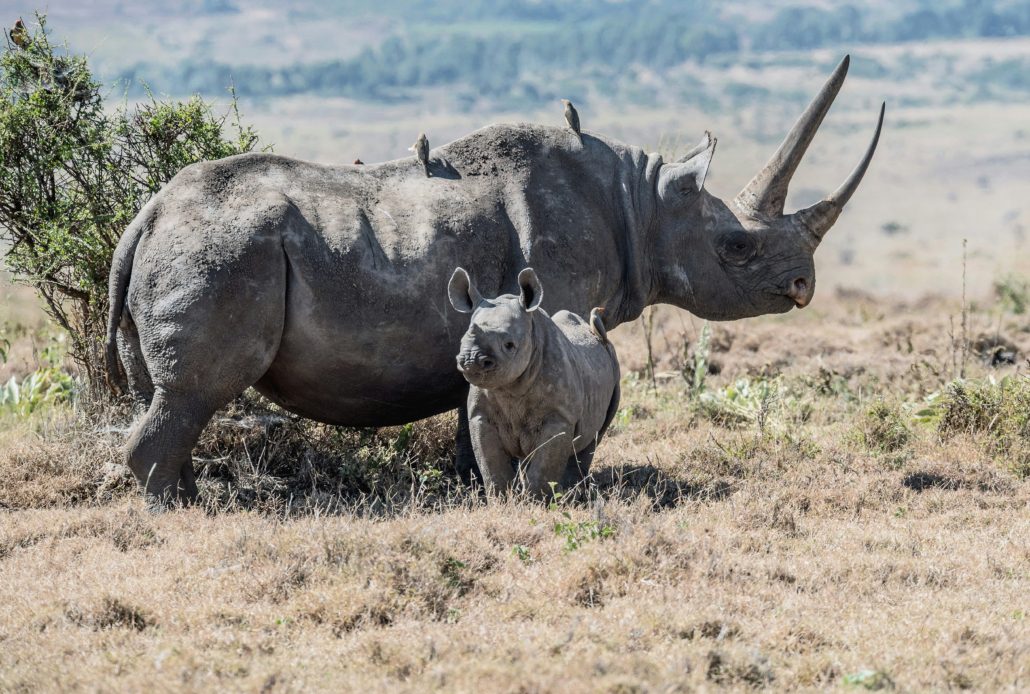
Protecting black rhinos is difficult across Kenya’s large reserves. Without tools that improve visibility during nighttime patrols, rangers may struggle to detect threats to the animals.

Standard cameras cannot produce details in the dark. Thermal sensors trace heat instead of visible light. Across Kenya, conservation teams use these systems to watch vulnerable areas and respond to suspicious movement. Understanding thermal imaging for wildlife protection reveals how precise technology supports local expertise in demanding environments.

How Thermal Cameras Read Heat

Every object above absolute zero emits infrared energy. A thermal camera collects this radiation through a specialized lens and directs it onto a detector. The detector measures temperature differences across the scene and translates those values into an electronic image.

Conventional image intensifiers work differently because they amplify available light from the moon or stars. Thermal imaging is one of the types of night vision systems that are useful in complete darkness. It does not depend on visible illumination. Heat contrast lets a person or vehicle stand out against vegetation. Trained operators must interpret each image alongside local conditions.

Kenya’s Rhino Protection Network

Rhino poaching affects more than wildlife populations. Because nature-based tourism supports employment and income across Kenya, losses among iconic species can harm guides, accommodation providers, local businesses and communities near protected areas.

Kenya provides a clear example of thermal imaging in field conservation. The World Wildlife Fund (WWF) and its partners support camera systems across black rhino areas. Fixed units monitor boundaries, vehicle-mounted cameras extend coverage during patrols, and the sensors reveal heat signatures. Once the staff has the images, they assess the movement and decide how to respond.

Local Training and Implementation

Local decision-making remains central to the deployment and sustainment of these systems in the field. Remote training allowed the staff at Ol Pejeta Conservancy not only to use thermal equipment but also to take part in designing and installing it themselves. In addition, teams learned to operate, troubleshoot and maintain each system, significantly reducing dependence on visiting engineers and external technical support.

This locally led approach was later extended to other protected areas. WWF reports that partners installed a large-scale thermal monitoring system at Solio Game Reserve in 2023, a site that holds around 30 percent of Kenya’s rhino population. Since the installation, Solio has recorded no wildlife poaching incidents within its boundaries.

The Infrastructure Behind Reliable Detection

A camera provides little value when power fails or alerts cannot reach rangers, so conservation teams first build dependable infrastructure before deploying thermal systems. Remote sites require stable electricity, secure mounting and strong communication links that transmit data in real time. 

Solar equipment often powers locations beyond the reach of an established grid, and it allows teams to maintain surveillance in isolated terrain. These systems must handle harsh weather and long distances while maintaining consistent performance. When all components work together, rangers receive timely alerts that help them respond quickly and effectively in the field.

Technology Supports Conservation Teams

Protecting rhinos preserves the wildlife experiences that attract visitors and support jobs in nearby communities. Through using thermal cameras for wildlife protection, trained teams will be able to identify more threats after dark. Combined with local expertise and dependable infrastructure, the technology strengthens ranger awareness while supporting conservation and local economic stability.

– Kelly Schoessling

Photo: Unsplash
August 7, 2026
https://borgenproject.org/wp-content/uploads/borgen-project-logo.svg 0 0 Jennifer Philipp https://borgenproject.org/wp-content/uploads/borgen-project-logo.svg Jennifer Philipp2026-08-07 06:48:072026-08-07 07:11:33How Thermal Imaging Protects Wildlife After Dark
Global Poverty, Tourism, Wildlife Conservation

Community-Led Conservation in Hwange With Imvelo

ImveloToo often, safari tourism across Africa comes at the expense of local communities and environmental sustainability. In 1999, Imvelo Safari Lodges set out to offer a counter-model. Operating on community-owned land on the edges of Hwange National Park in Zimbabwe, Imvelo has spent more than two decades showing that ecotourism can be both protective and empowering, supporting a symbiotic relationship between conservation, responsible tourism and rural livelihoods.

Communities and Conservation: A Necessary Connection

Conservation efforts have historically overlooked a critical reality: communities living beside national parks must be aligned with wildlife protection. When they are not, wildlife can become a liability rather than an asset.

In an interview with Hannah Tranter from the Community Rhino Conservation Initiative (CRCI), a partner organization of Imvelo, she explained that “local support is fundamental—local people need to have the means to be able to live with wildlife, rather than against it. They need access to water, food, safety from wildlife, employment, education, health care… so if you want to conserve wildlife and habitats, you need to make sure the local people’s needs are also covered and satisfied.”

For families facing poverty, food insecurity and limited economic opportunity, the negatives of living alongside wildlife often outweigh the benefits. Animals may destroy crops that people rely on, and predators such as hyenas and cheetahs may kill livestock. This imbalance often fuels subsistence poaching, which is driven not by malice but by necessity when no alternative livelihoods exist.

This disconnect weakens conservation outcomes and erodes trust between local people and park authorities. Imvelo’s model is designed to counter this cycle. By ensuring that wildlife contributes directly to community well-being through employment, services and long-term development, Imvelo helps reduce the economic pressures that drive poaching and replaces them with shared incentives to protect wildlife.

Reintroducing White Rhinos to Community Land

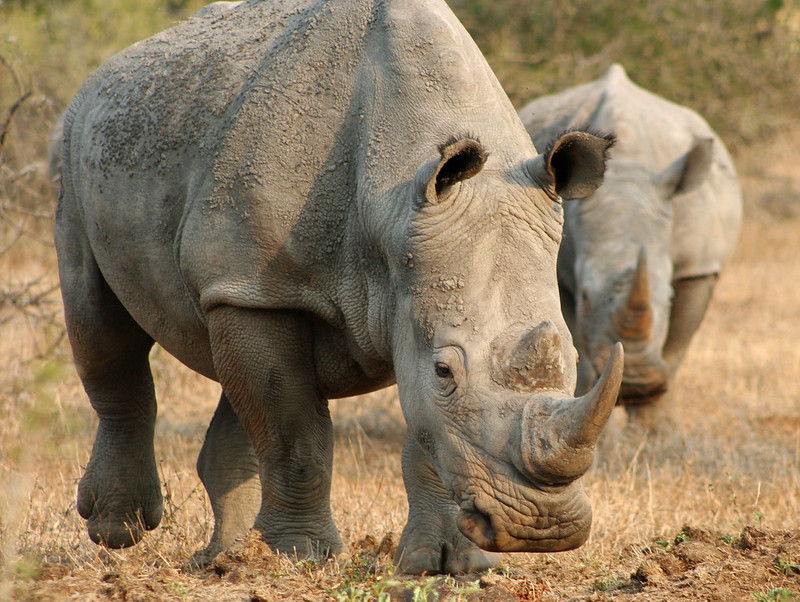
Historically, Hwange National Park was home to a robust white rhino population. By the 1980s, there were more than 100 rhinos, but poaching in the 1990s led to their disappearance. In 2007, the last white rhino in the area was killed.

CRCI has now successfully brought white rhinos back to Hwange, placing them on communal lands rather than solely protected government parks—this time with local communities as custodians.

Local communities have designated grazing land specifically for rhino conservation, giving up usable land for long-term goals. Importantly, revenue from rhino-viewing tourism through Imvelo’s lodges flows directly back into communities—100% of the income generated from rhino-related tourism is returned.

In 2022, Thuza and Kusasa became the first white rhinos ever to roam community-owned land in Zimbabwe. Since then, a second sanctuary has been built for two more male white rhinos, Mlevu and Asenze.

While the second sanctuary marks major progress, challenges persist. “A larger area is harder to protect. We need to recruit and train more local community members as scouts, need to buy another vehicle, more uniforms, pay more salaries, more food, more equipment,” Tranter explained. “It’s a larger cost and a bigger poaching threat, but growing the area and rhino population is essential… we need to get a bigger population of rhinos—not just four male rhinos!”

Employment and the Cobras Wildlife Protection Unit

The initiative also employs a local wildlife protection unit known as the Cobras, a team of community-based scouts. Recruited from nearby villages, Cobras receive training in first aid, weapons handling, conservation law, radio communications, rhino monitoring and human-wildlife conflict resolution.

A stable salary is transformative—improving food security, supporting school fees and reducing economic pressures that might drive poaching. Beyond income, placing community members at the heart of wildlife protection fosters ownership and pride. As one Cobra scout said, guarding rhinos is about “protecting what we can best describe as our own future.”

Since the arrival of Mlevu and Asenze, CRCI is training 24 more scouts, including three women who will become cheetah scouts.

Supporting Education in Wildlife-Adjacent Communities

While employment is vital for poverty reduction, education is the foundation for long-term change. Young people living on the frontline of Hwange’s wildlife areas face barriers such as long travel distances, understaffed classrooms and limited resources. Imvelo’s education program responds directly to these challenges, supporting 14 local schools through infrastructure development, learning materials and staffing assistance.

Support has included constructing classroom blocks, building teachers’ cottages, drilling boreholes for safe water and supplying desks, textbooks and uniforms. In 2010, Imvelo built its first high school classroom block with donor help. By the next year, the school had expanded to include two double classroom blocks, an ablution block and three teachers’ cottages, serving 110 students. In 2023, Imvelo provided two new dormitories and an ablution block, allowing boarding students from remote villages to attend school consistently.

Tranter emphasized the importance of education: “Investing in education is a priority. But so is actual experience. It’s important to simultaneously educate students about conservation and wildlife protection as well as allow community members to feel and appreciate the benefits of wildlife and the potential for improved livelihoods that wildlife can bring.”

Improving Health Care Access

Access to reliable health care is essential for communities, especially those in remote wildlife areas. In 2017, Imvelo began constructing Ngamo Clinic with donor support, and by September 2022, it treated its first patient—an important milestone for surrounding villages.

Imvelo also runs the Smile and See Safari, launched in 2011, which brings volunteer dentists and eye specialists from Smile Is a Foundation to provide free care to rural villagers. Over the past decade, the initiative has treated more than 36,000 patients. Support from Imvelo guests and partners in Australia has further strengthened health care and education facilities in Sidinda, providing essential infrastructure and economic uplift.

A Community-Centered Conservation Model

By placing communities at the center of wildlife protection—through education, health care, employment and the Community Rhino Conservation Initiative—Imvelo has built a model that benefits both people and nature. In a region where exclusion once weakened conservation, Imvelo offers an example of a more equitable approach, one in which communities and ecosystems can thrive together for generations to come.

– Elysha Din

Elysha is based in Guildford, UK and focuses on Good News and Politics for The Borgen Project.

Photo: Flickr

November 26, 2025
https://borgenproject.org/wp-content/uploads/borgen-project-logo.svg 0 0 Precious Sheidu https://borgenproject.org/wp-content/uploads/borgen-project-logo.svg Precious Sheidu2025-11-26 03:00:042025-11-26 01:58:15Community-Led Conservation in Hwange With Imvelo

Get Smarter

  • Global Poverty 101
  • Global Poverty… The Good News
  • Global Poverty & U.S. Jobs
  • Global Poverty and National Security
  • Innovative Solutions to Poverty
  • Global Poverty & Aid FAQ’s
Search Search

Take Action

  • Call Congress
  • Email Congress
  • Donate
  • 30 Ways to Help
  • Volunteer Ops
  • Internships
  • Courses & Certificates
  • The Podcast
Borgen Project

“The Borgen Project is an incredible nonprofit organization that is addressing poverty and hunger and working towards ending them.”

-The Huffington Post

Inside The Borgen Project

  • Contact
  • About
  • Financials
  • President
  • Board of Directors
  • Board of Advisors

International Links

  • UK Email Parliament
  • UK Donate
  • Canada Email Parliament

Get Smarter

  • Global Poverty 101
  • Global Poverty… The Good News
  • Global Poverty & U.S. Jobs
  • Global Poverty and National Security
  • Innovative Solutions to Poverty
  • Global Poverty & Aid FAQ’s

Ways to Help

  • Call Congress
  • Email Congress
  • Donate
  • 30 Ways to Help
  • Volunteer Ops
  • Internships
  • Courses & Certificates
  • The Podcast
Scroll to top Scroll to top Scroll to top