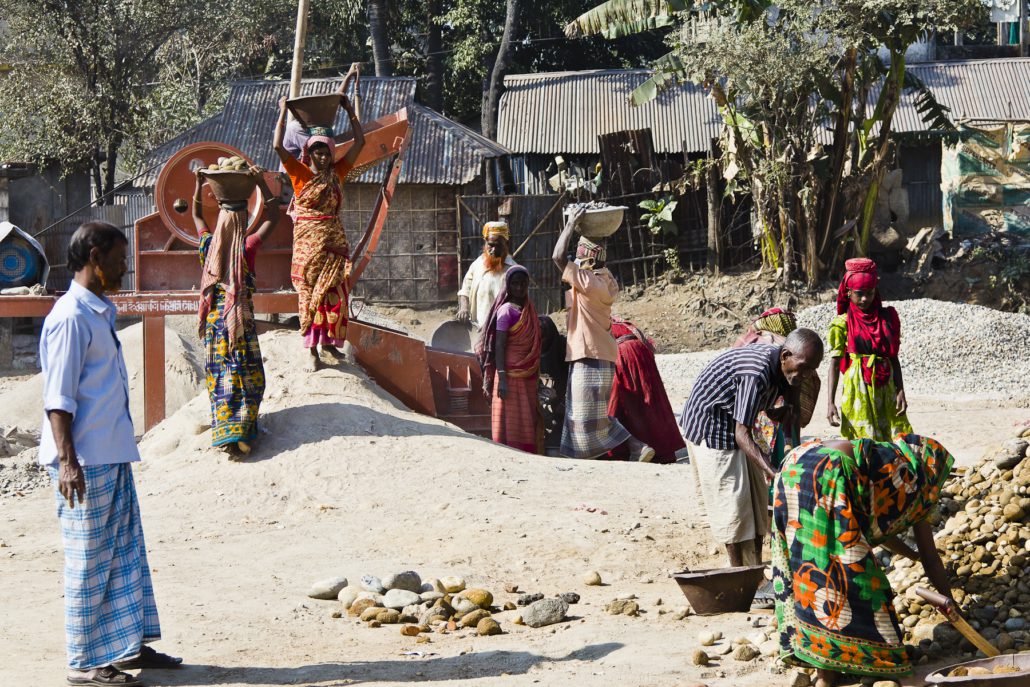
Bangladesh is a small country in South Asia bordered by India and Myanmar. With a population of 161 million, the country had a poverty rate of 21.8% in 2018. Since its inception in 1971, Bangladesh has faced a myriad of issues. In 1971, the annual GDP was -14%, the country was plagued by famine and floods and there were high rates of political instability. In recent years, the government has been actively working to reduce poverty in Bangladesh by addressing concerns across a variety of sectors. According to the Asian Development Bank, Bangladesh currently has the fastest growing economy in the region.
Involvement of NGOs
Several NGOs have been involved in Bangladesh’s economic success. These NGOs include Practical Action Bangladesh (PAB) and Proshika. These two NGOs have worked to implement policies that have allowed Bangladesh to better support its working population, namely by focusing on entrepreneurship.
Proshika is a Bangladesh-based NGO concerned with skills training and employee management. The NGO is responsible for starting the Small Economic Enterprise Development (SEED) program, which was created to help impoverished people and reduce poverty in Bangladesh. This program provides microloans, employee training, technology help, business consultation and more.
PAB has worked on a similar initiative in the form of the Markets and Livelihoods Programme (MLP), which provides training, technology help and more. These programs were studied in relation to the smith communities (blacksmiths, goldsmiths, etc.) in Bangladesh. The smith communities are some of the most impoverished in the country. In a 2015 paper published by Rezaul Islam at the University of Dhaka, Islam found that these programs were essential to allow these communities to prosper and create financial growth by encouraging entrepreneurship.
Diversifying Exports
Bangladesh has emerged in recent years as a major export provider for a variety of goods. In 2018, Bangladesh’s exports increased by 4.5%, increasing an additional 10.1% in 2019. Bangladesh is a significant producer of rice, jute, mangoes, vegetables and inland fish. Recently, Bangladesh has also been exporting technology, exporting four ships to India and 12 robots to South Korea.
Investing in Education
Bangladesh has also taken great strides to invest in the education of its young workforce. Every year, Bangladesh is seeing 500,000 students graduate from college, of which 65,000 receive IT training. This has transitioned Bangladesh’s economy from rural-based agriculture to a more urban and modern economy.
Bangladesh has also been working hard to address the gender disparity gaps in education. In 2015, Bangladesh was one of a handful of countries that managed to achieve an equal amount of school enrollment across genders and had more girls than boys enrolled in secondary education.
Developing the IT Sector
Bangladesh has developed the information technology (IT) sector of its economy, which now totals to a little more than 50% of the country’s GDP. The country has established around 8,000 digital centers across the nation and scaled up internet and phone coverage.
Annually, Bangladesh’s technology products exports total about $1 billion. The government hopes to increase this number to 5 billion USD by the end of 2021. The country also boasts about 600,000 IT freelancers.
Increases in Foreign Investment
All of Bangladesh’s economic growth has yielded another benefit: increased foreign investment. Investors from around the world have chosen to invest heavily in Bangladesh’s economy, demonstrating the strong growth potential of Bangladesh. In 2019, foreign investment increased by 42.9%. HSBC bank has predicted that Bangladesh can achieve a spot in the top 30 economies of the world by 2030.
Bangladesh demonstrates how growing the economy can help fight poverty. Increases in job opportunities, employee training, education and more benefit the impoverished in the country. Moving forward, it is essential that efforts to reduce poverty in Bangladesh continue.
– Anushka Somani
Photo: Flickr

Indoor Farming Can Help Water Shortages in the Middle East
Water shortages in the Middle East have become an increasing problem over the years. Many conflicts surround the availability of water to millions of people in the region. To reduce these conflicts and improve health and livelihoods, indoor farming is an innovative solution to help conserve water and increase its availability.
Water Conflicts
One impending conflict over water availability is in Egypt. In the Ethiopia-Egypt water dispute, Ethiopia is building a dam that would decrease the water flow of the downstream river nation of Egypt. As 95% of Egypt’s land is desert, the country relies greatly on water from the Nile River. The decrease in water caused by the proposed dam would have disastrous effects, greatly impacting agriculture. With an increasing population, it is already anticipated that Egypt will have water and food shortages in the coming years. Ethiopia and Egypt have failed to reach an agreement over this situation.
Another water conflict in the Middle East involves the Tigris and Euphrates Rivers, which flow from Turkey to Iraq. Turkey has built dams on both rivers, but, like Egypt, Iraq is very dependent on these rivers. According to Iraq, the dams have decreased the country’s water supply by 80%. This has led to protests and the controversy over the dam may lead to further conflict between the countries.
Some conflicts occur within countries when there are water shortages in the Middle East. In Pakistan, especially in cities like Karachi, local gangs are robbing water supplies, which leaves the 39% of people engaged in agriculture without sufficient water in a country already experiencing a water shortage. The majority of available water in Pakistan is used for agriculture.
Indoor Farming
While indoor farming cannot completely solve these conflicts, it can help alleviate water shortages in the Middle East. Indoor farming factories, which have plants growing in vertical rows in sunlight-devoid facilities, require 95% less water and 99% less land than conventional farming. Additionally, hydroponic plants that thrive in these indoor farms, which don’t require soil and only require water, absorb more nutrition than plants that grow in soil. This method is effective for growing leafy greens and is easy to learn for farmers with little experience.
One potential obstacle to indoor farming is the cost. Indoor farming can be expensive due to the artificial light required. However, factoring in the money saved on water, it can be affordable. Foreign aid can also help developing countries set up indoor farming and bolster the agricultural sector. While costs may prevent this from being a perfect long-term solution, it is an effective temporary solution that can help decrease worsening water shortages.
Moving Forward
Indoor farming is a promising option for countries experiences water shortages in the Middle East. With water access expected to continue decreasing in many areas, methods for conserving water are essential. Indoor farming is one way countries can reduce water usage, conserving the available water. Moving forward, with the help of humanitarian organizations, indoor farming and other water-saving solutions can hopefully be implemented across the region.
– Justin Chan
Photo: Flickr
Can Lab-Grown Meat Fight Poverty?
Lab-Grown Meat
Lab-grown meat, known alternatively as cultured meat, is an alternative application of stem cell technology typically used in medicine. Stem cells are extracted from an animal and converted to muscle cells. The cells are then cultured on a scaffold with nutrients and essential vitamins. From this point, they grow and can eventually be shaped into any desired form, such as sausages, hamburgers, steaks or mince. Lab-grown meat is being considered as a potential solution to food insecurity in impoverished countries as it takes much less time to grow, uses fewer of the planet’s resources and no animals need to be farmed or slaughtered.
The Arguments Against Cultured Meat
Those against the implementation of cultured meat as a tool in the struggle against world poverty point firstly to the impracticality of current production. The world’s first cultured burger, cooked on live TV in 2013, cost $330,000 to produce and more of its kind might not be commercially available for decades.
In addition to the practicality issue, critics also argue that providing meat grown in foreign labs to developing countries is not ultimately constructive. It creates a dependence on exports for food when most developing countries have the capabilities to produce their own food.
Most African and Asian countries used to be self-sufficient with regard to food production but this has changed over the last 30 years. Subsidized western-grown crops have been pushed on developing countries and barriers to markets have been lowered, allowing U.S. and European firms to export crops to developing countries.
Poverty Reduction Applicability
Kanayo Nwanze former president of the International Fund for Agricultural Development (IFAD), presented an argument in 2013 which has maintained support today. The argument is that the decline of agriculture in developing countries has been an effect of underinvestment as a result of structural adjustment programs pushed by the World Bank. The World Bank has funded numerous investment programs in recent years that aim to provide developing nations with western food as a means of poverty alleviation. Some argue that this is not a sustainable solution and will only lead developing nations to be dependent in the future. Instead of investing in big science, those looking to reduce global poverty should focus on supporting rural regions and small farmers.
Eat Just: Cultured Meat
Despite the existing criticism of cultured meat, supporters of this developing technology have reason to be optimistic. In December 2020, U.S. startup, Eat Just, became the first in the world to gain government approval to sell its product to the public. This approval came from the government of Singapore, which means cultured chicken will soon be available at an unnamed restaurant in Singapore. This is a landmark development for the cultured meat business. Following this gain of approval, more governments around the world may follow suit. According to Eat Just, cultured chicken nuggets will be available at “price parity for premium chicken you’d enjoy at a restaurant.”
The Potential of Lab-Grown Meat
The debate around the effectiveness of cultured meat as a tool in poverty reduction is justified and indeed necessary. Only after serious consideration and scrutiny does any new idea earn approval and the right to be implemented. Though right now it may seem that there are more arguments against its implementation than for, this is largely due to the novelty surrounding the idea. The technology and industry with regards to lab-grown meat as a whole are still in the early stages of development. The idea of lab-grown meat as a potential solution to hunger and poverty is being followed eagerly by supporters and skeptically by critics. Only time will tell whether this novel idea succeeds or falls short.
– Haroun Siddiqui
Photo: Flickr
Poverty in Bangladesh and Economic Growth
Bangladesh is a small country in South Asia bordered by India and Myanmar. With a population of 161 million, the country had a poverty rate of 21.8% in 2018. Since its inception in 1971, Bangladesh has faced a myriad of issues. In 1971, the annual GDP was -14%, the country was plagued by famine and floods and there were high rates of political instability. In recent years, the government has been actively working to reduce poverty in Bangladesh by addressing concerns across a variety of sectors. According to the Asian Development Bank, Bangladesh currently has the fastest growing economy in the region.
Involvement of NGOs
Several NGOs have been involved in Bangladesh’s economic success. These NGOs include Practical Action Bangladesh (PAB) and Proshika. These two NGOs have worked to implement policies that have allowed Bangladesh to better support its working population, namely by focusing on entrepreneurship.
Proshika is a Bangladesh-based NGO concerned with skills training and employee management. The NGO is responsible for starting the Small Economic Enterprise Development (SEED) program, which was created to help impoverished people and reduce poverty in Bangladesh. This program provides microloans, employee training, technology help, business consultation and more.
PAB has worked on a similar initiative in the form of the Markets and Livelihoods Programme (MLP), which provides training, technology help and more. These programs were studied in relation to the smith communities (blacksmiths, goldsmiths, etc.) in Bangladesh. The smith communities are some of the most impoverished in the country. In a 2015 paper published by Rezaul Islam at the University of Dhaka, Islam found that these programs were essential to allow these communities to prosper and create financial growth by encouraging entrepreneurship.
Diversifying Exports
Bangladesh has emerged in recent years as a major export provider for a variety of goods. In 2018, Bangladesh’s exports increased by 4.5%, increasing an additional 10.1% in 2019. Bangladesh is a significant producer of rice, jute, mangoes, vegetables and inland fish. Recently, Bangladesh has also been exporting technology, exporting four ships to India and 12 robots to South Korea.
Investing in Education
Bangladesh has also taken great strides to invest in the education of its young workforce. Every year, Bangladesh is seeing 500,000 students graduate from college, of which 65,000 receive IT training. This has transitioned Bangladesh’s economy from rural-based agriculture to a more urban and modern economy.
Bangladesh has also been working hard to address the gender disparity gaps in education. In 2015, Bangladesh was one of a handful of countries that managed to achieve an equal amount of school enrollment across genders and had more girls than boys enrolled in secondary education.
Developing the IT Sector
Bangladesh has developed the information technology (IT) sector of its economy, which now totals to a little more than 50% of the country’s GDP. The country has established around 8,000 digital centers across the nation and scaled up internet and phone coverage.
Annually, Bangladesh’s technology products exports total about $1 billion. The government hopes to increase this number to 5 billion USD by the end of 2021. The country also boasts about 600,000 IT freelancers.
Increases in Foreign Investment
All of Bangladesh’s economic growth has yielded another benefit: increased foreign investment. Investors from around the world have chosen to invest heavily in Bangladesh’s economy, demonstrating the strong growth potential of Bangladesh. In 2019, foreign investment increased by 42.9%. HSBC bank has predicted that Bangladesh can achieve a spot in the top 30 economies of the world by 2030.
Bangladesh demonstrates how growing the economy can help fight poverty. Increases in job opportunities, employee training, education and more benefit the impoverished in the country. Moving forward, it is essential that efforts to reduce poverty in Bangladesh continue.
– Anushka Somani
Photo: Flickr
3 Countries Supported Through Iceland’s Foreign Aid
Syria
Syria has a long history of political turbulence with numerous uprisings dating back to the 20th century. One event, in particular, was especially tumultuous. In 2015, Syria had experienced a major political uproar in one of the largest and oldest cities in the country, Aleppo. “The Battle of Aleppo” began in 2011 in the city of Deraa. Citizens who opposed the leadership of President Bashar al-Assad decided to rebel. This led to a civil war between the Syrian government and protesters who the Syrian government referred to as rebels. The civil war that lasted six years had a detrimental impact on the citizens. There were massive food and gas shortages. Multiple buildings were victim to mass bombings, including schools and hospitals. Civilians were caught in the crossfire and suffered greatly as a result. Iceland stepped in to offer assistance and allocated $600,000 to support civilians impacted by the war in 2015. The country continued in its efforts by supporting Syria with $4 million worth of humanitarian aid in 2016.
Malawi
Malawi holds one of the highest rates of poverty in the world, at 51.5.% in 2016. Malnutrition and infant mortality impact Malawi’s 18.6 million population. The country has experienced notable economic growth in the past three years, with a 4.4% increase in economy in 2019. Unfortunately, these economic gains have been stalled as a result of the COVID-19 pandemic. In early November 2020, the Icelandic government donated $195,000 to the World Food Programme to assist with the COVID-19 response in Malawi.
Uganda
Uganda and Iceland established their relationship in the year 2000. The Icelandic government is committed to enhancing the livelihood of Ugandan fishing communities located in the Kalanga and Buikwe districts. Uganda is one of the largest recipients of Icelandic foreign aid with an annual distribution of $6 million. Iceland’s contributions have seen monumental success with safe water coverage now standing at 77%, up from 58% in 2015. The primary school completion rate in Buikwe is up from 40% in 2011 to a staggering 75.5%.
Iceland: A Foreign Aid Leader
While Iceland may be small in comparison to its peers, Iceland has been tremendously influential in its foreign relations. The three countries above are just a few of the nations that Iceland has assisted. Humanitarian efforts continue to provide support to countries in need through Iceland’s foreign aid.
– Imani Smikle
Photo: Flickr
Central African Republic Refugees Return Home
Central African Republic Refugees
Repatriation efforts began after security conditions in the Central African Republic improved. Stability in the country has developed at a slow pace. Less violence in regions of the Central African Republic known for volatile shifts prompted the voluntary return of refugees.
Beginning in 2012, violent confrontations between armed factions throughout the Central African Republic forced more than 500,000 people to flee. Thousands more went into hiding, often in the wilderness, where access to food and clean water is scarce. A staggering rate of poverty among citizens of the Central African Republic reflects years of political instability.
Poverty in the Central African Republic
Both domestically and abroad, refugees from the Central African Republic experience rates of extreme poverty and hunger. The Central African Republic was one of the last two countries on the 2018 Human Development Index ranking. Combined with the political instability of the nation, the Central African Republic’s low development score contributes to the nation’s high rate of poverty.
With a population of a little less than five million people, almost 80% of the country’s people live in poverty. While political instability is a major factor that contributes to the high rate of poverty in the country, meager production rates, insufficient markets and pronounced gender inequality also contribute to the high rate of poverty. Additionally, it is estimated that nearly half of the population of the country experiences food insecurity.
Alarmingly, almost 90% of food insecure individuals in the country are classed as severely food insecure, which is nearly two million people. This has particularly devastating effects for children aged between 6 months and 5 years old. More than one-third of all children within that age range are stunted due to lack of appropriate dietary nutrition.
The World Food Programme Alliance
In partnership with the government of the Central African Republic and other humanitarian organizations, the World Food Programme (WFP) provided emergency food and nutritional assistance to nearly 100,000 people, in 2018. This assistance was delivered to individuals who were affected by the violence that resulted from the coup in 2013, the civil violence that was unleashed by competing factions after the coup and the violence that continued through 2017, as hostility between armed groups was reignited. This method of the WFP’s humanitarian aid involves the distribution of food packages and the implementation of nutrition activities for children and pregnant mothers.
Time will tell whether refugees are returning to a country that will eventually provide for them. Through various initiatives, including Food Assistance for Assets and Purchase for Progress, the WFP hopes to turn civic, humanitarian functions over to the country’s government.
Food Assistance for Assets and Purchase for Progress
Both the Food Assistance for Assets and Purchase for Progress initiatives were designed by the United Nations to help partner nations achieve objectives set by the ‘Zero Hunger’ Sustainable Development Goal. Food Assistance for Assets “addresses immediate food needs through cash, voucher or food transfers.” Its response to immediate needs is paired with a long-term approach. Food Assistance for Assets “promotes the building or rehabilitation of assets that will improve long-term food security and resilience.”
Purchase for Progress works in tandem with Food Assistance for Assets. It is a food purchase initiative, whereby the WFP purchases more than $1 billion worth of staple food annually from smallholder farms. This food is used by the WFP in its global humanitarian efforts. Meanwhile, its ongoing investment in smallholder farms contributes to national economies.
Through the initiatives of the World Food Programme and its dedicated efforts for humanitarian assistance and hunger eradication, the Central African Republic will hopefully reach a point where its citizens never again have to flee the country they call home.
– Taylor Pangman
Photo: Flickr
The South American NGO Helping the Homeless
When topics of direct involvement to relieve global poverty come up in casual conversation, young people sometimes find new and innovative ways they can volunteer. Since young adults and teenagers often do not have a lot of disposable income to donate to causes that speak to them, they may choose to involve themselves with an NGO they can give their time and energy to. This is where Un Techo Para mi Pais, or TECHO, comes in as it has an impeccable volunteering model. Techo is a South American nonprofit that emerged in 1997 in Santiago, Chile. Since 2001, the organization began its expansion throughout Latin America, and by 2010, TECHO was one of the most prominent entities providing natural disaster relief to nine South American nations and helping the homeless.
About TECHO
TECHO’s main aim is to decrease homelessness rates on the South American continent, while improving the quality of life of those in comunas and favelas, building sanitary and safe communities and employing the work and energy of volunteers. As of 2021, Techo operates in 19 Latin American countries, with over a million volunteers across the continent helping the homeless and impoverished communities.
TECHO’s initiative consists of not only providing marginalized and impoverished communities with the dignity they deserve but also linking the volunteers with the communities they are aiding. The organization discusses each community’s specific needs as it helps design a unique action plan for each neighborhood and settlement. Joint action occurs as volunteers and settlement dwellers construct paved roads, community centers and emergency homes. The latter is their most popular project: modular prefabricated spaces that are easy and fast to build and provide shelter and insulation from the elements to families in need.
How Young People Can Participate
One does not need formal training in construction or city planning, as teenagers as young as 14 can participate by following a simple guide and plan of action. Young volunteers can do a wide range of jobs, such as asking for pecuniary donations as individuals or with their schools, collecting construction materials and assisting at construction sites to lend a hand. It is through this hands-on model that TECHO has become a very popular “club” to be part of within Latin American cities, as young people dedicate a lot of their time to campaigns fighting extreme poverty while learning about systemic and structural problems their particular societies face at a community level.
Anyone Can Help
Professionals are also necessary at TECHO for the most ambitious plans, and the organization accepts almost all areas of expertise including volunteer firefighters, cooks, construction workers and nurses. Even those with no experience in humanitarian aid or those without a formal profession can help, as according to the organization, “The first step is to get to know the organization’s model very well, and the tools necessary to carry out your role. Then, TECHO seeks to offer various activities that will help you to deepen your knowledge on topics such as poverty and human rights. No previous experience is required to lend a hand.”
The Inter-American Development Bank recently gave TECHO the rank of fourth most visionary organization of Latin America. Moreover, the organization is currently working on more than 500 settlements across Latin America hoping to expand its reach into the most precarious areas of the region, helping the homeless and providing many more families with dignified services and homes.
– Araí Yegros
Photo: Flickr
Little Light Uganda: Empowering Ugandan Women
Little Light Helps Uganda
Uganda’s economy has had a reduction in growth because of the COVID-19 pandemic, a locust invasion and heavy rains that led to flooding. With subsequent job loss along with the economic decline, programs like Little Light Uganda are essential for giving help to those in need. Little Light’s services include “giving access to proper education, economic empowerment and psycho-social support.”
Little Light Uganda has two groups in the organization, its youth group and its women’s group. The youth group, officially known as Spoon Youth, aims to provide the young people in Namuwongo a safe and reliable environment. The group also educates children on how to navigate life living in poverty, including matters of crime and violence. Children and youth make up more than 70% of Namuwongo’s population, half of them without parents, which is why Little Light works to provide them sanctuary and resources.
Women’s Empowerment Group
The mothers of children in the youth group are invited into Little Light’s women’s empowerment group, called “Umoja,” which is Swahili for “Unity.” The group’s mission is to give women living in the Namuwongo slum tools to better their economic and social situation. Members of the women’s group meet every afternoon at the organization to make authentic African jewelry from recycled newspapers and hand-rolled beads. The jewelry is marketed in Uganda and abroad to provide an income and livelihood for women.
Mama Pendo Jewelry
The name the group has coined for the jewelry brand is Mama Pendo, which translated from Kiswahili means “The Mother of Love.” The initiative aims to improve the quality of life for refugees and single mothers trying to provide their children with an education.
Little Light Uganda volunteers have worked with the women to support their hard work and create a website for their jewelry to be sold. The proceeds from sold jewelry go toward projects the women feel passionate about, all of which intend to benefit the conditions for struggling women and other vulnerable individuals.
Combating Malaria and COVID-19
One of the group’s projects is dedicated to fighting malaria in Uganda, which is one of the main causes of death in the country. According to the American Journal of Tropical Medicine & Hygiene, between 70,000 to 100,000 children in Uganda die from the disease every year. The group uses money earned from sold bracelets to buy an organic mosquito-repellent soap, which is given to disadvantaged families that live in places that are more vulnerable to malaria.
The women have also created an initiative to combat COVID-19. Since hygiene is an essential tool for preventing the spread of the virus, the group has pledged one bar of soap for a family in Namuwango living in poverty for every website purchase.
Women’s Empowerment for Poverty Reduction in Uganda
Little Light Uganda does a lot for its community with initiatives like the Mama Pendo project. Not only is the organization helping those in need but it is also empowering women living in poverty. Women with more resources and liberation are more likely to pursue their own education and prioritize the health, nutritional and educational needs of their children.
– Celia Brocker
Photo: Flickr
USAID Helps Youth Development in the Philippines
The Education Problem
Unfortunately for the Philippines, an alarming portion of these young people are currently not in any form of education or employment. One-fifth of all youth in the Philippines are either jobless or not attending school or employment training.
Even before the COVID-19 pandemic, the Philippines was facing an education crisis. The country placed last in reading comprehension and second to last in both science and mathematics in an international student assessment.
USAID: Youth Development in the Philippines
USAID has committed to help improve and promote public education and other forms of education in the Philippines. Starting in 2018, USAID began a five-year effort to create a series of programs aimed at uplifting economically disenfranchised Filipino youth who are at the most risk of poverty.
One program, in particular, YouthWorks PH is a five-year partnership between USAID and the Philippine Business for Education that engages the private sector to address the education needs of youth as well as the skill requirements of employers. This partnership will improve access to training and employment opportunities for at least 40,000 youth through an innovative work-based training approach. Young people are able to earn a competency certificate from a university or training institute while working in partner companies.
More than 5,000 young Filipinos will have access to free technical and vocational training as a result of this initiative partnering with Aboitiz Construction and D.M. Consunji, Inc. (DMCI), two of the biggest construction companies in the country.
This type of on-site vocational training will help prepare youth for well-paid employment opportunities and will create more skilled workers in the Philippines.
There are also other programs created by USAID specifically to increase the quality and accessibility of education in the Philippines. All Children Reading (ACR), is a program to increase the reading skills of Filipino children. ABC+ aims to address the interconnected factors that contribute to low education outcomes in the poorest performing areas of the Philippines.
Youth Development Potential
Young Filipino people could potentially bring about massive economic growth in the country. In order to fully capitalize on this opportunity, resources and development opportunities must be provided to the youth so that they can fully integrate into the workforce as skilled workers. For this reason, the youth development work of USAID is integral. Not only will it lift thousands of poor Filipino youth out of poverty but it will help create a stronger economy for the Philippines.
– Christopher McLean
Photo: Flickr
Human Trafficking in Afghanistan
The Systemic Issues
One of the major issues contributing to the human trafficking crisis within Afghanistan is the continued practice of bacha bazi, or “dancing boys”, in which sexual abuse against children is performed by adult men. Although technically illegal, the centuries-old custom has been proven hard to get rid of, with many government and security officials being complicit with its continuation.
The U.S. Department of State has declared Afghanistan Tier 3, the highest threat level, meaning that it does not meet the minimum requirements for combatting human trafficking and is not making a significant effort to do so.
This has a significant impact on Afghanistan because according to the Trafficking Victims Protection Act, the United States will not provide nonhumanitarian, nontrade-related foreign assistance to a country that is ranked on Tier 3. According to the June 2020 Trafficking in Persons Report, the use of child soldiers and bacha bazi has continued. Although there have been investigations and arrests made in an attempt to end bacha bazi, no police officers involved were prosecuted.
Addressing Human Trafficking in Afghanistan
The Afghani Government has shown efforts to end human trafficking within its borders. In 2019, it joined the United Nations Office on Drugs and Crime (UNODC) on a global initiative to stop human trafficking. This initiative aims to allocate resources to countries in the Middle East and Asia that need assistance in the battle against human trafficking.
USAID reported that in 2019, Afghanistan increased the number of Child Protection Units within national police precincts, preventing the recruitment of 357 child soldiers. Furthermore, the National Child Protection Committee (NCPC) was created to respond to the practice of bacha bazi.
USAID has worked to assist the Afghani by training government officials to prosecute human traffickers and abusers as well as giving assistance to shelter workers that give legal and social resources to victims. It assisted in the creation of the Afghanistan Network in Combating Trafficking in Persons (ANCTIP), a network of Afghan NGOs that work with victims of human trafficking.
NGOs within the country have provided most of the assistance to victims of human trafficking. Approximately 27 women’s shelters in 20 provinces provided protection and care for female victims of trafficking. NGOs also operated two shelters for male victims under the age of 18.
Eradicating Human Trafficking
In order for Afghanistan to efficiently combat its human trafficking crisis and move to a lower tier level, Afghanistan needs to increase criminal investigations and prosecutions of suspected traffickers, especially in law enforcement and the military. Furthermore, traffickers must be convicted and adequately sentenced. This can be done by increasing the influence and powers of the NCPC and allowing the committee to remove public servants found practicing bacha bazi. Additional support from the country’s government must also be given to survivors of human trafficking. Only by rooting out the systemic abuse within the top institutions of the country can Afghanistan effectively address its human trafficking crisis.
– Christopher McLean
Photo: Flickr
Improving Education in Kashmir
Political Unrest and COVID-19
In August 2019, Article 370 of the Indian constitution that applied to Jammu and Kashmir was abrogated. Repealing this article revoked Kashmir’s semi-autonomous ‘special status’ as a state. As a way to curb anticipated unrest in the state, the Indian government blocked internet and phone lines. This crisis along with the COVID-19 pandemic in 2020 has put the future of education in Kashmir on shaky ground, reflective of its political landscape. Between 2019 and 2020, schools in Kashmir officially functioned for as little as 100 days.
Internet Connectivity in Kashmir
According to the latest census, 68.74% of Jammu and Kashmir’s population are literate and males are 20% more literate than females. Roughly 27.21 % of the state of Kashmir live in rural areas where access to education is a key issue, especially during COVID-19. Over time, the Indian government has facilitated low-speed internet to select areas up to the speed of 2G. The issue is that a higher speed of internet is required for classes to be facilitated via Zoom, Skype or to be watched on YouTube. Other than the children, educators, college and graduate students are faced with a continuing lag that has affected education in Kashmir. The government has whitelisted some websites and restored higher speed connectivity in some districts of the state.
Aawo Padhain
The Directorate of School Education Kashmir has set up “Aawo Padhain” (Come Lets Study). It is a portal that is filled with E-content and video-based classes for children to continue studying during the lockdown. The center is also equipped with a free Child-Line for children in need of aid and assistance. Additionally, Whatsapp has become a portal for teachers to send educational videos to students. While this initiative addresses the issue of continuing education during COVID-19, more needs to be done to address the other issues that affect education in Kashmir. Improving education in Kashmir will have benefits that are far-reaching.
Education Reform
The National Educational Policy 2020 (NEP 2020), approved by the government on July 29, 2020, was introduced to implement changes to education, with special focus on Jammu and Kashmir. The policy is based on the pillars of “access, equity, quality, affordability, accountability” and will transform India into a “vibrant knowledge hub,” tweeted Prime Minister Narendra Modi. However, the success of such a policy depends on its implementation. Its effectiveness, or lack thereof, will be seen in due time. For successful educational transformation, Kashmir also needs well-qualified teachers, access to electricity, the internet, computers, technology and libraries. Furthermore, country-wide internet bans should not be allowed.
Kashmiri students have lived in a life of lockdown longer than the rest of the world has, with their education impacted long before COVID-19 came about. To bridge the overall gap in education in Kashmir, it is essential for the country to receive assistance to implement educational reform for improving education in Kashmir.
– Anuja Mukherjee
Photo: Flickr