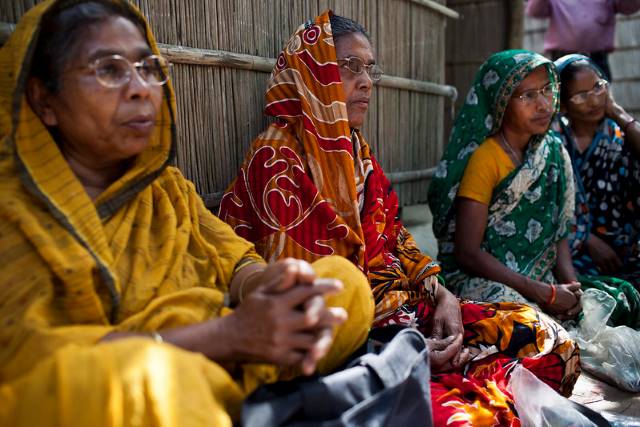
 Of the United Nations 17 Sustainable Development Goals, the first one sets an ambitious target. To end poverty in all its forms, everywhere and to leave no one behind. One such organization embracing this challenge is Bangladesh’s BRAC. BRAC is one of the world’s largest nongovernmental development organizations founded in Bangladesh that has done a tremendous amount of work fighting extreme poverty in Bangladesh. BRAC’s Ultra-Poor Graduation program has seen success globally.
Poverty Progress in Bangladesh
Nestled between India and Myanmar in South Asia, Bangladesh has made enormous strides in combating extreme poverty in a relatively short amount of time. In a little over a decade, 25 million people were lifted out of poverty. Between 2010 and 2016, eight million people were lifted out of poverty in Bangladesh.
Although poverty rates were seeing a steady decrease, those living in extreme poverty in Bangladesh still lacked basic safety nets and support from NGO services.
BRAC’s Ultra-Poor Graduation (UPG) Program
In 2002, BRAC introduced the innovative Ultra-Poor Graduation (UPG) program in an attempt to apply innovative approaches to solve extreme poverty in Bangladesh and across the globe.
The UPG program aims to provide long-term holistic support for those in extreme poverty to lift themselves out of poverty and graduate to a more resilient and sustainable life. This is done by addressing the social, economic and health needs of poor families while empowering them to learn new skills and better financial management.
BRAC believes that while traditional government interventions such as food aid and cash transfers are impactful and have a role to play, these benefits, unfortunately, remain out of reach for many in extreme poverty and are certainly not a long-term solution.
BRAC’s UPG program sets to build skill sets and assets to ensure families are equipped to become food secure, independent and achieve economical sustainability.
The Success of UPG Programs Globally
The program has found success inside and outside Bangladesh and has received praise and acknowledgment in some of the world’s most impoverished regions.
Take for example the country of South Sudan. From 2013 to 2015 BRAC piloted a project involving 240 women. The program provided support for the women to receive food stipends, asset transfers and various skills training that included financial and basic savings skills.
Shortly after the women received training and support, the South Sudanese Civil War escalated, ravaging the country and causing inflation and food shortages.
Despite these shocks, 97% of the 240 women were still able to increase their consumption thanks to the resources, assets and skills they obtained during the program. Also, their children were 53% less likely to be underweight and malnourished, compared to those who had not been in the program.
More Success in Afghanistan and Other Countries
Another example comes from Afghanistan, where a widowed woman in the Bamiyan province received a flock of sheep and training from BRAC. Since then, she has been able to generate enough income to feed her family, send her grandchildren to school, sell additional products and save for the future.
From 2007 to 2014, a large-scale UPG program across Ethiopia, Ghana, Honduras, India, Pakistan and Peru saw a 4.9% increase in household consumption, 13.6% increase in asset values and a 95.7% increase in savings pooled across all countries.
The success of BRAC’s Ultra-Poor Graduation program can be clearly seen from the results. It is an innovative program that aims to end all poverty and leave no one behind and is successfully on its way to doing so.
– Andrew Eckas
Photo: Flickr

Combating the Antimicrobial Resistance Crisis
Background of Antimicrobial Resistance
Drug-resistant diseases (AMR) have grown in prevalence over the past 40 years. Many of the medicines used to treat common infections like the flu and pneumonia have been around for decades. Eventually, viruses and bacteria develop their own microbial methods of fighting back against these drugs and inevitably become fully resistant to treatments.
Perhaps the most well-known example is the virus known as pneumococcus, or streptococcus pneumoniae. Penicillin has been used to treat pneumococcus since the early 1950s, giving it plenty of time to develop a strong resistance to the drug. Now, pneumococcus is practically untreatable, killing over 300,000 children below the age of 5 annually.
The CDC explains that germs that grow resistant to medications can be almost impossible to treat, often resulting in severe illness or death. This problem is only getting worse, as the U.N. finds that while 700,000 people die every year due to AMR diseases now, by 2050 that number will skyrocket to 10 million people.
The AMR crisis has severe economic implications as well. Antimicrobial diseases affect livestock as well as humans, leaving our international agricultural sector to collapse if not dealt with. All in all, the AMR crisis is projected to cause $100 trillion worth of global economic damage by 2050, only pushing people further into poverty.
Three organizations have stepped up to address the issue of antimicrobial resistance.
The AMR Action Fund
The AMR Action Fund is a financial project created by an international group of pharmaceutical companies. It aims to bring four new antibiotics that combat AMR to the consumer market by 2030. The fund expects to invest over $1 billion into late-stage antibiotic research by the end of 2025.
The AMR Alliance
The AMR Alliance is a massive coalition of more than 100 of the most powerful pharmaceutical companies, dedicated to fighting AMR. In 2016, the AMR Alliance signed the Industry Declaration, an agreement promising the development of anti-AMR medicines.
In 2018, the AMR Alliance spent a record $1.8 billion in the war against AMR. In 2020, the AMR Alliance released its second progress report, detailing the progress made so far. The results are promising: 84% of relevant biotechnology companies are in the late stages of research and development for AMR cures and more than 80% of them have strategies in place for releasing the drugs.
UN Food and Agriculture Organization (FAO)
The FAO is taking serious steps to battle antimicrobial resistance. These dangerous antimicrobial superbugs threaten livestock in farms throughout the world. The FAO explains that two-thirds of future antimicrobial usage will be in livestock. These AMR superbugs will only increase in danger over time, as they develop stronger resistance to medicines.
The FAO has worked to improve agricultural practices across the world, specifically in developing nations. The FAO is raising awareness about this issue with rural farmers and is providing millions of dollars in funds to combat AMR.
World Antimicrobial Awareness Week (WAAW) is an annual campaign designed to increase awareness of the issue and encourage best practices among the general public, health workers, and policymakers to avoid the further emergence and spread of drug-resistant diseases. Over the week of November 18, millions of posts are made around the globe in support of antimicrobial resistance awareness. Expanding awareness is key, as the WAAW campaign website explains that less general use of antibiotics could help to mitigate the effects of this issue.
– Abhay Acharya
Photo: Flickr
Being Uighur in Xinjiang
The Uighur Plight
At the height of the Karahanid Kingdom in 934 A.D., the Uighur were a prosperous people. Their cities were epicenters of philosophical and scientific thought, and the capital city Kashgar was a bastion of Islam. This all ended with the invasion of the Manchu Empire and the eventual takeover of the Chinese Nationalists in 1911.
Xinjiang has since been designated as an autonomous region within China. Despite this, the Chinese government has implemented numerous policies in hopes of assimilating the Uighur people and crushing separatist movements. The Uighurs have now become a minority in Xinjiang as the Han Chinese have become the majority in the region’s urban areas. The Xinjiang have been abetted by government incentives, while the Uighurs have been largely confined to poor rural areas. The wealthy and influential capital city Urumqi is now approximately 75% Han Chinese.
Uighurs in Xinjiang have had their land redistributed to the Han migrants, leaving not enough farming land behind to make a living. According to Reuters, the Uighur people face discriminatory hiring practices with many businesses displaying signs banning them from applying for jobs. This marginalization along with growing poverty among the Uighur people has spurred increased resentment towards Beijing and the ruling Communist Party. In 2001, the Chinese government used 9/11 and the resulting American War on Terror to repress the Uighurs’ desire for independence and begin intense surveillance and military operations.
Surveillance and Re-education
According to Human Rights Watch, Beijing requires officers in the region to use what is called the Integrated Joint Operations Platform (IJOP) as part of the Strike Hard Campaign to track the movements of the Uighurs and other ethnic minorities. The IJOP operating system and app, created by state-owned contractors, is used to aggregate data and flag the location of those deemed potentially threatening. The app tracks the movement of phones and vehicles, alerting officials to what are considered suspiciously long trips. The IJOP app also prompts officials to keep the biometric data of every person, including fingerprints, DNA, and blood type.
The IJOP has become a key component in the next stage in Beijing’s ploy for control, particularly with the implementation of so-called “reeducation camps.” Such camps were created by the Regulations on De-extremification in March 2017, specifically designed to convert Uighurs and other predominantly Muslim minorities to the ideological beliefs of the Communist Party. All forms of traditional religious clothing, literature, and practice are considered extremist and cause for internment in the camps under the regulation. Any form of travel is reason enough for being labeled suspicious and possibly being sent to the camps. People of all ages, male and female, are at risk. Security checks and invasive checks have become part of everyday life in Xinjiang, making it impossible to escape suspicion.
Inside the re-education camps, detainees are forced to learn about the teachings and ideologies of the Communist Party. According to those who have been detained, individuals who fail to comply are punished severely. The penalties range from verbal abuse to food deprivation, solitary confinement, beatings, and the use of restraints and stress positions. Deaths inside the camps have been reported but there is no way to verify how many people have died and the circumstances concerning their deaths. The number of detainees also remains unknown. Estimates are in the hundreds of thousands, possibly nearing one million.
What Is Being Done?
In the United Nations Committee on the Elimination of Racial Discrimination’s (CERD) periodic report on China, the committee stated its concern that the poverty rates among ethnic minorities in Xinjiang remain high. CERD also stated its deep concern about “numerous reports of detention of large numbers of ethnic Uighurs and other Muslim minorities . . . without being charged or tried.” CERD urged China to halt the unlawful detention of individuals and immediately release those who have been detained.
U.N. human rights chief Michelle Bachelet is currently seeking access to China to review these reports. However, Chinese officials claim the happiest Muslims in the world live in Xinjiang, as well as assert that “hostile Western forces” are simply misrepresenting and vilifying what is occurring in Xinjiang. The United States is preparing to enact a new round of sanctions against China over this mass imprisonment of Uighurs and other Muslim minorities. According to the Uyghur Humans Rights Project, these sanctions were previously halted due to trade negotiations with China during the G20 summit but have since been approved by all respective parties within the U.S. government.
Though the current situation for the Uighur people of Xinjiang remains dire, through diplomatic action by the U.N., the United States, and its allies are bringing awareness to the issue. Such dedication by international intervention has presented continued hope. Such hope is for a future where being Uighur in Xinjiang will cease to be a story of systematic oppression and instead will become a story of perseverance through great odds.
– Shane Thoma
Photo: Wikipedia Commons
ICTs: Amplifying Voices of Women During COVID-19
Hear Her Voice Project
Hear Her Voice is a research project that stemmed from the pandemic itself, allowing 25 girls from five different countries, Bangladesh, India, Malawi, Nigeria and the United States, to share their experiences during COVID-19. These firsthand narratives are insightful as they vlog their daily lives from various different technological platforms. These intimate conversations equip the women with the tools to better educate the public on the struggles they face with menstrual health, relationships, mental health, isolation and livelihoods during COVID-19.
The platform showcased the struggles women had when it came to Sexual and Reproductive Health and Rights (SRHR), especially in Jaipur and Munger. One of the Technology Enabled Girl Ambassadors (TEGA) is Carol, a 23-year-old woman from Munger, India, who shared her struggles with obtaining sanitary pads due to restricted mobility. When she first got her period during the lockdown, she was unable to obtain pads in time and was therefore left with no feminine hygiene products whatsoever.
Women Disproportionately Affected by COVID-19
A study done by the U.N. found that women’s economic resources in Asia and the Pacific are being hit the most. The pandemic has made gender inequalities more prevalent than ever, with the discrepancy highest in family businesses, remittances, property and savings. On top of this, it has been found that COVID-19 governmental aid is not as readily available to women as they are for men. The report stated 84% of women outside of formal employment lack social protections like unemployment support or government financial help. Women are suffering more than men all across the charts: 61% saw decreases in their income, savings and investments; 66% saw their mental health plummeting and 63% saw increased time spent doing unpaid domestic work.
Similar Scenarios During Ebola and Zika
During the 2014 Ebola outbreak in West Africa, women had consistently been the sole caretakers and health care providers, putting them at a higher risk of contracting these highly contagious viruses. The Zika virus in Latin America displayed how reproductive health services were limited and overlooked due to health care services allocating all of their resources into combating the epidemic. These unequal gendered patterns are yet again repeating themselves with COVID-19, the disadvantages being most pronounced for women.
The Impact of ICTs
Overall, information and communication technologies have been utilized by vulnerable minority groups ever since the rise of their prevalence in recent years. These innovative technological modes of communication are reshaping and expanding the uses of social media. The Hear Her Voice project is one of the many initiatives that have been using ICTs in the wake of a pandemic, to give a voice to women and the unique challenges they face and bring global awareness, support and assistance.
Additionally, ICTs provide helplines, applications, resource centers and more, so that women so can access the help and support they require. These platforms are transforming lives by amplifying and uplifting the voices of women during COVID-19.
– Mina Kim
Photo: Flickr
BRAC’s Ultra-Poor Graduation Program
Poverty Progress in Bangladesh
Nestled between India and Myanmar in South Asia, Bangladesh has made enormous strides in combating extreme poverty in a relatively short amount of time. In a little over a decade, 25 million people were lifted out of poverty. Between 2010 and 2016, eight million people were lifted out of poverty in Bangladesh.
Although poverty rates were seeing a steady decrease, those living in extreme poverty in Bangladesh still lacked basic safety nets and support from NGO services.
BRAC’s Ultra-Poor Graduation (UPG) Program
In 2002, BRAC introduced the innovative Ultra-Poor Graduation (UPG) program in an attempt to apply innovative approaches to solve extreme poverty in Bangladesh and across the globe.
The UPG program aims to provide long-term holistic support for those in extreme poverty to lift themselves out of poverty and graduate to a more resilient and sustainable life. This is done by addressing the social, economic and health needs of poor families while empowering them to learn new skills and better financial management.
BRAC believes that while traditional government interventions such as food aid and cash transfers are impactful and have a role to play, these benefits, unfortunately, remain out of reach for many in extreme poverty and are certainly not a long-term solution.
BRAC’s UPG program sets to build skill sets and assets to ensure families are equipped to become food secure, independent and achieve economical sustainability.
The Success of UPG Programs Globally
The program has found success inside and outside Bangladesh and has received praise and acknowledgment in some of the world’s most impoverished regions.
Take for example the country of South Sudan. From 2013 to 2015 BRAC piloted a project involving 240 women. The program provided support for the women to receive food stipends, asset transfers and various skills training that included financial and basic savings skills.
Shortly after the women received training and support, the South Sudanese Civil War escalated, ravaging the country and causing inflation and food shortages.
Despite these shocks, 97% of the 240 women were still able to increase their consumption thanks to the resources, assets and skills they obtained during the program. Also, their children were 53% less likely to be underweight and malnourished, compared to those who had not been in the program.
More Success in Afghanistan and Other Countries
Another example comes from Afghanistan, where a widowed woman in the Bamiyan province received a flock of sheep and training from BRAC. Since then, she has been able to generate enough income to feed her family, send her grandchildren to school, sell additional products and save for the future.
From 2007 to 2014, a large-scale UPG program across Ethiopia, Ghana, Honduras, India, Pakistan and Peru saw a 4.9% increase in household consumption, 13.6% increase in asset values and a 95.7% increase in savings pooled across all countries.
The success of BRAC’s Ultra-Poor Graduation program can be clearly seen from the results. It is an innovative program that aims to end all poverty and leave no one behind and is successfully on its way to doing so.
– Andrew Eckas
Photo: Flickr
Improved Farming Strategies to Fight Poverty in India
Help for Dalit (Untouchable) Women
A grassroots organization is working to fight food insecurity and poverty in India. Founded in 1983 in the Sangareddy district of Telangana, the Deccan Development Society works in 75 villages with around 5,000 “untouchable” women members. Its members represent the most destitute people in the community. The group has encouraged women to adopt millet-based agrobiodiverse farming approaches and market strategies that address malnutrition, food insecurity and poverty in the area. In its initial 10 years, the Society generated more than one million employment days for women, thereby directly reducing poverty in India. In the past 25 years, it has helped more than 2,700 women reclaim their farmlands.
Biodiverse Farming Methods
To address the limited water supply and poor soil quality, the Deccan Development Society helps its members to gain control over farming, seeds and the markets for their products. The Society has formed a processing unit for millet and also a seed bank as well as outlets for farm product sales. These avenues provide a powerful network of support for the farmers. More than 5,000 women have now adopted biodiverse millet-based farming, which combats food insecurity, malnutrition and poverty in India.
These days, many farmers are seeking profitable crops, using chemical fertilizers and buying market seeds rather than using organic practices and growing their own seeds. This causes the soil’s fertility to deteriorate, which leads to spending more money on enriching the soil in the future. The women farmers instead have been saving their seeds and they use organic methods with no investment involved — a more ecological and financially sound program that results in less expensive and more healthy food for their families. The women have enhanced the productivity of more than 3,500 acres of marginal or fallow land, to grow more than a million kilograms of extra sorghum per year. This activity has let them produce nearly 1,000 extra meals per family annually. These practices are not only ecologically correct but also help to reduce poverty and increase nutritional security in India.
Food Security Moving Forward
In 2019, the Deccan Development Society was awarded the Equator Prize for its work in eco-agriculture and food security. In February 2021, the Society held its 21st Mobile Biodiversity Festival at Machnoor, Jharasangham Mandal. The event celebrated the efforts of women farmers in improving agriculture, food security and nutrition. The festival featured traditional agricultural practices and showed how certain practices can help solve the problem of nutritional security and fight poverty in India.
– Sarah Betuel
Photo: Flickr
Silk Invest: Africa Food Fund Helps Local Businesses
The Silk Africa Food Fund
The fund was started in June 2012 and focuses primarily on businesses that distribute food to African consumers. Countries that attract investment the most are those which are institutionally and politically stable enough to support long-term economic growth. Silk Invest is distinct from many other foreign investment funds that support the effort to reduce hunger in Africa in that it does not target agriculture but rather the distribution of food to consumers.
The three largest investments the fund is involved with are Nigeria’s Sundry Foods Limited, Ethiopia’s Nas Foods Plc and Egypt’s El Rashidy El Asly. Of these three, Nigeria’s Sundry has seen the most significant success and expansion following its partnership with Silk Invest.
The Success of Sundry Foods Limited
The company runs the popular restaurant chain, Kilimanjaro, as well as bakery and food catering services throughout the country. When Silk Invest first gave funds to Sundry in 2012, the company had seven restaurants open and a revenue base of around $3.4 million. In 2020, just eight years later, Sundry has 40 restaurants and a revenue base of around $34 million. The entrepreneurial effort of the company’s founder, Ebele Enunwa, has been instrumental in this progress.
Sundry is a company firmly rooted in supporting its fellow local businesses. Instead of setting up in the more commercial capital of Lagos, Enunwa established headquarters in Port Harcourt where he is a local entrepreneur. Its management team consists of local hires and its supply chain uses locally sourced raw materials, including chicken and rice from rural areas.
Sundry’s Impact and Potential
Sundry Foods Limited represents an example of the enormous potential which exists for businesses in developing nations when the proper investment is made. By providing capital to Sundry, Silk Invest gave the company the tools it needed to expand its operation. By doing so, Sundry has not only offered an improved service to consumers throughout Nigeria but has also stimulated its broader community’s own economy by maintaining a steady and even increasing demand for local products.
The impact made by Sundry’s growth is palpable. Over the last 10 years, the company has created over 2,000 jobs. Silk Invest’s Africa Food Fund is hugely impactful in the effort to reduce poverty in developing nations not only because of the direct benefit the invested capital provides to individual businesses but also because of the economic growth created in broader communities as an indirect result.
The Importance of Investing in Africa
This impressive progress was all stimulated by a $2.4 million investment. The high return for Silk Invest demonstrates that funding businesses in developing countries is not only beneficial to the growth and development of those businesses but is also a practical and sound investment for the firms offering the capital.
Investing in the effort to reduce world hunger presents impactful and beneficial opportunities for all parties involved. By establishing the Africa Food Fund, Silk Invest has committed itself to this effort while simultaneously supporting developing economies.
– Haroun Siddiqui
Photo: Flickr
AgDevCo: Impact Investing in Rwanda
AgDevCo
AgDevCo is an example of a social impact investing firm that aims to invest with the intention of reducing poverty and increasing opportunity in developing regions. Based in the United Kingdom, AgDevCo was incorporated in 2009 and has engaged in numerous projects since.
The firm’s specific area of investment is in African agriculture, where it believes that impactful investments have the potential to be a significant force in reducing poverty. The firm is currently investing in eight different African countries. Its portfolio includes $135 million worth of funds in 50 different companies. These investments have engaged more than 526,000 customers and have created or sustained more than 15,000 different jobs.
Uzima Chicken Limited
One of its investment projects is a partnership with the East African poultry company, Uzima Chicken Limited. Uzima Chicken produces and distributes the Sasso breed of chickens. Sasso chickens are resistant to disease and can feed through scavenging. These beneficial traits make Sasso chickens particularly useful in the struggle to reduce poverty in East Africa.
In 2017, AgDevCo invested $3 million to support Uzima’s establishment in Rwanda. As a result of the investment, Uzima gained funds necessary for rapid operational growth as a domestic producer of poultry. This is in line with the government of Rwanda’s strategy to achieve poultry self-sufficiency in two to three years. Uzima has also been able to expand into Uganda, where its business is rapidly scaling upwards.
The Uzima Business Model
The Uzima model of business involves the employment of company agents who raise the chicks for six to eight weeks before selling them to low-income households in rural areas. Such a model provides benefits to farmers, who can increase income through the sale of the more valuable Sasso chickens, as well as the agents.
Agents typically make a 25% profit from selling chickens. A survey of Uzima agents found that, on average, 27% of household income came from selling Sasso chickens. By providing a reliable source of extra income for employed agents, Uzima helps to alleviate the burdens of poverty for these people. As of 2017, the efforts had created 150 new jobs, 40% of which are held by women. Rwandan women have benefitted significantly from Uzima’s employment with 64% of women agents reporting that the income they earned from selling Sasso chickens led to a positive change in the decision-making power they had in their households.
Impact Investments for Poverty Reduction
Uzima’s Sasso chickens grow faster, live longer, produce more eggs and have higher market prices. They are disease-resistant and thrive in local, rural conditions. Out of all the customers buying these chickens, 54% live below the $2.50 poverty line. AgDevCo investment gave Uzima the capital necessary for operational expansion, and as a result, a greater quantity of impoverished people in East Africa could buy superior chickens and increase income. Uzima’s business also has clear potential for women’s empowerment, making it a great tool in the effort to reduce poverty and inequality in the region.
The impact investments made by firms like AgDevCo have clearly measurable impacts in impoverished regions, particularly noting the success of impact investing in Rwanda. This makes impact investment firms an important part of the global effort to reduce all poverty.
– Haroun Siddiqui
Photo: Flickr
Maternal Mortality in Sierra Leone
Maternal mortality may not be a constant fear of yours if you think about pregnancy. However, this threat has not been eliminated in many parts of the world. Simply because developed countries have significantly decreased this issue with medical advances, many women in various regions must contend with this terrible plight. Maternal mortality in Sierra Leone, specifically, is still considered to be of high risk and something women should consider prior to pregnancy.
The Most Dangerous Place to Become a Mother
The most dangerous place in the world to become a mother, in fact, is Sierra Leone. This country has one of the highest maternal mortality rates globally. Around every one in 17 pregnancies end in the death of the mother- an overly alarming statistic. An endeavor that is supposed to be filled with joy and excitement is now clouded with fear as mothers worry about their health instead of being able to focus on their babies. This worry is not one experienced globally: Sierra Leone women are 300 to 400 times more likely to die with each pregnancy in comparison to women in Sweden, Finland, and other high-income countries.
Factors That Contribute to Higher Rates of Maternal Mortality in Sierra Leone
Postpartum hemorrhaging has accounted for 32% of deaths along with bleeding, hypertension, abortions, obstructed labor, and infections. Hemorrhaging is problematic because a blood transfusion is required immediately to resolve the issue. However, when a woman gives birth at a local clinic, it can take hours to transport her to a hospital for the procedure. Unfortunately, many women bleed to death while waiting. However, most of these conditions can be treated with the correct healthcare, but due to extreme poverty, an overwhelming percentage of families do not have access to the necessary care. This has resulted in unnecessary deaths.
Another significant factor that contributes to higher maternal mortality rates is that women in low-income countries tend to have more children. As a result, this increases their risk of complications. On average, women in Sierra Leone have five children, which, is considerably high when looking at countries like the United States whose average is 1.73 children. More children typically mean earlier pregnancies. In a 2016 report, researchers found 20% of deaths were girls ages 15 to 19 years old; a grim statistic especially when considering a 15-year-old is three times more likely to die during childbirth than a 22-year-old.
The Good News
Although the facts appear troubling, all hope is not lost. The United Nations has recognized maternal mortality as a serious issue. Thus, it has begun to combat the risk of death during pregnancy and the six weeks that follow.
The UN agency called the United Nations Fund for Population Activities (UNFPA) has started supporting midwifery through three government-run schools that graduate 150 students each year to tackle the high mortality rates. This alone will not improve the situation, as the majority of women in Sierra Leone already have midwives. It should result in better outcomes as these midwives will be better trained and even more common.
The UNFPA also focuses on family planning which reduces mortality by 25 to 30%. This UN organization provides 90% of the country’s forms of contraception through an annual $3 million budget. They estimated that from 2015 to 2017 this service prevented 4,500 maternal deaths and 570,000 unplanned pregnancies.
Maternal mortality in Sierra Leone may be among the highest rates in the world, but the country is taking imperative steps to diminish the risks, steps that have been working thus far. By 2023, UNFPA hopes that they can reduce adolescent births to 75 per 1,000. This, in turn, will massively decrease maternal mortality.
– Victoria Mangelli
Photo: Flickr
3 Things To Know About Hunger in Ireland
3 Things to Know About Hunger in Ireland
Turn2us
One organization that has raised the bar in helping those in poverty throughout the country is Turn2us. This organization focuses specifically on the financially needy in Ireland and looks to help those people in multiple ways. Their current campaign is called #LivingWithout. While poverty and hunger often calls to mind a country in the depths of financial despair, helping those in need in a modern country may look very different. #LivingWithout was made specifically to help families or individuals in Ireland to obtain the necessary household appliances that are needed to function well each day.
Turn2us focuses specifically on welfare benefits, charitable grants and other support in order to uplift countless lives. Their focus on practical programs, like #LivingWithout, shows that poverty in a modern setting needs much different help than a developing country. The strategy differs, and Turn2us highlights this fact by targeting the UK and its citizens.
During a time of such need around the world, it is important to look at even the most developed places for signs of hunger and needed aid. In order to see a downfall in the 2.50% hunger rate in Ireland, it is necessary to bring awareness around the subject.
– Natalie Belford
Photo: Flickr
The Link Between Poverty and Heart Disease
Heart disease has a reputation as a “first-world problem,” the inevitable result of a fatty diet and little to no exercise. Despite this common correlation, the link between poverty and heart disease is becoming increasingly visible. As of 2015, 80% of global deaths from cardiovascular disease were in low to middle-income countries (LMIC). According to The World Health Organization, 37% of premature deaths (<70 years old) in LMIC’s caused by non-communicable diseases are attributable to cardiovascular disease.
Heart Disease and Poverty
Prior to 1990, most deaths in LMIC’s were caused by communicable diseases like HIV, malaria and ebola, or complications from malnutrition. As urban areas grow in developing nations, lower physical activity and access to mass-produced and nutritionally-poor food contribute to the rise in heart disease-related deaths.
Heart disease is often the result of atherosclerosis, a build-up of plaque in the arteries of the cardiovascular system, or thickening that narrows the space for blood to flow. Heart attacks, stroke, arrhythmias and physiological deformities of the heart result from these blockages and can be fatal.
Major factors leading to heart disease include a poor diet, tobacco use, high blood pressure and high blood sugar. Additionally, a lack of diagnostic tools in LMIC may contribute to increased mortality from cardiovascular disease. A delayed diagnosis can result in irreparable cumulative damage and adverse cardiovascular events. Similarly, distributing affordable medications for managing heart disease in LMIC’s (ACE inhibitors, statins, beta-channel blockers and aspirin) is an ongoing challenge.
Non-communicable diseases like heart disease are often contributing factors to continued or extreme poverty due to lost wages, incapacitation and the generational effects of losing caregivers and wage earners. Patients in LMIC’s who survive heart attacks and strokes may need years of costly follow-up care and medication. The increases the likelihood that the dual burden of poverty and heart disease will prove fatal.
A New Baseline
Establishing effective preventative care in LMIC’s is one of the biggest obstacles to reducing cardiovascular disease. Lifestyle changes such as smoking cessation, dietary guidance and increased exercise can make a significant difference. Health professionals should recommend these changes to those screened as at-risk or suffering from high blood pressure.
The World Health Organization (WHO) has programs designed to treat and prevent cardiovascular disease globally. The WHO launched the Global Hearts Initiative in 2016 to provide support to governments in their efforts to prevent heart disease. The approach is multi-faceted and includes improvements to the health care sector, the nutritional quality of food and more.
The World Heart Federation (WHF) is an NGO focused on global cardiovascular care and outreach. Founded in 1978, it is internationally recognized as an authority on preventing, treating and diagnosing cardiovascular disease in children. The WHF provides training and networking opportunities to public health officials and caregivers worldwide, emphasizing practical methods of prevention and treatment.
Moving forward into a world where most people live in cities, vital infrastructure and basic medical services are necessary to improve the quality of life in developing nations and impoverished communities globally. Combating the rising incidence of heart disease is a major battle inequitably affecting the world’s poor. Cardiovascular screening, patient education and dietary guidance are all important steps in the right direction.
– Katrina Hall
Photo: Flickr